Podcast
Asia Centric by Bloomberg Intelligence
Hosted by Bloomberg · EN
Some of the world's largest and fastest-growing markets, economies and companies are in Asia. Every Thursday, John Lee from Bloomberg Intelligence speaks with experts and newsmakers about the big ideas and trends moving money across the region.
17episodes
Episodes
Newest firstAll episodes
Navigating US Treasury Selloff and Yen Intervention
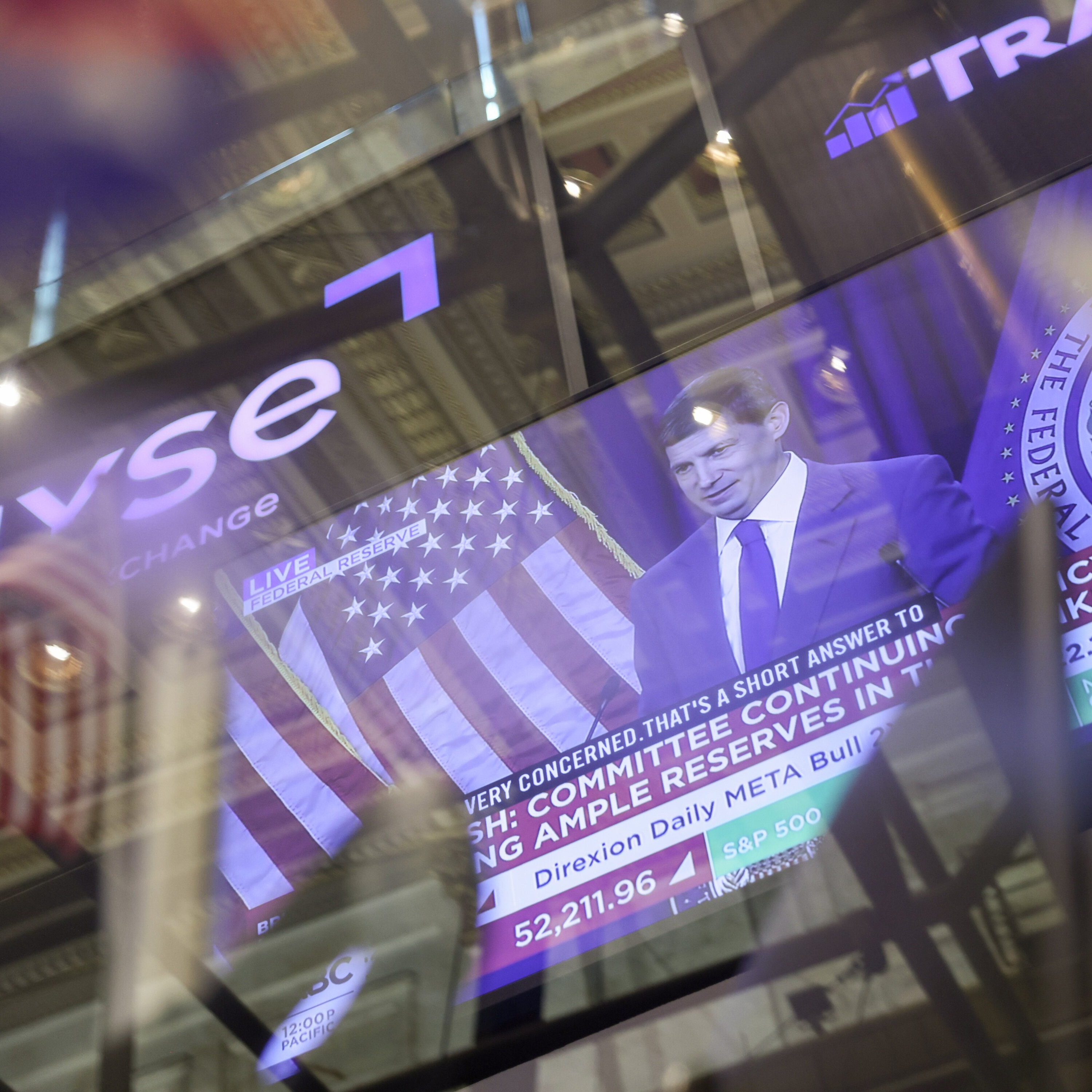
5d ago00:26:59Tap to summarizeGlobal fixed income markets are facing fresh turbulence as 30-year US Treasury yields spike to 5.2% – their highest level since before the global financial crisis – amid policy uncertainty under Fed Chairman Kevin Warsh. At the same time, FX markets are on high alert following coordinated intervention by US and Japanese authorities to support the yen after it breached 162. With rate volatility climbing while corporate fundamentals remain largely intact, how can credit investors find value amid tight spreads and negative net debt issuance across Asia? Monica Hsiao, founder and chief investment officer of Triada Capital, joins John Lee on the Asia Centric podcast. She looks at how Fed communication is driving up risk premiums, the mechanics behind US-Japan FX coordination, and why carry remains the primary strategy in global credit markets.See omnystudio.com/listener for privacy information.
Transcribe →
Can CXMT and Kimi K3 Break the Memory Supercycle?
2w ago00:30:59Tap to summarizeMemory chips have been the standout trade of the AI boom, but July brought a sharp reality check. Global semiconductor stocks whipsawed as investors began questioning the return on hundreds of billions in data-center spending. Market jitters deepened after Chinese startup Moonshot released its open-source Kimi K3 model at a fraction of the cost of US frontier AI architectures. Compounding these concerns is the rise of CXMT, China’s leading DRAM supplier, whose stock surged fivefold following a blockbuster IPO – raising fears of aggressive capacity expansion that could disrupt incumbents such as Samsung, SK Hynix and Micron. Jake Silverman, semiconductor analyst at Bloomberg Intelligence, joins John Lee on the Asia Centric podcast. He unpacks why fundamental support for the memory sector remains solid, how high-bandwidth memory (HBM) creates a structural cap on standard DRAM supply, and why multi-year strategic supply contracts and extended fab construction lead times insulate incumbents from an immediate market collapse.See omnystudio.com/listener for privacy information.
Transcribe →
Rise of the $300 Billion Prediction Market
3w ago00:21:45Tap to summarizePrediction markets are rapidly emerging as one of the fastest-growing asset classes in global finance. Driven by market leaders such as Kalshi and Polymarket, annual trading volume on real-world outcomes — from political elections to major sporting events — is projected to surge to $300 billion this year, with the potential to reach $1 trillion by 2030. But a high-stakes regulatory battle is looming: state gambling regulators argue these sports-heavy contracts constitute illegal gambling, while operators insist they are federally regulated derivatives under the purview of the Commodity Futures Trading Commission. Brian Egger, senior gaming and lodging analyst at Bloomberg Intelligence, joins John Lee on the Asia Centric podcast. They discuss the regulatory showdown, the impact on traditional sportsbooks such as DraftKings and FanDuel, and how financial markets utilize prediction market odds as real-time sentiment indicators.See omnystudio.com/listener for privacy information.
Transcribe →
Peak Hormuz and the New Oil Order
4w ago00:17:33Tap to summarizeThe disruption in the Strait of Hormuz upended global energy markets, but the feared catastrophic oil shock never materialized. Prior to the Middle East conflict, about 20 million barrels of oil and products flowed through the maritime chokepoint every day. Due to regional bypass pipelines, strategic reserve releases and voluntary demand reductions from China, the global system absorbed the impact. Now, major producers and exposed Asian consumers are doubling down on long-term diversification to secure their supply chains. Salih Yilmaz, senior equity research analyst covering energy, oil and gas at Bloomberg Intelligence, joins John Lee on the Asia Centric podcast. He outlines his "Peak Hormuz" thesis, detailing how global energy flows are rapidly realigning, the structural shift toward energy resilience, and what this means for near-term oil prices.See omnystudio.com/listener for privacy information.
Transcribe →
China's Shoppers Still Buy Luxury, But Selectively
Jul 1500:16:25Tap to summarizeChinese consumer sentiment isn't collapsing across the board, but retail sales growth is projected to hit a four-year low. While big-ticket categories like home appliances and autos crumble under subsidy fatigue, highly resilient segments are holding ground, particularly cosmetics, luxury, and premium sportswear. In e-commerce, Alibaba and rival giants are locked in a margin-crushing battle over agentic AI to capture shrinking wallets. Catherine Lim, APAC head of Bloomberg Intelligence and senior consumer and technology analyst, joins John Lee to unpack her latest retail survey. Catherine reveals exactly where the wealthy plan to spend next -- which players, like Laopu Gold, are winning over shoppers, and how AI agents are reshaping the digital marketplace.See omnystudio.com/listener for privacy information.
Transcribe →
How AI and Energy Security Fuel a New Supercycle
Jul 800:16:48Tap to summarizeA massive convergence of artificial intelligence, energy and security is sparking what is likely to be the largest and longest energy investment cycle in history, according to Morgan Stanley. Driven by the demands of AI data centers and a strategic shift from "just-in-time" cost efficiency to "just-in-case" resilience, more than $5 trillion in new-energy investments is projected for Asia over the next five years. Mayank Maheshwari, equity analyst at Morgan Stanley, joins John Lee on the Asia Centric podcast to break down this monumental shift. They discuss the rewiring of regional supply chains, how these investments will be financed, and the far-reaching implications across every asset class, sector and geography.See omnystudio.com/listener for privacy information.
Transcribe →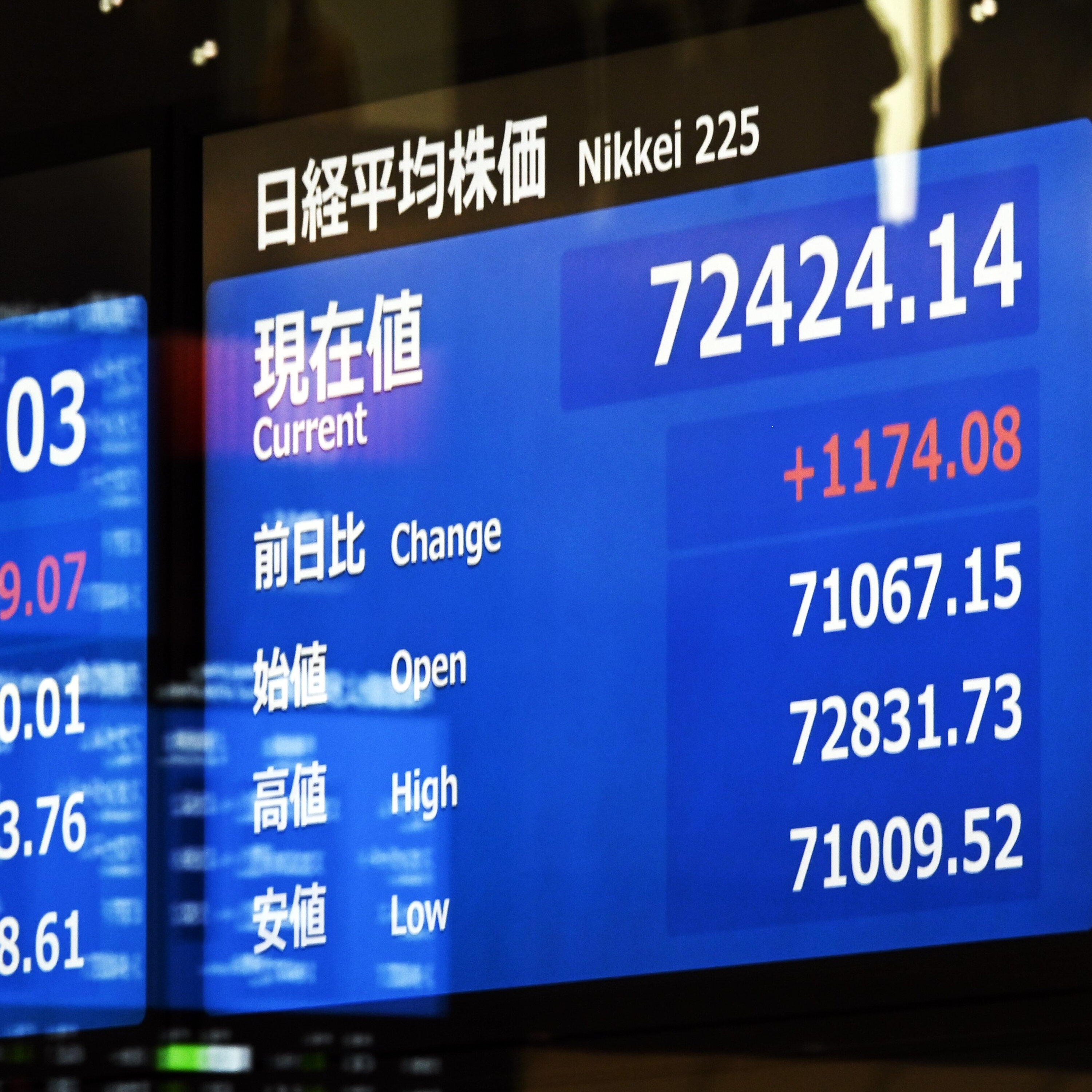
Why Global Capital Is Pouring Into Japan Stocks
Jul 100:20:31Tap to summarizeWhat's driving Japan's historic bull market? And why are global investors finally returning to Tokyo after years on the sidelines? According to Goldman Sachs, it’s a rare convergence of factors including the global AI trade, inflation, corporate governance reform and an evolving macroeconomic landscape. The firm also believes a regime shift is underway in the market, moving focus away from the high-growth, asset-light sectors such as software that dominated the past decade. Instead, they highlight a transition into "HALO" stocks: heavy assets, low obsolescence. These capital-intensive sectors, such as utilities and telecommunications, offer defensive barriers that can protect against AI disruption and geopolitical friction. Bruce Kirk, chief Japan equity strategist at Goldman Sachs, joins John Lee on the Asia Centric podcast to unpack these trends and discuss the implications of Japan's changing market dynamics.See omnystudio.com/listener for privacy information.
Transcribe →
How Leverage ETFs Are Shaking Up Asian Markets
Jun 2400:37:15Tap to summarizeThe rise of single-stock ETFs, especially CSOP's 2x leveraged SK Hynix ETF listed in Hong Kong, is reshaping market dynamics. The daily rebalancing of these massive funds is contributing to higher volatility in equity markets, creating new challenges for investors. At the same time, high concentration risk and narrow market leadership are fundamentally changing how investors think about hedging. In this special episode, featuring an excerpt recorded at the Singapore Volatility Forum on June 3, Oliver Chan, portfolio manager at Capula Investment Management; Stephane Martin, APAC head of derivatives institutional sales at Optiver; and Ivan Nurminsky, portfolio manager at Dymon, join Bloomberg News' Lianting Tu to discuss the hidden risks and opportunities in today's derivatives markets, including the surging popularity of the dispersion trade. To listen to the full recording of the Forum beyond this excerpt, including the opening speech by Bloomberg Intelligence chief global derivatives strategist Tanvir Sandhu on multi-asset volatility strategy and more, please click on the link to our sister podcast, FICC Focus. We hope you enjoy this episode.Apple Podcasts: https://podcasts.apple.com/us/podcast/all-options-considered-volatility-forum-singapore-2026/id1589459799?i=1000773012810Spotify: https://open.spotify.com/episode/4bRLGabkpuzCdg1xxCCUGP Bloomberg Terminal: {NSN TGQJMKKJH6V8 <GO>}See omnystudio.com/listener for privacy information.
Transcribe →
China’s Rise as the World’s First Electrostate
Jun 1700:21:10Tap to summarizeChina is rewriting the global energy playbook, rapidly transforming into a clean energy powerhouse and emerging as the world's first "electrostate". While the Iran war has rattled global commodity markets, Beijing has successfully absorbed the shock due to a decade-long pivot toward domestic renewable energy. Now, it's positioning itself to reap economic rewards by exporting its green infrastructure to the rest of the world. Jian Chang, Chief China Economist, and Dave Dai, APAC Head of Sustainable Investing Research, both from Barclays, join John Lee on the Asia Centric podcast. Together they unpack the economics behind China's green infrastructure exports and, with the US doubling down on fossil fuels, debate who will ultimately win the global energy race.See omnystudio.com/listener for privacy information.
Transcribe →
Is China's Property Market Finally Recovering?
Jun 1000:31:09Tap to summarizeChina's property market is showing signs of life after a five-year slump, prompting some analysts to call for a long-awaited rebound. Price declines for newly built homes are narrowing, while transaction volumes are finally ticking up, particularly in top-tier cities. But is this a significant turnaround or just a dead cat bounce? Leonid Mironov, a fund manager at Gavekal Capital, joins host John Lee on the Asia Centric podcast. He breaks down why he believes the real estate sector is bottoming out rather than roaring back and explains why markets might be too bearish on China's consumption narrative. Mironov also discusses Beijing's "anti-involution" measures to curb cutthroat competition and details where investors can still find high-quality opportunities aligned with the government's 15th Five-Year Plan.See omnystudio.com/listener for privacy information.
Transcribe →