
Podcast
Ask A Kansan
Hosted by Ask A Kansan · EN
Ask A Kansan is a podcast where we're amplifying, connecting and uncovering stories across Kansas.
Every week, Gus and Sydney sit down with the people who actually make this state run — museum directors and ranchers, founders and historians, zookeepers and woodcarvers. From Kansas City to Kinsley, WaKeeney to Wichita, we go where the story is.
You'll leave each episode knowing something you didn't about the state we call home. It's not a history lecture and it's not a business show. It's a real conversation with a Kansan worth knowing.
New episodes weekly. askakansan.com
26episodes
Episodes
Newest firstAll episodes
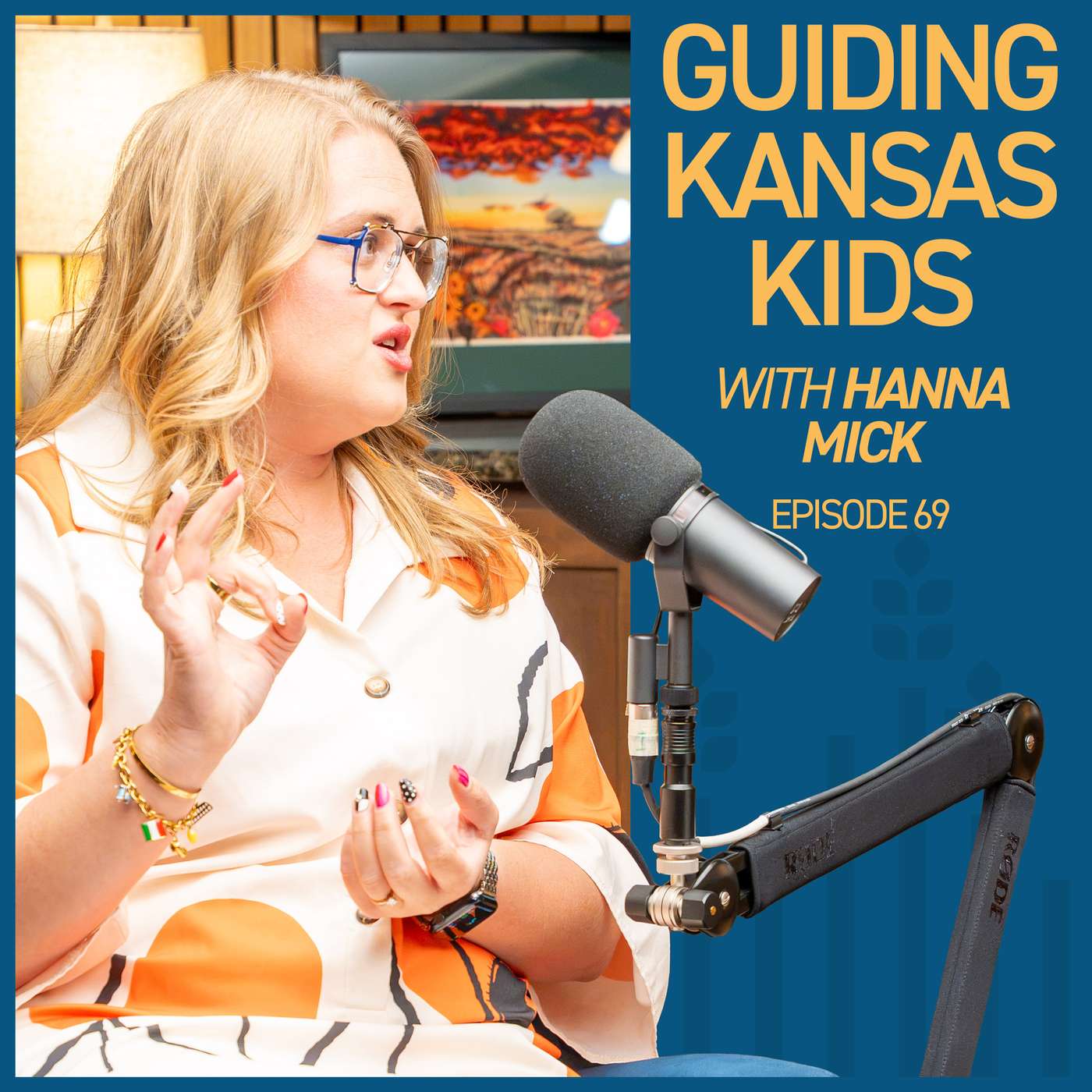
Guiding Kansas Kids' Futures with Hanna Mick
Yesterday00:58:43Tap to summarizeWhat does a school counselor actually do all day — and why does it matter more now than ever? Hanna Mick is an elementary school counselor in Topeka and a part-time consultant with the Kansas State Department of Education, and she's proof that the role goes far beyond what you see on TV. From launching a peer conflict-resolution program at recess to using AI for career exploration with kids as young as third grade, Hannah is redefining what it means to support students. She's also the Kansas School Counselor of the Year and a finalist for the national title — not that she got into education for the awards. This conversation will make you wish you'd had a counselor like her growing up.HighlightsThe difference between a "guidance counselor" and a school counselor — and why it mattersHanna's unexpected path from advertising to education (a soul-searching pivot she's never regretted)The Junior Coaches program: how sixth graders helping second graders at recess reduced office discipline referrals by 71–77% for some studentsWhy by third grade, kids have already begun limiting their career ambitions based on race, gender, and socioeconomic status — and what counselors can do about itUsing a school-approved AI tool to help students discover careers they never knew existed (e-sports manager, anyone?)Road Trip Nation: a free AI-informed platform that helps students cut through the "noise" and find their pathThe "two I's" framework for thinking about AI in schools: intention and impactWhy teaching kids what cheating actually is in the age of AI is harder than it soundsPiper the therapy dog, the Paws and Claws project-based learning group, and a Humane Society partnership built by third gradersDartography debuts! Gus introduces a new segment using a dart and a cork-board Kansas mapChapters0:00 – Stadium Renderings2:06 – Podcast Intro: Education Month2:42 – Meet Hanna Mick4:09 – Kansas Roots and K-State4:49 – From Advertising to Counseling8:16 – What School Counselors Do11:04 – Junior Coaches Recess Program15:53 – Counselor of the Year Mindset18:13 – AI in Schools: Basics21:25 – Teaching AI Literacy and Cheating28:08 – Therapy Dogs: Piper and Pickles29:35 – Paws and Claws Project Learning30:45 – Frontloading Expectations31:20 – Piper Costume Project32:00 – Humane Society Partnership33:35 – Career Bias by Third Grade36:15 – AI Career Discovery40:41 – Road Trip Nation Tool41:58 – Counselor of the Year (National)46:08 – Post-Interview Reflections46:58 – Dartography Segment Begins50:05 – Cimarron County Seat Gunfight51:33 – Sewell's Folly Canal53:02 – Ingalls Name Connections & Laura Ingalls Wilder55:57 – Dart Throw Results57:53 – Episode Wrap-UpResourcesKansas State Department of Education (KSDE) Conscious Discipline – Dr. Becky Bailey's podcast Character Strong Hanna Mick's websiteRoad Trip NationLearn more about the podcast at askakansan.com!This show is part of the ICT Podcast Network, for more information, visit ictpod.net
Transcribe →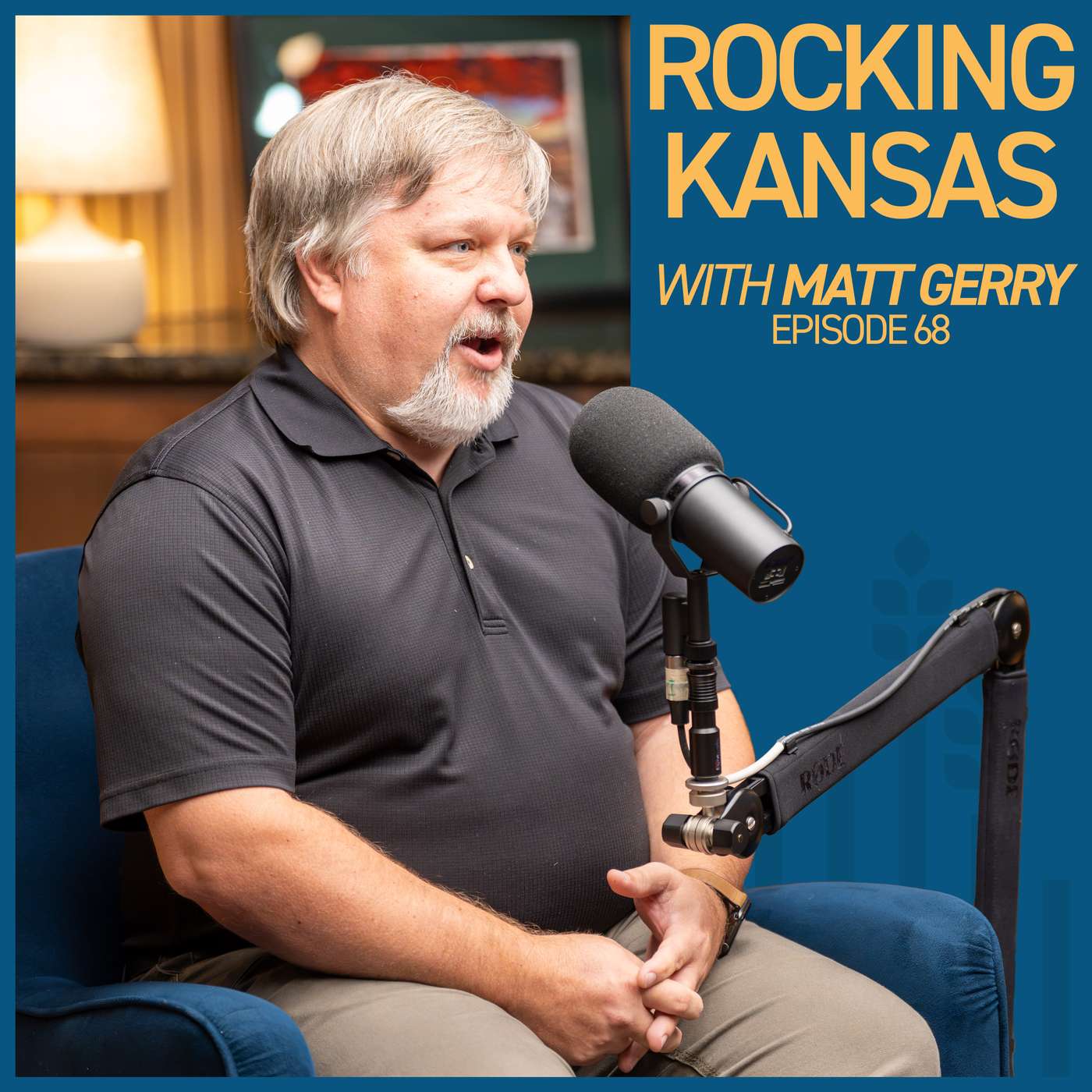
Strumming Success with Matt Gerry | Rocking Kansas
1w ago00:43:14Tap to summarizeDo kids even want to learn a skill like playing the guitar? This week we sit down with Matt Gerry, the guitar and music teacher at South Middle School in Salina, whose 24-year journey has taken him everywhere from a Weezer-sponsored trip to Chicago to a Radio Disney commercial — and even a Grammy Music Educator Award nomination. Before we get to Matt, Sydney shares a heartwarming (and a little ironic) story about a Kansan TikToker helping out a fellow Kansan stranded far from home, and Gus reminisces about the Hanks and Joshes of the world who keep our cars running. Then Matt takes us through how he fell in love with guitar via his dad's old Gibson, built a guitar program from scratch against school-system red tape, won contests with Weezer and Mozart-inspired performances, got his students backstage with Collective Soul, and shared the stage with his own wife and daughter in Theatre Salina's School of Rock. Highlights:A Kansan TikToker (Weston, from Winfield) pulls over to help a stranded fellow Kansan in Colorado — without realizing it at firstMatt Gerry shares how he fell in love with guitar playing his dad's Gibson from Kalamazoo, Michigan while performing in a school production of GreaseThe step-by-step story of building South Middle School's guitar program — from a grant-funded classroom set of guitars in 2003 to a dedicated guitar class in 2010, now serving 250 students a yearWinning a Weezer video contest that led to a trip to Chicago and new classroom instrumentsWinning the Midwest region of a Mozart-themed contest, earning $7,500 for new guitars, followed by a Radio Disney Channel visit and commercial shootMatt's involvement with the Stiefel Theatre's School of Music and getting students backstage with bands like Collective SoulSharing the stage with his wife and daughter in Theatre Salina's production of School of RockBeing nominated for the Grammy Music Educator Award and making the quarterfinalsWhy Matt believes learning guitar in a group setting beats learning solo from YouTubeMatt's big goal: becoming a clinician who trains other guitar teachersA nostalgic tangent about Salina radio stations, Weird Al Yankovic fan mail, and shared music memories from middle schoolChapters:0:00 – Scrolling TikTok Finds Weston0:45 – Kansans Helping Kansans2:32 – Brake Pads and Hank Stories3:23 – Ask a Kansan Intro4:52 – Meet Music Teacher Matt6:04 – How Matt Found Guitar7:42 – Choosing Music Education9:04 – First Classroom Memories11:47 – Building a Guitar Program14:07 – Why Guitar Hooks Students18:06 – Weezer Contest Goes Viral19:30 – Fame and Disney Tease20:16 – Mozart Contest Win20:51 – Disney Channel Visit21:42 – Family Support Grounding22:18 – Stiefel Music School24:03 – School of Rock Family25:01 – Awards and Humility25:52 – Church Music and Benefits27:40 – Middle School Mindset28:47 – Guitar Program Expansion31:38 – Big Goals and Training34:01 – Radio Nostalgia Tangent35:41 – Teaching Dream Job37:31 – Stories from a Hat Twist42:22 – Episode Wrap and MerchResources Mentioned:Salina Education Foundation: https://www.salinaeducationfoundation.com/ Teaching Guitar Workshops: https://teachingguitarworkshops.org/Stiefel Theatre: https://www.stiefeltheatre.org/KMEA (Kansas Music Educators Association): https://ksmea.org/Learn more about the podcast at askakansan.com!This show is part of the ICT Podcast Network, for more information, visit ictpod.net
Transcribe →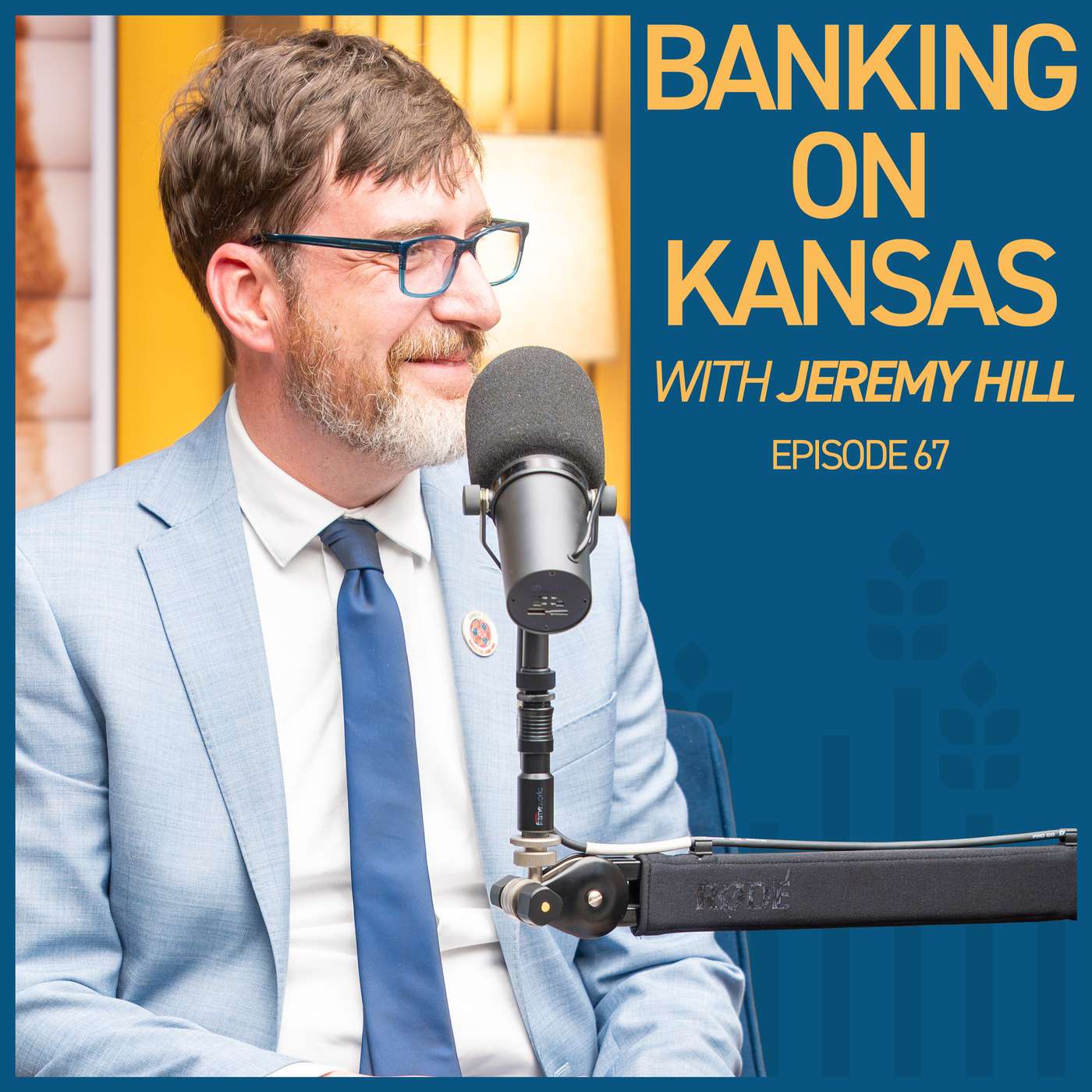
Banking on Kansas with Jeremy Hill
2w ago00:41:30Tap to summarizeWhat if the Federal Reserve wasn't just a boring government agency setting monetary policy, but a mission-driven storyteller trying to make sense of your household budget? On this episode, Julie and Sydney sit down with Jeremy Hill, regional executive for the Kansas City Federal Reserve, to unpack what the Fed actually does, why manufacturing is quietly booming across Kansas, and how inflation is hitting some households harder than others. Jeremy breaks down the Fed's three core functions, explains the K-shaped economy squeezing lower and middle-income families, and shares surprising stories from the Kansas City Fed's money museum, the shredded-cash vault, and the fly-fishing origins of the Jackson Hole Economic Symposium. Plus, stick around for a fun round of Kansas Penny Pinchers, where Sydney and Julie swap money-saving confessions.HighlightsThe Federal Reserve has three main functions: monetary policy, bank supervision/regulation, and managing how cash physically moves through the economy.The K-shaped economy is splitting households into two groups — some doing better every year, others falling further behind due to inflation eating into fixed costs like rent, insurance, and car payments.Kansas's GDP is currently growing faster than the national average, driven largely by a manufacturing boom (aerospace, machinery, fabricated metals).Agriculture and energy sectors in Kansas are struggling, while manufacturing is picking up steam and creating wage pressure as firms compete for labor.The Kansas City Fed operates a free, public money museum where visitors can see the history of currency and even watch cash being shredded.The Jackson Hole Economic Symposium, which draws central bank leaders from around the world, originated because a former Fed chair loved fly-fishing in Wyoming.The Fed is a semi-private organization with a public mission — it doesn't receive funding from Congress and instead earns revenue through banking services and its asset holdings.Jeremy describes economics as more art than math — piecing together abstract, nebulous signals to tell a bigger story about where the economy is heading.Chapters0:00 – Kids Freezer Obsession0:39 – Frozen Fruit Cup Logic1:51 – Do Your Kids Do This2:47 – Podcast Intro & New Co-Host3:24 – Meet Jeremy Hill4:20 – Jeremy's Role at the Fed5:37 – Why Economics Clicked6:41 – The Fed Explained Simply7:36 – How Banks View the Fed9:07 – Which Businesses He Visits10:49 – Backbone Industries in Towns12:08 – K-Shaped Household Strain14:27 – Where the Data Comes From16:29 – Money Museum and Cash Vault18:18 – Why Money Gets Shredded18:57 – Counterfeits and Secret Service19:41 – Back to the Third Bucket19:51 – Fed Mandate Explained20:15 – Rates: Buyers vs. Savers21:05 – Kansas Bootstrap Spirit22:43 – Inside the Fed Culture23:53 – How the Fed Funds Itself25:10 – Kansas Roots and Career Path27:26 – Economics as Art28:34 – Kansas Economy Snapshot30:52 – How Manufacturers Adapt31:33 – Jackson Hole Symposium Story33:23 – Where to Learn More34:14 – Post-Interview Takeaways34:51 – Kansas Penny Pinchers Game40:25 – Wrap Up and Next MonthResources MentionedKansas City Federal ReserveKansas City Federal Reserve's Money Museum — a free, public museum highlighting the history of currencyFetch app — a receipt-scanning app for earning points/gift cardsLearn more about the podcast at askakansan.com!This show is part of the ICT Podcast Network, for more information, visit ictpod.net
Transcribe →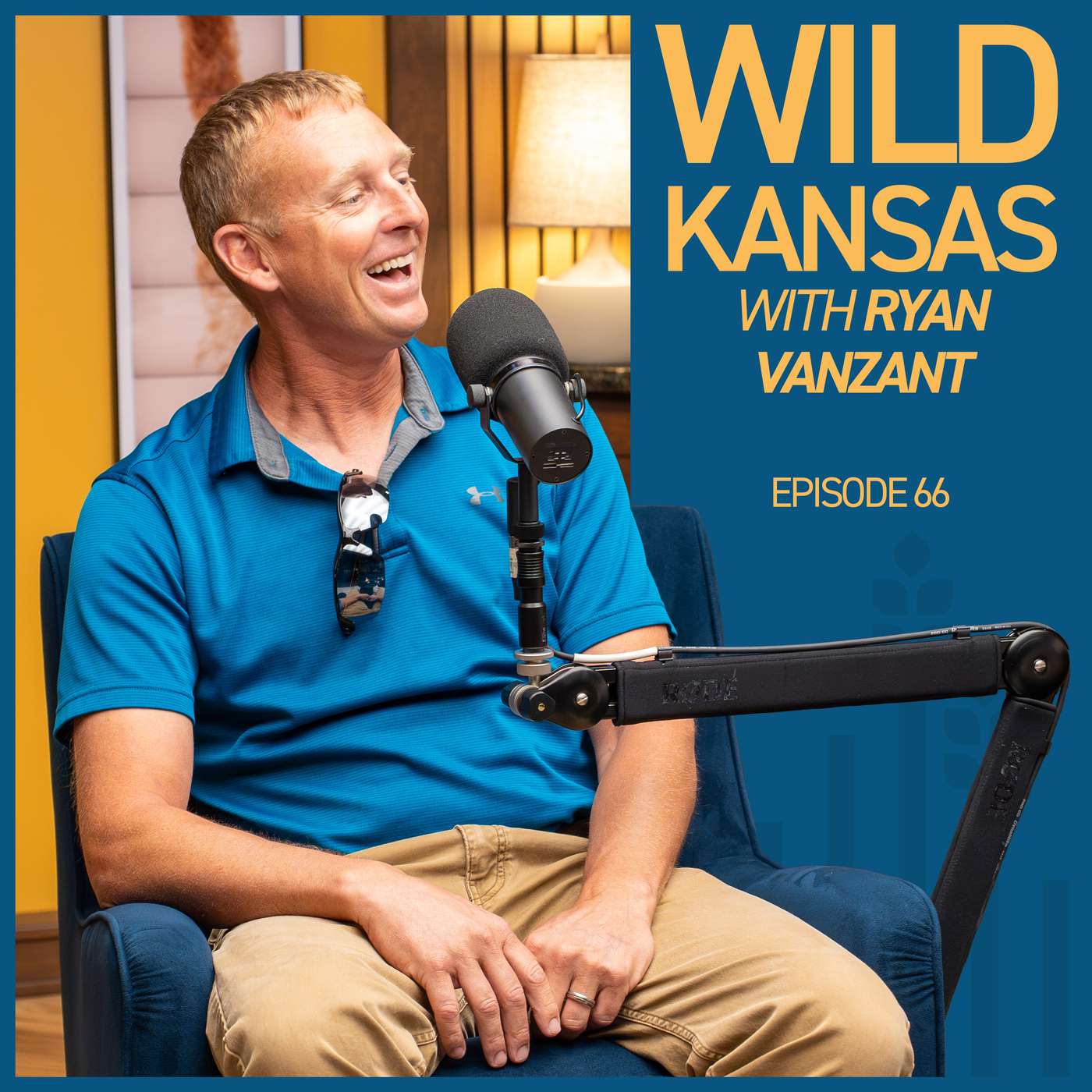
Wildlife and Conservation with Ryan VanZant of the Rolling Hills Zoo | Wild Kansas
3w ago01:01:03Tap to summarizeWhy do the animals you fall in love with sometimes have to leave the zoo? This week we sit down with Ryan VanZant, executive director of Rolling Hills Zoo in Salina, and trace his winding path from a childhood obsessed with parakeets and parrots to falconry, movie animal training, and eventually leading one of the youngest zoos in the country. We get the real story behind the zoo's famous museum, hear about the massive new Tiger Falls habitat on the way, talk through the tough calls zoo staff make about animal welfare, and dig into why Kansas prairie ecosystems deserve just as much attention as the savannas of Africa. Plus, we've got some big personal news of our own, and we close things out with a new round of Stories from the Hat.HighlightsRyan VanZant shares his journey from breeding parakeets and parrots as a kid to training animals for movies to running zoos in Hutchinson and now SalinaThe real history of the Rolling Hills Zoo museum and its taxidermy collection — plus a rumor finally debunkedDetails on Tiger Falls, a major new habitat expansion for Amur tigers, snow leopards, and incoming red pandasThe story behind Creed the baby rhino, named after Chiefs player Creed Humphrey, and how that story went viralAn honest look at how zoos make difficult animal welfare and relocation decisionsWhy Kansas's native prairie ecosystems are disappearing faster than any other ecosystem type, and why that mattersA rundown of upcoming Rolling Hills Zoo events like Zoo Brew, Safari Breakfasts, Silent Sundays, and Taste of AdventureA new round of "Stories from the Hat" with random prompts about hometown landmarks, guilty pleasure gas station snacks, and moreChapters0:00 — Sydney's Big News0:48 — Podcast Plans Ahead1:30 — Meet Rolling Hills Zoo2:39 — Ryan's Kansas Path3:41 — Why This Zoo Location4:39 — Childhood Animal Obsession5:57 — Parakeets to Parrots8:12 — Peregrines and DDT10:24 — Falconry Life Explained12:48 — Becoming Zoo Director17:56 — Leading People Like Animals19:15 — Rolling Hills Origin Story24:10 — Funding and Conservation Work26:29 — Inside the Museum29:26 — Christmas Lights Feedback30:19 — Holiday Lights Highlights30:59 — Tiger Falls Expansion34:37 — Viral Zoo Babies36:44 — Animal Welfare Decisions42:15 — Future of Modern Zoos45:22 — Saving the Prairie50:36 — Events and Visiting Tips55:37 — Stories from the Hat59:56 — Podcast Wrap and ThanksResources MentionedSunflower Summer app - https://sunflowersummer.org/Rolling Hills Zoo — https://www.rollinghillszoo.org/H Is for Hawk by Helen MacdonaldLearn more about the podcast at askakansan.com!This show is part of the ICT Podcast Network, for more information, visit ictpod.net
Transcribe →
Baseball Traditions with Katie Woods | Playball Kansas
4w ago00:47:24Tap to summarizeWhat if the hottest summer ticket in Kansas sports has been hiding in plain sight for 92 years? We sat down with Katie Woods, director of the National Baseball Congress in Wichita, and walked away completely obsessed with bobbleheads, Bananaball, and a baseball tournament with more history than you'd ever guess. From a 3 AM game under the lights to a decade-before-Jackie-Robinson integrated championship team, this conversation covers just about everything that makes baseball in Kansas special.HighlightsKatie Woods introduces herself as director of the National Baseball Congress (NBC), founded in Wichita in the 1930s by Hap DumontThe story behind the brand-new Ozzie Smith backflip bobblehead giveawayHow NBC teams work today: summer collegiate players (ages 18-22) from colleges across the countryWhy Katie fell into baseball via an internship with the Houston Astros, then the Frisco RoughRiders and Everett AquaSoxThe wild history behind minor league team names and mascotsHap Dumont's decades of innovation: pitch clocks 60 years early, glow-in-the-dark baseball, mic'd-up umpires, and even early attempts at instant replay and an automatic ball-strike system"Baseball Around the Clock" — 11 games in 33 hours, complete with tent camping, RVs, and survivor t-shirtsThe emotional and communal side of directing an all-night tournamentTrophy and prize money: the historic Cessna Cup and an $18,000 winner's pursePlans for the NBC's upcoming 100th anniversary/centennial celebrationDigitizing decades of NBC archives with Wichita State's Special CollectionsThe incredible true story of the 1935 Bismarck Churchills — the first integrated team to win a national title in any sport, a decade before Jackie Robinson broke the color barrierThe growing role of women in baseball, including Katie being the NBC's first female tournament director in 90 yearsA rousing round of Stories from a Hat, covering white lies, favorite chairs, and nostalgic Wichita hangoutsChapters0:00 — Studio Backdrop Reveal0:27 — Wood Carving Nerd Out1:42 — Show Intro & Baseball Tease2:15 — Meet Katie Woods2:51 — Ozzie Smith Bobblehead4:42 — What Is the NBC?5:53 — How Teams Work Today7:05 — Why Katie Chose Baseball9:37 — Career Path to Kansas11:30 — Why the NBC Matters12:27 — Tournament Venues & Logistics14:39 — Minor League Name Madness16:07 — Banana Ball and Innovation20:45 — Wichita NBC Community22:04 — Offseason Planning Pipeline22:56 — Baseball Around the Clock23:57 — Camping at the Ballpark25:03 — Director All Night26:00 — Sunrise and Sacrifice27:32 — Trophy and Prize Money28:05 — Kansas Community Baseball29:29 — Centennial Plans30:43 — Digitizing the Archives32:09 — Hap Dumont's Vision33:45 — How to Watch & Support34:46 — Colorblind: Origin Story37:28 — Women in Baseball40:01 — Host Wrap and the Organ41:33 — Stories from a Hat46:00 — Closing and MerchResources MentionedNBCBaseball.comNBC Baseball on Facebook, Instagram and YouTubeColorblind by Tom DunkelLearn more about the podcast at askakansan.com!This show is part of the ICT Podcast Network, for more information, visit ictpod.net
Transcribe →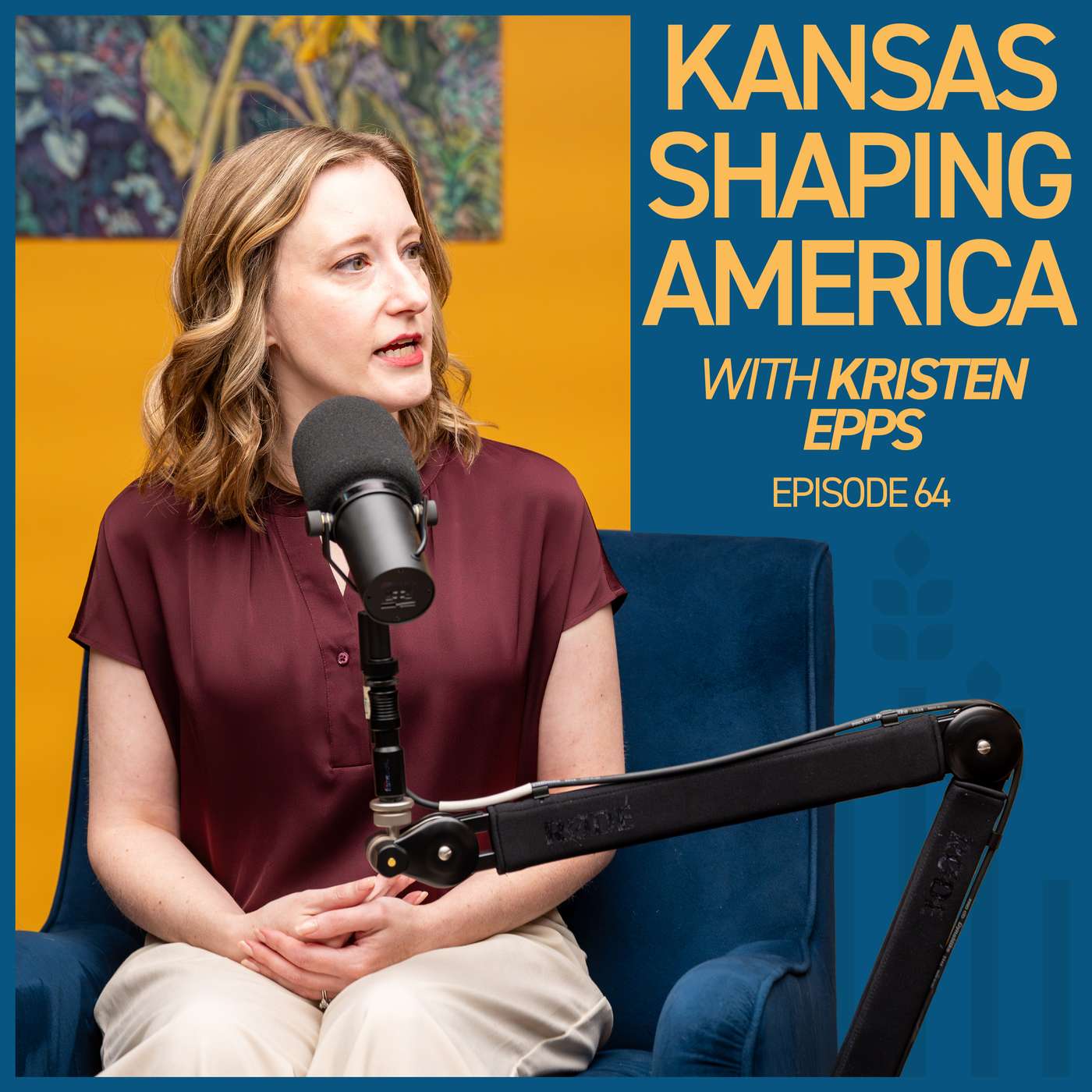
The Legacy of Bleeding Kansas with Dr. Kristen Epps | Kansas Shaping America
Jul 600:47:12Tap to summarizeThere was a time when what happened in Kansas was front page news on the east coast. This week, Sydney and Gus sit down with historian Dr. Kristen Epps, professor at Kansas State University and editor of Kansas History: A Journal of the Central Plains, to dig into Bleeding Kansas, the people slavery's expansion actually affected, and why the messy, complicated version of our state's story matters more than the tidy one. Kristen shares how she stumbled into Kansas history research, what it's really like editing an academic journal, and the wildest things she's found in dusty courthouse archives (John Brown's actual handwriting included). She also gives us a first look at her upcoming narrative history of Kansas, co-written with Jim Leiker, and reflects on resilience, reform movements, and why she finds hope in the next generation as the country marks its 250th anniversary. Plus, Sydney closes it out with an America 250-themed round of obscure Kansas facts covering everything from the Exodusters to ancient camels.HighlightsKristen Epps introduces herself as an "adopted Kansan" and explains her path from the Pacific Northwest and Colorado to becoming a Kansas historian.She edits Kansas History: A Journal of the Central Plains, a peer-reviewed publication jointly run by the Kansas Historical Society and K-State.Her book, Slavery on the Periphery, centers enslaved people's experiences rather than treating slavery as purely a political debate.A breakdown of what Bleeding Kansas actually was, including the Kansas-Nebraska Act, popular sovereignty, and the violence that followed.Confirmation that enslaved people did live in Kansas, including at the Shawnee Methodist Mission, Fort Scott, and Fort Leavenworth.Research stories from the archives, including finding Abraham Lincoln's signature and reading John Brown's surprisingly ordinary letters.A preview of Kristen's upcoming narrative history of Kansas with co-author Jim Leiker, out in early 2027 from the University Press of Kansas.Reflections on resilience through Kansas history, from the Dust Bowl to the decades-long fight for women's suffrage (won in Kansas in 1912).Kristen's thoughts on why history matters heading into America's 250th anniversary, and where she finds hope in today's college students.Sydney's America 250-themed Kansas trivia: the Exoduster migration, prehistoric camel fossils, a Kansas doctor's role in founding modern EMS, and the tiny town of Speed, Kansas hosting a Hot Wheels anniversary event.Chapters0:00 – Garden Bounty1:44 – Podcast Intro and Guest Tease3:05 – Meet Historian Kristen Epps4:09 – Why Kansas History Matters8:40 – Inside the Kansas History Journal10:49 – Becoming a Historian and Editor11:59 – Slavery on the Periphery12:50 – What Was Bleeding Kansas15:11 – Enslaved People in Kansas16:20 – Researching Hidden Histories19:08 – Archives Not Just Google21:29 – Letters from John Brown and Others23:38 – History Hits Home24:39 – Writing Kansas For Everyone26:26 – From Ancient Seas To Today27:35 – Resilience And Many Kansases31:38 – America 250 And Civic Duty33:17 – Why History Matters35:20 – Finding Hope In Community38:25 – Post Interview Reflections40:00 – Exodusters Black Migration41:41 – Camels And Prehistory42:24 – Kansas And Modern EMS45:39 – Speed Kansas Hot Wheels46:48 – Episode Wrap And FarewellResources MentionedSlavery on the Periphery by Kristen EppsKansas History: A Journal of the Central Plains https://www.kansashistory.gov/p/kansas-history/12443Kansas Historical Society: https://www.kansashistory.gov/Guns, Germs, and Steel by Jared DiamondLearn more about the podcast at askakansan.com!This show is part of the ICT Podcast Network, for more information, visit ictpod.net
Transcribe →
Discovering Hidden Trails with Jeri Brungardt | Hiking Kansas
Jun 2900:54:58Tap to summarizeWhat if the best hiking in Kansas has been right under your nose the whole time?Jeri Brungardt co-founded Women Hiking Kansas and Beyond in 2019 with a simple idea: stop losing track of friends who wanted to tag along on hikes and just make a Facebook group. What happened next surprised even her. Twelve strangers showed up to that first hike — none of them personal friends — and the group has grown to over 12,000 followers since. Jeri shares how the group scouts trails, what gear actually matters, why rattlesnakes dictate their summer schedule, and how hiking has become an unexpected source of community for women going through life's hardest moments.HighlightsWomen Hiking Kansas and Beyond started in 2019 and now has over 12,000 Facebook followers — grown entirely organically with no paid advertisingThe co-founders personally hike every trail before taking the group, checking parking, safety, and seasonal hazards like rattlesnakes at Horse Thief CanyonThey use the AllTrails app to discover new trails across the stateThe group is open to any female 12 and older; their oldest participant is in her upper 80s and outpaces most of the groupMonthly hikes are free; overnight trips charge a $20 fee managed through EventbriteTheir annual September trip to Estes Park, Colorado has been running every year since 2020Jeri recommends hiking poles for everyone — they reduce strain on your back and help probe water crossingsAlways bring sunscreen, a hat, water or electrolyte drinks, and a small first aid kitThe group has attracted women from 12 different states to their Colorado tripCindy Kuhnauer, the co-founder, also runs Fearless and Female, a self-defense business out of WichitaSydney defends Spangles with her whole chest (and eats it in the Walmart parking lot so her kids don't find out)Chapters0:00 — Madeline's softball ear muff situation2:13 — Podcast intro2:49 — Meet Jeri Brungardt3:25 — How Women Hiking Kansas and Beyond got started5:06 — How they pick trails and scout locations safely7:10 — What "hiking" actually means for this group8:02 — Upcoming Salina hike (Marty Bender Nature Area + Audubon Society)9:18 — Beginner tips: gear, shoes, water, and safety13:32 — Age range and the community the group has built15:31 — Jeri's personal hiking backstory17:17 — Favorite trails in Kansas17:07 — Trail diversity across Kansas19:57 — Jeri's backstory and career at Wesley Medical Center22:34 — The health benefits of walking23:52 — Beyond Kansas: Estes Park, Arkansas, Oklahoma, and Kansas City26:26 — How much work goes into running the group (+ Eventbrite)31:04 — Rapid fire: shoes and hats32:27 — Weather safety and what to do when it's 100 degrees33:59 — Rails-to-Trails and connecting with other hiking groups36:42 — Hiking with kids and different trail personalities39:45 — Future plans for the group43:25 — How the group grew through COVID and the power of one Facebook page47:55 — Stories From a Hat: parking lots, prairie dogs, Spangles, and soup flights53:34 — Outro and where to find Ask a KansanResourcesWomen Hiking Kansas and Beyond — Facebook Group AllTrails — alltrails.com — trail-finding app mentioned by JeriKanopolis State ParkElk City State ParkMonument Rocks / Castle RockTallgrass Prairie National PreserveFearless and Female — self-defense business run by co-founder Cindy Coughenour, based in WichitaLearn more about the podcast at askakansan.com!This show is part of the ICT Podcast Network, for more information, visit ictpod.net
Transcribe →
Cowboys, UFOs, and Distant Horizons with Jim Gray | Kansas Space Cowboy
Jun 2200:55:33Tap to summarizeFor centuries, history has been passed down through the stories of our lived experiences. And in this episode you’ll get a taste of the remarkable life of Jim Gray — The Cowboy — and this conversation might just be the most unexpected one we've had yet.Jim Gray is a rancher, historian, author, and director of the Jansen Museum in Geneseo, Kansas — a town of about 220 people in Rice County. He takes us from the wild cattle towns of 1860s Kansas all the way to a blinding white light on a rural road in the summer of 1972. Whether he's riding the Chisholm Trail or piecing together a collection of UFO drawings in a repurposed farmhouse museum, Jim sees the Kansas prairie as a place that communicates with those willing to listen.HighlightsA severe hailstorm recently devastated Salina — lost movie theater, closed mall, shattered pool railings — and the aftermath brought a wave of out-of-state dent repair hustlers trying to bribe Sydney at the permit officeJim Gray grew up three miles east of Geneseo and comes from a long line of livestock people whose family ranch in Rice County is still operating todayA music teacher once told young Jim to ditch the cowboy hat — his voice would take him farther. He didn't listen, and he has no regretsJoseph McCoy's stockyards in Abilene (1867) transformed Kansas: cattle shipments went from 35,000 head to 300,000 in just four years before the town literally ran the drovers offIn 2011, Jim helped organize a modern cattle drive from south of Caldwell to Ellsworth — 300 head, three weeks, chuck wagons, and a near-runaway that cost him his canteenHollywood cowboys (think Yellowstone) don't match reality — real cowboys Jim has known are shy, polite, and would never cuss around a womanJim's book centers on Ellsworth, where the phrase "a man for breakfast" meant killing someone — and where Civil War veterans once dragged outlaws out of their beds to restore orderIn late July/early August 1972, Jim and his wife-to-be experienced a blinding white light that filled their car and retracted up into the sky — followed by a massive dust devil that came straight down Main StreetThe Janzen Museum in Geneseo preserves the collection of Dr. Elmer D. Janzen — minister, chiropractor, ventriloquist, auctioneer — who amassed 8,000 family history slides and an entire room of UFO materials, including technical drawings of flying saucers by a Nickerson mechanical arts teacher named John DeanJim built a medicine wheel on his pasture 25–30 years ago, aligned to the equinoxes, that he says has taught him as much about the circle of life as any college classKansas UFO Day is June 27th (a Saturday) at the Jansen Museum in Geneseo, featuring vendors and the "Martians and Market" pop-upThe hosts played "Beam Me Up, Kansas" — a segment preparing extraterrestrials for life in the Sunflower State, covering tornado sirens, I-70 crosswinds, the Kansas State Fair parking situation, and which Kansan should negotiate first contact (Jason Sudeikis got a strong vote)Chapters0:04 — Hailstorm Fallout in Salina1:20 — Dent Repair Hustle Stories3:27 — Meet The Cowboy, Jim Gray4:54 — Becoming The Cowboy7:05 — Falling for Kansas History9:01 — Abilene Stockyards Revolution13:22 — Modern Chisholm Trail Drive (2011)18:19 — Cowboy Work Then and Now23:03 — Hollywood vs. Real Cowboys23:57 — Ellsworth Wild West Tales27:19 — Gunfight Myths and Reality28:25 — The 1972 UFO Encounter31:19 — Museum Founder & UFO Links (Dr. Elmer D. Janzen)32:29 — Doc Janzen's Slide Archive33:12 — The UFO Room Origins34:19 — Museum Neglect & Revival35:39 — Did Janzen Believe?37:26 — Distant Horizons Prairie38:51 — Medicine Wheel Wisdom41:17 — Kansas UFO Day & Visiting the Jansen Museum42:48 — Roswell: Cowboys and Aliens43:49 — Hosts Reflect on Jim45:39 — Beam Me Up, Kansas (Segment)47:27 — Alien Questions: Tornado Sirens49:30 — Driving I-70 Survival Guide50:38 — Which Kansan Negotiates with Aliens?52:05 — Which Kansas Town Has the Most Alien Energy?53:40 — Share Your UFO Story54:47 — Episode Wrap & AnnouncementsResourcesGeneseo City Museum — https://www.geneseomuseum.com/Kansas UFO Day — June 27th (Saturday) at the Jansen Museum, Geneseo, KS https://www.geneseomuseum.com/copy-of-aboutSend your UFO story: info@askakansan.comLearn more about the podcast at askakansan.com!This show is part of the ICT Podcast Network, for more information, visit ictpod.net
Transcribe →
Preserving Kansas African American Stories with Shane
Jun 1501:03:12Tap to summarizeWhat does it take to preserve the stories that shaped Kansas — and to tell them honestly?Shane Carter, executive director of the Kansas African American Museum (TKAAM), joins us for a rich conversation about history, identity, and the work of building something that lasts. Shane's path to Wichita is anything but ordinary: a chance painting job in Newton, a curiosity-fueled afternoon touring Wichita's historical sites, and a job posting that felt like it had his name on it. What followed was a year of pouring hard-won lessons from 13 years running a community center in Ohio into one of the most important cultural institutions in the state.We get into the history of the museum's building — a church hand-built brick by brick by its congregation, saved from demolition by a woman who stood in front of it and said no — and the responsibility TKAAM carries to tell accurate history without pointing fingers or creating shame. Shane is direct, personal, and genuinely inspiring. Stay for the whole thing.HighlightsThe Retro Future Home — A 1950s all-electric model home in Prairie Village toured by 60,000 people, preserved inside the Johnson County Museum, and a striking reminder of who those "American Dream" suburbs were designed forShane's Kansas origin story — How a cash job painting in Newton led him to spend his lunch breaks learning about Hattie McDaniel, the Dockum Sit-In, Chester I. Lewis, Nicodemus, and the ExodustersThe do-gooder's dilemma — The tension between giving everything to your community and actually making it home for dinner; Shane reflects on what it cost him and what the move to Kansas restoredThe Lincoln Community Center — A one-room schoolhouse turned regional hub: 120 kids daily, a staff of 30, a $6M construction project completed during COVID, and job re-entry for people the system had given up onTKAAM's building history — Calvary Baptist Church, demolished and rebuilt by its congregation in 1916–17, saved from county demolition in the 1970s by Doris Kerr Larkins, and now the home of the Kansas African American MuseumThe new museum and culture center at 201 North Main — A capital campaign with a goal of opening in June 2028, featuring immersive and interactive exhibits on Wichita's civil rights historyTelling history without shame — How Shane thinks about creating a genuinely non-political safe space where the Tulsa Massacre, segregation, and civil rights are told accurately to everyone in the roomJuneteenth programming — Free admission June 19–20, a community mural with Evergy at the museum, and events at McAdams Park with the Juneteenth ICT groupChapters0:00 — Retro Future Home2:03 — Segregation Reality Check2:38 — Introducing Shane Carter3:53 — Kansas Journey Begins4:41 — Ohio Roots & Leadership8:17 — The Do-Gooder's Dilemma9:50 — Skills for the TKAAM Role13:29 — Finding the Museum21:36 — Learning Kansas & Wichita23:48 — Museum Origins & Building29:25 — Hidden Stories & Water Street31:37 — Churches as Community Pillars35:38 — Museum Literacy Program36:09 — Museum Programs Overview37:25 — Trailblazers Hall of Fame38:41 — STEM Spotlight at Exploration Place39:21 — Taking Education Beyond Walls41:48 — Building the New Culture Center43:19 — Telling History Without Shame50:46 — Support the Capital Campaign51:33 — Juneteenth Events & Meaning56:48 — Mom's Knick-Knacks Game1:02:07 — Wrap-Up & AnnouncementsResources MentionedKansas African American Museum (TKAAM) — www.tkaamuseum.org/Juneteenth ICT — Community programming at McAdams Park, WichitaJohnson County Museum — Home of the Retro Future HomeExploration Place — Wichita; site of TKAAM's African Americans in STEM February projectionGreenwood Rising — Tulsa, Oklahoma; TKAAM peer and partnerCosmosphere — Hutchinson, KansasSunflower Summer — Kansas free-admission summer program for familiesLearn more about the podcast at askakansan.com!This show is part of the ICT Podcast Network, for more information, visit ictpod.net
Transcribe →
In the Grain: Kansas to Ecuador and Back with Tanner Johnson | Kansas Carver
Jun 800:53:05Tap to summarizeWhat happens when a kid from Lindsborg, Kansas follows his heart to a cloud forest in Ecuador — and then returns after staying for nearly 20 years? Tanner Johnson's answer to that question is one of the most unexpected, quietly profound stories we've heard. He built a bamboo house, married into a local family, taught English to kids from kindergarten through 12th grade, and somewhere along the way, picked up a knife and started carving wood. Now he's back in Kansas, reunited with his family, and using his art to honor the memory of Jewish people lost to the Holocaust — one face at a time.HighlightsPodcast listener Greg Victors (the Wichita Wardancer) inspired a collaboration with Manhattan High School Orchestra director Cody Toll — exactly the kind of cross-Kansas connection Ask A Kansan was made to createTanner grew up in Lindsborg, studied anthropology at K-State, and ended up in an Ecuadorian cloud forest as a volunteer on a bird study — and never really leftHe lived for years with no internet, no foreigners within 50 miles, and learned Spanish entirely by immersion in a rural communityHe built his own bamboo house, asked for his wife's hand from her brothers (her father had passed), cleared nearly two acres of land with his 90-something-year-old grandfather-in-law, and planted 110 trees during a pandemic military lockdownGrowing violence and crime in Ecuador in 2023 pushed him to bring his family back to Kansas — they got married here, bought a house, and are now all togetherHis daughters arrived in Kansas with almost no English and had to sink or swim in the school system — and thrivedHis woodcarving specialty is realistic faces, with a particular focus on honoring the memory of pre-Holocaust Jewish communities, inspired by Roman Vishniac's photography book A Vanishing WorldA face-to-face encounter with antisemitism solidified his decision to pursue a degree in Jewish studiesHe's carved over 650 pieces in five years — all by hand, no power carving toolsSydney debuts the new podcast segment: Fart or Art?Chapters0:05 — A Surprise Ask A Kansan Connection1:23 — Meet Tanner Johnson3:23 — From Hobby to Woodcarver5:16 — Lindsborg Roots and Music6:37 — Anthropology to Ecuador11:08 — Choosing a Life Abroad12:51 — Forest Life and Family16:34 — Pandemic Reality Check19:07 — Back to Kansas Together23:24 — Finding Woodcarving Style25:58 — Tools and Tropical Hardwoods26:58 — Relearning the Knife27:25 — Counting 650 Carvings28:25 — Finding Purpose in Memory32:01 — Art Form and Antisemitism35:11 — Choosing Jewish Studies36:54 — Spiritual Beliefs Explained39:11 — Hand Tools and Roughouts41:07 — Where to Find Tanner43:12 — Hosts Reflect on the Interview44:04 — Fart or Art Game52:20 — Episode Wrap and PlugsResourcesTanner Johnson Woodcarver — tannerjohnsonwoodcarver.comTanner on Instagram — @tannerjohnsonwoodcarverA Vanished World by Roman Vishniac — the photography book that shaped Tanner's Holocaust memorial carving focusZen Mind Jewish Mind — the book Tanner credits for shaping his spiritual perspectiveLearn more about the podcast at askakansan.com!This show is part of the ICT Podcast Network, for more information, visit ictpod.net
Transcribe →