
Podcast
Ask A Kansan
Hosted by Ask A Kansan · EN
Ask A Kansan is a podcast where we're amplifying, connecting and uncovering stories across Kansas.
Every week, Gus and Sydney sit down with the people who actually make this state run — museum directors and ranchers, founders and historians, zookeepers and woodcarvers. From Kansas City to Kinsley, WaKeeney to Wichita, we go where the story is.
You'll leave each episode knowing something you didn't about the state we call home. It's not a history lecture and it's not a business show. It's a real conversation with a Kansan worth knowing.
New episodes weekly. askakansan.com
26episodes
Episodes
Newest firstAll episodes
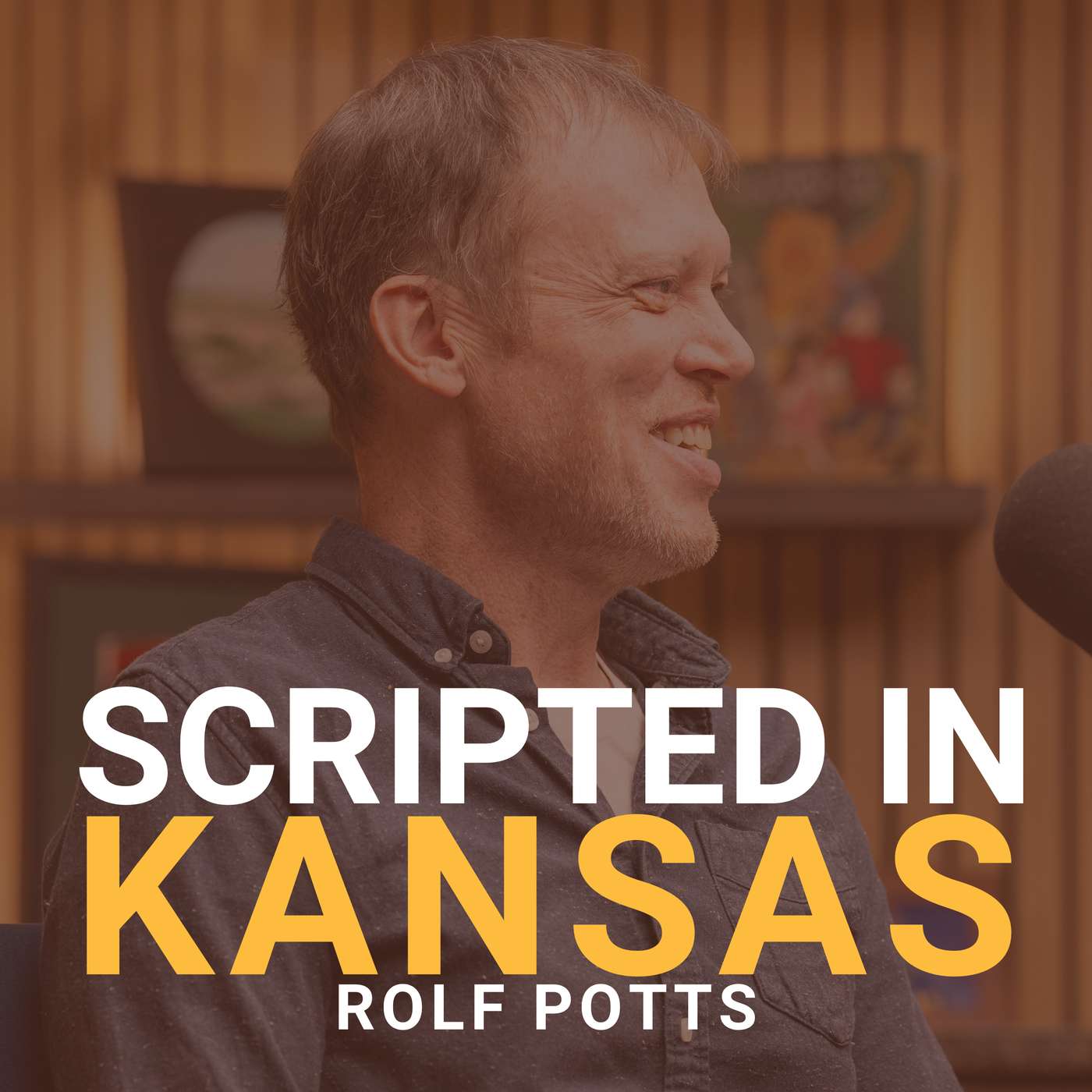
Authenticity and Adventure with Rolf Potts | Scripted in Kansas
Mar 2301:01:19Tap to summarizeWhat does it really mean to give yourself permission — to travel, to write, to call a place home?Rolf Potts has spent decades asking that question. A fourth-generation Kansan from Wichita, Rolf is one of the most recognized travel writers working today and the author of Vagabonding, a book that has quietly changed the way a generation thinks about long-term travel. But this conversation goes beyond passport stamps. We talk about how growing up with two schoolteacher parents shaped the way Rolf sees the world, why he thinks curiosity is the most underrated skill a writer can have, and how he's channeling a lifetime of storytelling into something deeply Kansan — a short film and a feature-length documentary called Kansas Never Plays Itself.HighlightsRolf's parents were both schoolteachers, and he credits them with instilling the curiosity that drives his travel writing and storytellingHis first and best-known book, Vagabonding, was essentially a letter to his teenage self about giving yourself permission to travel — without waiting for retirement or the "right" circumstancesHe taught English in Korea in the 1990s and entered Europe for the first time via the Trans-Siberian Railway — traveling through 40–50 countries before ever visiting ParisRolf distinguishes between guidebook writing and the kind of literary travel writing he practices — a blend of personal memoir and reported journalismHe has interviewed one travel writer per month on his website, rolfpotts.com, for 25 yearsHe and his wife, actress Kiki, co-wrote and co-executive produced a short film shot almost entirely on their property in KansasHis documentary Kansas Never Plays Itself explores how Kansas is misrepresented — or simply absent — in cinema, drawing on the work of filmmakers like Gordon ParksHis advice to Kansans: stop apologizing for where you're from. Authenticity is a superpowerChapters0:00 — New Mugs1:05 — Meet Rolf Potts2:32 — Curiosity From Teachers3:55 — Travel Bug and Vagabonding5:15 — Finding a Writing Life6:17 — What Travel Writing Is9:00 — Offbeat Destinations12:10 — Travel as Education13:54 — Planning vs. Spontaneity17:13 — Meeting Kiki in Kansas19:37 — Screenwriting Origins22:21 — Making a Kansas Short Film27:24 — Kansas Never Plays Itself33:12 — Place and Storytelling35:53 — Rehumanizing Place Stories37:22 — Kansas as a Destination38:55 — Authentic, Not Apologetic40:42 — Wrap Up and Links42:02 — Post-Show Reflections43:26 — Two Truths and a Lie1:00:54 — Final GoodbyeResources Mentionedrolfpotts.com — Rolf's website, home to 25+ years of travel writing interviews, books, social media links, and moreVagabonding by Rolf Potts — AmazonKansas Never Plays Itself — https://youtu.be/ra70AoXqHLQ?si=q5BQCyGuaVNMnnq3Paris Writing Workshops — pariswritingworkshop.com — the summer writing program Rolf teachesEnergy Green Grandpa (YouTube) — George Potts, Rolf's father, and his channel about sustainable energy: https://energygreengrandpa.com/Learn more about the podcast at askakansan.com!This show is part of the ICT Podcast Network, for more information, visit ictpod.net
Transcribe →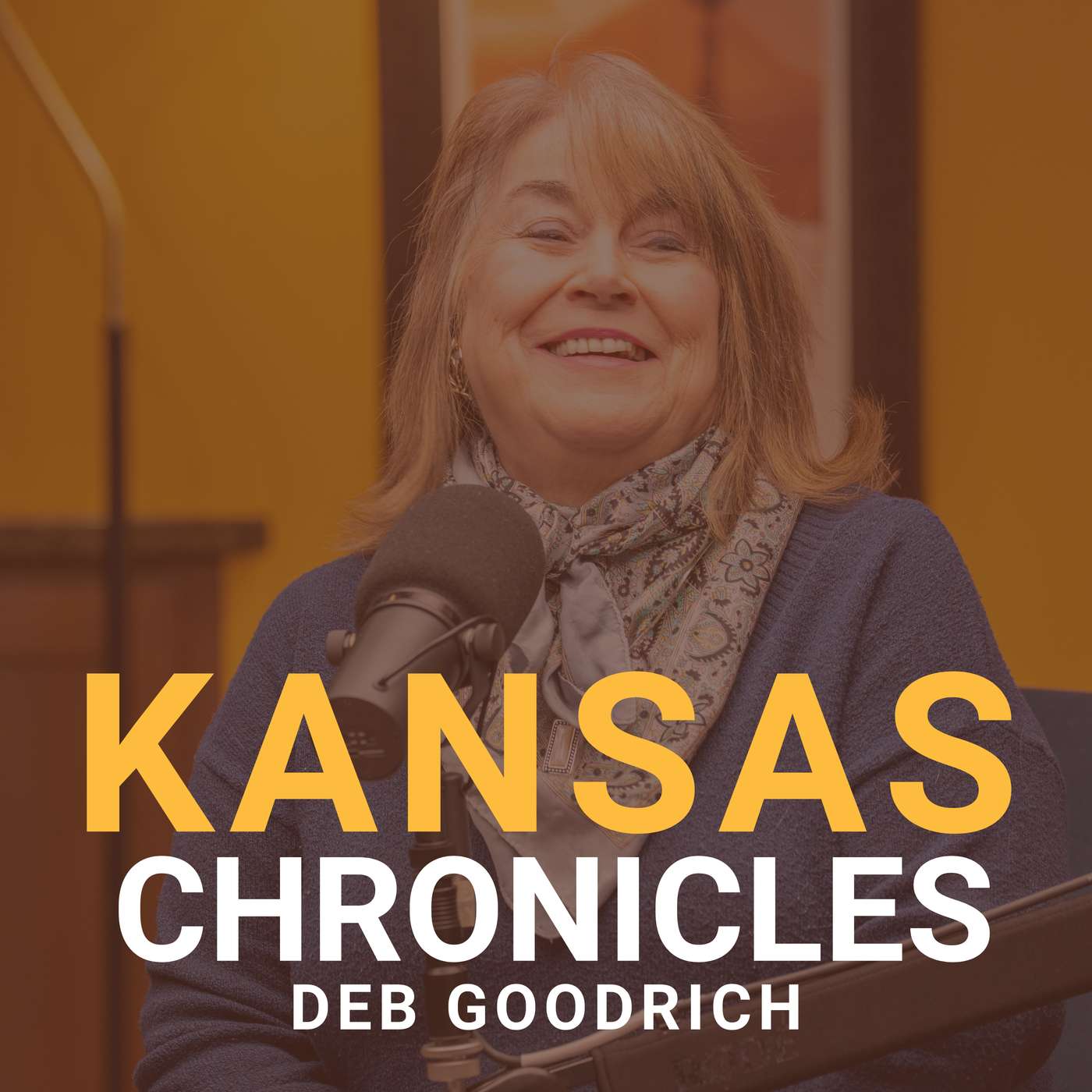
Amplifying Kansas History with Deb Goodrich | Kansas Chronicles
Mar 1600:57:02Tap to summarizeWhat does it take to fall in love with a place that isn't even yours — and then dedicate your life to making sure everyone else loves it too? That's exactly what happened to journalist, historian, filmmaker, and storyteller Deb Goodrich. From covering crime courts in the Blue Ridge Mountains at age 21, to living inside a Topeka cemetery, to championing the forgotten legacy of America's first vice president of color, Deb has spent decades proving that Kansas history is anything but boring. And somehow, she made drinking water funny in the process.HighlightsDeb Goodrich was inspired to become a journalist by watching Lois Lane on Superman at age fourShe began writing for her local paper in Stuart, Virginia at age 15 and worked across radio, TV, newspaper, and magazineDeb became a history major at Washburn University after a political science professor told her that's what she was — she had no ideaShe lived as historian-in-residence inside a historic home at Topeka Cemetery, where she first learned about Charles CurtisCharles Curtis was Vice President of the United States under Herbert Hoover (1929–1933), enrolled in the Kaw tribe, and is the first person of color to serve as VP — a story most Kansans don't knowDeb is working on a book, From the Reservation to Washington, about Charles Curtis, as well as a screenplayShe's collaborated extensively with filmmaker Ken Spurgeon, including on Touched by Fire (Bleeding Kansas) and The Moccasin Speaks (currently on PBS)Her upcoming film Under the Painted Sky tells the story of the German Family Massacre in Western KansasShe serves as Garvey Texas Foundation Historian-in-Residence at the Fort Wallace Museum in OakleyDeb's next book idea: Killers I Have KnownKansas's biggest export, according to Deb, is talent — and that needs to changeGus introduces a segment called "Less Fun With Flags," analyzing the Kansas state flag against the five rules of good flag design from the North American Vexicological AssociationKansas scored 3.01 out of 10 (a D-minus), ranking 69th out of 72 US state and Canadian provincial flagsThe Wichita city flag scored 8.41 out of 10 in 2004, ranking 6th best among 150 American cities — proof Kansans can do betterChapters0:00 – Australia Pin Giveaway2:23 – Podcast Intro / Meet Deb Goodrich3:28 – Meet Deb Goodrich6:00 – Journalism Origins: Lois Lane7:35 – History Bug: Cemetery Lessons9:34 – The Charlie Curtis Story12:26 – Topeka Cemetery Adventures17:29 – Film Work With Ken Spurgeon21:11 – Fort Wallace and Many Hats26:52 – The Oakley / Annie Oakley Myth28:33 – How Deb Got to Kansas28:45 – Mayberry Roots29:29 – Topeka and Washburn30:19 – Media Ethics Wake-Up31:09 – Switching to History32:29 – Court Reporting Lessons35:21 – Journalism Meets Film37:10 – Kansas Pride Problem40:20 – Fort Wallace Plug42:24 – Post-Interview Wrap43:45 – Less Fun With Flags45:33 – The Five Rules of Good Flag Design47:02 – Kansas Flag Fails52:38 – Wichita Flag Wins55:10 – Redesign Ideas and OutroResourcesFrom the Reservation to Washington by Deb Goodrich (book on Charles Curtis) — available on AmazonThe Moccasin Speaks — documentary on the German Family Massacre, currently airing on PBSUnder the Painted Sky — upcoming film by Ken Spurgeon and Deb GoodrichTouched by Fire — film about Bleeding Kansas by Ken SpurgeonBloody Dawn by Tom Goodrich — book on the Lawrence MassacreFort Wallace Museum — Oakley, Kansas; 2025 theme: "From Wallace to the Little Big Horn" https://ftwallace.com/Learn more about the podcast at askakansan.com!This show is part of the ICT Podcast Network, for more information, visit ictpod.net
Transcribe →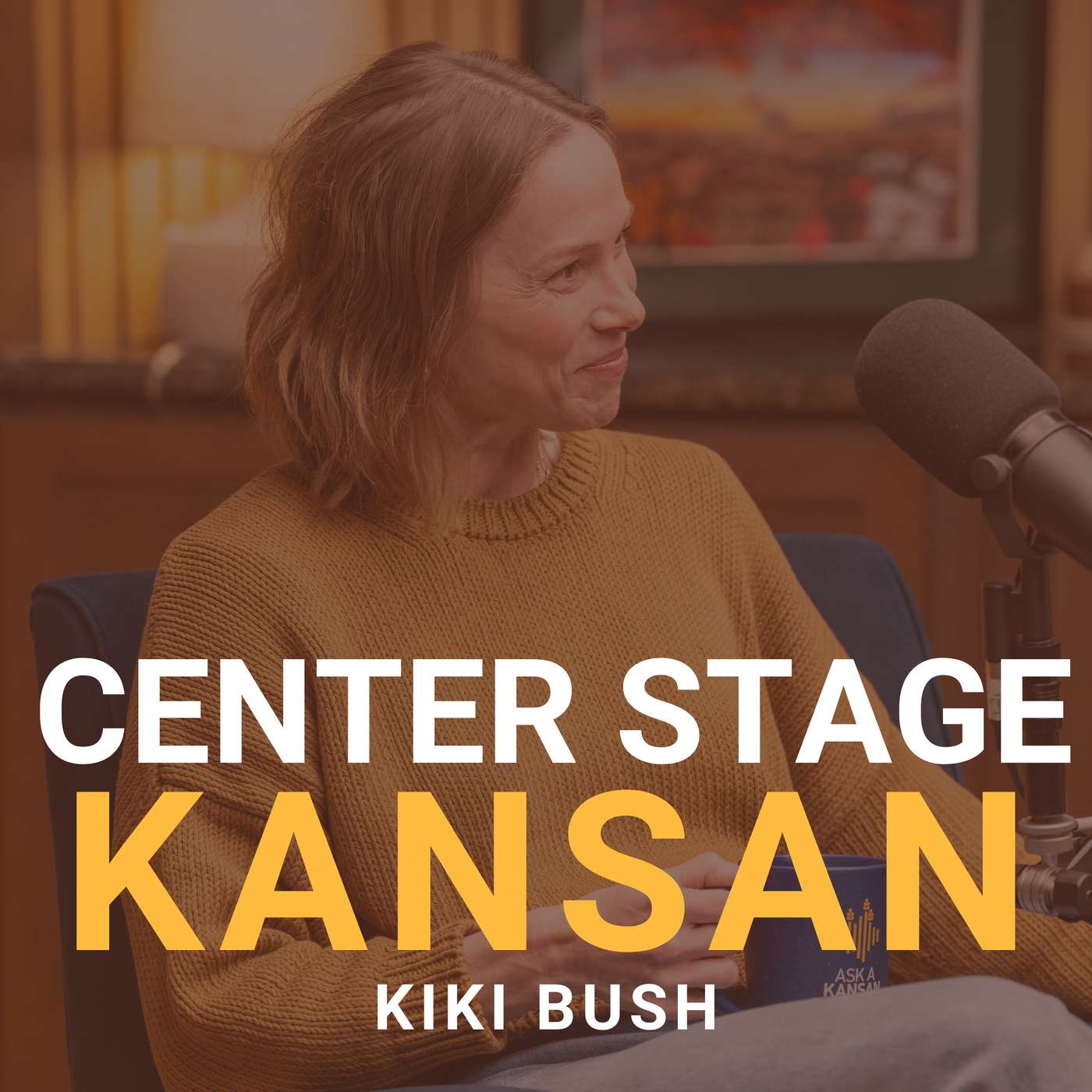
Acting, Advocacy, and Kansas Beauty with Kiki Bush | Center Stage Kansan
Mar 900:46:12Tap to summarizeWhat does it take to turn Kansas into a thriving hub for film and storytelling? Sterling native Kiki Bush left Kansas for classical drama training in England and a successful acting career in New York—but the pandemic brought her home, where she discovered something unexpected. She's now fighting to bring film tax incentives to Kansas, directing her own projects, and proving that the state's "difficult beauty" deserves to be seen on screen. From the theater across the street from her childhood home to advocating at the Kansas Capitol, Kiki's journey reveals why Kansas stories matter and what happens when we choose hope and grit over easy answers.HIGHLIGHTS• TikTok tree controversy sparks debate about Kansas history and landscape• Growing up across from Sterling College Theater ignited Kiki's passion for performance• Training at London's Guildhall School as the only American in her class• Career highlights: playing Cordelia to Kevin Kline's King Lear at The Public Theater• Meeting her husband Rolfe during the pandemic through online dating in Kansas• Creating "The Game Camera" short film with a primarily female cast and crew• Fighting for Kansas film tax incentives: 38 states have them, Kansas needs to catch up• Why women over 40 face fewer opportunities in film—and how Kiki is changing that• Kansas represents "difficult beauty" that requires staying power to appreciateCHAPTERS[0:00] TikTok Tree Controversy[1:16] Podcast Intro and Guest Introduction[1:57] Meet Kiki Bush[3:30] Sterling Roots and Theater[6:38] KU to England Drama School[10:19] Career Highlights and New York[14:07] Acting Calling Moment[15:07] Pandemic Homecoming to Kansas[18:46] Life in Saline County Now[20:15] Fighting for Film Incentives[22:40] Call Your Legislators[23:00] How Film Tax Credits Work[23:40] Keeping Kansas Creatives Home[24:16] Making The Game Camera[26:32] Origins of the Story[28:44] Equity On Set[30:27] Aging and Beauty Standards[33:51] Why Kansas Stories Matter[34:22] Difficult Beauty of Kansas[40:50] Post Interview Takeaways[41:19] Kansas Hot Takes Game[43:10] Sunsets, Sunflowers, and Pride[45:37] Wrap Up and SubscribeRESOURCES• Grow Kansas Film - Organization advocating for Kansas film tax incentives (contact for talking points to reach your legislators): https://www.growkansasfilm.com/• Sterling College - Sterling, Kansas: https://www.sterling.edu/• Guildhall School of Music and Drama - London, England: https://www.gsmd.ac.uk/• Shocker Studios - Wichita, KS - https://www.wichita.edu/academics/fine_arts/digital_arts/shocker_studios.phpLearn more about the podcast at askakansan.com!This show is part of the ICT Podcast Network, for more information, visit ictpod.net
Transcribe →
Filmmaking in the Heartland with Ken Spurgeon | Kansas on Screen
Mar 200:56:26Tap to summarizeWhat does it take to bring Kansas history to life on the big screen? From dusty archives and reenactment camps to film sets across the prairie, history professor and filmmaker Ken Spurgeon has spent two decades mastering the art of visual storytelling rooted in the Great Plains. His latest feature, Sod and Stubble, filmed entirely in Kansas with a community that literally built a house for the production, represents both a love letter to pioneer resilience and a case study in what's possible when Kansans commit to telling their own stories.HIGHLIGHTS• Ken's journey from construction worker to history professor to award-winning filmmaker• How Civil War reenactments became the bridge between academia and cinema• Working with Rance Howard (Ron Howard's father) and learning to direct seasoned actors• The making of Sod and Stubble - filming in 95°+ Kansas heat with 100 crew members in Downs, Kansas• Why the community built a replica pioneer house specifically for the film• The challenges of independent film financing with 47 investors• Why Kansas needs a film incentive bill to compete with Oklahoma, Texas, and Georgia• The difference between documentaries and narrative features - and why "movies are made in the edit room"• Balancing teaching history at Friends University with directing feature films• Why Kansas filmmakers shouldn't fear outside competition or collaborationCHAPTERS[0:00] The Sourdough Journey - Sydney debates naming her sourdough starter[2:14] Podcast Theme: Kansas Filmmaking Month[3:20] Meet Ken Spurgeon - History professor and filmmaker[4:02] Origins of a Historian - The Civil War weapon that sparked everything[5:46] Finding the Teaching Path - Seven years away from school working construction[8:51] Favorite Eras and Curiosities - Early America, Civil War, and the American West[9:47] Reenactments to Film Sets - From living history to working on Gods and Generals[11:20] First Documentary Breakthrough - Tackling Bleeding Kansas[12:30] Lessons from Documentaries - Money, flexibility, and learning not to "over-speak"[15:30] Why Film in Kansas - "I'm sticking my foot in the ground and filming here"[18:17] Film Incentives and Financing - Why tax breaks matter and how 47 investors funded Sod and Stubble[23:00] From Docs to Features - Winning the Wrangler Award and transitioning to narrative films[24:08] Working with SAG and Rance Howard - The rehearsal moment that taught Ken to be a director[30:20] On Set Reality Check - When the vision in your head meets reality[31:21] Movies Made in Edit - The three versions of every film[34:18] Sod and Stubble Origins - Filming the greatest pioneer story in American history[36:24] Filming in Kansas Heat - Shooting outdoors, Monday-Friday, June through August[38:18] Small Town Production Logistics - How Downs, Kansas fed 100 crew members[41:07] Professor and Filmmaker Balance - Teaching history while making movies[42:21] Kansas Film Future - Why we shouldn't fear freedom or outside filmmakers[47:31] Post-Interview Reflections - Gus and Sydney discuss directorial styles[48:49] Kansas Movie Trivia Game - Testing film knowledge with movies shot in Kansas[55:48] Wrap Up and SubscribeRESOURCES MENTIONEDEducational Institutions• Friends University (Wichita, Kansas) - Where Ken teaches history and filmmaking• Wichita State University - Where Ken completed his degrees under Dr. Craig Miner and Dr. Jay PriceFilms & Projects• Home on the Range - Ken's documentary that won the Western Heritage Award (Wrangler)• Gods and Generals (2001) - Civil War film where Ken worked as a reenactor• Road to Valhalla - Earlier Ken Spurgeon project featuring Buck TaylorBooks• Sod and Stubble (2024) - Ken's feature film based on the 1930s Kansas pioneer memoirKansas Movies Mentioned in Trivia Segment• The Wizard of Oz (1939) - Promotional footage filmed in Liberal, Kansas• Picnic (1955) - Shot in Halstead, Hutchinson, Wichita, and Salina• In Cold Blood (1967) - Filmed in Holcomb, Garden City, and Dodge City• Up the Academy (1980) - Filmed at St. John's Military School in Salina• Paper Moon (1973) - Shot in Hays, McCracken, and surrounding western Kansas townsWHAT'S YOUR SOURDOUGH STARTER'S NAME?Sydney's looking for the perfect name for her sourdough starter! Drop your best pun or creative suggestion in the comments. The punier, the better!Learn more about the podcast at askakansan.com!This show is part of the ICT Podcast Network, for more information, visit ictpod.net
Transcribe →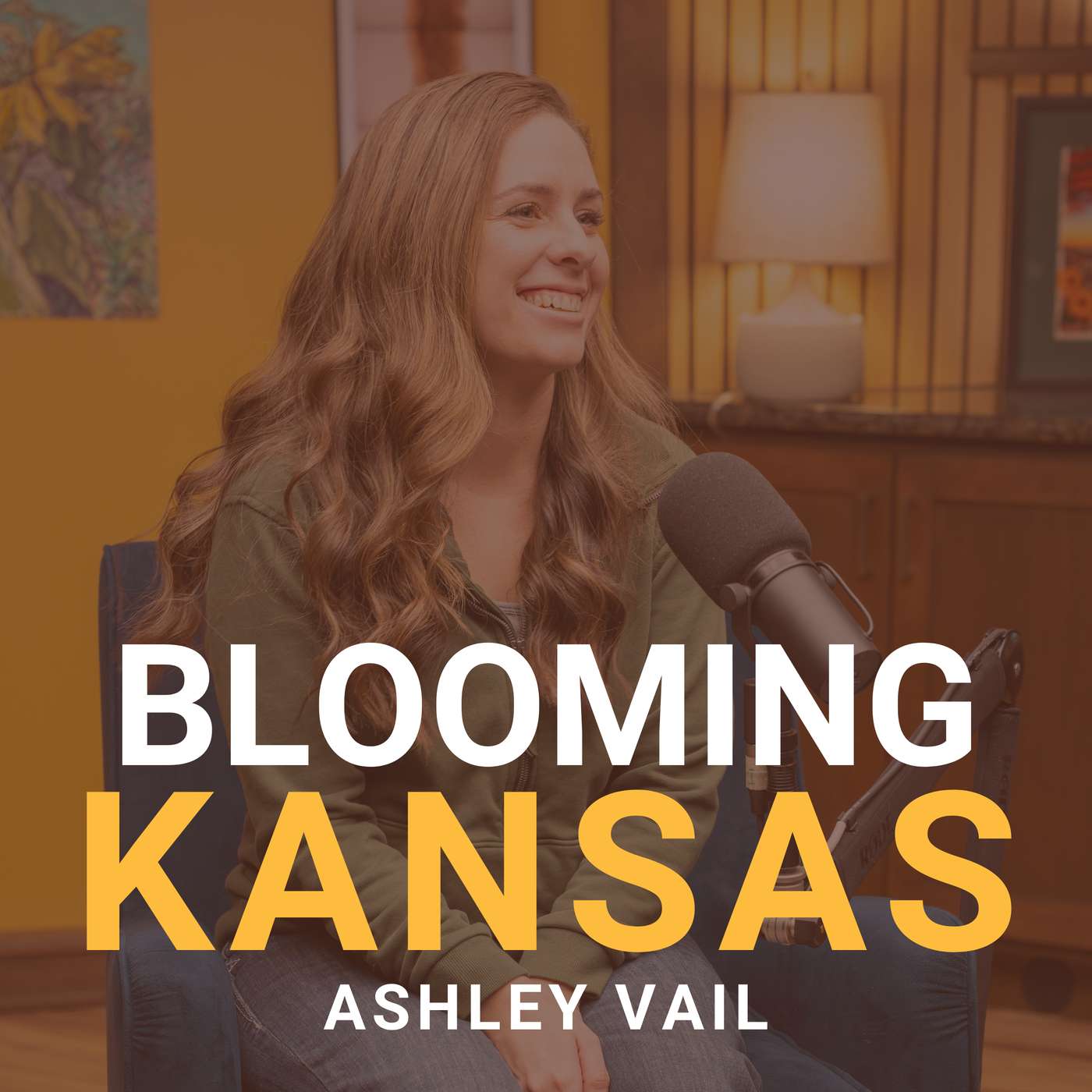
Field of Dreams with Ashely Vail | Blooming Kansan
Feb 2300:40:47Tap to summarizeEver wonder where those grocery store flowers actually come from? Most of us never think twice about it—until we meet someone like Ashley Vail, who turned a pandemic chicken hobby into a thriving half-acre specialty cut flower farm in Kansas. From planting nearly 2,000 peonies to surviving 110 mph winds, Ashley's journey proves that flower farming is way more intense (and way more rewarding) than you'd think.HIGHLIGHTS• A McPherson antique store's viral TikTok ad featuring Sarah McLachlin's iconic ASPCA song—but for abandoned antiques• How Ashley went from zero gardening experience to farming thousands of flowers on half an acre• The difference between annuals and perennials, and why Ashley's back is grateful for the peony pivot• Why Kansas weather is the biggest challenge for flower farmers (spoiler: it's not just the tornadoes)• The surprising number of flower farmers across Kansas—probably one in your county• How Bobcat let Ashley test drive a tractor for a week, knowing she'd never give it back• Why Ashley prefers being the grower over being the florist (wedding pressure is real)• The "reluctant farmer husband" phenomenon and how military training prepared Matt for flower farming• Victory Gardens during WWII: Kansas grew 17 million quarts of canned food in 1943 alone• Container gardening tips and when to plant: potatoes on St. Patrick's Day, tomatoes on Mother's Day, peppers by Memorial DayCHAPTERS[0:00] Local TikTok Find: McPherson Antique Store Ad That Cracked Us Up[1:02] Why the Ad Works: Sound Effects, Song Choice & Instant Nostalgia[1:53] Welcome to Ask A Kansan + Meet Today's Guest (Vail Family Farms)[2:53] Getting Set Up: Ashley Joins the Conversation[3:22] What Is a Specialty Cut Flower Farm? Size, Scale & What They Grow[4:41] Annuals vs Perennials: The Peony Pivot (and Saving Your Back)[5:58] How It Started: Pandemic Chickens to Full-On Flower Farming[7:40] Year One Reality Check: No Tunnels, No Tractor, Just Prairie Ground[10:22] Extending the Season: High Tunnels, Grants & Kansas Wind Survival[12:39] Selling the Blooms: Subscriptions, Farmers Markets & U-Pick Events[15:35] Bouquets & Weddings: Design Pressure vs Being the Grower[17:10] From Nursing to Farm Life: Making the Jump + Family Behind the Business[19:18] 'Reluctant Flower Farmer': Matt's Role and the Support System[19:60] Reluctant Farmer Husband: Military Life Meets Flower Farming[21:25] How Many Flower Farmers Are in Kansas? Finding Local Growers[22:14] The Biggest Challenge: Kansas Weather, Wind & Growing Zones[23:51] Support Networks & The Insurance Gap for Specialty Crops[26:23] Next 5 Years: Peony Expansion + Spring Crop Strategy[27:42] Building the Farm Brand on Social Media (and Keeping It Real)[29:32] Scaling Advice: Home Garden Tips vs Farming Thousands of Plants[30:44] Where to Find Vail Family Farm + Wrap-Up of the Interview[31:40] Post-Interview Chat: Farm Visits, Book Clubs & Photo Sessions[32:27] Theme Segment: Victory Gardens—History, Kansas Stats & Why It Matters[36:19] Planting Calendar & Container Gardening: Potatoes to Peppers[39:31] Final Thoughts: Gardening Trends + Subscribe, Newsletter & MerchRESOURCES MENTIONEDVail Family FarmInstagram: @vailfamilyfarmFacebook: Vail Family FarmLearn more about Victory Gardens: https://kgi.contentdm.oclc.org/digital/collection/p16884coll1/id/2183https://www.farmprogress.com/farm-life/victory-gardens-were-growing-all-across-kansas-during-wwiiLearn more about the podcast at askakansan.com!This show is part of the ICT Podcast Network, for more information, visit ictpod.net
Transcribe →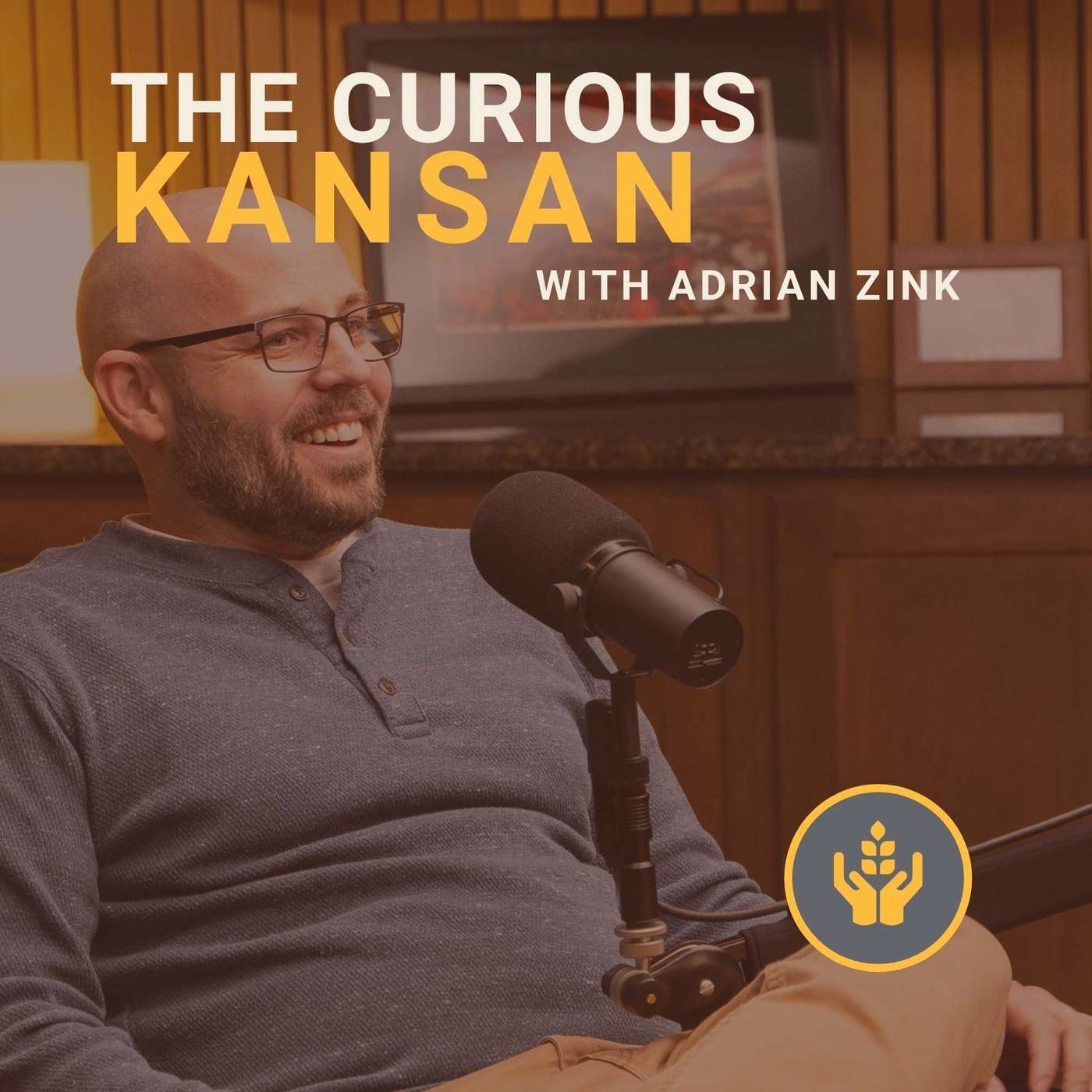
The Curious Kansan - Adrian Zink
Mar 17, 2025Tap to summarizeInterviewing Adrian Zink, author of Hidden History of Kansas and Wicked Kansas. He is a natural historian with a love of things odd and fascinating in his home state. Check out his books, available on Amazon. Links: https://www.adrianzink.com/ City: Larned City: Overland Park
Transcribe →