Podcast
Aspen Digital's Disinfo Discussions
Hosted by Diara J. Townes · EN
To inform the work of the Commission on Information Disorder, Aspen Digital is hosting a series of expert briefings around a broad range of essential topics related to disinformation called Disinfo Discussions. They are designed as a resource for the commissioners and the broader public and will cover issues such as Section 230, coordinated campaigns, algorithmic bias and education. Working in tandem with our Commission, these discussions will help make sense of the various facets of the information crisis.
Visit www.AspenInfoCommission.org for more information.
11episodes
Episodes
Newest firstAll episodes
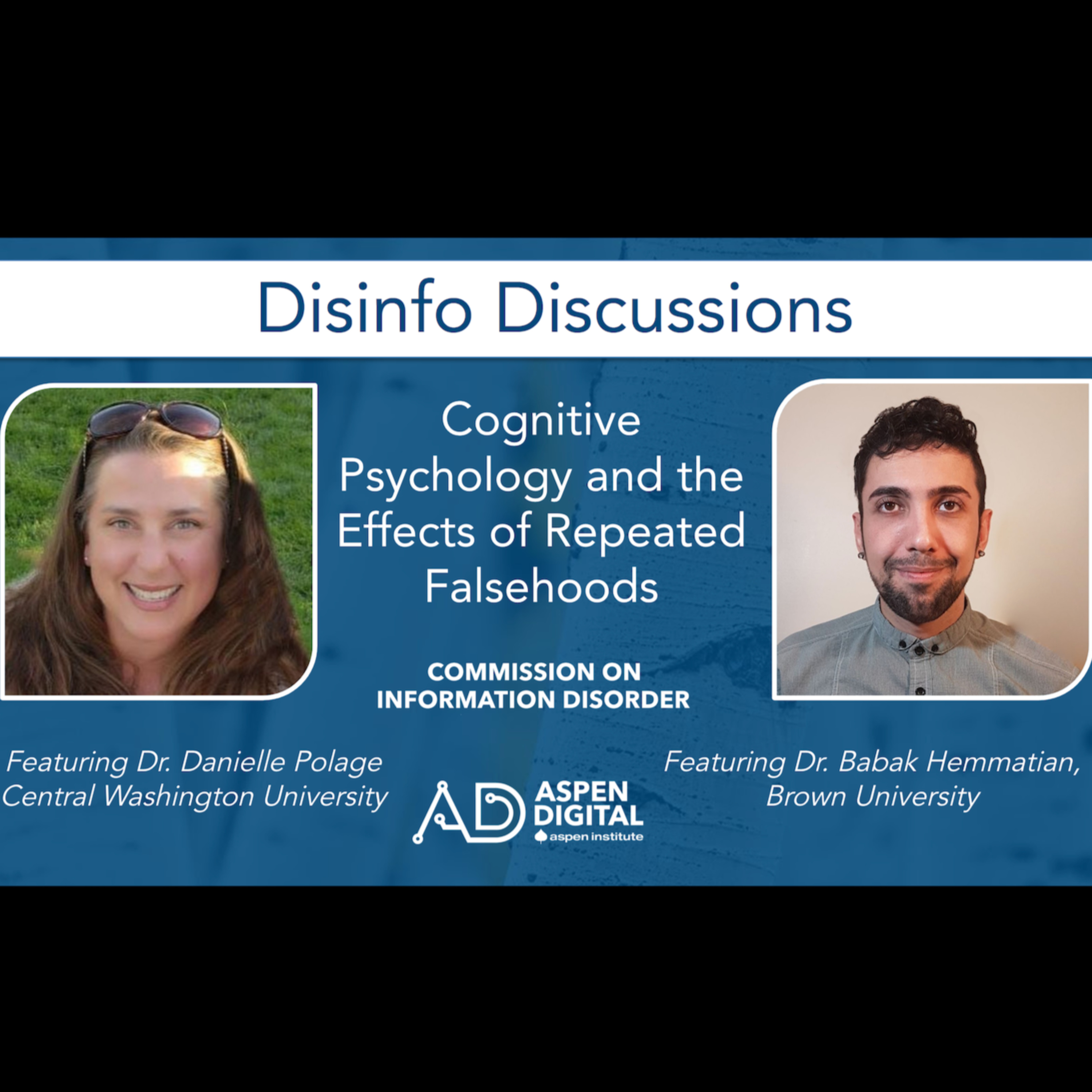
Cognitive Psychology and the Effects of Repeated Falsehoods with Danielle Polage and Babak Hemmatian
Jul 8, 202100:53:50Tap to summarizeTwo experts in the field of cognitive science bring an understanding to how the brain responds to false information online. Dr. Danielle Polage is a cognitive psychologist and professor at Central Washington University. She’s studied the impacts of false information in digital environments, and the effects exposure to repeated lying can have on an individual’s belief patterns. Dr. Babak Hemmatian has a Ph.D. in cognitive science and a Masters in computer science from Brown University. He studies how social narratives form and are negotiated using computational methods and behavioral experiments. His research dives into how people communicate and find consensus online. This session is part of an audio/video series of expert briefings on mis and disinformation hosted by the Aspen Institute in tandem with our Commission on Information Disorder to help make sense of the various facets of the information crisis called Disinfo Discussions. They are designed as a resource for the commissioners and the broader public. To learn more about Aspen Digital’s Commission on Information Disorder, visit www.AspenInfoCommission.org. Follow us on Twitter and Facebook @AspenDigital.
Transcribe →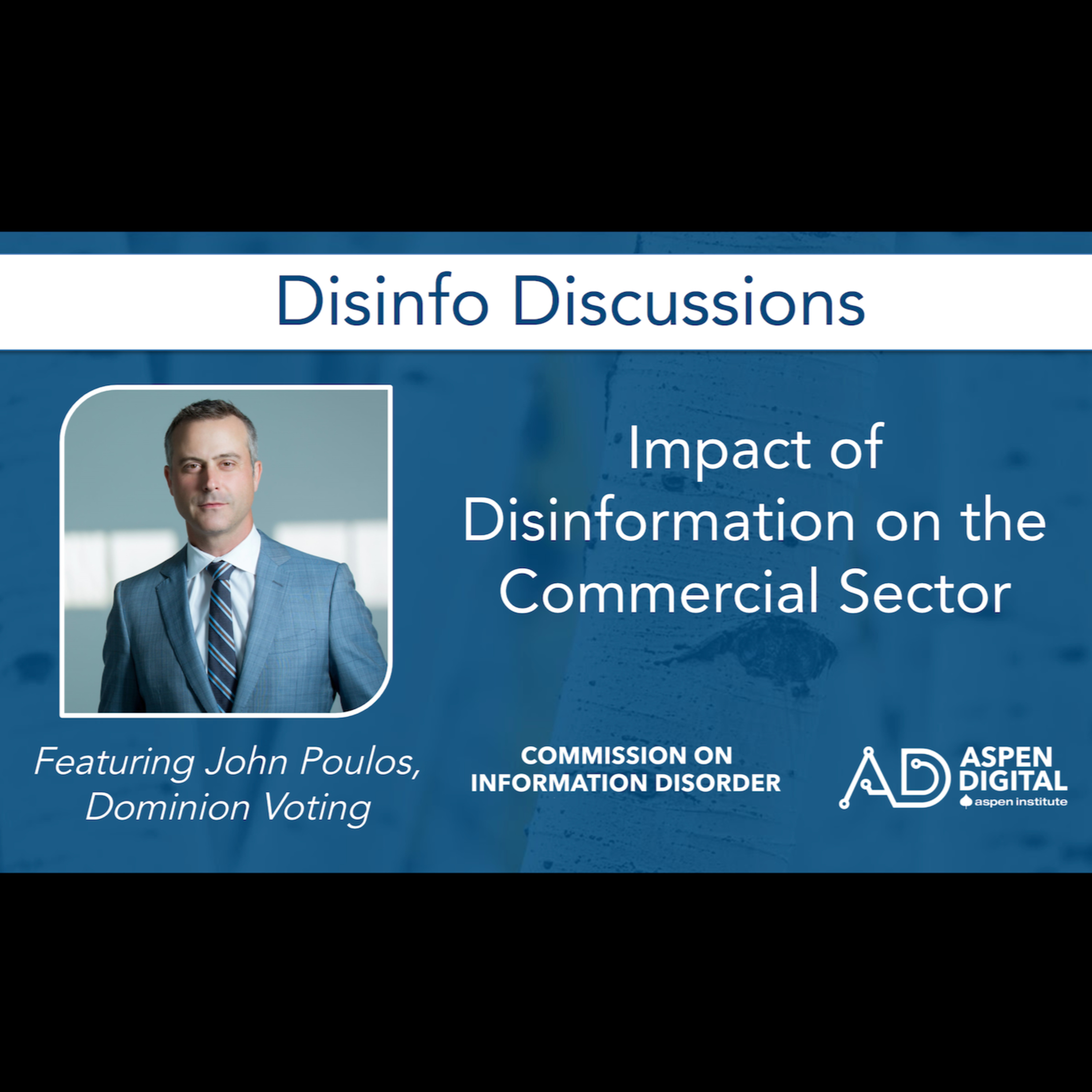
Impact of Disinformation on the Commercial Sector with John Poulos
Jul 5, 202100:39:54Tap to summarizeJohn Poulos is the President and CEO of Dominion Voting, a leading industry supplier of election technology across the United States. Dominion is one of several suppliers of election technology in the United States who became a target of rampant disinformation after the 2020 election. Poulos joined Commission Co-chair and former Director of the Cybersecurity and Infrastructure Security Agency Chris Krebs to discuss the effects the "Big Lie" had on his company and the active role business executives must play in preventing disinformation from spreading across their own organizations. This session is part of a video series of expert briefings on mis and disinformation hosted by the Aspen Institute in tandem with our Commission on Information Disorder to help make sense of the various facets of the information crisis called Disinfo Discussions. They are designed as a resource for the commissioners and the broader public. To learn more about Aspen Digital’s Commission on Information Disorder, visit www.AspenInfoCommission.org. Follow us on Twitter and Facebook @AspenDigital.
Transcribe →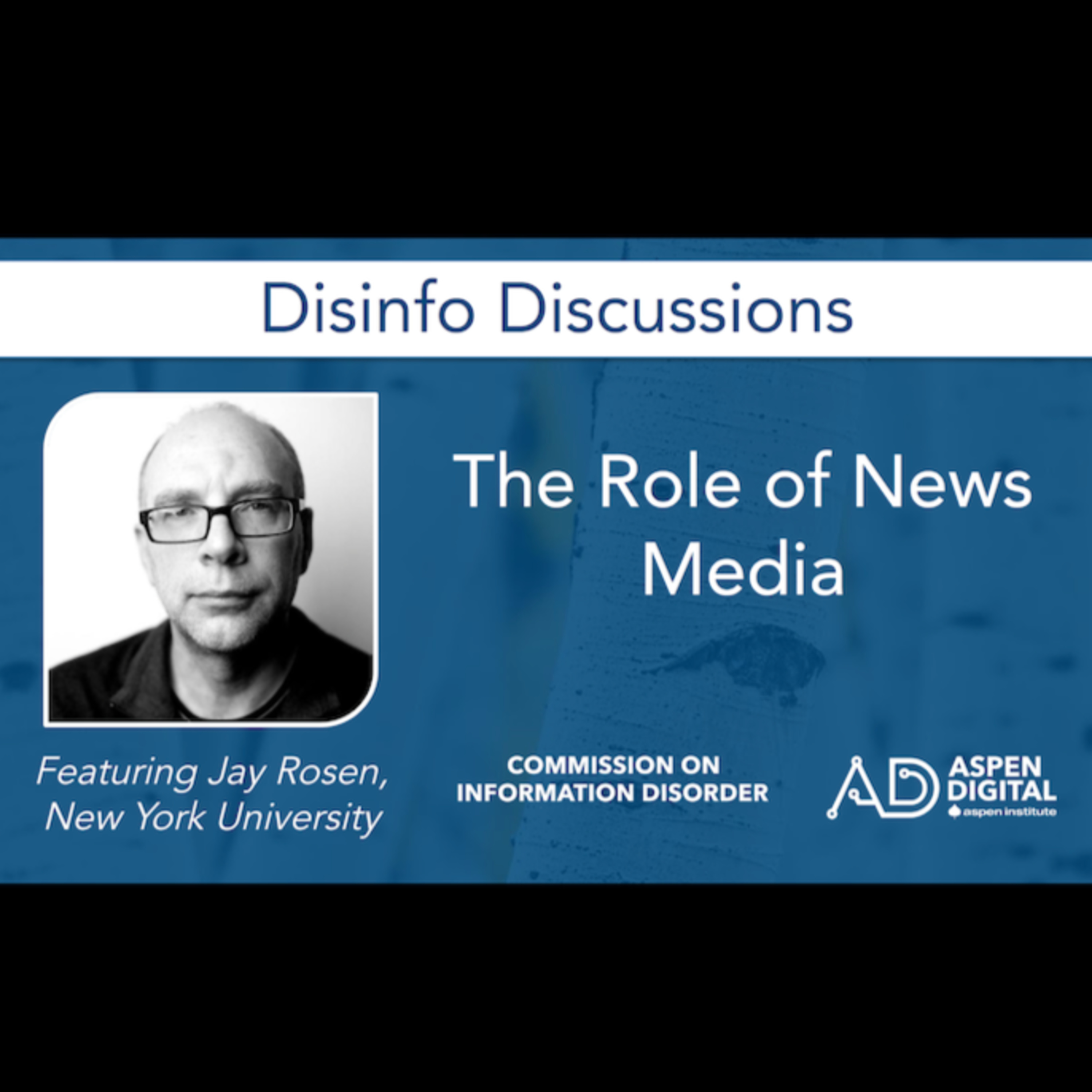
Disinformation and the Role of News Media with Jay Rosen
Jul 1, 202100:28:42Tap to summarizeJay Rosen is a long time professor of journalism at New York University. He is the author of the PressThink blog, and one of the great thinkers on the changing nature of journalism in the digital age. His work has appeared in The New York Times, LA Times, Salon, Harper's Magazine, and The Nation. He spoke on the challenges and opportunities around disinformation and the news industry with Aspen Digital's Executive Director Vivian Schiller. This session is part of a video series of expert briefings on mis and disinformation hosted by the Aspen Institute in tandem with our Commission on Information Disorder to help make sense of the various facets of the information crisis called Disinfo Discussions. They are designed as a resource for the commissioners and the broader public. To learn more about Aspen Digital’s Commission on Information Disorder, visit www.AspenInfoCommission.org. Follow us on Twitter and Facebook @AspenDigital.
Transcribe →
News literacy and Education with Alan Miller
Jun 28, 202100:22:57Tap to summarizeAlan Miller is the CEO and founder of the News Literacy Project. He examines the role of news literacy and education as an effective countermeasure to the spread of mis and disinformation, with Vivian Schiller. This session is part of a video series of expert briefings on mis and disinformation hosted by the Aspen Institute in tandem with our Commission on Information Disorder to help make sense of the various facets of the information crisis called Disinfo Discussions. They are designed as a resource for the commissioners and the broader public. To learn more about Aspen Digital’s Commission on Information Disorder, visit www.AspenInfoCommission.org. Follow us on Twitter and Facebook @AspenDigital.
Transcribe →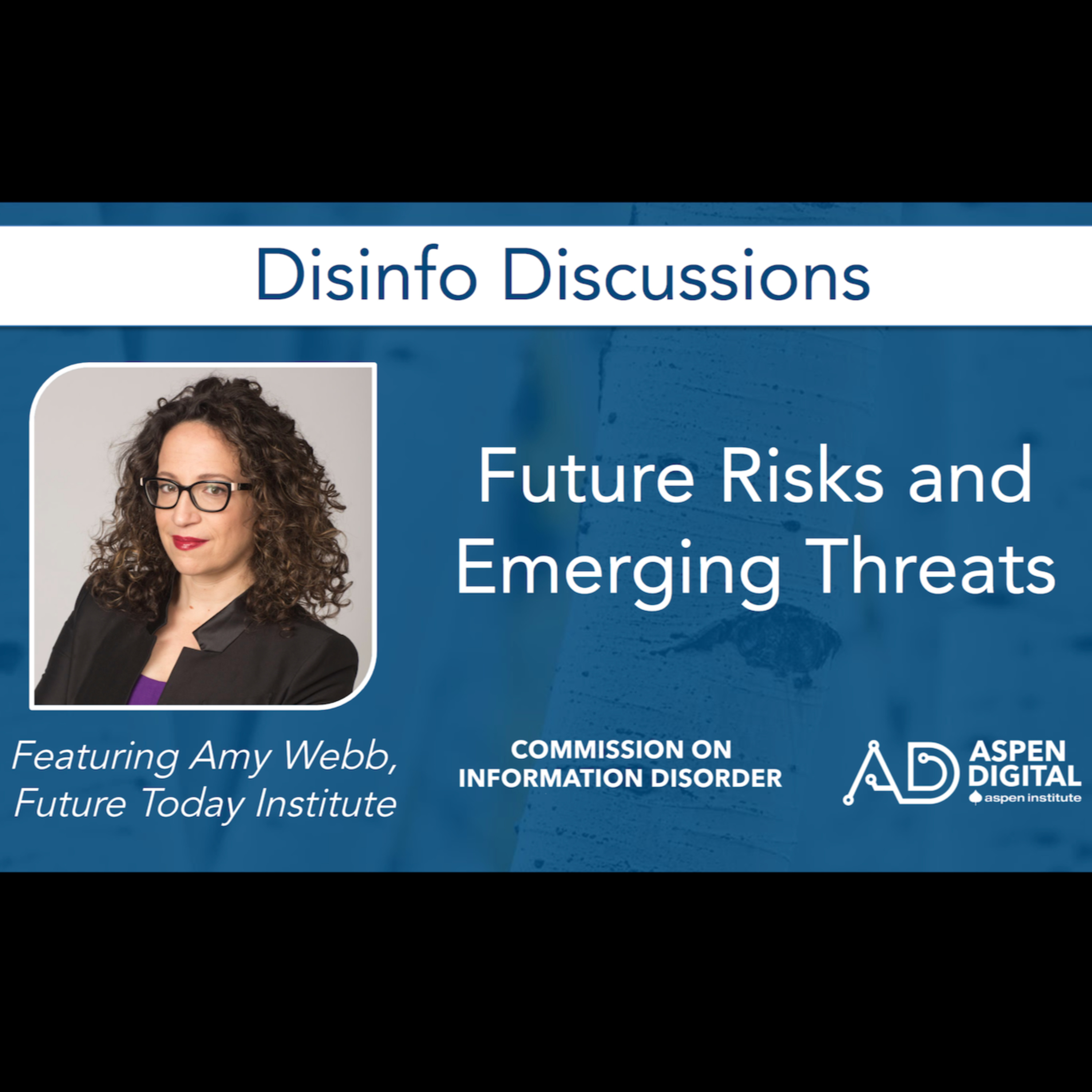
Future and Emerging Threats with Amy Webb
Jun 24, 202100:33:22Tap to summarizeAmy Webb is an American futurist and founder and CEO of the Future Today Institute. Amy’s work intersects with the risks and threats posed by new and future disinformation threats. She spoke with Aspen Digital's Executive Director Vivian Schiller on what we should be anticipating and what effective measures society can take today. This session is part of a video series of expert briefings on mis and disinformation hosted by the Aspen Institute in tandem with our Commission on Information Disorder to help make sense of the various facets of the information crisis called Disinfo Discussions. They are designed as a resource for the commissioners and the broader public. To learn more about Aspen Digital’s Commission on Information Disorder, visit www.AspenInfoCommission.org. Follow us on Twitter and Facebook @AspenDigital.
Transcribe →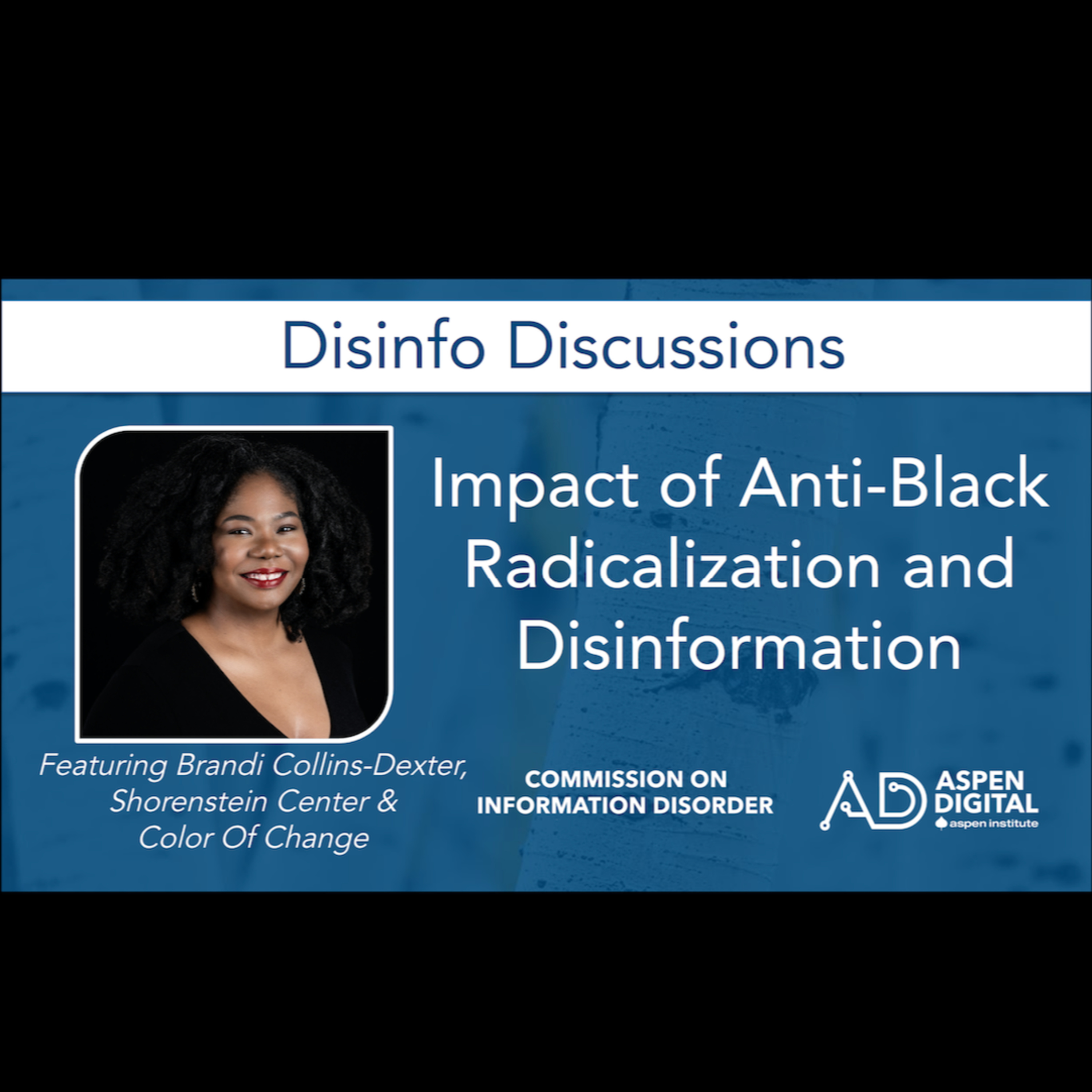
Impact of Anti-Black Radicalization and Disinformation with Brandi Collins-Dexter
Jun 21, 202100:54:40Tap to summarizeBrandi Collins-Dexter is a visiting fellow at the Harvard Kennedy School’s Shorenstein Center on media, politics and public policy, and a senior fellow at Color Of Change. She’s currently writing a book about the history and trajectory of Black political, economic and social power as it relates to the loss of offline Black-owned and controlled spaces. This session is part of a video series of expert briefings on mis and disinformation hosted by the Aspen Institute in tandem with our Commission on Information Disorder to help make sense of the various facets of the information crisis called Disinfo Discussions. They are designed as a resource for the commissioners and the broader public. To learn more about Aspen Digital’s Commission on Information Disorder, visit www.AspenInfoCommission.org. Follow us on Twitter and Facebook @AspenDigital
Transcribe →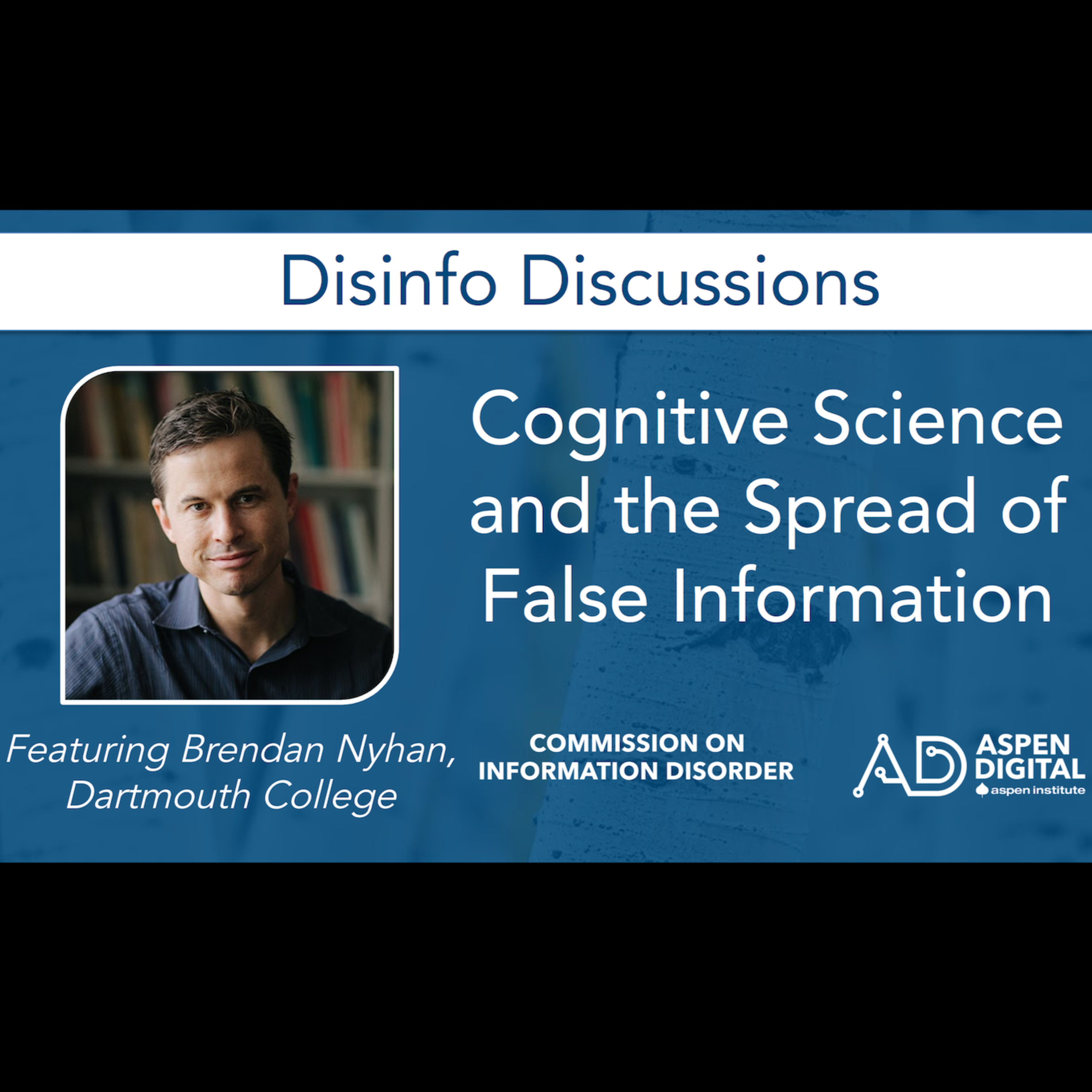
Cognitive Science and the Spread of False Information with Brendan Nyhan
Jun 17, 202100:45:45Tap to summarizeDr. Brendan Nyhan is a political scientist and professor of government at Dartmouth College. He spoke with Ryan Merkley, Aspen’s Commission on Information Disorder project director, about the effectiveness of misinformation countermeasures like fact checks on the retention of misperceptions, the US elections, platforms and the YouTube algorithm, and more. This session is part of a video series of expert briefings on mis and disinformation hosted by the Aspen Institute in tandem with our Commission on Information Disorder to help make sense of the various facets of the information crisis called Disinfo Discussions. They are designed as a resource for the commissioners and the broader public. To learn more about Aspen Digital’s Commission on Information Disorder, visit www.AspenInfoCommission.org. Follow us on Twitter and Facebook @AspenDigital.
Transcribe →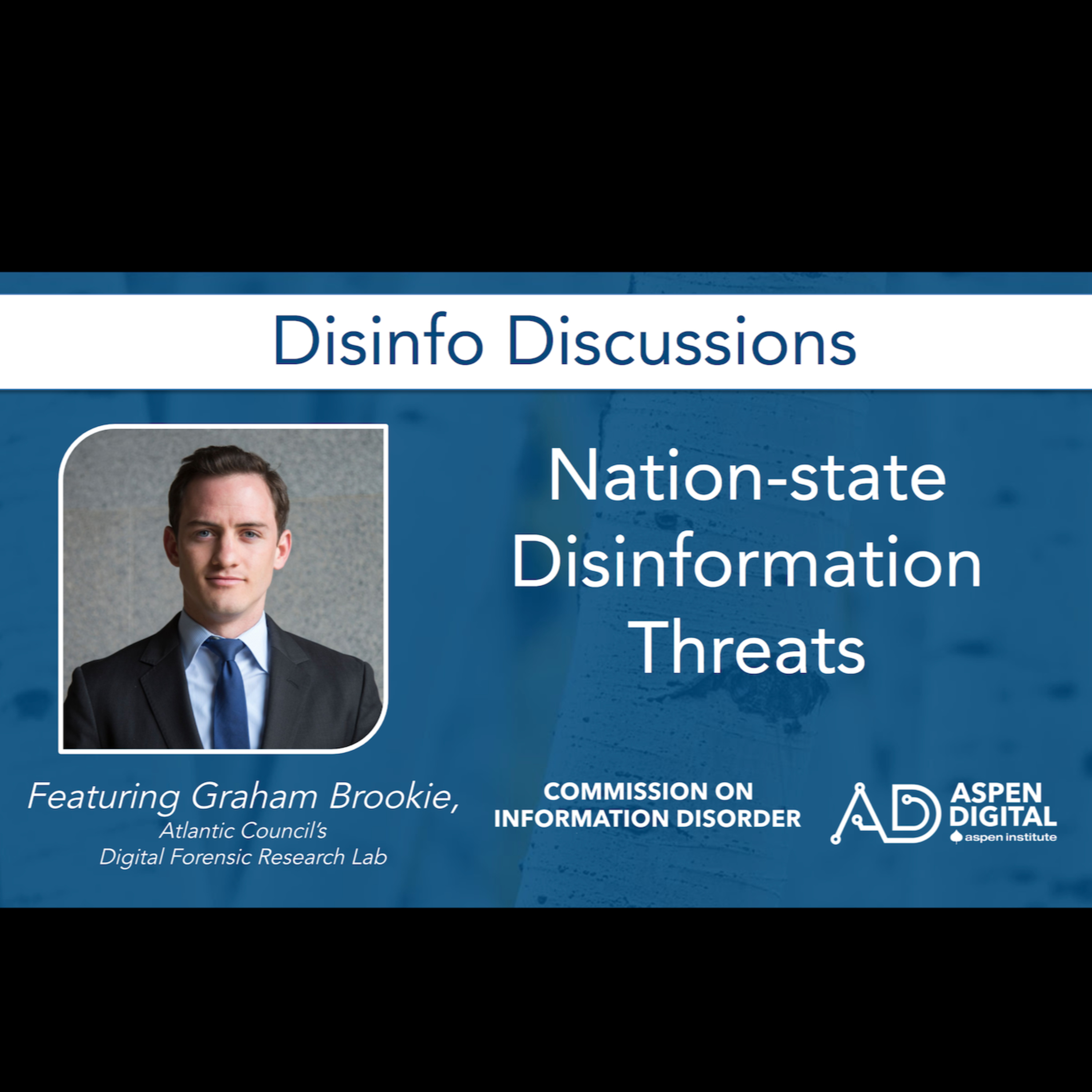
Nation-state Disinformation Threats with Graham Brookie
Jun 14, 202100:32:50Tap to summarizeGraham Brookie is the director of the Atlantic Council’s Digital Forensic Research Lab. He spoke with Garrett Graff, the director for cyber initiatives for the Aspen Digital program on how tech innovation and disinformation are affecting the global stage. This session is part of a video series of expert briefings on mis and disinformation hosted by the Aspen Institute in tandem with our Commission on Information Disorder to help make sense of the various facets of the information crisis called Disinfo Discussions. They are designed as a resource for the commissioners and the broader public. To learn more about Aspen Digital’s Commission on Information Disorder, visit www.AspenInfoCommission.org and follow us on Twitter and Facebook @AspenDigital.
Transcribe →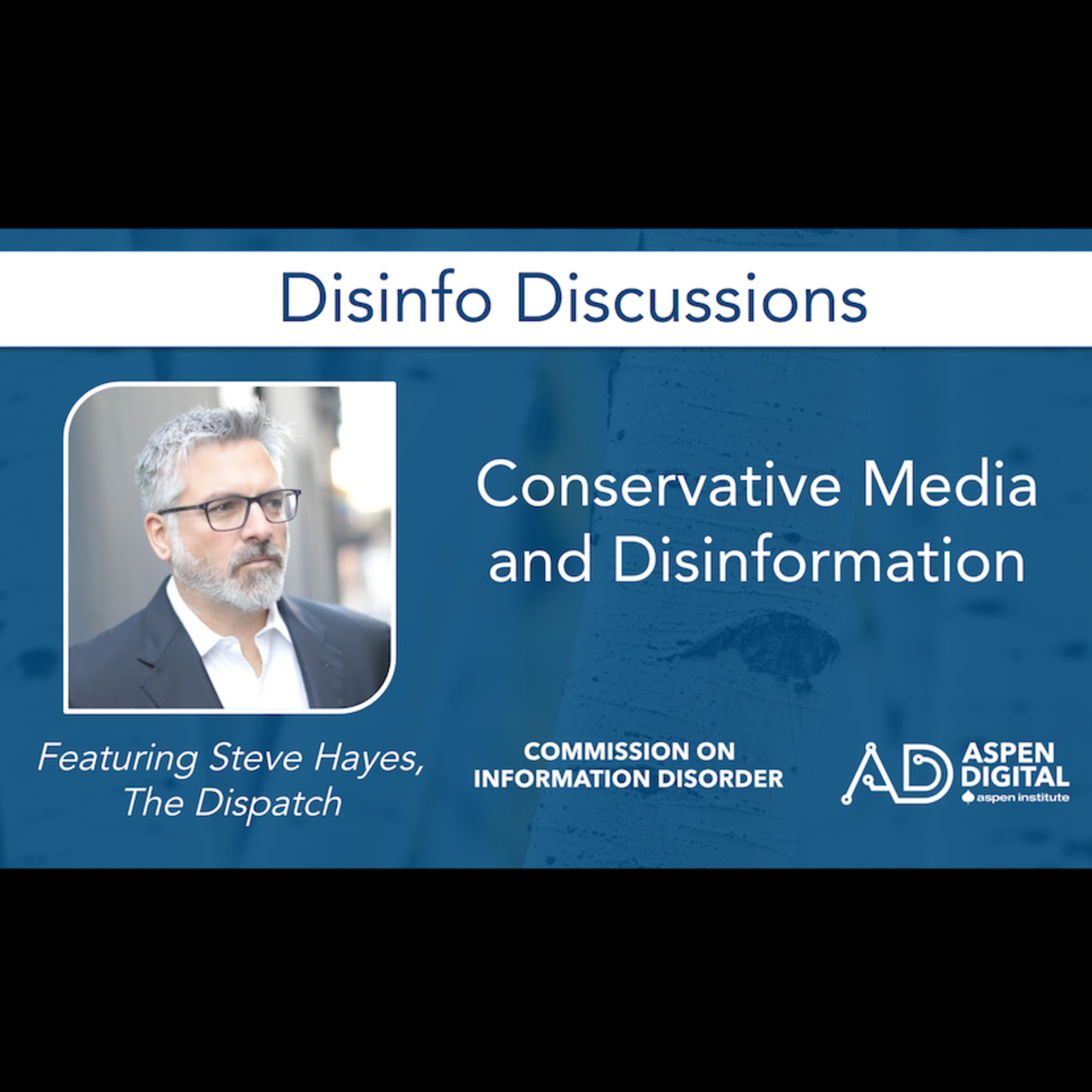
Conservative Media and Disinformation with Steve Hayes
Jun 10, 202100:31:51Tap to summarizeSteve Hayes is the CEO, co-founder, and editor of The Dispatch, a digital media publisher with reporting and commentary on politics, policy and culture informed by conservative principles. He spoke with Aspen Digital's Executive Director Vivian Schiller on the issues around conservative media and its role in an age of disinformation. This session is part of a video series of expert briefings on mis and disinformation hosted by the Aspen Institute in tandem with our Commission on Information Disorder to help make sense of the various facets of the information crisis called Disinfo Discussions. They are designed as a resource for the commissioners and the broader public. To learn more about Aspen Digital’s Commission on Information Disorder, visit www.AspenInfoCommission.org. Follow us on Twitter and Facebook @AspenDigital.
Transcribe →Disinformation, Technology & Polarization with Bruce Mehlman
Jun 7, 202100:42:26Tap to summarizeBruce Mehlman is the founder of the bipartisan government relations firm Mehlman Castagnetti Rosen & Thomas. He previously held the post of Assistant Secretary of Commerce for Technology Policy in the second Bush Administration and currently serves as Executive Director of the Technology CEO Council and Co-Chairman of the Internet Innovation Alliance. He spoke on the role technology plays in a polarized political landscape with Garrett Graff, the director for cyber initiatives for the Aspen Digital program. This session is part of a video series of expert briefings on mis and disinformation hosted by the Aspen Institute in tandem with our Commission on Information Disorder to help make sense of the various facets of the information crisis called Disinfo Discussions. They are designed as a resource for the commissioners and the broader public. To learn more about Aspen Digital’s Commission on Information Disorder, visit www.AspenInfoCommission.org. Follow us on Twitter and Facebook @AspenDigital.
Transcribe →