← Assembly Required with Stacey Abrams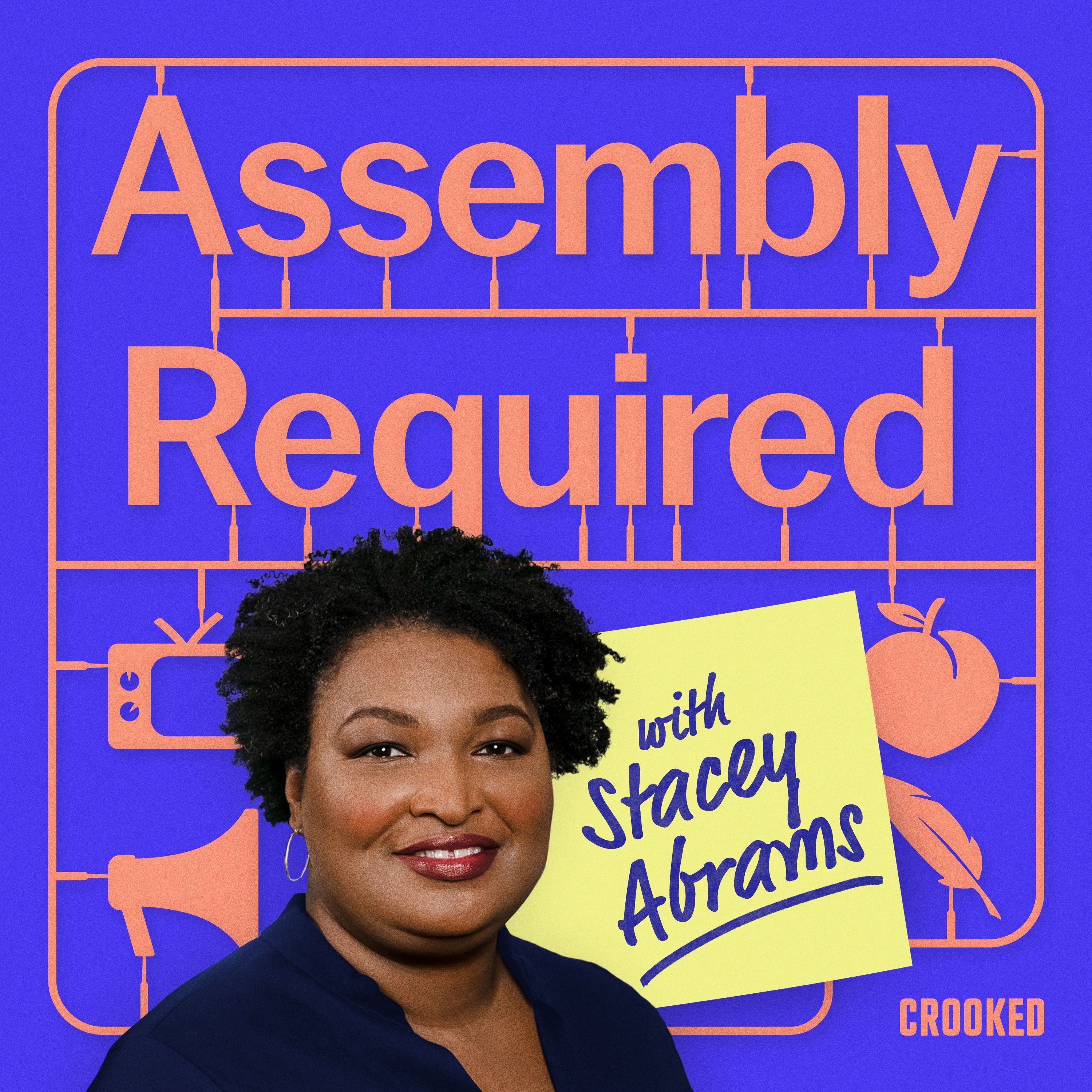
Loading summary
Transcript61 lines
- [00:00]
A
Assembly Required with Stacey Abrams is brought to you by Oneskin. You've heard me talk about Oneskin before, and whether you're someone who tries every new skincare product that hits the market or you've been using the same one or two things for years, at some point most of us realize our skin is evolving. And so must we. That's why I've added One skin to my lineup. It doesn't just make my existing routine better, it actually works differently than anything else I've tried. As we age, many of us experience visible signs of aging. Fine lines, loss of firmness, the dullness that creeps in over time. And One Skin's OS1 peptide was specifically engineered to address those. So you're getting everything you expect from great skincare. With OS1 doing something most skin care was never built to do, OS1's nighttime regimen is one of my best cheat codes. Just a few pumps of cleanser, dots of moisturizer, and a little bit of eye cream and my skin is ready for bed. Even better, I can see the difference the next day. Regardless of your complexion, skin safety matters. If you're not already using sunscreen daily, OneSkin's Face SPF is a great place to start. It's got those same skincare benefits from the OS1 peptide while giving you mineral SPF protection from UV exposure. One Skin's results are backed by four peer reviewed clinical studies, over 10,000 five star reviews and they've been recognized by Bloomberg as a leader in skin longevity. You really don't need a complicated routine to get healthier, younger looking skin. Born from over a decade of longevity research, OneSkin's OS1 peptide is proven to target the visible signs of aging, helping you unlock your healthiest skin now and as you age. For a limited time, try OneSkin with 15% off using assembly at OneSkin Co assembly. That's 15% off OneSkin Co with Code Assembly. After you purchase, they'll ask you where you heard about them. Please support our show and tell them we sent you.
- [02:19]
B
This is the story of the One. The one who keeps multiple buildings running smoothly day after day. Plumbing that flows, H Vac that hums. Cleaning supplies that keep surfaces sparkling. That's why she counts on Grainger. With easy reordering online and 24. 7 support, Grainger helps her keep the products she needs on hand so shelves stay stocked and buildings stay ready. Call 1-800-GRAINGER, click grainger.com or just stop by Grainger for the ones who get it done. Grainger knows when you're a procurement manager for an office park. You're not managing one building, you're managing all of them. And to stay ahead, you need to see through walls and around corners. Lights about to fail, filters ready to clog H Vac on its last leg. If you wait until something breaks, you're already behind. Count on Grainger for quality products, easy reordering and 24. 7 support. Call 1-800-GRAINGER click grainger.com or just stop by Grainger for the ones who get it done.
- [03:27]
A
Welcome to Assembly Required with Stacey Abrams from Cricut Media. I'm your host, Stacey Abrams. We spend a lot of time talking about the federal government because, well, the federal government is responsible for a lot of our lives. It's the common thread that weaves us into one nation, but the pieces that make America whole are the states and territories. It's that level of government that decides education, the economy, and who manages elections. All of them. Most federal laws in the 20th century were designed to bring states into alignment with uneven value systems, from voting rights to abortion rights to labor rights. For most of America's history, the quality of your citizenship has depended on your zip code on your state. Unfortunately, that disparity remains true today. But now the divides are more stark and the consequences are more critical. You see, a woman in Georgia or Texas might die from an ectopic pregnancy because of horrific anti abortion laws at the state level. The states of California, Mississippi, New York and Oklahoma have no minimum age for marriage. Yes, these states allow child marriage in 2026. From environmental laws to affordable housing regulations to how we treat the mentally ill, states matter. And who runs those states matter. I had the privilege of serving in the Georgia General assembly for 11 years, including seven as the House minority leader. As a Democrat in a Republican trifecta state, that means they control all branches of government. It would have been easy to give up before we even got started. But when I campaigned for the job of minority leader, I reminded my colleagues that I had been a minority for a very long time and I was really good at it. But when I got that job, I leveraged it to protect pre K from Republican erasure, to block water pollution legislation, working with the Tea Party and championing criminal justice reform. We worked together to stay stop terrible bills. But I also helped stop the largest tax increase on working families in Georgia history. Against the Republicans in power. I did it with a spreadsheet and a map. But more often than not, my job was to stop stupid, or at least slow it down as the authoritarian regime in Washington spreads its poison across the country. The this is no longer about stopping stupid. This is about defeating evil. And the states are a vital weapon in the fight for our democracy, in the fight to make sure our democracy delivers for our people at every level, especially at the lowest levels of government, but at the highest form of need. These stakes are incredibly high. But the laboratories of the states are our way of getting good done. And they're all around us inside our state legislative assemblies. And so here to discuss the power of state legislators and what we can do to engage with our state level leaders to make a difference, I'm excited to be joined by Daniel Squadron, co founder of the States Project and author of the forthcoming book the Fourth How State Government Can Save Our Union. And and he's a former state senator from New York. I'm also deeply honored to be joined by Pennsylvania speaker of the House Joanna McClinton. Daniel Squadron, Speaker Joanna McClinton, welcome to Assembly Required.
- [07:15]
B
Glad to be here, Stacey.
- [07:17]
C
Thanks for having us.
- [07:18]
A
Absolutely. So I want to spend this episode talking about the importance of state government, both from the vantage point of the legislative role, talking about the executive, but really talking about state government broadly, because we're at this moment where it feels like the federal government is all powerful and is clearly acting against the wishes and most importantly, the needs of the American people. I've spent a lot of time on the show really articulating how it's not just Trump and his Republican allies in Congress, it is the entire operation that makes up this regime. And they have been assiduously attacking participatory democracy and what it's supposed to deliver. And you both know they've been slashing programs, they have been undermining vulnerable communities. They've led us into these violent and costly foreign wars. And speaker, you in particular understand that what that means is that there's a direct impact on the people that you serve. And so I wanna start with this moment where people are feeling demoralized about the power that's been aggregated and how it's been used to change the direction of our country at the federal level, why state government still matters and why it matters more than ever. And so, Madam Speaker, I'm going to start with you. Give me the 32nd pitch on why state government is where the action is.
- [08:49]
B
So believe it or not, while state government is not as Sexy as Washington D.C. not on the news as much, not making all the headlines, first of all, we're in charge of elections. That's most important in this hour where you're tired, weary, overwhelmed. We all are, including us in state capitals. But we are in charge of every election. And every six months, no matter where you live, there is an election that your state authority is in charge of and making sure that you can lift your voice, that you can combat the chaos. We're all talking about this midterm that's coming up. Many of our states just finished a primary recently. But wherever you live, you may still have time if you're in New York. Right, Dan?
- [09:29]
C
Just getting started.
- [09:31]
A
Well, Dan, I mean, you wrote a book called the Fourth Branch, and it narrates how state governments can save our union. Start with your answer. Why does state government matter more than ever now?
- [09:41]
C
Yeah. And I love that because you're two parts of the question. Why do they matter in this moment? And why do they matter more than ever? And it really feels like it's more than ever. The three branches of the federal government are controlled by a movement that doesn't like representative democracy, would prefer that there are not competitive elections. In a world in which those were the only three branches of our constitutional system, we would be in even worse shape than we are. And I agree with you when you say that we are in bad shape, but it is not hopeless because the Constitution power in this country does have the independence of states. Now, my favorite kind of shorthand is in this country, the federal government didn't create the states. The states created the federal government. Now, that's been used for ill through our history and many, many ways, starting with the compromise that allowed slavery to continue beyond the Constitution being ratified. But there's nothing inevitable about the power of states that leads to racist laws or degrading government capacity to do good. And this is a moment when we need to flip that sort of script and have state government be the forefront of civil rights and a representative democracy. And it is possible.
- [11:03]
A
I mean, you're from New York. You're a former New York state senator, Speaker McClinton. You are the speaker of the House in Pennsylvania. I'm from Georgia, grew up in Mississippi. And so Dan was nice about how he alluded to it, but I'm from the region of the country that has really, really, really misused the idea of states rights. And it has been a proxy for stripping people of color, stripping women, stripping anyone that is seen as other of their rights. But it's also, I think, in this moment, an opportunity to use the power of the state to actually start to seize power back for the people. And so, Dan, I'll start with you as someone who spent so much time immersed in state government. What are some of the policies and day to day impacts in people's lives and that they may not realize are actually shaped far more by state government and state legislatures than by Washington.
- [11:54]
C
There's two levels on which the states matter I think more than anything else right now, and one is the one we were just talking about the very existence of democracy, but the other is the question you're asking. So if people just do a mental moment and think what is a domestic policy issue I care about? Probably a lot of folks who are engaging with this care about health care or good jobs. A full time job is enough to support a start of life and support a family or energy costs or climate or civil rights on any of those issues or a host of others. In the last 15 years, states have done more harm or good than the federal government has. The example here is not the most timely one, but for major policy impact is the last time the federal government did something on health care that was really important. It was passing Obamacare, the Affordable Care act, and even that required states to fully enact the expansion of Medicaid up into the middle class. Only happens if states do it. Today, 16 years later, nearly 100 million Americans don't have the advantage of that. So that's a good example. The other one I would say is the last time the federal government increased the minimum wage, it was like the same season, the same summer that the iPhone came out, they increased it to the princely sum of seven and a quarter. But for most Americans, minimum wage is much higher than that. Literally billions upon billions of dollars have been earned because states have raised the minimum wage in the intervening decades.
- [13:29]
A
This episode is sponsored by BetterHelp. For some, summer is their favorite season. Travel picks up and lazy days outdoors or trips to the beach are on the agenda. For others though, juggling all the activities can be tough and it can lead to overwhelm for many. They worry that they're wasting the days of sunshine. For me, the season is when I like to spend a little extra time with my family and friends. Whether I'm going on a family vacation or or just hanging out for a holiday weekend. As you find ways to take care of yourself during the season, check out BetterHelp. With over 30,000 therapists, BetterHelp is the world's largest online therapy platform, having served over 6 million people globally. And it works with an average rating of 4.9 out of 5 for live sessions based on over 1.7 million client reviews. BetterHelp therapists work according to a strict code of conduct and are fully licensed in the us. They do the initial matching work for you so you can focus on your therapy goals. A short questionnaire helps identify your needs and preferences and their 12 plus years of experience and industry leading match fulfillment rate means they typically get it right the first time. If you aren't happy with your match, switch to a different therapist at any time from among their tailored recommendations. You don't have to say yes to everything this summer. Find support in therapy. Sign up and get 10% off@betterhelp.com Abrams that's better. H E L P.com Abrams assembly required with Stacey Abrams is brought to you by Helix I spend way too many nights on the road and there's nothing like coming home to a mattress that knows you. Since I switched to Helix, a good night's sleep is always within reach. Buying a Helix couldn't be easier. They have free shipping in the US and seamless delivery right to your doorstep. Helix is the most awarded mattress brand tested and reviewed by experts like Forbes and Wired and you can rest easy with seamless returns and exchanges. Helix has a 120 night sleep trial and a limited lifetime warranty. The Happy with Helix guarantee offers a risk free customer first experience designed to ensure you're completely satisfied with your new mattress. With Helix, I am getting a better night's sleep and having better mornings. Go to helixsleep.comassembly for 20% off site wide that's helixsleep.comassembly for twenty percent off sitewide helixsleep.comassembly Madam speaker, you and I recently spoke to members of your caucus and members of the Democratic Party who were running in those primaries that you referenced. And one thing that struck me listening to you address that team before I spoke was how well versed you were in urban and rural issues and suburban and ex urban issues, how you knew mayors in small towns and community members who were stepping up to run for the first time. I would love for you to talk also about what you are seeing as someone who sits in what is not quite divided government anymore, but you rose from divided government to become speaker in Pennsylvania. What were the policies, what were the conversations that you had and how were you able to navigate those conversations not only to reposition the power in your body in the State House, but to really reposition power for the people.
- [17:17]
B
Absolutely. So one of the things that Pennsylvania was ranking almost the bottom nationally on was how we were taking care of our children, our kids at our public schools. Believe it or not, the States are the ones who fund public education. We appreciate everything that the federal government does. But the day to day for our brick and mortars, for our schools, it's up to the states to decide how many resources, how much resources rather are invested. In Pennsylvania, I learned in law school and I graduated 20 years ago, May 19, I learned it. So 23 years ago, I learned in education law class that Pennsylvania was at the bottom because all of ours is based on property taxes. So those who have really big, big houses and beautiful neighborhoods pay a lot of property taxes and have great school districts. And then people in communities like mine in West Philly, but also in rural parts of Pennsylvania, different counties, different townships, different boroughs, see buildings that haven't been invested in teachers that are paid classrooms. Unfortunately, some of them are crumbling, like physically crumbling. And so one of the things that we've been able to champion for the last few years, especially since I've been Speaker, is fairly funding every school, starting with the schools who are getting the least amount of state investment and increasing it. So it's not a Philly thing, you know, it's not a southeastern Pennsylvania thing. It's a Pittsburgh City school district thing. It's something that helps the children in Northumberland, you know, places that we've never even heard of in Pennsylvania because they're not as popular destinations, but they falling behind with being able to pay teachers, retain teachers and invest in the buildings. And that is something that we see transforming. It doesn't happen in one budget, but, you know, over five budgets, you will begin to see like significant changes in every day. And that's because of what's happening in Harrisburg across the aisle, Republicans and Democrats working together and making sure that our children, if we're going to push them to a bright future, we got to make sure what they see every day right now lets them know somebody in the government cares about you.
- [19:17]
A
Well, you just talked about being able to work across the aisle. And I know, speaker, you are in an evenly, more evenly divided house. Senator, when you were in public office, you guys had political majority, although there was an unevenness and ideological purity. And, you know, I was minority leader in the Georgia House, which was a Republican legislature under a Republican governor. And I used to say my job was to stop stupid or at least slow it down. But I also used to say that my job as minority leader was to first and foremost find ways to collaborate, then to compete. But ultimately in all ways it was accountability. And I raised that because when you talked for a moment, Speaker McClinton, about navigating and working with Republicans. One of the issues that we had to really think about were how do you navigate those really tricky political tensions both across party lines And Dan, to you, within your own party. And so would love to start with you, speaker, just talking about how do you bring coalitions together when your demise means their rise and when trying to work together feels hard. And then to you, Dan, would love to take the same conversation but talk about the internecine fights that we often had to you contend with.
- [20:37]
B
Well, it's challenging. You know, Dan mentioned the fact that minimum wage for instance, is a big win in many states all throughout the country. Sadly, Pennsylvania is on the F. We get an F with that, we're failing. Ours is still $7 and a quarter. Mind you. Every state around us though is much higher. New York's 15, New Jersey's 15, Delaware and Maryland are 15, Ohio's 10, West Virginia is nine. So that's one.
- [21:00]
A
We're 5:15 an hour, babe.
- [21:02]
B
Oh yeah. Now down in Georgia, man, I didn't even know that. So that brings some perspective when we go into caucus and hopefully there's a compromise this month. I'll say, well Georgia's is 5:15. But no, seriously, it's tough. But it starts with listening. Like when you talk about a coalition, first of all, Republicans love to say, well we're not voting for it because it's just gonna help kids in Philly or whatever the us versus them is. And we see right now in this White House constant us versus versus them. But if you start with listening and when you start with different organizations that go into areas where we might not be represented but can bring those constituents up to talk to their members and then we can follow up and talk to those colleagues about hey, I know this is an issue where you live and you know their sideline. They're not all front facing with a big rally and us holding a sign singing, you know, Kumbaya. It doesn't always work that way. But there are some smaller meetings sometimes in closed doors where when we're very honest about what our neighbors needs, our priorities are often the same. So maybe you don't want to invest as much because you think we should save money and put it in the rainy day fund. That's what we have here. Well, guess what, it's raining in schools. So we can't just keep putting off for tomorrow what needs to be done today and what our folks are sending us to this capitol to make us a priority.
- [22:20]
C
Senator, you know, I'm struck by and thank you that the title I only require my children to still use. So thank you, Leader Abrams.
- [22:28]
A
But look, once you have it, it's yours. Once you've gotten it, you get to keep it.
- [22:34]
C
I think there's something to that, actually, because I do think we should honor the service of public servants more than we do. And it's a hard thing, actually. Just very briefly, Speaker McClinton is doing a thing in the Pennsylvania House that we were unable to do in the New York Senate. With a bear majority in a bare majority, you are dependent either on the worst member of your party on every single issue, whatever that issue is, whoever the worst member is on that one, or you need to go across the aisle. And of course, going across the aisle when you're that close is hard because as you pointed out, Leader Abrams, your demise is their success. So even if they want to come help you, it's very politically hard. And Speaker McClinton has been like, it's been like wizardry to watch what's happened in Pennsylvania. And I sometimes joke about that. And speaker, you said to me before, like, yeah, but it's as hard as it looks. Don't call it wizardry, because it doesn't give credit for the chopping wood, carrying water of it all, which I know there's been a lot of in the New York State senate. In New York 2009 and 10, we had the first majority since basically the Great Depression. There had been one other sort of dysfunctional year in the 60s, and that worst member on every issue was so serious that we actually ended up in a tie, effectively, that shut down state government for 35 days, largely driven by a cast of characters who subsequently ended up in federal prison, not entirely, but mostly. And you really saw kind of how that partisan fight could happen, even though among Democrats, we didn't like each other. That same year, the year I was sworn in the Brooklyn Democratic Party chair on the day of my inauguration, I was a 29 year old, Beard wasn't gray, so excited I'd beaten a 30 year incumbent to get there. Pulls me aside and I said, leader is the leader of my party, my local party, where I'm from. Leader, I want you to meet my family. And he kind of pulls me aside, he says, hey, you're getting inaugurated today. You've got your family here. That's very nice for you. Enjoy it because it'll be your last one. And I was the 32nd Democrat, just like any other was. But leader, I have a real question for you on this because you were on the other side of it, but repeatedly were able to sort of break that timeline, but also be so clear about your values. Like, what did that look like?
- [24:56]
A
Well, I think, and I want to point out for folks listening, the reason I use Senator to talk to Dan and speaker to talk to Joanna. We're all friends, know each other well, but part of the dignity of this job is that once you get the title, they let you keep it because you may not have anything else to take with you. During my time as minority leader, I used to tell my colleagues, look, they call you leader to tell you the position you have within your caucus. They put minority in front of it so you don't forget whose power it really is. And for me, a lot of the work was trying to hold the caucus together. And I was minority leader at a time when we were at our nadir. We had hit the lowest number we'd had in 130 years. And part of my job was to knit together rural communities, urban communities, the most racially diverse caucus in Georgia history, and the tensions that come with all of that, and then go and deal with Republicans. And so what I would tell my team is, look, our first job was to find the places of agreement, because people don't care about your politics. They care about their lives. And so my job was to figure out what were the politics that people were worried about and what were the policies that we should be concerned about. And so to the speaker, education was one of them. My very first major act as minority leader was negotiating with the Republican governor to ensure the preservation of a scholarship When Republicans wanted to gut it and strip young people of color mainly of the ability to go to college. And they didn't say that, but we knew that based on the numbers, black and brown kids would have lost access to the scholarship and they were going to eliminate funding for pre K. And so I negotiated with a Republican governor and brought my caucus along to say, look, four year olds don't get a do over. And so we've got to invest. That was really contentious. And so to your point, Senator, it was a fight not only with in my caucus, it was a fight with the Democrats in the Senate because I was the leader in the House, the Senate leadership didn't agree with me. I told them what I was going to do and we had a few more people. So when we aligned with the governor on that issue, but we also got concessions. I think the second part to your question was finding allies that were unexpected but never compromised your values. And what I would tell my team, the young people who worked for me was that we might have to compromise our vision. We're not gonna get everything we want, but we never have to compromise our values. So let's know what they are. Let's know what we believe in and be so crystal clear on it and that we don't get caught up in the minutia or distracted by the politics. And so one of my favorite examples was that we stopped this terrible anti environmental bill that would have eroded stream buffers in Georgia and it sailed through the Senate. The speaker wanted it, the Senate Majority leader wanted it, the Lieutenant Governor wanted, the Governor wanted it, the Chamber of Commerce wanted it, they got it through the Senate. I think it was like the bare minimum amount of time it takes to hold something. But while they were doing that, I had lunch with the head of the Tea Party in the state House and I'm like, look, you don't believe in climate change? She's like, nope. I said, but you do understand property taxes. And who do you think is going to pay when the value of your property goes down? But the county still needs money. Do you think it's going to people, the ones who eroded the stream buffers or your folks? And I was like, look, we don't have to agree on why, we just have to agree on what. And I think to both of you, it's that decision to not have people have to share your beliefs, but to share your ambition. And the ambition there was to stop this bill and we killed this bill for three years and finally they just gave up and went home. But that would be my example.
- [28:57]
C
I just find that so inspiring. The same way I found watching Speaker McClinton's leadership inspiring in a way that politics never is. And I'm sorry to jump in, but just to say it, and if you look at Congress Since Gingrich in 94, you would think this country is just getting less and less focused on solutions, more and more a zero sum power struggle. The parties don't have any way to find that overlap of common ground. We've just heard two stories here that are really recent and it doesn't mean everything's butterflies and rainbows, but you know, there's 50 different timelines happening in this country and some of them tell us a different story. That maybe points to an answer.
- [29:43]
A
Assembly Required with Stacey Abrams is brought to you by acorns. Recently I introduced my college age niece and nephew to acorns to learn how to invest and save for the future. I helped them open an acorns account. And now when they hit certain goals, Acorn I make a small investment so they can learn how to plan for the future and grow their confidence. Right now, so many people are focused on where their money is today. Acorns is the financial wellness app that cares about where your money is going tomorrow. And with the Acorns Potential screen, you can find out what your money is capable of. Acorns is a smart way to give your money a chance to grow, and it's easy. You can sign up in minutes and start automatically investing your spare money. Even if all you've got is spare change, Acorns grows with you. Whether you're just starting out or thinking about settling down, Acorns supports your big and small goals across every life stage. The Acorns Potential screen shows you the power of compounding and how your money could grow over time. Plus, you can quickly adjust how much you're investing every day, week or month to make sure you're building toward your goals. Acorns is all in one no more finance apps cluttering up your phone. With Acorns, you can invest, save and give your money a chance to grow in one trusted place. Achieving financial wellness can seem daunting, but Acorns features make it easy. Their Roundups feature, which rounds your purchases to the nearest dollar and invest the spare change automatically, is a great way to get started. Sign up now and Acorns will boost your new account with a $5 bonus. Investment Join the over 14 million all time customers who've already saved and invested over $27 billion with Acorns. Head to acorns.com assembly or download the Acorns app to get started. Non Pay Client Endorsement Compensation provides incentive to positively promote Acorns tier 2 compensation provided potential subject to various factors such as customers accounts, age and investment does not include Acorns fees. Results do not predict or represent the performance of any Acorns portfolio. Investment results will vary. Investing involves risk. Acorns Advisors LLC and SEC Registered Investment Advisor View Important disclosures@acorns.com Assembly assembly required with Stacey Abrams is brought to you by First Day did you know small nutrient gaps can show up in ways you don't expect? Most of us have these gaps in our nutrition, especially with busy schedules and hurried meals. And it's hard to find the time to build a system to fill in the blanks. Enter First Day Multivitamins First Day's multivitamins have no added sugars, no artificial dyes, nothing unnecessary. I like that they are transparent about their ingredients and receive the Clean Label Purity award. Plus, they don't have a one size fits all approach. First Day actually makes different formulas for toddlers, kids, teens and adults. So it's tailored to your stage of life with everything going on around you. Take the guesswork out of closing the gaps in your nutrition. Just two gummies a day make it easy to stay consistent, which can be a huge difference. Over 1 million families use First Day. They also have a 45 day money back guarantee for a limited time only. Our listeners are getting an insane deal. Use Code assembly to get up to 57% off@firstday.com that's up to 57, yes, 57% off and a free gift with code assemblyirstday.com after you purchase, they will ask you where you heard about them and please support our show and tell them we sent you. Well, Speaker, I want to bring you back in because I think what the senator just said is exactly what you're showing. And I would love for both of you to respond because we're also watching this regime in D.C. weaponize state government and weaponize the projects that state government's responsible for. So Medicaid is the one that comes to mind for me. You both are in states with Medicaid expansion, but they've gutted Medicaid to extend tax breaks for the super wealthy. They've targeted blue states where they don't like the leadership and the policies. And so speaker, and then, and then, Senator, I would love for you to talk about the real world impacts of using the partnership between the federal government and state government. And speaker, if you can talk about why the state and the federal government are in partnership on Medicaid and why this political football that they've started tossing around is so dangerous for the people.
- [34:37]
B
Yeah, many times, especially when there's a delay to a start date, something terrible that's passed into law doesn't seem real because it's like, oh, you know, on this highway you're going to have to start doing 25 miles an hour. You'll get a ticket. But they don't start it. The minute you hear that there's a delay and they say, oh, this will start next year. And so unfortunately, with the big beautiful betrayal, it's what I call it, 300,000 of my neighbors in Pennsylvania, all across the state, mostly in rural Republican communities, will be kicked off of their healthcare start December of this year. So we saw a lot of news last year and it's so much for people to manage, folks taking care of their kids Caring for their parents, managing their households. No one is entrenched into the news like many of us are who are watching right now. So you hear about something being passed in Congress and you think, oh, who knows how that's going to hit? I haven't seen any changes yet. But what will happen this year in December is there will be changes. There will be children kicked off of health care, seniors kicked off of health care, and there will be hospitals who are already aren't paid enough to take care of us when we're sick, that won't be able to stay open as we go into 2027. I've had so many healthcare systems come to me and say, we've been in Washington. We appreciate the letters you sent to your federal delegation. We appreciate all you advocate for on the state level, but we likely will not make it through 2027 because people are going to come sick and we're going to get nothing to reimburse us for the care. And that, to me, is where it really will cause pain. But once again, it's a delay. It's not right away. So folks can't necessarily point the finger like, who did what? Well, it's this White House and it's this Republican speaker down in D.C. and how it impacts us at the state level is we need the federal government to foot the bill for most of our state healthcare. It is such an exorbitant amount, it's almost a third of our state budget, which is $54 billion. But most of that is from federal matching dollars. So the minute the federal government decides to scale back that health care and say, oh, we cut this here, so we give this billionaire tax cut and this billionaire tax cut, we are going to suffer for it because we can't create money. I always say I love Harrisburg, but we don't print money in Harrisburg like they don't print money in Albany, like they don't print money in Atlanta. They print the money in D.C. so we need the support from the federal government. And because they are, you know, deciding to choose the 1% over the rest of us, we will suffer. And it's not now, but it will be happening at the end of this year and going into next year.
- [37:08]
A
Senator, your book in Fourth Branch, you really do explore this partnership, this relationship. So I'd love for you to talk a bit about why it has been so effective for this authoritarian regime to weaponize the state governments and the responsibilities for these partnerships, like Medicaid, like education, in order to enforce their will.
- [37:30]
C
Well, because there's mutual dependence. You know, I my fear and one reason I wrote this book and have done the work at the States Project I've done is I think people assume the federal government is dominant and the state government is subservient. I think that someone in particular who seems to believe that is in the Oval Office. It's not true. But it's also not true that states can independently go solve all their problems. As the speaker just said, there's an interdependency and a mutuality that is the best of our constitutional system. When it works, it doesn't fully centralize power and it requires cooperation across all sorts of different experiences and geographies and economies. And so the federal government's basically falling down on its side of the ledger there. Even federally appropriated dollars aren't moving without politics, that's a disaster. That can mean that a state or a school district funded by the state with federal dollars will struggle to pay its bills for breakfast or lunch. You can't do 4 year old over again. You also don't ever want any child to have to experience a missed meal and God forbid a missed meal that the government's promised him or her. And it's true on larger issues like how universities are getting funded, what big projects are getting built. In New York we have big infrastructure projects, but I think the sort of the number one places that the Trumpian version of sole authority is just collapsing on itself is with district maps. He thought if I personally call some Texas state lawmakers up a thing, by the way, a Democratic president would never do actually talk directly to rank and file state lawmakers. Maybe we should all add up how many times we spoke to him. You all may have that, but you were all sorry, you were the average of somebody.
- [39:16]
B
Joe never called me when I was speaker and he was president
- [39:21]
C
and you were speaker of Pennsylvania, where he's from Scranton.
- [39:25]
B
And he said, hey, I need you to fix the next election.
- [39:29]
A
Yeah. President Obama never called to say please give me extra votes. And Trump was a little annoyed with me after he got into office.
- [39:40]
C
But there's, I mean, one thing to say about Trump is he does seem to notice state lawmakers more than others have actually, except for Reagan. Reagan would have alec, the American Legislative Exchange Council every year he would personally show up. But you know, so when Trump started the arms race mid decade on redistricting, you know, I think he thought, I'm the president, I'm going to push some states to follow my will and no one else can act. He of course was wrong We've seen California and Virginia. Despite the horrible politicized decision, we know that other places like New York and Maryland, Illinois, maybe even Pennsylvania, potentially it's possible to react to the unfairness over time, depending how things play out. But what you end up with is this really expensive arms race that lowers people's faith in government. At the end of the day, the net change, congressional seats won't be very much, but it's because there's not this understanding that in our system you need to figure out how to work together across the branches of government. It's a misunderstanding that if the federal government puts out an executive order saying, send us your voter lists, states will say, where do I mail them? And that's just not how we're set up. It's not what the framers wanted. They knew this was a fail safe against what we're facing. And now it's unfortunately one where there's kind of this clash. I'm not sure what the way out is. I don't know if either, sincerely, I don't know if either of you thinking about state power sort of have a path there.
- [41:08]
B
I was going to ask Stacy for some advice on that. Specifically, how can you suggest that we go into the second half of this year getting prepared in November where there could be more trickery and more games? I have neighbors, you know, they say to me sometimes, well, what happens if they cancel the election? Or what if he does something crazy and says we can't go out and vote? And what are you telling people on this, Stacey?
- [41:31]
A
So I would say there are three things. One, and it goes back to what you were saying, Senator. We have to remember the history and the difference between a Reagan and a Trump was that Reagan wanted to manipulate the states, but he did so from within the system at the bounds. But within the system, Trump has not only pushed the bounds, he has, and I keep using weaponized. But that's one of the reasons authoritarianism, especially competitive authoritarianism, is so dangerous. Competitive authoritarianism actually uses your democratic institution small D against themselves. So it looks at what powers exist not just in the middle, but on the fringes, and says, what can we do to exploit those powers or bastardize those powers in a way that you can't say exactly why it's wrong, but you know, it feels that way. But to both of your points, the solution then is the second thing, which is we gotta remember that the power is still ours, that the Constitution gives to the states the authority to control elections. There is no federal control of elections. What the federal government can do. It can seat members of Congress, it can accept electoral college votes from the states. And when the judiciary, when the Supreme Court and the judiciary decides to do its job, it can enforce federal law that requires a bit of uniformity or at least the illusion of fairness across the execution of elections. But the states control those elections. And so, speaker, to your question is number three, when people say they will cancel elections, there are two reasons they won't. One, authoritarians love elections. They love the pomp and circumstance and the pageantry of forcing people to come and, you know, pay homage to who they are. And for most competitive authoritarians, it works. Orban got, you know, shellacked in the last election. But by and large, authoritarians level elections, there's no reason to cancel them when you can corrupt them. And what we've been watching is the corruption. You know, Daniel, what you write about in the fourth branch speaker, what you've been working on, it's about how do you corrupt those elections? And the corruption works best when we don't remember that we are in charge. And so what I tell people to do is sign up to be poll watchers, sign up to be poll workers, register voters. We forget that registration is the path of port to participation. And if you want to overwhelm the redistricting that they've done in almost every place where redistricting has been used to weaken political power, to weaken minority power, to weaken communities of color, you have pockets of people who have never been asked to participate. Our solution set cannot be wielded purely by 26, but we can use 26 to galvanize for 27 for 28. I mean, speaker, you said it. There are elections every six months. We keep thinking we're only allowed to play with the pieces on the board. No, we've got millions of people. 90 million people did not participate in elections in 2024 who were eligible. That is an infinite number of people who can participate and change outcomes. But we spend so much time fighting over who showed up and what they decided that we forget. We got a lot of folks we can bring to the table. And I think that's the most important power that we hold, especially at the state level, because you guys know those neighborhoods, you know the streets where when the light changes, you know, you're like, please let me make it through the light. And I have to stop at that corner. Well, at that corner and around that corner are all the people you need to win back the power that they're trying to seize through redistricting. And now I will get off with my stuff.
- [45:23]
C
But that's even more true. Let me climb up and just hold on if I'm allowed for a second, because that's even more true at the state legislative level, you know, Speaker McClintock is Speaker because of 63 votes in a single district. 63 votes. Like, I think maybe one reason people don't vote or if they vote, they let themselves just, you know, doom scroll is they think their vote's not going to make the difference. In the federal level, you know, it may not. It's pretty unlikely. But in state level, in fact, in the book, I have two different cases of tied races. In fact, In Virginia in 2017, one more voter would have changed the majority. The speaker today in the Alaska House was originally elected in a tied race where he just happened to be the one the name picked out of the hat. So everything you say is true. And for anyone who says, you know, that's good and I want to be helpful, you're not a spectator when it comes to the state legislature. Your actions could change the literal outcome to have the kind of power impact leader Abrams just described.
- [46:24]
A
This episode is presented by Planned Parenthood Federation of America. We all deserve healthcare that is safe, supportive and nonjudgmental. But right now, that care is under attack. In a devastating blow to patients and our country's already broken health care system, the Trump administration and Congress passed a law to defund Planned Parenthood. Defunding Planned Parenthood would jeopardize health care for 1.1 million patients across the country. Without access to Planned Parenthood health centers, cancers will go undetected, STIs will go untreated, and patients will won't get the birth control or abortion care they need to plan their families and futures. Millions of people with low incomes, women, black and Latino folks, LGBTQ and rural communities could lose access to affordable health care. But Planned Parenthood isn't backing down. They're still showing up for patients, helping provide essential care and making sure everyone can access the the life saving, life changing services that they need. Alongside people like you and me, they fight every day to build the future we deserve, one where everyone can get the care they need, no matter who they are or where they live. As a longtime defender of abortion access and reproductive health care, I understand exactly how vital Planned Parenthood is in our communities. Donate now to support planned parenthood@plannedparenthood.org defend when you're a maintenance engineer in a
- [48:10]
B
beverage manufacturing plant, you keep production lines moving and quality on track because there
- [48:16]
A
is no room for slowdowns. With Grainger's vast selection of high quality
- [48:20]
B
motors, sensors, belts and hard to find
- [48:23]
A
parts, you can get what you need fast and all in one place so nothing gets in the way of getting the job done.
- [48:29]
B
Call 1-800-GRAINGER clickranger.com or just stop by
- [48:33]
A
Grainger for the ones who get it done.
- [48:38]
C
Tired of overpaying with DirecTV? Dish offers a reliable low price every month without surprises. Get the TV you love and start watching live sports news and the latest movies, plus your favorite streaming apps all in one place. Switch to DISH today and lock in the lowest price in satellite TV starting at $89.99 a month with our two year price guarantee. Call 888, add dish or visit dish.com today
- [49:10]
A
and speaker take I'm going to put you on the soapbox standing next to us. Let's also talk about why it matters that Pennsylvania care about what's happening in Tennessee, what's happening in California, how all of our fortunes are tied together. Because one of the hallmarks of your leadership is that you might be from West Philly, but you go everywhere and you talk to everyone. I'd love for people to understand why state legislative leaders are, I think, the glue that can actually bind our union back together.
- [49:37]
B
Well, I'll tell you what to see that rush redistricting in Southern states like Tennessee, like North Carolina, Louisiana, Florida didn't even wait for the decision. They just decided to do their own thing ahead of it. In Alabama, I'm seeing all of my friends, Leader Abrams, who are state senators in Tennessee and in Alabama and in Louisiana, rising up, advocating fighting on the floor of the House, some of them getting taken out with protesters, but understanding that their leadership in this hour is so integral. And I'm not just watching it, I'm also sharing everything that I see because I want people in Pennsylvania to know that no, this isn't happening here. But to Dan's point, we're one vote away, one vote away, and one Republican governor away from seeing complete chaos here under this dome too. It could happen here too. You can never say, oh, that could never happen in pa. Yes, it could. It absolutely could. And we have to care because when votes are diluted in Southern states, that means that, you know, Speaker Jeffries next year will have less people on his team that can fight for the good things we all care about, how we can restore the health care cut, how we can figure our way out of this mess, how we can do the appropriate investigations and of course, move forward with impeachment because what we've seen is wrong, it's unconstitutional, it's illegal. But we can't have power diluted in other places and think that doesn't impact us. We can't say, oh, well, that's down in Texas. No, it impacts us in Pennsylvania because they're all coming to Washington, D.C. to make regulations that impact all of us. Even if you think, oh, I haven't read the news, it doesn't impact me, it does. So we have to wake. We have to listen. And many times you do think like, oh, you know, there's an electoral College. But to your point, in state and local races, every single vote is the deciding vote in a district, in a mayor's seat, whatever it is that you think, like, oh, your vote doesn't count. Yes, it absolutely does. And we will be able this fall to let everybody know anything that you like. And most of us just haven't liked. I was telling a congregation where I was preaching this weekend. I read a meme over the weekend that says, seems like this president's been the president for 12 years. It's only been a year, a couple months, the whole church busts out laughing. I'm like, well, it's true. We all feel like we can't breathe. We're suffocating because of the nonsense and the madness. But in the same point after service, the pastor and I were talking about, but this is our moment. This is still our moment to rise. This is our moment to have beauty for ashes. This is our moment to have voices that have not been heard previously saying, oh, no, I'm running to that poll come Tuesday, November 3rd, because I don't like authoritarianism. I want to live in an America that's fully democratic and that no president is trying to steal the next election.
- [52:30]
A
Amen. Senator, can you talk about the state's project? Because picking up on the speaker's point, and I really do mean that. Amen. Can you talk about what are the ways. And you do this beautifully in your book, but you also do this through the states project. I want to shift for a moment and talk about where are the areas where, if we do it at the state level, it makes more sense to tackle these issues and it makes more sense to revive the commitment to democracy rather than waiting for the federal government to get its act together. Where can the states and where can the state's project do its greatest work?
- [53:08]
C
Well, not to be a New York homer here. And I know in this group especially, it's not going to go well for me. But. But New York was after the Triangle shirtwaist fire, the place that really was the cutting edge, not just among states, but for the country in some ways, the world on worker protections. Frances Perkins, as a New York state official, imagine that. Basically put together the pieces that became the New Deal when she went and became the first female member of the cabinet under Franklin Roosevelt. And so it's not like we've never done it before. And you see that with the expansion of civil rights, too. I came into office at a time that marriage equality in the country was a thing being driven forward by states. Fits and starts in New York, but well before the Supreme Court did. So I really believe this, that for any individual, I used to say any individual, unless you're a billionaire. But I actually have to say at this point, point, I think for any individual, period, any minute or hour or dollar you have, you're going to have a bigger impact on the issue you most care about, and that is any domestic issue at all. We've been talking about the core of democracy. We've talked about minimum wage. We've talked about climate. We've talked about energy, we've talked about jobs. We've talked about schools. We could talk about civil rights, like the expansion of marriage equality. We can talk about higher education, roads and bridges. You know, traffic, really, some people say, well, you know, people just care about traffic. People should care about traffic. They spend a lot of their lives in it. And states have a lot to do with that. You know, I'm sorry to sort of get sputtery, but there is not a single domestic issue. I've been asking this question for about 15 years, both in office and at the state's project. Tell me a domestic issue you care about and I'll tell you how states can do more gun safety. I'll just keep doing it. So the states Project, we try to bring all that together. And luckily my team and leaders are less sputtery than I am. So they do a great job of really figuring out where you can target shifts in power as part of a civic process of saying you're going to have the most impact you can, which state might shift who's in power. I mean, just imagine. Leader. I think about this sometimes. If you'd ever been able to be the speaker in Georgia or how incredible it is that you are the speaker In Pennsylvania, Speaker McClinton, and that's the change you can make by flipping 100 votes, raising some amount of money. We have a Giving Circles program Of let's people come together and do that at the state's project and they get to choose their own state, they get to choose their own name and they get to see their impact. But I think it's also true on issues. I used to say to people when I was in office, you can get 100 people on that issue you're talking about. You don't need me. Go Lobby Albany for one year, just 100 people in a neighborhood, one way or the other, it will be on the tip of people's tongue at the end of next session. It may pass, it may not. Life is complicated. Legislating is hard. But you will make it a top tier issue. And I try to give sort of a path for that in the book as well. So the stage project path is to really focus on power through elections and then to help great state lawmakers have the tools they need to govern well. But you can also start your own action circle on the issue that you and your neighbors most care about. And if you commit to it for a year, I'd be shocked if it's not an issue that the governor themselves has to decide whether to reject or accept a year later.
- [56:40]
A
And Speaker, I want you to pick up on that because what the senator just said is so true. I know in my day If I got 10 or 15 emails about an issue in a day or over the course of a week, that felt huge. And that was before the real expansion of social media. But we also, it was before this sort of, you know, the news of the day became news of the last seven minutes. Can you talk about why that hundred people, if that metric makes sense, why that hundred people can really have an impact and the level of public engagement that tells you that an issue is resonating and it should be top of mind for you and your colleagues.
- [57:19]
B
Absolutely. So Pennsylvania is a little unique because like New York, we're full time legislature, so we're not in a 28 day or 60 day or 90 day session. We can be found here, you know, most months of the year. And if neighbors have the capacity to meet us here or we have district offices like our New York friends, meet us in our district offices, talk to us multiple times, it will in fact become a part of someone agenda. So whoever is representing you, whoever your senator is, if you do a handful of visits, okay, they know you because believe it or not, while we serve smaller communities, Congress serves almost a million people. My district is 65,000 people. I'm seeing them in the supermarket at the rec center in the neighborhood while I'm going for a walk, they're beeping the horn and they're like, oh, that's your little dog. I didn't know you had a little dog. So we're closely knit in our communities. We serve a smaller group. So if we are able to run into you at the graduation where your kids walking across the stage. I'm one of several commencement speakers and you talk to me about it again and I'm putting you in touch with someone in the office. We are able to collaborate together. It means a lot. I've got some social workers coming up to the Capitol for the first time. I was their guest speaker early in the year and they are calling themselves a culturally competent providers and they giving me all these ideas rapid fire. And I'm like, have you all ever been to Harrisburg? They're like, oh no. I'm like, why not? I'm like, I will help you plan your first advocacy day, but you have to get in front of more of my colleagues so that we can be educated on the things you're saying and we can better invest into your priorities because if we are not able to hear from you, it's not on our agenda.
- [59:00]
A
Okay, I'm going to give you guys the last 30 seconds each to do something we love to do here on assembly required and that is give homework. We've now told our listeners that they have to be part of a new advocacy squad. We've told them it takes 100 people to get it done. So I'm going to start with you, Speaker. What should listeners do in the next 90 days to get prepared to make their issue your issue?
- [59:28]
B
So if you want to make your issue my issue over the next 90 days, I want you to find out exactly who your voice is in your state capitol. Who is your person representing you, who is your state rep, who is your state senator, who is your member of Congress. And then on a local level, because sometimes the local folks escape us and they might live right on our block. Who is your member of local government? Maybe that's council, maybe that's a commissioner, depending on where you live. And then find out which of your neighbors is also going to join you in advocating on this issue. There's a little area in my block where we needed stop signs and it took all of us over years, but we had to work with our local government because the state can't do that. It wasn't a state highway, but we were able to get it done. So we are witnesses that our voices collectively can do anything positive can create the change. So stay in the fight. Find out who your folks are and then bring someone else along.
- [60:22]
A
Senator, you get the last word. What should they do?
- [60:24]
C
You know, people like to pretend that politics is three dimensional chess. I'm not smart enough for that. I just like playing Connect 4. So find four friends and decide what impact you want to have. Is that an important issue in your state? Is it another state with those four friends? Strategize how you are going to build a larger group. You are going to get your local elected officials involved. You're going to go up to your state capitol and you're going to raise some dollars. It doesn't need to be big dollars, just the number of dollars that your network can get. And you're going to stay completely focused on it for one year and at the end of the year you're going to have had more impact than you ever could have imagined. If you want more specifics on how to do that either politically with the state's project through giving circles or just your own State Action Circle 4th BranchBook.com is a way to actually get some of the shorthand on the Take Action guide. The number one thing I'd say is state politics isn't that fun a lot of the time. It's often absurdly unpleasant, but it's always inspiring because it is. So much more happens based on the choices individuals make, whether they're individuals in office or individuals who want to make a difference than we ever learn in politics. And I think we just had a conversation that was fun and inspiring about politics. Not because we ignored that things were burning, but because this is an area where we actually have some fire hoses.
- [61:48]
A
Former senator and current lead of the state's project, Daniel Squadron. Extraordinary speaker of the House and State of Pennsylvania, Joanna McClinton. Thank you so much for joining me today on Assembly Required.
- [61:59]
B
Thank you.
- [62:00]
C
Thank you. It was fun.
- [62:09]
A
As always at Assembly Required we give you actionable tools to help make a difference. First, be curious. Let's all pick up a copy of Daniel's book the Fourth How State Government Can Save Our Union to learn more about the power of state government and check out the chapters at the end on how to take action at home. You've got homework number two, let's solve some problems. We need more people who care about their communities. Running for state and local office. Run for Something helps to recruit, train and elect young people. Organizations like Emerge and Emily's List support women candidates and new American leaders. Helps immigrants and refugees run for office, so find them and sign up. If you're interested in getting more involved in these local races, organizations like States Win and the States Project can help you take action in support of local candidates. And third, of course, let's do some good as schools let out across the country, children will face a summer without school lunch and that's sometimes their only meal of the day. Please consider donating to your local food bank or supporting no Kid Hungry atnokid hungry.org I want to say thank you to those of you who continue to share questions and comments about what's on your mind and what you want to know more about. You're doing it via my substack Assembly Notes at Crooked Media's Discord and on other platforms. So keep the questions and the comments coming and tell others about us and also add us to your feed. Let me know what episodes resonate and what you want to learn more about. We do pay attention to prove it today, I want to say thank you to pipandbusterbrown2278 who commented on our last episode. Pip and Buster said, OMG. This is such a great, insightful AI discussion. Amazing perspectives about what is happening right now. Thank you. I I needed to hear this discussion about AI and the centers. We appreciate the feedback and we will keep these conversations going. Join us every time that wraps up this episode of Assembly Required with Stacey Abrams. I want you to do good out there and I'll meet you here next week. Assembly Required is a Cricket Media production. Our show is produced by Ilona Minkowski and Farah Safari with Katie Long and Adrienne Hill. Our team includes Matt de Grode, Ben Hethcote, Kiril Palaviv, Jordan Cantor, Charlotte Landis and Jay Banks. Our staff is proudly unionized with the Writers Guild of America East. When you're a maintenance engineer in a
- [64:57]
B
beverage manufacturing plant, you keep production lines moving and quality on track because there
- [65:02]
A
is no room for slowdowns. With Grainger's vast selection of high quality
- [65:07]
B
motors, sensors, belts and hard to find
- [65:09]
A
parts, you can get what you need fast and all in one place so nothing gets in the way of getting the job done. Call 1-800-GRAINGER clickranger.com or just stop by Grainger for the ones who get it done.