← Assembly Required with Stacey Abrams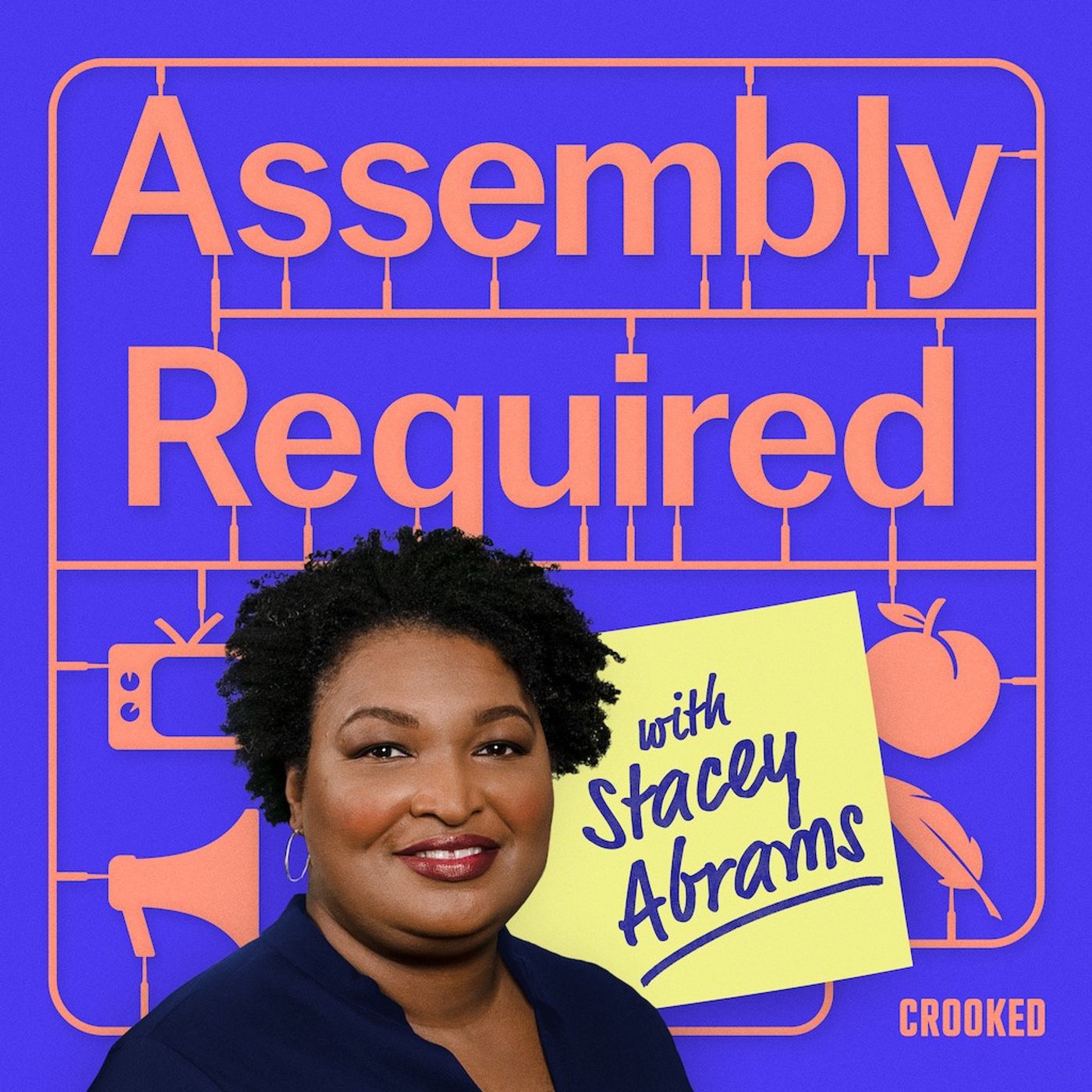
Loading summary
Transcript67 lines
- [00:00]
Stacey Abrams
Assembly Required with Stacey Abrams is brought to you by Bilt. It's 2026, and if you're still paying rent without Bilt, it's time for a change. BILT is the loyalty program for renters that rewards you for your biggest monthly expense, your rent. With Bilt, every rent payment earns you points that can be used towards flights, hotels, Lyft rides, Amazon.com purchases, and so much more. And here's something to be really excited about. Now BILT members can earn points on mortgage payments for the first time. That means you can get rewarded wherever you live. And you can unlock exclusive benefits from more than 45,000 restaurants, fitness studios, pharmacies and other neighborhood partners. Personally, I'd redeem my points for restaurants or the BILT Home Collection. It's simple. Paying rent is better with bilt. And now owning a home can be better with BILT too. Earn rewards and get something back wherever you live. Join the loyalty program for renters@joinbuilt.com assembly that's J-O-I-N B I L T.com assembly and make sure to use our URL so they know we sent you.
- [01:16]
Alex Preddy
The country feels like it's falling apart right before our eyes and the people inside it are being silenced. So we're going to East 26th street and Nicollet Avenue, which is where Alex Preddy was executed by ICE and Border Patrol. That is not a headline. That is a human life and it is all happening right now. Do you worry about your own safety being involved in all this?
- [01:42]
Stacey Abrams
Yes. But it doesn't really feel like there's another option, you know? You know?
- [01:49]
Chris Hayes
And of course they use a 5 year old child as bait. And of course they're doing all these horrible bad things because they don't know what they're doing. They've been told that they're going to get rid of the worst of the worst, then they have absolute immunity. And they've been told that nothing they do will they ever be held accountable for.
- [02:10]
Alex Preddy
On my show, Runaway country, we go where the headlines hit home. From communities under threat to to the people fighting to be heard. New episodes of Runaway country drop every Thursday. Subscribe wherever you get your podcasts or watch on YouTube.
- [02:26]
Stacey Abrams
How did you get your website to look like that? Mine's so basic. Thanks. I just used WIX Harmony.
- [02:32]
Chris Hayes
What's that?
- [02:33]
Alex Preddy
It's wix's AI website builder.
- [02:35]
Stacey Abrams
You just tell it what you want and it builds you a whole site. But you can also switch back and forth between chatting with AI And. And editing things yourself.
- [02:44]
Chris Hayes
Ah, so you're not stuck with whatever the AI gives you?
- [02:47]
Stacey Abrams
Nope. I mean, the results are pretty nice, but you can jump in and mess with whatever.
- [02:51]
Alex Preddy
Oh, that's neat.
- [02:53]
Stacey Abrams
Try it for free@wix.com Harmony. Welcome to Assembly Required with Stacey Abrams from Cricut Media. I'm your host, Stacey Abrams. Today's episode is with the brilliant Chris Hayes. But first, I want to talk about immigration. Last week, Republicans voted down proposals to partially reopen the government. As you know, it's been almost 40 days since nearly half of the US Senate demanded reforms to ICE as a precondition to handing over billions of dollars to the current Republican regime. Because let's remember how we got here. An armed, masked paramilitary invaded an American city and killed two U.S. citizens. Now, neither Democrats nor Republicans dispute this fact, nor is there any dispute that an additional 13 people have died in ICE custody in 2026 alone, more than had died by this time last year, which was a year that recorded a 20 year record for ice deaths, a record that was set by the same regime. Let's also remember that in response, Democrats refused to authorize an extension of funding to ICE until reforms were put in place to lessen the likelihood of more deaths, to remove the number of invasions of American cities, to put some restrictions on the kidnappings and the seizures and the racial profiling happening across our country. Republicans, and not just Trump, but Republicans with equal power in Congress, have refused to take action. They've also refused to fund the other Department of Homeland Security agencies like tsa, the Coast Guard, and FEMA while negotiations drag on. But the problem I'm having is that the press and the public are falling into the temptation to treat this like any other political dispute. And it's not. This isn't normal. This isn't. This isn't ethical, and it's not right. So let's remember what Americans are asking this authoritarian regime to do, what Congress is being asked to do. They're being asked to mandate judicial warrants for entering private property to stop indiscriminate arrest instead of the administrative warrants that are the ICE equivalent of signing your own doctor's note. They're being asked to prohibit ICE agents from wearing masks or face coverings can during operations, like most law enforcement. They're being asked to require agents to display their agency, their last name, and their unique identification number to tell us who is using power in our names. They're being asked to prohibit enforcement of ICE actions at sensitive locations, not pulling children out of schools Parishioners out of churches, the sick out of hospitals, and pulling voters out of polling places on the off chance to that you think they may not belong there. We're asking the American people to demand that Congress prohibit profiling based on race, ethnicity, language, accent or location, because that's not supposed to be who we are. Congress is being asked to codify a reasonable use of force policy and to mandate body worn cameras so we don't have murders happening in our name by ICE agents. And we're asking them to allow independent investigations into agent misconduct, to require consent from local jurisdictions and to give access to counsel for detainees. And overall, we want to prohibit the tracking and profiling of individuals who are engaging in First Amendment protected activities, making certain they don't get murdered for doing what America says they can do. And let's remember, Anthropic just got blacklisted for refusing to allow its AI to be used for this purpose for mass surveillance, while Sam Altman and ChatGPT said we'll allow it. I want to raise this because we are in the midst of falling behind again, of allowing racism and use of force and letting cities and states accept military occupation. Because. Because we're tired and we're tired. I know we are. But this is classic brainwashing. They shift the targets and they convince the hostage that what's on offer is a good deal. But this is not about compromise. Compromise presumes that reason exists on both sides, that good faith has entered the chat. This is about power. And I need us to remember this and hold it and to not forget. This is about who has it and who they can use it against. I explained this to a union worker this weekend. Authoritarians need three things. They need our individual freedoms, our complacency, and our refusal to hold them accountable. So as you stand in line at tsa, as you hear about the fact that if we just agreed to the DHS funding, it would all go away and you get on vacation faster, I need you to remember that we're not simply fighting against ICE and its indiscriminate harm. We're not simply fighting a political battle. We are waging a war for the soul of America. Look, this is a nation that has its flaws, but it's a nation that's built on the premise that freedom should not be brought low by the cowardice of stolen power. We cannot let them tilt the debate in their favor by saying that what they're doing is simply fighting a political fight. They have proven a deadly inability to protect Americans. And now the Republican regime is hoping that if they can wear us down, they will wear us out. On March 28, no king rallies will occur across the country. And I'll be joining then. But each of us has to return home and do something, anything, to make this regime understand that we do not consent. I'll continue to do my work on the ten Steps campaign and here on Assembly Required. But millions of us, each in our way, have to dig in and dig deeper and find a way to rebel against this attack on our sovereignty. We do not hold our democracy by being comfortable. We hold it and we improve it. And we perfect our union by calling out where it has failed, where we have failed. And that's by demanding that those in office either do what's right or lose their jobs. And that means in this moment, that we have to do ours. We have to be uncomfortable, we have to withstand the harm and we've got to demand better. And I know we can get it done. So joining me this week on Assembly Required, so we can unpack the news of the week, so figure out what's at stake and learn so much more is author and MSNow host, Chris Hayes. Chris Hayes, welcome to Assembly Required.
- [09:58]
Chris Hayes
It's great to be here.
- [10:00]
Stacey Abrams
I really appreciate you joining. And as you might imagine, Iran remains the top news week after week. The war in Iran and the surrounding region is continuing unabated. We have tragic civilian casualties, absurd financial consequences that were easily predicted. And last week on your show, you told your audience in relation to this endless war that quote, every once in a while you have to remind yourself that the president of the United States is a sociopath. I vehemently agree with you, but I also think it's critical, especially in this moment, that we also label him and his regime as authoritarian and connect those dots. And. But I also think it's important that we not ascribe to him absolute power, which is how he wants to be framed, and the default that we keep. I think referring to. Can you talk to me about why it's important that we understand Trump on all of those axes and how you navigate that with your show?
- [11:04]
Chris Hayes
I mean, I think on the sociopath front, it's just, you know, it's so priced in that people just expect this aberrant behavior from him, which is, you know, it's not wrong to expect it from him because you do. People acclimate to the way people behave. You know, the thing that he said over the weekend about Robert Mueller, I saw, you know, people posted it, I said, I'm glad he's dead. And I had to go check the actual, like, Truth Social to make sure that it wasn't, you know, one of those fake screen grabs that kind of float around. But of course it was him, because that's he that, you know, he is a person who is a bad person and a cruel person, and also a person, I think, just as fundamentally broken in a way that's like, constitutive like he is, does not have the capability of feeling empathy. And that means a lot for the judgments he makes and the kind of government he runs incapable of conceiving of how it will hurt people caring about that at all, only worried about his own glory on the authoritarian front. I think the way that I thread that needle that you're talking about is that his project is to become an authoritarian. He is an aspiring authoritarian, but he is not going to necessarily be successful. So to distinguish between what the project is, which is replacing the current constitutional order with a personalist presidential dictatorship, full stop, that is the plan, and whether he can do it are two different things. And I think there's lots of evidence of failures on the latter part of that. Just even in just this calendar year,
- [12:41]
Stacey Abrams
even if he can't do it himself. Do you think that if we look beyond and behind him, that there are threats that are posed by also aspiring authoritarians that are using him as sort of a first wave attack and we need to pay attention to what's happening behind him?
- [13:01]
Chris Hayes
I think yes, yes and no. So in the yes category, there is a sustained legal project to consolidate power in the hands of the executive that is, you know, predates Trump and I think is part of a grander project also to consolidate power in the institutions Republicans feel they can reliably control, which is a presidency that's defined by electoral College, a Senate defined by the filibuster state legislatures, not even governorships like the legislatures, which they think they could control through gerrymandering, particularly. And because there's lots of states where they have large majorities as well as the Supreme Court, not the courts, but the Supreme Court. So there's like this weird project to try to consolidate power in the institutions of government the right thinks it can control reliably that existed before Trump and is part of a longer trend. I think there's also a desire to kind of build this. I think there's real, like, distaste for democracy as a general tendency in right wing politics. But Trump's particular aspirations, I do think are kind of particular to him. Like, I do think this notion of sort of ruling via whimsical. Being a king or dictator is something he deeply, personally aspires to in a way that not that many American politicians do.
- [14:27]
Stacey Abrams
When we come back, more from my conversation with Chris Hayes. Today's show is sponsored by Strawberry Me. Are you looking to grow in your career? Do you feel like you are ready for the next step but you're not sure how to get there? Success doesn't just happen and successful people don't figure it out on their own. They have mentors, coaches and people guiding them every step of the way. That's where Strawberry Me career coaching comes in. I believe in the importance of career guidance, especially for those who don't always know where to look. Mentors come in many forms, and I've actually written a book about the importance of finding mentors who can be a sounding board as you navigate your own growth. Career coaching from Strawberry Me gives you the clarity, strategy and accountability that you need to turn your goals into reality, whether it's landing a new job, advancing in your current role, or transitioning into a field you love. With expert guidance, you'll identify obstacles holding you back, develop a step by step plan and take action with confidence, knowing you have a dedicated coach that supporting you every step of the way. Instead of relying on guesswork or waiting for the right time, professional coaching helps you take control of your career trajectory, ensuring you make intentional strategic moves towards success. So go to Strawberry Me assembly and get 50% off of your first coaching session. That's Strawberry Me assembly. It's like therapy for your career. Assembly Required with Stacey Abrams is brought to you by bookshop.org where you shop for Books Matters. When you purchase from bookshop.org, you're supporting more than 2,500 local independent bookstores across the country. And independent bookstores do more than sell books they take care of and pour back into their communities, creating safe spaces that foster culture, curiosity and and a love of reading. Whether you're searching for the next great young adult series for the kids, a gripping sci fi novel that helps us make sense of the current technological moment, or a beautifully photographed cookbook to help inspire your next dinner menu, bookshop.org has you covered around Atlanta. I like to stop by independent bookstores like Village Books, Brave and Kind and A Cappella Books to pick up my next great read. Right now I'm diving into the Cut by George Pellicanos. So use assembly to get 10% off of your next order@bookshop.org so there are reports that say as Part of his dictatorial aspirations. He's planning to ask Congress for as much as $200 billion in additional funding for Iran. And even if it ends up being only half that, that is an extraordinary amount of money for what they routinely refuse to describe as a war. So how does the request for $200 billion square with the refusal to call this a war? And does it matter what they call it?
- [17:44]
Chris Hayes
Well, I think it matters what they call it constitutionally. And I think also just in terms of the weird squirrelliness, it just looks terrible, whatever you're gonna call it, people are opposed to it because it was never. They didn't even go through the trouble of making the case for it. I mean, it's really remarkable to look back at that State of the Union, which is the one agenda setting speech the President gives, which was the longest in history, in which they were clearly planning on launching an enormously consequential, possibly catastrophic, extremely important, any way you look at it. Regime change, war in the Middle East. It got maybe five minutes in that speech. Yeah, I mean, maybe five. Like four and a half. So at one level, like, they never made an argument for it, whatever you call it, they never went to the public to be like, this is. They don't do persuasion. This is really the thing about them. They just don't believe in it. It's propaganda. It's trolling. It's a kind of bludgeoning repetition. But it's not persuasion in terms of the, The. I don't, I don't know how you feel about this. I think that vote is doa. I don't think they have the votes for that supplemental. I mean, you know, there's already a few recorded Republican nos. They can only lose in the House, I think. What can they lose? Three votes right now? I always forget because of vacancies, but Boebert said she's a no, and she says she told leadership she's a no. Massie's going to be a no. Chip Roy sounds like he's probably a no. I think there's. There. I don't know, man, that's a tough vote. Like that thing is that. That is a. You know, the supplemental itself is deeply underwater. You know, it's a 40, 60 proposition, maybe 55, 35 in terms of. Depending on the polling you look at. So. And I also think, yes, you're right, to highlight a tension between, like, it's not a war, but we need $200 billion for it. Like, again, it's this thing that's not that Important. Don't worry too much about it. Don't think about it too much about it. I'm going to do events about the ballroom and about fixing college and don't you worry your pretty little heads. But actually we also need 200 billion is a bit of an internally inconsistent set of arguments.
- [19:51]
Stacey Abrams
And that inconsistency is concerning to me on a host of levels. But I can't tell if we're doing tea leaf reading or phrenology or what signals are being sent because you're right, they don't do persuasion, but they also don't send seem to do any set of belief systems. And as we're thinking through how the rest of America and the rest of the world responds, I'm wondering how you are processing all of this in terms of when you decide what to report on, when you decide what floats to the top and the hour that you have every day with the attention of America. How do you discern which things to point to? Since there is a tragic comic nature to almost all of the conversations, it's really hard.
- [20:43]
Chris Hayes
I don't know if we've ever figured it out reliably. And I think a lot of days I end up going to bed second guessing. There are always so many things that I didn't get in the show that I wanted to. You know, I think look, the places of the most sort of intense and visible conflict and stakes tend to be things that drive the news. So I think like the ice invasion of Minnesota, the, the killing of two American citizens like in broad daylight recorded on camera phones for the whole nation to see. Those people subsequently being slandered by their own government baselessly. A set of lies being told about both them and the circumstances of their death. The unprecedented effect of that occupation on the folks in the twin cities of Minnesota, like that drove the news and then the President launched a war. And so right now that's so those. I mean in terms of what's the A bloc, what's the lead like? That hasn't been that hard. But then the other thing is, I've just even been thinking about this myself. There's been a ton of immigration stories since the war started that I've had a harder time getting to because the war itself has so many different kind of angles and repercussions. There's, you know, there's energy markets, there's the economy, there's the politics of it. There's the geopolitical reverberations. So yeah, I mean, one of the things I always tell myself though, is it's a little like, you know, it's like a merry go round, like it's going to come back around again. Right. So when there's times where you're like, oh, we haven't done. We sort of haven't been paying attention to the tariffs, and there's still a lot going on in that. And the court struck it down and there's a fascinating, you know, court of Federal claims judgment that the administration has to pay, you know, refund the money. I haven't even done that on the show. But the thing I always tell myself is, like, it'll be back around in the cycling carousel. That is the news. You know, there were periods of time in the first year where I felt like we weren't doing enough immigration coverage, and then it was all we were doing. So there's something a bit reactive about that, which can be frustrating. But I think I would say that the thing that is good is during that period of time when you're, say, covering a war and you're not covering as much immigration or the tariffs, you're also reading and thinking and learning a lot. And you can then bring that context to the moment when it does become the number one story, because it's not like you've checked out of paying attention to it personally, like me and my staff. And so I think that actually helps.
- [23:22]
Stacey Abrams
No, I appreciate that, and I want to get to a few of the things you mentioned, but I want to do one more question on what's happening with Iran, because, as you pointed out, this war is consuming the world. We've got the natural gas spikes that are being created not just because of the closure of the Strait of Hormuz, but because of the strikes in Qatar and Oman. We know that roughly one third of the world's fertilizers comes through the Strait of Hormuz, that grain shipments have been stalled that will affect international food supplies, and that international antipathy seems to be bowing to a geopolitical reality, which is that these energy spikes, these blockades to consumer and energy shipments, that this expanded destabilization of a vital region has ripple effects. And in particular for Europe, who wanna remind us that there is still the ignominy of a Russian war being waged on their doorstep that has been forgotten or at least shunted aside by this attack. But they've also seemed to have these spikes of courage that then recede. And I describe it as sort of praise and pray. They praise him and then they pray that he will not do something else. But do you see a new European strategy emerging, given that they said last week with that letter, like, we'll do something, but we're not going to do what you've asked?
- [24:52]
Chris Hayes
You know, I still think that they have. I still think they're trying to figure it out. I don't think anything has coalesced for what, what this sort of new order looks like. Like, what's clear is that he has broken whatever was remaining of the basically Post World War II international order, let's call it that, particularly the Atlantic alliance, as we call it, that's, I think, been irreparably damaged and broken. And there's lots of reasons that I think that was due to be kind of reconfigured anyway, just because of the reality of the power, for instance, of China. And I think also at a certain point in the future, which it doesn't feel, it seems weird to talk about it now, but, like, the geostrategic import of fossil fuels will not be the same in 20 years. What it is now just won't be. In fact, this moment might help get us there, to be honest. So, like, there's a lot of reasons, I think, for everyone to kind of reconfigure how they think about, you know, the new world order and a multipolar world, as people call it, whatever it is. It does seem to me like Europe is still trying to figure out what they do. But I do think that, like, action precedes theory. So one of the things you have seen with action is the US Is basically pulled back almost entirely from support of Ukraine in a financial sense, and the European nations have stepped up basically dollar for dollar. So that's a place where you're actually seeing just action. Right? Whatever the theory of that is, which is we can't rely on the Americans or there's some, you know, they're actually doing it. And I agree that this week was another example of, you know, what on earth are you talking about? You want to escort ships through the Strait of Hormuz. Someone said some NATO. I think it was a NATO official, and I can't remember if it was an on the record quote or an anonymous one said, like, going to help the Strait of Hormuz right now is like buying a ticket for the Titanic after it hit the iceberg. That was a pretty funny line.
- [26:51]
Stacey Abrams
Okay, so with that being noted, that gives me one more question on Iran, and that is, and this goes to just the seriousness of what we face and yet what we're about to do. So we've lost 13 service members in this conflict. We are responsible for a growing civilian death toll that includes hundreds of children. And at the same time, the US announced that it is lifting sanctions on Iranian oil, which will actually finance the Iranian retaliation and put more Americans in harm's way. So I'm not sure which analogy to use. What is this? How do you.
- [27:32]
Chris Hayes
Scott Bessett tried to call it? We were jiu Jitsuing the Iranians when he was on Meet the Press this weekend. I mean, I think, look, I think the Occam's razor interpretation of the facts as presented is that Donald Trump thought this could be easy and quick and it would be like Venezuela. I think he was encouraged to think that by two key people, Benjamin Netanyahu and Lindsey Graham, both of whom we have copious reporting, were heavily invested in getting the US into this war. I think fresh off the tactical success of Venezuela, I think he was being told, hey, another victory post another W on the board. Decapitate. We've got this great intelligence. They're all getting together. There's even more reporting today suggesting that Israeli intelligence really strongly believed that they could inspire essentially a anti regime uprising in the wake of that decapitation that would, that would topple the revolutionary government from 1979. And I think again, the Occam's razor interpretation is they thought it'd be quick and pretty easy. Despite all the warnings for the last decades, it wouldn't be and then it wasn't. Everything's played out basically the way people have said, which is, yes, the US And Israel have tremendous military superiority. Yes, they have wreaked tremendous military damage on Iran, not to mention killing many civilians. But also it hasn't toppled the regime. It has also emboldened them and they have this very key leverage, which is their control over the global energy supply. And so Trump is clearly backed in a corner and so he's looking for the exits. I mean, he issued an ultimatum and then climbed down on his old ultimatum mentioning that there were negotiations. It's unclear if those negotiations even exist. And it all reminds me, I mean, the thing that's so frustrating and maddening about this, the thing that I found so difficult about 2024, the campaign, was the fact that for a bunch of complicated reasons, I think some of which were very personal, relating to trauma, some of which were like societal, some of which were like backlash, reactionary media posture, everyone just decided to forget 2020 happened, that we had watched this individual try to pilot his way through a crisis not of his own making. In that case, he did not make Covid happen. Not his fault, but he couldn't do it. It was exactly the same thing. It was self contradictory. The same press conference, trying to talk his way out of it, trying to float things so the markets closed high. You know, we're gonna have testing at every CVS brought to you via Google and the markets go up. And then that never happened. It's the exact same thing. Except this time he initiated the crisis. It didn't have to happen. It didn't come from some molecules. It wasn't an infectious disease. And here we are once again. It's the exact same totally inconstant, self contradictory, scrambling, frenetic desire to basically win the next hour with no strategic sense of where everything goes.
- [30:41]
Stacey Abrams
Speaking of which, as you pointed out, immigration for so many has receded as a conversation because all eyes have been on the war. And yet this lack of focus and lack of an end game, I guess, is the worry that I have because in the interim, this White House continues to destroy lives and it issues contradictory. Although I think the one remarkably consistent piece of this administration has been their xenophobia and their racism. While we are in the midst of a funding battle over ICE in Congress about ICE's deadly tactics, there is also another strain of anti immigration that's making its way through, and that's daca. DACA recipients are now being targeted. So some have been deported. Hundreds of others say their status has not been renewed. And for anyone who forgets the acronym DACA refers to the Deferred Action for Children. And basically young people who were brought here before the age of 18 who were given a legal status because this is the only home they've ever known. When you think about what you would like to sort of bump up to the a block on immigration, where does this conversation fit in and sort of what else is out there that we should be watching?
- [31:59]
Chris Hayes
Yeah, I think it's, I think it's what you're saying. The distinctions you're making are really important. So I think there's sort of three different buckets to think about immigration policy in. One is the border, where basically Trump inherited a border that had largely been shut off to the, you know, unprecedented historic numbers of asylum seekers showing up that had basically declined by the end of 2024. And, and Trump has kept it that way using a variety of methods, some of which are new or revived from back when he was running the first term, some of which carry through from the Biden administration, some of which are due to Mexican policy internally. So that, that's one. And I think that's gotten sort of, in some ways the least attention because it's just sort of like a little out of sight, out of mind. And also, I think is the one place where there was like a genuine small d Democratic mandate for the policy. Like, people did not like the border policy under Joe Biden. They voted for it to be different. It is different. And people seem largely okay with that. Then the second bucket is mass deportation is the attempts to take people who are in the country out of legal status, sometimes in legal status, and deport them. And this has been the full spectrum from sending people to a Central American gulag to, to the raids now again expanding to folks that should have status, like DACA recipients. The great reporting from Ms. Now of a father who was going to the NICU to bring his newborn infant and the mother of his children milk apprehended and taken by ice. There's a whole bunch of people that fall into this category, particularly spouses of American citizens, people who should have either temporary protected status, which has been rescinded, who have pending asylum claims, who, who don't have, you know, deportation orders. So there's, there's both the people that have deportation orders they're going after, but then there's just like everyone out of status or even in status they can argue about. So that's, that's one big story. But then in some ways, I think the biggest story that's on, if you're talking about, like, what hasn't gotten attention, it's the attack on the forms of legal immigration across the entire board. And this is something David Beer, who's a great immigration policy analyst at Cato, was on my podcast talking about last week. I mean, we've basically ended all refugee resettlement in the US except for white South African refugees, Afrikaners. We have made it way harder for, for instance, people to come from abroad to study at American universities, particularly like, to get MBAs, right. Scientists. We have made it way, way harder for the spouses and family members of American citizens to come. We have imposed arbitrary and indefinite weight holds on applications for all kinds of people that have no, there's no, like, they haven't violated a law. Like, they're, they're doing everything. Eugenio Suarez is like one of the best baseball players in the Major League Baseball and just had the key hit in the World Baseball Classic for Venezuela. Like, right now is just in immigration limbo for no reason. They just have just decided to pause all these. That story is so messed up, but also a little less visible than the kind of violent, thuggish in your face stories of the mass deportation. And I think it's in a little harder to kind of surface. That one is why I did an hour on the podcast with it because it's also like immigration policy so complicated you have to really kind of talk it through. But it really is the case that it is a full spectrum shutdown for the avenues of orderly, regular and like national interest benefiting immigration across all different avenues right now under this administration.
- [36:01]
Stacey Abrams
More from my conversation with Chris Hayes after the break. Assembly Required with Stacey Abrams is brought to you by honeylove. We've all had to confront the dreaded sports bra. They can seem impossible to take on and off. Plus you have straps that dig into your shoulders and strain your neck and even the best ones that do the job, eh, you want to take it off the second your workout ends well. The honeylove Crossflex sports bra is different from any other sports bra I've tried. It's supportive without feeling suffocating and is actually designed for all day wear. Plus it has an easy hook and eye back so you don't have to wrestle it over your head. Like most sports bras, there are no wires involved. Honeylove uses cloud fuse bonding so there's no poking, digging or pressure points. Honeylove is now offering a crossover triple bra bundle so if you want a full refresh on your top drawer, you can get huge savings by buying three at once. And they recently launched their new Crossover Contour bra which features their best selling wireless crossover bra design plus built in molded light foam pads for extra support and a beautifully contoured shape. Honeylove is an independent female founded brand with products designed by women who actually wear them, including the founder Betsy. They don't just make bras and shapewear, they've built a full line of tanks, bodysuits and underwear with supportive structure, smoothing fabrics and premium finishes. That's why I trust honeylove for comfort and support. Treat yourself to the most advanced bras and shapewear on the market. Use our exclusive link to save 20% off honeylove@honeylove.com assembly that's honeylove.com assembly after you check out they'll ask where you heard about them. Please support our show and tell them we sent you Experience the new standard in comfort and support with honeylove. Assembly Required is brought to you by the Freedom From Religion Foundation. A strong democracy doesn't happen by accident. It's built deliberately through laws that protect everyone's freedoms, not just those with power. One of those protections is the separation of church and state. The First Amendment ensures that government serves all people equally, regardless of faith, background, or belief, and that no one is forced to live under someone else's theology. Today, that principle is under threat from movements that want to blur the lines between religion and government, narrowing who truly belongs in our democracy. Today, that principle is under threat from movements that want to blur the lines between religion and government, narrowing who truly belongs in our democracy. The Freedom From Religion foundation works to defend that boundary in schools, courts, and public institutions. So freedom of conscience remains a right, not a privilege. This is about fairness, it's about inclusion, and it's about building a democracy that works for everyone. Visit FFRF US Stacy or text my first name S T A C EE Y to 511-511- and support the work of protecting our shared freedoms. To learn more, go to FFRF US Stacy or text My First Name Stacy to 511511. Remember to text My First Name Stacy to 511511 and helps protect a country that belongs to all of us. Message and data rates may apply. Your most recent book, Sirens Call, really, I think, helps give us a lens through which to understand not the finite issue of immigration and these layers of harm and these layers of long term impact, but also why we can't focus on it. And you talk about the fact that human attention is the defining currency of the digital age. Can you walk us through a little bit of your thesis and how you use it to understand the current moment that we're in? And there's a tendency to say this is a political issue or, or this is a policy issue and I think it's a societal issue, I think it's a cultural issue. And would love for you to talk about why you felt compelled to write Siren's Call at this moment and what we need to know from it.
- [40:44]
Chris Hayes
I mean, the central thesis of the Sirens Call, which published last year, is out now. You can get in paperback or audiobook. I read the audiobook or I like to say this always. You can also get it at your library. It's stocked at every library. Also, libraries often have a great audiobook, Apple, in which you can borrow it remotely on the app. It's awesome. The central thesis is that attention is the defining resource of our age, that we for too long have thought about it as information being the defining resource. But information is actually infinite and replicable and copyable and it can be in multiple places at once. Attention is necessarily finite. It's either in one place or another. And that finitude is what makes it so valuable in an age where there's more and more things vying for it. Because it's the most important resource of our age. It's also the fact that it interacts with the deep biology and neurology of attention in this really fraught way. Because we have different faculties for attention, our attention can be pulled against our own will. When a siren goes wailing down the street, if you hear a car crash, if a car car honks its horn, if a baby's wailing on a plane, you don't get to control whether you pay attention or not. And in this competitive attentional marketplace in which the resources got more and more important, there are these ever more sophisticated, complex and powerful technologies and corporations marshaling technologies to extract that attention from us in this sort of compelled way, like a slot machine at a casino, like the siren wailing down the street. Not like the thing that we want to sit and think about ourselves, right? And what this also means is focus becomes really powerful and focus is always being subverted. And that's, you know, that is. And into this sort of environment comes a guy with a truly kind of age defining, feral sense of attention, which is Donald Trump. I think for the reasons that have to do with his own deep brokenness and pathologies and the New York tabloid world of attention that he grew up in, he just has this kind of instinct for it, like this, this sort of, again, it's almost visceral kind of cunning. And I think it's really defined this age of politics, the combination of those two things. I mean, when you at a second generation, at a second inauguration, when you saw the attention age, billionaires standing next to him, like Elon Musk and Bezos and them and him, it sort of all clicks into focus of like, right, he is a creature of this age and a kind of defining politician of this age because of his ability to kind of control and dominate attention.
- [43:32]
Stacey Abrams
So I want to ask you this question because it's. It sticks with me all the time. And it is one of the conundrums I have about doing this podcast about the work that I do writ large around democracy. And it's that I completely grant that Trump is a unicorn of sort of American politics in his ability to be an extraordinary salesman of bad. And he has, he is savvy. He has this Barnum Bailey quality merged with a Huey Long populism with a dollop of Stalin. And he has led this regime to master these tactics of how to flood the zone, how to speak everywhere and anywhere about all things. But what I worry about is that we relegate this to being a style endemic to Trump. And what I'm concerned about is that it makes us blind to what might come Next. This guy's 80. I mean, despite the fact that longevity is not unreasonable, my worry is that we spend so much of our time necessarily in reaction and response to him, that we aren't shifting ahead of time to what has to come next, and in particular, how journalists and media organizations and folks like myself who sit in this sort of weird, quasi space. How should we be navigating the next three years, but also anticipating what's next?
- [45:06]
Chris Hayes
It's a really good question. I mean, something I personally go back and forth on is how much it's him and how much it's broader than him, how much he's sui generis. And you just named Huey Long. I mean, Huey Long's sort of fascinating example. I mean, it really seemed like Huey Long was building a kind of populist American, possibly sort of proto fascist, but like redistributive politics that was going to challenge fdr. And then he was assassinated. He was shot and killed by a man who was mad at him for something he'd done to his father, who was a judge, I believe. And then after Huey Long died, the thing did kind of dissipate, like it did. Turned out that the particularities of Long and what he was building were particular to him. Now, that's like there's all sorts of form of populist reaction, obviously in the American south that are, you know, that. That grew out of that predated him. But the specifics of the threat that he posed and conjured in his person and the specific talents he had, it wasn't like that gave rise to some next thing after Huey Long. And I do sometimes wonder how much of that is the case with Trump, honestly. Like, how sui generes is it in terms of what comes after him? I do think that we always end up in this kind of fighting the last battle idea in politics, particularly when we're talking about campaigns like, oh, it has to be someone like him or who has his particular abilities. It may be like a complete negation of him in some ways. Often that ends up being the case. Like Barack Obama was in many ways the opposite of George W. Bush. I remember thinking the whole idea with Bush was that you needed the most kind of relatable to Middle white America you could drink a beer with guy ever. And then it was Barack Hussein Obama, the first black president of the Harvard Law Review, a Constitutional law school and community organizer. I was like, oh, that was not at all what anyone was predicting. So in the narrow sense of the campaigns, the broader question, though, to me that I think you're getting at is I truly feel at a loss about rebuilding what the constitutional democratic order looks like. That, to me, is the big challenge. Whatever happens next, a bunch of things have been broken that you can't just pretend aren't broken. Like if Stacey Abrams got, you know, inaugurated the next president, United States, and you were like, oh, I'm going to. This is my attorney general, and we're going to just revive Department of Justice independence and go like, I don't know, is that going to work? Just to be like, oh, the last four years didn't happen and we're just going to go back to all these post Watergate norms we have and maybe we'll write some new OLC memos that make it extra clear. And it's got to be bigger than that. But I don't know what that looks like, truly. Like, this is something that I struggle with. I'm curious what you think, but that to me is like, what this Democratic repair at the deep level looks like after something has been so thoroughly broken and so many weaknesses exposed. That's the kind of, that's the big question to me underneath all of this.
- [48:18]
Stacey Abrams
And that's part of what worries me, because I love your analysis of Huey Long, but what I would say is that Huey Long was sui generis in his way, but he also had no scaffolding. He was born out of a very specific moment in Southern history. He had a very unique way to navigate, but he also didn't build anything behind him. He was so extraordinarily corrupt in his behavior that he couldn't trust anything. And if we were dealing with the first Trump, I would put him in the exact same space. I think what concerns me so much is that Trump came back with Heritage foundation, with Project 2025 with Steve Bannon, but also with this architecture and these minders who have learned from their first round. And so I worry that he is much more the Chavez with a Maduro than he is a Huey Long with whoever became the next Louisiana governor, not to get reelected.
- [49:19]
Chris Hayes
So, yeah, I mean, I guess the question part of it also to me, and maybe this is, this might be cope on my part, I think it does matter how popular they are. Like I just think that the politics of this are hugely important. So, you know, if they're at 30%, like, if it's George W. Bush after Lehman Brothers, that's a whole different world than 45% of the country, half the country. Like, and I do think that all these fights that are happening, like, I think the fight over immigration, I saw amazing polling today that was about. It was Pew polling about whether people thought he acted ethically in office. And 55%, I want to say 55% of white evangelicals believed he did in February 2025, and that's down to 40% now. Right. So, like, his, like the demographic base of the modern sort of conservative party, which is white evangelicals, a majority don't think the guy's ethical. Now, that 15% decline seems like kind of not that much, but it does signal this is not winning people over. And I guess my question is it's kind of a shoot the moon strategy from hearts, the game Hearts, where you're trying to get every single point. And if you do, you get a huge victory, which is you become dictator, and then you hand the dictatorship to your Maduro. But if you miss, if you mess up, then, like, if you fall a little short, and I'm just not. It's not clear to me that, like, if they fall short, how much will be there to hand over?
- [51:03]
Stacey Abrams
And I think that goes to your point about what? How do you undo what they've done because they've embedded so deeply into so much of the infrastructure. This isn't just. And to your point, this isn't just an OLC memo. This isn't just replace the head of omb. This is they fired all the people who know how to do this job. And a lot of those folks have gotten new jobs and they burned the paperwork. That said, this is how you rebuild it. Where I think we have to enter it is to recognize that. And this goes to something you said at the very beginning. The Electoral College doesn't say they have to be popular. The Electoral College says they have to be strategic. And we've been winning elections on the margins. One of the reasons I'm so bullish about defeating the SAVE act and why I'm so delighted by the fact that California and Virginia are pushing back, is that we can no longer win elections on the margins. If we head into 2028 with the margins we had in 2020, even if we win the popular vote, we will not win because they don't have to overwhelm the system. They simply have to Game the system sufficient to shave points. And to your point about shooting the moon. Yeah. The problem is they'll just overturn the table like a bad poker game in a western and just say that the cards weren't on the table.
- [52:29]
Chris Hayes
Yeah, yeah. I mean, I think this question about, I do think this point about what would it take to build a, you know, Searchlight Institute, which this sort of new kind of centrist formation in the Democratic party talks about like super majority thinking and it annoys a lot of people on the left because they think it's a sort of, you know, it's a sort of reverse engineered way to get people to move to the center or move to the right or abandon trans people. But I actually do think like thinking big in terms of like huge electoral mandates pretty important here because. And then once you get inside, then you also have to think big about how to redemocratize the system. Right. So like. But those two have to happen together because you gotta win and the narrow win doesn't get you what you want. Like it. And I again, I think this regime and administration are handing its opponents the tools to build a big popular mandate against them. Like he is at 37% right now. They just launched a war for no reason they can articulate that is going to raise everyone's prices. They are not conducting themselves with public opinion in mind. But I think those two things have to go together, which is, yeah, Democrats have a higher bar because of the way that Senate apportionment works and because the electoral college is built off that Senate apportionment, they have to win by more than Republicans have to win by. Even when they win by more, they still face these disadvantages. And then they have to think really radically about. And people sometimes say like third reconstruction is the term I've heard. You know, if you think about reconstruction of the Civil War, the civil rights movement is sort of a second reconstruction and a kind of third reconstruction, a kind of like reconceiving institutional constitutional reforms on the order that will kind of redemocratize the country, that will reground and strengthen like genuine multi racial pluralistic democracy. I think both, both of those are necessary. Like it's again, it's not, it's not going to be enough to just eke out some victory and go back to like, oh, we found this guy that ran CBP during Biden one, let's put him in customs and border patrol. It's like it's not going to work.
- [54:50]
Stacey Abrams
No, I think you're right. I would say this. I think the critique of Searchlight is not invalid. My worry is that we keep trying to win using the other guy's playbook, that we keep thinking we know the answer. The answer is super majority. The question is, are we trying to copy someone else's homework, or are we actually creating, because of our values, the vision that we have? And are we willing to say it out loud? Because they will say the craziest stuff. It sounds crazy to us, but they've been able to convince their audience that for a moment, it was a popular idea, even though the manifestation to your point is showing not just diminishing returns, but plummeting popularity.
- [55:36]
Chris Hayes
They campaigned on mass deportation, even though it was a nightmare and they won on NASA. Mass deportation? Yeah. I mean, I think there's sort of two levels of this argument. You know, one of them, which is like the weak version, I think basically everyone agrees with, and I don't know why we fight about it. Like, it's like, let's say that there were a bunch of groups that were saying there should be a total deportation moratorium in the country. Okay. Donald Trump is so broken. Mass deportation. There should be a deportation moratorium. And there are other people arguing, no, we need to go back to only deporting people that are violent criminals. Right. If you are advising you and running for governor of Georgia, or you got hired on the campaign of, like, the Democratic candidate in Iowa or Sherrod Brown's campaign in Ohio or Tellarico's in Texas, which of those are you going to advise them on? We all know it's not the moratorium. Like, obviously you wouldn't. That's not the position you would take. Public opinion is a real thing. Like, they're a lot of conservative people with conservative views on immigration in those states. It would be weird and crazy to tell them to push for a moratorium. I think. So at the. At the sort of basic level of, like, should you be talking in a way that, like, hues towards the center of public opinion in the state you're running? Yes. The thing I think you're identifying is what. What is death is if you reverse engineer a campaign that's only about reacting in that way to those things. And we've seen a really dramatic example of how nightmarish that is with labor in the uk which has basically decided to take all of these issues that they were underwater in public opinion on. Like, genuinely, like, the polling was not in their favor on issues having to do with trans rights, immigrants and asylum and just spend a lot of time talking about those issues.
- [57:28]
Stacey Abrams
Yeah.
- [57:29]
Chris Hayes
And with this big calculated pit, and what it does is all you're doing is constantly raising the salience over and over and over and over of your worst issues. And it's been a polling electoral disaster there. So it's like, yes. Is moderation on these sort of issues necessary? And indeed, I think even, like, I would even say more than necessary, like genuinely important from a representative standpoint? Yes, it is. Can you kind of reverse engineer some kind of appeal just by backing out the places that you're going to cross party orthodoxy or pivot to the center to the right? No. That is an absolute dead end. You have to do both. You have to have some genuinely stirring affirmative vision. And then you also have to not say things that are gonna be wildly out of step with the voters you're trying to win.
- [58:22]
Stacey Abrams
Okay, that seems like extraordinarily sage advice, and I am deeply skeptical about who exactly is gonna follow it.
- [58:33]
Chris Hayes
Well, I think there's, I think, I mean, I think there's some, there's some Senate, you know, there's some statewide candidates, I think, who are gonna figure this out pretty well.
- [58:40]
Stacey Abrams
Much more when we come back from the break. Assembly Required with Stacey Abrams is brought to you by Factor. As the hours race by during a busy workday, figuring out how to make something healthy and delicious for lunch or dinner can sometimes feel impossible. Factor's fully prepared meals, designed by dietitians and crafted by chefs. Is your answer ready in two minutes? No planning, no cooking. Factor has quality functional ingredients, including lean proteins, colorful vegetables, whole food ingredients and healthy fats. You don't have to worry about finding refined sugars or artificial sweeteners in your food, but you will find meals that fit your goals and your schedule. Healthier eating there are 100 rotating weekly meals to keep things fresh and delicious. Options include High Protein Calorie smart Mediterranean diet, GLP1 support, and ready to eat salads. Plus the new MusclePro collection supports strength and recovery. Perfect if you're getting back into a workout routine. These meals are always fresh, never frozen, and they're ready in about two minutes. There's no prep involved and no stress about maintaining a healthy diet. For a menu that can make your mouth water, consider the Brown Butter Grilled Chicken and Yukon Mash or the Blue Cheese Caramelized Onion burger. Head to FactorMeals.com assembly50off and use code assembly50OFF to get 50% off and free breakfast for a year Offer only valid for new Factor customers with code and qualifying auto Renewing subscription purchase make healthy eating easier with factor.
- [60:35]
Alex Preddy
The country feels like it's falling apart right before our eyes and the people inside it are being silenced. So we're going to East 26th street and Nicollet Avenue, which is where Alex Preddy was executed by ICE and Border Patrol. That is not a headline. That is a human life and it is all happening right now. Do you worry about your own safety being involved in all this?
- [61:01]
Stacey Abrams
Yes, but it doesn't really feel like there's another option, you know?
- [61:08]
Chris Hayes
And of course they use a 5 year old child as bait. And of course they're doing all these horrible bad things because they don't know what they're doing. They've been told that they're going to get rid of the worst of the worst, then they have absolute immunity. And they've been told that nothing they do will they ever be held accountable for.
- [61:28]
Alex Preddy
On my show Runaway country, we go where the headlines hit home. From communities under threat to the people fighting to be heard. New episodes of Runaway country drop every Thursday. Subscribe wherever you get your podcasts or watch on YouTube.
- [61:44]
Chris Hayes
You know what I realized the hardest part about building a website is, isn't making it look good, it's getting what's in my head onto the page. But I've been playing with the new WIX Harmony editor and I'm impressed. You can literally just tell it what you want or if you're picky like me, jump in and move things around yourself. The nice part is you can hop between AI and hands on editing so you end up with a site that actually looks the way you pictured it. Try it out for free at wix.comharmony.harmony
- [62:18]
Stacey Abrams
part of our tension is that we think that there is a silver bullet. We think there's a one way to do it and if we figure out that one way to do it, we win.
- [62:25]
Chris Hayes
Totally.
- [62:26]
Stacey Abrams
I always try. And you and I met because my argument was always you need to say what you believe and you need to be clear about what those beliefs are. But if you ignore a certain group, we keep forgetting people can vote for you, vote for the other guy or not vote. And so I think part of the tension is let's not presume that by currying favor with one group that you don't really risk losing another. And I think that's part of the challenge that we're facing.
- [62:55]
Chris Hayes
Well, I'm just saying that's the stuff of politics, right? It's like how to figure that out. And I always give this example because I Think it's so instructive about Donald Trump because. And I'm working on a book right now that sort of has some similar themes, which is that there's a boundless creativity to how right wing reaction can form coalitions against another. So my favorite example of this is in the summer of 2016, a jihadi who had sort of been, you know, reading ISIS propaganda goes into this gay nightclub and shoots and kills, you know, dozens of people in that nightclub in the Orlando Pulse shooting. And the aftermath of that, Donald Trump makes this argument that very explicitly, he says, gay people, you have to stand with me against the menace of Muslims and Muslim radical terror and violence. So gay people, you're in my coalition because we need you. Need me, Strongman, who is already called for the Muslim ban to keep these bad Muslims away from you. Right. In 2020, there had been a series of curriculum fights in some towns in Michigan in which Muslim parents had rebelled, basically, against LGBT items in their curriculum. And the Trump campaign went to those parents and made the argument, muslims, you need to unite with me against the menace of gay people. And. And the exit show that, like, in both versions, it kind of worked like he drew. He. He did better with gay voters in 2016 than previous Republicans. He did better with Muslim voters in 2020 than he had in previous elections. And so it's like, it's wildly disingenuous and dangerous, but there's a lot of coalitional flexibility that they have availed themselves of. And there's a progressive version of that, too, which is like getting people to buy in together, right? Not against some enemy, but finding the sort of left progressive version of that, which is like, we can all stand united together, is the kind of magic.
- [65:01]
Stacey Abrams
I'm gonna let that be the next to last thing you say, because that is perfect. And here's the thing. We like to give our audience homework on this show, which, despite doing so, they keep coming back. And as someone who has a staggering range of topics that you explore, your podcast is one of my favorites.
- [65:21]
Chris Hayes
Oh, thanks.
- [65:22]
Stacey Abrams
Oh, truly. Why is this happening? I mean, I say this as a deep compliment. You are a curious and avowed nerd, and that is such a wonderful thing. And so I want you to give our team homework. What do you want more people to be doing if they just have 30 minutes a week that they can dedicate to saving democracy? I mean, you just described a few things that you're investigating and thinking about, but just given the range of what you contemplate in a day, somebody has 30 minutes in a week to do something. What do you want them to do?
- [65:58]
Chris Hayes
That's a great question. I think the classic example people will give here is about local politics and local races, but I think it's incredibly true. National politics commands so much of our attention, but there are lots of really interesting local races. There's gonna be a ton of really interesting local races even in primaries too, which are coming up, which I think right now. Go. Like I had. I found out about a primary in my own state assembly district because of a mailer I got. And I was so embarrassed that it took like, it took that for me to realize that my rep was being primaried. And I'm not gonna talk about what they did and who I voted for, but I was just like, oh, I should have known this myself, that there was like an active and interesting primary in my race before I got this mailer. So like, I do think taking the time to be like, wait, who are my local reps? Are there because it's the summer? Are there interesting primary challenges? Like is there someone that represents me who has been for instance, like fighting against a lot of new housing and is there someone who is primaring them because they want a lot of new housing to be built? Or someone who has been extremely anti bike lane and someone who is very pro bike lane or someone who actually is our county sheriff who has been cooperating with ICE under a 287g agreement. So I think that's like you should really know and particularly right now because we've had, let's see, Texas and Illinois, Arkansas, I think five or six states have had their primaries ready, but there's gonna be a bunch. What's that?
- [67:32]
Stacey Abrams
Mississippi.
- [67:33]
Chris Hayes
Mississippi too. And there's gonna be a bunch over the next few months. By the time you hear this, like this will be the kind of April, May, June will be kind of peak for that. So that would be one thing. And then the other thing, which might sound weird is doing nothing. And what I mean by that is I think part of reclaiming your attention is to spend some time alone with your own thoughts every day. And this is something that I've been like telling people. My book is not like a self help book. It's not like here's how you, here's the five things to do to take your attention back. But the one piece of really tangible advice I give people is it's really important and good for yourself. Your own thinking, your own clarity of thought, your own processing and metabolizing of your interior life and your relationships to like have 10 to 20 minutes a day just with your own thoughts. So like, instead of plugging your headphones in and listening to a podcast when you're walking to wherever or driving somewhere, like, try to just spend those time with your thoughts. We used to do that a lot more than we do now. And I do think that that practice, it's been really good for me. It's been really generative too. Like, it gives me a lot of ideas, it stokes my curiosity, it makes me giving a little bit of emptiness. Just gives some space for the mind to wander. And that wandering, I think is really productive.
- [68:59]
Stacey Abrams
Chris Hayes, thank you so very much for being here with us on Assembly Required. This was fantastic.
- [69:05]
Chris Hayes
I loved it. Thanks so much.
- [69:14]
Stacey Abrams
Assembly Required is here to help us understand what's happening and then take action wherever we are. Because every decision to resist adds up. So first, let's be curious. Check out Chris Hayes. Excellent show. All in with Chris Hayes on Ms. Now and his thought provoking podcast why Is this Happening? And pick up a copy of his most recent book, the Sirens Call to learn more about the ways our attention is being captured and commodified. Number two, let's solve some problems. Trump and his Republican allies have made no secret of their efforts to interfere with the upcoming midterms by making it more difficult to vote. The maze of legal action, potential SCOTUS rulings that will restrict mail in ballots and congressional actions like save. These are laws that can be tough to follow and can kick people out of their right to vote. So please consider donating and subscribing to the Democracy docket and to the Brennan center to support their excellent coverage of this issue. Third, let's do some good. Sustained protest is crucial to demonstrating that we will not remain silent or complacent in the face of authoritarianism. On Saturday, March 28, we will have the opportunity to join our friends and neighbors for a third no Kings protest, one that the organizers anticipate will be one of the largest protests in American history, with all 50 states having events. Visit nokings.org to find an event near you and please visit the website for updated information on how to stay involved, including trainings on knowing your rights and inspiring your friends and loved ones to get involved. Assembly Required continues to grow its audience, but we need your help. We reach more people when you tell others about us, when you add us to your feed, and when you share your favorite episode. So make sure you actually subscribe on all your favorite platforms, not just one, and boost our visibility by rating the show and leaving a comment. You can find us on YouTube, Spotify, Apple, Amazon or wherever you get your podcasts. And please also check out my substack Assembly Notes where we dive deep and where I share more of my thoughts on how we understand and then fight back against this authoritarian regime. Thank you to the thousands of of you who have signed up for the 10 Steps campaign. At 10StepsCampaign.org we offer information in English and Spanish to help you recognize what's happening and to activate around solutions to build a better America. We've recently added Mobilize so you can find events and opportunities near you. Okay, that wraps up this episode of Assembly Required with Stacey Abrams. Do good out there and I'll meet you here next week. Assembly Required is a crooked media production. Our lead show producer is Lacey Roberts and our associate producer is Farrah Safari. Kiril Palaviv is our video producer. This episode was recorded and mixed by Charlotte Landis. Our theme song is by Vasilis Fotopoulos. Thank you to Matt De Groat, Kyle Seglin, Tyler Boozer, Ben Hethcote and Priyanka Mantha for production support. Our executive producers are Katie Long and me, Stacey Abrams.
- [72:47]
Alex Preddy
The country feels like it's falling apart right before our eyes and the people inside it are being silenced. So we're going to East 26th street and Nicollet Avenue, which is where Alex Preddy was executed by ICE and Border Patrol. That is not a headline. That is a human life and it is all happening right now. Do you worry about your own safety being involved in all this?
- [73:13]
Stacey Abrams
Yes, but it doesn't really feel like there's another option, you know?
- [73:19]
Chris Hayes
And of course they use a 5 year old child as bait. And of course they're doing all these horrible bad things because they don't know what they're doing. They've been told that they're going to get rid of the worst of the worst, then they have absolute immunity. And they've been told that nothing they do will they ever be held accountable for.
- [73:40]
Alex Preddy
On my show, Runaway country, we go where the headlines hit home. From communities under threat to the people fighting to be heard. New episodes of Runaway country drop every Thursday. Subscribe wherever you get your podcasts or watch on YouTube.
- [73:56]
Chris Hayes
AI this, AI that. I get it. I'm so sick of people telling me to just use AI. But weirdly enough, wix's new AI website builder really works for me. It's called WIX Harmony. And and here's the thing. I get to choose how to use AI I get everything I need to create a website and I can either have Aria, my AI agent, design things for me, or I can edit things myself. Try it for free@wix.com Harmony with Verbocare
- [74:29]
Stacey Abrams
help is always ready before, during and after your stay. We've planned for the plot twists, so support is always available because a great trip starts with peace of mind.