← Assembly Required with Stacey Abrams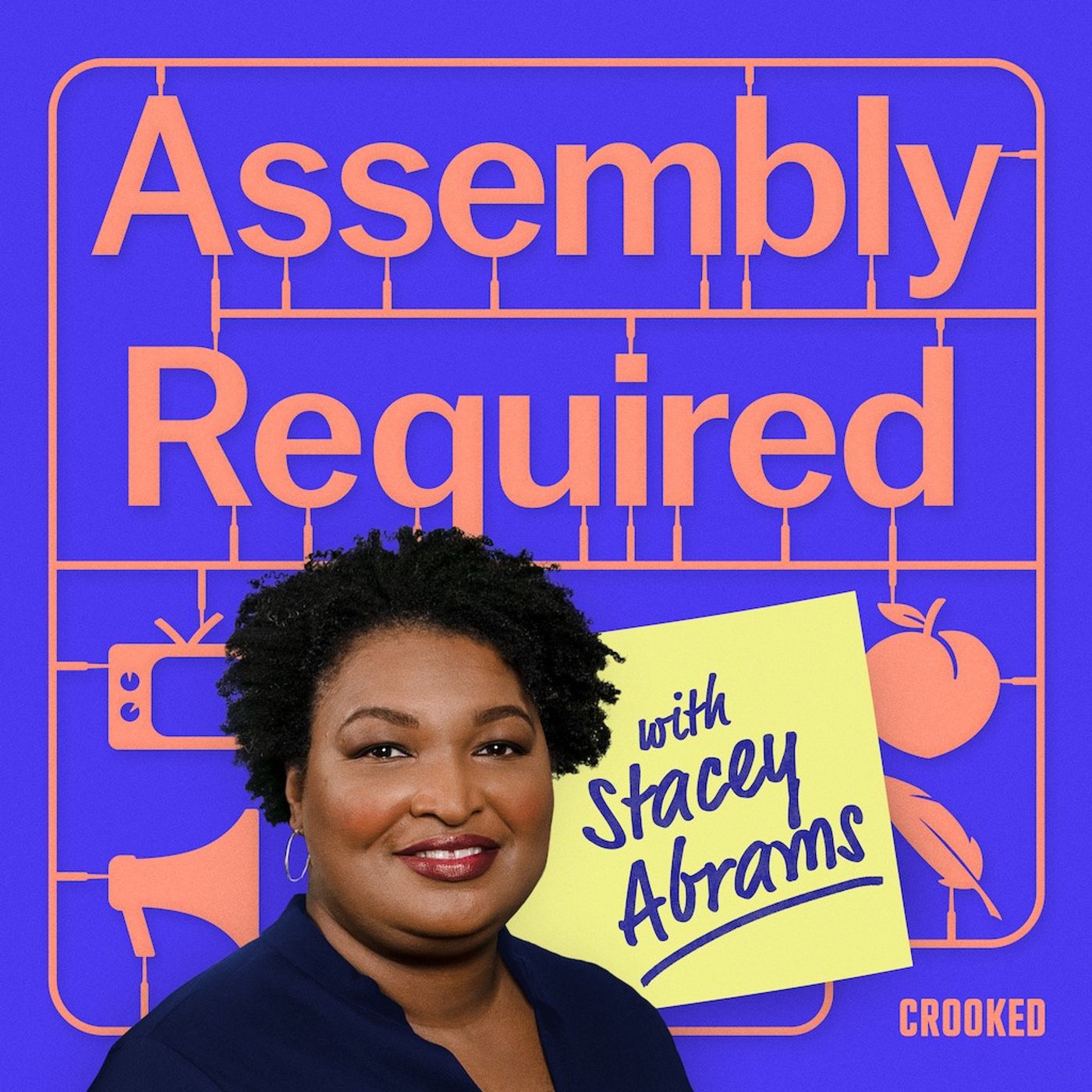
Assembly Required with Stacey Abrams
Orban Ousted in Hungary, and Trump Picks Fights Over Childcare (w/ Reshma Saujani)
01:06:25
Loading summary
Transcript70 lines
- [00:00]
Commercial Narrator
With Vrbal's last minute deals, you can save over $50 on your spring getaway. So whether it's a mountain escape with friends, a family week at the beach, or sightseeing in a new city, there's still time to get great discounts. Book your next day now. Average savings $72 select homes only.
- [00:26]
Reshma Sujani
You.
- [00:30]
Vrbo Advertiser
Get a jump on next summer with vrbo's early booking deals. Don't wait to claim your dream summer spot, whether that includes a good porch swing or a poolside lounger. When you book early, you get the best places at the best prices. But back to poolside loungers. With vrbo, you don't have to reserve any loungers. They're all yours. In fact, the whole private home is yours. Book with early booking deals and you can lounge around all summer long. However you please. Book with vrbo.
- [01:08]
Stacey Abrams
Welcome to Assembly Required with Stacey Abrams from Crooked Media. I'm your host, Stacey Abrams. When Americans worry about affordability, one of the most expensive and necessary elements is childcare. From daycare to after school care, parents need to know that their children will be all right, especially in a functioning democracy. Yet our political leaders haven't yet demonstrated that they know how to deliver for our youngest residents or their parents. One of the leading voices on how we're falling behind but can catch up is this week's guest, Reshma Shujani. Look, affordability isn't purely an American issue, and neither is authoritarianism. And I'm going to talk about that and more with our guest, Reshma. But before we do so, I want to talk about something that happened this weekend. Across the Atlantic Ocean in Hungary, Viktor Orban's 16 year reign as the autocrat in chief came to a stunning end. You see, this is the man who has taken Hungary through all of the steps of authoritarianism. In fact, the work in the 10 Steps campaign is based on a study of his Reign led by Dr. Kim Shepple. Hungary matters because this was a democracy that backslid all the way to authoritarianism. It took 16 years, but they hit all 10 steps. He expanded executive power. He controlled the legislative and the judicial branches.
- [02:40]
Reshma Sujani
He.
- [02:40]
Stacey Abrams
He changed the constitution of Hungary to expand and deepen his power. He trafficked in the kind of rhetoric that marginalized communities, that terrified the disadvantaged, and that made average citizens believe that speaking up was dangerous. He did everything right if what you want is to end democracy forever. He engaged in a level of corruption that we have become armed too familiar with here in the US but he did something else. He activated his people to Fight back. He reminded them that democracy exists for them. And as a consequence of his corruption of the economic strain that made life in Hungary no longer affordable because of his strident policies on immigration, demonizing the LGBTQ communities, and his embrace of Christian nationalism, he lifted up a people who decided to fight back. But it wasn't just the internals. It was also his refusal to support Ukraine and his decision to put the rest of Europe at risk for his own power. We've seen that through the wars of choice being decided by this president, and what we can learn from Hungary is that we have the power to fight back. This past weekend, by more than 77% turnout, the people of Hungary said no more. And they ousted Viktor Orban. They elected someone who had once been on his side, but recognized that that was the wrong side for history and for the future of his people. The newly elected president, President Peter Magyar, used to be a member of Orban's party, but he decided to stand up and fight back. And he faced the consequences. He was threatened. He was put at grave risk and so was his family. But he continued to fight because courage is part of the capital in winning against authoritarianism. We are all excited about the fact that not only did the party win and put Orban out of power, but they got a 2/3 majority. So they can start to fix what Orban and his party broke. But there are warning signs that we need to take in the midst of the celebration. Those warning signs are that elections can still be marred by attempted voter suppression, by fraud. As we listen to the continuing specter of the SAVE act, we can't ignore the executive order here in America that would seize election records and seize voting information. We cannot ignore that gerrymandering is an attempt to redraw the lines that to suppress the voice of the people. We have to know that what happened in Hungary is happening in America, but that we can also learn from their solutions. As I mentioned, they had massive voter turnout. 77% of registered voters cast ballots. This is the highest turnout in Hungarian elections since the collapse of communism in 1989, which was also the start of their democracy. They also picked up, as I mentioned, 2/3 majority. So they can start to fix things. I watched the elections in Hungary with incredible fascination, but also with incredible hope. Because we know that Hungary is a mark for what could happen here in America. And therefore it is a mark of what we can deliver for our fellow Americans. We can take heart and we can learn lessons. We can do the work. The 10 Steps to Authoritarianism and autocracy were taken directly from Hungary. But so too are the 10 steps to freedom and power. We can commit, we can share, we can organize, and we can mobilize. We can do the work of electing the new leaders that we need. And the midterms are an extraordinary step. But I want to remind us we cannot overlearn the lessons from Hungary. You see, Hungary has a population that is 88% ethnic Hungarian. Only 3% is Romani or Roma, which is the most ethnically marginalized population. This is an important distinction because the nation of Hungary is only 10 million people. It's the size of New Jersey. But the United States is 30 times larger and nearly 40% more racially and ethnically diverse. And even in Hungary, identity mattered. And it took more than one election to topple that brand of fascism. But in the interim, real people got hurt. And here in the us, real people are paying the price. And so, as excited as we can be about Hungary, we have to remember that we've got to fight a very different fight that is American in origin. How do we do that? How do we topple this brand of fascism that took 16 years to take down? Because we don't have that kind of time. Number one, we have to commit to fighting back and supporting the marginalized. It is easy to take the lessons of this election and say, well, what we have to do is go to the center, go to the right. No, we cannot go anywhere that leaves our people behind. Number two, we have to defend voting rights now and in the future. We cannot be seduced by easy language. We have to believe that voting rights expand our power, that there is no necessary constraint because we do not have voter fraud, we have voter suppression. We have to show up in overwhelming numbers and up and down the ballot. They took a two thirds majority in the Hungarian Parliament. We need to take the House. We also have a chance to take the Senate, but we need to also take state legislatures across this country. Because the power in the US is not just in Congress, it's where you live, like Hungary. We know that if we work together, if we vote together, if we demand a stronger America, we can get there. We can get to a place where. Where we can respect our leadership again and where we can expect our leadership to serve us. Yes, there are 10 steps to freedom and power. And Hungary has once again proven that it can be done. But America, we're different. We're different enough that we've got to learn our own way. We've got to fight our own fight. We've Got to do the work that makes sense for us. Let's look to Hungary for lessons. But let's not forget that we've got work to do here at home. If you want to learn more about what happened in Hungary and why it matters, I encourage you to catch the Pod Save the World episode this week. But back here on Assembly Required. Joining me this week is Reshma Sujani. She's the founder and CEO of Moms first, the founder of Girls who Code, and the host of the podcast the Reshma Sujani Show. Reshma Sujani, welcome to Assembly Required.
- [09:51]
Reshma Sujani
Thank you, Stacy. It's great to be here with you.
- [09:54]
Stacey Abrams
Well, it is always a pleasure to be in conversation with you. I know if I'm in a room where you are, I'm in the right place.
- [10:00]
Reshma Sujani
Oh, come on.
- [10:01]
Stacey Abrams
And no, I'm serious. It's been that way since we met. And as someone who is a perennial problem solver, I have always admired the fact that you see a problem, you don't just say, here's how I can fix it. For me, you think about, how do I fix it at the systemic level. Your newest venture is Moms first, which is an organization whose mission is to support mothers by tackling issues like paid family leave and affordable childcare at the systemic level. So given all the things that you've done and all of the things you have been and continue to be, why is this something you've embarked on?
- [10:44]
Reshma Sujani
Cause I realized that, like, we're never getting to gender equality until we fix American motherhood. And, you know, for so long before I built Mom's first brain, I was building Girls Code. And I had kind of bought into this myth that, like, we just gotta fix women. We gotta get more confidence. We gotta color code our calendar. We gotta get the right mentor. And having a baby during the pandemic and seeing the shock that was put upon women and the impact that it had on their labor market participant made me realize, oh, I was trying to fix the wrong thing, that it's really about fixing structures and not fixing women. And that the biggest thing that I saw that was standing in the way of. Of women's full potential was childcare and paid leave. And I wanted to take as a social entrepreneur the things that I had learned in building Girls who Code to this fight. And that's why I'm doing what I'm doing.
- [11:44]
Stacey Abrams
Tell our listeners a little bit about building Girls who Code, because I think that leads into a lot of the work you've done and why today is so important.
- [11:52]
Reshma Sujani
I think you can actually really appreciate this. So I am a. I always say, like, I'm a weird person to have started Girls who Code. Like, right. We went to law school. I was a poly sci major. My father had like. Was like, math was not my. Math and science were just not my thing, not my passion. But when I ran for Congress, that was at the beginning of the big tech boom. And my district actually had some of the poorest zip codes in New York City and some of the richest. And when I would go into the best private school in New York City and I would go into one of the most challenging schools, I saw the same thing, which was that we were not teaching our girls computer science, and they were missing from the classroom. And that was deep, deeply problematic, both from an economic perspective and an innovation perspective, because this industry was hot, right? It was where all the opportunity was. And I grew up with immigrant parents, and my parents were like, you can be a doctor, a lawyer, or an engineer. And so this kind of journey into the middle class, this ability in one generation to move like that, was everything about how I had been raised. And so I saw the possibility for that to happen by teaching girls to code. And that's what inspired me to start Girls who Code was the. Was the dream that you could have a girl leaving a homeless shelter in the morning, sitting next to a girl whose parents have three homes and both of them can start at the same place and have the opportunity, right, to get $120,000 job that we could actually make it. Right. That's what inspired me to start Girls who Code.
- [13:33]
Stacey Abrams
I wanted to talk about it because I want to draw a through line. So you do Girls who Code. Your next real push and passion, as you described it, was helping sort of solve for women. And a big piece of the puzzle has been that where women are situated in this country has always been as support, as help, but never as central to its mission. And you have touched each of those component pieces. So I would like for you to talk about that middle piece for a second before we get back to moms first. And that is the work that you've done on women. What you articulated in Pay up, just sort of how you started thinking about that, moving from Girls who Code to that component.
- [14:18]
Reshma Sujani
Yeah. So it was clear to me that. That when you looked at a country where women are 75% of our high school valedictorians, they get the vast majority of bachelor's degrees now. They also get the vast majority of kind of PhDs, meaning from an education perspective, women are thriving and leading, right? And when you look, though, at labor market participation, at a certain point in a woman's career, there's a significant drop. So she. You don't see her reaching her educational potential. And when you look at when that happens, it happens when she becomes a mother, right? So an 80% of women at some point will become a mother. And so it felt like if we were going to reach the promise of potential, we had to basically look at where the pipeline was leaky and ask ourselves, well, what's going on here? And I think oftentimes the perception is that women choose to leave the workforce once they have a baby. And that is actually just not true. Because, one, the reality is most people are struggling to even put food on the table or pay their rent or buy diapers. There's no choice in this country anymore. People have to work, right? And really what's happening was that we've built a workplace that just doesn't work for women in terms of how we've designed it. Simply the hours of the day. Why is the school day 8:30 to 3, and the work day is 9 to 5? And again, it matters because women do two thirds of the caregiving work. So women are doing the rearing of children and the working. And so they are every day waking up thinking about, how do I balance these two things? The second thing is that childcare, if you work and you have a child, you have to provide care for it, right? And so the childcare system in America has always been fundamentally broken. And what I mean by that is that, first of all, most people cannot afford care. You know, the vast majority of Americans, 40% of them, are in debt because the cost of childcare. So often times a woman's childcare will cost more than the amount that she's making in her paycheck. And so when the family sits down and says, well, what are we going to do here? It's often the woman's labor. You know what I mean? That is basically, you know, set to have to set aside. Secondly, 50% of Americans can't find daycare. So even if you can afford it, most people actually can't find it. So it's a business model, Stacy, that has been broken. We don't pay childcare workers enough, and we don't pay parents enough in order for them to afford it. And it's always been this way since the beginning of time, and we've just kind of refused to fix it. So that's a big. And then, of course, paid leave, right? So listen, we're the only industrialized nation in the world that doesn't offer paid leave. So that means the vast majority of women go back to work two weeks after having a baby. Yes, we have fmla, but that simply means that you can take time off, but you have to pay for it yourself and you won't get fired maybe. Right? And it depends on your employer. So if you happen to work at a Google or a Microsoft or, you know what I mean, a white collar place, they may offer you paid leave, but if you don't, they're likely not to. So you have to take that time off by yourself. And so these two structural things I think in particular, and then I would argue the lack of flexibility as well, are what's really pushing women out of the workforce. So no woman wakes up and makes a choice. She has a choice made for her.
- [18:20]
Commercial Narrator
Assembly Required with Stacey Abrams is brought to you by Mosh. Whether I'm heading to an event or powering through a deadline for a new book, I don't always have time to plan what I eat. So I need a protein snack that satisfies me and makes taking care of myself a little bit easier. One answer is Mosh bars. Mosh, which you may have heard about on Shark Tank or Oprah's Favorite Things, was founded by Maria Shriver and her son Patrick Schwarzenegger with a to spark a conversation about brain health through food, education and research. After Maria's father was diagnosed with Alzheimer's, they set out to create something bigger than just a protein bar. Mosh protein bars are made with ingredients that support your brain and body, like Ashwagandha, Lion's Mane and Omega 3s plus Mach is the first and only food brand boosted with Cognizine, a premium form of cytokoline that helps support focus, memory and mental clarity. And they come in a variety of flavors including plant based options. I recently got my new shipment with Chocolate Chip Cookie Crunch, Raspberry White Chocolate Crunch and Peanut Butter Chocolate Crunch. And now you can save on mosh while making your wellness routine effortless. Get 25% off and free shipping on your first 15 count variety pack and then 20% for life on your monthly subscription. You can swap flavors anytime based on what you like best. Keep your go tos on repeat or try something new. Your favorite functional fuel is delivered directly to your door so you never run out and supporting your brain health becomes a simple habit you can feel good about why mosh? Because it donates a portion of the proceeds from every order to the Women's Alzheimer's movement because two thirds of Alzheimer's patients are women and Mosh is working to close that gap. It's more than just a protein bar, it's brain fuel with purpose. Find your favorites, build your boxes or keep things fresh with a variety pack. Mosh bars are one of the best ways to customize your health while giving back. Head to moshlife.com stacy and subscribe today to get 25% off your first variety pack and 20% off your monthly subscription with code STACY. That's 25% off your first pack and 20% off your subscription of Brain Boosting bars delivered straight to your door. Start building Brain Health into your everyday with Mosh bars and thank you Mosh
- [20:59]
Stacey Abrams
for sponsoring this episode.
- [21:00]
Commercial Narrator
Assembly Required with Stacey Abrams is brought to you by Wild Alaskan Co. When was the last time you truly trusted the seafood you brought home? Growing up on the Gulf of Mexico, my family always knew that the catch of the day was within reach. Now that we live in Atlanta, far away from the water and it's not as easy, that's where Wild Alaskan Company comes in. Wild Alaskan Company is the best way to get wild caught perfectly portioned, nutrient dense seafood delivered directly to your door. You haven't tasted fish this good. My parents enjoy having a box delivered directly to their doorstep so they don't have to bother with the hassle of shopping and can get straight to cooking. Wild Alaskan company is 100% wild caught in never farmed. This means there are no antibiotics, GMOs or additives, just clean, real fish that support healthy oceans and fishing communities. Wild Alaskan fish is frozen off the boat to lock in taste, texture and nutrients like omega 3s and it is sustainably sourced wild caught from Alaska. Every order supports sustainable harvesting practices and your membership delivers flexible shipments, expert tips and truly feel good seafood. Right now my parents are enjoying the Pacific Rockfish and Pacific Cod. Try it risk free with a 100% money back guarantee. If you're not completely satisfied with your first box, Wild Alaskan Company will give you a full refund. No questions asked. No risk, just high quality seafood. Not all fish are the same. Get seafood you can trust. Go to wildalaskan.com assembly for $35 off of your first box of premium wild caught seafood. That's wildalaskan.com assembly For $35 off of your first order. And thanks to wild alaskan company for sponsoring this episode.
- [23:05]
Stacey Abrams
As you just laid out how we handle the issues of child Care and family leave. It says a lot about our priorities as a nation. And in response, we are in a war of choice right now with Iran that has already cost billions of dollars. And now this administration just asked for another $1.5 trillion Pentagon budget, and yet we still haven't solved this core structural issue. And we know just the other week at the White House Easter lunch, Trump said that the federal government can't fund daycare. And I want us to listen to this clip.
- [23:42]
Donald Trump
The United States can't take care of daycare. That has to be up to a state. We can't take care of daycare. We're a big country. We have 50 states. We have all these other people. We're fighting wars. We can't take care of, of daycare. You got to let a state take care of daycare. And they should pay for it, too. They should pay. They have to raise their taxes, but they should pay for it. And we could lower our taxes a little bit to them to make up, but it's not possible for us to take care of daycare, Medicaid, Medicare, all these individual things. They can do it on a state basis. You can't do it on a federal. We have to take care of one thing, military protection. We have to guard the country.
- [24:22]
Stacey Abrams
So, Reshma, I mean, you heard the President's own words, and this isn't news to you, you've raised this issue with Trump before, in fact, at a famous event in 2024. You know, what did he say then? And what does his recent pronouncements tell you about how this regime understands the role of government in not just childcare costs, but the role of women in America?
- [24:48]
Reshma Sujani
Yeah, I mean, I think the thing is we spend billions for bombs and pennies for children. And the thing that struck me when I heard what he said at the event on Easter was his inconsistency, because he had said something very different to me before. When I asked him what he was going to do about childcare, when I asked him at that Economic Club of New York event when he was running for office, when the idea of affordability and the cost of daycare was very much on many voters minds, he committed to saying that we gotta put American families first. Right. And what he said then, while after he was president again, when the cost of daycare is rising at twice the rate of inflation. So nothing has changed about the state of American families. But what has changed is Trump's answer, which was, we gotta basically put money into wars rather than we can't fund Childcare, we can't. We don't have money for that. We gotta fund these wars. And so that, to me was very telling and should be telling to kind of every single voter because, you know, the reality is, like you said, he's asking $1.5 trillion to fund the war. And the childcare system's collapse essentially is costing the economy $122 billion a year. It's treated as a private family problem and not a national crisis. And for most American families, I mean, literally, they are one financial event away from ruin. You know, one medical emergency, one missed car payment from emergency, because all of their savings gets put into childcare, period. It is the linchpin of affordability. And to so brazenly say that, sorry, not sorry, and basically say, I'm going to put America last, was just very telling to me and should be to everybody.
- [26:49]
Stacey Abrams
Yeah, I mean, look, we know polling tells us that Americans are concerned about the everyday cost of goods, but to your point, they are most concerned about the big structural things. Housing, health care. And for a majority of Americans under the age of 45, you know, the cost of having a family has gotten so high that it has become unaffordable is one of the quotes from that poll. Can you connect the dots for us? And you just started doing so. But I want you to take a little more time and give us some numbers to talk about how childcare is at the root of conversations about affordability, but also opportunity. Because as you pointed out, you come from an immigrant family. You know, there are low income communities that are facing these challenges. I'd love for you to talk about the opportunity consequence of this lack of.
- [27:41]
Reshma Sujani
Yeah, I mean, the reality is 7 in 10Americans say that raising children is too expensive. 40% of Americans are in debt because of the cost of childcare. So when you look at like, credit card debt. Right. What is driving credit card debt? Childcare. Families are putting the cost of their childcare on their credit card and it's increasing their debt. I mean, it's just a fact. Right? And so if you. The cost of childcare costs more than rent than families are paying for rent in every single state. So when a family sits down with their budget and they look at all their items, okay, my car payments, my groceries, my mortgage or my rent, my childcare, it's childcare that is the most expensive expense for families. So if we drove the cost of that down, that would give families more breathing room. This is why I think over the past, you know, we've been, you know, really running on this issue and really kind of, because part of what we needed to do is switch people's point of view that this isn't a personal problem that you just have to deal with. This is an economic issue, period. It's something we should expect that our government fix, we should expect right there to be policy investment on. So that has really shifted, I think, in the minds of voters over the past couple years. And we've run a relentless communication strategy to make it shift. And so now you're seeing actually people win. Zahran Mamdani became mayor of New York City because he ran on childcare, period. The governor of New York will be our next governor of New York because she made an executive action on childcare. So this is happening across the country. And so I think that anybody running for office needs to understand that it is childcare that is, again, the linchpin of affordability, period.
- [29:46]
Stacey Abrams
So thinking about the opportunity gaps, because as you just laid out, childcare is instrumental across the board. But if you're from a low income family, if you're a woman of color, the acuteness of this challenge, the precipice it shoves you off of, is not only dangerous, it's nearly insurmountable. To get back up, can you talk a little bit about what the world could look like if we actually addressed it? And I'd love for you to talk about it in the context of what they just did in New Mexico.
- [30:17]
Reshma Sujani
Yeah, I mean, one of the things to, like, think about, like, so, you know, look, 40% of American families can't afford the essentials, but the thing that's really shifting their lives at the cost of childcare. You saw this in the latest jobs report. 500,000 men entered the workforce and 500,000 women left. And when they surveyed those women that were leaving and they said why? The vast majority of them had children under the age of five. And they said, the reason why I had to leave the workforce was the cost of childcare. So the opportunity cost of our country is that we are losing talented workers every single day because we failed to fix this business problem. You know, the opportunity cost of families is that they're, you know, having to choose between feeding their children and funding their daycare. What is unconscionable, right? And so I think that, like, it is very clear and especially for low income families, especially for women, this really impacts women because women are the ones who are doing, you know, the lion's share of the caregiving work. They're also the ones that really suffer economically when they have a children. So there's something called a motherhood penalty. So when a man has a child, he actually gains 6% in his income. Employers look at him and be like, ah, you became a dad. Gotta give you more money. When a woman is in the same job, same person, right? Has a child, they look at her and they see her as a liability and they actually take opportunity away from her, right? They make the economic state worse for her the minute that she becomes a mother. And so to me, when you. Because we always talk about the gender gap, and the reason why we have a gender gap in our country is because we have a motherhood penalty. And the cost of childcare exacerbates that gap that we have financially between men and women. And that's why, again, I always call it the linchpin of affordability. Because once you start making childcare affordable, right? Once you actually think about how to make it both affordable and available, you start changing the circumstance of families. And going back to your question about the state, so now, you know, we've kind of are in a moment where it is pretty clear that this administration is not going to do something about the cost of childcare. It was pretty clear before he made that comment during Easter. Right. And so since, again, families are drowning, I think governors across the country have said, okay, what can I do? So you've seen the governor of Vermont, you've seen the governor of New Mexico, you've seen the governor of New York. We're working with a handful of other governors. So you're gonna see more change happening across the country to say, how can I bring down the cost of childcare? And different states are doing it differently or paying for it, quite frankly, differently. Here in New York, what we did was we started with a large investment into the city and then into the state and starting with the most kind of the lowest 20% of families with the lowest income, and really to figure out how we can actually have universal childcare for them.
- [33:18]
Stacey Abrams
So I want to talk about how Republicans are existing in a state of permanent hypocrisy here. You know, they have been opposing these bills. They opposed Governor Lujan Grisham's efforts in New Mexico. They have not been fans of Mayor Mandani. They are not going to cheer what happens for the state of New York. And yet they are also advocating for young Americans to have bigger families. They couch it in this sort of protonatalist philosophy about traditional gender roles and women staying home to raise their kids. And, you know, I would argue this is part of their broader authoritarian project as outlined in Project 2025. So people don't have to think that this is conspiracy theory. No, it's just reading this is what they've said. And we also know that last week the CDC announced triumphantly that the teen birth rates had hit an historical low. And it prompted hand wringing from Republicans, including Stephen Miller's wife, Katie Miller. And she posted that quote, hormonal birth control is killing population growth and our biological destiny is to have babies. And on the show we've had conversations about protonatalism, about why Republicans want white women to have more children. Let's be clear, this is not a universal intention. And we also know that there's this growing trend of right wing actors who want to subjugate women and girls and deny them opportunity. And that's why I wanted you to kind of talk about what's happening. When you think about the structural necessity of the work that you're doing. I would love for you to talk about how this isn't just about improving the systems of America. This is about how we save America. Childcare, I would argue, is one of the systems, if we fix this, is one of the ways we save democracy. Go.
- [35:19]
Reshma Sujani
Yeah, I mean, listen, I think the reality is, is that we know that. Well, first of all, I want to start with your point about Republicans. Republicans are not disingenuous about this. It's not rocket science. Like, if you really care about a declining birth, which we have the lowest birth rate we've had in, I think it was 20 years. Right? Like, it's like people are choosing not to have children. And when you ask them, it's very clear they're choosing not to have children because it's too expensive. And so we should at this point be throwing money at people. Right? And we know. And the reason why it matters is when you have a declining birth rate, you have a dying nation. We've seen this happen in Japan, we've seen this happen in South Korea. Right. And who have kind of now catastrophically low fertility rates. But the reason why that happened is because of patriarchy. They left patriarchy intact. In fact, Jennifer Shuba, who I'm interviewing for my podcast soon, brilliant, I mean, person who talks a lot and writes a lot about this, is one of the number one reasons why birth rates tend to decline is because gender equality goes in the wrong direction, which is exactly what has happened. You know what I mean? In America, you know, we're living in a moment where our reproductive rights have been Taken away, where there is an attack on De and I and programs like Girls who Code, quite frankly, that have increased opportunities for women. We're seeing, you know, this rise of trad wife versus girl blouse language, which is like, really trying to tell women that this is where your place. There's an assault on our right to vote. You know what I mean? With the SAVE Act. All of this is really leading to many young women saying, yeah, no, thank you. Right? Like, I can't or don't want to have a child in this moment. And so if we were really, really, really genuine about wanting to increase the birth rate, we would, one, stop attacking women because it is the most dangerous time to be a woman in America, period, is what we're living through right now. Secondly, we would have policies like paid leave and childcare that make it possible for families to economically be able to bear the cost of a child and so their entire paycheck doesn't go. But we're not. I mean, instead, what you hear from this administration is, let's build fertility highways. Let's give medals to women who have six children or more. Let's have more policies. Let's erase female scientists from NASA's Walls. Right? Let's basically make it impossible for a woman who's gotten married and changed her name to be able to vote. And women are paying attention, and we're gonna bear the price of this.
- [38:06]
Stacey Abrams
I'm absolutely certain that they wouldn't have given my mother, who was the mother of six children, a medal for anything.
- [38:13]
Reshma Sujani
Right, because your mother is a woman of color. Exactly. I mean, it's just. And I don't even think they're trying to hide this, Stacey. I think they're quite clear. And the fact that Katie Miller is going nuts about that. Teen pregnancies are down. You should be ashamed of yourself.
- [38:32]
Commercial Narrator
Assembly required with Stacey Abrams is brought to you by Hexclad. Spring is finally here, and it is a great time to clean out your kitchen and get rid of that old scratched cookware that doesn't work well anymore. When it was time for me to upgrade my cookware, I turned to Hexclad. Hexclad combines the performance of stainless steel with the convenience of non stick. So you don't have to choose whether I need heat control for a perfectly sauteed chicken dinner or an easy omelet Saturday. Hexclad has me covered. And you get the performance of stainless steel with the convenience of non stick. So cleanup is always a breeze. The pans are dishwasher safe. Easy to wipe down, oven safe up to 900 degrees Fahrenheit. The Stay Cool handles are an extra bonus, especially when potholders are out of reach. With over 1 million customers and over 50,000 5 star reviews, the secret is out and all Hexclad products come with a lifetime warranty. It could be the last set of pots and pans you'll ever have to buy. Hexclad's 12 piece set is the ultimate all in one cookware upgrade. With three versatile pans, two saucepans and a family sized stock pot, each with its own lid, you'll have every tool you need to cook for a crowd or master any recipe. Built with hexclad's patented hybrid technology and backed by a lifetime warranty, this set is designed to be the last cookware you'll ever need. Hexclad pans are metal utensil safe so you don't have to baby them or switch tools mid cook. I actually bought my first hexclad pan for my dad and it became his favorite. Spring is the perfect time to upgrade your kitchen with cookware that actually works
- [40:26]
Stacey Abrams
as hard as you do.
- [40:27]
Commercial Narrator
For a limited time, our listeners get 10% off with our exclusive link. Just head to hexclad.com assembly and support our show and check them out at hexclad.comassembly make sure to let them know we sent you. Let's cook smarter this spring with hexclad's revolutionary cookware. Assembly Required with Stacey Abrams is brought to you by Acorns. So recently I presented my nieces and nephews with a challenge to learn how to invest and save for the future. I helped each of them open an Acorns account and now when they hit certain goals, I make a small investment so they can learn how to plan for the future and grow their confidence in money Right now. Acorns is the financial wellness app that believes that everybody's money has potential. And if you want to see what your money is capable of, the Acorns Potential screen makes it easy. Acorns is a smart way to give your money a chance to grow and to give your young ones a chance to learn. Acorns is easy. You can sign up in minutes and start automatically investing your spare money. Even if all you've got is spare change, Acorns grows with you. Whether you're just starting out or thinking about settling down, Acorns supports your big and small goals across every life stage. The Acorns Potential screen shows you the power of compounding and how your money could grow over time. Plus, you can quickly adjust how much you're investing every day, week or month to make sure you're building toward your goals. Acorns is all in one no more finance apps cluttering up your phone With Acorns, you can invest, save and give your money a chance to grow in one trusted place. Achieving financial wellness can seem daunting, but Acorns features make it easy. Their Roundups feature, which rounds your latest purchase to the nearest dollar and invests the spare change automatically, is a great way to get started. Sign up now and Acorns will boost your new account with a $5 bonus. Join the over 14 million all time customers who have already saved and invested over $27 billion with Acorns. Head to acorns.com assembly or download the Acorns app to get started. Paid non client endorsement compensation provides incentives to positively promote Acorns tier 2 compensation provided potential subject to various factors such as customers, accounts, age and investment settings. Does not include Acorns fees. Results do not predict or represent the performance of any Acorns portfolio. Investment results will vary. Investing involves risk. Acorns of Acorns Advisors LLC and SEC registered investment advisor view important disclosures@acorns.com assembly
- [43:22]
Stacey Abrams
I was recently at an event and there was this jarring moment. I was sitting with a group of tech leaders and there was this moment of absolute consensus that if you aren't in tech, there's a diminished value to your contribution to society. And in a moment where we see tech controlling the economy, the conversation, the likelihood of employment, and notwithstanding Melania Trump's argument that we can have these robot teachers, childcare workers, I would love for you, as someone who started her public work around girls who Code and trying to bridge that gap, this tension that I see with how the tech, not just the tech oligarchy, but the sort of technocracy that is pervading this country is driving down our intention to solve what is a uniquely American problem. We invest far less than other nations in public funding for child care. And with the rise of this sort of technocentric fiefdom, how do we think about America solving for it?
- [44:43]
Reshma Sujani
This is a conversation, a question that makes me really sad, Stacey, because I spent a lot of my life when I started building girls who code. I really believed that companies, when they said we want to hire women, we want more girls, we just can't find them. And I said, okay, I'll go get them, I'll go train them, I'll train all of Them. And I really believed, right, that there was this sense of that tech was almost like the American dream and the goal for all of us was to give equal access to everyone so that they could create, build and solve our biggest problems. And that is like the mindset, right, that I went into building girls who code. And as time went on, I became more and more disenchanted because I realized that that wasn't actually true. And I see that now where I see young women every day that have 4.0s and are brilliant just can't get their foot in the door because they're not a white male. They don't have go to the same schools or hang out in the same country clubs or have the same exposure. That there is something that tech has really never contended with, that it's not a meritocracy. It's not all nerds are welcome. And I think that there's been an uncomfortableness with recognizing and being honest with themselves about who they are. And I think if you talk to any woman in Silicon Valley right now, it's disgusting. It's the worst culture that I think anyone has seen in a very long time. And I'm not surprised. And there's just a lack of honesty in talking about what is that really about? Because I think what that's really about is preserving privilege. I think it's about a fear, not a fear about women and our intelligence and our opportunity. And I would argue people of color. Right. And it is not about all nerds are welcome. And I know that. So I think that we really have to. There's nothing that makes me. I mean, the amount of like every single tech person should be shouting from the mountain talks about the 13 states that are disbanding, you know what I mean? Clubs like Girls who code. Right. Because you no longer can congregate from a gender based perspective or a race based perspective. That should be an embarrassment. That should be. You should see every single tech CEO swarming Congress and state houses saying absolutely not. Where's the kind of commitment to talent now? It only seems to happen when it suits them. And let me tell you, Stacey, like I watching Christina take off to space last week is. And I was so insistent on being there and watching her dream. And I think we live in a moment where I need to witness every woman's dreams is because we cannot let them dismantle progress and we actually have more power than they do. And where I thought you were, where I think where I see this is with AI, right? And how we need to not let seed this powerful tool. Right.
- [48:12]
Stacey Abrams
Yes, they are attacking dei. DEI is not illegal. And part of the, the tragedy of what's happening to girls who code clubs, what's happening across this country, is that they are using a. An illegal anti DEI executive order to contravene what the law says you can do. Now, states can decide what they want to fund or not fund, but they don't get to do so in the absence of the law. And so anyone out there who's hearing this and who's listening to Reshma and is listen to me. We have to believe and know as a truth DEI is not illegal. And the power that we hold as Americans is that we've got to hold them accountable. I got to spend the past week at a conference with Sky Perryman from Democracy Forward. They're suing Alfonso Davis, who David, who runs the Global Black Economic Forum, just sued, and Texas. We have got to remember, and I know, Reshma, you've been a part of larger set of conversations I want us to hold as a truth. The way we defend democracy is by solving for childcare, solving for women being able to be fully realized parts of our society. And that can only happen if we defend, protect and expand dei.
- [49:35]
Reshma Sujani
That's right. And one of the most, I'm sure you. So you know, I was thinking about this. Almost every single year for the past decade, I've probably given over a hundred speeches a year. And this past 12 months have been so nuts because there's no more conferences, there's no more events, there's no more women ergs. And so, like, in practicality, what does that mean? That means I don't get to stand in front of women and teach them how to be brave. You know what I mean? How to learn how to code. Right. How my journey of failure, how to run for office. Like, think about, like, how you and I are standing here because from the time we were 12 to the time we were 40, we heard women share their stories and we said, yep, me too. I can do that. That's how you do that. Oh, I can do that. I know how to do that. Like gatherings of women coming together and being inspired and hearing from one another, learning from one another is what has allowed us to get to a place where we can say 75% of high school valedictorians are girls. And so to me, it is suing. Yes. But we as women have to say, no more, no more. Because what they do is they test how far can they get away with. And they've gotten away with a whole lot. I am still shocked. And I would love to know if you know the answer to this, but like when major companies cancel their women's conferences, don't let women in. AI conferences happen or women ERG groups happen. I want to understand why the women in those organizations are not saying something or doing something. Because we're terrified of losing our jobs. That's what's going on.
- [51:14]
Stacey Abrams
Oh, because they can't afford health childcare.
- [51:16]
Reshma Sujani
Yeah. If they do. And we have to figure out how we collectively. Right. Can come together. So no one. One person's job is at risk. Right. That they. That we're. Because we are two power. We are more powerful than them. I know that in my heart.
- [51:33]
Stacey Abrams
No, absolutely. And so part of the work that you do, part of the work that I do, you know, there's a Ten Steps campaign which is really focused on how do we aggregate all of the organizations fighting to save democracy. But there is within that the work that we're doing on DEI because DEI is the central pillar of democracy. You can't have a pluralistic democracy without the pluralism. And one of the component pieces of that is how we understand the world we're a part of. And this is a really tortured way to get us back to something else you raised, which is AI. You know, as the founder of Girls who Code, you know, on our DEI website, on a PR network website, I got a little bit of flack because I created an AI agent that answers questions about the legality of dei, that tells you what DEI is. And there were some on the left who got really anxious. They're like, well, I don't. Why are you using an AI agent? Agent? I'm like, because it is a technology that can help us get access to information. On the Ten Steps campaign side, we are building what we call Marion. It's a, it's an AI. It's a app based tech stack that can actually help you create your own resistance plan that gives you this tailored way to actually get in the fight. Once you come back from no kings, what do you do next? This is going to help you do it. And I have a dear friend I was talking to about it who wouldn't support it because she does not trust AI legitimately. And I've written a book about what can happen when AI goes wrong, but what happens when it can work. And so this is a very long way of saying to you, I'd love to talk about, yeah, there are concerns about AI replacing jobs and about coding no longer being a relevant skill. But how much of what you are hearing is real? How much is overblown and how much is us saying no to fire because we know someone who got burned?
- [53:27]
Reshma Sujani
Well, listen, I also think it's important for us to understand our history here. Like, I wouldn't have had to start Girls who Code if we didn't. I think in many ways think about this differently 30 years ago. The reality is, is that fear mongering and even though when those fears are true have been used to suppress access to technology to the communities that need it the most, the reason why 20% of Americans still don't have access to WI fi is, is because in many of those communities back then, WI fi, the way we talked about WI fi was the way we talk about AI today. Don't use your, remember? I mean, I couldn't bring my computer to law school. Right. Or use it at work. We're old enough to remember that, right?
- [54:10]
Stacey Abrams
Yes.
- [54:11]
Reshma Sujani
And so, and what happens is then you set up structures where some people, wealthy, privileged people, have access to this new technology, are using it, become proficient in it, are able to create in it, are able to make money in it, and the rest of us who have been sounding the alarm are left behind and we never catch up. I cannot tell you for 10 years, you know, building girls who Code clubs, which were the title one schools that didn't really have WI fi properly wired in their schools that didn't get to learn how to code. Because when you went to coding class or you know, coding club, the WI fi maybe worked for five minutes. What was the impact on that? The impact was on that was that we didn't have enough black and brown. Founders, entrepreneurs, creators, engineers, NASA scientists, everybody know your history. This is how it works. And guess what? They're happy for us to be arguing with one another about an AI agent or not. Because then they get to basically make all the things, create all the algorithms and make all the money. What we should be doing is spending our time together demanding that Grok OpenAI, you know what I mean? Google, Gemini, all of them are giving free licenses to every Title 1 school that we have a report card today on what the gap is on usage. And we should be demanding that our kids are learning it. Now again, that doesn't mean we don't have to have standards and times and risks and talk about them. But the reality is, as someone who uses AI every single day, who mandates that her team uses it, that has somebody come in once a week to teach us the new tips and Tricks about how to use is here. It's not going anywhere and I rather shape it. I rather set the power structure of it than be beholden to it.
- [56:10]
Commercial Narrator
Assembly Required with Stacey Abrams is brought to you by MSI United States. MSI Reproductive Choices provides contraception and safe abortion to women in 36 countries, mostly in Africa and Asia. Their 2025 impact report is just out and last year they served 27.8 million people. They focus on women living in poverty in places without health care facilities. Young people who've never received any kind of sex education. They want to remind you that women with limited choices don't stop being women. They need control of their bodies so they can get an education or a better paying job so they can decide how many kids they want or take time in between pregnancies. MSI Reproductive Choices is one of the few women's health organizations that's still going strong despite all of the cuts in foreign aid. This is a real opportunity to do some good. For $30, you can give a year of contraception to six women. That's transformative impact. For $30, text Abrams. That's a B, R a m s to 511-511- and make a donation to MSI United States today. You can learn more on their website, msiunitedstates.org modern, safe, informed MSI United States.org go to msiunitedstates.org that's M as in modern, S as in safe, I as in informed. Or again, you can just text Abrams to 511511. Look, they don't get any money from the U.S. government. So to help them out, go to MSI United States.org or you can just text my last name, Abrams to 511-511. Let me give you the website one more time. MSI United States.org thanks for giving them a look. Text fees may apply.
- [58:17]
Carvana Customer
I sold my car in Carvana last night.
- [58:19]
Reshma Sujani
Well, that's cool.
- [58:20]
Carvana Customer
No, you don't understand. It went perfectly. Real offer, down to the penny. They're picking it up tomorrow, nothing left.
- [58:26]
Reshma Sujani
So what's the problem?
- [58:27]
Carvana Customer
That is the problem. Nothing in my life goes as smoothly. I'm waiting for the catch.
- [58:31]
Reshma Sujani
Maybe there's no catch.
- [58:32]
Carvana Customer
That's exactly what a catch would want me to think.
- [58:35]
Reshma Sujani
Wow. You need to relax.
- [58:36]
Carvana Customer
I need to knock on wood. Do we have. What is this? Table wood?
- [58:39]
Reshma Sujani
I think it's laminate.
- [58:40]
Carvana Customer
Okay. Yeah, that's good. That's close enough.
- [58:41]
Reshma Sujani
Car selling without a catch.
- [58:43]
Vrbo Advertiser
Sell your car today on Carvana.
- [58:46]
Reshma Sujani
Pick up These may apply.
- [58:49]
Stacey Abrams
So I think we've just given ourselves homework because I am completely with you on that. And I think those posts go, those report cards, I love that idea. Because part of what we're working on at apr, APR Network, American Priorities Network, is how do we understand and better integrate. I've got a separate project I'm working on down in a tiny town in South Georgia where we are going to working with an organization out of Mississippi. We're going to teach everyone in that town how to use AI,
- [59:19]
Reshma Sujani
and they should be paying for that to happen. And I'm happy to talk to you about access. I mean, listen, we at MOMS first built a tool called paid LE AI, as you know, I want you to
- [59:28]
Stacey Abrams
talk about it a little bit.
- [59:29]
Reshma Sujani
And that's, you know, again, you know, some states that offer paid leave, less than 2% of families that have access to it actually apply for it. Because when you go on the government website, it's so confusing. Generative AI is a great tool to help benefits, adaption.
- [59:46]
Stacey Abrams
Yes.
- [59:47]
Reshma Sujani
And here's the thing. Only someone, only you and I or our kinds of organizations, we're going to think about and think about how basically it can be used that way. And so I needed to become and have an understanding and a proficiency of AI in order to even have the light bulb go off and be like, this is a great thing to build, right? So now we're using it in all 50 states, you know what I mean? And the tool's been expanded. 180,000 people, you know what I mean, have had access to it and are using it. But there's so many other kinds of use cases like paidleave AI that we
- [60:26]
Stacey Abrams
need people building on this show. We believe in giving our listeners homework. And look, you are a Renaissance woman. You are a polymath. And it is one of the things I love about you. I would love for you to give our audience homework at the top of the conversation. Before we started recording, you and I started a conversation about the midterms. And the fact that I do not. I am excited about the midterms, but I do not think that the midterms solve our problem because it staves off further disaster by giving us at least a House of Representatives that can block bad legislation, possibly a Senate that can have some intercessory opportunities. But we still have the administration that we have. We still have the governors that we have, we still have the inaction on child care affordability that we have. So with that in mind, what homework would you give to Our audience that they can do right now to help address childcare affordability, get it into the spotlight, keep it into the spotlight, and make it a part of this election cycle and beyond.
- [61:38]
Reshma Sujani
Yeah, well, look, we have a documentary coming out about the culture wars of American motherhood in June. I want everyone to watch it because I think in many ways, it's really important for us to understand our history and about how history repeats itself over and over and over again into these caricatures or archetypes, right, like trad, wife, girl, boss, that keep us divided. And when we are divided, when we are pointing fingers at each other, we're not fixing the structure. And you can use that example in so many different. You know what I mean? Identities or communities or fights. And so I really want people to see this and how it applies to childcare and paid leave and motherhood, enjoying the work that we're doing. I think the second thing I really want to say is we have a bravery deficit in this country. We have a bravery deficit in this country. And I think part of it, Stacy, is that we haven't taught people how to be courageous. I think that there's a perception, and I know you know this well, that courage feels good. It doesn't. It's scary. It feels like rejection. And so when people. Like that uncomfortable thing when you go into your office of your boss or your manager in that town hall and you say the thing that is morally right, it doesn't feel good. And I think people right now are really used to feeling good. And so we have got to teach bravery. And I really want everyone to practice that. Practice the uncomfortable. Because you're right, we're probably gonna win the midterms, but this fight is far from over. But that means we gotta be in the fight every day. And people say to me, ah, but I'm so tired. And I say, would you rather be dead or rested? Because I'd rather be dead than rested. And that's the moment we're in right now.
- [63:27]
Stacey Abrams
Rasma Sujani, polymath renaissance woman and warrior for women, for childcare and for a better America. Thank you for joining us here on Assembly Required.
- [63:38]
Reshma Sujani
Thank you, Stacy, for having me.
- [63:43]
Stacey Abrams
Assembly Required is here to help us understand. Understand what's happening and then take action no matter where we are. Because we know that every decision to resist not only adds up, but as we saw in Hungary, it can actually work. But here's what we've got to do this week. Number one, got to be curious to dive deeper into the systemic issues that are helping fuel the affordability crisis and what we should be demanding from our leaders. I encourage you to check out Reshma's 20202022 work pay up the future of women and work and why it's different than you think. Number two We've got to solve problems. Visit Moms first omsfirst us to learn more about their work and get involved. If you're an expectant parent and not sure what your options are for paid leave, as she mentioned, check out the Moms first paidleave AI chatbot for helpful guidance. You can also urge your state lawmakers to support paid leave and child care access, and you can do that now. Number three do good Children deserve to be in classrooms and on playgrounds and in childcare, not in cages. And yet we know that thousands of children are facing incarceration through our immigration system, but the 10 Steps campaign and its partners are focused on fighting back. We are continuing our activation to end family separation and the detention of parents and kids in immigration facilities. I'd like to encourage each of you to visit readthemhome.org and record yourself reading a children's book to the kids being held in family detention centers and to the public leaders who are refusing to act. We've already exceeded more than 4 million impressions, but we need your help to keep this 30 day activation going. You'll be joining voices like Glennon Doyle, Michael threets and Ms. Rachel herself as we remind Americans that children are ours to take care of, not incarcerate. So please take five minutes today. Go to readthemhome.org and get instructions on how to read a children's story into your camera and post your video with the hashtag readthemhome. We can do this. Assembly Required continues to grow its audience, but we need your help. We reach more people when you tell others about us and when you add us to your feed and share your favorite episode. So make sure you're actually subscribing on all of your favorite platforms, not just one, and help boost our visibility by rating the show and leaving a comment. You can find us on YouTube, Apple, Spotify, Amazon, wherever you get your podcast. And also please check out my substack Assembly Notes where we dive deep and where I share more of my thoughts on how we understand and then fight back against this authoritarian regime. Thank you to the thousands of you who've signed up for the 10 Steps campaign at 10stepscampaign.org and thank you everyone for your continued commitment to building a stronger America that wraps up this episode of Assembly Required with Stacey Abrams. Do good out there and I will meet you here next week. Assembly Requires is a crooked media production. Our lead show producer is Lacey Roberts
- [67:17]
Commercial Narrator
and our associate producer is Farah Safari. Kiril Palaviv is our video producer. This episode was recorded and mixed by Charlotte Landis. Our theme song is by Vasilis Fotopoulos. Thank you to Matt de Groat, Tyler Boozer, Ben Hethcote and Priyanka Mantha for production support. Our executive producers are Katie Long and me, Stacey Abrams.