
Podcast
Aviation News Talk – Pilot Stories, Safety Tips & General Aviation News
Hosted by Max Trescott | Aviation News Talk Network · EN
General Aviation news, pilot tips for beginners & experts, interviews, listener questions answered, technical details on G1000 & Perspective glass cockpits & flying GPS approaches. 40 yrs experience flying general aviation aircraft. As an active flight instructor, I bring my daily experiences in the air to this show to help teach pilots and future pilots to fly safely. I'm a Platinum Cirrus CSIP instructor and work with people who are thinking about buying a new or used SR20 or SR22. Go to AviationNewsTalk.com for my contact information, or to click on Listener Questions, which lets you speak into your phone to leave a question you'd like answered on the show.
29episodes
Episodes
Newest firstAll episodes

424 The Savvy Flight Instructor: Greg Brown on CFI Jobs, Getting Hired, and Finding Students
2d ago01:21:52Tap to summarizeMax talks with Greg Brown about one of the most important—and often underestimated—roles in aviation: the flight instructor. Greg is one of aviation's most respected CFIs, writers, and pilot mentors. A pilot since 1972 and a flight instructor since 1979, he was named the 2000 Industry/FAA National Flight Instructor of the Year, became the first-ever Master Flight Instructor, and was inducted into the Flight Instructor Hall of Fame in 2021. Many pilots know Greg from his aviation books, including The Savvy Flight Instructor, The Turbine Pilot's Flight Manual, Flying Carpet, You Can Fly!, and Job Hunting for Pilots, as well as from his long-running "Flying Carpet" column in AOPA Flight Training magazine and his Cockpit Adventures from the Flying Carpet podcast. In this episode, Greg and Max focus on practical advice for people who are becoming CFIs, looking for CFI jobs, or trying to build a better flight instruction business. Greg explains that he did not become a flight instructor immediately after earning his private pilot certificate. By the time he earned his CFI, he had already accumulated a great deal of flying experience and had discovered that he loved teaching. He instructed about 800 hours in his first year while still holding another full-time job, and soon discovered that instruction could lead to unexpected aviation opportunities. One of Greg's key messages is that becoming a CFI should not be viewed as a dead end or merely a required stepping stone to an airline job. He tells the story of teaching an instrument student who owned a scientific instrument company. That student eventually invited Greg to become the company's chief pilot and help select and fly a cabin-class twin. Greg's point is that CFIs meet people, build trust, and create opportunities in ways that are impossible to predict. Greg also offers detailed advice on how new instructors can get hired. He explains that many applicants simply send resumes and end up in a large pile with everyone else. A smaller number know someone at the flight school. But the strongest applicants are those who have built a personal relationship with the owner, chief instructor, or people already working there. Greg urges aspiring CFIs to visit flight schools, ask for advice, stay in touch, and create a simple system to maintain relationships over time. In a tight CFI job market, he says, networking and reputation can be more important than raw hours. Max and Greg also discuss different paths into flight instruction, including academies, Part 61 flight schools, flying clubs, universities, and independent instruction. Greg says flying clubs can be a terrific environment because instructors often know their students, have access to aircraft, and may face less bureaucracy. They also discuss the idea of buying an airplane to teach in. While that can work for some instructors, Greg and Max point out the financial and insurance challenges, along with the practical limitation that when a student solos your airplane, you no longer have that airplane available for dual instruction. A major theme of the episode is that flight instructors must also learn marketing and sales. Greg recommends that CFIs create photo business cards with an airplane or cockpit image, a QR code, and contact information. He says the card does the work of explaining who you are and often starts conversations with people who may be interested in aviation. Greg also recommends having at least a simple web page, so potential students searching online for flight training or a local flight instructor can find you. Greg also strongly recommends earning a ground instructor certificate. He explains that the advanced ground instructor written test overlaps substantially with the commercial and flight instructor written tests, making it a practical step for many aspiring CFIs. Teaching ground school can help a future instructor get connected with a flight school, develop teaching skill, and attract future flight students. Max adds that teaching ground school before his CFI checkride made it far easier to stand at a board, explain concepts clearly, and teach an examiner during the practical test. The discussion then turns to how CFIs can earn more and build long-term credibility. Greg compares flight instruction to golf or tennis instruction: the best instructors are not necessarily the cheapest, but the ones who provide the most value. He recommends building references, earning additional instructor ratings, pursuing credentials such as Master Flight Instructor, and developing expertise. Max adds that specialization can move an instructor up the value chain. A CFI might become known for tailwheel training, glass cockpit instruction, instrument training, mountain flying, aircraft ownership, Cirrus training, Mooney training, or another niche. Greg and Max also explore the deeper human side of flight instruction. Greg tells two stories about challenging students. One student showed poor judgment and returned from a long solo cross-country with nearly empty tanks and a damaged wing after failing to refuel. Another student, a CFI applicant, performed terribly on a checkride because of severe test anxiety, even though he had been well prepared in training. Rather than dismiss him, Greg helped connect him with support. That student eventually became an airline captain. The lesson: some problems reflect character and judgment, while others are barriers a good instructor can help a pilot overcome. Near the end of the episode, Greg asks listeners to think of the flight instructor who most influenced their lives. Max names his primary instructor, Dick Johnston, and recalls how his advice still echoes decades later. Greg remembers his own primary instructor, Bob Vetter, who let him recover from an inadvertent spin under careful supervision and taught him lessons that shaped his own approach to instruction. Max closes by describing flight instructing as a sacred responsibility. CFIs are not merely preparing students for checkrides; they are helping pilots build the judgment and habits that may keep them alive for decades. Greg agrees and shares how meaningful it is to hear from former students, now airline captains, who still remember the role he played in their lives. This episode is both a practical guide to CFI jobs and a reminder that flight instructors can profoundly shape the future of the pilots they teach. If you're getting value from this show, please support the show via PayPal, Venmo, Zelle or Patreon. Support the Show by buying a Lightspeed ANR Headsets Max has been using only Lightspeed headsets for nearly 25 years! I love their tradeup program that let's you trade in an older Lightspeed headset for a newer model. Start with one of the links below, and Lightspeed will pay a referral fee to support Aviation News Talk. Lightspeed Delta Zulu Headset $1299NEW – Lightspeed Zulu 4 Headset $1099 Lightspeed Zulu 3 Headset $949Lightspeed Sierra Headset $749 My Review on the Lightspeed Delta Zulu Send us your feedback or comments via email If you have a question you'd like answered on the show, let listeners hear you ask the question, by recording your listener question using your phone. News Stories AOPA Releases Proposed Bylaw Changes FAA Debuts New mobile tool for IFR Clearances California Pilots Challenge Use of ADS-B Data for Aircraft Taxes Departing FAA Leader Says Agency Is Being 'Nudged' to Embrace Risk FAA Reminds Pilots To Land at the Right Airport Archer To Acquire Wisk and other Companies From Boeing First Emergency Medical Response Deployed by eVTOL Aircraft Farmer Charged With Attempted Murder After Shooting at Crop Duster Mentioned on the ShowBuy Max Trescott's G3000 Book Call 800-247-6553 UAV News Talk - Archer Aviation episode <a href= "https://www.podpage.com/network/aviation-podcast-netw...
Transcribe →
423 How Pilots Can Avoid Turbulence and Find Smoother Air with SkyPath
2w ago00:57:23Tap to summarizeMax talks with Maya Shpak, CEO of SkyPath, about how pilots can avoid turbulence and find smoother air by combining crowdsourced observations, aircraft data, and machine-learning predictions. The idea for SkyPath came from an airline captain and check airman who encountered turbulence and realized that the iPad already carried in the cockpit contained accelerometers capable of measuring aircraft movement. Much like a traffic app gathers information from phones on the road, SkyPath could collect ride-quality observations from participating aircraft, send them to the cloud, and return an updated turbulence picture to other pilots. Maya says the system now receives data from about 40,000 users each day. An iPad observation is only one of five sources used by SkyPath. The system filters accelerometer readings, removes noise, and normalizes each report for aircraft type. That adjustment is important because light turbulence in a large business jet may feel moderate in a smaller general aviation airplane. When two pilots have iPads aboard the same aircraft, SkyPath can compare the two devices and identify a questionable reading. SkyPath also derives turbulence information from ADS-B vertical-rate data. Many aircraft provide both ADS-B reports and iPad observations, allowing the company to compare the two and refine its conversion algorithm. This expands coverage into areas where no participating iPad-equipped aircraft has recently passed. The platform also incorporates PIREPs and eddy dissipation rate, or EDR, reports. EDR is an aircraft-independent measure of atmospheric turbulence widely used in commercial aviation. SkyPath can convert its sensor information into EDR-compatible reports while using existing EDR data to supplement its own observations. The fifth source is SkyPath's predictive model. More than 200 meteorological parameters from NOAA and other government sources are fed into a machine-learning system trained with SkyPath's observational data. This produces estimated ride conditions where direct reports are limited. Maya says this is particularly useful to general aviation pilots flying below normal airline cruise altitudes, although the company generally sees better accuracy above about 5,000 feet. Pilots can use SkyPath before takeoff or during a flight. They may enter a call sign or flight number, paste a route from another electronic flight bag, or operate without a filed IFR flight plan. In its bearing mode, the app monitors an area approximately 100 miles ahead and 15 degrees to either side of the aircraft's direction of flight. It can run in the background and generate an alert about ten minutes before the airplane reaches significant turbulence. For larger operators, the same information can also be delivered through SkyPath's own flight-following tools or integrated EFB systems. Pilots can set the alert threshold, place the app in the background, and continue using their primary navigation display. Dispatchers may receive warnings when an aircraft is approaching rough air and then contact the crew through the operator's normal communications system. Maya says SkyPath was not yet integrated with ForeFlight at the time of the interview, although routes can be copied from ForeFlight into the app. The altitude slider helps pilots compare ride conditions above and below their planned or current altitude. This can support a decision to climb, descend, or choose a different cruising altitude before departure. SkyPath also displays validated smooth-air observations as white hexagons. Knowing where the air is smooth can be more actionable than simply seeing where rough air has been reported. The display uses familiar aviation colors to represent smooth, light, light-to-moderate, moderate, and occasional severe turbulence. Observed and predicted areas appear differently, allowing pilots to distinguish between actual aircraft encounters and conditions generated by the forecast model. Users can filter the display to emphasize the severity levels most relevant to their aircraft and operation. Maya says access to better turbulence information can change pilot behavior. One business aviation operator using SkyPath reported nearly a 50 percent reduction in moderate-turbulence encounters. SkyPath also reviewed 180 published turbulence incidents and found that matching information had been available beforehand in 79 percent of them. The app may also improve communication with passengers. Maya describes pilots showing charter passengers where rough air is expected and when it should end. That visual explanation can help nervous flyers understand why they need to remain seated and keep their seatbelts fastened. Unexpected turbulence can produce injuries, diversions, medical expenses, airport fees, passenger accommodations, replacement-aircraft costs, and schedule disruptions. Even an unsecured passenger, flight attendant, or hot drink can create a serious event. Better information gives pilots more opportunity to avoid the roughest areas or prepare everyone aboard before reaching them. Finally, SkyPath allows pilots to submit a digital PIREP from the app directly into the FAA reporting system. Individual pilots can begin with a free trial and choose between subscription levels. Maya explains how SkyPath is designed to supplement the navigation and weather tools pilots already use while providing a more detailed picture of where they may find rough or smooth air. If you're getting value from this show, please support the show via PayPal, Venmo, Zelle or Patreon. Support the Show by buying a Lightspeed ANR Headsets Max has been using only Lightspeed headsets for nearly 25 years! I love their tradeup program that let's you trade in an older Lightspeed headset for a newer model. Start with one of the links below, and Lightspeed will pay a referral fee to support Aviation News Talk. Lightspeed Delta Zulu Headset $1299NEW – Lightspeed Zulu 4 Headset $1099 Lightspeed Zulu 3 Headset $949Lightspeed Sierra Headset $749 My Review on the Lightspeed Delta Zulu Send us your feedback or comments via email If you have a question you'd like answered on the show, let listeners hear you ask the question, by recording your listener question using your phone. News Stories FAA Expands Approval List For Swift Fuels' 100R Unleaded Avgas FAA Accepts New MOSAIC Light-Sport Standards ForeFlight's Newest Feature ClearNOTAMs Industry urges Congress to provide $20 billion for air traffic control upgrades New Sentry SkyPlay Brings ForeFlight to the Instrument Panel Redbird Unveils G1000 NXi Emulator, Enhanced Simulator Panel Lightspeed Headset Customized For Rotax Power Bad Boy's File: Florida Speeder May Miss His Checkride Mentioned on the ShowBuy Max Trescott's G3000 Book Call 800-247-6553 SkyPath Turbulence App Free Index to the first 282 episodes of Aviation New Talk So You Want To Learn to Fly or Buy a Cirrus seminars Online Version of the Seminar Coming Soon – Register for Notification Check out our recommended ADS-B receivers, and order one for yourself. Yes, we'll make a couple of dollars if you do. Get the Free Aviation News Talk app for iOS or Android. Check out Max's Online Courses: G1000 VFR, G1000 IFR, and Flying WAAS & GPS Approaches. Find them all at: https://www.pilotlearning.com/ ...
Transcribe →
422 N249CP King Air Crash: GPS Jamming, Dark Night, and a Fatal Visual Approach + GA News
Jul 400:46:04Tap to summarizeMax talks about the fatal crash of Beech C90 King Air N249CP, an air ambulance flight that departed Roswell Air Center in New Mexico shortly before midnight on May 13, 2026. The aircraft was headed for Sierra Blanca Regional Airport near Ruidoso to pick up a patient for transport to Albuquerque. It was a short flight—only about 51 nautical miles—but it ended in tragedy when the King Air struck terrain near the Capitan Mountains. Both pilots and both flight nurses were killed. The aircraft was operated by Generation Jets under Part 135 as an unscheduled fixed-wing aeromedical flight. The two medical passengers were flight nurses employed by Trans Aero Medical Services. Max emphasizes the human side of the accident: these were young professionals on a mission of mercy, people who had dedicated themselves to helping others. That makes the accident especially painful, but also especially important to study carefully. According to the preliminary report, the flight occurred in dark-night VMC with zero percent moon illumination. Max explains why that matters. In rural or mountainous terrain, a dark night can feel very much like instrument conditions, even when the weather is technically visual. There may be no visible horizon, no way to judge terrain ahead, and no meaningful outside references to confirm whether the aircraft is safely above rising ground. Pilots may be legal to fly VFR or accept a visual approach, but operationally they may need to fly with the discipline of an instrument procedure. A second major factor was GPS jamming. The report says U.S. military GPS jamming activity was taking place in the area and at the altitudes used by the accident flight. During the flight, ADS-B data that had been reporting every few seconds began reporting at roughly one-minute intervals. The crew later told Albuquerque Center they had lost GPS capability and needed a heading. Other aircraft in the area also reported GPS problems, including one pilot who appeared to have difficulty identifying or navigating to a ground-based navigation aid. Max uses this to highlight a broader issue for pilots: most of us have become deeply dependent on GPS. That dependency affects not only primary navigation but also the tools we rely on for situational awareness. Electronic flight bags, panel-mounted moving maps, terrain displays, and many terrain warning systems all depend on accurate aircraft position. If GPS is jammed or unreliable, those tools may stop working, may degrade, or may give pilots less protection than they expect. The flight was initially cleared as filed to Sierra Blanca and assigned 12,000 feet. At one point, the controller advised the crew that the aircraft was at 13,000 feet, about 1,000 feet above its assigned altitude. The pilots responded that they were correcting and had lost GPS. The controller provided headings and later began working to have the military stop the jamming. As the flight continued, the crew requested the RNAV approach, then later requested the ILS approach because of the GPS failure. But the destination presented another complication. Sierra Blanca's automated weather observation system was out of service, and the ForeFlight briefing showed no METAR and no TAF for the airport. The instrument approach procedures contained notes stating that when the local altimeter setting was not received, the procedures were not authorized. Max explains that this may have left the crew without a legal instrument approach option, even though flying an approach would have provided more structure and terrain protection than descending visually in dark-night mountainous terrain. At about 12:08 AM, while northeast of the airport, the crew reported that they had the airport area in sight and could proceed visually. The controller cleared them for a visual approach and told them they could cancel IFR in the air above 9,000 feet or after landing. Shortly afterward, the aircraft began turning southwest toward Sierra Blanca. The Capitan Mountains, rising to more than 10,000 feet, were between the aircraft and the airport. After the aircraft was cleared for the visual approach, the controller's supervisor reportedly told the military that jamming could resume. ADS-B again began recording at about one-minute intervals. The aircraft descended toward the airport and later appeared to climb during the final moments of the flight. The last recorded Spidertracks data showed the aircraft at about 9,823 feet GPS altitude, with a groundspeed of 150 knots and a heading of 250 degrees. The aircraft impacted terrain at an elevation of about 9,950 feet, near the Capitan Mountains Summit Radio Facility. Max discusses several lessons from the accident. First, dark-night operations in mountainous areas deserve special caution, even in VMC. Second, pilots should maintain proficiency with non-GPS navigation, including VORs, localizers, and raw-data flying. Third, before accepting a visual approach at night, especially in terrain, pilots should have a clear plan for terrain clearance and should consider using any available ground-based guidance, such as tracking a localizer or ILS course, even if cleared visually. Fourth, pilots should understand what equipment they may lose when GPS fails: not just navigation, but also moving maps, terrain pages, and some terrain warning capabilities. The episode closes with a practical reminder: GPS jamming is not theoretical. If you fly enough, you may eventually lose GPS. The goal is to make sure that losing GPS does not also mean losing situational awareness, terrain clearance, or your life. If you're getting value from this show, please support the show via PayPal, Venmo, Zelle or Patreon. Support the Show by buying a Lightspeed ANR Headsets Max has been using only Lightspeed headsets for nearly 25 years! I love their tradeup program that let's you trade in an older Lightspeed headset for a newer model. Start with one of the links below, and Lightspeed will pay a referral fee to support Aviation News Talk. Lightspeed Delta Zulu Headset $1299NEW – Lightspeed Zulu 4 Headset $1099 Lightspeed Zulu 3 Headset $949Lightspeed Sierra Headset $749 My Review on the Lightspeed Delta Zulu Send us your feedback or comments via email If you have a question you'd like answered on the show, let listeners hear you ask the question, by recording your listener question using your phone. News Stories Papua separatists shot dead a US pilot who transported Indonesian troops China Grounds Light Aircraft Aviation Groups Oppose GI Bill Flight Training Cap Bonus depreciation is permanent for business jets W Aviation Organizes Venezuela Relief Flights Special Olympics Airlift a Success Transport Canada Launches Licensing Review After Bogus Captain Revealed N.J. Man Gets 6½ Years In Fatal Training Accident Mentioned on the ShowBuy Max Trescott's G3000 Book Call 800-247-6553 Max's FLYING Magazine article: Flying in New Zealand article Deadly Display Potential in the Cockpit +V Advisory Glide Slopes Free Index to the first 282 episodes of Aviation New Talk So You Want To Learn to Fly or Buy a Cirrus seminars Online Version of the Seminar Coming Soon – Register for Notification Check out our recommended ADS-B receivers, and order one for yourself. Yes, we'll make a couple of dollars if you do. Get the Free Aviation News Talk app for iOS or <a href="https://play.google.com/store/apps/details?id=com.aviationnewstalk.android.aviation&hl=...
Transcribe →421 New Zealand Mountain Flying in a CTLS: Fiordland, Microlights, and Safety Lessons
Jun 2101:09:43Tap to summarizeMax talks with New Zealand pilot Keith Froude during a scenic flight in Keith's Flight Design CTLS over Fiordland, one of the most dramatic flying environments in the world. Departing from a grass runway near Lake Te Anau, they discuss CTLS operations, RAANZ microlight flying, parachute-equipped aircraft, personal flotation gear, ADS-B, electronic flight bags, and the realities of flying a light aircraft among steep mountains, lakes, fog, and changing winds. The flight becomes a real-time lesson in conservative mountain flying. Keith explains why he climbs before crossing water, why he wants altitude before entering valleys, how local wind layers and morning heating can create bumps even early in the day, and why moving maps are so valuable in terrain where valleys and peaks can quickly look alike. Max and Keith also talk about local helicopter and floatplane traffic, avoiding the busy Milford Sound environment, the Manapouri power station, glowworm caves, Lake Te Anau, and the challenges of keeping a light, slippery CTLS under control on descent and landing. It is part travel adventure, part aircraft checkout, and part safety lesson for pilots who want to understand what flying in New Zealand's Fiordland is really like. Support the Show by buying a Lightspeed ANR Headsets Max has been using only Lightspeed headsets for nearly 25 years! I love their tradeup program that let's you trade in an older Lightspeed headset for a newer model. Start with one of the links below, and Lightspeed will pay a referral fee to support Aviation News Talk. Lightspeed Delta Zulu Headset $1299NEW – Lightspeed Zulu 4 Headset $1099 Lightspeed Zulu 3 Headset $949Lightspeed Sierra Headset $749 My Review on the Lightspeed Delta Zulu Send us your feedback or comments via email If you have a question you'd like answered on the show, let listeners hear you ask the question, by recording your listener question using your phone. Mentioned on the ShowBuy Max Trescott's G3000 Book Call 800-247-6553 Buying a new Cirrus SR20, SR22, or Vision Jet - Contact Max first! Free Index to the first 282 episodes of Aviation New Talk So You Want To Learn to Fly or Buy a Cirrus seminars Online Version of the Seminar Coming Soon – Register for Notification Check out our recommended ADS-B receivers, and order one for yourself. Yes, we'll make a couple of dollars if you do. Get the Free Aviation News Talk app for iOS or Android. Check out Max's Online Courses: G1000 VFR, G1000 IFR, and Flying WAAS & GPS Approaches. Find them all at: https://www.pilotlearning.com/ Social Media Like Aviation News Talk podcast on Facebook Follow Max on Instagram Follow Max on Twitter Listen to all Aviation News Talk podcasts on YouTube or YouTube Premium "Go Around" song used by permission of Ken Dravis; you can buy his music at kendravis.com If you purchase a product through a link on our site, we may receive compensation.
Transcribe →
420 Cirrus SR22T CAPS Pull: N39VF Power Loss and Parachute Drag Survival
May 2601:04:23Tap to summarizeMax talks with Troy Duck and John Von Fange about their dramatic Cirrus SR22T CAPS parachute deployment in N39VF after a power loss near Chanute, Kansas. What began as a routine flight quickly turned into an emergency when they heard a loud banging noise and lost engine power. Faced with a rapidly developing situation, they attempted to divert toward the airport, declared an emergency, and ultimately pulled the CAPS parachute. The event was unique in that they were able to user their Spyderco Manix 2 pocket knives to cut two of the parachute's Kevlar attachment harness lines from within the airplane. In this episode, Troy and John describe what happened in the cockpit, how they assessed their options, and what led them to activate the Cirrus Airframe Parachute System. They also share what happened after touchdown, when strong winds kept the parachute inflated and dragged the aircraft across the ground, creating a second phase of danger after they were already on the surface. This conversation offers valuable lessons for Cirrus pilots and all general aviation pilots about emergency decision-making, power-loss scenarios, CAPS readiness, and the importance of acting decisively before options disappear. It's a firsthand survival story with practical training value and a powerful reminder that preparation matters. If you're getting value from this show, please support the show via PayPal, Venmo, Zelle or Patreon. Support the Show by buying a Lightspeed ANR Headsets Max has been using only Lightspeed headsets for nearly 25 years! I love their tradeup program that let's you trade in an older Lightspeed headset for a newer model. Start with one of the links below, and Lightspeed will pay a referral fee to support Aviation News Talk. Lightspeed Delta Zulu Headset $1299NEW – Lightspeed Zulu 4 Headset $1099 Lightspeed Zulu 3 Headset $949Lightspeed Sierra Headset $749 My Review on the Lightspeed Delta Zulu Send us your feedback or comments via email If you have a question you'd like answered on the show, let listeners hear you ask the question, by recording your listener question using your phone. Mentioned on the ShowBuy Max Trescott's G3000 Book Call 800-247-6553 Spyderco Manix 2 pocket knives Free Index to the first 282 episodes of Aviation New Talk So You Want To Learn to Fly or Buy a Cirrus seminars Online Version of the Seminar Coming Soon – Register for Notification Check out our recommended ADS-B receivers, and order one for yourself. Yes, we'll make a couple of dollars if you do. Get the Free Aviation News Talk app for iOS or Android. Check out Max's Online Courses: G1000 VFR, G1000 IFR, and Flying WAAS & GPS Approaches. Find them all at: https://www.pilotlearning.com/ Social Media Like Aviation News Talk podcast on Facebook Follow Max on Instagram Follow Max on Twitter Listen to all Aviation News Talk podcasts on YouTube or YouTube Premium "Go Around" song used by permission of Ken Dravis; you can buy his music at kendravis.com If you purchase a product through a link on our site, we may receive compensation.
Transcribe →
419 LaGuardia Runway Collision: Why the Runway Lights Turned Off Before Impact + GA News
May 500:53:36Tap to summarizeLaGuardia Runway Collision and the NTSB Preliminary Report Max talks about the fatal LaGuardia Airport runway collision involving Jazz Flight 646 and an ARFF fire truck responding to an emergency near Terminal B. The accident occurred at night, in rain and reduced visibility, as multiple airport rescue firefighting vehicles were moving toward an emergency scene and needed to cross Runway 4 at Taxiway D. Dr. Victor Vogel Max also gives a tribute to Dr. Victor Vogel, who recently passed away. The basic outline sounds simple: a fire truck was cleared to cross an active runway and was struck by a landing regional airliner. But the NTSB preliminary report reveals a much more complicated chain of events involving ATC communications, emergency response workload, runway status lights, ASDE-X limitations, and human factors. Truck 1 was part of a larger convoy of emergency vehicles. The tower controller cleared Jazz Flight 646 to land, then later cleared Truck 1 and company to cross Runway 4. About 20 seconds before the collision, the airplane was very low on final approach and roughly a quarter mile from the runway. Truck 1 read back the crossing clearance and began moving toward the runway. The controller then instructed Truck 1 to stop, but the truck continued accelerating and entered the runway just before impact. Why the Runway Entrance Lights Turned Off One of the most surprising details in the episode is that the runway entrance lights, or RELs, turned off just before Truck 1 entered the runway. These red in-pavement lights are part of the Runway Status Light system, which is installed at only a limited number of airports. They are designed to warn pilots and vehicle operators when it is unsafe to enter or cross a runway. At first glance, it sounds like the system failed. But Max explains that the lights apparently worked as designed. For arriving aircraft, runway entrance lights illuminate when an aircraft is approaching the runway, then extinguish at each equipped taxiway intersection a few seconds before the aircraft reaches that intersection. That timing supports ATC's use of anticipated separation, which allows controllers to issue clearances based on the expectation that required separation will exist by the time the clearance is actually used. That design may make sense when a crossing aircraft or vehicle is stopped at or near the hold-short line. But in this accident, Truck 1 was already rolling toward the runway and reached the runway edge just as the red lights extinguished. Max explains why that creates a serious human-factors trap. To a pilot or driver, red means stop. When red lights go dark, the intuitive message may be that the danger has ended. But with Runway Status Lights, dark does not mean "go." It only means the lights are no longer providing a stop warning, and an ATC clearance is still required. Why ASDE-X Did Not Alert Controllers The episode also examines why ASDE-X, the airport surface detection system, did not generate an aural or visual alert warning controllers of the conflict. The problem appears to involve the way the system detected the group of emergency vehicles. The responding vehicles were not equipped with transponders, so ASDE-X could not uniquely identify each vehicle. Multiple vehicles were intermittently detected as radar targets, but because they were close together and moving near each other, their radar returns merged and separated in a way that prevented the system from creating high-confidence tracks. At one point, the system displayed only two radar targets where there were actually seven response vehicles. Without reliable tracks for Truck 1 and the other vehicles, ASDE-X could not correlate Truck 1's movement with the landing aircraft and predict the runway conflict. Human Factors: More Than "He Should Have Looked" Max then turns to the human factors that may have affected the fire truck driver, the controllers, and the pilots. The key point is that this was not just a simple case of someone failing to look. A fire truck driver responding to an emergency is in a very different cognitive state from someone conducting a routine runway crossing. Emergency response increases urgency but can degrade scanning, patience, and cross-checking. Stress physiology can narrow visual attention and reduce peripheral awareness. Goal fixation can shift the driver's mental priority from "cross the runway safely" to "get to the emergency." Time pressure can make someone ask the wrong question: not "Is the runway actually clear?" but "Is anything still telling me to stop?" Expectation bias also matters. The driver may have believed that tower, the convoy, and the runway status lights were all part of a protected system. When the red lights extinguished, that may have reinforced the expectation that the runway was available, even though the landing airplane was still only seconds away. The Pilot Safety Lesson For pilots, the takeaway is direct: an ATC clearance is not a guarantee. Controllers can make mistakes. Automation can have blind spots. Warning systems can be technically correct while still creating misleading cues. And when an instruction or transmission is ambiguous, the safest assumption may be that it could apply to you. Max emphasizes that pilots must continue to look for traffic before entering any runway, even after receiving a clearance. Likewise, pilots on final approach should build a mental picture of airport surface activity and listen carefully for runway crossings that could affect them. The LaGuardia collision is a reminder that runway safety depends on more than procedures and technology. It depends on human beings recognizing when a situation is no longer routine, resisting expectation bias, and consciously widening their attention when stress and urgency are trying to narrow it. If you're getting value from this show, please support the show via PayPal, Venmo, Zelle or Patreon. Support the Show by buying a Lightspeed ANR Headsets Max has been using only Lightspeed headsets for nearly 25 years! I love their tradeup program that let's you trade in an older Lightspeed headset for a newer model. Start with one of the links below, and Lightspeed will pay a referral fee to support Aviation News Talk. Lightspeed Delta Zulu Headset $1299NEW – Lightspeed Zulu 4 Headset $1099 Lightspeed Zulu 3 Headset $949Lightspeed Sierra Headset $749 My Review on the Lightspeed Delta Zulu Send us your feedback or comments via email If you have a question you'd like answered on the show, let listeners hear you ask the question, by recording your listener question using your phone. News Stories Port Authority To Add Vehicle Transponders After LaGuardia Collision United 767 Strikes a bakery truck and light pole while landing at Newark Falcon Field Airport imposes landing fees as flight schools warn of collapse NTSB confirms China Eastern Airlines Flight 5735 was a murder-suicide Florida Bans ADS-B Fee Calculation at Airports Jeppesen ForeFlight Introduces Emergency Glide Mode WACO Aircraft Shuts Factory, FBO/MRO To Follow FAA reduces SFO arrival rate amid runway work and safety concerns NTSB Expands Accident Dashboard With Findings Data Mentioned on the ShowBuy Max Trescott's G3000 Book Call 800-247-6553 Free Index to the first 282 episodes of Aviation New Talk So You Want To Learn to Fly or Buy a Cirrus seminars Online Version of the Seminar Coming Soon – Register for Notification</...
Transcribe →
418 New Zealand Flying: Aero Clubs, Milford Sound, and Glowworm Caves + GA News
Apr 701:12:30Tap to summarizeMax talks with Russell Ladbrook about a chance meeting in New Zealand that turned into one of the most delightful episodes of Aviation News Talk. Max was taking a glowworm cave tour when Russell noticed his Cirrus jacket, struck up a conversation, and soon realized he was talking to the host of a podcast he had followed for years. By the end of the day, the two were sitting down at the Fjordland Aero Club near Manapouri Airport for a conversation about flying in one of the most scenic and demanding parts of the world. How aero clubs keep flying affordable Russell explains that aero clubs fill a role in rural New Zealand that would often be handled by a flight school or FBO in the United States. In smaller towns, there may not be enough demand to support a traditional aviation business, so clubs become the way local flying survives. The Fjordland Aero Club has about 85 members, a hangar, and club-owned aircraft, along with privately owned airplanes brought in by members. What makes the model especially interesting is the economics. Russell says the club rents its aircraft wet for about 150 New Zealand dollars per hour, plus GST, and that includes fuel. The airplanes are microlights rather than larger certified aircraft, which helps reduce costs. Even more striking, much of the labor is donated. Club members help with maintenance, instruction, and field work. Russell himself mows the runway, and the club also earns revenue by mowing airport property and baling hay from the surrounding grass. It's a practical, community-based approach that makes flying accessible in a part of the world where a normal commercial model might fail. Flying near Milford Sound The conversation then shifts to the geography of New Zealand's South Island and the challenges of flying there. Russell describes the area around Te Anau and Manapouri as farmland on one side and steep mountains on the other, right on the edge of a huge national park. The terrain is beautiful, but it also makes aviation more demanding. ADS-B coverage can be spotty because mountains block signals, some aircraft operate without transponders, and local knowledge matters enormously. Russell gives an example of a nearby valley where 4,500 feet might provide a smooth ride while 3,500 or 5,500 feet can be rough. That local knowledge becomes even more important around Milford Sound, where tourism flying is a major part of the aviation scene. Russell says many of the flights into Milford use Cessna Caravans from Queenstown, and that it is not unusual to see dozens of aircraft lined up there. Helicopters are also everywhere, supporting sightseeing and practical work in remote terrain. Russell talks about helicopter flights into the mountains, helicopter barbecues in remote valleys, and the many ways rotary-wing aircraft are woven into daily life in the region. Weather, waterfalls, and helicopter work One of the strongest parts of the episode is Russell's description of the weather around Milford Sound. He confirms that many planned flights never happen because low clouds, wind, avalanche danger, and poor visibility can shut things down completely. He describes Milford as one of the wettest places in New Zealand and says it can receive astonishing amounts of rain, with conditions that may be dramatically different only a short distance away on the other side of the mountains. On wet days, entire mountainsides fill with temporary waterfalls, while only a few permanent waterfalls remain visible when the rain stops. Russell also explains that helicopters in New Zealand do far more than scenic flights. They recover deer, resupply backcountry huts, and haul waste out of remote wilderness areas where it would be impractical to carry supplies in and out by hand. That operational detail gives the episode a more grounded feel. This is not just a postcard version of New Zealand. It's a working aviation environment where flying is both practical and essential. Glowworm caves and an unexpected connection The final section of the episode brings the story back to where it started: the glowworm caves. Russell says his first full-time job in the mid-1980s involved both flying Cessna 172s and working as a cave guide, and that decades later he is once again guiding visitors through the same cave system. He explains that glowworms are tiny insects that live in dark, damp spaces and use light to lure prey into sticky threads. The cave tour includes a boat ride, narrow walkways, an underground waterfall, and a final passage through deep darkness where the glowworms shine overhead. Russell's description of guiding the boat through the cave is especially memorable. He compares it to a kind of cave IFR, navigating in darkness by feel and by markers on chains overhead. It's a funny comparison, but also a revealing one. The whole episode is built on that same blend of aviation mindset, local knowledge, and sense of wonder. Russell also shares his own story of returning to flying after doubting himself for years, and the joy he now gets from taking others aloft, especially children seeing aviation up close for the first time. That gives the episode a strong emotional finish and makes it about more than scenery. It becomes a story about community, confidence, and how aviation creates connections in the most unexpected places. If you're getting value from this show, please support the show via PayPal, Venmo, Zelle or Patreon. Support the Show by buying a Lightspeed ANR Headsets Max has been using only Lightspeed headsets for nearly 25 years! I love their tradeup program that let's you trade in an older Lightspeed headset for a newer model. Start with one of the links below, and Lightspeed will pay a referral fee to support Aviation News Talk. Lightspeed Delta Zulu Headset $1299NEW – Lightspeed Zulu 4 Headset $1099 Lightspeed Zulu 3 Headset $949Lightspeed Sierra Headset $749 My Review on the Lightspeed Delta Zulu Send us your feedback or comments via email If you have a question you'd like answered on the show, let listeners hear you ask the question, by recording your listener question using your phone. News Stories Latest ALERT Bill Allows Portable ADS-B In Digital Airman Certificate Bill Clears U.S. House Potential Investors Looking At Sonex Mayor excludes FAA from hearing on closing Burke Lakefront Report Calls for Major Flight Training Changes Michael Graham Named NTSB Vice Chairman Idaho pilot sentenced to jail time for flying drunk, crashing near Boise airport Pilot sentenced for fatal 2021 Sevier County helicopter crash Mentioned on the ShowBuy Max Trescott's G3000 Book Call 800-247-6553 NTSB News Talk #13 - NTSB Member Graham InterviewGarmin Service Alert - Use of Advisory Vertical Guidance (+V)NTSB News Talk #26 - LaGuardia and Losing Friends in Aircraft AccidentsFjordland Aero Club website Fjordland Aero Club Facebook pageWings and Water Fiordlands by Seaplane Over the Top - Helicopter Tours Free Index to the first 282 episodes of Aviation New Talk So You Want To Learn to Fly or Buy a Cirrus seminars Online Version of the Seminar Coming Soon – <a href= "https://aviationnewstalk.com/contac...
Transcribe →
417 Cirrus SR22, Vision Jet and SR20 Design with Mike VanStaagen
Mar 1101:05:46Tap to summarizeMax talks with Mike VanStaagen about the design philosophy behind the Cirrus SR20, SR22, and SF50 Vision Jet, and how Cirrus rethought what pilots and passengers should experience inside an airplane. Mike explains how his architectural mindset helped him bring together competing ideas at Cirrus and turn them into aircraft that felt modern, spacious, intuitive, and comfortable. They discuss why Cirrus focused so heavily on easier entry and exit, better visibility on the ground and in flight, and a roomier cabin than traditional GA airplanes. Mike describes how ideas borrowed from the auto industry shaped the Cirrus cockpit, from the pilot-centered layout to the center console and cleaner instrument panel design. He also shares the story of how a tiny clay model helped convince Cirrus leadership to move away from a conventional flat panel toward the now-familiar Cirrus interior. The conversation then turns to the Vision Jet, including the secret garage project where the concept first took shape, why the aircraft ended up with a distinctive V-tail, and how hours spent inside an early mockup led to key design breakthroughs. This is a fascinating look at how thoughtful design changed modern personal aviation. If you're getting value from this show, please support the show via PayPal, Venmo, Zelle or Patreon. Support the Show by buying a Lightspeed ANR Headsets Max has been using only Lightspeed headsets for nearly 25 years! I love their tradeup program that let's you trade in an older Lightspeed headset for a newer model. Start with one of the links below, and Lightspeed will pay a referral fee to support Aviation News Talk. Lightspeed Delta Zulu Headset $1299NEW – Lightspeed Zulu 4 Headset $1099 Lightspeed Zulu 3 Headset $949Lightspeed Sierra Headset $749 My Review on the Lightspeed Delta Zulu Send us your feedback or comments via email If you have a question you'd like answered on the show, let listeners hear you ask the question, by recording your listener question using your phone. Mentioned on the ShowBuy Max Trescott's G3000 Book Call 800-247-6553 BeechBash in Kentucky The Flight Academy Adventure Tours +V Advisory glide slopes with less than 250 feet clearance from obstacles Free Index to the first 282 episodes of Aviation New Talk So You Want To Learn to Fly or Buy a Cirrus seminars Online Version of the Seminar Coming Soon – Register for Notification Check out our recommended ADS-B receivers, and order one for yourself. Yes, we'll make a couple of dollars if you do. Get the Free Aviation News Talk app for iOS or Android. Check out Max's Online Courses: G1000 VFR, G1000 IFR, and Flying WAAS & GPS Approaches. Find them all at: https://www.pilotlearning.com/ Social Media Like Aviation News Talk podcast on Facebook Follow Max on Instagram Follow Max on Twitter Listen to all Aviation News Talk podcasts on YouTube or YouTube Premium "Go Around" song used by permission of Ken Dravis; you can buy his music at kendravis.com If you purchase a product through a link on our site, we may receive compensation.
Transcribe →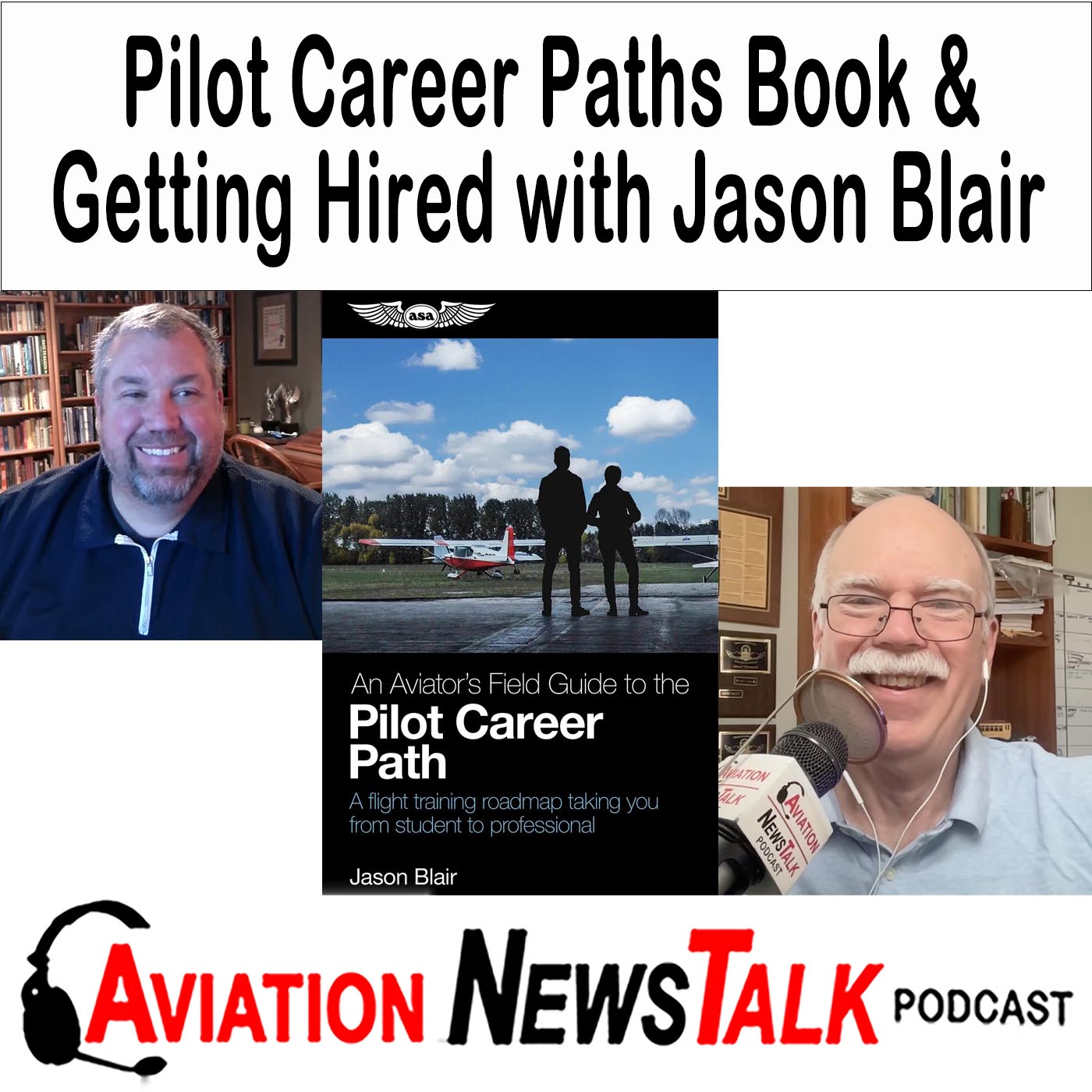
416 Airline Pilot Career Path: Part 61 vs Part 141, R-ATP & Getting Hired (Jason Blair)
Mar 500:58:04Tap to summarizeAirline pilot career path roadmap with Jason Blair: Part 61 vs Part 141, R-ATP, and what matters most for getting hired. Max talks with Jason Blair about building an airline pilot career path that gets you to the right seat faster—without expensive detours. If you're comparing Part 61 vs Part 141, wondering whether R-ATP changes your strategy, or trying to figure out what actually helps with getting hired, this episode is a practical roadmap. Jason explains how to think backwards from your target job (regional, major airline, charter, corporate) and make training decisions that protect your timeline and seniority. They start with the gatekeeper: the FAA medical. Jason shares how to "preflight" potential medical issues, avoid self-inflicted paperwork delays, and choose the right AME strategy. Then they break down training options: where Part 141 structure can reduce total hours and accelerate progress, and where Part 61 flexibility makes more sense for career changers balancing work and family. Jason also clarifies restricted ATP (R-ATP) pathways and a common mistake that can eliminate eligibility if you do training in the wrong order. Finally, they cover the hiring reality: why airlines are becoming more selective again, how checkride failures and training history show up, and how to present your story like a professional. They close with the unglamorous stuff that wins careers: clean logbooks, backups, and smart training finances. If you're getting value from this show, please support the show via PayPal, Venmo, Zelle or Patreon. Support the Show by buying a Lightspeed ANR Headsets Max has been using only Lightspeed headsets for nearly 25 years! I love their tradeup program that let's you trade in an older Lightspeed headset for a newer model. Start with one of the links below, and Lightspeed will pay a referral fee to support Aviation News Talk. Lightspeed Delta Zulu Headset $1299NEW – Lightspeed Zulu 4 Headset $1099 Lightspeed Zulu 3 Headset $949Lightspeed Sierra Headset $749 My Review on the Lightspeed Delta Zulu Send us your feedback or comments via email If you have a question you'd like answered on the show, let listeners hear you ask the question, by recording your listener question using your phone. Mentioned on the ShowBuy Max Trescott's G3000 Book Call 800-247-6553 Jason Blair's website Jason's Books: An Aviator's Field Guide to the Pilot Career Path Private Pilot Oral Exam Guide Instrument Pilot Oral Exam Guide Commercial Pilot Oral Exam Guide Flight Instructor Oral Exam Guide Free Index to the first 282 episodes of Aviation New Talk So You Want To Learn to Fly or Buy a Cirrus seminars Online Version of the Seminar Coming Soon – Register for Notification Check out our recommended ADS-B receivers, and order one for yourself. Yes, we'll make a couple of dollars if you do. Get the Free Aviation News Talk app for iOS or Android. Check out Max's Online Courses: G1000 VFR, G1000 IFR, and Flying WAAS & GPS Approaches. Find them all at: https://www.pilotlearning.com/ Social Media Like Aviation News Talk podcast on Facebook Follow Max on Instagram Follow Max on Twitter Listen to all Aviation News Talk podcasts on YouTube or YouTube Premium "Go Around" song used by permission of Ken Dravis; you can buy his music at kendravis.com If you purchase a product through a link on our site, we may receive compensation.
Transcribe →
415 Log IFR Instrument Currency in an FAA-Approved Simulator + Redbird Factory Tour
Feb 2700:55:54Tap to summarizeMax talks with Josh Harnagel, COO of Redbird Flight, about a practical use-case that matters to almost every instrument pilot: logging IFR instrument currency and staying proficient in an FAA-approved simulator. Josh explains why many pilots buy Redbird's FAA-approved tabletop devices specifically for currency—especially to knock out the holding requirement—and why he likes shooting an approach in the simulator before flying it in the airplane. Max shares why he does the same thing before recurrent training, because simulator reps surface the "gotchas" that can spike workload in real IFR—like autopilot behavior on LNAV+V. Josh breaks down Redbird's product lineup, clarifies what's FAA approved versus "just a computer," and explains where Basic ATDs and Advanced ATDs fit in training. They also touch on Redbird GIFT (Guided Independent Flight Training), remote instruction possibilities, and why avionics emulation is hard (and expensive) to do with perfect fidelity. Then the episode pivots to a Redbird factory tour: outbound shipping and crating, assembly workflow, fabrication of honeycomb aluminum shells, wiring harness and switch panel build, PCB soldering and parts inventory, completions/testing, and even the cooling/vent system inside the sim—ending with why engineering and the shop are co-located for faster iteration and better quality. If you're getting value from this show, please support the show via PayPal, Venmo, Zelle or Patreon. Support the Show by buying a Lightspeed ANR Headsets Max has been using only Lightspeed headsets for nearly 25 years! I love their tradeup program that let's you trade in an older Lightspeed headset for a newer model. Start with one of the links below, and Lightspeed will pay a referral fee to support Aviation News Talk. Lightspeed Delta Zulu Headset $1299NEW – Lightspeed Zulu 4 Headset $1099 Lightspeed Zulu 3 Headset $949Lightspeed Sierra Headset $749 My Review on the Lightspeed Delta Zulu Send us your feedback or comments via email If you have a question you'd like answered on the show, let listeners hear you ask the question, by recording your listener question using your phone. Mentioned on the ShowBuy Max Trescott's G3000 Book Call 800-247-6553 Video Simulation of Epic E1000 Crash at Steamboat Springs, CO on Patreon Helicopter VR Flight Simulator Training podcast: Loft Dynamics Free Index to the first 282 episodes of Aviation New Talk So You Want To Learn to Fly or Buy a Cirrus seminars Online Version of the Seminar Coming Soon – Register for Notification Check out our recommended ADS-B receivers, and order one for yourself. Yes, we'll make a couple of dollars if you do. Get the Free Aviation News Talk app for iOS or Android. Check out Max's Online Courses: G1000 VFR, G1000 IFR, and Flying WAAS & GPS Approaches. Find them all at: https://www.pilotlearning.com/ Social Media Like Aviation News Talk podcast on Facebook Follow Max on Instagram Follow Max on Twitter Listen to all Aviation News Talk podcasts on YouTube or YouTube Premium "Go Around" song used by permission of Ken Dravis; you can buy his music at kendravis.com If you purchase a product through a link on our site, we may receive compensation.
Transcribe →