
Podcast
Awesomers.com
Hosted by Awesomers.com · EN
If you are an Amazon seller, ecommerce entrepreneur, ebay seller or you want to learn how to sell online this Podcast is for YOU!
What is an Awesomer?
An Awesomer is someone who through a series of long-term actions and behaviors has demonstrated that they are not satisfied with normal. They are achievers to a penultimate degree in their own industry specialty or area of interest. There are no monetary criteria to be an Awesomer, in fact, many mega-wealthy people are not Awesomers. Some of them are Normies. Others are even Basics! Awesomers want to thrive; not just survive. Awesomers are trying to improve their lives and the lives of those around them. They are trying to make an impact, in whatever way they can, on the world.
Many Amazon Sellers are awesomers. They took the Amazon FBA opportunity and they siezed the moment by taking action. If you are an Amazon Seller or interested in selling in eCommerce you should take a moment now and listen to all the Awesomer origin stories.
Entrepreneurs solve problems in the world. They don’t create them. Awesomers are never done learning or improving. To become an Awesomer one must realize the journey to improve is perpetual. In other words, you don't arrive to the land of the Awesomer as a destination. Being an Awesomer means you are on the path of achievement for the sake of improving your life and those around you. Awesomers are 75% more likely to listen to educational or improvement podcasts.**
What is a Normie?
A Normie is someone who is stable and well established in life and ultimately is satisfied with the status quo. They don't want to rock the boat. They don't want to take risks. Normies are satisfied to survive. Normies are fine, just ask them. Awesomers have no problems with Normies. In fact, most Awesomers are surrounded by Normies who are their close friends and even family. More often than not Normies do not understand the plight of the Awesomer so they will warn the Awesomer to “be careful” or “don’t do it” or provide other guidance they mean to be helpful, but it is really just negativity that the Awesomer must overcome. We all know and love Normies and we are not criticizing Normies. We're only delineating some of the differences that exist between Awesomers and Normies. Normies are 84% more likely to listen to news about the Kardashians than Awesomers.**
What is a Basic?
A basic is someone who doesn't care about anyone which is often including themselves. They self-sabotage, they create problems, and they are not people that anyone should hang out with. They suck the life out of everyone around them by manufacturing drama, problems, or other nonsense. These people have chosen a path for themselves often by years and years of behaviors and actions which lead them to the life they have today; which is ok with us. We’re not judging. We just choose not to have our journey detoured by crossing the path of a Basic. (We also refer to this as the no A-HOLE rule.) 63% of basics hav...
18episodes
Episodes
Newest firstAll episodes
Founders Bootcamp Online
Jun 900:52:14Tap to summarizeAre you truly leading your company, or are you just its most senior, overworked employee? Welcome to a special deep-dive episode of the https://Awesomers.com Podcast! Today, we are tackling the "reluctant leader trap"—that dangerous phase where founders get stuck grinding through daily technical tasks instead of building a business that actually serves their life. Drawing on the Catalyst88 Executive Training Program and the deep experience of veteran entrepreneur, CEO coach, and mentor Steve Simonson, this episode is a masterclass in founder-to-founder training. We break down the exact mindset shifts and practical tools you need to stop working in your business and start working on it. https://stevensimonson.com In this action-packed episode, we cover: The Three Pillars of Leadership: How to master Vision, Action, and Culture, and practically apply them to your daily executive decision-making. Discovering Your "WHY": Why finding your intensely personal purpose—beyond just financial success—is the ultimate unlock for unlimited energy and momentum. Systemic Thinking: How to stop the "blame game" and use system-based solutions to crush the most common and annoying small business obstacles. The Strategic Objective: A step-by-step guide to writing a crystal-clear vision that defines exactly where your company is going and what it will look like when it's "finished." It’s time to stop letting your business consume you. Learn how to build systems that liberate you to do the work that actually matters! Ready to take action and level up your leadership? If you are a highly motivated founder looking to scale alongside the best, head over to https://Catalyst88.com right now to learn more about the Chairman's Circle Mentoring group led by Steve Simonson. Listen now and start building the architecture of your freedom! #AwesomersPodcast #SteveSimonson #Catalyst88 #Leadership #Entrepreneurship #SystemicThinking #FindYourWhy #BusinessGrowth #CEOcoach
Transcribe →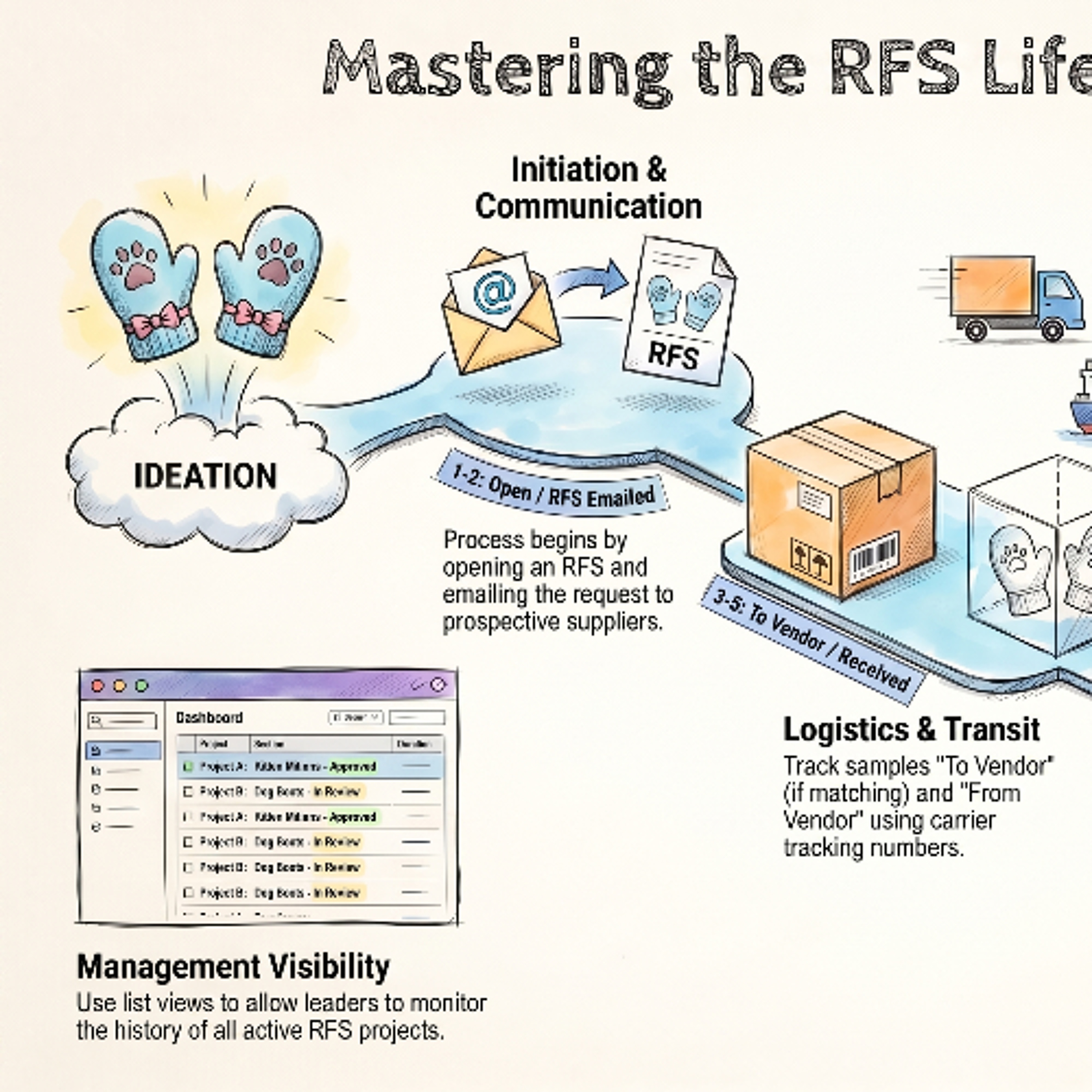
How to manage the sourcing process for brand owners
Jun 400:41:32Tap to summarizeTo get into the article that was the source for this podcast go here: https://x.com/stevesimonson/status/1776373385670569993 Title: Mastering Global Sourcing in 2026: The vFLOW Method Explained! Hook: Are you still sourcing products like it's 2019? It's time to upgrade your supply chain with the vFLOW method—your ultimate GPS for navigating global sourcing without the headaches! Intro: In this summary, we are diving into Steve Simonson's vFLOW framework, which stands for Vendor Freight Logistics Optimization Worldwide. Sourcing in 2026 doesn't have to be a maze of complex jargon. This method is all about keeping things professional, data-driven, and highly systematized so you can easily manage economic potholes. Phase 1: Ideation & Specifications Before you even reach out to a supplier, you need to know exactly what you're making and how it stands out. Do the Research: Use tools like Helium10 or DataDive to scope out the competition and pinpoint your product opportunity. Define the Specs: Build a rock-solid template of product specifications (size, weight, materials). This ensures every potential supplier is quoting on the exact same baseline, making it much easier to compare them later. Phase 2: Communication (aka "Supplier Speed Dating") Next, line up 5 to 10 potential candidates. Look Beyond Price: The lowest price isn't always the winner—you get what you pay for. You need to assess their responsiveness, capacity, business history, and credit rating. Centralize Data: Track all your communications and quotes in a shared system. This allows your entire global team to watch the progress in real-time and jump in to add value. Phase 3: The Sample Showdown (Request For Sample) When it’s time to review the wares of your potential supply suitors, don't leave anything to chance. Be Specific: Ensure every sample order has sufficient details to keep your results consistent. Document all shipping details and tracking information. Use Visuals: Include photos of what you want. In the supply chain world, a picture isn't just worth a thousand words; it saves a thousand hours of back-and-forth. Track the Status: Log the receipt of these inbound samples into your system so project owners and managers can easily view the history and status of every Request For Sample (RFS). The Wrap Up: Money & Logistics Don't let hidden costs ruin your margins. Negotiate with Data: Pricing will fluctuate based on raw materials, labor, and energy. If the cost of a commodity drops, ask for a discount; if it rises, validate the supplier's story. Watch the Currency: Currency conversion is a wild card that can sneak up on you. Index currency rates with every Purchase Order. Calculate Landed Costs: Shipping and tariffs change constantly. Use Landed Cost Vouchers within your system to track your actual landed costs—including ocean freight and customs duties—so you know exactly what you're paying. Outro: Ultimately, the vFLOW method is about driving your sourcing decisions with cold, hard facts. By systematizing your product specs, supplier communications, and true logistics costs, scaling your physical product brand becomes a breeze! https://symoglobal.com https://parsimony.com https://catalyst88.com
Transcribe →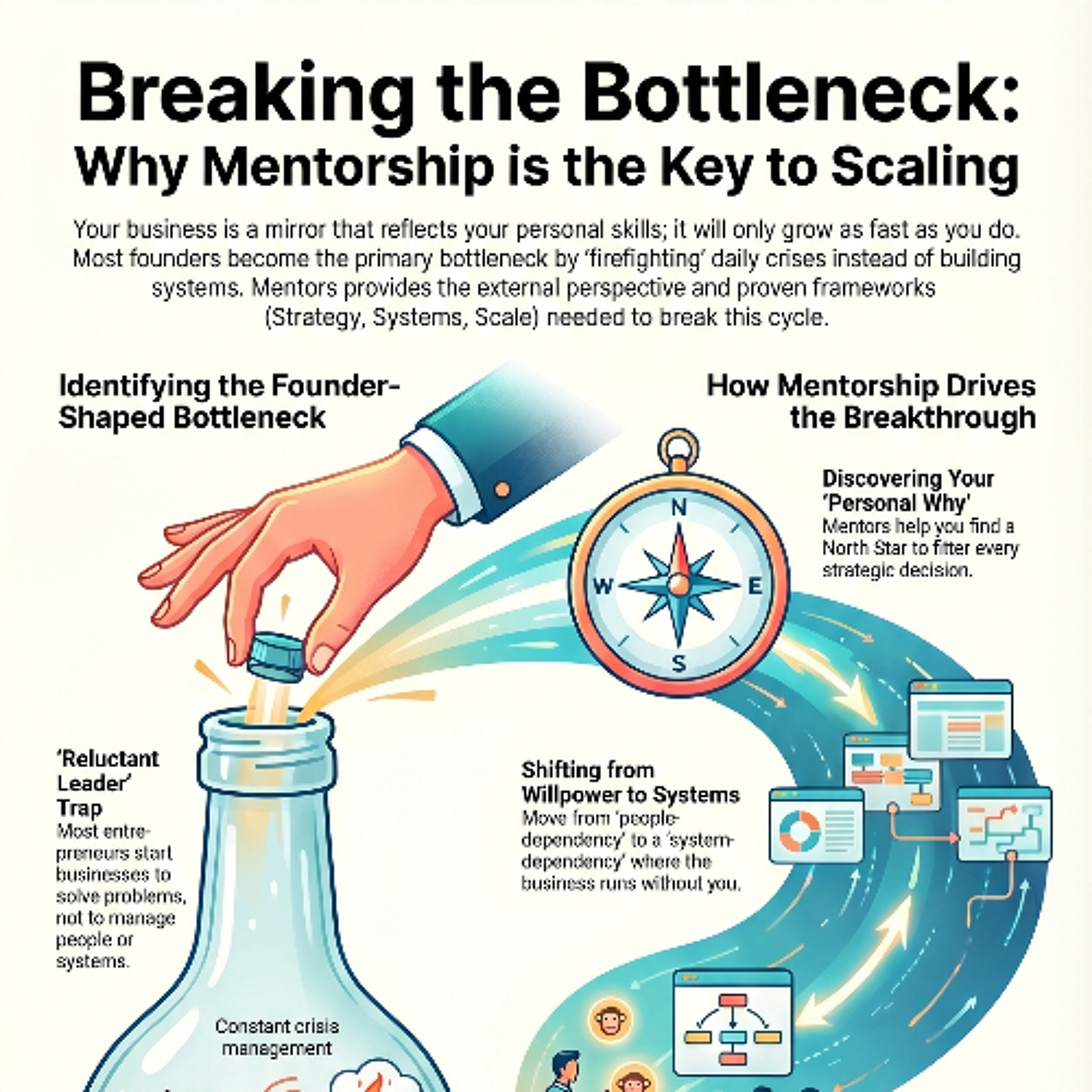
Why your business can't scale
Apr 1600:21:18Tap to summarizeWhy your business can't scale by Awesomers.com
Transcribe →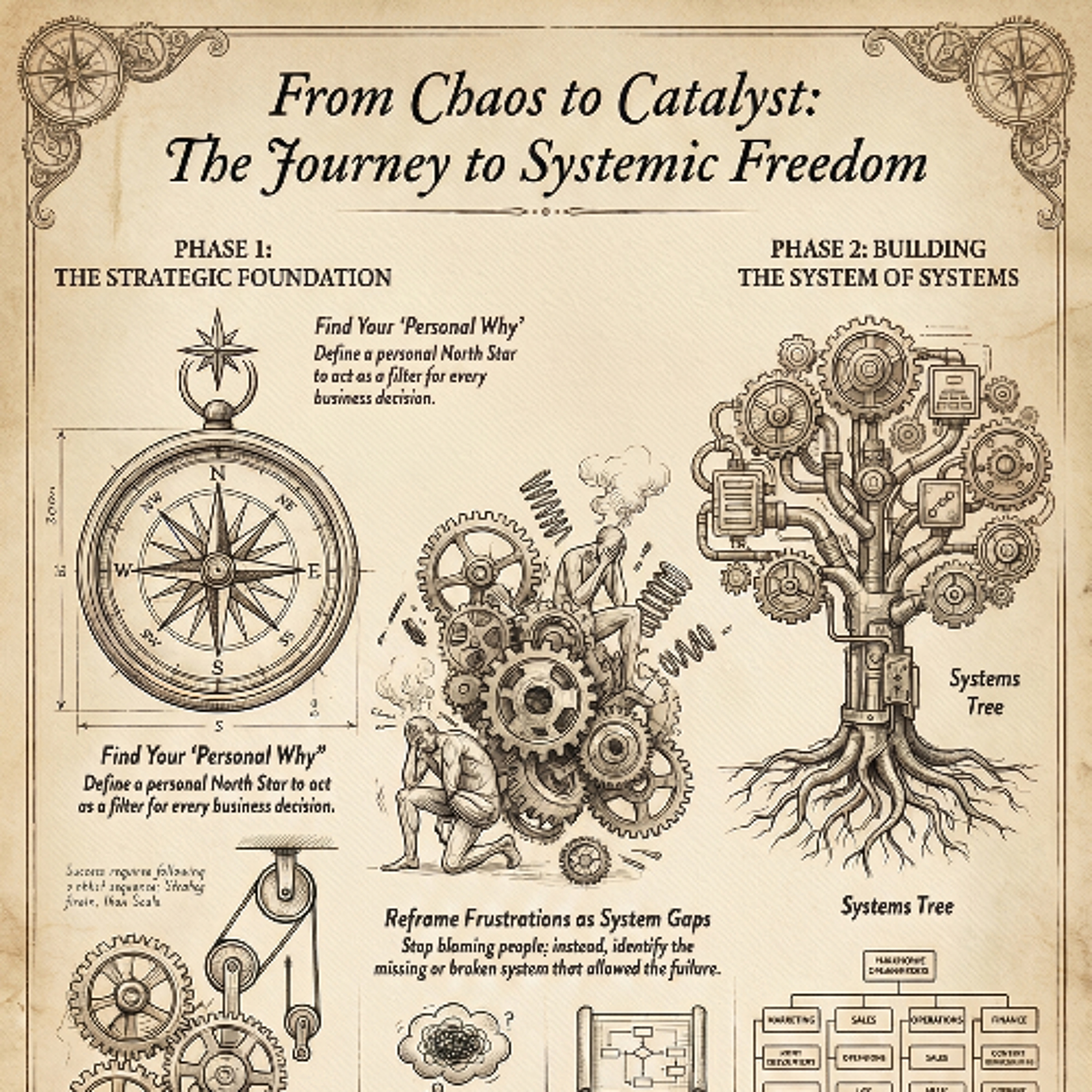
Stop being your most senior employee
Apr 1400:54:48Tap to summarizeIn this video transcript, entrepreneur Steve Simonson introduces a workshop series titled AI Blueprint, which focuses on transitioning from merely collecting software to achieving tangible business execution. He addresses the common anxiety of falling behind in technology, encouraging leaders to ignore "shiny objects" in favor of tools that produce durable, measurable results. The primary demonstration features Manus AI, an agentic platform used to build comprehensive brand guidelines through a structured, interactive interview process. Simonson explains how to integrate these guidelines into custom AI bots that can objectively score marketing content for brand alignment, thereby eliminating organizational bottlenecks. To streamline the data-gathering phase, he also highlights Google’s Pomelli as a resource for extracting brand DNA and visual aesthetics from existing websites. Ultimately, the session provides a practical roadmap for founders to professionalize their organizations and ensure creative consistency using automated workflows. Https://catalyst88.com
Transcribe →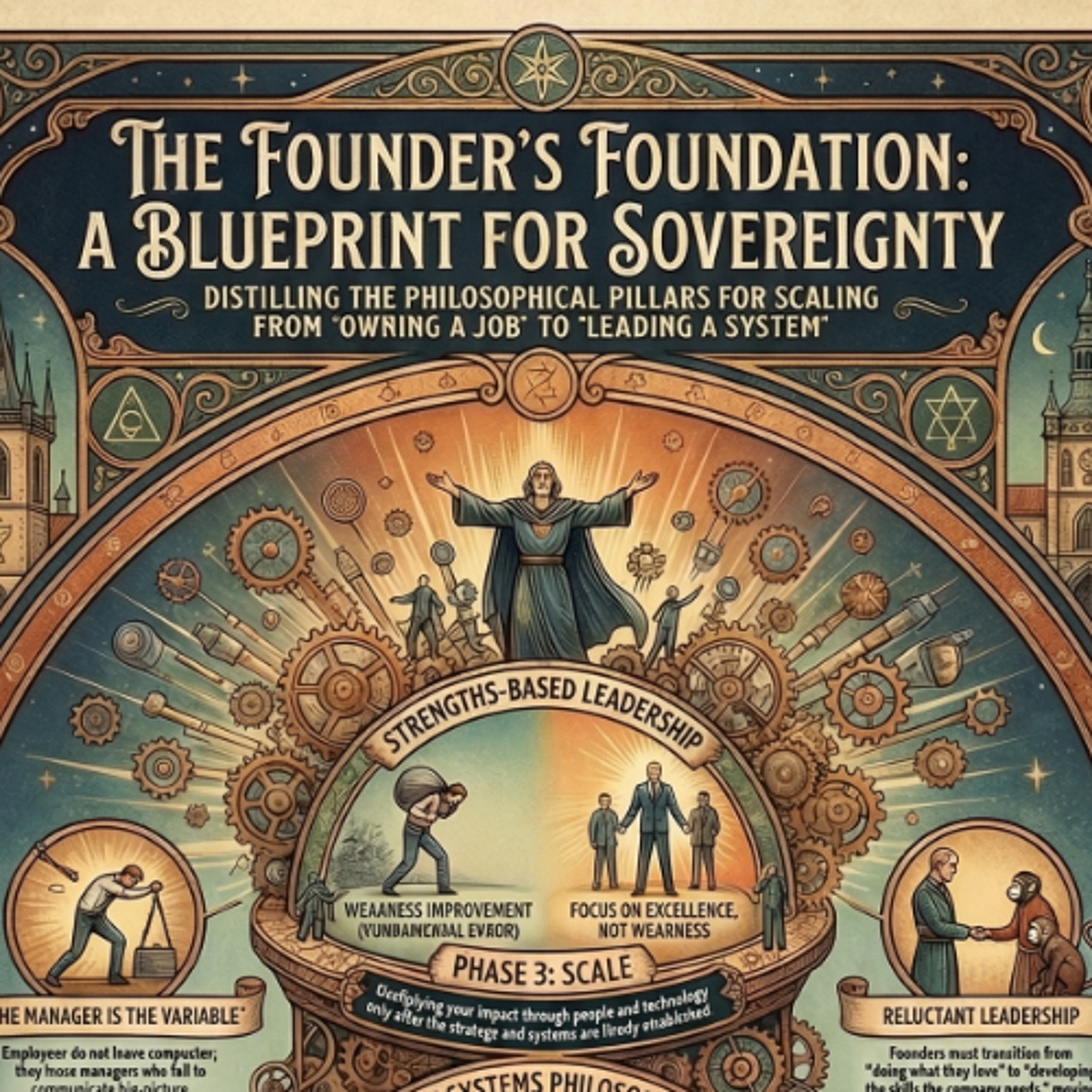
Stop being the bottleneck to scale your business
Mar 2600:50:42Tap to summarizeIn this episode, we dive deep into the uncomfortable truth every entrepreneur eventually faces: you are the bottleneck in your business. If you find yourself jumping from one crisis to the next, putting out fires instead of planning for growth, or feeling like your business would grind to a halt the moment you stepped away, then you don’t own a business—you own a job. Host Steve Simonson challenges the common paradigms of leadership and management, offering a framework to transform from a "reluctant leader" into an intentional architect of your organization. We explore why the ceiling of your company is ultimately determined by the ceiling of your own leadership and how to break through it by prioritizing strategy and systems over sheer willpower. You’ll learn how to shift from a permission-based culture to one of ownership where team members take responsibility for results. Steve shares practical tactics for moving your team away from asking "What should I do?" to proposing their own solutions. We also discuss the "Frustration to System" process, which allows you to take any recurring headache in your business and turn it into a scalable, documented system. https://catalyst88.com https://parsimony.com https://stevensimonson.com https://symoglobal.com
Transcribe →
Why Isolation is bad for Founders
Mar 1200:53:02Tap to summarizeIsolation is often described as the **"loneliness of command,"** where a founder feels like they are standing alone on the bridge of a ship in the middle of the ocean. While independence is part of an entrepreneur's DNA, it can quietly transform into a dangerous trap where the most important decisions of a company’s life are made in total isolation. The following points summarize why this state is so detrimental to both the founder and the business: * **The Danger of Blind Spots:** The biggest risks to a business are rarely external market forces; they are the internal blind spots in a founder's own leadership. Without a peer group or mentor to provide a high-level feedback loop, these flaws remain invisible to the founder until they cause significant damage. * **The "Slowest Way to Win":** Attempting to figure everything out alone is the least efficient path to success. Isolated founders learn every lesson through expensive, firsthand failure, effectively "paying retail" for wisdom. A mentor or advisory circle acts as a guide through a maze, pointing out "landmines" so the founder can compress ten years of trial and error into a single year of progress. * **The Psychological Weight of Leadership:** As a company scales, the decisions get heavier, the payroll gets bigger, and the consequences of a mistake become more expensive. Making these high-stakes choices without a trusted advisory environment leads to heightened stress and a feeling of being "stuck and secretly terrified." * **Becoming the Bottleneck:** Isolated founders often fall into the trap of "hustle culture," where they believe they must do everything themselves. This makes them the primary bottleneck of the company. Without external accountability and structured systems, they cannot transition from being a daily operator to a visionary architect. * **The Price of Ignorance:** Every mistake made in isolation burns capital and time. Founders who go it alone often burn more cash and take longer to reach scale because they lack the perspective to see more efficient routes already discovered by veteran operators. Ultimately, entrepreneurship is a team sport. Breaking isolation through forums like the Chairman's Circle allows founders to trade "heroics" for "systems," ensuring that the business can scale without the founder having to white-knuckle every decision. **Explore more from Steve Simonson and the Catalyst88 community:** * **Catalyst88:** [https://catalyst88.com](https://catalyst88.com) * **Awesomers Podcast:** [https://awesomers.com](https://awesomers.com) * **Parsimony:** [https://parsimony.com](https://parsimony.com) * **SymoGlobal:** [https://symoglobal.com](https://symoglobal.com) * **Best AI Agent:** [https://bestaiagent.com](https://bestaiagent.com) * **HumanityNow:** [https://humanitynow.com](https://humanitynow.com)
Transcribe →
Transform Your Business From Chaos to Order
Mar 500:48:38Tap to summarizeThe Firefighter Trap — Moving From Chaos to Systemic Order Description: Are you spending your entire day putting out fires instead of building your empire? In this episode of the Founder Foundations Mini-Series, we dive deep into the "Paradigm of Normal" entrepreneurship—a state characterized by constant chaos, emotional decision-making, and the exhausting role of the "Founder Firefighter." If you find yourself stuck in the trenches, reacting to every daily blaze, you aren’t managing a business; you’re being managed by one. Host Steve Simonson breaks down why most entrepreneurs fall into the trap of becoming the ultimate problem-solver, or "Mr. Wizard," for their team. While it might feel good to save the day, this "permission-based" management style creates a massive bottleneck that kills scalability and steals your sanity. What you’ll learn in this episode: Breaking the Paradigm: Why "normal" business operations are actually chaotic and how to shift toward a rational, predictable model. The Anatomy of a System: How to view every function of your business as a flow chart with a clear Input, Process, and Completion point. System vs. Personality: Why you must stop relying on "magical unicorn" employees and start building systems that produce predictable results regardless of who is in the seat. Managing by Exception: How to set up your "control panel" so you only have to step in when a light turns red, leaving you free to focus on high-level strategy. The Golden Rule of Management: Why you should never manage what you can’t measure and why you should always "blame the system, not the person." Stop being the primary firefighter in your company. Learn how to engineer your business so the system runs the business, the people run the system, and you—the founder—finally get your freedom back. Subscribe and join the movement at Awesomers.com to replace your daily chaos with world-class order. https://awesomers.com https://catalyst88.com https://stevensimonson.com https://symoglobal.com https://parsimony.com https://ibamboo.com https://floorshop.com
Transcribe →
MyMentorSteve.com
Mar 400:28:46Tap to summarizeThe Stoic Inventor: How Steve Simonson Defies the "All-Rounder" Myth through Cognitive Depth 1. Introduction: The Myth of the Universal Leader In the corridors of corporate leadership, we are often sold the exhausting myth of the "universal leader"—the individual who is perfectly balanced, emotionally omnipresent, and proficient in every competency. This pursuit of individual perfection is a psychological trap. In reality, the most high-impact leaders are rarely "well-rounded"; they are sharp, specific, and deeply invested in their unique "fingerprint" of talent. Instead, his leadership is a sophisticated synthesis of Ideation, Responsibility, and Self-Assurance—a map of contribution that prioritizes cognitive depth over broad mediocrity. 2. The Power of Domain Diversity (Not Individual Perfection) A Rare Synthesis across the Four Domains Gallup’s research identifies four essential domains of leadership: Executing, Influencing, Relationship Building, and Strategic Thinking. While the myth suggests a leader must be dominant in all four, the reality is that a strong team requires this diversity, while a strong leader needs only to master their specific intersection. Simonson’s profile is remarkably balanced, touching every single domain: Executing (Responsibility), Influencing (Self-Assurance), Relationship Building (Relator), and Strategic Thinking (Ideation, Learner). This rare spread allows him to serve as a bridge between high-level strategy and ethical execution, provided he stays aligned with his natural talents rather than trying to mimic a different leadership style. Gallup found that it serves a team well to have a representation of strengths in each of the four domains of leadership strength: Executing, Influencing, Relationship Building, and Strategic Thinking. 3. The "Inventor" Mindset vs. Traditional Constraint Ideation: The Cognitive Disruptor as Authoritative Voice For Simonson, the "Ideation" theme is far more than a creative spark; it is the drive of a "mental explorer" who finds underlying causes where others only see symptoms. He is a cognitive disruptor, recruited by groups specifically for his ability to generate concepts that defy conventional logic. This creates a natural friction point: he grows weary of "prescribed" activities and rigid traditions that stifle better methods. Interestingly, this "inventor" mindset is paired with an unexpected Influencing tool. Simonson intentionally commits intricate words and specialized terminology to memory. 4. Stoicism as a Strategic Asset Self-Assurance: Quiet Certitude over Ego In an era of performative leadership, Simonson’s "Self-Assurance" offers a masterclass in strategic stoicism. He keeps a "tight rein on emotions," preferring the cold comfort of evidence over the warmth of personal drama. This lack of ego-driven seeking allows him to take high-level calculated risks that others might find paralyzing. By weighing consequences and studying facts with a reserved, cautious eye, he can "defy the odds." His confidence is a quiet, internal resource—a rational foundation that allows him to pursue unpopular but necessary courses of action. https://catalyst88.com https://go.catalyst88.com https://parsimony.com https://stevensimonson.com https://awesomers.com https://symoglobal.com
Transcribe →Poorly Made in China - Book Review Revisited
Aug 2500:11:10Tap to summarizeI released Episode 53 of the Awesomers.com podcast some time back, and it's a deep dive into a book that I consider absolutely essential for anyone involved in manufacturing or trade with China: Paul Midler's "Poorly Made in China." If you're doing business there, this isn't just a recommendation; it's a necessity. Paul Midler is a brilliant author who has genuinely lived the stories he outlines in this book. With over 15 years of my own experience trading with China, I can tell you that many of his anecdotes are eerily familiar – often both funny and tragically so. This book offers an extraordinary, in-depth look into how China's export industry truly operates, and indeed, how China itself works. In this episode, I break down some of the most critical concepts Paul discusses, which resonate strongly with my own observations: • Quality Fade (or Product Fade): This is real. Factories subtly reduce product quality over time—thinner shampoo bottles, changed formulas, subcontracting to cheaper facilities, or reducing material weight or thread count. These changes are often hard to detect visually, making vigilance crucial. • "Price Go Up": You've probably heard it. Factories frequently increase prices, citing labor, environmental controls, or raw material costs. Yet, they rarely, if ever, inform you when prices could go down due to currency shifts or other factors. Their objective, after all, is to maximize their own profit. • Counterfeit Culture & Intellectual Property (IP) Issues: The book highlights astonishing instances, like factories copying a customer's product formula and then audacious claiming it as their own intellectual property when asked for disclosure. • Profit Siphoning & Under-reporting: Paul details cases such as Chinese partners in joint ventures siphoning off all profits, and factories under-reporting production of patented goods to avoid paying rightful patent fees, even devising elaborate schemes to circumvent oversight programs. • Manipulation Tactics: I caution listeners about "guanxi" (long-term relationships), which, while valuable, can also be used as a manipulation tactic by factories. Understanding these strategies is paramount to maintaining an even playing field. I truly believe that "knowledge is power" when navigating relationships with Chinese factories. "Poorly Made in China" is one of the very best books I've seen on the subject—extraordinarily insightful and entertaining, despite the serious lessons it imparts. Honestly, I'd consider it "entrepreneurial malpractice" not to recommend it. If you trade with China, buy products from China, or develop products there, reading this book and understanding these dynamics will help you be better prepared and significantly minimize potential problems through proper management. Watch the full episode for a deeper dive: 👉 https://awesomers.com/53 You can also find more helpful processes and procedures on our mailing list at https://awesomers.com. For professional, Amazon-ready product photography for your China-manufactured goods, check out https://symoglobal.com. And for the business operating system for your marketplace business, visit https://parsimony.com. Let me know in the comments if you've read "Poorly Made in China" or experienced any of these situations! If you want to work with me check out https://catalyst88.com and https://humanitynow.com or our new chatbots at https://chat.parsimony.com #ManufacturingInChina #PoorlyMadeInChina #SteveSimonson #AwesomersPodcast #ChinaTrade #SupplyChain #QualityControl #IntellectualProperty #BusinessStrategy #GlobalTrade
Transcribe →
Awesomers Overview
Oct 31, 202400:16:30Tap to summarizeHere's an AI overview that reviews the very first Awesomers episode. https://awesomers.com/1 Awesomers: A Detailed Briefing This briefing analyzes content from the Awesomers Podcast, focusing on episode one and the website's core message. The analysis highlights key themes, important facts, and philosophies presented by Steve Simonson, the podcast host and a seasoned entrepreneur. Core Themes: Awesomer vs. Normie: The content establishes a distinct dichotomy between "Awesomers" and "Normies." Awesomers are characterized as proactive individuals who challenge the status quo, embrace continuous learning, and strive to create value. They own their mistakes, focus on the big picture, and believe in abundance. Conversely, Normies are often portrayed as risk-averse, reactive individuals who blame circumstances, get bogged down by problems, and operate with a scarcity mindset. Pay It Forward & Abundance Mindset: The podcast is deeply rooted in Zig Ziglar's philosophy: “You can have everything in life you want, if you will just help other people get what they want.” This "pay it forward" mentality underscores the importance of helping others without expecting anything in return. It's closely tied to an abundance mindset, believing that there's enough success and happiness for everyone. Strategy, Systems, & Scale: Simonson emphasizes the importance of a three-pronged approach to business success: strategy, systems, and scale. He encourages entrepreneurs to develop their own unique strategies, implement robust systems (like his https://parsimony.com ERP system), and leverage the power of collective growth through e-commerce associations like https://empowery.com Important Ideas & Facts: Knowledge is Equity: Simonson repeatedly stresses the importance of continuous learning, stating that “knowledge is equity.” He highlights successful individuals like Warren Buffet, Elon Musk, and Bill Gates who dedicate significant time to reading and knowledge acquisition. He encourages listeners to invest in their intellectual capital as it's a valuable asset that can never be taken away. Focus on Strengths: Instead of dwelling on weaknesses, Simonson advocates for doubling down on one's strengths. He believes that individuals and organizations should focus on their areas of excellence and build teams that complement each other. Sustainable Strategies over Quick Fixes: While acknowledging the appeal of "hacks" and quick fixes, Simonson cautions against relying on them for long-term success. He emphasizes the importance of developing sustainable strategies grounded in sound business principles. Notable Quotes: "Equity over the long run is the most important strategic indicator that your strategy is working." This quote emphasizes the need for focusing on long-term value creation rather than short-term gains. "Knowledge is equity; nobody can take knowledge away from you." This statement reinforces the importance of continuous learning and knowledge acquisition as a valuable personal asset. "Wherever you are in life today, it's because of all of your decisions up until this point." This thought-provoking quote encourages listeners to take responsibility for their choices and their impact on their current situation. "Awesomers understand the world of abundance and disregard the scarcity mindset." This quote highlights a key difference in perspective between Awesomers and Normies, emphasizing the importance of believing in limitless opportunities. "Awesomers do the right thing, even if nobody is looking." This statement underscores the importance of ethical behavior and acting with integrity regardless of external validation. Overall, the Awesomers Podcast promotes a philosophy of proactive, value-driven entrepreneurship, encouraging individuals to embrace an abundance mindset, focus on their strengths, and continuously learn and grow. Additional resources: https://symoglobal.com https://catalyst88.com https://stevensimonson.com
Transcribe →