← B2B Breakthrough Podcast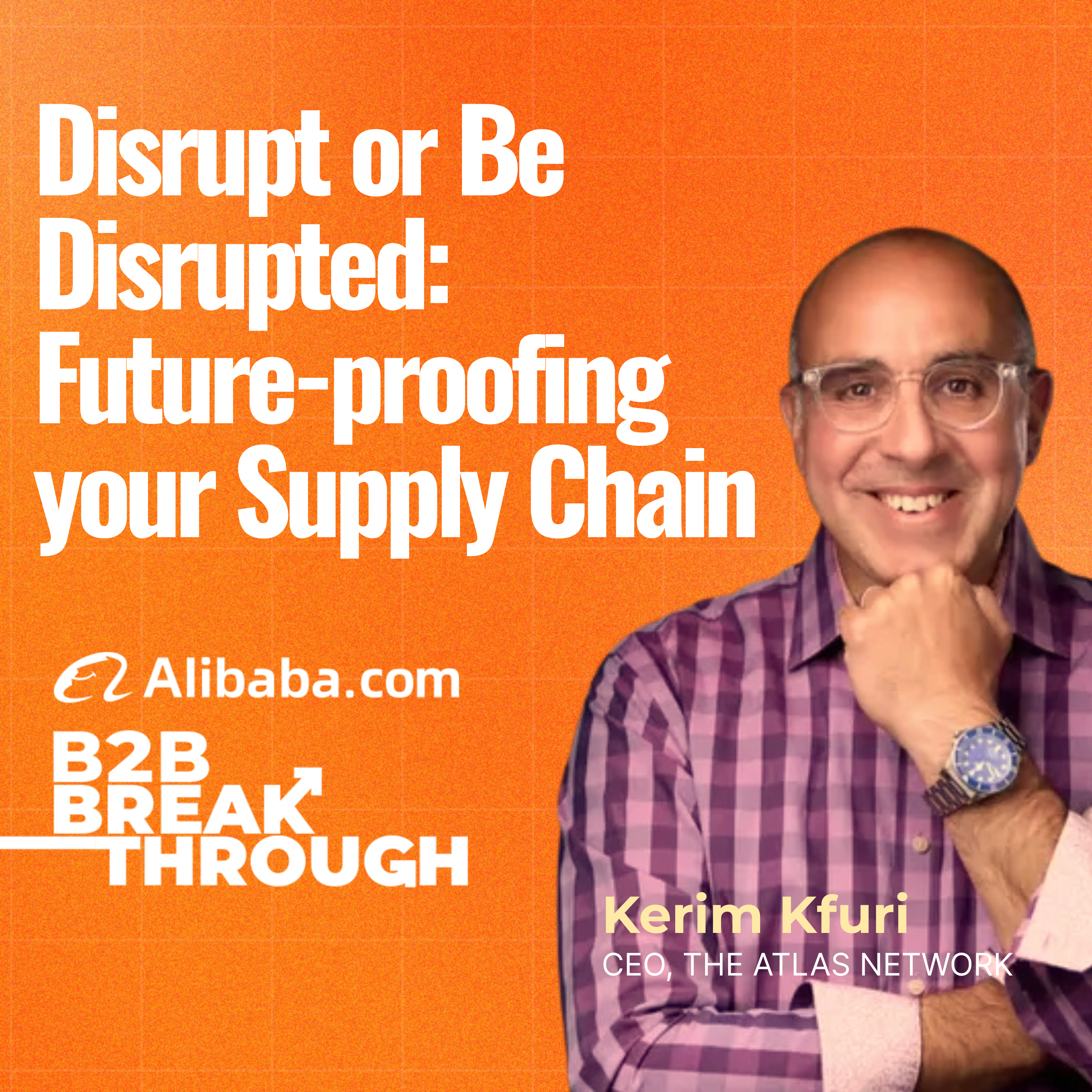
B2B Breakthrough Podcast
Disrupt or Be Disrupted: Future-proofing your Supply Chain with Kerim Kfuri
00:36:43
Why does treating "every production as the first time" prevent the kind of complacency that turns mass production into mass disaster?Turning disruption into opportunity requires more than just quick thinking—it demands the right mindset, strategic preparation, and a willingness to embrace chaos as fuel for innovation. In this episode of B2B Breakthrough, host Ciara Cristo chats with Kerim Kfuri (https://www.linkedin.com/in/kerimkfuri/), President and CEO of The Atlas Network (https://theatlasnetwork.com) and global supply chain strategist, about mastering the art of leading through uncertainty. With decades of experience helping businesses navigate everything from tariff disruptions to pandemic-induced shortages, Kerim reveals his three-step methodology for controlling the controllable factors while building resilience against the unforeseeable. Learn how to transform your biggest challenges into competitive advantages through strategic supplier relationships, proactive risk assess...
Loading summary
Transcript50 lines
- [00:00]
Kareem Kafouri
It starts with the right mentality. And from the mentality, having the willingness to open yourself up to the opportunities that will present themselves to you or you can search for, because you had that right mentality, you had that open mindset, that limitless mindset. Nothing is set in stone. Things can ebb and flow and you have to be dynamic enough and look at those challenges as opportunities. Look at that chaos as an opportunity.
- [00:28]
Ciara Christo
Welcome to the B2B Breakthrough Podcast. We're here to bring you all the best knowledge, insight, insights and strategies from e commerce experts, successful business owners, and the team@alibaba.com that you'll need to grow your business and achieve your next big breakthrough. I'm your host, Ciara Christo. All right, today on the show, I'm joined by Kareem Kafouri, the president and CEO of the Atlas Network and a global supply chain strategist with a knack for turning disruption into opportunity. With decades of experience leading transformation across industries, Karim's here to share how to get ahead of what's next. Karim, welcome to the show.
- [01:02]
Kareem Kafouri
Thank you so much for having me. Really appreciate it.
- [01:04]
Ciara Christo
Well, we're really excited to talk with you. Before we get into the nitty gritty of how to navigate disruption, can you lay a little bit of a foundation for us on your background and what you're focusing on these days?
- [01:15]
Kareem Kafouri
So, you know, as you said, I'm the president and CEO of a company called the Atlas Network, which is a global supply chain solutions company. And as I'm sure you can imagine, we're full of challenges and problems these days in the world of supply chains. So this is a perfect opportunity for our organization, our company, to help businesses small, medium and large navigate disruptions. We've been doing this for more than 20 years. We maintain a network of close to 2,000 suppliers globally and really focus in on commodities, textiles and innovation products. But technically we're very much product and industry agnostic. We have really developed a methodology here which has been focused on risk mitigation, transparency and visibility, which for a very long time in the realm of supply chain were sort of underutilized terms and words. Everybody was more concerned with sort of the lowest price and the fastest delivery. And then you then have major disruptions in the world and then everybody cares about the non interesting things, if you want to say, or the kind of cogs of the machine that really make it work, which are those fundamental ideas of visibility, transparency and risk mitigation, which has always been our forte and focus.
- [02:33]
Ciara Christo
As we talk about things in this world of disruption, it's kind of a catch all term. So how are we defining, or how are you defining rather disruption in 2025?
- [02:43]
Kareem Kafouri
That's an amazing question. And I would really tell you that it's not Even necessarily in 2025. It's just holistically across the supply chain. It is an industry that is filled with ups and downs, and I wrote a book about it. Supply chain ups and downs, that talk about basically the controllable and the uncontrollable factors when it comes to disruption. So we're talking about controllable factors. We're talking about the relationship you have with your suppliers, the level of defects, the timeliness, things that you really try to actively manage from an operational standpoint, maybe even a contractual standpoint, to really ensure that you get an outcome that's most desirable for you or for your clients. But then you have the uncontrollable, the things that just come out of the woodwork that no one really could plan or forecast or think about until it comes to your doorstep. You always try to be as disruption proof as you can be. But what do you do when a pandemic hits? What do you do when Mother Nature decides to just throw a major forest fire that impacts ports? What do you do when there's port workers and strikes that happen, these things that fall outside of the purview, or even things such as tariffs, trade conflicts, war, political environment? All of these things obviously flow through and can create these different levels of disruption. And all of these things are essentially in many ways uncontrollable. They're not in our hands to basically determine. So the conversation about what to look for. What does disruption really mean? It means being able to control the controllable factors and being able to be as disruption proof as you can be for those unforeseen uncontrollable factors. When you're dealing in global economy and.
- [04:35]
Ciara Christo
Global supply chain, what does disruption proof really mean? Do the controllables help to lock down, you know, those uncontrollables and keep them at bay better?
- [04:45]
Kareem Kafouri
The reason why the controllable can help with the uncontrollable is because by managing your controllable factors and understanding your risk areas and what are the mitigation strategies and so forth, you're able to do business so that essentially when the rainy days happen, the uncontrollable situations that you are in a driver's seat to be able to absorb or manage or maintain some of those rockier periods. Now it becomes difficult in industries where the margins are so slim that even though you do the right things in the controllable times, all you need is one apple and then the whole apple cart can fall over. And there are industries that are like that, especially in the commodities area, where it's razor thin margins, the timing is everything, and if anything really kind of goes off kilter, the whole mechanism can break apart very quickly.
- [05:38]
Ciara Christo
So I'm trying to apply that to a real world scenario. So can you help me set the stage with an example? I think in a scenario like that, it's a little bit more difficult to prepare by stocking up on your inventory. You know, when, when the margins are that small. How have you seen that come into play? And how have you avoided big disruptions with clients in the past?
- [05:58]
Kareem Kafouri
It's very, very situational and it's very product by product and industry by industry. But let's take for example, something like a commoditized product like paper goods, okay? Something like, let's say, cardboard corrugated boxes for the consumer, packaged good industry. Well, this is an industry that is very thin margins. It's paper, it's laminates, it's nothing that requires a lot of handwork or artisanal type of functions. It's something that basically goes in a machine and comes out of a machine. And in the end it comes down to the cost of those materials, the paper, the inks, the dyes, so on and so forth. And there isn't really a lot of bells and whistles that one part of the world has over another part of the world. Well, we've definitely helped some of our organizations and companies that we work with, especially in consumer packaged goods, look to transition some of those processes where their timelines may have been elongated, they may be at risk for potential global issues at play that they have no control over rising material costs. And when you sort of factor in these aspects of materials output, resources involved, the technology needed, and finally the costs. And if it's not making sense in one place in the world, but it is making sense in other places in the world because it's a commoditized product. It's nothing overly complicated. It's something that can be shifted quite easily, then you need to look at those, and we've helped clients of ours do that and shift to either closer geographies or geographies that are not as impacted by global events. So to have something that's a better option, that's either closer, more affordable, or mitigate some of these global challenges is something that you have to look at. And we've done that for a lot of our clients.
- [07:43]
Ciara Christo
That's huge. I think having someone like you in their corner to set themselves up for success, knowing that risk is inevitable. It's really important to have someone with your expertise there to, to kind of walk you through that. Because the, the nitty gritty of it is, is not always that intuitive to people. And sometimes. And that's where a lot of this research and preparation comes into play.
- [08:03]
Kareem Kafouri
I always say the only consistency is inconsistency in the global supply chain. And I believe that that is a very important statement. And the other thing that I always say is every production is the first time. That's another major challenge that so many businesses face that don't really have their eyes and ears on the ground, don't have the visibility and transparency into their production process. They assume that because it's been done 100 times before, that the 101st time is going to be just as good as every other time. That is, that is the recipe for your downfall, 100%. Because anything and everything could change from the environment to the materials being used, to the person who's working that production line, that the quality differentials are just slight enough that it just, it creates from mass production becomes mass disaster. And it all happens because you stop kicking the tires, you stop looking under the hood.
- [09:03]
Ciara Christo
So don't get comfy.
- [09:04]
Kareem Kafouri
Never, never. You can't. And that's why I don't have any hair, because, you know, I haven't been comfy for more than two decades. But it is the truth of it. And that is how you get a great outcome. Because you realize the game you're playing. You realize that this is a business that has so many moving parts and so many variables, especially when you're doing it cross border. You know, you have cultural differences, you have all kinds of challenges in the world that can really be able to create major disruptions. So it's quite important that you're always looking ahead.
- [09:42]
Ciara Christo
You got to know the game you're playing.
- [09:44]
Kareem Kafouri
Absolutely. Absolutely. You have to know the game that you're playing. Because in the end of the day, there are so many elements to this game that as business people, we don't always truly understand. We have this mentality, unfortunately, in the Western world, that the rest of the world is going to just kind of do what we need them to do in exactly the way that we think it should be done. And that's a recipe also for disaster, because you stop learning and then you stop leading and you stop being able to get a good outcome.
- [10:16]
Ciara Christo
So I mean, with that in mind, you know, you just mentioned 20 years of discomfort and learning in this industry. What have you learned culturally through these processes? Processes through working with different clients that has helped you bring it forward into, into other relationships within the supply chain world?
- [10:32]
Kareem Kafouri
You have to be a when in Rome type of mentality. When in Rome, do as the Romans do. You have to have this mentality. You have to be a bit of a chameleon to be able to change your colors and adapt and be never set in your ways. I'll give you an example. And you have thought as an entrepreneur or a business that we're going to make it with material A. It's got to be material A, because material A is the best material. That's what we use all over the world and planet, so on, so forth. And it's got to be material A. And it has to be in this design because we say so and we've written it down, we've done in these kinds of ways. Well then in the end you talk with five different suppliers and they end up coming back and saying really the best solution for this is material B. And did you ever think about it, that this design and this design and this design could cause all these downstream impact issues or could give you different kinds of hidden benefits that you maybe never would have thought about and so on and so forth and you gain a significant amount of maybe efficiency, cost restructuring capabilities, innovation that could set your product aside, make it infinitely better than your original roadmap. And it all happened because you were willing to take advice. You're willing to keep your ears open, your eyes open to the suggestions of suppliers that could be either in your backyard or on the other side of the planet. But you're just open, you're just open to the suggestions. And that is very important in the world of global supply chain too.
- [12:02]
Ciara Christo
So it's a little improvisational. There's this element of trust, that trust that is so inherent in a positive working relationship with a supplier. You really have to lean on that to be willing to apply those suggestions and really deeply consider the impacts of them as you go through the process.
- [12:20]
Kareem Kafouri
Correct. And that's why the first step of the process, we have a three step process here at the Atlas Network that regardless of what the product is or the industry is, we apply this and have since day one, the first one is pick the right supplier. For all the things you just said and the thousands of other things that you didn't say, there is this mechanism of looking at the quantifiable and the qualifying factors of what's the right supplier, you know, quantifiable years in business, number of employees, levels of revenue, exportation markets, you know, what kind of technology, what accreditations. They have capabilities and certifications. They have all the numbers, stuff that makes a company look good on paper. And then the qualifying factors, what's their professionalism, what's their accountability, what's their reputation, you know, and all these other things, who have they worked with in the past? Can you interview those groups and get levels of due diligence and vetting? This first step is absolutely essential so that when those scenarios come up of improvisation, as you said, or having to take the guidance of others where you may fall short, or you have a knowledge gap that you feel confident to do so because they've done it for XYZ big organizations for many, many years. You have a dependability and a contract in place and there's visibility and there's recourse. And if any kind of issues come about, all these things are essential and critical in global supply chain. And so picking the right supplier and doing it in a formulaic manner is very, very important. And that's what we do here on behalf of our clients. And that's what Alibaba does too. I mean, Alibaba has an amazing system that does this through verification and different kinds of standards and assurance programs to make, you know, buyers feel comfortable with the suppliers that they're going to work with because they have been vetted, because they have entered into a verification process very, very critical and important. So that when you have those downstream conversations around improvisation or challenges that may arise or benefits that may come about, you can have those freely because they were the right supplier. The first step, then you have the second step, which is eyes and ears on the ground visibility. Are you going there? Do you have people that are there that are watching to make sure your interests are done well? They're going to try to do things regardless of how good they are on paper, because that's just the manufacturing and supply chain industry. They are all about path of least resistance. They're about basically trying to get to the next customer, the next client as quickly as you can. So that's the second step, to have eyes and ears on the ground. And the third part is third party attestation. You have to bring in groups that are paid to find mistakes that are not part of the transaction. It's not you, it's not the factory or the supplier. It is a third party. A QC firm, an audit firm that comes in and are paid to find mistakes in accordance with industry standards and challenges. If you do this, the right supplier, visibility during the process and transparency and then third party attestation that is how you get a good outcome regardless of the product, regardless of the industry.
- [15:33]
Ciara Christo
Is the complexity of sourcing holding you back? Are you getting overwhelmed by information in an endless search? Now, Sourcing for your business has never been easier. Meet Axio, the world's first AI sourcing engine that helps you source like a pro with five key features. You'll get product inspiration that leverages real time market data from comprehensive web insights, social media trends and B2B knowledge. Generate detailed requirements to find the perfect match from AI verified products and suppliers through Axio's multimodal search. Use supercomparison to easily discover and compare millions of products from leading suppliers, focusing on the best selling and most competitive options. With Axio Page, you'll get AI generated encyclopedia pages that compile verified product information for each SKU and finally leverage Axio Agent to streamline negotiations with the conversation, guidance, real time summaries and direct answers about products and suppliers without having to browse detail pages. Head over to Axio AI today. That's Accio AI to try Axio for free and start sourcing like a pro. We've talked a lot about how to identify a great supplier on our platform. More broadly speaking, just knowing, knowing all of the ins and outs of your industry so that you're able to ask the right questions and get the right supplier. But the piece that I think is a little bit less accessible to folks and I would love to pick your brain on is how to get those feet on the ground. I think that's one where you know not all small business owners have that kind of network in place. How do you make sure that the boots on the ground that you're able to identify is someone that you can trust? How do you find that liaison to really help solidify your your system?
- [17:14]
Kareem Kafouri
Shameless plug. It's called the Atlas Network. We've been doing it for more than two decades and the reality of it is that that is if you don't have the capability, if you don't have the bandwidth, if you don't have the skill set to go to your supplier wherever they may be down the street or on the other side of the planet, you need to have that visibility. And it's not just about what's happening during, when it's on the production line and everything else. It's also about the communications in between. Hey, we're going on the line tomorrow, not in three weeks from now. You know, you have to be that sort of that buzzing mosquito in the, in the ear of the supplier to make yourself relevant. Because if you don't own the factory, then you are at the sort of whim and ebb and flow of their deal flow and what productions they have. And when you fall into the line, there are sometimes there are some productions that could take two days that don't get delivered for two months because of the fact that you just have to wait your turn. And so this is where the squeaky wheel gets the grease and everything else. So if you don't have the capability yourself, you need to work with a supply chain management company that will allow you to have that eyes and ears on the ground. That's what we do. And that's why I think so many companies love to work with us, because they can focus in on what they need to focus in on, which is sales and scale and marketing and distribution and those things while they know that their supply chain is being well run by good suppliers that are top of the game. Everything else being well managed by a team or an organization such as ours which does these. And there are others too, and also has this third party attestation vehicle that we talked about where it's just not even related to any of the entities. It's just completely third party that are paid to come in fresh set of eyes and issue kind of a clean bill of health, you know, QC report really.
- [19:16]
Ciara Christo
I know as we talk about disruption, you know, one of these core tenets that I know that is dear to you is this notion of leading through chaos is finding solutions to problems as they arise. How do you manage chaos calmly but also address the problem at hand?
- [19:33]
Kareem Kafouri
I think the mentality you have to have is being an adaptable mindset and being able to pivot quickly in the world of business and definitely in global supply chain. And so it's through chaos that you can be able to develop opportunities to be able to say, hey, we got our back against the wall on this one, what are we going to do to figure out. And you've had many of these situations, I mean, how many times did we hear about during the pandemic when, you know, there wasn't these availability of PPE or masks and then there are people in their garages now all of a sudden making masks and doing things. I mean, you know, the chaos, there's no opportunity. We still have a need. Everybody figures it out, right? And they start to make things in the way that they need to. And, you know, we've definitely felt and seen this during this recent time with all of the tariff conversation and the disruptions that were happening in the global economy due to tariffs, where, you know, I spoke a lot about this in some conferences about five ways to manage this and in a way that could be opportunistic. Right. And so when it came to tariffs and duties, which everybody was, you know, discussing and wanted to know more about how to work through this, my positioning was, yes, it's difficult, but it's not unsolvable and there are ways to move forward. So what I talked about, as I talked about things like absorption, you know, who absorbs tariffs, whether it's suppliers or customers or the brands themselves deferring tariffs. How do you go into some creative mechanisms to essentially take on tariffs but defer the costs of them? By essentially working through the shipping schedule, working through bringing them into US Bonded warehouses, and then only paying tariffs when you pull goods out. This comes from a cash flow standpoint, terms and conditions, working hand in hand with your supplier. If you've been working with them for years and years and years and say, hey, listen, tariffs are expensive. So we need to work on how frequently I can pay you or what my upfront deposit looks like or my final deposits look like, and work through the cash flow because I'm going to have an upfront expense of these tariffs. So I need to reduce my cash flow, make more sales, and then I can pay you in arrears, you know, terms and conditions. These are things that happen. You know, challenge is the mother of invention, right? So we come up with these things and then you have other operational opportunities, such as pricing. So this is where we go back to that discussion of saying, you know, we never looked at it before, but we've been underpricing our product for years. Now's the time to tout the hidden benefits and so on and increase our costs to not only offset the tariffs, but more goal set to what our products should really cost. Or now is the time for us to look at cost engineering. We always made it with material A. We always thought about making it with material B. Let's make it with material B. It's not inferior. It costs less than material A does. And that differential in the cost structure will help us offset some of these additional expenses, such as some of the tariffs. So again, this scenario, through the chaos, therefore increases the opportunity and you're increasing your pricing, you're reducing your cost. Structure, you're looking at your business in a way because you haven't in the past because you didn't have those challenges. And we get into this mentality of if it ain't broke, why fix it type of thought. And we reduce the ability of efficiencies or streamlining or cost effectiveness or capabilities. And then finally, the last one is alternative supply chains. Like we discussed before. Is this the time that we really think about other parts of the world or other parts of the way to do this, and may even be in the same part of the world, just not with supplier A. So A, supplier B or C, because they're just as good, but they're 20% less, their time frames are better. We were always nervous to make the shift. Maybe now we make the shift and it helps us offset other things. So, you know, you're consistently looking at ways to mitigate and develop the opportunities through chaos. You just have to be willing to be pivot and have an open mind and be able to look at how are we going to restructure a business. And that can be scary for some businesses because they've done it a certain way for so long and they just don't want to take any kind of risks. But sometimes again, when your back is in the corner is when you got to know how to fight your way out.
- [23:55]
Ciara Christo
Yeah, absolutely. And you know, part of the challenge with this is managing and mitigating chaos is inherently a little bit reactive. It has to be, you know, you have to be responsive to deal with the actual situation at hand. But opportunity also favors the prepared mind. So as you, as you are seeing chaos on the horizon, what are some of the early indicators that you have been able to predict, you know, over the past years to kind of say, all right, let's get ready. I don't know what exactly is coming, but these are the steps that I can get myself and my business prepared for to weather it appropriately.
- [24:35]
Kareem Kafouri
I love this question. It's very, very good. And when I was just in, in China last month with my teams and I was at Hangzhou, at Alibaba headquarters as well, I spoke a lot about this topic because I think it's very, very important. You must, in the world of global supply chain, have a proactive mentality, not a reactive mentality. You have to, because reactive, it's way too late. And how do you become proactive around these things? Well, it comes back to that conversation we had earlier about communication. So what you do is, is that before you even enter into a project, even if You've or an engagement with a supplier, you may have even done it 50 times before. And this is number 51, you have to have a kickoff call. You've got to sit down with your supplier and you got to say, let's go through a risk assessment. Let's go through what are all the areas we know that could or have been a challenge in the past or could potentially be an issue that you've seen, that we've seen. So on, let's identify what those things are and then out of that risk assessment, then develop a QC checklist that the supplier is going to follow and that you may actually give to a supply chain management company like an Atlas Network, or to even the third party attestation group to say, here are the bullets that have to be in place. These things need to be done regardless, whatever it may be. And when you have this kind of a conversation up front, a kickoff call, a risk assessment, QC checklist, these are the things that help you to control those controllable factors. You may even throw in a couple of uncontrollable ones. Say, how are we going to handle if there's whatever XYZ challenges that may be occurring in either our industry or things that are happening at the time that you're doing the production? Hey, well, we don't know what's going to happen, but in the next few months this could happen. How would we deal with that? Have the conversation before it happens. And that way you can look back and say, hey, you know, we talked about this a little bit and we all sort of understood it. Not that it came about and everybody's like, well, it's your problem because no one discussed it and we don't know about it. So proactive, not reactive in supply chain kickoff calls, risk assessments, QC checklists, having those dialogues, those communications, those are the ways that you really are able to get the secret sauce to have a good outcome. And I think a lot of people don't think about those things, talk about those things at all.
- [26:54]
Ciara Christo
Well, they're challenging things to predict. It's hard to have that conversation. I think everyone wants to stay in this really positive mindset and not think about all the things that could go wrong. I think that's just human nature. But, you know, at the same time we have to be prepared for them. And it's a challenging one to get into that headspace.
- [27:13]
Kareem Kafouri
You have to be negative with a positive intention.
- [27:17]
Ciara Christo
Interesting. I like that angle.
- [27:19]
Kareem Kafouri
So it's not negativity for the sake of being a negative person. Or a naysayer or kind of trying to poo poo the process or whatever else it is. It is. We are trying to have a best case outcome so that you supplier don't have challenges and we as a client won't have challenges so we can continue to move everything forward and do well. So let's look at worst case scenarios from the beginning so we avoid them at all costs.
- [27:47]
Ciara Christo
And I bet that's really instrumental at this stage that we're in right now of this cycle of tariff volatility and uncertainty. So as you apply this notion of leading with negativity, with a positive intention, how do you apply that to a tariff conversation or prepare for all the unexpected?
- [28:07]
Kareem Kafouri
Yeah, I mean, it comes down to what I was mentioning earlier, which specifically with tariffs, that in my mind there are these five ways to manage it, right? There's these two strategic ways and then there are these three operational ways. And that's what I've sort of discovered as the best ways to work through it. And as I said on strategic, it's that absorption or that deferral, right? And there's mechanisms around each of these on how to deal with that strategically. And then operationally it is, as we said, the terms and conditions with your supplier to manage cash flow, the pricing and cost re engineering of your existing products and increasing your costs as well to offset additional peripheral costs that you can't control like tariffs. And then finally there's the operational side of the, you know, fixing or changing or alternating your supply chain entirely. New suppliers, new networks and so forth. And that's the way that you have to work through those, those scenarios. There may be some industries where you have to do very little and there may be some industries where you have to do a significant amount and completely rejigger the whole equation because it's the only way that you'll be able to survive and operate because the way you did it historically can't. And this is back to that idea of disrupt or be disruptive, right? You have to basically, you know, think about that and then implement strategies that work for your business, your products, your company. And there's just no silver bullet for it all because it is so situational. It is very situational.
- [29:36]
Ciara Christo
And so that's the self inflicted disruption. That's saying, all right, we know this is coming up, that's a disruption of, in and of itself, but here's how I can break the cycle, exactly how.
- [29:47]
Kareem Kafouri
I can break the cycle and come out better because of it. You know that that's the Thing that I find amazing, like, who was I talking to? I. I had a. I had a chat with another podcast guest for, for our podcast Supply and Demand show, and she was telling us about how they were in the paint industry for years and years and how they always would put it in these particular types of, you know, paint cans and so on, so forth. And that, I guess it was during the pandemic, they just couldn't get those anymore. They couldn't get those paint cans anymore. So they had to go towards this alternative type of packaging, which was infinitely less cost but much more robust. And it ended up saving them a significant amount of spoilage and challenges during shipping and transport. Because the original cans, although they look prettier and everything else, had like a 20% leak rate, whereas these new ones that were cheaper completely eliminated that situation. They didn't look as nice and as beautiful, but they eliminated this spillage scenario and they also reduced their cost structure. So again, it was this situation where that through the disruption, there ended up being significant upside. And that's how you have to look at it in the world of business. You can't just say, oh, you know, things are not the way I've always seen them to be. So now I guess we're going down with the ship. Now you got to look at it and say, there's a challenge here. Let's look at it as an opportunity and then figure out how it can be and where it can be. And only, you know, your business the best to know where it could be and not be. And then, and then obviously having more and more dialogues and conversations with others will then be able to showcase for you ways that you could take advantage of other opportunities.
- [31:26]
Ciara Christo
How has that helped, you know, foster a community of small business owners?
- [31:31]
Kareem Kafouri
You know, this is a very, very interesting and unique time for global supply chain. We've never had as much attention on it. We've never had as much disruption as we've had, you know, in the past several years, starting with pandemic up to now, global trade, so on and so forth. It doesn't really necessarily exist in so many ways where you've got a bunch of, you know, businesses of the particular capacity that sort of come together and sort of talk about how their challenges are. I do think that there should be more forums, more opportunities and places where these dialogues should be fostered and should happen more. There are some, I mean, there's some industry conventions and groups like Manifest is a huge supply chain event shop talk, and they're big E commerce ones. Where people come together and they sort of talk. But I don't think it's one where it's like, come to this space, bring all your nightmare stories, challenges, and let's try to sort through how you can be able to figure this all out. I mean, that, that's what we do every day over here.
- [32:35]
Ciara Christo
It's like we need group therapy for, for small business owners everywhere to share these, these harrowing tales.
- [32:41]
Kareem Kafouri
Yeah. I mean, and really, I guess again to have the mindset that it's all going to work out. I mean, talk about the fact that I am a supply chain optimist, that is what I would term myself, because I have seen great outcomes, amazing outcomes that happen in the wake of major turmoil and then the outcome is infinitely greater than it could have ever been previously. And so in that way, I believe that there's just so many options and alternatives and opportunities that exist in our global economy that for you to not be optimistic about it means that you've got your head in the sand and you only want to see things one way and you're not willing to open up to the possibilities that actually exist. And there are infinite possibilities that exist.
- [33:34]
Ciara Christo
I've been thinking this whole time, you know, what is, what is the one takeaway? How do you future proof your business? But I think you've laid it out time and time again in that it's, it's this flexibility and this openness to welcome opportunity, and that's really what's going to help you, that's really going to serve you over the years to make a sustainable and profitable business in the long run.
- [33:56]
Kareem Kafouri
I think you actually synthesize that 100% correctly, that it starts with the right mentality. And from the mentality being having the willingness to open yourself up to the opportunities that will present themselves to you or you can search for. Because you had that right mentality, you had that open mindset, that limitless mindset, that flexible idea that, you know, nothing is set in stone, things can ebb and flow and, and you have to be dynamic enough to be able to take advantage of those opportunities as they come and look at those challenges as opportunities, look at that chaos as an opportunity. But that all starts with, you know, starts up here with the right, with the right mindset for sure, A hundred percent, for sure.
- [34:43]
Ciara Christo
Preparedness helps, but that flexibility is really what's going to take you over the finish line.
- [34:47]
Kareem Kafouri
Yeah, it is. It really is. Especially in this economy and in this space.
- [34:51]
Ciara Christo
Absolutely. And I know we're going to continue this conversation at Co Create as well. I know there's a lot more that, that we want to get into with you and you know, there's, there's only so much we can cover on the podcast. So I know that we're going to have more opportunities to chat in the coming months. So if, if anyone's looking for a new opportunity to, to meet and greet other small business owners and learn from Karim here, I, I want to do a little plug for ourselves that Co Create this September. But Kareem, in the meantime, where can folks find you to stay up to date on the latest and greatest?
- [35:22]
Kareem Kafouri
My company's website is theatlasnetwork.com we also have a pretty nice large scale storefront on the Alibaba.com platform as well where people can enter into that universe and be able to discuss with us this way. And then for anything around, kind of just thought leadership and the things that I do, it's Kareem Kafouri.com the book is Supply Chain Ups and Downs.com or on Amazon and then obviously all the social media places. Instagram, LinkedIn, Facebook, TikTok, all those fun places.
- [35:56]
Ciara Christo
Well, we really appreciate that and we'll make sure to link all of these resources as we promote this episode in the coming weeks. But we're really excited to share your lessons with the community and we'll stay close as Co Create nears.
- [36:10]
Kareem Kafouri
Thank you so much. I really appreciate it.
- [36:11]
Ciara Christo
Awesome. Thank you, Karim. It was a pleasure chatting with you.
- [36:14]
Kareem Kafouri
It was. Well.
- [36:16]
Ciara Christo
B2B Breakthrough is produced by Alibaba.com to find out how Alibaba.com is empowering its customers with the tools, services and resources they need to grow their business. Visit Alibaba.com and then make sure to search for B2B Breakthrough on Spotify, Apple Podcasts or wherever you find your podcasts. Make sure to follow us so you don't miss future episodes. On behalf of the team here@alibaba.com thanks for listening.