← B2B Breakthrough Podcast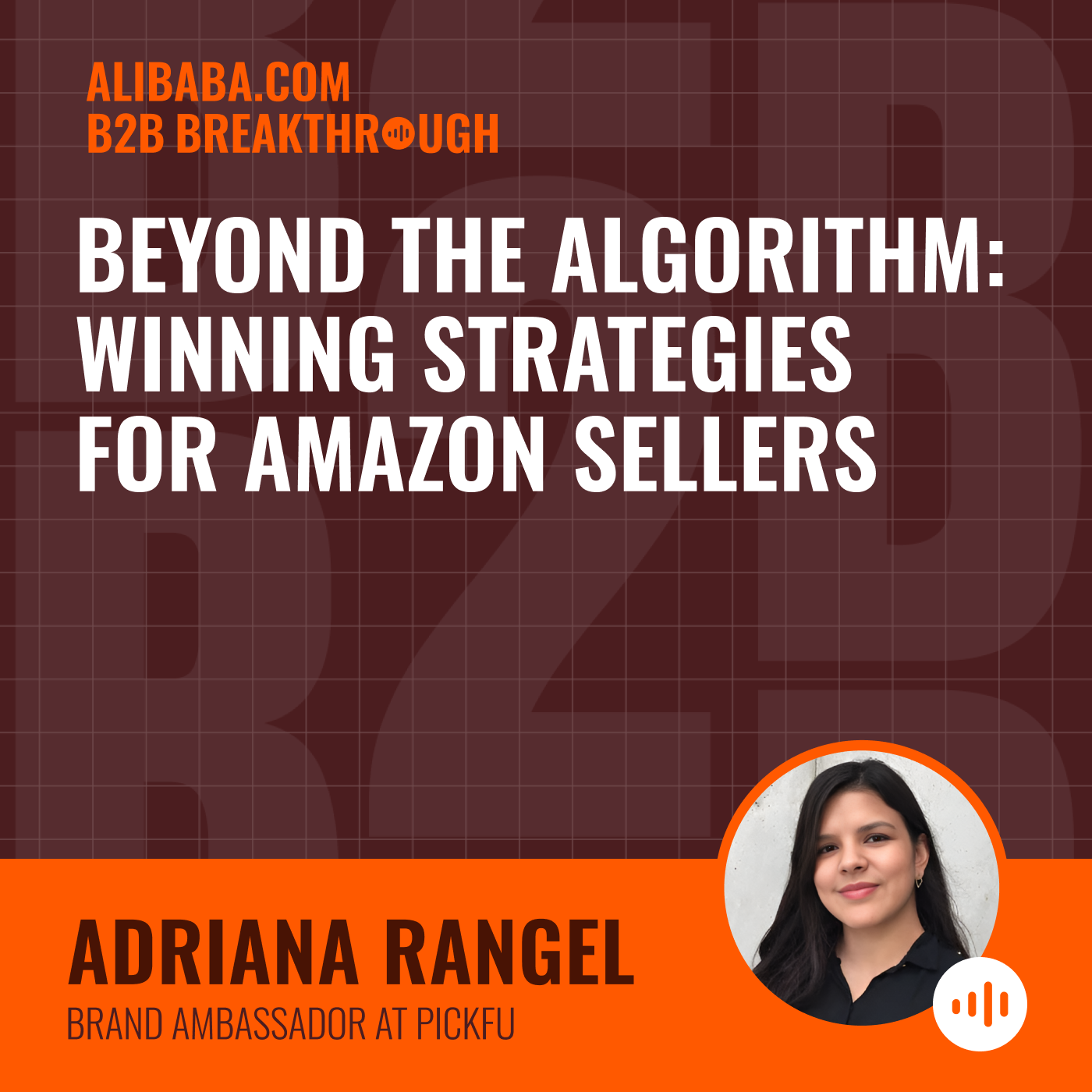
B2B Breakthrough Podcast
E-Commerce Mistakes to Avoid for Amazon Sellers with Adriana Rangel
00:32:01
Success on Amazon isn’t just about great products—it’s about data-driven decisions and human-focused optimization. In this episode of B2B Breakthrough, host Ciara Cristo chats with Adriana Rangel, PickFu brand ambassador and Sellers Podcast en Español host, about avoiding costly mistakes as an Amazon seller. Learn the secrets of keyword research, multi-language listings, and why analytics should drive product selection. Whether you’re new or scaling up, this conversation delivers game-changing strategies for standing out in a competitive marketplace.
Loading summary
Transcript61 lines
- [00:03]
Adriana Rangel
So that is, I feel like a rookie mistake. I made that mistake and any mistakes that I mentioned here in the podcast, you better believe that I made them in my first couple of products. But yeah, usually it's that we're like so obsessed with bringing in traffic and appearing on in the searches that we just totally forget that it's a human that that's making the final decision.
- [00:24]
Sierra Christo
Welcome to the B2B Breakthrough Podcast. We're here to bring you all the best knowledge, insights and strategies from e commerce experts, successful business own, and the team@alibaba.com that you'll need to grow your business and achieve your next big breakthrough. I'm your host, Sierra Christo.
- [00:40]
Podcast Host
Welcome to the B2B Breakthrough Podcast. Today we're joined by Adriana Rangel, a true powerhouse in e commerce, brand ambassador at Pickfu, and the host of the serious sellers podcast en Espanol at Helium 10. With years of experience helping businesses thrive, Adriana is here to guide us through the most common mistakes entrepreneurs make when launching a business and how you can avoid them. Adriana, welcome to the show.
- [01:02]
Adriana Rangel
Hi Sierra, thank you for having me. I'm so, so excited to be here and just chat about how Amazon sellers navigate business in general.
- [01:11]
Podcast Host
Awesome. Yeah, we're really excited to chat with you. Can you tell us a little bit before we dive into the nitty gritty of what to do, what not to do, tell us a little bit about your background and how you got into this space.
- [01:21]
Adriana Rangel
So, yes, seven years ago I had my, you know, my full time job and I was looking for ways to kind of like launch my own business. Back then I only have, you know, whatever savings I had at the time and I wasn't thinking about raising capital or anything like that. So I needed a way to kind of like start, you know, slowly and just basically using whatever I had, whatever resources I had. And that's when I found out about Amazon. I am also from Mexico and so I thought it was a very interesting way selling in, not only in, in the marketplace here in, in Mexico, but also abroad and also. And basically having that arbitrage or working on that arbitrage of making money in other marketplaces and basically just keeping my overhead cost very low, as low as possible. So I thought that was very interesting. And that's when I started just like learning about Amazon. And of course I started to look into Alibaba because I know that Alibaba is basically the first place that I had to look into when it came to connecting with providers.
- [02:23]
Podcast Host
That's awesome. So you have firsthand experience of making this work before you started teaching and really acting as an advocate for other business owners to find their start, correct?
- [02:33]
Adriana Rangel
Yes. I started my YouTube channel maybe like two and a half years ago, but I started selling seven years ago, so it's been a while.
- [02:41]
Podcast Host
All right, so you know the ropes.
- [02:43]
Adriana Rangel
Yes.
- [02:45]
Podcast Host
As you've started curating this channel and working with other Amazon sellers, can you tell us what are like the most crucial first steps when launching a brand on Amazon?
- [02:54]
Adriana Rangel
Yes. I would suggest first time sellers to look, to start thinking about looking at what the keyword search volume is for, basically the searches and to find out what it is that people write in the search box in Amazon because that informs our decisions to what it is that there is demand for. So many times and I, I did this, actually my first two products didn't work as well as I planned. And that is because I basically, I was thinking of products that I myself would use or that even my girlfriends would use. And that's of course a very biased way of making decisions. I didn't look at competition, I didn't look at if there was even demand for the product. And I sourced that product locally and that costs weren't as efficient as to actually, you know, sourcing the products from, from people either in China or other places in the world. And so I just wanted to get, you know, a product on, on the marketplace, live on the marketplace. And that is why I, I feel like I rushed the process. I would say the biggest thing here is that I would suggest first time sellers to, you know, to take time to do their research before jumping in and just look at the data.
- [04:08]
Podcast Host
Interesting. So I, I want to flip that on its head a little bit because you gave us a lot of do's and don'ts in that answer. What is the number one mistake that you find that people make when launching on Amazon? And then, you know, taking that a step further as they continue to scale.
- [04:22]
Adriana Rangel
I would say that the first mistake usually first time sellers make is that we just start thinking of ideas. We look around, you know, in our house and we look around, you know, when we visit our girlfriend's house and we see, oh, you know, that's a cool product, like that looks interesting. And then we're like, okay, maybe you know, like let me just go ahead and find that product or like source that product online and just like launch it as opposed to looking at the data. So research and just looking at those metrics, basically. Is there a demand for the product and how Many sellers are selling this kind of product. And how many brands, especially how many brands, well established brands, are selling this kind of product? That will save you a lot of, a lot of headaches, because trying to generate demand is the hardest thing there is. Or you need a lot of money to be able to pull that off. So just that quick hack will get you better results.
- [05:17]
Podcast Host
The biggest mistake is not looking at the data and not preparing before setting out to do this.
- [05:22]
Adriana Rangel
Correct. And just thinking that whatever products you have in your house or whatever products you use, you know, those must be the products everyone else wants to buy on Amazon.
- [05:32]
Podcast Host
A sample size of one is not going to do the trick. You got a little closer. Exactly as you set out to do this and to you find those products that you want to sell, you see that there's a demand, you see that there are people actively searching for it, and you decide to post it. You've developed the product or source the product as you're optimizing the listing itself. What are some of the things that a lot of sellers get wrong when they're actually putting it on Amazon?
- [05:59]
Adriana Rangel
Yes, I think that when we launch our first product or even our second product, what we do is think about how we can bring traffic to our listing. And so one way to do that is by placing a lot of keywords. You know that the phrases that people are typing on the search box on Amazon and just like keyword stuff, your title, your description, your bullet points, et cetera. And we should optimize for the algorithm. But remember, at the end of the day, the party that makes the decision whether to buy the product or not is a human right. And so we need to think about not only, you know, optimizing for the algorithm, but of course, creating and designing our listing in such a way that we talk about not only about features, but about the benefits that the person is going to get when, if they purchase our product. And of course, optimize for the experience, the brand experience that person will have once they are, they land in our listing on our product page. And this is because the conversion rate matters a lot. And so we don't want people to find our product because of course we're optimizing for the algorithm. But then bounce off that actually gives a signal to Amazon that for some reason, you know, people are not finding our product interesting. And you know, the ranking algorithm and all that kind of like penalizes you because they don't want to be showing a product that people are not buying. They want to show the products that bring the better experience and that people end up buying and they find that they are, you know, like a great, good products. So that is, I feel like a rookie mistake. I made that mistake and any mistakes that I mentioned here on the podcast, you better believe that I made them in my first couple of products. But yeah, usually it's that we're like so obsessed with bringing in traffic and appearing on in the searches that we just totally forget that it's a human that that's making the final decision.
- [07:48]
Podcast Host
So how do you, how do you reconcile that, how do you quantify the humanity element here? Because the humanness is so inherent in shopping and just the consumer experience. So how do you, how do you balance those two disciplines or really do that human research alongside of the algorithm? Yes.
- [08:09]
Adriana Rangel
Nowadays it actually has become easier now to kind of like reconcile those two points because now Amazon, the algorithm is now they don't focus as much as they did maybe like a year ago, as maybe even a few months ago on, you know, how many keywords you have on your listing and all of that. Now they use semantic info to learn what your product benefits are, in which occasions or in which cases or scenarios people use your product for, you know, what kind of people, if it's male, female or, you know, ages, demographics and all of that. And so now it's, you can fill your listing basically selling your product and adding, talking about the benefits and how your product is going to enhance their experience. And that will also let the algorithm know how. Back then we just had to, we spent hours just thinking about how can I fit this keyword in this paragraph or in this bullet point. But now it's easier and AI helps a lot, especially for us that English is not our first language. We used to struggle a lot and now, you know, the AI does that hard work for us.
- [09:18]
Podcast Host
Interesting. So you mentioned something really key here is understanding how to optimize those keywords not only, you know, across cultures and across languages, but using the research that you acquired from the human research element, the algorithm insights and how to pull out keywords that are actually going to be effective. So what are some of the mistakes that new business owners may be making as they try to leverage this information and maybe overpopulated a listing with keywords like what, what are those errors that people are making?
- [09:54]
Adriana Rangel
I would say that many times we neglect to do the proper research on what the long tail keywords are to find out what the real, you know, what the buyer intent is when people are searching for our products. Many times we try to rank our products for, you know, for that big keywords. And that usually is. It's hard. It's very hard. And it can be very expensive to try to get a peer position, two or three for this big keyword, let's say for, let's say diaper bags, right. As opposed to maybe just focusing on the long tail keywords. Let's say travel diaper bag with changing bag, that long tail keyword, which of course has less competition because it's longer and because it has, you know, there's more detail in the keyword, we can basically work on ranking our product for several of those long tail keywords and gather enough search volume. Because let's say that the big keyword, the diaper bag keyword, let's say it has 5,000 search volume and these smaller ones, maybe we have 10 that each has 500 search volume each. And that's a much more effective and less cost effective way of getting basically that traffic from other like smaller sources. When we think about our launch process in this way, I feel like many of us, we really cannot risk, you know, failing with three or four products. And that's the safer way and usually more effective way of gaining traction, getting those initial sales and getting those initial reviews which validate our product and our brand well.
- [11:33]
Podcast Host
So it's really about differentiating even in the title itself, beyond the description, really getting as much information and much detail in that listing title as possible.
- [11:44]
Adriana Rangel
Correct?
- [11:45]
Podcast Host
Yes.
- [11:46]
Adriana Rangel
Because we, you know, people that search for this keyword. Right. Travel diaper bag with changing pad, we see the buyer intent there, that people already know what they're, you know, what they want, what they're looking for, as opposed to these larger keywords that might get us that conversion or not.
- [12:04]
Podcast Host
Interesting. And so another thing that is driving folks to that page, they may not always be searching directly in Amazon. We may be conducting Google searches or using any other search engine that floats our boat here. So what we're seeing is that about half of the Amazon sellers who are developing this presence on Amazon are ignoring that other half and are showing that, you know, they're not building their presence on Google as well or on a Shopify page or another, you know, another platform. And so is that a mistake? And how is, how is that really handicapping their, their own ability to grow their presence and discoverability on Amazon?
- [12:47]
Adriana Rangel
Yes, it's a big mistake. It actually took me personally, let's, I would say about two to three years before actually just thinking about building a presence on Google. Google is this huge, huge platform and many people, most people actually still run their searches on Google. One thing to note here is that Amazon rewards bringing external traffic to the platform. I'm sure that is because they know that once people reach the platform it's just very easy and very convenient to shop in Amazon. You usually buy more than one product when you visit Amazon and so they I that is why they promote these programs such as Amazon Attribution. They even have a program for that where they tell you you bring us traffic from social media or from other places, even from like, even if you have like a physical shop and you get people to scan the QR code and to buy on Amazon for whatever reason they give you, they even give you like a 10% bonus when you bring people in. They lower your referral fees, et cetera. And so that's very important reason why you should focus on this. And another one of course is diversification, right? You want to, you know, if for whatever reason, God forbid something happens, your listing goes down or whatever the case in Amazon, you can still be able to sell via your e commerce site, shopify. Whatever the case, when you think about building a brand, that is when you, and not only you know, selling a product on Amazon, that is when you need to start thinking about being, you know, having clients be able to find you in several platforms because, and you might even do this when, when you're trying to decide if you should buy a product or not, you usually go and maybe look at their social media or search them up on Google. And so that helps a lot with buyer journey. When making a decision whether to buy your product or not, is the complexity.
- [14:40]
Sierra Christo
Of sourcing holding you back? Are you getting overwhelmed by information in an endless search now? Sourcing for your business has never been easier. Meet Axio, the world's first AI sourcing engine that helps you source like a pro. With five key features, you'll get product inspiration that leverages real time market data from comprehensive web insights, social media trends and B2B knowledge. Generate detailed requirements to find the perfect match from AI verified products and suppliers through Axio's multimodal search. Use super comparison to easily discover and compare millions of products from leading suppliers, focusing on the best selling and most competitive options. With Axio Page, you'll get AI generated encyclopedia pages that compile verified product information for each sku. And finally leverage Axio Agent to streamline negotiations with conversation guidance, real time summaries and direct answers about products and suppliers without having to browse detail pages. Head over to Axio AI today That's ac C cio, AI to try Axio for free and start sourcing like a pro.
- [15:44]
Podcast Host
You run the podcast for Helium 10 and you have all of these resources within the Helium 10 toolkit. Can you talk to us a little bit about some of the tools that entrepreneurs and small business owners may not be leveraging that they should be to get where they need to go?
- [16:00]
Adriana Rangel
Yes, of course. I think the main tools US sellers use, for example, in the suite of Helium 10, we use the tools that help us find out what the most popular keywords are. So usually first time sellers, they focus on searching for product, for products, ideas. And the better way to look at it when you're doing product research is to search basically for keywords, what people are looking for and then that will inform your decision or your ideas on how to design a product. And so when you see so this kind of research experience, it really does tell you a lot about how and as I mentioned earlier, about which are the kind of products that has, that have, you know, the least sellers offering that kind of product. Because we usually want to get, you know, our first wins early because that will build that our cash flow and that will help us, you know, have money to further launch more products and grow our product line. But we do need to get those early wins because as opposed to, you know, losing money at first because sometimes we just cannot afford to, you know, like the big brands to lose a lot of money. Sometimes if we lose money, we just have to quit and just like find other ways to make money. So that's a very useful way of getting those early wins when it comes to product launches. And from there, if you later, let's say you're passionate about a certain product or about a certain category, let's say yoga pants or whatever the case, then it's easier to launch in that kind of categories once you have enough capital to really put into marketing and, and you know, like, and to be able to compete in those bigger categories.
- [17:43]
Podcast Host
And so how do you advise small business owners to take that next big step? You know, we talked about shifting from a diaper bag with a changing pad to, you know, to something like yoga pants. I know this is just one example, but you know, those to me seem like two very different categories. And so it's not necessarily capitalizing on some of the research you've already done and the audience you've grown to know and appreciate. How do you apply the learnings from one to another and make, make both products successful?
- [18:13]
Adriana Rangel
That's actually a great point. We usually try to compound our efforts by staying in one category. We could, you know, what we usually do is launch other variations. They can be color variations or size variation or flavor variat of the same product. Because you, as you said, you have already invested time into trying to understand who your buyer Persona is and you know, what basically studying what is it that they're looking for, et cetera. You might already have created or built an email list from there and so from your first product and so you can let them know when you launch variation or a new product that is closely related to that product. So that's the best way to go about it. Just try to grow your product line. Trying to stay, trying to, you don't have to stay in the same, in the same niche, but hopefully trying to cater to the same audience because you already have developed so much or gotten so much knowledge about what is it that they want to buy and so that you basically want to compound your efforts to get there faster.
- [19:17]
Podcast Host
That reminds me of a conversation that we had with another guest a couple of weeks ago for our listeners. If you listen to Johan Jacobs episode, we talked about some of the top tips to make it in retail and how to, you know, work with a retail buyer. Now these are two vastly different places to sell. You know, we're talking online retail versus big box store. And he talks a lot about how working with a retail buyer it's important to have those differentiating elements like you said, different colorways, you know, accessories that build on the same product or cater to the same audience. And for in the retail lens it's, it's more about making sure that displays line up well and you're, you're, you're capitalizing on the space on the shelves. But the same, the same logic can be applied to, to a consumer it sounds like, you know, and knowing that I'm a busy mom who's on the move a lot, I've got, I need a travel diaper bag with a changing pad and I also need Brent, you know, I don't organic wipes and whatever ever whatever other accessories are relevant and they end up in the same search zone, so to speak or recommended products does that And I'm just speculating here so I want to hear from you whether that feels appropriate in terms of Amazon listings.
- [20:30]
Adriana Rangel
And you just gave a great example which is, you know, the products that a mom might be looking for. And usually, you know, moms have other friends that are moms as well. Right. And so usually start to as a person and As a consumer, you usually start to create like your own universe or of, you know, of brands you follow, of products you buy, et cetera. And so even if you launch another product in, in this, you know, catered to the same, to the same Persona, many times US sellers, we are, you know, it's only us, you know, we are by ourselves building the business.
- [21:06]
Podcast Host
One other element that I want to talk to you about is, is you work cross culturally a lot. And so, you know, when we talk about the North American market, we want to make sure that we're able to scale our business and appeal to a broader audience. How do you encourage people or advise people to adapt and optimize across languages and across cultures to make sure that their business is as wide reaching and inclusive as possible?
- [21:34]
Adriana Rangel
Yes, I mean, you just mentioned that the American market and many people don't know that it's more than, you know, it's more than 40 million people in the US that speaks Spanish. That's a huge, huge market. And many people are not tailoring or catering to that market there. It's basically two things that we look to be able to get this exposure. We use Spanish keywords and we put them in our backend and that will basically get your product index for those searches as well. And the second thing that we need to make sure, and it's just, and it's the easiest thing, it takes you maybe 10 to 15 minutes. Amazon actually has a tool that helps you translate your listing to Spanish or to whichever language that you want to translate it to. This helps you basically for your product to appear with your language and not with like a lossier translation. And it does really make a difference because people of course, you know, feel much more, I would say, confident to buy from a product or from a brand that actually, you know, speaks proper Spanish, let's say. And you can very easily do that nowadays with AI, you can translate it and just like ask it, you know, to, to give you like a good quality translation and that will help you, I mean, even if you get, let's say, an additional 10 units a day of sales thanks to making that 15, you know, to taking care of, of that 10 minute task, that will really, that does make an impact, especially as you want to grow your brand and maybe even eventually sell it, to have an exit in your business, that can very much impact what kind of exit you have. So it's just like it takes you less than 30 minutes to make those small changes.
- [23:22]
Podcast Host
It sounds like a really intuitive, simple fix. Are people underutilizing this, are you seeing data that reflects that this is just existing, not being conducted and is really hindering people's experience?
- [23:33]
Adriana Rangel
Yes, of course. I think it's a matter of helping people see that this is a huge market. It's a lot of people that, and not many Spanish speakers, you know, speak English very well. And so all their apps, they're in Spanish. And if you're not indexed, if your product is not indexed for those Spanish searches and they search in Spanish as well, but if your products is not indexed, it will simply not not appear and you're losing on, on sales here. And you could very easily in kind of like strategic way of beating your competition is getting sales from those from the smaller niches. Smaller, quote, unquote smaller. Right. Because this, this is a big, big audience, but that's a very effective way. Oh, you know, I noticed that my competition, my competition's product doesn't come up on the Spanish searches. Let me just get in there and that when I get that those sales, it will increase my sales velocity and will help me ranker, rank higher hopefully than my competitors product.
- [24:34]
Podcast Host
And applying that to the conversation that we had earlier about optimizing off platform as well, how does that translate to developing content? You know, is it, are we doubling our work by creating an English and Spanish blog? Or we, what are some of the strategies that you can employ off platform to be as effective on platform?
- [24:53]
Adriana Rangel
I would say that nowadays I wouldn't say we're doubling our efforts or using double our resources in order to rank for these other marketplaces. Even if, let's say you're based in the US you're selling in the US and you want to explore selling on Mexico or in Canada. Amazon makes it very easy to open those marketplaces to even hold your, your inventory in the US and basically just like tick a box and you basically give Amazon permission to make your product available in these other marketplaces. It will be whatever we learn and whatever strategies we learn and apply to the US market we can implement in other markets. And it's so much easier to compete in smaller markets. There's just not as much competition.
- [25:39]
Podcast Host
It's an afterthought. We need people to think about this as an equally important market to appeal to.
- [25:47]
Adriana Rangel
Yes, yes. I mean and sometimes I've seen this, I've seen people from the US try to, you know, think about selling abroad to get that first, you know, those first early wins and get that cash flow and then compete in the bigger, much bigger marketplace which is the US because the Us is bigger by many. You know, it's like five or seven times bigger than, you know, the next biggest market. So it's, it's pretty, pretty big.
- [26:15]
Podcast Host
So significant. Yeah, definitely don't sleep on that. You gotta, you gotta take advantage of these insights.
- [26:21]
Adriana Rangel
Yes.
- [26:22]
Podcast Host
So, you know, you mentioned a minute ago those early wins, those, those big foundational moments that, that propel you into a different level selling on Amazon. You know, a lot of folks don't necessarily have these resources upfront or don't know that these resources exist and have had a sluggish start and are just not succeeding in their e commerce and online retail, you know, endeavors. So apart from starting from scratch, taking it all back to square one, how can someone who's not been successful really employs these strategies and resources in a way that's, that's efficient in terms of their time and really make a difference moving forward? Or is it a total tear down?
- [27:06]
Adriana Rangel
No, I would say that many times when we find ourselves in that situation because it happened to me with my first two products didn't work as well as I wanted them to work. What I did was try to find, to learn more about how the platform works. But of course I didn't want to spend on expensive courses or anything like that. The tip that I would share with the listeners here are that many of these, you know, the big software tools such as Helium 10 and even other other tools as well, they usually provide free trainings and free courses and these are great, great, great resources. I, you can, later on after you learn, you know, the do's and the don'ts of how to sell on, on Amazon, you can of course use that same IP and simply, you know, create new listings. You can, you can use the same, you already have the connections with, usually with people, let's say the people that, that help you source a product. I feel like that knowledge, you cannot lose that knowledge and you cannot lose, you know, that experience. That's actually the best crash course that we get. You know, the failures and it's like, oh my God, I remember I did this and this was wrong because that would, would have never worked like you see that in hindsight, but it's the most valuable. I would argue that it's even more, much more valuable than whatever training or whatever course you can get. So no, it's, I think it's important to frame these quote unquote failures and reframe them to think about them as, you know, like a master's on what not to do on E commerce and.
- [28:40]
Podcast Host
Building A community is important in that as well. You know, knowing learning from other people's mistakes is as beneficial as learning from your own. So have those conversations. Don't shy away from your mistakes because it may help someone else.
- [28:53]
Adriana Rangel
Yes, that's actually the most valuable thing. Meeting people, meeting other sellers, that's learning from their. Their experiences as well.
- [29:00]
Podcast Host
Yeah, totally. So I know we're. We're coming up on time here, but do you have any hot takes about succeeding on Amazon that someone else may not tell you?
- [29:11]
Adriana Rangel
You could say that. Selling on Amazon easier than you think. I would say usually this. You know, what we hear about. There's a lot of competition and that kind of thing. I feel like, I mean, you're in New York City. You. You can see packages of Amazon, you know, Amazon deliveries everywhere, all the time. This presence keeps expanding, and they keep getting more penetrating or. Or getting more market share with every day, and it's just, like, sticky. They make their subscription stickier, and it's harder, pretty much impossible to cancel your prime subscription. Like, what are you gonna do, like, when you walk to the store and get the product, like, it's not happening anymore. So I would say, you know, just, like, try to leverage what, you know, all the work they've done to acquire clients or buyers and to keep them. Basically. It would be very hard for you to kind of like to get that for your own business. Just put in the work. That's. That's all. But. But you'll get there. I mean, I'm. Myself. I don't consider myself, you know, like the best businesswoman on earth, but I. But I did it. After many tries, I. I did it. I got there.
- [30:21]
Podcast Host
Don't sell yourself short. I think you might be the greatest businesswoman on earth. I'm sold.
- [30:26]
Adriana Rangel
Oh, no, thank you, Sierra. No, it's just been a lot of, you know, a lot of studying, a lot of experiments, a lot of running experiments.
- [30:34]
Podcast Host
That's awesome. I'm totally inspired. I think you've shared a lot of really helpful resources here. Before we sign off, where can people find you?
- [30:42]
Adriana Rangel
What.
- [30:42]
Podcast Host
Where do we get more information?
- [30:44]
Adriana Rangel
Yes. Well, I post on my YouTube channel every Thursday, every week, and I post tutorials, like, even, like, lengthy tutorials at times. Sometimes they can get a. Can get a little. You might feel like you're in class. My channel is called Adriana Rangel Bende. So it's my name, and then Bende as in selling, and it's in Spanish, but you can, of course, use that. You know, the captions in there if you only speak English. And, yeah, for all my Spanish speakers out there, I, you know, it's it, this is a great opportunity to launch your own business. And so, yeah, I would, I would offer that.
- [31:18]
Podcast Host
Awesome. Well, thank you so much. This was super helpful, and you're a delight. This was great.
- [31:22]
Adriana Rangel
Thank you. Thank you, Sierra. Thank you for having me.
- [31:25]
Podcast Host
My pleasure.
- [31:28]
Sierra Christo
B2B Breakthrough is produced by Alibaba. To find out how Alibaba.com is empowering its customers with the tools, services, and resources they need to grow their business, visit Alibaba.com and then make sure to search for B2B Breakthrough on Spotify, Apple Podcasts, or wherever you find your podcasts. Make sure to follow us so you don't miss future episodes. On behalf of the team here@alibaba.com, thanks for listening.