← B2B Breakthrough Podcast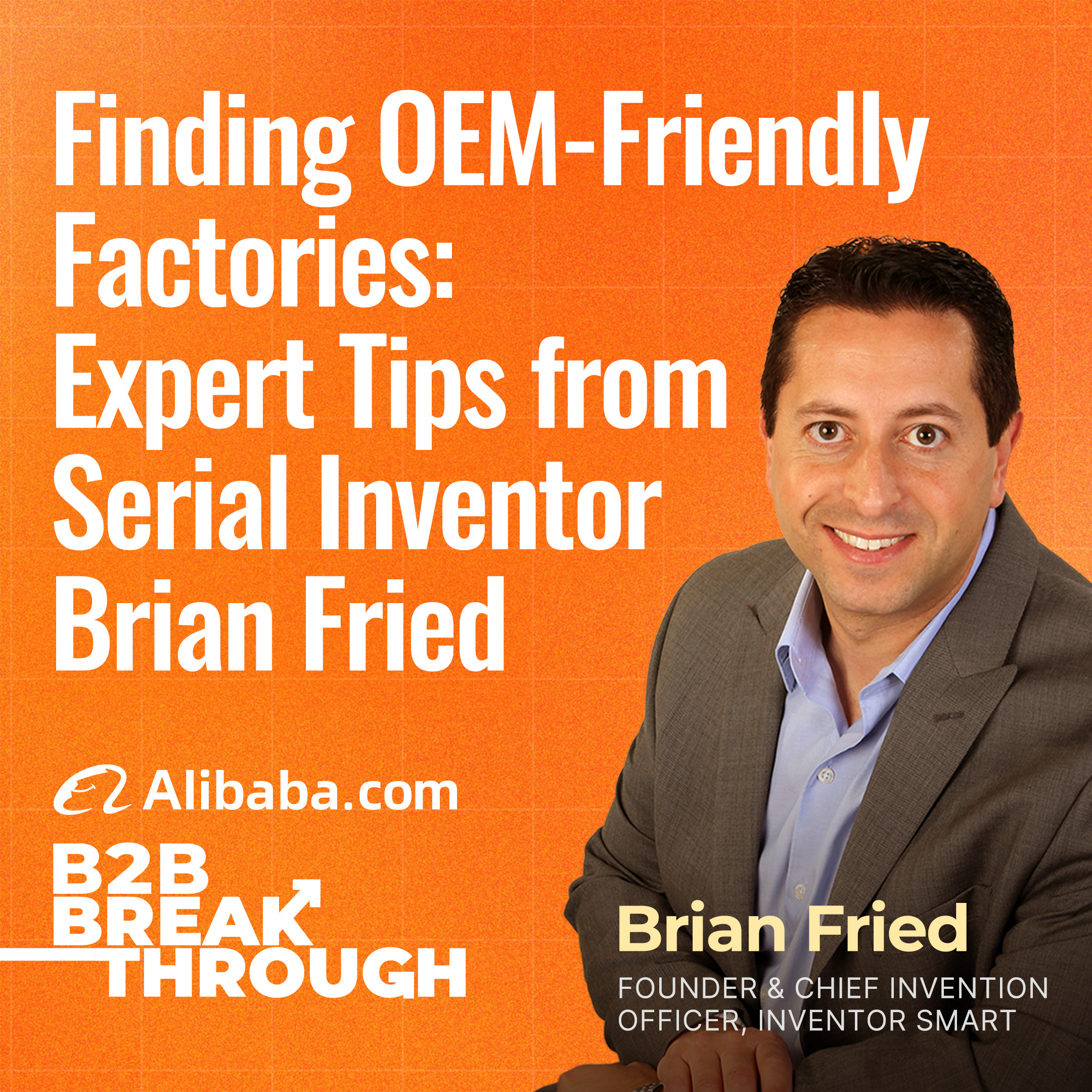
B2B Breakthrough Podcast
Finding OEM-Friendly Factories: Expert Tips from Serial Inventor Brian Fried
00:40:17
How can you tell if an overseas factory is legitimate without visiting in person?Turning ideas into physical products isn't just about creativity—it's about strategic planning and finding the right manufacturing partners. In this episode of B2B Breakthrough, host Ciara Cristo talks with Brian Fried (@brianfriedinventor), serial inventor and Chief Inventor at Inventor Smart, about bridging the gap between great ideas and successful products. With 15 patents and 19 years coaching inventors, Brian reveals the common manufacturing misconceptions that keep great products from reaching the market and shares his proven system for vetting overseas factories without boarding a plane. Tune in to learn: (00:00) Welcome and Introduction to Brian Fried (03:45) Key Considerations When Vetting Manufacturers (08:12) Building Strong Supplier Relationships Across Distances (14:37) Scaling Production While Maintaining Quality (19:58) Leveraging Technology for Better Manufacturing Partnerships (24:43...
Loading summary
Transcript42 lines
- [00:00]
Brian Fried
It's interesting to see people on their journey and to be a part of their journey, which is inspiring and that's what keeps me going. I love to see people be successful. And what is success? Some people want a gazillion dollars in their bank account. Other people are happy with a patent hanging on their wall. For me, I love to see people use my idea for the same reason I came up with it. That's the gold for me. That's what keeps me going.
- [00:25]
Sierra Christo
Welcome to the B2B Breakthrough Podcast. We're here to bring you all the best knowledge, insights and strategies from e commerce, successful business owners and the team@alibaba.com that you'll need to grow your business and achieve your next big breakthrough. I'm your host, Sierra Christo.
- [00:42]
Unknown
You know that gap between a great idea and an actual product? Well, today's guest closes it for a living. Brian Fried is a serial inventor manufacturing expert and the chief inventor behind inventorsmart, where he's helped countless creators navigate the wild world of product development, from sourcing factories to avoiding costly mistakes. He's also an advocate for using smart tools like AI to streamline the process and is honestly just a walking encyclopedia of practical knowledge for inventors. Brian, we're really excited to chat today. Welcome to the show.
- [01:10]
Brian Fried
Thank you very much. Siri, thank you for having me.
- [01:13]
Unknown
Oh, it's an honor. So, you know, I gave a brief, high level introduction to you there, but can you share with us a little bit more about what you work on and what you prioritize as you support other inventors through this process?
- [01:25]
Brian Fried
I'm an inventor. I started a long time ago. I have 15 patents, I've licensed products, so I earn royalties from the products and I also manufacture. I manufacture locally and overseas and I've been doing the same thing as the inventor coach for 19 years now. I've authored three books. I've been on QVC for three years as an on air guest. I run the National Inventor Club and also created an app for inventors that is our very own social media channel, Resources networking, that's going on in there. So I am pretty active with the inventor community and I guess the inventors, you can also classify them as entrepreneurs and startups and we do utilize Alibaba quite a bit.
- [02:16]
Unknown
Oh, that's great to hear. Yeah, I mean, so you've got, you've got a lot going on right now just in terms of different communities, communities you're managing, and different entrepreneurs and inventors that you're supporting. You're all over the place. That's great.
- [02:29]
Brian Fried
Thank you. Well, the last notch I could put on my belt here is that I recently became an ambassador for Alibaba. So I'm excited about that.
- [02:36]
Unknown
Yeah, welcome to the community. I think we're going to do a lot of great work together. And you definitely have a wealth of information and knowledge that we're really excited to bring into this community and offer to the broader network of inventors and entrepreneurs that we've got working with us.
- [02:52]
Brian Fried
Well, that's what keeps me driving and doing what I do every day. It's important for me to get the right information out to people. And look, I don't have a crystal ball. I could tell you though that through my interactions with inventors, successful inventors, inventors that have had challenges, and then on the other side, whether it's buyers or licensees, investors, just different types of experiences that are out there doing this for so long, you start to kind of get in the zone of when you see something, it's almost like an intuition. You almost see where it's going to go and then come back to where myself or somebody is and then help them to get to where they want to go. And I could tell you that a lot of times just starting off with an idea, you get really excited about it. It's like this emotional feeling that overcomes you and sometimes you want to just keep going and going, but there's some obstacles or some kind of check ins to see if it's something that you should work on or not. Is it something that you should move forward with? Is it your intellectual property? Is it not? Is it something that there's many different iterations that are out there already or versions that are out there and maybe that saturated of a market. So there's a lot of things that when I see an idea that I look at a little bit differently than somebody, that poof just came up with an idea today. And that's what I feel. These type of platforms and being able to communicate that out to people, if I can help one person out there, then it makes a difference to them and to me.
- [04:22]
Unknown
I'd really like to begin here by asking you a little bit more about your own beginnings as an inventor. Can you tell me a little bit about the products that you've, you've brought to market?
- [04:31]
Brian Fried
I had to reflect back at some point to realize, like, how did this all start? As I was growing up, I realized that I was curious. I tried to figure out how things worked. I figured some out and some I didn't. I used to take things apart. So as I was growing up, started to think about things, but I started to take it a little bit more seriously when I was kind of on my own and just going through the everyday, daily routines of what I do. So I started to really pay attention to what people do and myself. And that's the thing is to stop and capture that idea and then figure out if it's something you should work on or not. Some people say, ah, I'll leave that for somebody else when I come up with that idea. But there's a point where you stop and you're like, you know, I think I got some good ideas here. I think I'm onto something. And that's when I started to build up like this portfolio of ideas. And then is the idea selfishly for me or is it for other people? How many other people? Is it a niche or is it a bigger window of opportunity? So I started to ask people, generally, I started to work on these ideas from a marketing perspective, what is my biggest window of opportunity? Who would buy those type of things? Not for me, but for you. And then I just built it. And then I started to have some levels of success. And that's when people started to ask me for help and I was giving it to him. And that's when I felt like this was the time to continue.
- [06:04]
Unknown
This is the best way to bring knowledge to people, is to talk through these personal experiences. I find. And it sounds like you've had this incredible lead up to these communities because you are so inspired by the people in your life. And I think that's where a good idea really does stem from.
- [06:19]
Brian Fried
Thank you. Well, it's interesting to see people on their journey and to be a part of their journey, which is inspiring and that's what keeps me going. I love to see people be successful. And what is success? Some people want a gazillion dollars in their bank account. Other people are happy with a patent hanging on their wall. When I come up with an idea and it's selling in retail for me, I love to see people use my idea for the same reason I came up with it. That's the gold for me. That's what keeps me going. So doing that for other people also and getting them through those hurdles and commercializing their invention is really very inspiring for everyone.
- [07:00]
Unknown
Well, let's talk a little bit about that process then. You and I spoke very briefly about this before and I want to bring it to our listeners. The idea of that pre sourcing Phase, as you're starting out with this great idea that you have dreamed up, you need to bring it to someone who can actually manufacture it. And there's so many steps involved in that process. But that that preparation phase in terms of getting your design into the right hands and getting a design that they'll to them is incredibly crucial. So do you have any advice or items on a checklist that are really helpful to bring your idea to the right people in the right terms?
- [07:38]
Brian Fried
When you're coming up with this idea, you're going to go through those stages and look, your audience could be listening at certain stages of their. Whether it's a business, whether it's an invention. Just to kind of figure out in the beginning, like I said earlier, is this something that is your invention? Is this something that you can call your own? Are you going to be able to get some sort of intellectual property protection like a patent? Maybe you're filing a provisional patent application which is a filing date, or you're filing the non provisional patent application which is a utility patent, or is your idea a design patent? So yeah, it's a good idea in my opinion to do a patent search with a patent ability opinion this way. Am I going to hit a brick wall continuing with this? If I'm going to. Let's go further out. We're going to start manufacturing. Can other people manufacture the same thing that I'm showing because I don't have any intellectual property protection? Or are we both going to be able to make the same thing and compete against each other? So I could just manufacture anything at that point. So just going back now, doing a patent search with a patent ability opinion, ripping things apart to make a working prototype or a close to working prototype or making it look close to what you are envisioning or getting some help getting an engineer. What type of engineer is it industrial? Electrical? Is it an industrial design? Industrial designer? Is it something that doesn't need many gears and twists and turns, that it's just kind of the way it looks and you can, there's a couple quick living hinge or a gear or something simple that an industrial designer can do and then having that to be able to make a prototype, put it in front of you, see if it's what you envisioned, is it going to be this way or do I need a few other iterations to get it to where I want it to be? And now you get there and what are you going to do? Yes, you can. You've heard about the licensing to earn royalty, so finding A company that has similar product than what your idea is and asking if they're interested in adding your product to their product line. They manufacture it, they distribute it, and you earn a royalty from it. Or is it something that you want to manufacture yourself? Are you going to go through the, working with the factory and going through these things and then dealing with accounts payable, accounts receivable, the shipping, the tariffs, the. All these different things that you need to learn and is it possible? Absolutely. That's what I do is kind of going through those motions quite a bit, making it easier for people. But you can figure it out too. You can find, working with a factory direct, you can find a broker. And I know that it would be great to get into some of those steps of when you do find one. But being able to have something prepared first, like a CAD file or specs, specifications to how you might want a cut and sew job, how you want something cut, maybe figuring out what materials you're going to use, the thickness, and you can work with your engineer, industrial designer to figure those things out and maybe get close to what it could be with the prototypes to start.
- [10:53]
Unknown
Yeah, the prototype piece of this is, is really interesting and I want to talk about that in the context of living in a, in a global society here, you know, just thinking, thinking broader and where you're going to manufacture these products and how do you communicate something that's so physical that's, you know, easy for you and I to sit down and for me to take a look at and get a feel for it? How do you communicate that effectively? Maybe through CAD files and specs, but how do you communicate that to someone who's, who's supporting you as a partner on the other side of the world?
- [11:26]
Brian Fried
It's important, especially if you're going to manufacture, to pretty much get as close as possible to what it's supposed to be. Now, from my experience, let's say you came up with this idea and you're looking to manufacture a watch with some features to it. So what we want to do is, does it look kind of what you want it to be like in the finished product? Does it have electronics? Do you need a PCB board kind of programming? Or is it something simple? All these different things to try to figure out. But the more information that you have will help to determine finding a partner overseas. So a lot of times, Sarah, when I'm working with an inventor that comes up with something and they say, brian, I want to manufacture this, you want to try to find similar products to yours that you've come up with and find and kind of search a factory. So I go on alibaba.com and now we have Axio, which is an amazing tool, an AI tool. You can create a whole business plan with Axio. You can also source products. But for us, when we're working on an oem, which is kind of an original design, you want to find factories that are OEM friendly. So on Alibaba.com, we have a way to chat with the manufacturer. And before you do, you can do some research. You could see how long they've been on Alibaba.com platform. You could see the reviews. You can see their website. Some. Most of the websites that they have have tours of their facility and their factory. So I kind of look at all that, and then I also look at the response time, which is important, that you have on your dashboard there also. And then I start chatting and I see their response time, and I see that they are communicative, and I see if they're a factory that's open to working with an inventor, for example, with a new idea, or even if it's somebody that they might not necessarily call themselves an inventor. Right. They come up or they're selling a product, but they came up with a new way to make that product work. They added something to it. It might not necessarily be patentable, but it could be something that they want to improve on a product. And that's the start of just being prepared before I present to a manufacturer.
- [13:52]
Unknown
You mentioned a few things in there that are really helpful in starting that search from around the world, the virtual tours and chatting online, being able to communicate all hours of the day and night or leave it until you're ready to work in the morning. So part of that is, as you mentioned, finding reliable OEMs. Can you tell me a little bit more about the real benefit behind identifying and vetting an OEM as your production partner? What is that unique ability or specialty that they are able to bring to the table that you find valuable to steer other inventors to?
- [14:29]
Brian Fried
Well, when I am using Axio now, it pulls up the OEM factories for a particular product that I'm trying to work on with an inventor to produce. So I'll go through and I'll see that they're OEM friendly. I'll reach out to them, and when I talk to them, I'd like to know a little bit more about their factory. Are they making things for other companies and kind of like a contract manufacturer, which means that they're kind of like an order taker. One in, one out, one in, one out, one order in, one order out. Or do they have their own product line? Are they selling to retail? Is there a further opportunity to expand with them or I prefer not. Because I want to know that my intellectual property is safe as much as I can. So I've done my due diligence before. I bring my specs and all that to a factory. I'll talk to them, I'll see if they can either help me out with a prototype to see and have them understand the idea, just like I'm trying to show them. And it's not about me having to explain it. I can say, here you go, here are my CAD files. You can pretty much read everything from there and understand how much material you need, what type of material. Maybe they'll ask a question or two or maybe you know it. And then how long is the machine time? How long is the tooling? Is it a 1 cavity, 2 cavity tool? Is it every time? Here's the tooling that gets made. Big steel metal plates and the plastic gets poured down and then when it's done, it opens and comes out. So these are the things that I want to understand. Like I start to ask them about the products they have and I want to do a simple transaction. Let me see the products that you're already manufacturing. Send some to me, I'll pay for the shipping. Send it to me so I can see. And are they receptive and responsive? Are they delivering? When they say that they're going to deliver, was it easy to make a payment to them? I've had some great, great experiences and I've had some other experiences where I opened the box and I almost threw up. Okay. So being able to vet companies in a way that just starting with a transaction to be able to know that they're on the same page as you and you can work with them. Because, you know, like for us again, we get very excited and we're emotional about our ideas, but we want to be able to make good business decisions. One other really strong point that I, that I do is sometimes you don't know 100% who you're kind of speaking to. So I do like to have a video call and I ask them, are you a salesperson for many factories? Do you just work with one factory? Oh, you work with one factory. Are you in the factory right now? I'd like to take a tour. Put me on, on video and walk me around. Let me see what you have going on and I put them on the spot. But I, I need to do the best that I can without being in that factory at that moment to be able to make a decision if that's a factory that's going to help me or my client.
- [17:38]
Unknown
So it's, it's all of these, these little tests to make sure that they're trustworthy and, and capable of, of fulfilling your vision and, and executing your plan.
- [17:48]
Brian Fried
Absolutely. Look, I work with a lot of inventors and so am I. But a lot of times we're not waking up, graduating college or moving up in life going, you know what, I'm going to be an inventor. Most of the time it starts off as a side hustle. You're making some extra income, residual income. Maybe you took a chance, maybe it worked, maybe it didn't. But if it is working, then it could turn into your full time job. So you want to be able to figure out all these things, but you don't know this, right? Sometimes, like me, I'm coming up with ideas in the kitchen. I haven't cooked, but I'm coming up with ideas for kitchen gadgets and everything else. I'm just making a point. So I go to experts that are in the industry to say, can you design something that is consumer friendly? What material is the right one to use? Is it polypropylene, PP or is it abs, stronger material? Is it, you know, TPR or tpe? That's at all these different things and you don't know. But that's why I do what I do is so I can be there by your side or you figure things out. These days again, it's a lot easier to get things done with Axio, with AI, with people that are, that have been there, done that. So empower yourself to make those type of decisions.
- [19:10]
Unknown
It's a great rallying cry because there is so much, there's so much information that is accessible to us, that is, that is out there, but it's hard to find. And sometimes having someone like you to point you in the right direction and understand, you know, what are the resources that are really going to be beneficial for me is helpful in identifying, not even necessarily identifying the actual answer, but in identifying where my gap in my own knowledge is. Now that's something that we've talked about, Axio being really beneficial in identifying viable options. But you know, you, you want to make sure that they are fully capable of, of executing that, of creating it with integrity, with truth to the actual designs is the complexity of sourcing, holding you back?
- [19:55]
Sierra Christo
Are you getting overwhelmed by information in an endless search now? Sourcing for your business has never been easier. Meet Axio, the world's first AI sourcing engine that helps you source like a pro with five key features. You'll get product inspiration that leverages real time market data from comprehensive web insights, social media trends and B2B knowledge. Generate detailed requirements to find the perfect match from AI verified products and suppliers through Axio's multimodal search. Use supercomparison to easily discover and compare millions of products from leading suppliers, focusing on the best selling and most competitive options. With Axio page, you'll get AI generated encyclopedia pages that compile verified product information for each sku and finally leverage Axio Agent to streamline negotiations with conversation, guidance, real time summaries and direct answers about products and suppliers without having to browse detail pages. Head over to Axio AI today. That's Accio AI to try Axio for free and start sourcing like a pro.
- [20:58]
Unknown
What are some of those gaps in knowledge that you you see inventors come to you with most often? Where, where are people really missing information and how can we fill in that info gap?
- [21:10]
Brian Fried
I've worked with inventors because I've been in the beta testing of Axio and when somebody talks to me about an idea, I can generally describe it in the platform and it comes out with relevant comparisons. And yes, you can go to Walmart and go up and down the aisles of Walmart and say oh my gosh, my idea is not out there. I'm going to be a gazillionaire because nobody else has this and I'm going to do this. But there's also the US Patent and Trademark Office database. Maybe it was invented over 20 years ago and it's in the public domain and anybody can make it. Maybe somebody tried and it didn't sell and they stopped. Or maybe it is something to continue and to work on. But just seeing it and making a decision, if I see hundreds of the same thing that is out there and mine is a bit of a tweak, do I have the marketing to be able to let people know that it exists? So I have many inventions that are unique and for me to have somebody understand like I have this collapsible egg tray who's going on or going into a store thinking about a collapsible egg tray, right? So when somebody searches for it, I got to come up as a possible another solution to it. So is it a saturated industry? Is mine going to be enough of a Difference to be able to call my own and then starting to spend some money on intellectual property to protect myself with the patent, with a trademark, which is for the good name, the brand or the product. And there's other, one really strong way that myself and other inventors and entrepreneurs and startups, I know there's a lot of names there that you can classify them. A lot of us, we will start with one product that might be unique and that can be our anchor. And then we go into Axio and then we start to look and see what other. Like I have a lady that works on outdoor barbecue tools. So she invented a very interesting barbecue accessory and now she goes on there and can look and see all other kind of commodity type items that are around barbecue tools and accessories. A lot of times people don't know what direction to go. Sierra. They don't know what's in their best interest. They hear these things on they watch Shark Tank and they hear about licensing their invention for royalties. You see a lot of people coming on and manufacturing and coming into the tank, for example, with sales. So what do you do? Well, that's great for everyone else, but what about you? What do you want to do? And a lot of times for me, like, I have to learn about you. I have to learn about your product or your idea. I see where you are, and then we figure out where you should go and then come back to where you are and then get to where you need to go. So it's a journey and it's interesting, but being able to have the resources these days different than when I first started. And here I go again, making myself an old man. But it's true, things are so much easier. It's at my fingertips. If I want to find the right factory, I can use Axio. If I want to find products that are similar in the industry, that I want to expand my brand, I can use Axio. If I want to make a business plan, which I tested, it was unbelievable. I put in, for example, I tried a barber shop, I tried roller rink. And what was interesting is that it showed me all the things that I needed for those type of businesses. I was just playing around, I guess. One day I needed a haircut, another day I heard about something else. But it's interesting because it'll give you a plan, give you some predictions of what those industries, their forecast of how well they do. And then it's going to also suggest some of the things that I need to buy. Yes, we're inventors, but when I talk to Inventors, a lot of times, when it's pretty much the similar type of thing that they're coming up with, it doesn't mean that you have to stop. If you were going to move forward anyway, then buy what already exists. Buy that handy bag that's for the front seat to put something in, you know, like a little container or something. If yours was different, but there's similar ones out there, then buy those containers and act as if that was your invention without spending the money on patents and put it on, come up with a good name, add some other product to it, wrap it around in a brand and now sell it. And that's the beauty of this today, is that things are so easy for us to capture and make something and build a brand on it. And you know what, Sarah? These days, you don't have to be in a retail store to be successful. There's so many different ways to sell product. Even AliExpress. Right? There's so many different ways for people to sell and be successful. And again, what does success mean? That's for everybody, specifically, for their goals to determine. But anything is possible these days. Anything can get done.
- [26:37]
Unknown
Absolutely. And I think you mentioned Axio being a great resource to crank out some extra ideas and to build out a plan and to really help you understand those gaps. But for someone like you, who is so well versed in this world and has this experience and how to vet things manually and really keep an eye out for what to look for in a manufacturer as you work with AI, where do you notice the shortcomings and where your own intuition can kind of fill in. And how do you reconcile the two notions? Because you have to trust your own gut at a certain point and say, yeah, it's a great idea, but it's not what I'm going for and try to find a new way forward.
- [27:20]
Brian Fried
It's trust. It's almost like you're talking to somebody and what they're giving you. Do you believe? Do you validate? I'm very big into references, so how am I going to believe what you say? So I find myself bouncing to these AI platforms and I keep mentioning it's a great tool. And I've had the chance also to work as a beta tester on it, to work with your development team to even tighten it up. Like things that I was stuck on, getting through things and then them fixing it and then making it easier. So I'm proud to be a part of that. And it's just knowing that these tools are available. So, yeah, I Can kind of work on some of the other AI platforms. And then I come in here for more of the business side, for more of the product side, for more of the manufacturing side to really put it all together. And then again, going through and vetting the factories and then getting it to a point where I got my pre production sample and I know that I can hit the green light or the pre production sample gets sent to the inventor and they hit the green light and now they have 3,000 units in their garage. And it's an amazing experience. There's one lady that I worked with and I don't forget this conversation. It's like, well, take a guess. Well, it's 25,000 for the mold. Three to four dollars per unit. Okay, so let's, you have the CAD files, right? Let's go to a factory and let's check. So it ended up that the, the mold was $600 per unit, was 80 cents per unit. Wow. Oh, but I have to order hundreds of thousands of units at that price. Well, let's see, what's the MOQ? Right. Minimum order quantity, 3,000 units. Okay, let's do some math. 3,000 units times 80 cents. $2,400 times 600 for the mold. Three grand. You sold 3,000 units? 3,000 units. 5,000 units. 5,000 Units. It's possible, but it seems like a lot of people think that manufacturing a product is like. Maybe it is. If you have something complex, it's possible. But yes, you may need to get investors or find another way. Or maybe it is something to license because there's a company that already manufactures, distributes and you earn a royalty from it. But you could do it yourself too. It's not that complicated. So these are the things that you got to kind of like vet and sift through to figure out if you should work on it or not. Is it something that's going to make you money? Is it something that's worth your time, money, energy, effort to put into, to be able to start your own business or to see some return from your investment?
- [30:06]
Unknown
Yeah. And I want to come back to this example of this woman that you worked with. You know, so as you go through this process with her and she had this, this trepidation behind trying to find a manufacturer and do it herself. So as you go through this process with her and find someone, you know, you mentioned they can do it for less. You know, they found ways, you know, find the money efficiencies. And you spoke, you spoke earlier about the response time being something that you look for in a manufacturer. So as you worked with this, let's stick with this client as a case study here. What are some green flags that stand out to you in that manufacturer search to even know to ask for a quote?
- [30:43]
Brian Fried
What I like to do again is to figure out what they do their business. Are they manufacturing for other people or themselves and other people, are they in the office? Are they a salesperson? Do they own the factory? Do I have access to the owner of the factory? Can I come and visit if I ever wanted to? Are you the factory or are you a broker? Do you rep many factories? Because now I have multiple layers of markups, right? Not only do I have to pay the factory, but now I have to pay a middle person. Are you going to be able to package it for me? Are you going to be able to handle the logistics of getting it to where I need to on time? So when I was working with my QVC products, I had a very short window of time to be able to get my product in there, otherwise I might be penalized. So knowing that the factory is responsible and building the relationships with them is very important. And they're your partner and you want to be able to understand what your price is, what the expectations are with price breaks. And I feel like the respect is very important. Expectations is very important. Communication, deadlines, keeping your word, quality right. These are things that I check off Sierra to know that I have a good factory. And you know what, your platform, Alibaba.com does a really good job. Like if I know that there's a factory that's been on for a while and I see the response times and I see that the chat and there's multiple people that I can chat with and I see the fact factory and I know that they have a website and those are things that I feel better about as a green flag rather than a red flag.
- [32:30]
Unknown
You mentioned the communication being such a massive part of this decision in the early stages. That's, you know, it's really good to have that keen awareness of what indicates to you that they're going to be a good communicator. Have you found yourself further down the line in a process, in a relationship with a supplier where, where communication took a nosedive and, and it's just not, it's not going in your way and you need to maybe part ways with a, with a partner? How, how do you navigate a conflict like that when you're working on something that is so, you know, as we've already mentioned, is so emotional? For you as a, as an inventor.
- [33:08]
Brian Fried
It'S not the easiest. And I've been in various challenges. You know, sometimes a factory decides to mark up a price, and if they mark it up, then you got to mark it up, and then it's either eating up in your margin or you gotta offer that higher price to the customer. And then are people gonna still pay that or are you gonna lose sales? So you eat your margin and is it to a point, like if you're working with major retailers, for example, even yourself, but you have margins and let's say you're working with a buyer and they have expectations of what you should sell it to them for, and it's not hitting that. So is the factory going to be able to work with you? Or maybe not. And that's happened where they couldn't meet the price that I needed and I have to pick up the tooling and move it to another factory. And it's painful. Sometimes it works out okay and sometimes it doesn't. Right? So your risk of the initial investment of that tooling could hurt. Or do you have two factories? If one goes out of business or one happens not to fulfill what they need, or they got a big order and all of a sudden I'm 10th in line and I was supposed to be next. Now I have another factory as a backup. So sometimes having multiple factories working on it. So you have to plan, you have to understand the factories, you have to understand where you're producing. And those are the things that a good factory will do, is help you to plan and figure things out, just knowing that they're accessible and easy to communicate with, to be your partner in these situations. But yeah, I mean, just like anything, right? You can have a great relationship and something takes a left turn and every situation is different, but you try to come to terms, to be able to make it so it's amicable for both sides to keep going or to not and part ways friendly.
- [35:06]
Unknown
Right?
- [35:06]
Brian Fried
That's what you hope for. But sometimes it doesn't always work out that way. And that's the risk that we take when we're, let's say, manufacturing overseas. And the same thing can happen here in the US I work with factories in the US and it doesn't work out. It might be a little easier to move the tooling, but then again it's, you know, transportation to get it from one place to another.
- [35:26]
Unknown
I want to look to the future for a second. And as someone, as we've mentioned, is so well versed in this world, what is a dream resource or a dream tool that you would like to see be more accessible to inventors and entrepreneurs working in this environment.
- [35:45]
Brian Fried
Honestly, I wish there was me times 100. And I'm not saying this to make myself, to put myself on a pedestal, but I know that my experience and the resources that I've kind of over, over the years kind of picked up. Like, I want to be able to share that with as many people that reach out to me to make their lives easier, to get them to where they want to go quicker, to get them the right information. And that's why I do what I do, and that's why I'm on here. I have my National Inventor Club. I put great people that are able to give good information out there because it's important to me and they don't always have to hear it from me. So if I want to talk to you about trademarks, I'm getting somebody from the US Patent and Trademark Office to talk to you about trademarks. If you want to know about different opportunities and different platforms that are out there, you can ask me, but I'll bring them in. And just being able to do that and be able to share information from experts is really what's important to me. So maybe it's the experts that are around me that we all are able to multiply it, and maybe that's what AI is doing these days. But, you know, there's also the human interaction, which is very important, and I feel like it's the trust. Just like I said, when I. When I ask a question to AI, I find myself going onto multiple platforms to validate if that's the right answer. And then which one am I going to listen to? It's like going to your friends and asking them for advice. Right? Who the heck are you going to listen to? Right, Right. So you kind of beat it up a little bit, like, no, I want the answer the way that I want the answer. Tell it to me. Like, is it what I want to hear? I'm not going to stop until you tell me what I want to hear or you giving me facts or just your opinion. And there's a lot of opinions out there, as we know, and what they say. But that's the biggest hurdle and that's what I see in the future is just continuing to provide the resources that are available out there. Quicker, easier, factual. I think is really important because, look, Sierra, a lot of people, the way that they found answers is just by Googling and whatever is first at the top of the Google is what people believe. Oh, yeah, it could be full of, you know, but it could be factual. But I feel like this is getting us closer to a point where we don't have to be so uncertain that we can get better answers before we leave.
- [38:24]
Unknown
Where can we find you for more information? Because I know you've got more to share and I don't want to leave anyone hanging.
- [38:30]
Brian Fried
Well, I have my personal website, which is brianfreed.com and Sarah, a lot of people spell my name B, R, A, I, N for some reason, and they pronounce my last name is Fried, but it's Freed. So if you spell my last name, if you spell my first name Brain and my last name Fried, then I'm Brain Fried. But it's Brian Freed. B R I A N F R I E D dot com. My app is Inventor Smart. You can find it on Google Play or Apple App Store. National Inventor Club is wrapped up in that app, and I just keep doing what I can to get the word out. And thank you for having me and being a part of the Alibaba.com world and Axio and all the initiatives that Alibaba.com is doing. So I appreciate continuing to build our partnership and also being a voice for the inventor community to keep our options open and kind of lead us down the path of the best way to or the best that we can with what we have.
- [39:35]
Unknown
Well, the inventor community is very lucky to have you. I'm very grateful to have you as part of the Alibaba.com Ambassador Program, and I'm so excited to see what you do next.
- [39:46]
Brian Fried
Thank you so much. Thank you for the opportunity.
- [39:48]
Unknown
Thank you.
- [39:50]
Sierra Christo
B2B Breakthrough is produced by Alibaba.com to find out how Alibaba.com is empowering its customers with the tools, services, and resources they need to grow their business. Visit Alibaba.com and then make sure to search for B2B Breakthrough on Spotify, Apple Podcasts, or wherever you find your podcasts. Make sure to follow us so you don't miss future episodes. On behalf of the team here@alibaba.com thanks for listening.