← B2B Breakthrough Podcast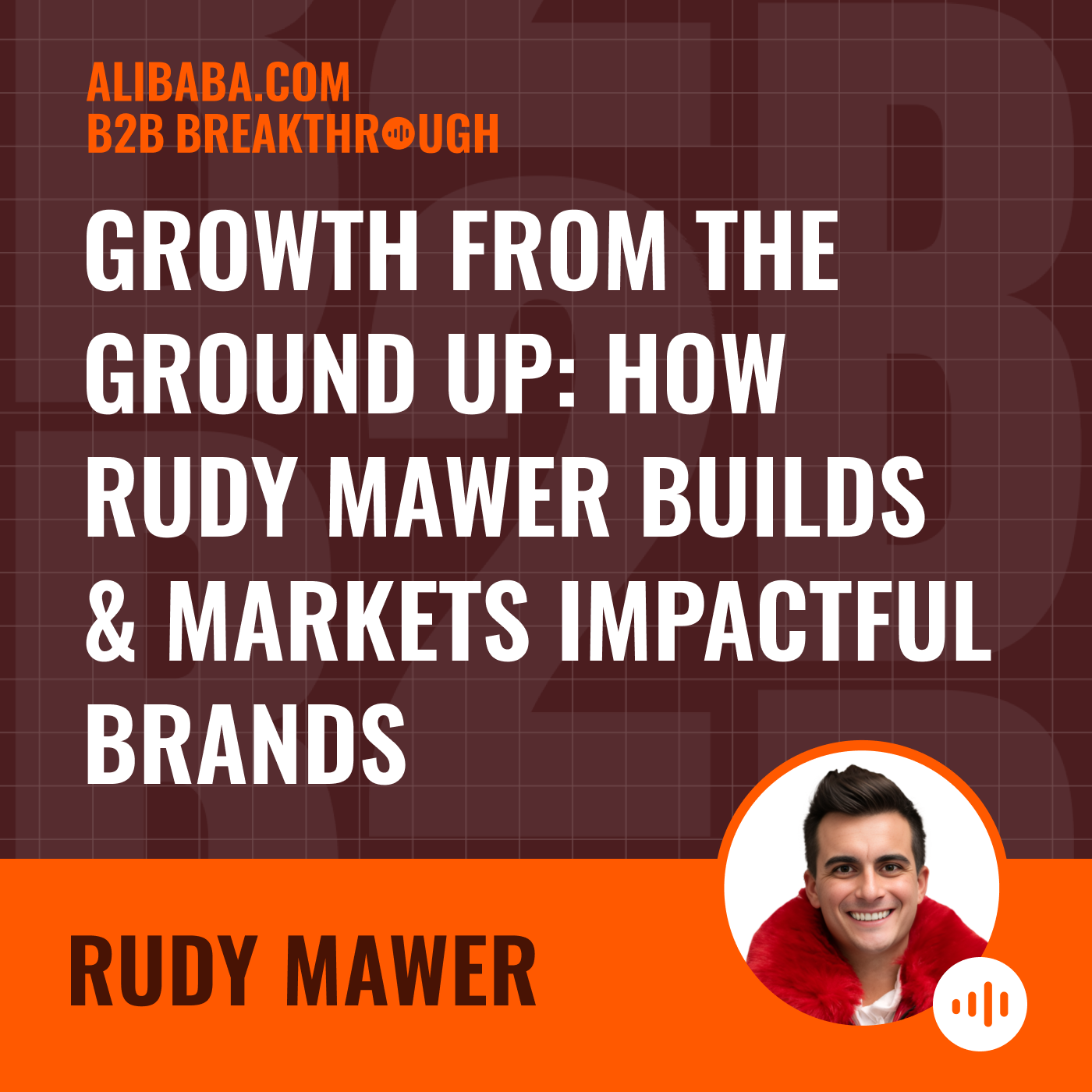
B2B Breakthrough Podcast
Growth from the Ground Up: How Rudy Mawer Builds & Markets Impactful Brands
00:35:13
In this episode of B2B Breakthrough, Ciara Cristo chats with Rudy Mawer, CEO of Mawer Capital and celebrity marketer, about mastering a winner's mindset, navigating the shifting marketing landscape, and scaling businesses. Rudy shares insights on resilience, innovative marketing strategies, building loyal communities, and the transformative role of AI in business. He also offers actionable advice for entrepreneurs aiming to thrive in today’s competitive environment. Tune in for key takeaways to elevate your business success!
Loading summary
Transcript91 lines
- [00:02]
Rudy Moore
I think the minute you stop innovating is the minute you become a blockbuster, a Kodak, or an ancient brand like you can't afford to, because especially now, the Internet collapses time. So everything changes even faster than it did 20 years ago.
- [00:16]
Sierra Christ
Welcome to the B2B Breakthrough Podcast. We're here to bring you all the best knowledge, insights and strategies from e commerce experts, successful business owners, and the team@alibaba.com that you'll need to grow your business and achieve your next big breakthrough. I'm your host, Sierra Christ.
- [00:34]
Unknown
Today on the B2B Breakthrough podcast, we're joined by Rudy Moore, the CEO of Moore Capital, the man in red and.
- [00:39]
Sierra Christ
Celebrity marketer who's helped raise over $200.
- [00:41]
Unknown
Million in revenue for brands. Rudy, you want to help us with a little bit more introduction on what you've done?
- [00:46]
Rudy Moore
Yeah, it's great to be here. The short summary is started in England, always entrepreneurial. Moved to America, grew my first million dollar company in my mid-20s. Took that to about 8 million. And then since then, I've generated tens of millions of dollars for my own brands and then hundreds of millions for other companies. Took e commerce companies to a million dollars a day in revenue and then built a big online brand, a million followers, top five podcasts, Amazon Prime TV show. And yeah, I enjoy the online marketing game and building brands.
- [01:16]
Unknown
So you're doing all right?
- [01:17]
Rudy Moore
I'm doing okay. I'm on the way. I love it.
- [01:20]
Unknown
Now, I was doing some research and following some of your content and you talk a lot about a winner's mindset. Now just to kind of ground us in where we're at today, what 2025 has in store for us. What is your mindset today and your outlook for the year?
- [01:36]
Rudy Moore
So I grew up in a family of pro athletes. My mom was a gold medalist in triathlon and my dad was the Great Britain team manager for the Olympic team. So I spent every weekend and holiday was with Olympic athletes.
- [01:49]
Unknown
Oh my God.
- [01:49]
Rudy Moore
So that gave me this winter mindset. Right? And it's funny because I think sport correlates so much to business. You know, winning in sport and the mindset to win in sport is the same in business. And I think it's so important, you know, in 2025 and every year as an entrepreneur, because entrepreneurship's not easy. You'll face a lot of challenges. You have to believe in yourself. And it's the same in pro sports. You train four years for an Olympics and then you get sick the night before or you hurt your ankle a Week before and now it's oh, four years, you'll come back again. So you need that resilience and you need the same in business. When everybody, an employee, steals from you, when logistics go wrong, when a product gets stuck at customs for a few months, it's resilience and the mindset.
- [02:32]
Unknown
So you mentioned you started really strong, really young. So what was that landscape when you started? The marketing landscape, the entrepreneurial landscape. And how has that changed?
- [02:41]
Rudy Moore
I kind of grew up with social media, like not like the kids these days. But you know, as a teenager Facebook came along. I was always entrepreneurial, so I was selling in school. And then as soon as I could, I started a business at 17, a fitness business. And I actually had an online gaming community as a teenager. So I was really good with websites, computers. So I built a website ranked number one on Google and did very well as a 18, 19, 20 year old. And I started taking all that money buying real estate properties as a 20 year old. And then I built my first fitness company to about 8,9 million in revenue in my 20s with social media and Facebook ads. And it was much easier back then, you know, 10 years ago to answer your question, I was running ads and I was making five, ten grand profit a day on the initial product. And now we teach, hey, you don't really make money on the first product, but you get the customer and you make money over time selling more to that customer in what's called lifetime value. But yeah, back then when Facebook was just starting and ads were just starting 10, 11 years ago, it was kind of like an ATM. You'd spend money and get more money back every day. And it was easier then. Now it's very competitive. Everyone's running ads, everyone's using influencer marketing, everyone wants to be a personal brand, so it's a lot harder, but you just have to innovate. And the top brands and personal brands and entrepreneurs that innovate, they stay ahead.
- [04:01]
Unknown
Yeah, I mean in terms of staying ahead, you've had to stay on top of those trends and on top of the changing landscape more than I'd say the average entrepreneur just in terms of coaching other entrepreneurs. So how do you stay that one step ahead and at what point did you realize that you had the information to pass on?
- [04:19]
Rudy Moore
Well, I mean I've been fortunate because you know, after my fitness business I got really good at marketing and I kind of self formed an agency cause all my friends started wanting to hire me to run their stuff. So this created an agency and through that we Helped hundreds of businesses running their marketing. So I really got to learn every type of business. E commerce brands, software companies, local marketing, digital products. And then, you know, that transition into what's now our big community and our coaching programs. And we have tens of thousands of members on all of our marketing coaching. So we get to see a lot of data and we get to see a lot of industries and we get to see a lot of what's working and not working. And it's like a mini sandbox environment. Right. And also because now I own seven of my own brands, my own companies and companies with celebrities that also creates these environments where we attest to and we're testing every day. And every day I have a call in my marketing team at 8 in the morning till 9, and there's about 200 ideas on a Monday board that are in the pipeline forever. They'll never really, you know, it might come down by 20, up by 20, but it's never changing because we're never done. You're never at the finish line. Right. It's like when these tests and projects are finished, there's already 10 or 20 more ideas. And when we run out of ideas, we set up a new call with my 12 executives and we brainstorm for an hour, new ideas. And that's marketing. That's business.
- [05:43]
Unknown
Yeah. Keeping that space fluid and always creating a safe space to foster.
- [05:48]
Rudy Moore
Yeah. I think, I think the minute you stop innovating is the minute you become a blockbuster or Kodak or an ancient brand like you can't afford to, because especially now, the Internet collapses time. So everything changes even faster than it did 20 years ago. It's easier for your competitors to grow fast. It's easier for new brands to come along. Right. Like you can create new brands now in a couple of days, whereas 30 years ago, if you wanted to start a company, it would take months. You had to order the inventory, do newspaper ads or whatever. Now anyone can build a website in a day and throw up a landing page and run some ads. So more access creates more opportunity, which creates more competition, which creates more distraction for the consumer. So you have to figure out, how do I stand out and how do I captivate and stay ahead? And that's what we're pretty good at.
- [06:36]
Unknown
The environment demands growth more than anything.
- [06:38]
Rudy Moore
Yeah, always. Because it's always changing. Customers always want more and your competition is always pushing. And you know, one big thing that we teach a lot of is getting attention and holding attention and building a brand and a tribe and a community because there's a lot of new cool products. But people become loyal to tribes and communities, right? You have people that will never leave Apple and then you have people on the other side that hey, Apple and will only ever be on Android. Right. And they argue with each other. That's a tribe and a community. So even if the new iPhone comes along, someone that's on Android that hates Apple devices will never go over there. Right. And that's, you know, for e commerce brands, that's so important into fostering that with your members or buyers.
- [07:21]
Unknown
So there's a positive connotation to developing a brand feud. There is a little bit of a. Yeah, yeah.
- [07:26]
Rudy Moore
I mean Pepsi and Coca Cola do it all the time. You know, like you want your loyal tribe and the best customers are the ones that go to battle for you.
- [07:34]
Unknown
I want to take a step back. Growth and scaling is not a decision, a one day move. You're constantly growing and scaling. But what does that mental shift look like when you decide to put more resources behind it or like really galvanize that tribe and community to push it forward?
- [07:52]
Rudy Moore
I started with zero funding. I never raised money. Grew my company to Inc. 5110 employees. One of the fastest growing companies. And you learn a lot, right? Like solo entrepreneur, you do everything yourself. Hire a couple of VAs and overseas people first W2 employee and then you get to 10, 50, 100 and it changes every time. So you have to develop as a CEO and a leader and most people don't. That's why they don't get to that 10 million mark or get to that 50 employee mark. But yeah, you have to change a lot and you change how you operate and what you do. I used to build the websites, I used to write the landing page copy, I used to set up the ads. You know, I used to do all that. Now I don't do any of that really. I supervise it, approve it, and I create new big partnerships. I work with the celebrities, I work with the brand partners, I speak on stages, I come on podcasts. So I think a big part of it in scale is changing what you do, how you operate. And that's so important because if it's always you doing everything, you'll never get very far.
- [08:51]
Unknown
Yeah, for sure. And that solopreneur mindset, that solopreneur phase of your business, it lasts longer than I. I think people think that they're going to reach this phase where they're hiring 50 people.
- [09:02]
Rudy Moore
Yeah, it takes a long time. I've been doing it my whole life. But I'd say I started more seriously around 25. And in the 25 to 30, in that five years, we grew to about 10, 20, maybe up to 30 staff. And then really in the last four years is where we grew to like a big level. Because in those first few years you're learning so much and you're figuring out your products and you're learning all these things. And you know, I'm still pretty young to have achieved what I've achieved. But when you look at it, I've been doing it 15 years, so it's still a long time. Yeah.
- [09:31]
Unknown
And in that time you've shifted industries a lot and you've grown so much in terms of understanding industries, even ones that you aren't necessarily an overtly active participant. So how have you shifted from fitness and real estate and marketing to a place where you can advise maybe some product based businesses? How have you grown to have a fuller understanding of that landscape?
- [09:54]
Rudy Moore
You know, I've always been obsessed and passionate about physical products. I like tangible things and you know, I started selling digital products and then I added subcategory supplements, even in my fitness business. So I got my taste for physical and now we've grown a lot of physical brand companies. And you know, I love physical products because most of the time people come back and buy more, which makes marketing much easier. But you know, to answer the bigger question of how do I move across all these industries, it's because of two things, psychology and creativity. Like, I'm very good at psychology and understanding the consumer and reverse engineering what they want. How can you make a product stand out and that links to creativity? Like, okay, we have this product. This is the psychology of the buying process and the consumer. How do we get creative to market this product and separate it from the thousand competitors? So it stands by itself, it stands out and we really hit the pain points and the wants and the desires and get the attention of the consumer.
- [10:49]
Unknown
Do you have an example of proving that out from a product how to creatively market around it? Tapping into the psychology?
- [10:56]
Rudy Moore
Yeah, there's lots of examples. A big company I won't mention, but we took it to a million dollars a day in Reven and it was selling furniture. It's not the sexiest product on the planet, right?
- [11:05]
Unknown
It can be, it can be.
- [11:06]
Rudy Moore
But these are the. It was just household furniture, right? It wasn't anything innovative, but we had this desk chair that was doing very well during COVID and it was selling a lot. So we started getting really creative with it and we shot an ad in a park and we took this office desk chair to a park and we grabbed random people in the street and had them sit in it and film their reaction. And that's one basic example. But we sold thousands of these desk chairs with that one ad because we got creative with, okay, everyone else is going to shoot a desk chair ad in an office and have some influencer or maybe actor talk about the chair. We're going to go into a park where you would not expect to see a desk chair. So you grab attention instantly and you stop people on the newsfeed, they're going, what is this? Why is there an office chair in a park? And now you're actually asking honest, authentic people their first impression as they walk by. Right. And you filming people being stopped in the middle of a park to sit on a random desk chair. So this is one example of how to stand out. And pretty much every company that hires me, they come to me with their product, they tell me what it does. Often they can't communicate it in five seconds, which is all you get on social media. And when they can, it's boring. It's the same as everyone else's product. But after 30 minutes, when I really peel back the layers, it's like peeling an onion. And understand what the product does, why it's so unique. Because most product creators have some uniqueness, they just don't know how to convey it. So once you peel back the layers and really get to the root of it, now you can do more sexy marketing that really stands out, that really hits the pain point and creates that separation.
- [12:39]
Unknown
Cool. So what is that stage that people come to you at? Like what is the level of development?
- [12:44]
Rudy Moore
We work with billion dollar brands and famous A list celebrities and all the way to beginner. And I think the reason for that is I was a beginner once and I learned the hard way. So I always love the entrepreneur that's starting out that wants help because I think mentorship's the best thing. You know, we try and help them collapse time and do the right things. Because when you start out, you do all the wrong things. So we try and get them to do all the right things and then we work with a lot of companies in that few million a year, 5, 10 million a year. Because I think a lot gets stuck there. And then obviously we have our bigger billion dollar brands and a clients as well.
- [13:17]
Unknown
So when you're in that early conversation, seeing a product that's pretty young in its development, how does that conversation work in Terms of the psychology that we talked about, how do you talk to a business owner who has so much passion for their product but is so green without breaking them down?
- [13:34]
Rudy Moore
Yeah, you've got to simplify. So it's like they come with all the ideas and stuff. And I like to simplify business, especially online business, 99% of them. You need to be able to drive traffic, right? How people are going to see it, that can be social media, influencers, ads, email, TV ads, podcasts, it doesn't matter. You need to drive traffic. You need a place to drive that traffic, which is normally called a landing page. Right? A clear place that people can go through it, read about it, learn about the product, and actually buy the product. And then you need to hopefully have upsells after that, because most businesses won't be successful selling one product, they'll need more products. So then you need a way to increase what's called lifetime value. And especially in E commerce, it's very important. So how can we sell them more? So there's three things. So I get everyone to focus on those three things. How you're going to drive traffic, how are you going to sell the product, landing page, a video on there, a webinar, whatever it is, shopify, store or whatever. And then how are you going to sell them more products? Okay? And as long as you get those three things right, nothing else matters. Take out the blogs and all these random things and the logos, just those three things. And then alongside that is what I said earlier about what is the unique selling point of this product? What's the big hook? How does it stand out? And as long as you're clear on that and do those three things, you'll make your first few million. And then it's like, now you got to add staff and operations and finance and legal and more things. But those three things are the most important.
- [14:57]
Unknown
And part of that, you kind of alluded to this, having the blog and all of the extraneous details. Now when we boil it down to something simple and then we start building up around it, the staff, the team, everything, how do you counsel people on not scaling too quickly? Like, what is that tipping point that makes a business unwieldy once they already simplify?
- [15:16]
Rudy Moore
Once you get a company bigger, once you pass those first few million in annual revenue to me, it's like, okay, you've figured out the product, the marketing is a good level now, and you can just keep scaling that. But you need what I call the boring stuff behind it now, right? You need the Team. You need the culture, you need the HR, you need the operations, the SOPs, the data points. You need the recruitment processes. So you need all that other stuff to paddle the sexy marketing stuff on the front end. And yeah, a lot of entrepreneurs don't do that. They don't pay attention to it. And that's, I think, why they stay stuck. And the ones that do that grow to tens of millions or even hundreds of millions. Again, it's changing priorities as a CEO, you know, like, okay, when you started, you focused on selling the product because you need money to pay the bills. Now it's focused on building the brand and the team behind the product.
- [16:04]
Unknown
Yeah. It's so intuitive and it makes sense, you know, in terms of, like, this is what you have to do to get through it. But we're highly emotional people.
- [16:11]
Rudy Moore
Yes.
- [16:11]
Unknown
And especially business owners. I mean, it's their baby.
- [16:15]
Rudy Moore
Yeah.
- [16:15]
Unknown
So how do you take the emotion out of it? Or how do you support people and encourage them to take the emotion out of it? To say, I know you want to talk about your business all day long.
- [16:23]
Rudy Moore
Yeah, yeah.
- [16:23]
Unknown
But let's talk about your finance guy. Let's get the right people in place and not your friends and family.
- [16:27]
Rudy Moore
I think people come to me with like, it's like going to a doctor. Most people are like, okay, I'm going to listen to the doctor. And just like a doctor, if you're giving advice and they're not following it, I'm just a pretty honest guy and I'm a pretty transparent guy and go, look, you can do it that way. What's going to happen? It's not probably going to work, but at the end of the day, it's your business and it's your life and go do what you want. But this is what I would advise, is why I'd advise that. And you can take it or leave it, but yeah, I think you have to be coachable. Right. And it's the same. You can be a great athlete. If you're not coachable in a team player, you'll generally never reach your full potential. And the same as entrepreneur, you can be a great entrepreneur, work hard, be super creative, believe in yourself. But if you're not willing to listen to other people, then eventually you'll plateau.
- [17:10]
Unknown
Yeah, that's sound advice. I talk about it all the time with friends and family. If there's someone that you're close to and want to help them, they can't be helped until they're ready.
- [17:17]
Rudy Moore
Yeah. And the good thing about entrepreneurs normally is Entrepreneurs that become successful are generally quite self reflective and they're good at understanding good and bad and realizing where their strengths and weaknesses are. And I think that's an important skill in life and that's important as a CEO is to understand what's your superpower. Where should you spend most of your time? Mine's marketing. So even though we have seven people in my marketing team, I'm on that call every day at 8am because when I've come out of that call, which I've done over a couple of years, marketing went down. It still did okay. But it's my superpower. So I think for a CEO, it's definitely important to stay in your lane and your superpower.
- [17:54]
Unknown
Lean on the people who you trust and respect to get what you need done.
- [17:57]
Rudy Moore
Done.
- [17:58]
Unknown
Yeah, nice. I think of that in my own life in terms of want to choose to have to.
- [18:02]
Rudy Moore
Yeah, that's good.
- [18:03]
Unknown
And knowing that you have to have your legal team, you want to do the marketing and you choose to focus, focus your energy where you need to.
- [18:09]
Rudy Moore
Yeah, it's a great thing. And look, it's a fortunate. You know, when you start out, you're forced to do everything and you have to get through that phase. And pretty much every entrepreneur has got through that phase. That's when they become successful and obviously a nice place to be in eventually where you can now choose what you do and you don't do.
- [18:27]
Sierra Christ
Is the complexity of sourcing holding you back? Are you getting overwhelmed by information in an endless search? Now, sourcing for your business has never been easier. Meet Axio, the world's first AI sourcing engine that helps you source like a pro with five key features. You'll get product inspiration that leverages real time market data from comprehensive web insights, social media trends and B2B knowledge. Generate detailed requirements to find the perfect match from AI verified products and suppliers through Axio's multimodal search. Use supercomparison to easily discover and compare millions of products from leading suppliers, focusing on the best selling and most competitive options. With Axio Page, you'll get AI generated encyclopedia pages that compile verified product information for each sku and finally leverage Axio Agent to streamline negotiations with conversation guidance, real time summaries and direct answers about products and suppliers without having to browse detail pages. Head over to Axio AI today. That's Accio AI to try Axiom for free and start sourcing like a pro.
- [19:30]
Unknown
Now I want to shift us a little bit to the supply chain conversation you've mentioned that you're working with celebrities on launching E commerce brands, product based businesses, as they're looking to scale, how do you work with them and their suppliers to make sure that the machine behind them is prepared to grow and scale at a rate that's sustainable for the business?
- [19:51]
Rudy Moore
Yeah, I think E commerce is fascinating. It has a whole element of complexity which is the supply chain and logistics. And again, I've been forced, fortunate or unfortunate enough to do it at a level where we were doing a million dollars a day. So you learn a lot very quickly when you're running big brands at that sort of level because you're selling thousands of products a day. As a marketer, when you start out, you just want to sell everything. You're like, let's sell it all, we'll figure it out later. And then eventually you're like, you have to have a ying and a yang. Right. So you still want to sell it all, but you got to have that end tight. We brought in a lot of logistical experts that had worked in big brands and operations for 20, 30 years to help with that because again, that wasn't my superpower. Working with good partners like yourself that understand it, have the connections. And I think the most important thing which you do well is having trustworthy vendors because every vendor and manufacturer will tell you what you want to hear before you sign and pay. And when did you pay? It can become a very. Oh, it's a bit delayed. Oh well, we're still missing this part. To make it, they'll give you 101 stories why it's late. It's so important to go with a trusted vendors and suppliers. And that's why we work with you guys, because you have them. Because the worst thing you can do is sell a thousand of them because you got told they'll be ready on March 1st. You tell your customers that and then you get a call. Oh well, bad news. The bottle lid is missing. So it's going to be April or May now. And you know, now you're on the back foot with your customers. So yeah, it's very important to master it. It's very important to hire experts or work with experts like you that can guide you and then use trusted sources and vendors like we do with you because especially when you start playing big, it can ruin your whole business if you get it wrong.
- [21:29]
Unknown
Yeah. And so to infuse a little bit of that psychology we talked about earlier into this conversation with supply chain, we talk to a lot of folks who have great relationships with their suppliers overseas and they're sending Christmas cards to one another, have this great rapport. But how do you, in these conversations where, like you said, they'll tell you what you want here, how do you identify for yourself that this is a partner that's with me for the long haul? What are those green flags?
- [21:54]
Rudy Moore
I guess, I mean, look, eventually, like you said, the Christmas card thing, you become almost business partners because if you become a big client, you're paying their bills and their staff and supporting them. So you want to have that relationship. Obviously, the number one thing that I do, whether it's employees, vendors, contractors, logistics, supply chain, is vetted sources. That's going to cut down a lot of risk instantly using vetted sources. And again, coming back to you guys, you already have that and you can tell how many orders they've processed. Their reviews, like having that is just, it's like going to a restaurant with 5,000 five star reviews. The chance of failure there versus a brand new restaurant with no reviews is massively different. So that's the first thing, looking at reviews and using trusted suppliers. Second thing is, and I think this is the number one rule in all of business, which is clear expectations. Clear expectations. And I think it comes with experience asking the hard questions. So we ask, you know, again, being a transparent person, I say to my want to hear this fluffy answer you might give other people about when it's going to be ready and I just want to know exactly when it's going to be ready. And then I want a backup plan if that isn't met, what's going to happen if it's not met and I put the risk on them. So I might even with some suppliers change the contract structure. And so they've got some skin in the game too. But yeah, generally now we're luckier that it's happening less because we've worked with people we trust most of the time that have good results, case studies. And I also think when you set clear expectations, it's generally it goes 90% better than if you don't. So I would say they're like the three main things.
- [23:25]
Unknown
Yeah. And part of those clear expectations is set in this negotiation phase early on.
- [23:31]
Sierra Christ
So for people who are a little.
- [23:32]
Unknown
Gun shy with negotiations or just a little anxious about how to make sure that we're all getting what we need, we're all benefiting from this deal. How do you approach a negotiation and set terms in a way that's setting you up for a successful partnership?
- [23:45]
Rudy Moore
I think you have to understand you're the consumer. So you should come in knowing what you want and what you can pay and then you should obviously do your research and see what's realistic and then find that middle ground, right? It's like, okay, this is where we're at, this is what we need, the rough timeline, what we can pay per item. And then as long as that's realistic, it's finding that reputable dealer and obviously having discussions and just like hiring an employee. Feel it out, right? You've got to feel it out. You've got to make sure there's a middle ground and there's a good connection and then doing your due diligence, looking at reviews or references, all of those things. I think they all play a big part in that initial phase. And I think you have to, if you're an entrepreneur that's maybe shy, like you said, it's just business. And honestly, if you're shy, most of the seasoned vendors and manufacturers, they deal with this all day, every day. They're not going to get upset by you asking a couple of questions. But you do have to have realistic expectations because any big company, even as an agency, will send customers away if they come in and they're asking all these silly questions, it's like they're going to be a nightmare client. We already know it's so it does go both ways. You've got to understand what's average, what's realistic and then, you know, push to that where it makes a good deal for you. But also there's a good deal there because you want, like you said, you want both parties to win, right?
- [24:59]
Unknown
Can't come in too hot feeling like you got to push too hard.
- [25:02]
Rudy Moore
For now, if you're a celebrity and you're ordering 100,000 units, maybe you can come in hot. But you got to remember if you're not, you've got to pay your dues, you know, and then as you scale up quantity and spend more money, then you can obviously negotiate again.
- [25:16]
Unknown
Because the flip side of that is, yeah, you're looking for someone with 5,000 5 star reviews and experienced manufacturer, but they're looking at someone who is a first time entrepreneur.
- [25:23]
Rudy Moore
Yeah, if you're ordering 200, it's like they already got people ordering 20,000. They're not going to, you know, do a million things for you just starting out. So they're business owners just like you are.
- [25:33]
Unknown
Yeah, that's great. That's really helpful advice, I think because myself, as someone who is maybe a little bit nervous going into a negotiation because it feels like you're putting all your cards on the table. But it's someone who wants to benefit from this relationship just as much as you do. As you're working with celebrities and creators. For those who aren't already capitalizing on their captive audience and creating brands, how do you recommend they start and really create something new for their audience?
- [26:02]
Rudy Moore
Yeah, I think it's a great question because when we meet those people, I always tell them, hey, you've done the hard work. You've done what 99% of brands want to do, which is build a captive audience. It's kind of like winning the lottery and then not cashing in your lottery ticket. That's how I see it. So it's very important that you do that. Obviously that's what we specialize in with celebrities. And the way we go through that process just quickly is understanding first your audience. So who's your audience and why do they follow you? Okay, great. What products are related to what I'm known for and what my audience wants? It's two part question, right? Well, if I'm a boxer, then I could bring out boxing gear and fitness and protein bars maybe and all those things. Right. So really understanding what you're known for and then making sure it mirrors into what the audience follow you for. Okay, so that's the second thing. And then we survey before ordering or committing. So we have our hypotheses and we have our research and we have our ideas. Now we're going to solidify them a little more before we spend four months making a product and ordering 5,000 of them. So we'll do surveys. Okay. Instagram polls. If they have an email list, we'll email, for example. And then we'll start generally after that by doing a minimum viable product with minimum order quantity where we're going to test it pretty quickly. And we'll often even coincide that with a pre sale. So we'll actually sell the product out before it's finished making so it self funds and self liquidates. That's why, you know, I've been able to build lots of companies without raising capital. And then we'll go from there and keep adapting and pivoting once we launch.
- [27:36]
Unknown
So the flip side of that coin, I am not a celebrity, I am not an influencer, I do not have a following and I have no idea how to start my business. What are the first three things that entrepreneurs or budding entrepreneurs should do to set themselves on the right path to success?
- [27:52]
Rudy Moore
Yeah, well, I mean, you gotta decide what you want to do. So like what are you passionate about? What is a good industry to start on? Can you start it quickly and easily again without having to spend tens of thousands of dollars or five years in the making? And then you know, does it have legs? Right. So like that initial things, probably step one is figuring all that out, the research, the market research, figuring out what you want to do. Number two is then creating a plan for those three things. I said, how are you going to get people to see it drive traffic? Where are you going to build the website? How are you going to get people there to buy it or opt in or preorder it or whatever? And then what else can you sell them? Because when you start selling, you're going to miss out a bunch of money if you don't sell more things. So what else could you be selling? I would say that's number two. And I would say number three is not trying to do it alone. Right. So once you've got all your ideas, you've got a bit of a plan, you know what you want to do, you're starting on that, you're building your website, figuring out how to promote it. Number three is get advisors, get team members, get mentors, join coaching programs, join masterminds, go to events. Because once you get yourself in the circle, you'll learn so much, you'll have people helping you, you'll have answers to all your questions. And that would be number three.
- [29:01]
Sierra Christ
Nice.
- [29:01]
Unknown
All right, so we've got the full formula here. We're ready to start businesses, we're going to make some magic. I love it.
- [29:07]
Rudy Moore
That's the goal.
- [29:09]
Unknown
So I want to look ahead a little bit. So what is coming up for you and for the businesses that you're working with for your clients? What are some big things that are exciting on the horizon?
- [29:17]
Rudy Moore
Yeah, I think the integration of media, like we're becoming and launching more on the production side, our own sort of entrepreneurial network. Because content creation has come so far in the last five or six or seven years and it's kind of like bread and butter now on social media. But I think the next thing is integrating it into high quality media, which is what I mean by I.e. tV shows, documentaries and movies. So we're really moving into that because I think we'll be ahead of the curve when we do that. And then AI as well, like integrating AI into a lot of what we do. We've been able to increase our net margins and reduce certain departments by an efficiencies with AI. So I think those two big things are the big future for us and just constantly growing your brand. The reason we're working with a lot of celebrities is people want to do business with their favorite brand or favorite person more now than ever before.
- [30:08]
Unknown
Yeah, I got hung up on the AI bit here. So how exactly are you finding, I mean, efficiencies with AI? We understand from a headcount perspective, but what are the most lucrative parts of your business that can be supported by AI to find these efficiencies?
- [30:23]
Rudy Moore
Yeah, I mean we've been doing AI really since it took off a couple of years ago. And we've trained tens of thousands of entrepreneurs and business owners on it too. Because I think AI can be used in every department. So we really about two years ago looked at every department in our company and how they can use it. And we're constantly as a executive team pushing it down the chain into our departments and enforcing they use AI. So a good example is a designer might maybe went in the past to a copywriter to get all the copy. Now we literally, we push back on the designers and say no chatgpt at first and then if you need it, come to the copywriter. 99% of the time they don't. And that maybe seems small, but when you're doing hundreds of pieces of copy to design a week, like think about how much time that is. Not just doing the copy, but the transition of time between the design department to the copy team to the head of copy, to the person that checks the grammar, back to the head of design to then give it back to his designer to implement. And then there's an error or that doesn't fit on the page or in the design you wanted. So it's like you've got seven steps there. Then you times that by 200 tasks a week it becomes very significant into not just a cost saving but also speed of implementation thing. And that's one example. But imagine that across every department in your company. And imagine that in five scenarios in every department. If you have 10 departments times five, that's 50 scenarios. So that's really where we're looking, right? We're not looking at one thing or this cool software. We're looking at that. The day to day efficiency is because it's like most things in life, the biggest ROI comes from the stuff you do the most and you do over time. So back in diet and exercise, there's no like one sexy supplement or exercise you can do to lose weight. It's the stuff you do all day, every day. So we take the Same approach with AI.
- [32:11]
Unknown
Consistency is key.
- [32:12]
Rudy Moore
Yeah. And the foundations, consistency in the foundational things. That's where you always get the biggest results.
- [32:17]
Unknown
So thinking about not only how AI is contributing to businesses, if you were to start a new brand, let's call it a product based business for the sake of this podcast, start a new brand tomorrow. Who are the first three people you hire probably?
- [32:31]
Rudy Moore
Well, I'm a great marketer, so I'm probably gonna keep doing the marketing. I think organization's key. So like a jack of all trades, like admin manager, project manager. Right. I have a couple of those in my company and they kind of sit around each big department and they keep everything organized because especially if you're an entrepreneur, you're probably full of ideas and they can help pull the ideas out. Put them on a Monday board or a project management software or a spreadsheet or a sticky note at the very least. And keep you organized. Right, and keep the team organized. I think that one's important. I think a virtual assistant is very important. A VA or admin assistant. I cut out every way I can save time. Because as an entrepreneur, especially if you only have free staff, your time matters. So however you can optimize it, whether it's in the business or out the business business, your time's your time. You get 24 hours in a day, so that one's a massive one. And then a creative because everything's visual now. So like a really good designer slash video person would be the third.
- [33:31]
Unknown
So this isn't including operations and logistics and that stuff.
- [33:34]
Rudy Moore
When you're free people, you're probably doing most of that and you're. And your project admin person's going to be helping with that. And look, I'm pretty good at ops and systems, so I actually like to do them and build the process, which is why I wouldn't have those as the first three, because I want to go through it all. I want to work with the manufacturers, I want to negotiate, I want to build the operations and system side and then eventually someone will come in and run it for me. When you're starting out, operations and systems and stuff, they're changing every day while you find your feet. So you know you want a COO eventually in a director of ops, but you bring them in too early, they're going to have no clue what to do because they don't live in an entrepreneurial setting.
- [34:10]
Unknown
That's a great breakdown of the archetypes you need at the beginning. I think that's really helpful for folks to understand, especially the solo entrepreneurs phasing out of that part of hair. Well, thank you so much for chatting. This has been a really cool conversation. Where can people find you?
- [34:23]
Rudy Moore
Yeah, just look for the red. The red's everywhere. Once you see it, will never go away. But Instagram, Rudy, More Life, Google, Me, Rudy Moore, Amazon, we have a TV show, 60 Day Hustle, more capital is our main holding company which has all our brands underneath that.
- [34:39]
Unknown
So, yeah, all right. He is all over the place. You'll find him. All right. And we'll share some links as well.
- [34:44]
Rudy Moore
Great. Been a pleasure. Thank you.
- [34:46]
Unknown
Likewise. Thanks, Rudy.
- [34:47]
Rudy Moore
Thanks.
- [34:48]
Sierra Christ
B2B Breakthrough is produced by Alibaba.com to find out how Alibaba.com is empowering its customers with the tools, services and resources they need to grow their business, visit Alibaba.com and then make sure to search for B2B Breakthrough on Spotify, Apple Podcasts, or wherever you find your podcasts. Make sure to follow us so you don't miss future episodes. On behalf of the team here@alibaba.com thanks for listening.