← B2B Breakthrough Podcast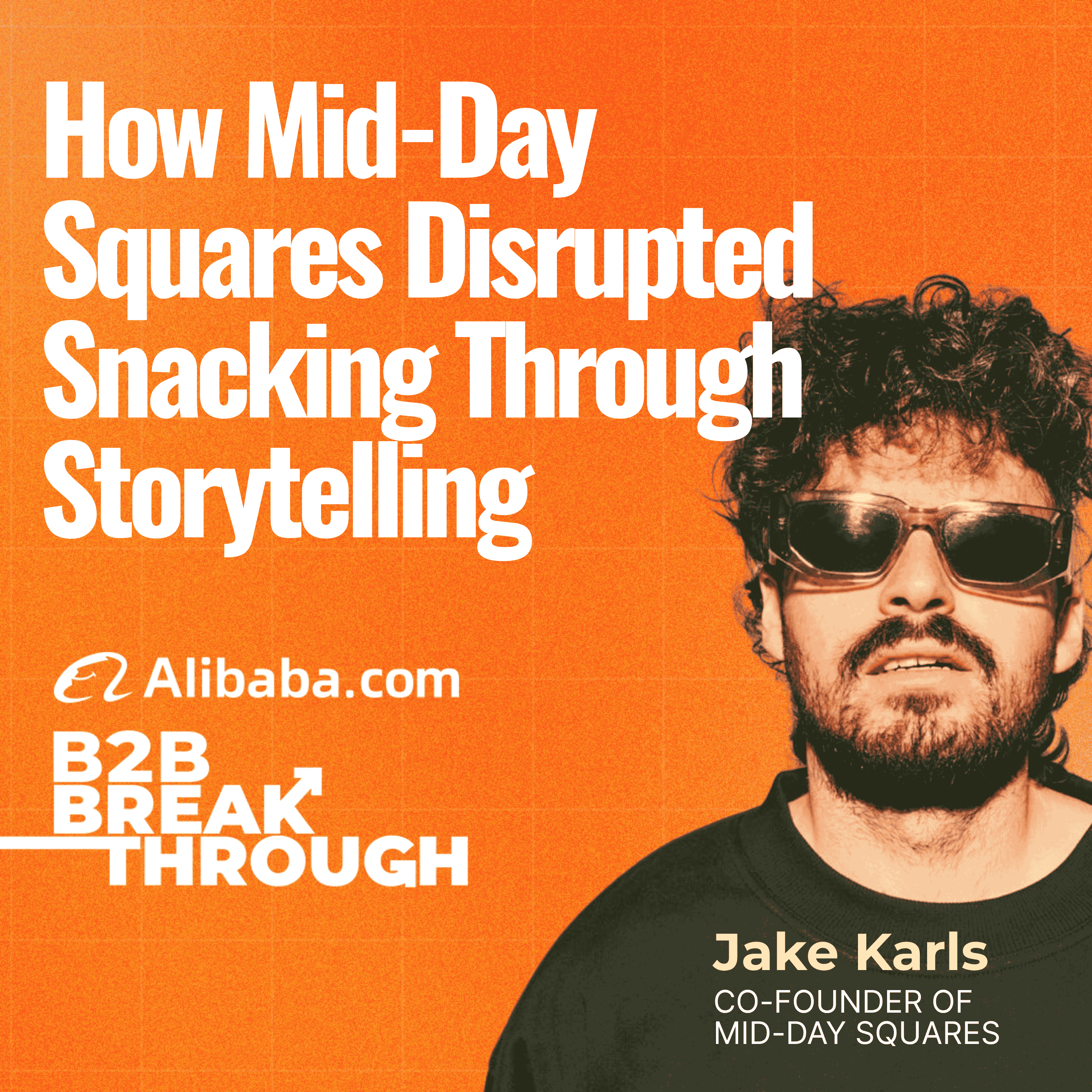
B2B Breakthrough Podcast
How Mid-Day Squares Disrupted Snacking Through Storytelling
00:35:21
How did three people with no social media following turn handwritten notes and free samples into a multi-million dollar snacking empire?Building a successful food brand in today's market requires more than just great products—it takes authentic storytelling, community building, and the courage to do things differently. In this episode of B2B Breakthrough, host Ciara Cristo chats with Jake Karls (https://www.linkedin.com/in/jake-karls-653106ba/), co-founder and “Chief Rainmaker” of Mid-Day Squares (https://www.middaysquares.com), about revolutionizing the snacking industry through documentary-style marketing and direct-to-consumer innovation. Learn how they built a loyal following by sharing the good, the bad, and the ugly of entrepreneurship, scaled from handwritten notes to millions of customers, and created a brand that makes people feel like they're buying from friends.Tune in to learn: (00:00) The Serendipity Philosophy and Building Through Relationships (03:50) From DTC Origi...
Loading summary
Transcript50 lines
- [00:00]
Jake Carls
I'm a huge advocate for serendipity and showing up and doing it in your way and not being scared to get on a plane. Even if the flight's 12 hours for one meeting, you might not get anything out of it. But you never know, we might get something massive. It takes one person, one person listening, one person to change your life or your business forever.
- [00:17]
Sierra Christo
Welcome to the B2B Breakthrough Podcast. We're here to bring you all the best knowledge, insights and strategies from e commerce experts, successful business owners and the team@alibaba.com that you'll need to grow your business and achieve your next big breakthrough. I'm your host, Sierra Christo. Welcome back to B2B Breakthrough. We're here for a little bit of a different format.
- [00:38]
Interviewer
Today we're chatting with Jake Carls in person. He is the co founder and chief rainmaker of Midday Squares. And we're going to talk through all things going D2C in the food space and how to integrate that into your marketing strategies as a food based business. So Jake, tell us a little bit more about what you do.
- [00:55]
Jake Carls
Oh, I love it. First of all, chief rainmaker, coolest title.
- [00:58]
Interviewer
Absolutely.
- [00:58]
Jake Carls
I want to go into that because I think some people are like, what is that? That sounds strange. It sounds like a different type of position and it is. So I'm 31 years old. I started a chocolate bar company with my sister and my brother in law and the idea was how do we become one of the most trusted afternoon brands in the better for you space in the afternoon snacking. So imagine that moment at 2pm when you're hungry and you want something that will carry you through. That's what we tried to create. But in the better few, you know, good ingredients, all that stuff. And before even starting my whole life I've been a person that loves storytelling, loves community building, making as much noise as possible, using Internet and all that stuff. Because I'm really a huge advocate of bringing people together, whatever it is, whether it's a product or whether it's an event or whether it's something like that. I know that stories bring emotionality and emotionality brings people to connect. So basically before I was even doing Midday Squares, I was throwing parties on college campuses. I was doing little pop up shop experiences selling clothing. And the common trait was I was building brands that had some sort of community behind it. So when I ended up closing my second business, my sister and brother in law approached me and they're like, hey, do you want to join us on this chocolate Bar business. And I looked at them and I said no. And the reason why I said no was because the world doesn't need another bar, another health bar, another chocolate bar. And you know, if you look at a store, whether it be in physical or even on B2C online, there's a lot of brands and there's a lot of competition and can't just expect to win by coming out of your product. Unfortunately, you need more than great products and you need great storytelling. You need to be able to get awareness. You need to be able to connect people. So I looked at them, I said, it's going to be way too hard to climb up this mountain. I believe in you guys, but I don't think I'm going to join. And they like pushed me in a good way to. They're like, I think you should join. So I ended up saying, you know what, screw it, let's do it. And I said to my, my role at the time was CMO and founder. And I basically said, I don't want to be a CMO after like eight months. Then I said I wanted to do something that I was actually really good at. And what I was really good at was making friends for the brand, making, building the network. So making it rain, that's where the rainmaker comes. I don't, I don't make it rain in products. I make it rain in relationships. And whether that be sales, marketing, you know, media, being in the face, being on, you know, all this stuff, I do that every day. I travel the world. I get to meet people, yourself and doing cool things like this. And it allows for the brand to get more awareness, more noise, but also bring people to help be part of our organization, whether that be a service, whether that be a new team member, whether it be an investor. So yeah, I live under the suitcase and in a four wall hotel room and I live in a lot of transportation. So that's my life.
- [03:34]
Interviewer
I have so many questions for you about this model, about everything that you and you and your co founders have been doing. What I really like about everything that I've read about Midday Squares and everything that you all have been doing is how integrated that storytelling is into the product itself, into the distribution model that you've cultivated. So can you talk to me a little bit about what this D2C model has done for you as a storytelling brand, as this community brand?
- [03:59]
Jake Carls
So when we start, we weren't selling anywhere, right? We weren't selling a physical retail. We were just three people with not a big social Media following. And we just basically said, how can we get people to try this product? So what we did is we created this D2C component which website and we started selling samples. So not full price and we wanted people to just try the product. So we did it. Obviously I think it was 25 cents at the time, crazy for a bar. And these bars cost a lot to make. And we want. It wasn't about losing capital on the product. It was about getting people that were serious to try it so they still have to put down their credit card and actually commit. They weren't just freeloaders on samples. And what that did was it created a opportunity to get people to try but also have touch points with them. So basically what we did was every customer that boarded on the sample, we sent them a personalized photo of the three of us with a handwritten note. Even though it took a lot of time, it was not scalable. We still do it, but in a different way now. But we hand write note about you, let's say you bought it, we would find something about you, write about it and then you would see like, wow, this brand is so personalized. It's so humanized. How could you not want to cheer them on? And so we did that for months and the idea was just get trial and get people talking using storytelling. And we actually hand delivered product at the beginning because we couldn't afford shipping. So it really wasn't a feasible model. But basically it got hype and it got people talking and it built some sort of awareness naturally. And as we were doing that, the way we got more people was we simply just took out our phones and we started filming everything and we just started documenting as if we were producers or we were like a movie, sorry, documentary. And we want to share everything that happened. So when people start to see the story of being like, hey, like these are three, three people that are building a food company and I get to watch the hustle of the behind the scenes. It's like I want to be part of what they're doing. I want to, I want them to win or I don't like them and I don't want to buy their products. But most people are like, these are underdogs and we want to support them. So they became part of the journey by just watching and as soon as they watched, eventually want to buy. So we just kept on doing that. And the DDC KE on growing and growing and growing. The views went up, the sales went up and the storytelling was the ability to get people to be interested. And then once they were interested, what ended up happening was product market fit had to kick in. People had to, once they bought the product, they have to be like, oh, I want to eat this again. So I always say to people, product market fit will get people to stay. Your storytelling, and especially in a DTC business, will allow for people to come to your site, to come to your, you know, your program or whatever you're offering and be interested. But if you're going to sell people on features and benefits, like we could have told people we had 6 grams of protein, 4 grams of fiber. That's not relevant to people because it doesn't interest them on an emotional level. Today more than ever, people crave authenticity, but also crave some sort of emotional connection to brands. They want to care about what they're purchasing. So what we did was just use that of documentary style and quotations of content and it, and it drove, you know, thousands and then now millions of people to try the product.
- [06:49]
Interviewer
That's huge. And you're based in, well, you're based in hotel rooms all around the world, but as a, as a brand, you're based in Montreal.
- [06:59]
Jake Carls
We manufacture everything in Montreal.
- [07:01]
Interviewer
Yeah, everything is manufactured there and distributed from there.
- [07:03]
Jake Carls
From there, shipped all over.
- [07:05]
Interviewer
Amazing. So how is that community building been on, you know, a city by city basis? Like, is there like a Canadian pride behind the brand that has really helped to drive the momentum or anything?
- [07:15]
Jake Carls
Definitely that has helped. I think the strategy we took early on, before we even went to physical retail was we went city by city. So we actually went to our local city, which is Montreal, and we basically built as much awareness that was relevant to that city. So we would learn culture, we would learn different things that like we could talk about on social media. We would go down in the big park of the city and give out free samples and film that process. That way people knew and they felt that energy. Once we felt that we were ready to move on to the next city, we move on to the next city. But it took time. We would build out the city, we would actually sell to local retail. We would build the D2C component. We'd work with creators in local cities to help spread the word. Until that was matured or ready. We would then go to the next city, do it at the next city, then next city, and then it would take a lot of time, but at the end that you build depth and then people start to know who you are. So again, very based on storytelling, but also being in the city physically, we would actually travel city by city and do things, events. We would show up at local, local things that were being, you know, in the community and support that, you know, sponsor them. And we'd also work with local creators around the, around each city that we went to. And then now it's more of nationwide and multiple countries that we sell into. So the marketing's a little bit different. But when we started, especially when we were D2C we would literally hype up the city by working with locals, local creators of being part of local events and stuff like that. And that actually worked because people would then see it and be like, I know that person talking about it, I see it here. I want to buy the product.
- [08:39]
Interviewer
We were just talking about some of the now retail opportunities that you've had. How has your DTC origins morphed over time to being more retail based? And has that loyal following of folks who felt so connected to you and still feel connected to you? How has that helped you land those opportunities?
- [09:00]
Jake Carls
100%. So the DSC is where we started and that's where we, we drove, we still drive almost 30% of our business through DTC and it's, it's never going to go away and I think it might even go up even more over time. But we knew that from a logistics standpoint we needed to get retail and we need to start selling single products. Because in our, in our D2C there are boxes which is a higher ticket item even for value. It's still a higher ticket in terms of dollar value. So some people might just want to try one bar a time. And logistically it was too hard to do a DTC with one bar without losing tremendous AM capital. So we did that at the beginning with the samples, but then we stopped it after like three or four months once we start to gain momentum. Now our DSC is for a lot of the loyal, a loyal base that loves midday squares and wants to buy, you know, almost like on repeat, non stop to have it always in their fridges because we sell in the fridge. And what retail allowed us to do is touch a lot of other people that would have never bought that ticket item on the website because it might have been too expensive or too pricey at the time. So when they go to a local retailer, you know, whatever city they're in, they have a chance to try one and that allows them for the price of 249, typically they're able to buy the bar and they either like it or they don't. But what Translated from the D2C side, which we use for our entire business, and the mindset is basically used on a D2C component is we're still competing for shelf space. There is limited eyes, limited attention. And if you want to win in this world, you need to be able to break through attention, the tension economy. I think as someone I'm paraphrasing, maybe Gary Vee said this, but basically, attention's become so valuable. And if you're going to build a business today, it doesn't matter what you're in. Could be commodities, could be. It could be chocolate bars like us, could be services. What you need to do is be able to get people's attention if you want to win. You can't just force people to pay attention. You have to earn the right, the privilege to communicate with them. So how do you do that? You don't do that by talking about your features or your benefits or the commoditized things. You do it by making people feel something. And the way to make people feel something is just tell a story. Because our brains are wired to process storytelling. Our brains are wired to understand stories and interpret things through stories. That when you go home at night and you speak to your, you know, your family or your friends, you're like, how was your day? You're telling a story. So businesses need to be on the same level playing field in terms of humanizing and storytelling as we do in our daily life. Just as friends. Right. And I think what we did really well was we took that mindset and we applied it to retail. That way when people went to the stores, they felt like they were buying from a friend because they knew us, they were friends with us. Our stories were talking about a, you know, a machine breaking down and how we. We couldn't ship out and we got fined XYZ dollars and almost put us out of business. You see the emotions, right? You see the authenticity strike, and that makes you feel closer to our brand. So that's what we did. We built it like that. And that still is the strategy. And it's now 70% retail, 30% DTC. And the same marketing, other than pricing and promo strategies, it's the same more or less marketing to drive the people to the stores or to online to our website and sell products. Wow. I mean, it's all based on great storytelling, authentic storytelling.
- [11:59]
Interviewer
Yeah. Well, and it's sharing that vulnerability.
- [12:01]
Jake Carls
It's most important. Stories are useless without that. And I'll tell you why. If I told you only good things 24 7, you'd be like, oh, that's cool. And then eventually you'd be like, it's not reality. And I think where we won was we showed you the good, the bad, and then the ugly. And it wasn't just for marketing purposes. It was to actually show you what it looks like to build a business. And when you see the good and the bad, you're like, wait, I relate to this both on the good side and I go through this in my bad side. So I feel really close to this brand because they're doing it different than every other company, which typically writes just the most perfect things. Right. And we live in a world today, whether we like it or not. People crave authenticity. They crave human connection. How do you do that? You just, just be yourself. Or if you're a big organization, you live by your values and that will strike through as authentic because you're living true to what this company was built on. And you don't, you don't have to be like midday squares and share everything. That's not what I'm saying to anybody because a lot of businesses won't do that. You don't need a front facing character or person, but you need to be able to tell good stories that are authentic to whatever the business represents.
- [13:05]
Interviewer
You've really bucked tradition. You said, you know, we're going to do this our way. This is our, you know, this is our approach to marketing, is our approach to storytelling. And this is, this happens to be our product. But why is this, like I'm asking you to speculate a little bit here, but why is this not a more adopted model?
- [13:23]
Jake Carls
Yeah, well, the food space specifically, let's, let's nail that. So think about it. You know, a lot of food businesses sell traditional retail limited space. You're one of 30 to 40,000 products on a shelf and people have limited time to shop. They're not shopping six hours a day. They're going in and they want to get convenience or their products usually looking for listed items. So if you're a new brand, you're barely going to stand out. Doesn't matter how good your product is, if people don't know anything about it, they might not ever pick it up, whether it's pricing architecture problems or just no marketing put behind it. So I think that what's missing is traditionally what worked in retail was the old school marketing where it's like, yes, features, benefits, you know, we've got less sugar than XYZ and maybe that would matter at the time. Or we're on promo for 30% off, come by it, say try it or demoing, which still works to a certain extent. I think a lot less than the online strategy. I think what we did was we said if we want to do it different and make noise, how do we stand out from the crowd? Be loud online, be real. And that way people will then look for your product in store, even if it's in the back of the store. They'll come in and be like, where's Midday Squares? I like that brand, I'm trying to find it. They'll put intention behind shopping. Now why do brands not do it or why are they slow to adopt it? Because some have done it and they're doing a great job and kudos to them. They're taking risks, they're bold. I think the biggest thing is fear and it comes back to human nature where we as humans are fearful of failing in public. We're fearful of judgment. And when you do things differently, it's uncomfortable. Some people aren't ready to do it. Every business that exists has done something different to create their business. And at first it's always a little weird or it's a little strange or they don't want to purchase. But then over time it starts to get, wait, I'm more familiar with that, I'm more familiar with that. And then they buy the product. So I think that same thing goes with the storytelling is people are a little bit fearful of sharing something that's not about the features of the benefits because that seems safe. But in the end what's actually more safe is to connect the consumer. So it's more of a risk that you're just commodities and features and benefits because you're spending capital to do that. But the attention is not even there on the consumer. Why not try to get on the same level playing field with them or the same wavelengths and tell them something that matters to them.
- [15:33]
Sierra Christo
Is the complexity of sourcing holding you back? Are you getting overwhelmed by information? In an endless search? Now, sourcing for your business has never been easier. Meet Axio, the world's first AI sourcing engine that helps you source like a pro. With five key features, you'll get product inspiration that leverages real time market data from comprehensive web insights, social media trends and B2B knowledge. Generate detailed requirements to find the perfect match from AI verified products and suppliers through Axio's multimodal search. Use super comparison to easily discover and compare millions of products from leading suppliers, focusing on the best selling and most competitive options. With Axio page. You'll get AI generated encyclopedia pages that compile verified product information for each sku and finally leverage Axio Agent to streamline negotiations with conversation, guidance, real time summaries and direct answers about products and suppliers without having to browse detail pages. Head over to Axio AI today. That that's Accio AI to try Axio for free and start sourcing like a pro.
- [16:38]
Interviewer
I think between having the engaging, you know, social presence and the vulnerability out there, you've paired that with packaging and branding that feels connected to that tone and feels it's very vibrant and noticeable in the, on the shelves and online. And so how have you cultivated the brand visually alongside of your, your tonal marketing plan?
- [17:05]
Jake Carls
So I'll give it to my sister. So she's my business partner. She's also a creative director. She designed the packaging with her team and what she wanted to get out of those non traditional food. So she basically said she went through the grocery stores and online and D2C businesses and looked at everything and she wanted to basically bring a lifestyle escape to the grocery stores or to the online component, but basically being more like a shoebox. So like when you look at our box, it looks more like a shoebox that way we're kind of blending from some of the other worlds like fashion or even beauty and bringing it into the traditional food and beverage world. And that sets you apart. So then, you know, it's less focused on again, blowing up the certifications and things that typically food companies will do on the front of their package and making it more like sexy, more fun. And people are then like, oh, whoa, what is that? And they look. And it's different to them, right? It's combining other worlds, taking what you love from other worlds and bringing it to your world. And we're not perfect, far from it. And we're learning everything. We're changing the package as we go. But one thing I can tell you is it's different than typical other products on the shelf because they follow the typical food and beverage playbook. And I think that there's nothing wrong with that. But I think if you want to have a chance to win, you don't have unlimited resources. You got to be different. And that's part of our story. We're bold. Our whole mission is to show people in the world that you can build whatever you want or you can win whatever you want by just being you and leaning into your superpowers. So being different on the shelf too is a sense of being bold. And that's part of our values. Right? So you're right, it does align on the story. Even the tones, the colors, all that stuff is all intentional.
- [18:36]
Interviewer
Some of what you're able to pick up on and finding out what works and that trial and error which is a huge part of business ownership in any category for any business owner. But what's really intuitive about what you've, all you all have built is with how hands on it has been from the manufacturing perspective. Local in Montreal and you brought your packing in house as well, is that correct? So what fueled that decision to really keep it tight?
- [19:03]
Jake Carls
Oh, you nailed it. This is a critical for food and beverage companies. A lot of them will have third party manufacturers and it makes sense by the way you build, you build a product, some people have the machines and the know hows to do it, they can scale it for you. And then you focus on growth, sales, innovation, great stuff. Businesses should focus on that. We tried that so early on we were making our condo kitchen and to get out of our condo hand making, we looked at co manufacturers across the world, everywhere. And the problem with our product or the good thing about our product, it could be problem or good thing is when we went to these comands, 26 of them, they didn't know how to make this bar. They're like we need to change it xyz, textures, layers. You know, their machines just weren't feasible for this. It just, it requires different types of know how. So we had two options. Change the product and fit in, which is fine, which a lot of people do. Or build our own factory, which we had no money. We luckily found capital to invest in this and get that going. But basically we chose my, we chose that. My sister came back one day and she said we're not going to co manufacture, we're keeping it the way we make it our home. We're going to scale this to a product. If we could land people on, if we could take people to space, we can make the chocolate bar, right? And that's what we did. We ended up spending, you know, two and a half years building this first line out that we built. And what that did was yes, it allowed us to keep innovation alive and margin and all that stuff. But it was the hardest thing we've ever done. And it allowed for our story to tell a lot of the adversity side. We talked about the good, the bad, the ugly. The bad and the ugly came from a lot of the ops problems that we had. So it also leaned into the storytelling component. Right. And now we're about to go expand that line and build a second line to triple the output. And that's another 20 to 24 month process that's coming in.
- [20:47]
Interviewer
Interesting. And, and so you, you mentioned that this phase, this, you know, the ops side of it is what really brought the bad and the ugly into your storytelling. Did you ever reach a moment where you second guessed why are we doing this? How did we get here?
- [21:00]
Jake Carls
Yeah, 30 plus times. So, you know, I think cried ourselves to sleep. Why are we doing it? Big questions. You know, my partners are my sister, my brother in law, they're married. They almost got divorced because the manufacturing was causing so much problems. They were working together on it, they didn't get divorced. They, that they work through it, they're killing it. But manufacturing, and I respect any manufacturer out there, it is really hard. And it's not just like you put something and something comes together. There's a lot of brilliance, there's a lot of machinery, there's a lot of humans that are making this work. And one thing can cause a domino effect to go the other way. And countless amounts of times where our chocolate machine, for example, broke, what makes it worth it every time is going to why we do it. And seeing people enjoy these things. Millions of people around the world enjoying midday squares every day and also talking about how they love watching us and they're inspired and they started a business because we were bold. And if they had permission to be bold, even though that should never be permission, you could always do it. So I think that that's what brings us back to this is all worth it. And at the end, being able to see a product go from zero nothing to literally leaving a facility and landing in a shelf where we are right now in New York City. And that was made, I know exactly where it was made, when it was made, who, who touched it, when I touch it, it's just, you know, maybe and then, you know, blah, blah, blah. That's cool. People only see packages of products they don't understand that they don't, they probably understand, but they don't get to see the interesting details that went into just delivering that, that greatness or that horrible product, whatever it is. So I think that that's the most amazing part that brings us always back from those really hard moments of wanting to quit.
- [22:41]
Interviewer
And on that note, you know, you talked about how much you travel, how you are grinding all the time, you're cranking out a lot of content, you're meeting people, creating community and just constantly involved in the social economy. Around your business. So how do you manage the burnout for yourself with all of the demands?
- [23:04]
Jake Carls
Well, I think it's important to note, like, as good as storytelling is, it has a side that's. That. That can cause a lot of potential issues if you. If you get very involved in it, you're always like, how do I get this content out? Is it. Is it real? Is it not real? Like, how do you do it? So I think for me, like, at least, I had a burnout. I had a real burnout two and a half years ago, and it was horrible. And I had a breakdown, and I just didn't know who I was. And it sounds weird to say, but, like, I was so off track because I was doing so much content. I was traveling 140 flights a year. I was always out there chasing the dopamine and the next thing. And it just never ends, by the way. It could just keep going. The world moves and there's opportunities, there's this, that. And then I took a time off and I realized that, like, hey, like, it's okay to take a rest. It's okay to take a break and just refine yourself. And I did. And I spent 42 days taking time off. And I'm grateful that my partners were supportive and my business was supportive for that. I came back strong, and I came back to listen to my body. So I know I'm tired or I'm feeling lethargic, Lethargy. When you don't, like, you know, no more creative motivation. You don't want to do anything. You're not excited, don't feel excited. It's time to take a second to just what's going on. And, you know, I always tell people, entrepreneurship is not. There's a lot of glory to it and a lot of excitement, but that's like 5%, 10%, 90% is. Is a lot of fires and hardship. I call it loneliness, hardship and punches. You just get back up. But there's a time where you don't have the energy to get back up, so you need to repair or recharge to get back up. And I think that that's the most critical part of this journ. Yeah. Do I travel a lot? Yes. I figured out little kinks when I traveled, like, you know, like picking up snacks at a certain, you know, grocery, which are healthier, that I could bring with me along the day, or staying at certain locations where more can. More wellness focused, that I actually feel more comfortable rather than trying to hustle, hustle, hustle, hustle. Hustle and I've seen a huge ROI on that. But I definitely am really tired and I just believe in the vision. So like whether that's crazy or not, it could be, it could be delusional. I don't know. I wake up every day and I really believe that it's possible. You know, I also get to meet people like, you know, like yourself and others and I become friends with that. You know, not just are for business, potentially could be for life and you don't know. And that's what makes the world exciting, is the unknown and the serendipity. Yeah. So that's why I love it. And I think I've already done like this is what, 20, 25 already. I've already done like 60 flights so it's a lot. But I'm slowing down for the summer and, or whenever. I don't know when it's coming out, but I'm slowing down for a couple months. And there's something about physically showing up that makes a difference. And I've noticed that the ROI on that too has been 10x. The the idea of not showing up. So. So I don't know, I'm kind of addicted to it.
- [25:42]
Interviewer
Well, let's, let's build on that then. So what is, what does that ROI look like? How did what is so beneficial to you and your philosophy on showing up? Being in person, having this real world interface with the people that with your customers, with your distributors, with your community, with people.
- [26:00]
Jake Carls
People. The world's running with people. Right? Think about that. That's number one. Number two is the ROI has been like heavy duty investments in the organization with people. We love media articles from TV to print to. And it's all organic, unpaid. And another part is new team members hiring new people, building a team that's with epic, epic performers. Right. And meeting them on the journey. And then last but not least is making as much noise for the actual product itself so that people go and buy it in the retailers. I think that the return about a rainmaker, what I do is not direct. It's not like your ROI is going to be tomorrow or today. For me and the person, it's actually going to happen over a period of time and you've got to be willing to be patient and see things through it. Like, you know, I spent time on the road two and a half years ago or three years ago meeting a bunch of different investors and we built a relationship for two years and I kept going back to hang out with them and guess what? They ended up being one of our lead investors in our last round, and that's because they kept showing up. Yes, the business model had to make sense and all that stuff, but guess what? The relationship was so strong, there was so much trust built prior to even due diligence or anything like that, that it was a lot easier to get the deal done. So that's how the ROI works of being a rainmaker. And I think digital is great, but at the end of the day, there's something about human to human that goes so deep and has the potential for anything to happen. And I'm a huge advocate for serendipity and showing up and doing it in your way and not being scared to get on a plane, even if the flight's 12 hours for one meeting. You might not get anything out of it, but you never know. You might get something massive out of it. It takes one person, one, one person listening, one person to change your life or your business forever. For good or for bad. But I'm hoping that it's good for good.
- [27:41]
Interviewer
Well, and even if you didn't get anything tangible or monetary out of that interaction, you probably learned something in the experience of just being there with someone, even if they're. They don't end up being an investor.
- [27:53]
Jake Carls
We're in New York right now. Like, I, you know, the energy's wild. I woke up this morning, I had a meeting and I was walking and I got a creative idea. As I was walking, I was looking at the energy of people just like they were hustling. And I was like, I got something fired up, called my partner. Boom. What if I wasn't here? I don't know if that idea would have come. Like, this is, what I'm trying to say is like, invest in showing up. And it's costly for small businesses, it's costly for large businesses. But at the end of the day, give yourself the best chance and the way to give yourself the best chance is to see as much serendipity, as many opportunities as you can that is focused on what you're doing and just take care of yourself as you're doing it.
- [28:30]
Interviewer
That's huge.
- [28:31]
Jake Carls
Most important, yeah.
- [28:32]
Interviewer
As you, you're all trying to scale midday squares, that, that self care that, you know, that investment in yourself, that investment in, you know, interfacing with people in person, how are you thinking about sustaining that as you scale? And where do you, where do you find the opportunities to outsource? Or what would you, what would you even consider. Consider on the table for an outsourced department.
- [28:58]
Jake Carls
So 100%. So self care is definitely part of the journey because it gives us the energy to keep going. We've been building our team internally. That is phenomenal. They are the all stars. They are running the business. You know, my partners and I are basically the advocates and you know, we're comfortable. Like we're becoming more irrelevant every day in the day to day operation from a standpoint of relationships and noise and all this stuff, very relevant innovation, all that stuff. So number one is hire a great team. You can't do things without a great team. It's impossible. Second is as we scale, we are outsourcing certain things, some things that, you know, content was done all internally prior. Now we have content internally and we have externals that work with us on specialty things that can help us with a really cool campaign that we're doing, which we didn't do in the past, that we will work with them, with our internal team and the external teams packaging. We have some designers that we work with that are really cool that we're launching new innovation on design. So we've learned that like as we continue to scale, we need help in certain things that we're not good at or that we don't have internally. Instead of it just being all in one, we now work with others that supplement our internal team. So that's kind of like the next journey. I think the next three to five years will be a lot of externals that we work with while our internal team manages that.
- [30:09]
Interviewer
And so let's continue that thread as we look to the future. What else is on your three to five year radar to keep growing the business or goals even if they're not necessarily tangible goals. That feels good. I mean you talk so much about this being it's a passion project clearly and you are so invested as humans and having that connection to the brand. So what does the future look like from a tangible business perspective and a fulfillment perspective?
- [30:38]
Jake Carls
So number one, we expanding output, the max amount of output we can do in our facilities. So obviously without products you have nothing at the end of the day. So that's number one over the three year game plan is to get our second line fully operating. Number two is we call it the road to 100 million is just get this thing to 100 million of trailing 12, which is a lot of chocolate if you think about it, a lot of chocolate bars in one year eaten. So that's another goal, next two years and then the last is like continue to build up this team. So you know and make us as irrelevant as possible. And what I mean by irrelevant is not that we're not useful, we're very added value. But we built this business to sustain itself over the period time. Not to rely on the three of us, my partner's night to be there. Right. We're just, we're now advocates and brand ambassadors and innovators. But at the end of the day, we realize at every stage you need to build the team for it. You need to have the people that can help you execute. We have experts that are way better than us in most of the things, but we want to play just to our superpowers, all of us. We're slowly moving more and more into the those things. And I think the future is going to be again, who is the best storyteller and how can brands relate at a deep level and emotionally connect and then also, you know, build products that are truly innovative. So when I say innovative, it's not copycat products. It's actually something that's different, something that the consumer feels is there was a lot of work for food specifically, it goes into my mouth and wow, that's a crazy different experience. And that builds a lot of consumer trust. And once you have the consumer trust, you have an ability to communicate with them. You have an ability to, you know, work with them and have a community that they get support. But also it gives you the best chance at building, you know, if you believe you could build the next biggest snacking, biggest company, whatever you're doing. That's what we're trying to do. And we do it in three year stunts. We go on three years, we reevaluate everything. And what's the next three years look like? And then that's how we followed. It's like our, it's like our. There's a document that says exactly what we need to do. And yeah, as long as we're having fun, I think that's why we'll keep going. The moment we stop having fun is the moment you won't see us part of the business.
- [32:36]
Interviewer
That's a great metric. I think the fun and the joy.
- [32:41]
Jake Carls
Tired is fine, but fun and excited. I think it's going to be tiring anything you're doing while you build something meaningful. But if you're not having fun while doing it for periods of time, you live one life and it's short. Whether it could be a hundred years, who knows how long? I don't know, 200 years, but 100 years, it could be 10 years. You don't know. So what I've noticed is if you're not doing something fun in your life, then don't do it because it's a privilege to exist. So for us, we're trying to make sure we're having fun.
- [33:10]
Interviewer
It's a privilege to exist. I love that.
- [33:13]
Jake Carls
I like that too.
- [33:13]
Interviewer
I never heard of that. Surprising himself here. That'll do it. That'll do it. Well, just being mindful of time here, I want to leave the folks with one piece of advice and where we can find you.
- [33:25]
Jake Carls
Okay, you can find us on our website w middayscores.com or any retailer. Sorry, a lot of retailers in the refrigerated section go on our website. You can see the retailers. And then a piece of advice I would say is if you're at least to anyone that's building a business or even within a company, there's going to be a lot of noise to tell you to do things a certain way. You got to block it out. You trust your gut and your instincts. That's usually the right answer. Not all the time, but most of the time it knows it. And if you want to win, you need to trust your gut and trust those instincts and block out whatever noise is out there. Because they're not in your shoes, the consultant's not in your business. They might be helping your business, but they're not living through the day to day emotions. And I think that that's kind of what I wish I knew. When I started my original journey of entrepreneurship 11 years ago with other businesses was just not to listen to everything that happens. Take it in, but be very cautious. And I listened to everything and it got me bamboozled. And next thing you know, I failed because I didn't know what to do. I was like, I had this like paralysis on ideas and execution and everyone I speak to goes through a lot of similar types of things and they, you know, when you block out the noise, you, you're, you're free.
- [34:37]
Interviewer
I like it. Well, I hope you can continue to block out the noise and that you're heading on a path that is more fun and less tiring.
- [34:45]
Jake Carls
No, less caffeine.
- [34:46]
Interviewer
Less caffeine, less caffeine. That's awesome. Well, thank you so much. This was a really great conversation. I appreciate, appreciate you.
- [34:52]
Jake Carls
Rock on.
- [34:53]
Sierra Christo
B2B Breakthrough is produced by Alibaba.com to find out how Alibaba.com is empowering its customers with the tools, services and resources they need to grow their business. Visit Alibaba.com and then make sure to search for B2B Breakthrough on Spotify, Apple Podcasts or wherever you find your podcasts, make sure to follow us so you don't miss future episodes. On behalf of the team here@alibaba.com, thanks for listening.