← B2B Podcasting Insights - business strategy podcast for founders and brands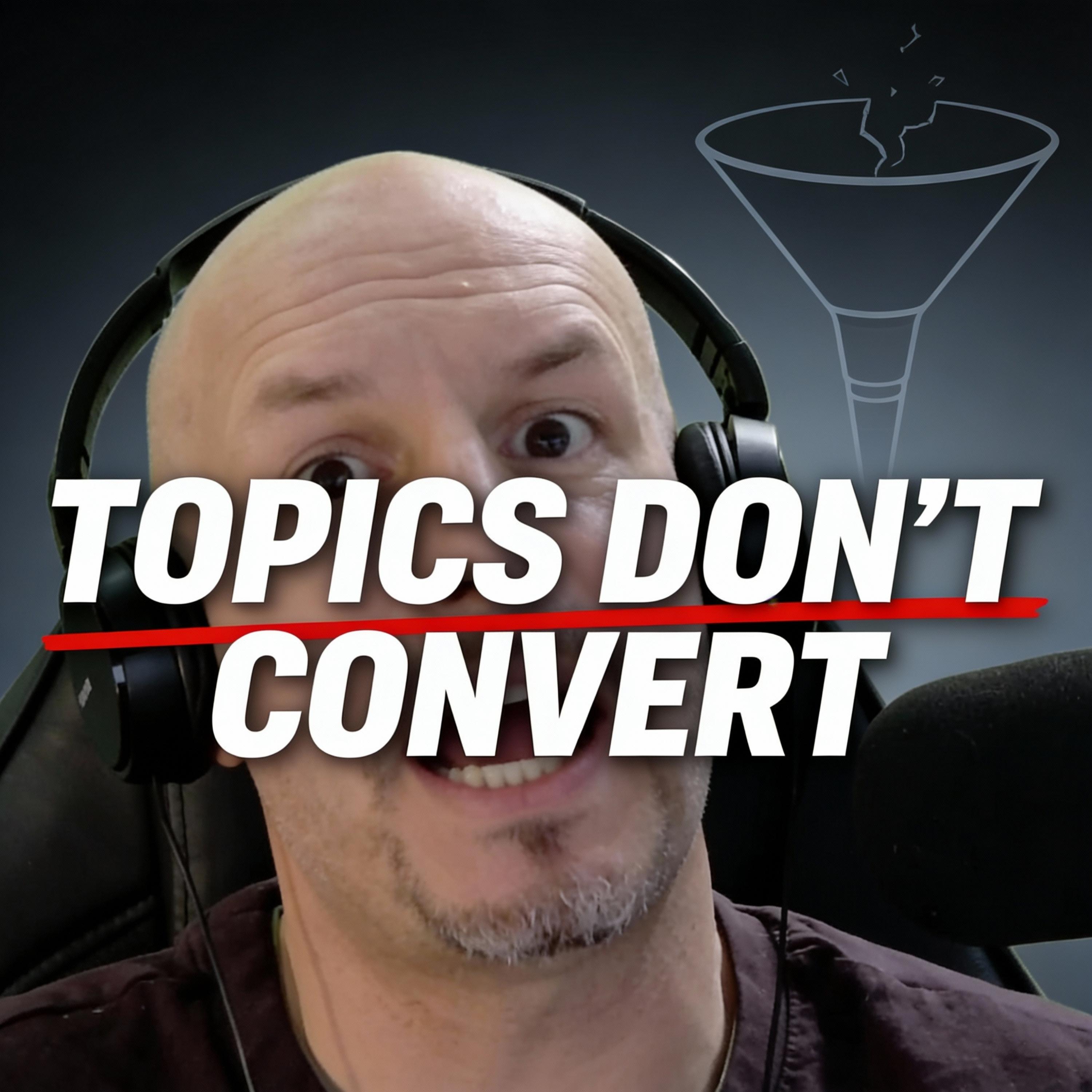
B2B Podcasting Insights - business strategy podcast for founders and brands
Your B2B Podcast Isn’t Working Because You’re Solving the Wrong Problem
00:07:46
Loading summary
Transcript5 lines
- [00:00]
A
This podcast uses chapters in Apple Podcasts. You can access them and skip to the relevant parts of this episode by clicking the Now Playing bar at the bottom of your screen and then tapping on the bullet points icon in the bottom right. So let me tell you about something that most business podcasts get completely wrong. They build episodes around Topics.
- [00:25]
B
Welcome to B2B Podcasting Insights with Neil Velio, founder of Podnos, a podcast agen helping you get better results from podcasting,
- [00:35]
A
marketing, leadership, culture, productivity. No one's out there googling productivity, hoping that they're going to find your take on it. If you want your show to drive business and not just tick off boxes on your content calendar, well, you got to build around buying triggers, not topics. Let's talk about that. So first of all, what is a buying trigger then? Well, it's that exact moment your potential client, and in this particular case, listener, realizes something is off, their old system is not working, and they've come to you to listen to your podcast to figure out why that is. Their own audience has completely stopped engaging. Maybe their sales team is ghosting their own pipeline. That's where your show should live. Think about it like this. Your ideal client doesn't wake up thinking, do you know what? I'd love to learn more about marketing funnels today? No, they don't. Contrary to what thousands of podcasts would have you believe, they wake up thinking, why did our last campaign tank even though the product is good? That frustration we've identified there, tanking marketing funnels despite good product. That is a buying trigger. It's the start of their buying journey, and it's exactly what your B2B podcast needs to speak to. Let me give you a short example that might be relevant to your own situation. If you help founders fix their sales messaging, don't do an episode called how to Write Better Copy. Everyone is doing that. What you need to do is an episode that speaks to a buying trigger may be called what to Do. When prospects keep saying thanks for the
- [02:30]
C
information, we'll think about it carefully and get back to you very soon. Okay, we appreciate your time and effort.
- [02:37]
A
Same topic, different angle, but one gets skipped and one gets a play click. Potentially gets you followed even more potentially gets them on your email newsletter list and ideally gets them on the end of a zoom call or teams meeting. This is why most podcasts miss this. Most B2B podcasts sound like panel discussions from 2014 because people build them around what they want to talk about, not what their ideal buyer is feeling in the moment. Right before they decide they need you, they're thinking top of funnel brand awareness. But the thing is, podcasts aren't there really for building brand awareness. They're there for building belief. They're there to be you in the room with them before you can physically get in the room with them. Look, if you want brand awareness, go make some TikToks, go pop some reels on Instagram, just shove some slop on LinkedIn. If you want trust, go make a podcast. So just how do you find your buying triggers then? Well, I'm glad you asked. Here's an exercise for you to carry out which will absolutely help you with this. First of all, listen back to your sales calls, read the transcripts, put them in ChatGPT and have a conversation with your GPT about your sales calls. Try and figure out the exact moment that a prospect says, yeah, that's our issue. That's the moment you know you have a successful buying trigger. So ask your best clients what was going wrong right before they decided to pull the trigger and work with you. Maybe scroll through your DMs and your inboxes. Look at those questions people ask you repeatedly. They're absolute gold. Great ideas for podcast episodes. In fact, use the exact questions as your episode titles. At this point, when you've got this working correctly, you're not creating content anymore. You are answering buying stage pain points out loud. You're addressing buying triggers. Let's have another crack at what this might sound like in practice. Say you're a B2B SaaS company. Instead of the future of MarTech, try what happens when your CRM stops closing deals. Instead of AI and creativity, do the moment you realized automation just made your brand sound robotic. Each of those triggers a specific business pain that somebody is already in. And that's what gets your episode shared internally within teams, helping you close the sale. Get to the decision maker. Activate complete buy in. Forget the topics list. Stop trying so hard to sound smart. Yes, we know. You know the thing that you talk about. You should. It's your thing. Stop trying to outsmart everybody else in your industry and instead try to sound relevant. Answer the questions they're not answering because they're too busy focusing on building their personal brands. They want to be seen as the go to thought leader on the topic in the industry. Every episode you put out, you're aiming to have the listener say in their own brain, yeah, they're talking about me right now. And that's the moment a podcast stops being content and starts becoming a buying accelerant. If you want to know whether your show is built around buying triggers or is just putting content out, or maybe just sticking around comfortable topics that are easy for you to get out there, let's literally what I do and the link to my training is in the episode description. I hope you found this particularly useful, and maybe it's activated one of your buying triggers, in which case, make sure you click that link in the description. If you did find it useful, feel free to share it with a colleague or peer in the industry, or any industry that you think might get something from the episode. Make sure you're following the podcast in your favorite podcasting app, and I will speak to you on the next episode of B2B podcasting insights. Until then, best of luck continuing your podcasting journey.