← Baby, this is Keke Palmer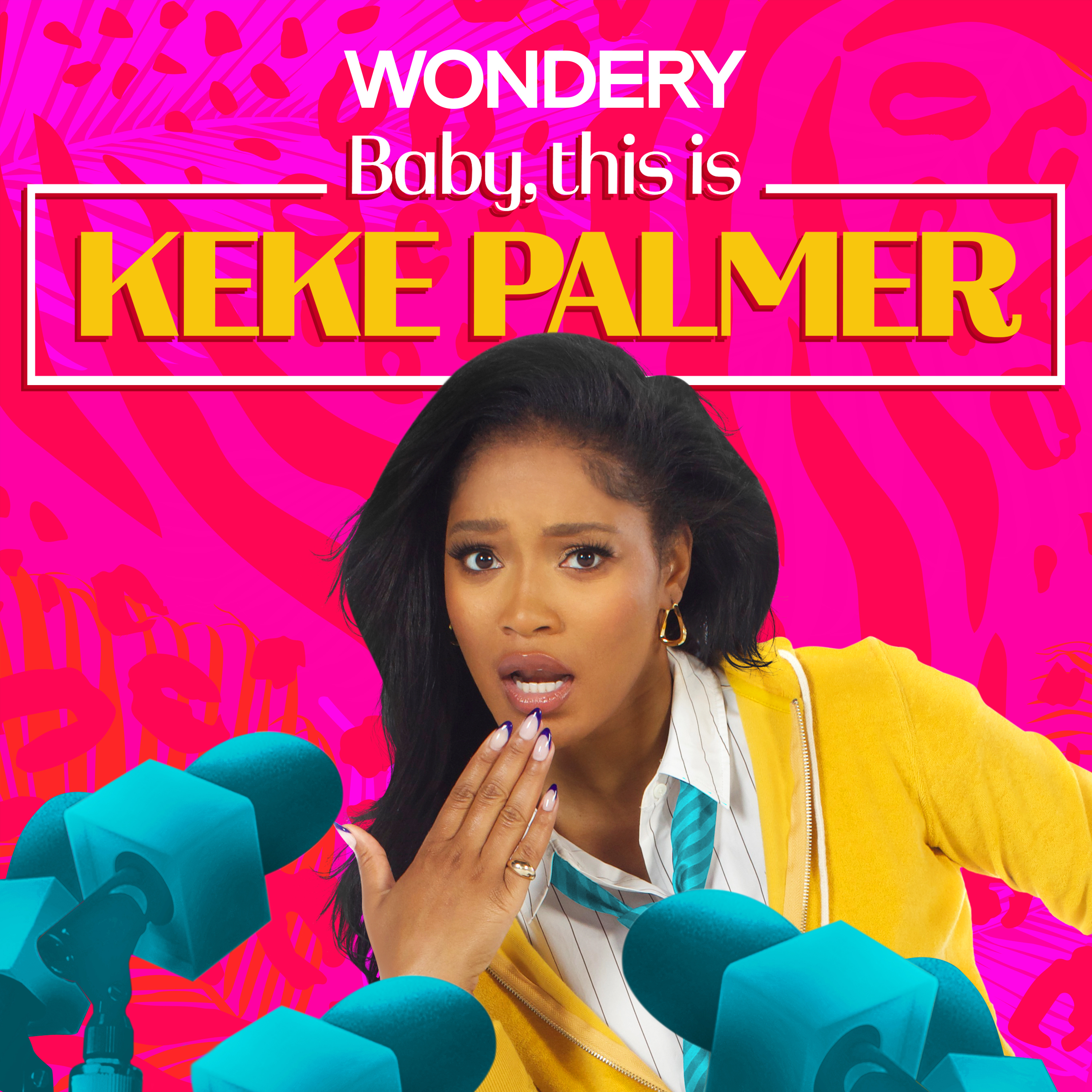
Loading summary
Transcript395 lines
- [00:06]
Keke Palmer
Today's guest is what I call the real deal. Emmy nominated scene stealing and multi hyphen it to the core. Natasha Rothwell has written for snl, lit up the screen in Insecure, made us feel things in the White Lotus, and created her own lane with how to Die Alone. Now she's adapting Reesa Tease's viral series and showing us what it means to lead with heart, human humor and hella vision. From military brat to creative powerhouse, Natasha is giving main character energy on screen and off screen. Baby, this is Natasha Rothwell. No matter what we doin in the car, just chillin pop on Amazon music. Sit back and listen. Life, love, sex, science, hovering it all especially the bad. Cause money always evolves no matter what it is we gon make it make sense. Nothing else to do but kick it with the homies and kings. So grab you a drink and a snack you enjoy and get into the vibe that only wants you know it's your girl. This is Kiki, baby. This is Kiki Palma. Yeah. This episode is presented in partnership with Airbnb, where the best end of summer memories are made with your closest friends. Now let's get on with the show. Natasha.
- [01:20]
Natasha Rothwell
Yeah.
- [01:21]
Keke Palmer
I am so happy to have you on the show, girl. I feel like I always see you out.
- [01:26]
Natasha Rothwell
Yes.
- [01:26]
Keke Palmer
While I was at an event saying hi and bye real quick. We never had the time to really kiki and get it together.
- [01:31]
Natasha Rothwell
No. I'm so excited like to be across from you and not have to worry about, you know, 100 other people.
- [01:36]
Keke Palmer
Yes. How are you? And did you find that bag at.
- [01:38]
Natasha Rothwell
The front of Danny's fair party?
- [01:39]
Keke Palmer
Yes.
- [01:41]
Natasha Rothwell
So I like losing things is I have adhd. Real, real bad.
- [01:45]
Keke Palmer
Same.
- [01:45]
Natasha Rothwell
So my purse, I had set down somewhere and then spent the rest of the event hunting for it.
- [01:51]
Keke Palmer
That is too funny. But I'm glad you found it.
- [01:54]
Natasha Rothwell
I found it.
- [01:55]
Keke Palmer
So we do the pre show pull up questionnaire and I'm excited to get into your mind and see what vibes we have today. So it says, today I'm giving whimsy, which I feel you always give, it just lights up with a side of cleavage. Because when you've got it, you've gotta flaunt it.
- [02:09]
Natasha Rothwell
You know, there's no hiding it.
- [02:10]
Keke Palmer
Girl, when I tell you my son took all my cleavage, the very little that I had, I mean, he just sucked it all out.
- [02:16]
Natasha Rothwell
He just sucked it dry. Girl, it's so. But cleavage is also a mentality.
- [02:19]
Keke Palmer
I love that.
- [02:19]
Natasha Rothwell
So you also, you got cleavage, girl.
- [02:21]
Keke Palmer
And girl, you know, growing up, I Did a couple projects with Queen Latifah. And let me just tell you, she leads with cleavage. Yeah, Queen is gonna hold something. Shoulders back.
- [02:30]
Natasha Rothwell
Shoulders back, girls.
- [02:31]
Keke Palmer
I'm Dana.
- [02:32]
Natasha Rothwell
Listen.
- [02:34]
Keke Palmer
Okay, so whimsy, a side of cleavage.
- [02:36]
Natasha Rothwell
Yeah.
- [02:36]
Keke Palmer
Today's mood. In one word, I'm always living here. Curious. Yes, curious.
- [02:41]
Natasha Rothwell
I'm curious about life. I ask questions all the time. I used to get in trouble when I was in school for saying why, and I would get, like. I had the grades to support it, so they'd get annoyed. Cause they're like, well, she's getting as. But, like, stop asking your why.
- [02:55]
Keke Palmer
She's gonna find out we're stupid.
- [02:56]
Natasha Rothwell
Yes, exactly.
- [02:57]
Keke Palmer
Exactly.
- [02:58]
Natasha Rothwell
But I was always asking why.
- [03:00]
Keke Palmer
I love that. I was the same. I mean, I would ask my mom, why about the sun. Why is the sun yellow? Because it is. Well, why would yellow be the one? Why would that be the color effect? Girl, everything okay? What did you listen to on the right here? Motown and the Daily.
- [03:14]
Natasha Rothwell
Yes. So on the right here, I had to take some calls, so I went with what was on just before I left.
- [03:18]
Keke Palmer
Okay. Okay.
- [03:19]
Natasha Rothwell
So I listen to the Daily all the time. The podcast, the New York Times. It just sets my day.
- [03:23]
Keke Palmer
You like news?
- [03:23]
Natasha Rothwell
I like news. I like to know how we are.
- [03:25]
Keke Palmer
You know what I'm saying? Cause we need to know.
- [03:27]
Natasha Rothwell
We need to know. And then I put on Motown mornings. I like to just like a nice, fun sort of morning.
- [03:34]
Keke Palmer
Yes, I love that. Shout out to Motown and the Daily. The last screenshot on your phone. No deleting. Show me now.
- [03:41]
Natasha Rothwell
It be.
- [03:44]
Keke Palmer
We are.
- [03:45]
Natasha Rothwell
We came to play. Let's pull it up.
- [03:49]
Keke Palmer
Let's put it up.
- [03:50]
Natasha Rothwell
Let's pull it up. No deleting. Screenshot. Oh, no.
- [03:54]
Keke Palmer
I'm so excited. Oh, yes. Love Island.
- [04:00]
Natasha Rothwell
Love Island.
- [04:00]
Keke Palmer
Girl, we got to get a sideline of this real quick. So, Janae, obviously listeners, if you know Love island, great. If you don't, let me put you on game. So Janae, who was on the season before the most recent, she was with a guy named Kenny. Her and Kenny, we seem, you know, we were happy for them. We were rooting for them. We were like, yes, our girl got a man.
- [04:16]
Natasha Rothwell
Yes.
- [04:16]
Keke Palmer
Well, come to find out, things went haywire. She. She. The screenshot that I'm reading from Natasha's phone is. Hi, my loves. Thank you for all your love and support. It means the world to me. As you know, Kenny and I are no longer together. Please know that I have seen all the breakup theories and none have matched up to how Terrible. Disgusting. Disgusting and disappointing. It truly has. Discovering that someone you loved isn't who you thought they were. And the relationship you thought you were building hasn't been genuine since day one has been truly devastating.
- [04:44]
Natasha Rothwell
Mm.
- [04:44]
Keke Palmer
Thank you for respecting my privacy. And please know, as a child of God.
- [04:47]
Natasha Rothwell
Mm.
- [04:48]
Keke Palmer
I will always be okay. Hey. She ate that, first of all. Second of all, we come to find out that Kenny had been talking to his homeboy, saying he don't like black women.
- [04:56]
Natasha Rothwell
He don't like black women.
- [04:58]
Keke Palmer
He thought he would get more money from this. Yes.
- [04:59]
Natasha Rothwell
Doing it for the clout.
- [05:01]
Keke Palmer
Exactly. And disgusting. It's in. Girl, when you seen that, I pulled the bag.
- [05:07]
Natasha Rothwell
I mean, look at her, girl. Not just physically, but her. Like, she's smart, she's funny. I don't know about you, she's loving.
- [05:13]
Keke Palmer
But I feel like we're in this era where people are so obsessed with clout, fame, and money. It doesn't actually even matter how gorgeous, smart, cool, handsome, whatever. Whatever side of it that you're on, it doesn't matter that you're actually awesome.
- [05:26]
Natasha Rothwell
That's right.
- [05:27]
Keke Palmer
Sometimes people are just so hell bent on this superficiality of personal self, it's shallow.
- [05:33]
Natasha Rothwell
And I'm like, her beauty is the least interesting thing about her. She has so much more to give. And the fact that he was so negative about black women who. You know, and I'm biased. I think that we are exquisite.
- [05:49]
Keke Palmer
I mean, what's the damn problem?
- [05:50]
Natasha Rothwell
What's the damn problem?
- [05:51]
Keke Palmer
I mean, all people have issues. All of them. But we, like, have the least issues.
- [05:55]
Natasha Rothwell
The least. What I think is that he was with a woman that held him accountable.
- [05:59]
Keke Palmer
And that now, isn't that always. I was just talking to my girlfriend about that, where I was like, girl, it gets to the point where it's like, just me being me doesn't make you secure. Yeah. I can't not be me. So I guess I'm just gonna be chilling over here on the side. Listen, because this whole thing of always having to ride the fence, of not messing up how you feel about you and not hindering your confidence or your, uh.
- [06:22]
Natasha Rothwell
Figure it out. I'm. So I call my house my peace palace. Girl, I have created a life of satisfaction. I'm happy. I am at peace. I can do for myself.
- [06:32]
Keke Palmer
That's right.
- [06:33]
Natasha Rothwell
So for me, a man, in order to be a part of this, he has to be additive. And that thing is not a financial additive. It's not that. Be additive to my life, to my life, to my soul. Pour into Me. So for me, I'm just like, Janae got the biggest blessing.
- [06:49]
Keke Palmer
Absolutely got the biggest blessing, because who wants to be caught up in something like that for life? Okay, what is your zodiac sign? And I love that, you know, your big three, because a lot of people come up on here, they don't know the real deal.
- [06:59]
Natasha Rothwell
Well, they don't really know themselves. They don't know themselves. That's. What if they don't know themselves, they need to know the victory.
- [07:04]
Keke Palmer
So you have a Libra sun, an Aquarius moon.
- [07:07]
Natasha Rothwell
That's right.
- [07:07]
Keke Palmer
And a Sagittarius Rising.
- [07:09]
Natasha Rothwell
That's right, girl.
- [07:10]
Keke Palmer
This is an incredible chart that we have going on here.
- [07:12]
Natasha Rothwell
Yeah, I have the. You know, my rising, I've gotten to know over time because I was always, you know, just Libra, Libra, Libra.
- [07:19]
Keke Palmer
Yeah.
- [07:19]
Natasha Rothwell
But my rising has really allowed me to step into sort of like a bit of a transient lifestyle. I'm on the go all the time.
- [07:25]
Keke Palmer
Girl, you're so funny. I mean, I feel that sag energy from you all the time in different characters. Like, obviously, I feel like I definitely got that in Kelly.
- [07:32]
Natasha Rothwell
Kelly.
- [07:33]
Keke Palmer
Yes.
- [07:33]
Natasha Rothwell
She gave me chosen for sash bag.
- [07:35]
Keke Palmer
Yes. But the Aquarius, that's that brilliance. Aquarius is so brilliant. I don't know that a lot of people always get into that sign. Yeah, but they are really.
- [07:44]
Natasha Rothwell
They're sneaky, mad geniuses.
- [07:45]
Keke Palmer
Yes.
- [07:46]
Natasha Rothwell
They're, like, not afraid to be weird or quirky. They like to try new things. So.
- [07:50]
Keke Palmer
So love me an Aquarius.
- [07:51]
Natasha Rothwell
Yes.
- [07:52]
Keke Palmer
Okay. What is the most unexpected thing on your talent, writer? Oh, this is so cute. Jerky and Jolly Ranchers, she said, salty and sweet. I like a little Sal. Now, what's your favorite Jolly Rancher color?
- [08:03]
Natasha Rothwell
Cherry, girl.
- [08:04]
Keke Palmer
Mine's too.
- [08:05]
Natasha Rothwell
I just like a little cherry I will pop. Like, sometimes being on set, it's just like, I need something a little sweet.
- [08:09]
Keke Palmer
Yes.
- [08:10]
Natasha Rothwell
So I just put a little cherry in there.
- [08:11]
Keke Palmer
My niece, she had a. She had a pocket full of Jolly Ranchers. She said, hey, Auntie, you want some Jolly Ranchers? And I was like, yeah, you mind what color? I said, whatever you want. I said, cherry. She said, I don't like those. You can take it. I was just thrilled.
- [08:24]
Natasha Rothwell
I was just.
- [08:24]
Keke Palmer
While she had them in her pocket. I don't know, but it's what I needed.
- [08:26]
Natasha Rothwell
It's what you needed. You know what I mean? I don't need to know where you got them. I just know that you have them and I can get them. That's it.
- [08:33]
Keke Palmer
Okay. And then may I Have your autograph? You gave me your autograph. I'm selling this now. I'm so happy to have you on the show. Thank you. I was interested. You grew up as a military kid.
- [08:41]
Natasha Rothwell
Yeah.
- [08:42]
Keke Palmer
So tell me where some of the places you lived growing up and what that was like.
- [08:45]
Natasha Rothwell
Yeah. My dad was in the Air force for over 35 years. And I was born in Wichita, Kansas. I lived in New Jersey. I lived in Incirlik, Turkey, when I was. Turkey, when I was, like, from two to four. So, like, two years there. Illinois, Florida.
- [09:01]
Keke Palmer
Illinois. Shout Out.
- [09:02]
Natasha Rothwell
I was in. Right outside of St. Louis. And then my dad retired as the commander of Fort Dix in New Jersey. But before that, he was at the Pentagon, and he was also at Andrews Air Force Base.
- [09:16]
Keke Palmer
Wow.
- [09:16]
Natasha Rothwell
Yeah. And so we moved around a ton. And so that's all I knew. And it also, I think, uniquely equipped me for being an artist, because when you're on set, it's like, almost a military base. You're there.
- [09:27]
Keke Palmer
Yes, it is.
- [09:28]
Natasha Rothwell
You do a tour duty, you all have the lived experience, then it goes away, you move on to the next. So I think it uniquely equipped me for this lifestyle, for sure.
- [09:36]
Keke Palmer
Well, thank you, your father, for his service. Yeah. Now, when you were in school, in your college, you read Langston Hughes, Dream Deferred.
- [09:43]
Natasha Rothwell
I did.
- [09:44]
Keke Palmer
And it made you switch your major. So what was your original major? And then tell me about the process of finding that piece.
- [09:50]
Natasha Rothwell
Yes. Journalism. So I've always written. I loved writing, and. But I knew I wanted to be an actor. And I had told myself that my parents were just, you know, they would hate it, and they would just, like. I just. You know. Drama. Right. I was just, like, inserting drama where there was no drama. I was just like, they're gonna hate it. So I'm gonna major in journalism. And then I saw this play, House of Blue Leaves, at Ithaca College. I was there my freshman year, and in the program, they had Langston Hughes, the Dream Deferred. I just remember sitting in the seat, reading it and sobbing. And I was just like, I'm deferring a dream right now. And so I went home for Christmas break, sat my parents down, and I was like, I'm gonna come out as a thespian. And I was like, I gotta tell you, I wanna be acting. And the first thing was just like. We were confused when you said journalism, but we thought, that's what you want. So they ruined my dramatic moment. I was like, well, I'm gonna do acting. They're like, of course. And so, oh, my God, they were so supportive. And I ended up transferring to University of Maryland, and I got a full ride for acting. Yeah.
- [10:49]
Keke Palmer
Now, isn't it so funny how our parents just know us? Because, I mean, obviously they've watched us before we've arrived at who we are. Was there ever a moment in time where they were like, this is when we knew, or this is how we knew?
- [10:59]
Natasha Rothwell
I mean, I was performative from. I mean, my dad was also an early adapter with technology, so he had the video camera that was, like, on your shoulder in the 80s.
- [11:08]
Keke Palmer
Come on, Daddy.
- [11:09]
Natasha Rothwell
So there's VHS of me just, like, putting on, like, my mom's shoes and, like, performing. I was always performing. And I think for them to nurture that and to see that and to allow me to, like, step into that, I'm just so grateful they didn't hinder it. And, you know, I grew up, like, my family's a family of faith, and so they're just like, you're called to this. Like, lean into your purpose. And as scary as that was, I knew I had them, you know, rooting me on. So that's really what changed it for me. And I was like, I dove from that point. I didn't look back.
- [11:39]
Keke Palmer
I love that. Nothing better than family support. Yeah. I mean, you've done everything from hitting your mark to writing to producing, showrunning, from Insecure to White Lotus, and now Risa Tisa. I'm very excited about this girl. I mean, what drives you to stay in all those lanes? And how did it come to, like, which one came first? I know acting did, but in terms of professional.
- [11:59]
Natasha Rothwell
Well, I have to credit Issa. I mean, I didn't grow up in a time where multi hyphenates were a thing.
- [12:06]
Keke Palmer
Same.
- [12:06]
Natasha Rothwell
So when I got to the writers room at Insecure, I was there to write. I had, like, Kelly didn't exist yet. So I was there writing, and I had a theater degree for acting, and I would put out this little Netflix special, but I was there. I didn't want to be perceived as anything else but writing. And I just remember when Kelly became to be and she was on the paper, she and Prentice were just like, we want you to play her. And I broke down in tears because I was like, oh, she sees all of me, and they're letting me be all of me. They're not saying, stay in one lane. They're just like, you can do this. Let's do this. You can do that, let's do that. And then cut to season Five, I'm directing, I'm producing. And so to be around someone who's a multi hyphenate who could just like, game recognize game.
- [12:49]
Keke Palmer
That's right.
- [12:49]
Natasha Rothwell
And she was just like, not only that, I'm gonna give you opportunity. And so I've tried to model that in how I'm creating. And with my production company, Big Hattie, just how do I replicate giving that opportunity to other people and to let them know they don't have to stay in one lane, they can switch lanes and explore their self creatively and their creative voice in whatever lane makes sense.
- [13:11]
Keke Palmer
Shout outs to Issa Rae. I mean, I had amazing experience with her as well.
- [13:15]
Natasha Rothwell
Yeah.
- [13:15]
Keke Palmer
I've been fuddling with this thought in my mind. Is it that we actually have to be multi hyphenates to be able to get the stories that we want told told? You know, because I think there's this thing where it's like, oh, we waiting for doors to be opened and we gonna get this opportunity and, you know, at some point somebody's gonna get it. But it's like, if we have to be the nuance, then should we just become the nuance?
- [13:35]
Natasha Rothwell
Yeah, I think. I mean, for me, I had this conversation recently because it's exhausting being a multi. It's exhausting creating for yourself and opening. Creating the door and walking through the door. And of course, I wish there were. The environment in Hollywood wasn't so that the thing that I'm doing because I love it wasn't something I had to do in order to do it. So there's this mandate that, you know, if we want to be on screen, if we want our stories told, we have to do it ourselves because they're not doing it for us, which I think is true. And while I love doing it, it is that kind of like. It is. Damn, it is exhausting that, like, if I want this thing made or want to see myself, I think that's how my show how to Die Alone came about. It was like, oh, I wrote this thing because I don't see, you know, brown girls with big titties in any other light. So I had to create a light that felt more familiar and that expressed my experience. No one else was going to do that. And so there's this, like, it's part gratitude for the opportunity to do it, but it's also. There can be resentment because it's just like, why do I have to. Why can't the industry be such. Where they want these voices and understand that black people were not A monolith. Like, we come in all shades, all colors, all stories. And so I'll do it because I love it. But it's also, I need to do that to make sure that the door stays open for the stories that are coming.
- [14:58]
Keke Palmer
And I do hope and I do believe creators such as yourself, or we're speaking about people like Issa Rae, I mean, Jordan.
- [15:03]
Natasha Rothwell
Yeah, likewise.
- [15:04]
Keke Palmer
Oh my gosh. Like those I do hope and I feel that we're creating foundation of work and hopefully IP that can at least stand as an example to what can be done and what should be done, even if it's not us doing it. That's the hope. But I do feel the same as you. Like, we do have to do it if we wanna do it. We gotta be the chest.
- [15:20]
Natasha Rothwell
We gotta do it.
- [15:20]
Keke Palmer
That we wanna see.
- [15:21]
Natasha Rothwell
That's right.
- [15:21]
Keke Palmer
Now, you said insecure taught you how to write with vulnerability, and White Lotus stretched you as an actor. What did how to Die alone teach you as a showrunner? Because that is a difficult job, mama.
- [15:32]
Natasha Rothwell
That's a difficult job. Woo.
- [15:34]
Keke Palmer
Showrunning is no joke.
- [15:35]
Natasha Rothwell
It's no joke. Yeah, but I loved it. It was just like my ADHD was like I was built for this moment. I was built for this. Like just the number of plates that are spinning, like, I was never buil and being able to create something, it's the most vulnerable thing I put out into the world. It's an intimate story, it's a funny story. And I knew what it is I wanted to create. And so showrunning was my. My vantage point to protect the story and the integrity of the story. And so I was so grateful that like every single decision, I was able to make sure that it felt true to the story that I wanted to tell. And it's not for the weak. And I also, that experience taught me just because I can do it and I can do it at a level that's. That got the show awards and feels good about. That's right. Doesn't mean I want to do that for just anybody. Because I know what it takes when you know, the emotional toll, you know, the sweat equity of what it takes to do something.
- [16:37]
Keke Palmer
It's so funny what you say in it because I had saw an article, something I had seen online. I don't want to totally botch it, but Martin Lawrence was talking about how doing Thin Line Love and I hate almost killed him because he acted, he wrote it and he was starring in it. I mean, excuse me. And he was directing it. I don't Know exactly everything. But he was doing a lot.
- [16:54]
Natasha Rothwell
He was doing a lot.
- [16:54]
Keke Palmer
And he was like. That almost killed me. I'm curious for you. I mean, obviously you kind of said it there, but, like, it is hard to direct yourself or to produce yourself.
- [17:03]
Natasha Rothwell
Yeah.
- [17:04]
Keke Palmer
How did you kind of switch gears or know how to tap in and be able to still focus on your role while keeping the whole infrastructure of the building together?
- [17:11]
Natasha Rothwell
Well, I definitely. I took lessons from Insecure because it was making sure that, like, every script that for every episode was complete before I got to set.
- [17:21]
Keke Palmer
Yeah.
- [17:21]
Natasha Rothwell
Because I knew that when I was there, I would have trouble downshifting into the writer's mode to then to there. So it was a lot of prep work to make that easier. But I. It is not. It's not for the week. It certainly isn't. But I also felt like there is something that happens to you when you are in flow and operating from your purpose. My battery was charged and I didn't know how. Do you know what I mean? Like, I was on two hours sleep and I was like, how am I energized right now? How am I? And people would comment on set constantly, be like, you're still going. And I'm just like, it's in me. Like, something is lit in me and this is what I'm supposed to be doing, girl.
- [17:57]
Keke Palmer
It literally has me touching my heart because I know the exact feeling of what it means when you're saying, being in your flow, it does have you high in the sky. In the sky. It's a feeling that you can't explain because you're just like, I'm in my flow. I'm in my go. Yes. Like, and I'm not letting out.
- [18:10]
Natasha Rothwell
No.
- [18:11]
Keke Palmer
Yeah.
- [18:11]
Natasha Rothwell
And you just. The wind is at your back. And I think that what that taught me is just like, remember this feeling. Cause then you'll know what it feels like to be forcing something.
- [18:22]
Keke Palmer
Okay.
- [18:23]
Natasha Rothwell
You'll know what it's like when you are pushing it. And that energy is not coming from the purpose within you. It's coming from something that you want that's more carnal and not coming from the place that feels right and feels aligned. And so it really taught me to listen to that and honor that. And so when I'm picking jobs, reading scripts, if I'm feeling like, oh, this could be a way for me to tap into that flow and that purpose, it's easier. It's a hell yes. Right?
- [18:50]
Keke Palmer
Yeah. That's important to say because sometimes we are in like a. I don't mind the concept of hustling, but I think it also undercuts the reality of this flow that you're speaking of. It's like, yes, put yourself out there. Yes, be prepared. But also, there's a reality where you don't want to reach.
- [19:04]
Natasha Rothwell
That's right.
- [19:05]
Keke Palmer
You know, you just want to land.
- [19:06]
Natasha Rothwell
Yeah.
- [19:07]
Keke Palmer
We got to always remember that because it's like once you put your time into something that's. That doesn't mean anything, then you're working an uphill as a team.
- [19:13]
Natasha Rothwell
That's right. That's right.
- [19:14]
Keke Palmer
Well, obviously I have to ask because we talked a little bit about it at the top, but as a multi hyphenate, we got a lot of stuff going on. Being a busy bee, but we also got love life. So how are you navigating relationships in this time, girl? Because I'm having a hard time. Me too. Don't you just look in the mirror? You're like, I'm very fine.
- [19:31]
Natasha Rothwell
I'm very fine.
- [19:32]
Keke Palmer
Like, I'm funny and cool. I got a lot of stuff going on.
- [19:34]
Natasha Rothwell
I got time.
- [19:35]
Keke Palmer
Why am I not the most eligible bachelorette? Hello. Let's go.
- [19:39]
Natasha Rothwell
I'm like, I mean, girl, Girl. It's so crazy. It's actually crazy. It's actually crazy because the thing is, is that, like, two things can be true at once, right?
- [19:49]
Keke Palmer
Yeah.
- [19:50]
Natasha Rothwell
Yeah. I can be happy, I can be whole. I can be at peace. But I can also want someone to share this with. I want people to run and chase.
- [19:56]
Keke Palmer
Me down the street.
- [19:57]
Natasha Rothwell
Chase me down.
- [19:58]
Keke Palmer
I got a soft life. Give me a pillow.
- [20:01]
Natasha Rothwell
Make it softer.
- [20:03]
Keke Palmer
I mean, hello. I mean. And it's like, also, how do we meet people these days? Like, my girlfriend and I, we're like, do I need to go down to.
- [20:10]
Natasha Rothwell
The bar and sit down?
- [20:10]
Keke Palmer
I was talking to Jill Marie Jones, and Jill was telling me, she was like, girl, you got to go to the bar and chill.
- [20:15]
Natasha Rothwell
Whoa.
- [20:16]
Keke Palmer
I'm like, if that's what it is.
- [20:17]
Natasha Rothwell
Is that what it is?
- [20:18]
Keke Palmer
I'm gonna go then. Cause I tried the apps.
- [20:20]
Natasha Rothwell
The apps are rough. The apps are so. Because they're also just like, oh, I know you from sewing. Like everyone. And I'm just like, don't talk to me. Like, that's just. Come on.
- [20:29]
Keke Palmer
It's just not giving. And I miss the days. Or at least I missed the days watching on TV where people were meeting at the club or meeting out at the lounge.
- [20:37]
Natasha Rothwell
LA's hard for that. LA's hard for like, let me take my ass to D.C. a D.C. new York, something. I know I set my parameters to London. At one point I was like, maybe there's a bloke across the sea that can handle it. Cause I got a bloke or something.
- [20:51]
Keke Palmer
I live for blokes.
- [20:52]
Natasha Rothwell
I was like, find me a bloke. Because I'm just like, I want to, like, see the world I want to have. But it's also just like, I think men need to just, like, come and just be like, step up. I ain't gonna chase you.
- [21:05]
Keke Palmer
Everybody is so tense. I also feel like everybody's tense, timid, you know? Don't wanna be a joke. Don't wanna be cringe. I've seen this quote from Donald Glover. He said, nobody's gonna be, like, looking at your deathbed and being like, oh, my gosh. He was so cringe. That right?
- [21:20]
Natasha Rothwell
It's like, cringe to care. No, Be cringy and have fun.
- [21:24]
Keke Palmer
And, like, even if love only lasts for two weeks, let it last for two weeks.
- [21:28]
Natasha Rothwell
And let. Come on. I'm a Libra. I crush on this mic stand. You know what I mean? Like, I can crush on anything. And it's been a minute since I had a proper crush girl.
- [21:37]
Keke Palmer
I know. And you just want the feeling.
- [21:39]
Natasha Rothwell
I want the feeling. I want to like that. Wake up, look at your phone and be like, a tee. Hee, hee hee. I want a tee.
- [21:46]
Keke Palmer
Where can I tee? Yes. And it's so funny because I feel like we're all having the same conversation. We're in a world where everybody's connected, we're all online, we're all somehow intertwined, but yet there's no real connection.
- [22:00]
Natasha Rothwell
There's no real connection. Cause it requires vulnerability. It requires, like, the chance of failure. And people just want a sure thing. Or people are too impatient. And I also think, too. I think there's this version of ourselves, hair done, nails, all that kind of stuff. And then there's me, no makeup, sweats, my glasses on, and I'm doing Legos.
- [22:23]
Keke Palmer
I think that's so cute that you do Legos. I love that.
- [22:24]
Natasha Rothwell
I do a little Lego girl.
- [22:26]
Keke Palmer
She's a genius.
- [22:26]
Natasha Rothwell
She's trying. But it's just like, I need someone to be attracted to that version of me and, like, want that and not just want this. Cause this is.
- [22:36]
Keke Palmer
And how do you deal with the perception? Because I have a hard time with that as well. Because people see me and they're always thinking, hilly Gog. And it's like, I can get into that bag. But it's like, also, like, you know, My confidence comes from me just saying, this is all I got. You know, it's not because I think I'm perfect or I got it all going on. It's just me being like I'm working what I got. Yeah, but it's interesting how sometimes that perception can leave people to think about what you want or who you are.
- [23:03]
Natasha Rothwell
Can I tell the truth and shame the devil?
- [23:04]
Keke Palmer
Girl? Yes, baby. This is Icy Palmer. Yeah, honey, I don't care what the pumpkin spice industry says. Summer ain't over just yet. And let me tell you, I had the vision of the perfect late summer getaway that would make Earth, wind and fire proud. I can already see it now, and I'm dancing in a spacious Airbnb living room, surrounded by my crew belting out do you remember? Because trust me, this is a memory in the making. With all the back to school chaos, sometimes you need a breather. Last year, I booked a guest favorite for a quick family escape. We had bedrooms for days, a kitchen big enough for our Chopped Leftover Edition competitions, and the kids could do their schoolwork without feeling like they were in detention. If you're looking for that last taste of summer or a cozy fall retreat, check out Airbnb guest favorite. I mean, seriously, these are the cream of the crop, y'. All. Perfect for family trips or friend getaways. You get more space, privacy, and locations that'll make your Instagram followers green with envy. Whether you're chasing the last rays of summer or embracing the pumpkin, everything Airbnb has a spot for you. Ah, baby, I just had the wildest ride with the prophecy. Season 2 on Audible and Kerry Washington. She's taking supernatural thriller to a whole new level. Dr. Virginia Edwards really thought she could finally breathe easy, but the universe said, not today. Just as she's setting in with her family, the power hungry billionaire cult leader shows up, threatening everything she's protected. On top of that, she's being hit with these intense visions. Cryptic, otherworldly, and impossible to ignore. Now she's racing against time with just one month to decode them before the world falls apart. And where do these visions lead her? Straight into the Deep south on a relentless run. Giancarlo Esposito is locked in as the villain, and he's hot on her heels and coming with full force. But good thing Virginia's got her trusted ally, Moses, played by Dulay Hill, riding shotgun. He and Kerry Washington go way back to psych. But this time, their characters are trying to stop a plan that could change the world forever. The Performances will grab you. And the sound design, it'll pull you so deep into Virginia's world, you'll be looking over your shoulder at every strange noise. Whether you caught the first season or you're diving in fresh, The Prophecy Season 2 serves up thrills, chills, and some serious what would I do? Moments. Ready to test your faith and face your fears? Listen to The Prophecy, Season 2, now on Audible. Head to audible.com prophecy2 for your free trial. Trust me, this is one prophecy you want to hear.
- [25:48]
Natasha Rothwell
You exude an authenticity that is so potent that it requires anyone to be in your presence, that anyone that's in your presence needs to show up with that authenticity. And there's no fake about you. There's no this version, that version. And I think that when people, like, that's that perception, like you said, you could tap into that bag and be like, hey, girl, whatever. You know who you are and the people that will love you and surround you, like, they know that too. And I think that's also the few times we've crossed paths. And I'm very, like, spiritual and so, like, your vibration. I was like, oh. I was like, she's someone who I. That I need in my orbit. Because you're so 10 toes down. And I just know that, like, whoever you end up with is gonna be so worthy. Oh, gosh. Is gonna be so worthy.
- [26:39]
Keke Palmer
Yes. Honey. I feel like I don't know what scene, what movie this is. I think it's Jill Scott. Yes. And Tyler and upstairs and I didn't get married. Oh, I see it for you, girl. I need that.
- [26:55]
Natasha Rothwell
I see it. I'm gonna be there with my bloke. I know. What, honey? Me and my bloke, we gonna figure it out.
- [27:02]
Keke Palmer
Oh, girl, I live. I live. Well, congratulations on your second Emmy nomination, girl, for White Lotus. I mean, what is this moment like? I mean, this is your second time around with White Lotus. You keep getting these acknowledgments. I mean, I know you don't probably do it for that, but it has to feel great.
- [27:16]
Natasha Rothwell
Yeah. No, it feels incredible, especially. Cause it's my peers, and I think this time around, I wasn't expecting it, and I was so, like, caught off guard. Yeah, I was so caught off guard. But I love doing work that. Yeah, that fills me up and fills my cup up. But also, audiences respond to. And also my peers see it's all about being seen, right? And feeling seen by an industry that works against us in a lot of ways. And so when it actually sees you, it Feels amazing.
- [27:50]
Keke Palmer
And I think it also is so great because we fell in love with you on Insecure with one type of character. And then we get to see the development of a totally different style of character. And not even like you're working against it. It's just she has such a different nuance and a temperature and pace.
- [28:03]
Natasha Rothwell
Yes, yes, yes.
- [28:03]
Keke Palmer
That's what I love as well about Belinda.
- [28:05]
Natasha Rothwell
Yeah. It was a joy to play her. And it also, I think, let the industry at large know that, like, I contain multitudes.
- [28:11]
Keke Palmer
Yes.
- [28:11]
Natasha Rothwell
I'm an actor. I can do it all. And so I think when you come onto the scene with a character like Kelly from Insecure, it's so much easier for those in, you know, executives and positions of power to be like, oh, she does one thing. Check.
- [28:23]
Keke Palmer
Yeah.
- [28:24]
Natasha Rothwell
And so it was wonderful to have this character be like, no, no, no. Like, recognize that there's a fullness to what I can do. And yeah, I'm excited for what's next too.
- [28:33]
Keke Palmer
Yes. Now, you said in People magazine that you had serious imposter syndrome on season three set working with people that, you know, you've seen growing up from afar. But your co star Carrie Coon called you the og. Yeah. So how did it feel from going how you felt in the beginning to now?
- [28:48]
Natasha Rothwell
Incredible. I think I went in cause I wasn't in season two. And then season three was so big from the onset. Yeah. I was just. I wanted to come in and like, low key, respect my elders. Like, they've been in the game a long time. Their resumes are insane. And I know I have a lot to learn and so wanting to do right by that. But for her to be like, no, like, we saw you're the og and she gave me the best analogy. She was just like, doing a character you've done before is like putting on a wet bathing suit. It's like weird at first. You know, it fits and it'll feel better when you get in the water. And that's how it was. Cause once I was on set, I was like, oh, I know these people. I know this. I know this character. So it gave me more freedom after that.
- [29:28]
Keke Palmer
Now I have to ask a personal question of where were y' all filming at and how fun was it to be on them islands?
- [29:33]
Natasha Rothwell
Thailand, girl. Woo. I was there for five and a half months. Oh, my gosh, it was beautiful. It was hot as. But I did. I had never been before, and so it was beautiful to be there. And like, what I learned about Thailand, if you ever get a Chance to go or have you been?
- [29:49]
Keke Palmer
Never.
- [29:49]
Natasha Rothwell
Oh, girl. So Thailand has never been colonized. Wow. Never been colonized. Like, them folks never been to war. So you walk in, I remember there was the PA on set named Fearne, and it was like the first week or something. I was like, the vibes are immaculate. Like, tell me what's going on. Something's. And she's like, yeah, no, we've never been colonized. And it hit me. I'm walking through America, which is in a constant state of trauma response, for sure. And now I'm in a place where that just. That's not there. It was like my shoulders went down, I exhaled. There was no preconceived notions about. I'm trying to figure out how they pulled that, you see?
- [30:30]
Keke Palmer
Cause I know y' all got resources.
- [30:31]
Natasha Rothwell
How did y' all do that? How?
- [30:32]
Keke Palmer
Ain't nobody come over there and rob y'. All.
- [30:35]
Natasha Rothwell
I know that's a blessing. It's a blessing, and you feel it when you walk around. Oh, my gosh. I gotta go up over there. You gotta go up over there.
- [30:41]
Keke Palmer
Shout outs to Tylan for being amazing. Now we gotta talk about the SNL sketch that Lizzo did with Belinda.
- [30:47]
Natasha Rothwell
Oh, my God.
- [30:47]
Keke Palmer
How was that for you to see? I mean, it had to be. It's so iconic.
- [30:51]
Natasha Rothwell
It's iconic. I mean, it was out of my mind because when I was writing there, I was there for a year. It was so tricky being there, you know?
- [30:59]
Keke Palmer
I mean, working on snl, I can only imagine the experience. I was on there just once, and I saw the energy. I know you guys were just. It's like around the clock.
- [31:05]
Natasha Rothwell
It's around the clock. The stakes are high. It was my first big thing, and so there's a lot of stress. And so to go from that, where I was writing sketches and hoping one of them would get on to having someone portray me, I was like, look at God. Like, it was crazy.
- [31:20]
Keke Palmer
It's so awesome. I love when that happens. I feel like that's God, like, giving us a little tingle where he's like, 100%. Continue on.
- [31:26]
Natasha Rothwell
I got you. Yes, exactly.
- [31:27]
Keke Palmer
We must talk about Risa Tisa, because everybody in Hollywood wanted this storyline, girl. I mean, everybody. It took us all by storm on the Internet, and we couldn't wait to figure out what else he do could become. So what was compelling about this story for you and how did you become a part of it?
- [31:43]
Natasha Rothwell
It's related to Thailand. I was in Thailand shooting White Lotus, and I kept getting tagged on TikTok in this story and I didn't know what it was. And it's 5310 minute episodes, so I didn't have time for that. I was working. So I was just like, I don't know what this. I don't know what this is. Then it infiltrated my. My cousin's group chat. There's like 25 of us, my Philly cousins. And someone had made some key art, like doctored this. And it's the COVID It was like, who the did I marry? And it had my face photoshopped with some other chocolate. And I was just like. I was like, okay, enough. Enough is enough. Cause they found it on the Internet. They're like, oh, Tosh, you doing this? Cause they don't know how the industry works. They're just like, I saw this. Is this real? It's true, it's true. And I was like, okay. So then I watched every video and it was the most radical act of vulnerability I had seen. She was to camera telling her story. And my favorite parts were when she was just like, this is not gonna make me look good. And she'd tell the truth. Shame the devil. She was like, I'm telling my truth. And so I FaceTimed with her when I was in Thailand and just told her how much I loved her and her story and that I loved to be able to tell it. And we weren't the biggest company, you know, Big Hattie Productions, my production company, where boutique were small and like big names threw their hand in the ring. Like it was competitive. And I remember my director of development, she's like, do we wanna attach to one of those companies? I was like. I was like, no, let's ride solo and just trust girl. And we got the call. She's like, oh, she chose you. I was like, oh, Rashonda.
- [33:13]
Keke Palmer
Like, what are you talking about?
- [33:14]
Natasha Rothwell
She showed up and it was like, what? And so I was so, like blown away. And so I've linked arms with this amazing showrunner named Marty Knoxon. And we're developing the story, we're gonna be taking out, pitching it in this next week actually. And oh my gosh. Yeah, I'm just excited to do right by her story. Cause for me, I was like, oh, I don't wanna make your. You know, I don't want trauma drama or pain porn about what hurt you. I wanna know the story, the hero's journey of how you went from that to where you are now. Oh my gosh. And so that's our entry point to really talk about what happened to her, but really be with her now on the B side of it, to see how it's shaped her and molded her. And she still believes in love, and she's still like, trying, taking big swings. She's still bold. She's still, you know, taking chances, and it's beautiful to see.
- [34:01]
Keke Palmer
So, I mean, this is a yes across the board that we all want to see, and we live for these moments. Just like with Zola, when something happens on the line and people just do right by it. Shout out to Taylor, Paige, my girl. But so I'm very excited about this. I mean, going back to her saying yes to you. What do you think it was? Did you feel you guys have had a twin connection? Were you guys just clicking right off the bat, or.
- [34:19]
Natasha Rothwell
Yeah. No. I mean, she was a fan of my work, which is wonderful, but I think in talking to her, she knew I didn't want to take advantage of her, you know, not to say anyone else was, but I was very open with her.
- [34:29]
Keke Palmer
Yeah, But I think what you're saying is, like, there's a real surface, just kind of, like, headliney way to approach something like this.
- [34:35]
Natasha Rothwell
Correct, Correct.
- [34:35]
Keke Palmer
As opposed to doing something that's really. You know, I love what they did with the Anna Delvey story.
- [34:38]
Natasha Rothwell
Yes, yes, yes.
- [34:39]
Keke Palmer
I thought right off the bat, I'm thinking, she's nuts. But when I watch the show, I'm like, maybe she could.
- [34:43]
Natasha Rothwell
Maybe she. Yes.
- [34:44]
Keke Palmer
You know, that's how it should feel.
- [34:45]
Natasha Rothwell
That's how it should feel.
- [34:46]
Keke Palmer
Cause that's from that person's perspective.
- [34:47]
Natasha Rothwell
Correct. And I wanted to steep the story from her pov. And I also. I just remember being on the. On the Zoom with her, and I didn't ask her, like, tell me about this. This. I was just like, how's your head? How's your heart? And she kind of sat back, and I was like. She's like, what? And I was like, yeah. Like, yes. This. Yes. Yes. You know Risa Tisa. Yes. But how are you? And we just sort of just, like, connected ten toes down, and she's so funny and so smart and. Yeah. I'm just excited for the world to see it.
- [35:14]
Keke Palmer
Well, congratulations on that. I'm excited to see you, too.
- [35:16]
Natasha Rothwell
Thank you.
- [35:17]
Keke Palmer
I want to go back to how to Die Alone. Because it took eight years.
- [35:20]
Natasha Rothwell
That's right.
- [35:20]
Keke Palmer
Why do you think it got the green light? It did once. It did. The timing of all that, I mean.
- [35:25]
Natasha Rothwell
I fought for it. You know, I think for me, there were so many opportunities over the course of that eight Years where I could have walked away. But I knew I wanted this story to see the light of day and bringing it over with me. I was at HBO with it, and I had gotten a deal at Disney, and I kind of made it a part of that package. I was just like, I want to be able to bring it. And. And I have such a great relationship with hbo. And they don't usually let you sort of give it back.
- [35:51]
Keke Palmer
No.
- [35:52]
Natasha Rothwell
And they let me have it, which is a testament. Amy Gravett over there is one of my dear friends, and she's so wonderful. She's so wonderful and supportive, and I just believed in it. And I think that at a certain point, you have nothing left to lose. You know, you have to bet on yourself. And so in meetings, I talked about it, pitched it, and, yeah, we got the green light. And being able to tell a story that's undeniable. I linked arms with another amazing showrunner, Vera Santa Maria, and we just made the story undeniable. Being able to tell the story of an airport worker, you know, which is a demographic that we don't really highlight as being worthy of telling a story.
- [36:26]
Keke Palmer
But we see them all the time.
- [36:27]
Natasha Rothwell
We see them all the time. And so what? You know, I knew that people would want to see a story about someone whose job is to get you where you're going, and we want to know where she's going, you know, and so it was beautiful to fight for that and to see it come to life.
- [36:43]
Keke Palmer
Well, I mean, it got a critical acclaim even though it was canceled after a season. And we've seen that happen with shows that have become cult class. I mean, I think about My so Called Life.
- [36:50]
Natasha Rothwell
Oh, my God. Angela Chase, girl. Oh, my God. Jordan Canilano, girl.
- [36:55]
Keke Palmer
Okay, The Jared Leto I know.
- [36:57]
Natasha Rothwell
That's the Jared Leto I know.
- [36:59]
Keke Palmer
Okay. So it's like, we see this happen with these incredible shows, but it always hurts. So what was that experience like for you to know that whether it continued or not, the show was still valid and it did what it did.
- [37:09]
Natasha Rothwell
Yeah. I mean, it's disorienting, right, because you got critical acclaim, you've got a Spirit Award, you got NAACP nominations, and then you get a cancellation. So my brain was trying to reconcile how all of this could be true. But what I understood at the end of the day, that cancellation has nothing to do with the quality of the show.
- [37:31]
Keke Palmer
Exactly.
- [37:32]
Natasha Rothwell
It has nothing to do with the work that I put out. There's a system at play that is doing what they need to do. And I'm doing what I need to do and I'm gonna keep my eyes on my own paper. But it did set me back. Cause it was confusing. Right. It was confusion. And for me. And again, we talked about, I love the question why.
- [37:49]
Keke Palmer
Yes.
- [37:49]
Natasha Rothwell
They would never give me anything to satiate that. So I had to just let that go and say, you know what, there's circumstances and, you know, things going on that I will never understand. But what I do know to be true is I'm proud of what I put out into the world. I am so proud. And people still see it and they're just like, oh, I feel seen, you know, thank you so much for writing this. You know, I saw your show and now I'm gonna book this trip. You know, I've never flown before. I'm gonna fly. And so. So it's gonna continue to have those results. And again, I always bring up my so called life because that show was everything. And I still talk about it, it still impacts people. So I'm in good company. I'm proud of what I did. And it's just my first show. One of many.
- [38:29]
Keke Palmer
Yeah. And I think it's so good. The reason why I wanted to highlight that because I really want people to understand that there are other things at play.
- [38:36]
Natasha Rothwell
Yes.
- [38:36]
Keke Palmer
We work, we're creatives in a corporate environment. At the end of the day, I know people don't see it that way, but it's the same as any other.
- [38:42]
Natasha Rothwell
We're commodities.
- [38:43]
Keke Palmer
We're commodities. And so we have to always remove that personal factor so that we can keep going.
- [38:48]
Natasha Rothwell
That's right.
- [38:48]
Keke Palmer
Because when we stop going, that's when we lose.
- [38:50]
Natasha Rothwell
That's when we lose.
- [38:51]
Keke Palmer
When we keep on and we move forward, that's how we can continue to tell the stories that are important to us.
- [38:55]
Natasha Rothwell
That's my favorite thing to talk about. And sometimes, like when I do interviews, they shy away from it. I was like, no, let's talk about it. Because I think it helps people understand that the no that you get from someone else is not a no for you to stop everything. It's just a redirection. So like, where else can you put your energies? What other stories are inside of you?
- [39:12]
Keke Palmer
Yeah. And this is a business.
- [39:13]
Natasha Rothwell
That's right.
- [39:14]
Keke Palmer
You know what I mean? Now, you talked about Risa, Tisa, we talked about Mel, even Belinda. And they're all women that are trying to be seen for you as an artist, how much of you relate to their experience or how those characters have come to you have been from your personal experiences. Baby, this is icky. Paul.
- [39:31]
Natasha Rothwell
My. Yeah.
- [39:34]
Keke Palmer
When I think about Church's chicken, I'm taken back to those nights we tried to figure out what we were picking up for dinner and my dad would say, church's. I'm not gonna lie. We had a little tradition of our own. We'd always snag one of those fresh baked honey butter biscuits for the car ride home. Sorry, family quality control purposes. You know, that's what makes Church's so special. It's fresh hand breaded chicken seasoned just right. I still do the jalapeno squeeze just like my dad taught. It's part of the experience now. And those honey butter biscuits I mentioned baked from scratch daily. And yes, they're worth the potential family drama. What I love is how Church's always comes through with portions that can feed everybody. Even after our little quality control moments. Everything's made with real care and you can taste it at the end of the day. Church's chicken is more than just a meal. It's family, it's tradition. It's home. Find your next meal and deal with@churches.com.
- [40:29]
Natasha Rothwell
I mean, I relate to him deeply. I think that growing up as a plus size young girl, I never felt worthy of being sent to frame. And so many of the stories that I saw, those characters were always relegated to the sidelines. They were the best friend, they were helping someone else on their journey. And lots of therapy, like 20 plus years been in the game, understanding my worthiness and my responsibility to stand in my power as someone who is beautiful plus size and worthy of being on screen. I know that journey for me was treacherous. And so for me, I am everything I write, everything I do, everything I perform that speaks to that. It's like a love letter to that unhealed version of myself. It's a love letter to those at home that are still not feeling worthy of being seen. And I think I'll always be drawn to stories that will subvert those expectations, that will center marginalized voices. Because I think for me, those stories are so worthy and those stories are so much more interesting than what has been center frame historically. And so the characters, I do have this sort of common denominator of wanting to be seen and wanting to break through. And I think that scratches an itch for me because even still, after all of that, I still have moments where my unworthiness wants to creep up or, you know, feeling like, you know, even when you, when your team reached out, they're like, oh, we wanted to do Keke's Podcast. I was like, me. That was my first like. And I was just like, yes. I was like, okay, cool. You know, like, let me put on my real Spanx. You know, like, show up. Like, oh, you know, girl. Yes. So it's just like, okay. And it's. It's a constant exercise because that's what I always say to people when I talk to young girls and mentor. I'm just like, none of this is solved. No, none of it.
- [42:22]
Keke Palmer
You just quiet it better.
- [42:24]
Natasha Rothwell
You quiet it better.
- [42:24]
Keke Palmer
You hear it come up and you're.
- [42:25]
Natasha Rothwell
Like, oh, that's that. That's that. Yeah, let's put her aside.
- [42:28]
Keke Palmer
I'm fine as hell. Holla at your girlfriend.
- [42:29]
Natasha Rothwell
Yeah, exactly. Exactly. It's like, okay, let me. Okay, the thought's happening. I don't have to give it inner energy. Yes. And that, to me, has been my growth and my experience. And so as long as I'll have the privilege of being able to storytell, I'll always favor those stories because of my experience.
- [42:47]
Keke Palmer
And I feel like with Kelly, like, the reason why we all love that character so much. There's always an element, I think, with Issa's stuff, I don't know if it's just being millennials or pop culture, but there's an element of satire that really is elevated, intelligent, where it really points things on the nose. And with Kelly, it's like, you think you know Kelly, but each episode and each season, we're like, she's really not who we think she is. How much or how important was that for you and the whole team to continue to give us those layers and show the nuance of this quintessential character that you think, you know ain't who you think she is.
- [43:20]
Natasha Rothwell
Oh, that was so my goal, and I was really purposeful in the writer's room not to push Kelly's stories or fight for them, because I was there as a writer for the show, and I know that ultimately it's a love story between Issa and Molly, and Kelly's there to sort of, like, add that flavor. Is that so? Anytime we would work on a Kelly storyline, I'd go in measured. Cause I didn't wanna, like, oh, I wanna see this. But I would always make sure that I would run that through my truth, which is like, I do not wanna see her as a tropey stereotype. I want her to push expectations. She's gonna be someone who is sex positive, someone who's smart, she's good with her money, she likes to have a good time. She likes a good drink. She also is at work on time, you know, like, you can. She can be, you know, she can tame multitudes. And so it was so much fun to play her because she's so not me. You know, like, people think that's me and I'm just like nerdy as and like, you know, very quiet, sipping on like a little place. And she's just like, she's the life of the party.
- [44:21]
Keke Palmer
She is.
- [44:22]
Natasha Rothwell
So it's so much fun to, like, bring her to life and let those surprises come out and subvert expectations.
- [44:27]
Keke Palmer
I mean, she did just that in the last episode. She got pregnant. Something she wasn't really trying to do. I mean, she's surprised, you know, how was finding her ending, you know, and what you guys landed on for you?
- [44:40]
Natasha Rothwell
Yeah, I struggled, if I'm being honest. I told Issa. I was like, really? I was like, pregnant. And because I'm childless by choice in real life, and I love my niece and nephew. I love people who are having children. But I was just so. I was like, I wanted her to be an example for women who were choosing a different path.
- [45:01]
Keke Palmer
Yeah, yeah.
- [45:02]
Natasha Rothwell
And so part of me, I was just like, I feel like, you know, she can find like a boo for life or whatever, but the non traditional nature of her, I was like, I don't know if her being pregnant, like, I can reconcile that with who I know her to be. And we did a lot of room discussions about it, and I came on board ultimately because I knew that's what Issa wanted for the character. And so in my mind, I'm like, oh, well, Kelly would be a non traditional parent. You know what I mean? And so I found ways to have her still feel like the Kelly I knew in this new environment. You know what I mean? But at first it took me by surprise. I was just like, really? I was like, okay. Cause she makes jokes, there's. I forget what season she makes a joke about going and getting an abortion where she's just like, oh, if I wanted a kid, I would have kept it. It's a line from the show. And so I was like, oh, maybe that tip. But, yeah, she surprised me. She surprised me.
- [45:56]
Keke Palmer
Okay. I mean, you talked about. This was something you talked about being neurospic. When did you realize that neurodivergence was a part of your identity, you know, and how has it shaped your creativity?
- [46:06]
Natasha Rothwell
Woo. I had a sense for a long time that I saw the world differently.
- [46:11]
Keke Palmer
Yeah.
- [46:11]
Natasha Rothwell
And I didn't have the language for it. I didn't know what it was. And this is truly recent. So last year I was like, enough is enough. So I found a neuropsychologist and I had been. I'd been in therapy for like 20 years. So, like, my therapist was just like, girl, you got adhd. And I was like, I didn't have an official test or anything, but I wanted to know what all the spices were. So I went to NeuroPsych, did an eight hour battery of tests, which is what they do when they're doing, like an official diagnosis. And I went in just like, I want to learn more about the way my mind sees the world.
- [46:44]
Keke Palmer
Me too, girl.
- [46:45]
Natasha Rothwell
I'll give you info if you want to get this. It is so enlightening because there's a lot going on. There's a lot going on. One of the things that I learned, outside of the fact that I have raging adhd, it's wonderful to have that confirmation. She also said, like, there's this one test you take, right? There's like these weird symbols, like three of them, and then there's a line of like seven weird symbols. And you're timed and you have to find those three symbols in this line. And I go through the test and the psychologist, the neuropsych was just like, are you always this quick? And I was just like, oh, did I? Because sometimes I can be fast and wrong and I didn't want to be that. She was like, no, you were fast and right, but are you always this quick? I was like, what do you mean? And so the test had like 12 pages. In the book, she says, I've been doing this for 25 years. I've only graded the first three pages. And you got to page seven. So I was just like. She was like, and so my brain moves so fast, which makes sense.
- [47:40]
Keke Palmer
So fast.
- [47:41]
Natasha Rothwell
So fast. Which was why, being a showrunner, I was in flow. Being like, when? And she kept saying, she was just like, I bet for you small tasks are hard because you need more weight on the bar because your brain likes that challenge. And so it wasn't just the diagnoses, it was an understanding of how my mind works.
- [48:00]
Keke Palmer
Oh, my gosh. That feels so freeing. Knowing of ourselves.
- [48:04]
Natasha Rothwell
Yes.
- [48:04]
Keke Palmer
How we think and how we're the way we are. It really is empowering. I need that cycle.
- [48:09]
Natasha Rothwell
Oh, I'll give the neuropsychistic part of it.
- [48:11]
Keke Palmer
Neuropsych. You get to hook me up.
- [48:12]
Natasha Rothwell
Yes. And the test, I think, like, it's revelatory because you can also, now that I Have the language of how spicy my brain is when I'm in environments. I'll say, now, I move really fast, so if you need me to slow down, let me know.
- [48:24]
Keke Palmer
Yes.
- [48:24]
Natasha Rothwell
As opposed to just showing up and people like not knowing that they have permission to engage with me and call out the fact that I'm being spicy. Call it out. Let's be spicy together, you know? Yes. I live.
- [48:36]
Keke Palmer
Natasha, I've had so much fun with you, but I'm not letting you go without a game.
- [48:39]
Natasha Rothwell
Oh, no, I ain't leaving.
- [48:40]
Keke Palmer
Because I play a game with all my guests, and this one is called I call that growth. Obviously inspired by you. I love you. It's. Now here's how it works. I'm gonna read a bunch of scenarios. Some real, some ridiculous, and some a little bit relatable, maybe too relatable. And Natasha and I are gonna decide if we call that growth. Okay. Gaslighting. Either them or ourselves. Okay. Or if it's just grown woman behavior.
- [49:05]
Natasha Rothwell
Okay.
- [49:06]
Keke Palmer
Okay.
- [49:06]
Natasha Rothwell
Growth. Gaslighting or grown?
- [49:08]
Keke Palmer
Yes. Okay, here's the first one. I told him I wasn't ready for a relationship, then got mad when he didn't act like my boyfriend.
- [49:16]
Natasha Rothwell
Oh, I'm gonna call that gaslighting yourself. Yeah, that's gaslighting.
- [49:22]
Keke Palmer
I feel like it's totally gaslighting yourself and a little bit of gaslighting them. Because, girl, why are you mad?
- [49:26]
Natasha Rothwell
Why you mad? You say you didn't want it when you say what you want.
- [49:30]
Keke Palmer
Okay. I turned down the brand deal because they offered exposure instead of a check.
- [49:35]
Natasha Rothwell
Mm. That's grown.
- [49:36]
Keke Palmer
Yeah.
- [49:36]
Natasha Rothwell
Get your bag, honey.
- [49:38]
Keke Palmer
Because if you know that right at this point in time, you need the check more than you need the exposure.
- [49:43]
Natasha Rothwell
That's right.
- [49:43]
Keke Palmer
Then you've made a decision based off of your needs.
- [49:45]
Natasha Rothwell
That's right. You're. You need to make the decision.
- [49:47]
Keke Palmer
Okay. I cut off a friend I've known since college because we simply outgrew each other. And I'm at peace with that. Gross, gross, gross. I got a couple of them. Sayonara. Sayonara. Hasta la vista, baby.
- [50:00]
Natasha Rothwell
Listen, I've cut off many a friend, and you have to put those boundaries down and say what you need. And sometimes they were good for a time.
- [50:11]
Keke Palmer
That's right.
- [50:11]
Natasha Rothwell
And you have to say, thank you, Marie Kondo, that friend. Thank you. Let it go.
- [50:16]
Keke Palmer
I love Marie. She ain't got nothing in her house.
- [50:19]
Natasha Rothwell
She ain't got nothing. She ain't got nothing. That's crazy.
- [50:24]
Keke Palmer
But she probably feel free.
- [50:25]
Natasha Rothwell
Free.
- [50:26]
Keke Palmer
Okay. I said I was protecting my peace, but really, I was just avoiding accountability. Oh, I really. I don't like them people.
- [50:37]
Natasha Rothwell
I don't like them.
- [50:38]
Keke Palmer
That's called gaslighting.
- [50:39]
Natasha Rothwell
That is called gaslighting.
- [50:41]
Keke Palmer
How are you so damn mean? What piece are you protecting? Yeah.
- [50:44]
Natasha Rothwell
Yes.
- [50:44]
Keke Palmer
Cause peaceful people don't act like that.
- [50:46]
Natasha Rothwell
That's right. There's a difference between boundaries. When you're just like, you know, that's enough. And then there's this like, oh, no, I don't want anyone to hold me accountable. Yeah.
- [50:54]
Keke Palmer
I don't want to talk about it. So you're done.
- [50:56]
Natasha Rothwell
You're done.
- [50:57]
Keke Palmer
I'm too mature for this. You're too mature to be found out. Yeah.
- [51:00]
Natasha Rothwell
You got your fingers in your ears. Take them out and listen. Listen. Yeah, that is. Now, that's a read.
- [51:07]
Keke Palmer
You got your fingers in your ears.
- [51:08]
Natasha Rothwell
You got your fingers in your ears.
- [51:09]
Keke Palmer
Take them out.
- [51:09]
Natasha Rothwell
Take them out. Listen. Okay, that's light.
- [51:12]
Keke Palmer
So she told her friend she was over the drama, but still recapped the entire situation in perfect chronological order with timestamps, screenshots, and color coded receipts.
- [51:22]
Natasha Rothwell
Mm, that's wrong. You're keeping your receipts organized. Ain't nothing wrong with that.
- [51:27]
Keke Palmer
I have a folder for all y'.
- [51:29]
Natasha Rothwell
All. Listen, Libras are petty as. Girl, I got. I got. I got slow burn receipts. Stuff that I ain't even gonna bring out until I know when the time comes.
- [51:38]
Keke Palmer
When I. I tell you, I'll keep a conversation from five years ago. Listen, play with me if you want to.
- [51:43]
Natasha Rothwell
Play with me if you want to.
- [51:44]
Keke Palmer
And I got the screenshots saved on the Dropbox PowerPoint.
- [51:46]
Natasha Rothwell
You got a screen, Pull it down.
- [51:47]
Keke Palmer
Period, girl. Okay, I said I was over him, but I still checked the astrology compatibility for our birth charts again. Now, you know that's gaslighting yourself.
- [51:57]
Natasha Rothwell
That's gaslighting yourself.
- [51:58]
Keke Palmer
He's not the one. No matter how much the stars align.
- [52:00]
Natasha Rothwell
That's right. I don't care what his rising is.
- [52:04]
Keke Palmer
And that's actually made me distribute trust astrology on so many occasions because they told me you was my Barack.
- [52:08]
Natasha Rothwell
I mean, and you just turned out to be a rock. Listen, don't want it.
- [52:17]
Keke Palmer
Okay, last one. Let me see. I want to be a good one. I put a good one. Okay. I never told her I was hurt. I just started matching her energy.
- [52:32]
Natasha Rothwell
I. Ooh. It's not.
- [52:34]
Keke Palmer
Isn't it tricky?
- [52:35]
Natasha Rothwell
Yeah. Cause it's not grown to not say what you. You know, like. It's not grown. But it's educational when you just be matching energy.
- [52:43]
Keke Palmer
Yes.
- [52:44]
Natasha Rothwell
You know what I'm saying?
- [52:44]
Keke Palmer
So I do feel like it's kind of in that growthy space.
- [52:47]
Natasha Rothwell
It's that growthy space where it's just like you still have more to grow because you need to say what you mean and mean what you say. But also you can hold up a mirror. To some people, I hold up a mirror sometimes where I'm just like.
- [52:57]
Keke Palmer
And they're like acting like they seen Medusa.
- [52:59]
Natasha Rothwell
Yes. And I'm like, no, that's you.
- [53:00]
Keke Palmer
That's you, boo.
- [53:01]
Natasha Rothwell
I'm giving you you. You don't like it. That's a you problem.
- [53:05]
Keke Palmer
Natasha, thank you so much for coming to the show. You're absolutely incredible.
- [53:09]
Natasha Rothwell
Thank you for having me.
- [53:09]
Keke Palmer
And I'm waiting for us. Write me into something, girl, so we can bag the town out. Girl, we are a match.
- [53:15]
Natasha Rothwell
I know. I love you so much. Thank you. You're awesome.
- [53:22]
Keke Palmer
Y'.
- [53:22]
Natasha Rothwell
All.
- [53:23]
Keke Palmer
Natasha Rothwell is the moment and the multi hyphenate movement. From cracking us up as Kelly to making us rethink everything as Belinda. She's proof that funny black women are layered, brilliant, and running the room. Thank you, Natasha, for showing up with honesty, power and all the spice. I'm taking notes and I know y' all are too. Until next time. Baby, this is Keke Palmer. Baby, this is. This is Kiki. Baby, this is Kiki Palmer. Yeah. Baby, this is Keke Palmer is hosted and executive produced by me, Keke Palmer. Lucas Siegel is our post producer. Our producers are Lauren Hampton and Molly nestor. Hilary Esty McLaughlin is our executive producer. Production services provided by Evolution Media Our original theme song was written and performed by me, Keke Palmer for two for team Kiki. My producer is Sharon Palmer for wondery. Our managing producer is Olivia Fonti. Senior managing producer is Nick Ryan. And our executive producers are Emily Feldbrake, Erin o' Flaherty and Marshall Louie.
- [54:34]
Nick Cannon
It's your man, Nick Cannon and I'm here to bring you my new podcast, Nick cannon at night. I've heard y' all been needing some advice in the love department. So who better to help than your yours truly? Nah, I'm serious. Every week I'm bringing out some of my celebrity friends and the best experts in the business to answer your most intimate relationship questions. Having problems with your man? We got you catching feelings for your sneaky link. Let's make sure it's the real deal first. Ready to bring toys into the bedroom? Let's talk about it. Consider this a non judgment zone to ask your questions when it comes to sex and modern dating in relationships, friendship, situation shifts and everything in between. It's gonna be sexy, freaky, messy and you know what? You'll just have to watch the show. So don't be shy, join the conversation and head over to YouTube to watch Nick Cannon at night or subscribe on the Wondery app or wherever you get your podcast. Want to watch episodes early and ad free? Join Wondery right now.
- [55:31]
Narrator for Lawless Planet Ad
How hard is it to kill a planet? Maybe all it takes is a little drilling, some mining, and a whole lot of carbon pumped into the atmosphere. When you see what's left, it starts to look like a crime scene.
- [55:43]
Natasha Rothwell
Are we really safe? Is our water safe?
- [55:46]
Keke Palmer
You destroyed our tap.
- [55:47]
Narrator for Lawless Planet Ad
And crimes like that, they don't just happen.
- [55:50]
Natasha Rothwell
We call things accidents.
- [55:51]
Keke Palmer
There is no accident. This was 100% preventable.
- [55:56]
Narrator for Lawless Planet Ad
They're the result of choices by people. Ruthless oil tycoons, corrupt politicians, even organized crime. These are the stories we need to be telling about our changing planet. Stories of scams, murders and coverups that are about us and the things we're doing to either protect the Earth or destroy it. Follow Lawless Planet on the Wondry app or wherever you get your podcasts. You can listen to new episodes of Lawless Planet early and ad free right now by joining Wondry in the Wondry app, Apple Podcasts, or Spotify.