← Bankless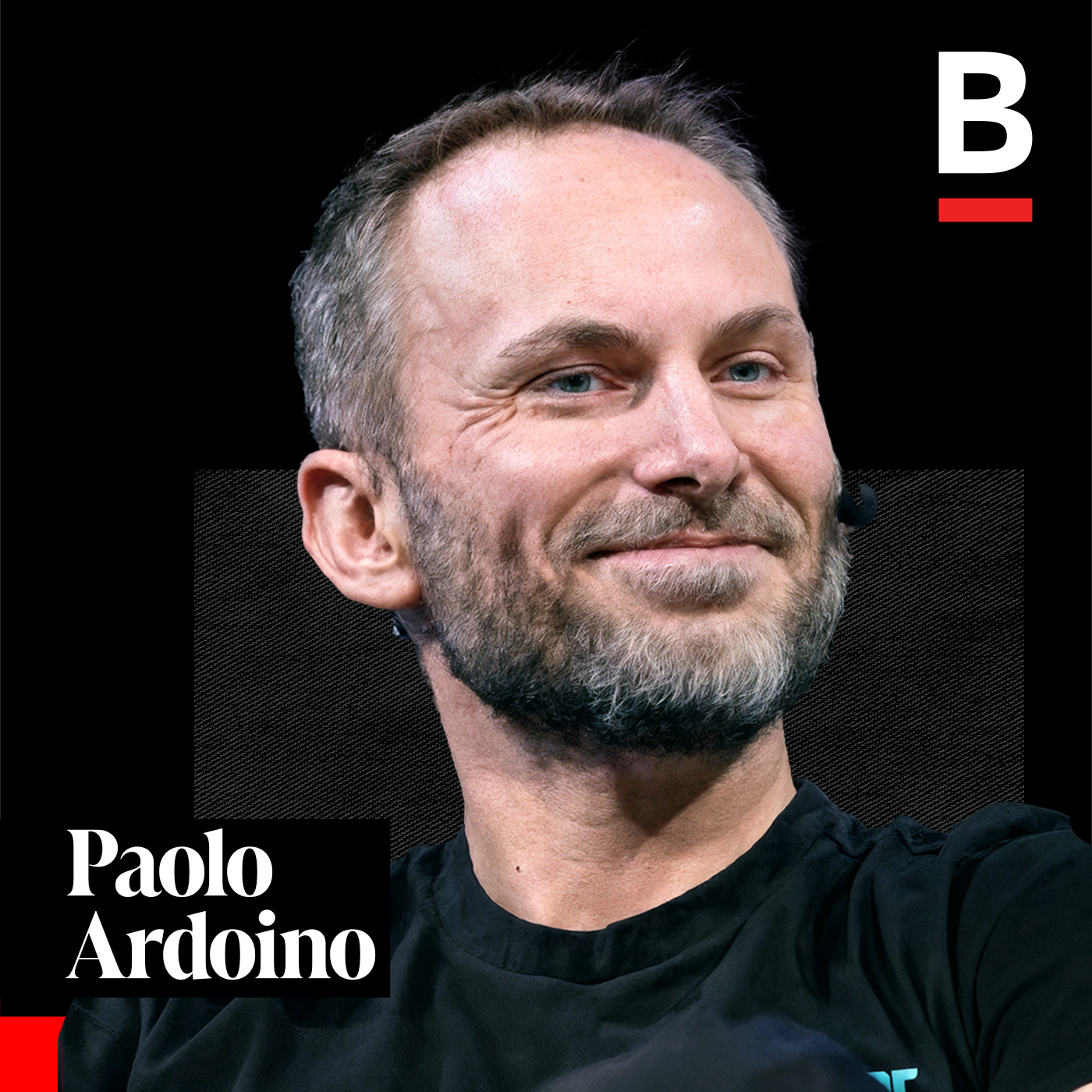
Bankless
The Stablecoin King | Tether CEO Paolo Ardoino on GENIUS Act, Circle IPO, Bitcoin & Tether to Trillions
Loading summary
Transcript107 lines
- [00:00]
Paolo Ardoino
Last year we made 13.7 billion in profits, and this year I think we are going to beat that.
- [00:06]
Ryan Sean Adams
Wait, 13.7 billion in profits last year.
- [00:09]
Paolo Ardoino
And this year I think we can do a little bit better.
- [00:15]
Ryan Sean Adams
Welcome to Bankless, where we explore the frontier of stablecoin finance. This is Ryan, Sean Adams. I'm here with David Hoffman, and we're here to help you become more Bankless. Guys, there's a Game of Thrones going on right now, a stablecoin war of sorts. Tether is the undisputed number one lead of stablecoins right now. So I guess that makes our next guest, Paulo Ardonio, who's its CEO, the stablecoin king. And I gotta say, for a king, he's pretty unassuming. But he has ambitious plans for the continued distribution and dominance of Tether, and that's going to be important in this new era, an era where we've just seen the Genius Act. The US's landmark stablecoin bill just passed the Senate. Looks like that's going to go forward to Trump's desk and it will get signed. So my biggest question going to this episode was, assuming the Genius act passes, what's Paolo planning to do with USDT and Tether? Is he going for compliance or is he going to launch a new US domestic stablecoin and bifurcate things? The answer sounded like it was both, but it was also really nuanced and you'll have to listen in to find out and get your take. He also said, and this made David and I almost fall out of our chairs, that tether made almost 14 billion in profits last year. Okay, that's profits. I did some math after this episode was recorded, and if you take the price to earnings ratio of Circle right now, which is trading at pretty heady valuations, and you multiply that by the earnings of Tether, around 14 billion, you turn Tether into a $13.7 trillion company that'd be the largest company right now that exists, ahead of Microsoft, Apple, Nvidia and all of the rest. I'm not sure if Tether is worth that much, but it's certainly gargantuan in scale. He also broke the news that Tether is launching a new product this year. So let's get right into the episode with Palo. But before we do, I want to thank the sponsors that made this episode possible.
- [02:12]
Sponsor/Ad Voice
In the Wild west of Defi, stability and innovation are everything. Which is why you should check out Frax Finance, the protocol revolutionizing Stablecoins, Defi and Rolex. The core of FRAX finance is Frax USD, which is backed by BlackRock's Institutional Biddle Fund. Frax designed Frax USD for best in class yields across Defi t bills and carry trade returns all in one. Just head to frax.com then stake it to earn some of the best yields in Defi. Want even more? Bridge your frax USD over to the fractal layer 2 for the same yield plus fractal points and explore fractals diverse layer 2 ecosystem with protocols like Curve Convex and more. All rewarding early adopters. FRAX isn't just a protocol, it's a digital nation powered by the FXS token and governed by its global community. Acquire fxs through frax.com or your go to Dex Stake it and help shape Frax Nation's future. Ready to join the forefront of DeFi? Visit frax.com now to start earning with Frax USD and staked Frax USD and for Bankless listeners, you can use frax.comrbankless when bridging to Fraxel for exclusive Fraxel perks and boosted rewards. Uniswap is your gateway to a more efficient Defi experience with Uniswap. Swapping and bridging across 13 chains is simple, fast and cost effective, helping you move value wherever, whenever. Thanks to deep liquidity on the Uniswap protocol, you'll enjoy minimal price impact on every trade. And now Uniswap V4 takes it even further. Swappers benefit from gas savings on multi hop swaps and eth trading pairs, while liquidity providers can create new pools at 99% lower costs. The best part? You don't have to do anything extra. Each trade is automatically routed through Uniswap X, V2, V3 and V4, so you get the most efficient swap without even thinking about it. Whether you're swapping, sending on, ramping off, ramping or bridging. Uniswap's web app and wallet gives you the tools to unlock DeFi's full potential on Ethereum, Base, Arbitrum, Unichain and more. Use Uniswap's web app and wallet for a more efficient, efficient way to use Defi. Celo, the blockchain engineered for everyday payments, has officially returned home to Ethereum as a blazing fast Layer two Built on the OP stack and Eigen Da Celo delivers one second blocks subsent fees and fee abstraction so users can pay gas in USDT, USDC or any whitelisted ERC20 token. Add native bridging Ethereum level security and ultra green money and you have a network purpose built for global Commerce. In just five years Celo has processed 730 million transactions for 12 million addresses. It's launching with a hundred partners and fresh defi firepower that makes Celo the on chain FX hub for borderless remittances and real world spend for builders. Distribution is baked in programs like presentee grants retroactive public goods funding. Celo camp and proof of ship will put your mini app on farcaster and opera minipay tokenomics leveled up to the great Celo Habiting cuts inflation from 2% to 1% aligning the chain with its ambitious vision 2030 a trillion dollar on chain economy where regions cypherpunks and degens create prosperity for all. Follow on X and start building@celo.org today.
- [04:59]
David Hoffman
Bankless Nation we are once again joined by Paulo Arduino. He's at the helm of tether, the 100 billion stablecoin the thing that really brought stablecoins into existence in the first place. Last time we talked this was pre stablecoin bills, pre Genius act, all of the stuff that's going on inside of Capitol Hill. So there's a bunch to get updated on. Now with the US on the brink of passing just a massive stablecoin bill that just got voted on and passed in the Senate, it goes back to the House. There are a lot of things to discuss. Paolo, welcome back to Bankless.
- [05:29]
Paolo Ardoino
Thank you for having me.
- [05:30]
David Hoffman
Guys, I just want to get your first reaction to the passing of the the Genius Act. It still has some work left to do. It has to go back to the House, but people are more than cautiously optimistic, I would say. Donald Trump sent out that tweet saying, guys, I just want to approve this thing. House, just get it done. Let's get this done. What was your first reaction to the Genius act passing in the Senate for.
- [05:52]
Paolo Ardoino
Us is as you know, Tether is the creator of the Stablecoin industry. In 2014, we are very honored that the most powerful country in the world, the most powerful government in the world is taking good care of a technology or legislating on a technology that we created 11 years ago. So that is very exciting. I think that Genius act is a step in the right direction. It creates a framework. Well, of course, as you said, it still needs to be passed by the House, but seems there is a good momentum. So it creates a strong framework for domestic stablecoins as well as foreign stablecoins like USDT that could find in their ability to meet the requirements through comparable regimes. So we think that Tether USDT is in the right spot to comply. As a foreign issuer and also as I announced I think a couple months ago, now we are looking at creating a grassroots domestic stablecoin in the United States. So the Genius act creates a very, very high bar for everyone. That's the thing that I think I like the most. And it's very fair in a sense that it creates a very high bar when it comes to AML and compliance. Yesterday there was a huge news of Tether collaborating with the Department of Justice. Tether was able with its own means almost one year and a half ago at this point to identify through its monitoring technology. We built, I think the most amazing technology for monitoring our secondary markets in the blockchain ecosystem. When it comes to stablecoins and specific usdt, we were able to identify peak buckturing scheme. And when we did that, we immediately notified the law enforcement that is the doj and they agreed with our analysis. We proceed to the freezing and now basically the DOJ is in the process of receiving this money and working on restitution. So these are great examples of what Tether does. We collaborated with more than 250 law enforcement agencies across more than 55 different countries. There is no financial institution that has these numbers. So we are happy to prove more and more and keep raising the bar. And when I see that those type of requirements in the Genius Act, I'm very content because I think that we are doing that best than anyone else. The requirements of strong financials are also very good. No one wants to have another Terra Luna. Tether has more than $125 billion in treasuries. It's growing over the last all the data stations we have been growing our monetary base in US Treasuries. So we are going the right direction. So we think that, you know, that's having a requirement for a strong balance sheet is very important. Tether has in this moment as a group Equity has around $176 billion in front of 155 billion in market cap of the stablecoin. And precisely we keep just on top of the single reserves of the stablecoin, of the 100% of reserves of the USDT stablecoin. We keep around $6 billion in excess, right? Compared to the standard banking system that usually goes in fractional reserve up to 90%. So they keep only 10% of liquid assets. Tether has like 100 and something percent, like 105% of liquid assets as reserves of the stablecoin. On top of that, we have another $15 billion as a group equity to add. So it is very unprecedented. And you know, so we are basically, in general, we are very excited. Of course, you know, we, we need to see the final form also to proceed with our domestic, with our intention of the domestic stablecoin. But you know, I just, I just want to upload the efforts that have been done by, by Senator Agathay Lames and all the others. David Sachs, Bo Hines. Yeah, and the rest.
- [09:44]
David Hoffman
Assuming the Genius act gets passed as it stands today, what opened, what doors open for Tether downstream of that, like what happens next? What's your guys's strategy post Genius act getting approved? And also, is there anything in the Genius act or not in the Genius act that you would have liked to have seen? Like what's your biggest, what would be your biggest amendment to the Genius act, if any?
- [10:04]
Paolo Ardoino
So I think that the Genius act would provide the clarity that everyone needed in order to operate more safely. So first of all, we come from the last four years not as tether, but as an industry. We come from the last four years where was clear this thing called operation chop point 2.0 where the OCC, where the, you know, the administration and they were against crypto. So banking was, crypto banking was not very much possible. And when they tried, like remember 2023 when you know, our major competitor almost died because of Silicon Valley bank and Silvergate Signature, all targeted by, you know, the Operation Chokepoint 2.0, but nevertheless almost killed our competitor. So that's not very good now. So I think that the new administration is creating a framework that ensures that there is support from the institution, the administration, from the federal authorities for crypto banking. And so that will improve the safety of the industry as a whole. So we are very excited about that. The Genius act is also giving the opportunity to other players to step in. Right? I mean, to me when I see all the consortium of banks, JP Morgan or Amazon and Walmart and others are declaring that they want to create stablecoins. Everyone, their sisters now want to create a stablecoin. That's great. I mean the more the merrier. Like welcome player too as I said on X. Because I think that the beauty of it and is that unfortunately, so unfortunately all these competitors will focus on the US markets that, you know, the way I describe it is like there is such an opportunity globally that the opportunity is insane. There are 3 billion people in the world that are unbanked and tether covers 450 million users now, but all the rest are like, you know, there is so much to do and so the opportunity is big. But what I feel is like most of the competitors will compete, keep competing in the US and Europe because they are the low hanging fruits. And in a way, in a certain way, when it comes to profitability, it's great for Tether, but also is not great for the industry itself or is not great for the end users because technically you would have more competitors so that you can bring the efficiency at higher level and also the cost at the lower level.
- [12:27]
Ryan Sean Adams
I do think Tether has done a fantastic job outside of the US in particular to get, you know, recruit new stablecoin users and the usage metrics certainly show that. Paolo, I want to make sure we get details on kind of your plan post Genius act because there are multiple paths now it seems that Tether could take and let's just assume the Genius act passes. In fact, I was looking at polymarket this morning. We've got an 80% probability on polymarket, okay, that the Genius act passes. So that's the best it's ever been. I was thinking about last time we had this conversation with you. It was February 2024 and that was just a completely different world with respect to us and its relationship to crypto, not to mention stablecoins. We had operation Choke point. Anyway. Okay, let's talk about the path forward for Tether itself. Usdt, we talked to Senator Bill Haggerty yesterday who's a co author of the bill, and we asked him specifically about Tether and this is what he said. If an offshore issuer like Tether wants US market access, our bill lets treasury run a comparability test. And if their home rules match ours, they can keep operating. Otherwise they'll need a US subsidiary that meets the same reserve and disclosure standards as everybody else. He further said Tether can start complying tomorrow. So can you give us the details on kind of what's your plan? So you have USDT, which is currently not compliant. It seems like there could be a path to get USDT compliant. In order to meet that path, you have to go through some additional auditing rigor. You have to refine your treasury. Maybe you be more domestic, be more onshore. I'm not sure everything that goes into that. But there is a path there and you could acquire an OCC license for that. There's also the path that I think you have announced, which is to create a domestic Tether stablecoin. That's a separate type of asset that is really focused on the US and then I guess you would preserve usdt. This seems to fracture liquidity though. Anyway, give us a sense of what your, your plan is in some more detail here.
- [14:24]
Paolo Ardoino
Right. So our interest is. And I think that even with usdt, actually with usdt, we plan to follow that pathway to meet the requirements.
- [14:35]
Ryan Sean Adams
Okay.
- [14:35]
Paolo Ardoino
I think that if you have a company and last year we made 13.7 billion in profits and this year I think we are going to beat that.
- [14:43]
Ryan Sean Adams
Wait, 13.7 billion in profits last year.
- [14:47]
Paolo Ardoino
And this year I think we can do a little bit better. Look, only with only having $155 billion, you know, the Fed didn't cut the rates. We have been saying that for a long time and you know, kind of was true. So the rates are still around 5%. So you do the math. It's, you know, give or take 7.5 billion just, just because of that. And then all the rest we are doing all the other investments or like, you know, we, we have been investing gold and Bitcoin, all that. Right. So it's. Well, this year I think we are going to do much better. You know, still the year is long. But you know why people do think that we don't have the ability to meet with the requirements? Because not saying that you said that, but I saw that on X. Right. People think that we are going to let it go. We are going to not continue to support the best business in the world. You know, why is that? I mean again, we have the profitability to. And by the way, we are acquiring more Treasuries than anyone else apart maybe a couple of countries. But you know, the pathway is there. Like last year we were the fifth largest purchaser of U.S. treasuries.
- [15:55]
Ryan Sean Adams
Okay. Just people don't appreciate the stat. The fifth largest purchaser of US Treasuries. And that's taking into account all the countries that are purchasing U.S. treasuries as well. So number five ranked with like entire countries.
- [16:11]
Paolo Ardoino
Yeah. And we are in total overall the 18th largest country. We are not a country, but holding US treasuries. So that's the power of stablecoins. And I think that Besant understood that very well. The President understood very well. It's one of the best AIDS to the U.S. economy. And look, think about it. The one thing that is very powerful about USDT compared to everyone else is that USDT focuses outside the United States but also means that it's people outside the United States are purchasing USDT and with that money we purchase US Treasuries. So in a way is people is we are decentralizing the ownership of the US debt so that you don't have one single guy like Xi Jinping that can press a button and sell them all together. It's 400 million different brains that will not act altogether. And that is great service first. But also I think that is much better for the US to have the debt of the US not owned by US people. Otherwise I think that that is kind of the recipe for disaster. So you want people outside the US owning the US debt. And so that is also what Tetra is making. So we have, as I said, as I think Senator Hagerty is right, right. There is a pathway, there is a process. Right. So there is a pathway that you have. There is a comparable regime reciprocity. It will take a bit of time because you know, countries have to create these regimes. And what I think will the Genius act do is exactly this will open the path for every single other country in the world to adopt the Genius act almost exactly like that. So that there are. The US is the greatest country in the world. So everyone will copy that. Because if you think about it apart uae, I mean Europe has a very, very bad regime with like 60% of reserves that has to be kept in an insured cash deposit. That's what happened to our competitor with Silicon Valley Bank. So you don't want Europe has a bad regime, but everyone else like UAE has a very similar regime to the Genus Act. And you know, Singapore is dipping their toes in the water. But when the US will pass this, I can guarantee you that every other country will follow and that will open a path for reciprocity.
- [18:30]
Ryan Sean Adams
Okay, so but on USDT then it sounds like you're saying your primary plan is to just get USDT compliant with the Genius Act. And so, you know, but if that's the case, then why launch a domestic on US shore asset as well? Why have two? Is that just for redundancy? Is that like a backup plan?
- [18:50]
Paolo Ardoino
No, it's a great question. But you know, I think that it serves two completely different use cases. The way I see it maybe might be controversial, but I think the US will be a market where the current stablecoin business model will not work. So of course there is a lot of frenzy now in the U.S. because the Circle IPO, but no one will make money in the U.S. it will be a race to the bottom on making the money on Stablecoins in the U.S. sure. Look at when exchanges, crypto exchanges started in 20 around 2010, right. And Bitfinex was in 2012 was making 20 basis points in fees. Every trade now you get one basis point is a taker fee compared to 20 like 10 years ago or 12 years ago. And you know, it's basically a race to the bottom when you have look at the US US is the market in the world where there is the highest efficiency as money rails. So you could argue that US has 90% efficiency of financial rails. So if you add a stable coin in the US you will bring the efficiency from 90% to 95%. So the premium that people will pay for that is very little. If you are in another part of the world, you are like Nigeria, the efficiency of financial raise is like 20%. If you add a stable coin, you get 50%. So you have an increase of 30% of efficiency. So that is why people in emerging markets are happy if they leave to us the interest simply because the intraday volatility over the national currency is higher than 4% that you can give them on a yearly basis. So to me it's important to have a distinction between two products, two use cases. Basically to me in the US Stablecoins will become at some point tokenized money market funds. Like I was seeing this jpmd, it will be kind of like that and like every other stable coins will be coming like that where basically the entire yield will be shared back. And so to us then in order, the StableCoin in the US that we want to create has to compete on a different level, has to compete in programmability, has compete in services, has compete not with, does not, cannot compete with the same business model that we have for usdt. That is a stablecoin that is made for the foreign world.
- [21:19]
Ryan Sean Adams
I see, so you're still thinking two products potentially because they will serve two different use cases. But you're also saying that you do intend to get USDT compliant under the Genius act as well.
- [21:31]
Paolo Ardoino
That is our intention, yes.
- [21:33]
David Hoffman
There's a growing conversation about domestic stablecoin issuers. There's been a bunch of rumors about things like Amazon, Walmart, even like Meta Twitter launching stablecoins. And we also know that like JP Morgan, Citi, Wells Fargo are also they're exploring this consortium. Stablecoin kind of feels like cope to me, but that's just my opinion. There's going to be a lot of domestic competition coming out. So if large US banks can mint deposit tokenized deposits that settle against fed balances, what moat would you say tether still has in five years after this becomes pretty commonplace domestically.
- [22:07]
Paolo Ardoino
So there is still a lot of potential with our distribution partners and our own distribution networks. Right. So again, the thing is that banks usually would sell their stablecoin to their own customers. So I don't see a bank breaking banking employees breaking their back in the streets doing educational stablecoins and going to basically the normal people or the people in the lower west tier, tier of richness. That always was our approach. Right. So we never went to, when we open a new country, we don't go to, you know, the local biggest bank like our competitors. We go, we do education in the streets, we work in the streets. We explain how to, we do education in schools. We go door to door. Basically, we find the partners locally that are aligned with exactly this vision of grassroots adoption from the bottom up. And so that is also possible. I mean, although the US has great financial rails still, you know, I was reading that, you know, the people struggle even to keep bank accounts open. So more and more in the US you will have a tier of population that will benefit from a product that has our more like, more direct approach to people rather than, you know, sitting on an ivory tower and, you know, just thinking that the world is the same of 20 years ago.
- [23:30]
David Hoffman
Now I want to bring up the conversation of the circle price post IPO launched at $31, now trading at $200. I saw some napkin math on Twitter that if Tether was given a commensurate valuation, Tether would be valued at something like $3 trillion or something like that. What's your, what's your reaction to the, the price action of the, of the Circle Post ipo?
- [23:52]
Paolo Ardoino
That's great. So we don't want to go public first of all, because, I mean, companies that want to go public do it for two reasons. Either they need to have access to capital, but our profitability is so high that we don't need that. And second, we would need, and by the way, we invest with our profitability. We invested, I think in the last two years more than $5 billion in the United States. That is something that is very little mentioned, but it's very important. It's like, so we are giving back also to the country that has created this great currency like the US Dollar. But you go public because you want to have access to cheap capital or because the shareholders wants to have an exit. And we don't need either.
- [24:38]
Ryan Sean Adams
Right.
- [24:39]
Paolo Ardoino
So we have great profitability and at the same time, we don't need an exit. I want to stay in this company forever. We are, we Are having fun, we are enjoying. We think that it's almost like we just started this company because there is so much to build, so much to prove, so much many more ideas under same concept of USD but different verticals, different sectors in terms of disruption. Right? So disruption for the benefit of the people and not a few corporates. And so the. But when I see that multiplier, I was like really thinking, well that's nice, that's a nice multiplier. Because you know, some, at some point you have to, you know, price what you are doing. And if that is comparative, that is, that is a great price. I mean we'll see what, how, you know, how long it will last. But for us, couldn't be better.
- [25:35]
David Hoffman
Going back to this notion that Tether is sitting shoulder to shoulder with countries when it comes to owning US Treasuries and then this implied, you know, not really fair, but implied valuation of multiple trillions of dollars.
- [25:47]
Sponsor/Ad Voice
Does it stress you out the magnitude.
- [25:50]
David Hoffman
Of what you're building and what you're doing? Like if I was managing enough Treasuries to you know, be considered a country in terms of just like geopolitical weight, that feels like a lot of pressure. Do you ever like, do you stress out about this? Do you worry about this?
- [26:06]
Paolo Ardoino
Look, it also ties into, you know, sometime people, you know, there, there is this old fudge of oh, Tether, you know, even in the respect of what I saw on Twitter in the last recent days, it's almost like people still think is, you know, it's 2014. People think oh maybe Tether. You know, Tether wants to hide and all that. We keep our money in counterfeit Gerald. That is a prime U.S. institution. We keep 120 plus billion dollars in counterfeit Gerald in U.S. treasuries. So we are not hiding ourselves. We keep our money in the United States. That's going back to the genius act, right? So it's not like oh, Tether does not want to comply or all that. I mean we keep already our money in the US and so the US has basically control over our money because it sits in one of the most regulated entities in the world, that is primary dealer that has a direct connection to the Fed and all that. So the reason why we keep our money counterfeit jail is because, is because I can sleep well at night. Because you know, they have a direct connection to the Fed. We have a great line with overnight reverse repos and Repos. So it allows us to be comfortable. If we get tens of billions in redemptions, we can meet them without problems. And that's, I think, the beauty of the setup. And I think that the dissemination and the genius act will help in making this industry even more solid.
- [27:39]
Ryan Sean Adams
Paolo, I think investors right now are really trying to figure out what's the value of this whole stablecoin thing, right? So like you could see Wall street, you know, they're, the gears are grinding as they try to value Circle. And I think everyone is just like, stablecoins have just come on the radar for a lot of investors. And this has been silent in the background, just growing and growing and growing every year. And I think Tether is finally getting a spotlight. I mean, Scott Besant, the Secretary of the treasury, just, it seems to have come on his radar that this is a big net buyer of bonds anyway when it comes to valuation of stablecoins in general. Right. We're talking about a $45 billion market cap for Circle. David, just read out the numbers. That's on like 150 million or so in annualized net income and annualized profit. You just said you were generating 13 billion. Okay. And that was last year and you said you expect this year to be bigger than that. And so I'm just like calculating the numbers. David said 3 trillion, which is interesting. That would, that would place Tether in the top 5 of all companies. I mean, just below what, Nvidia, Apple, Nvidia and maybe Apple and Microsoft kind of in that camp. But it's not inconceivable based on the cash that you're throwing out. And then there's also this vast, very strong treasury as well. Anyway, I know it's an interesting question for you to ponder, but now you have public market comps of a pure play stablecoin company and it's trading God knows how much, I don't know, 200x profits, something like this PE ratio. So what do you think Tether is actually worth today?
- [29:16]
Paolo Ardoino
To me, a lot.
- [29:20]
Ryan Sean Adams
I should say so.
- [29:22]
Paolo Ardoino
Yes, to me, a lot. But because it's my baby, right? So to me, is worth a lot. But look, I don't know how sustainable. I mean, I don't know how many companies sustain 200x and again, if they can continue to sustain 200x, it's great for us. I mean, as comps, as you said, we are not seeking for. We are not actively seeking for investments. So we don't need to raise money. That's the problem. So we'll see. I mean, but it's just nice to see, right? It's nice to see because in the end, it's an industry that we feel we created with in 2014. And so we are just proud. Like every day I wake up and pinch myself, you know, looking at these numbers. Like I come from a town with 600 people and living there and with cows and chicken roaming. And so like these numbers are out of this world. And I think it's, you know, just entire. This is actually the achievement of an entire industry, including the crypto industry. You know, we, we went so far, we improved so we have, we had up and downs but there are so many people that were stubborn and kept going even in the difficulties and built all this. So you know, it's, it's a congratulations to everyone, I would say.
- [30:41]
Ryan Sean Adams
So let's talk a bit more about winning kind of the next phase of stablecoins, right? Because right now I think it's safe to say Tether is one phase one and that has been. Well, stablecoins have been primarily crypto native Genius act means we're entering a phase two. David mentioned a whole bunch of us companies that were talking about getting into the stablecoin game. All of the banks, these are your new competitors, right. So welcome to that. And now the banks are going to have a play at this. So will the tech companies as well. Something like Meta. I read an interesting post from Arthur Hayes. It was just on stablecoins and he makes the point that Stable, the stablecoin game is all about distribution.
- [31:15]
Paolo Ardoino
Right.
- [31:16]
Ryan Sean Adams
And Tether came out first, came out early, really pioneered the sector, had all of the crypto native distribution, fantastic. I think saturation and offshore, you know, Tron is a fantastic distribution networks. It seems like for tether, 80 billion tether on Tron alone and a lot of usage and payments there. Anyway, the next phase of this whole stablecoin game, you're going to be faced with big tech, you're going to be faced with companies like Meta. Does Meta have over 3 billion users like worldwide? And so it's a new chapter. How do you win the next chapter with respect to distribution of the Tether stablecoin?
- [31:54]
Paolo Ardoino
Well, one thing is interesting, maybe again the genius art is not maybe you know, we need to wait. But seems like companies like Meta might have a hard time to launch a stablecoin given if I'm not wrong, given the genius act. Right. So there is kind of sort of a prohibition if you are not primarily involved in finance. There is kind of a sort of prohibition if you know that that is at least my take from the language. That is so. So that is Going to be interesting how it will play out. So I think that big tech companies will need to partner with existing stablecoins providers or with maybe banks in order to support someone else. Stablecoin and get a rev share for sure. But that will create a very interesting dynamic because I again it feels like meta or similar will not be able to launch stablecoin. Again I could be wrong given the language but I think I got it right. But when it comes to distribution people, you know, you know Tether has more than 100 companies in its portfolio. Investments done with Tether investments not as the reserves. And so that is where part of the profitability goes and went. So that gives us enormous distribution channel. Think about the US domestic stablecoin Rumble will launch a Rumble wallet and has 70 million users. It's not bad to start with. You know it's a good bootstrap. I think that is pretty much how many active users. Well, much more active users than probably the biggest exchange in the US So it's a great bootstrap. And then there are other opportunities that we invested in that actually built and helped Tether to build in the last 11 years the biggest distribution network for the US dollar in the history of humanity. So we have millions of physical touch points around the world. So the reason why Tether is the leading stablecoin and has such high metrics like 450 million users, we grow by 30 million new wallets per quarter and we publish that data. We have this website called usdt.network where we publish the updated data. 37% of our users are savings accounts example. So we have, we collect all these statistics. The reason is because we are actually growing and we have been building this distribution network that is unprecedented is granular is with boots on the ground or reached really the smallest village in Philippines or you know we invested from remittances companies to bodegas in central South America to building kiosks in Africa. So you know, just in Africa, you know we build, we are building. We did this pilot with 500 kiosks with solar panels on top and battery rechargeable batteries inside. In Africa, 400 million people don't have, 600 million people actually don't have access to electricity. And so we build these kiosks with solar panels on top and batteries inside. We sell subscriptions for 30 USDT per month to, to, to the people in these villages. And we have around 500,000 users already and 10 million battery swaps. And by end 2026 we're going to have 10,000 kiosks. And end of 2030 we're going to have 100,000 kiosks. So we are going to touch around 30 million households by 2030. It means that 120 million people on average in Africa, first of all is a change that you can see from space because you light up a continent. And Also you have 120 million people that are going to rely on a day to day basis on the US dollar in the form of usdt. That's how you bring the US dollar Gemini farther and you bring it to the emerging markets. That's what we, you know, what boiled in our pot for the last many years. And that is one of the least understood things about Tether.
- [35:46]
Ryan Sean Adams
I was going to say. I just like as going over these stats that you were talking about and this is all on USDT.network, right? 440 million total estimated users of Tether. I feel like the entire US has been sleeping on this use case. I mean there's been so much talk of crypto not having a killer app, it being just kind of, you know, speculative casino, just, you know, bitcoin, that kind of thing. We have 440 million users using the US dollar. How did this first phase of distribution happen? Was it all kind.
- [36:20]
Paolo Ardoino
It wasn't.
- [36:21]
Ryan Sean Adams
It can't have been all an emerging market type of story, right? It's like, can you explain these numbers to people who are seeing them for the first time?
- [36:29]
Paolo Ardoino
Actually it's funny because if you can scroll down a little bit to the chart of the growth of the market cap here, right? Look at 2020 and what happened? Do, do you know what happened 2020? Do you remember?
- [36:43]
Ryan Sean Adams
Oh yeah, we had a little global pandemic. You talking about that one?
- [36:46]
Paolo Ardoino
Yeah. So, and you know, we are at.
- [36:49]
Ryan Sean Adams
For people who can't see, we are at 4.7 billion tether in 2020.
- [36:54]
Paolo Ardoino
Yes. So, and this is in retrospect, right, because we didn't have a marketing team until 2022. So. And look at the growth up to 2022. So the reason why that happened is we, we understood recently, we went back and we did a lot, we asked a lot of questions to ourselves. And so think about the emerging markets in developing countries. They have two common denominators, you know. Well, three, they are in general poor. They have this high, you know, high inflation, higher than of course the wealthier countries. But they have two other things. They have good penetration of smartphones and so they're still very digital and they have more children. So they eat More youth, younger population. From 2017 to 2020, this youth is the one that learned about crypto before anyone else. And in The Meanwhile, in 2020, when the pandemic happened, something changed. The parents of these kids were going in the streets with the pandemic. The pandemic accelerated the loss of jobs everywhere, but especially in emerging markets like in the US And Europe was bad. But in emerging markets, the pandemic accelerated loss of jobs, increased inflation, and did all that. Right? But. And so what people did more and more during the pandemic with the fear was going out in the streets and buy cash dollars. Because if you live in Argentina, at the beginning of the pandemic, the Argentina pesos started to tank. And then you get scared, you want to. You lose. You are risking to lose your job because of the pandemic. You cannot go to work. You go out in the streets, in the black market, you buy cash dollars. But the kids in 2020 look at their parents going out knowing that there was the pandemic. Parents putting themselves even more at risk going the black market with the pandemic. And the kids were like, dad, why are you going out to buy dollars? I have dollars in this app. That's how it all happened. That's crazy. It's very humbling. But it's all happened, and the charts prove it.
- [39:02]
Ryan Sean Adams
What apps are they using for this? Is this kind of like crypto exchange type apps? Are these, like, you know, everything? Metamask wallets? Are these just wallets that are connected to Ethereum and Tron, local exchanges, you know, small.
- [39:15]
Paolo Ardoino
I mean, a variety. Like an infinite number of wallets? Like we never said, oh, use this wallet, use that wallet. Like, it's truly when people are in need. That's the issue with Europe and the US In a certain way. Right? So we still live in a situation that is better than anyone else for most of the people, because we have our problems. But, you know, again, that is far better than. And everything's relative. And we are still far better. Our economy does far better than anyone else. That's the reality. And so when you are in need, when your family is at risk, when you work from January to December for 12 months, and at the end of the year, you're poor compared to the beginning of the year because your value, your currency devaluated so fast, you will find any possible way to save your family and to protect your family. And that is exactly what happened here. People found ways to go out and. Or, sorry, to find ways to hold dollars and to have Access dollars through local exchanges, through Binance, you name it. But they fund every possible way through the kids because again, the kids were playing with crypto because they're young kids, they try everything, they know everything. They're small hackers and growing, right? So they, and then word of mouth because one parent goes to the other parents and says, well, you know, we, you know, I, I did this, I, I, I'm testing this, I'm buying dollars on this app and all. And so that's how it went.
- [40:42]
Ryan Sean Adams
So how much do you think tether market cap is tied to the total market cap of all of crypto? I mean, there seems like to be some correlation there, right? So you know, got massive acceleration up to 2022 and then we had kind of a, a dip. It didn't go all the way back down, but slightly. And then more, more acceleration. Is it tied to crypto market cap at all?
- [41:01]
Paolo Ardoino
I honestly I, I mean, I think that right now only less than, I mean we are running some statistic around that, right? But I think that from what we see around, less than 40%. To be conservative, less than 40% of our market cap is due to crypto. So the rest is actually grassroots usage of, of USDT in emerging markets. I think that the next leg of growth of the USDT market cap is commodity trading. Like every single biggest commodity traders are pinging us, calling us because for them USDT is the best thing after sliced bread. Because when you have, you do, you need to do, you need to do international trades and you are relying on, on the slowness of banks. The efficiency of capital is very bad with the poor for, for commodity traders. And now they are looking at USDT as a solution to make their portfolio infinitely more efficient. Because if you're a commodity trader, usually the commodities are bought from the emerging markets. So if you are a commodity trader, for you sending USD or pigeon or whatever is accepted by the seller is great, but you just want to make sure that the seller will receive the money as soon as possible so that you can move on to the next deal. So for them, for the commodity traders, USD is great. For the seller, the seller is in an emerging market. So we'll get USDT and will find a user base for USDT directly in the market. So they can pay salaries in usdt, they can do everything USD. And so look at Bolivia. I posted a tweet about Bolivia one week ago or so you have in Santa Cruz and other villages in the cities in Bolivia, like in the shops, there are like the price tags are in usdt. We never went there, we never been there, we never had a person in Bolivia. All happened organically.
- [42:52]
Sponsor/Ad Voice
Imagine if your checking account and defi wallet finally spoke the same language. That's Mantle banking, an all in one fiat and crypto account. It lets you save, spend and invest all from one dashboard swipe for coffee, stake me three Yield or even use virtual cards for payments through Apple Pay so it feels web 2 simple yet stays web 3. 3 sovereign for allocators meet mantle index 4 the S&P 500 of crypto a tokenized institutional grade fund seeded with $400 million from the mantle treasury and balance across Bitcoin, Ether, Sol and Yield Enhanced Stables 1 Asset broad exposure, pure defi composability. The momentum is real me faults, FBTC, bridges and a $2.4 billion community treasury are all powering the next phase of on chain finance. Mantle brings real world access, yield and utility to digital assets ready for the next era of on chain finance that actually belongs in 2025? Explore Mantle at mantle XYZ or follow mantle underscore official Mantle bridging Tradfi and Defi so you don't have to Binance is the world's number one crypto exchange. Over 275 million users already trust their world class security. Binance makes starting crypto as simple as it should be. Whether it's learning about crypto on Binance Academy or browsing hundreds of assets and viewing your newly created port portfolio in a clear, easy to track dashboard, Binance helps you go at your own pace. For hardcore traders. Binance Pro opens up industry leading services for trading professionals with fully bespoke trading products along with a suite of white glove services for VIP and institutional clients. Need support 24. 7 customer service is on hand whenever you need it and with some of the lowest fees and deepest liquidity in the market, it's no surprise why over 275 million users trust Binance for everything Crypto Download Binance today and get started in minutes. Binance is not available in certain countries, including the United States. Check its terms for more information.
- [44:33]
David Hoffman
I want to turn the conversation to Tether Ventures because you're doing a lot over there. There's a lot of different investments going on out of the Tether portfolio and then now there are investments that make sense that I definitely want to talk about. Things like plasma and stable, these like layer one chains that are specific for Tether. But then there's also just a bunch of more kind of like eclectic investment.
- [44:54]
Sponsor/Ad Voice
That you guys make there's acquisition offers.
- [44:56]
David Hoffman
For basically like mobile networks, telecom networks on ramps and just other infrastructure companies. There are energy startups in the Tether portfolio. There's like these media tech companies like for the help creators make content out there. And I believe you guys also own an Italian football team as well. So there's a bunch of like interesting investments coming out of Tether Ventures. Maybe. Can I just talk about that strategy going on there?
- [45:20]
Paolo Ardoino
Yes. I mean the portfolio is big, right? So you have to create different verticals. So as any good portfolio that is again outside the reserves. And for any good portfolio you have a part that is very conservative and very stable. So we buy some bitcoin and gold with that. But also we started recently to buy land and agricultural companies. So this company called adicoagro that is listed on the US market, they are the biggest or one of the biggest landowners in South America between Brazil, Argentina and Uruguay. And they are producing also dairies and well, bioethanol, but also dairies, rice and cattle stuff. Why that? Right. So first of all, land is a very scarce and safe asset and historically slowly, slowly appreciates, right? So part of your portfolio you want in something like that, in something that humanity will always need, like land and agriculture. But on top of that you have to think about the fact that you know, this agriculture is commodity, Commodity trading could be, you know what I said about commodity trading and USD can be applied also to agricultural commodities. And so USDT and stablecoins in general will expedite also agricultural companies to have better, you know, efficiency when it comes to access to capital, but also when it comes to just payments for the goods that they produce. So that is a very interesting combination between the two things. Then we have another silo that is new technologies, Artificial intelligence is one. We are building our own peer to peer AI platform called qvac. It's going to be insane and very, very cool. Really unstoppable AI. I think that with the way I like to describe it is like the comparison between when you had the. When I was in the elementary school, you had like the teachers were forcing you to do like calculations by mind, right? So the sum, the divisions and all that. Then casual calculator started and I don't know now, but you know, most of the people that I meet, they might not be able to do simple math in mind. And so imagine like that is. So we lost our ability, many people lost their ability to do in mind calculations. So imagine if. And because you have a replacement for that, imagine if you have the same Thing for intelligence. Right? So. So you think less because you have an aid now. Now it's fine because that is where the future will go. But what you could say about not your keys, not your coins, you could say also for not your AI, not your intelligence in a sense that you don't own. If you give all your data to a big corporation that also owned your intelligence, that is not becoming more intelligence, it's becoming dumber and making more money and become to the other company and so that also that company will become more intelligent. So our ability and given our balance sheet and the fact that we are a very unique company that has the technology capabilities but also the capital to build whatever they want. We are going to try to build technology and AI platform that will bring AI closer to the people. So this AI platform will run on every single device, can adapt to the GPU of the device working from a $30 smartphone to like a flagship phone to any laptop to any server. Right. Will just automatically decide which model to use, which number of weights to use and all that. So we've been invested in biotech. There is this company called BlackRock. Neurotech doesn't do anything and it does not have anything to do with BlackRock. We're going to change the name and you know the idea is like to me brain computer interfaces are very interesting because the ultimate hedge against the robots killing all of us. So I think that humans will need to become more intelligent and have but in order to become intelligent they need to have a mathematical co processor in their brain that will not share all their thoughts with OpenAI. Right. So the idea of combining local intelligence plus brain computer interface is very exciting to me. I'm a big sci fi and nerd. I mentioned football club. Well yesterday Juventus 15:20 in the in their first match of the US World Championship for. For clubs. So great start that. So you know that is Italian football club. Myself and Giancarlo have been football fans. I mean the investment compared to our portfolio is not that big so. But we are football fans for that.
- [49:50]
David Hoffman
One was more for fun.
- [49:51]
Ryan Sean Adams
Just a little bit of fun.
- [49:52]
Paolo Ardoino
Yes. But if you think about it it could be an insane distribution channel. Juventus fans are everywhere and and scatter all over the world. So actually we could bring more football fans to Juventus through our network. Plus you know Uventus network could be beneficial to tether and longer term when.
- [50:08]
David Hoffman
You'Re looking at a potential investment is distribution the first thing that you kind of evaluate is like every. Every investment that you make you distribution is kind of the top of the list of things that you care about.
- [50:18]
Paolo Ardoino
Yeah, exactly that. I mean even if we did a platform, I think that, I think that AI we are going to have 1 trillion AI agency in the next 15 years and every AI agent should have a non custodial wallet. I doubt that you know any agent will have an account at the Fed or in JP Morgan. Right. So, so we are building this SDK called WDK Wallet Development Kit. Will be fully open source and will allow like everyone to build full non custodial wallets. We don't have any keys, you can create any model you want. We'll support all different blockchains. And the idea is that paired with our AI platform I want basically I see a user experience where I have my smart fridge shows me a QR code. The QR code is linked to like a non custodial wallet. I give like $50 to my fridge and the fridge will just do groceries for me. Right. But I don't want basically my fridge money to be in PayPal. Right. So that I don't think is the right experience. It's also because if you have billions of equipments and even I see a future in 20 years where light bulbs should have a very, very tiny AI that will understand what is the best level of electricity to use and the best lighting for that specific moment in time in the ambient. And we are going to go there maybe not in 20 years, maybe in 30 years, in 40 years. So that's the reason why we are doing local AI. I don't think that every single light bulb can be connected to ChatGPT. We'll crash the servers of ChatGPT, the latency will be insane and all that. So local AI is going to be very important. Plus giving a wallet to local AI is going to be very important. And if you have a stablecoin to add to that wallet, it's going to be great.
- [51:54]
David Hoffman
There's a couple of investments that Tether has made that has hit the zeitgeist on the crypto side of things. Plasma stable. There's a bunch of layer ones that are trying to become just tether based layer ones. Notably fees on Tron have like really kept up recently. I think the average fee on tron is something like 4, 4 or $5 which as a payments blockchain is just not, not going to work. And so plasma stable, like I mentioned a few others are all trying to be a payments blockchain. That's Tether specific and Tether has invested.
- [52:23]
Sponsor/Ad Voice
In all these are Any of these.
- [52:25]
David Hoffman
Supposed to be the tether chain or how do you think about this like investment into a handful of tether specific high throughput blockchains.
- [52:34]
Paolo Ardoino
There is no tether chain and I don't think there will be ever a tether chain. But there are good opportunities and good, good teams that can build great ecosystems. So I foresee you, you mentioned like higher fees in, in certain chains and you know that varies over time. Like sometimes the chain has high fees, sometimes low fees. I foresee a future and I never see this user experience and I'm trying to, I want to craft it in, in some of the wallets. Tether might launch a wallet by the end of the year, we'll see but well actually never said it before.
- [53:07]
Ryan Sean Adams
So that could be breaking. Might launch a wallet on you know, particular crypto network or will it support.
- [53:13]
Paolo Ardoino
No any networks? We'll support every network. But one thing that excites me is that we want to launch it with wdk, right? So everyone can actually build a wallet like ours. We don't want to make money with the wallet. Actually I would prefer to not launch a wallet but I want to make sure that there is a good product out there, right? And imagine a wallet and I'm still thinking through it because again I never heard of it. Maybe someone else is already doing it. But given that now we have been working with grassroots community projects like USDT0 and similar USDT0. It's a very cool project and they're building these cross chain layers. Imagine a future where you have a wallet or multiple wallets and basically these wallets will use these cross chain swapping facilities to swap part of the USDT of a user to the chain that has lower fees. So in a way you create an incentive for chains to have always lower fees if they want higher tvl. So that is a level of user experience that I think a tether wallet or wdk. So every wallet that will build on WDK can enable and I think is the best thing for the end user because we want to have fair competition across the different chains. We want to see like an ecosystems grow. And so that's something that you know, as long as a chain has fair fees and low fees for usdt, that should be prioritized in my opinion. So imagine an algorithm that will automatically start converting and moving based on certain factors, user preferences and all that will basically create a preference for a certain chain. We don't decide. I don't want to have to decide. I don't want I should not be able to decide. Every user should decide which chain is the best for them.
- [55:00]
Ryan Sean Adams
Right?
- [55:00]
Paolo Ardoino
That's the point.
- [55:01]
David Hoffman
The plasma chain, the one that's kind of really caught the attention of crypto Twitter, it's actually a bitcoin sidechain. And really before Tether blew up on Ethereum, the supply of Tether blew up on Ethereum. It was actually on Omni Network, which was kind of like the first really expressive chain. And that was also a bitcoin sidechain. And it was, it was a tether dedicated chain really before we as an industry had really figured out blockchain tech. So it's a little bit kind of like a full circle, like bitcoin sidechain that was tether focused. Then Tether issued its stablecoin on Ethereum. The supply grew there. Now tether is all across many different networks and now it's investing in, you know, incubating its own kind of tether chains, one of which is a bitcoin sidechain. What would you say tether's relationship is with bitcoin? Do you guys think bitcoin is special? Is it just another chain? You guys obviously have reserves in bitcoin, so you're obviously bullish. Bitcoin, like when you look at bitcoin, when you think about bitcoin, what do you think?
- [55:52]
Paolo Ardoino
I love bitcoin and we as a tether, we love bitcoin. We, you know, it's, it's the reason why we enter in this space. There is some poetry around how bitcoin came about and you know, the fact that, you know, it's, it's, it's a simple chain, right? But it does what it needs to do. And especially I love it because I know that will work in the worst case scenario, the 10 minutes block time, people say, oh, it's very slow. And it's true, it's very slow. That's why you start having these layer twos and, or like, like, like network, lightspark, Spark as a, as a blockchain and all these similar or like you have plasma and you have other opportunities so that you can, you shouldn't do payments on. In my opinion, even Ethereum is not, you know, aiming to do payments. It understands that there is a bottleneck if you do payments on layer ones, right? So eventually you need to have scalability layers and that's fine and that's the right approach. But the true immutability of bitcoin, the fact that my opinion with 10 minutes block time is very, is very aligned With Tether value in the fact that if you have a 10 minute block time and around like between 1 and 4 megabytes block size, even if you are in a village in Africa, you might have the ability to download four minutes in sorry 40 mega, four megabytes or a few megabytes every 10 minutes. Right. So even, even with an antenna is proven. You know, in the middle of nowhere you can download the bitcoin blockchain if you have a faster block time. It's much harder for people in emerging markets cope with that speed. If you think about things like Solana, it's very, very hard for anyone to run a node if you are in a not super like connected country. So to me there is something that is very special to bitcoin because of that is the ultimate inclusion even in the worst case scenario, even in the World War three. Then I don't, I don't. I mean other blockchains have different use cases but it's important to distinguish the different use cases. Like for example plasma is EVM compatible. Right. And, and, or like Blockstream Liquid is another great bitcoin sidechain. They are working on simplicity that is like kind of like Turing complete contracting system. So I like innovation that happens also outside of bitcoin. But you know to that is our first love and actually is aligned with our mindset.
- [58:21]
Ryan Sean Adams
It's also very aligned with your treasury strategy it seems like. So a hundred thousand bitcoin on the Tether Treasury. Do you think you'll ever add other crypto assets to that Treasury?
- [58:30]
Paolo Ardoino
The problem is that no, I don't think, well, I don't think we are going to ever add any other assets. But also it will be a bad signal. Bitcoin is the only chain that does not have, that does not have controllers in a way. Right. So we are not playing favorites if we have only bitcoin. If we start adding like chains where there are like foundations behind the chains and all that feels like we are playing favorites. So for us we stay out of trouble. Just bitcoin, you know, it's easy enough, it's simple, clean, that's what we like.
- [59:10]
Ryan Sean Adams
How about bitcoin mining? I believe Tether is investing in that area as well. Can you get us updated on that?
- [59:16]
Paolo Ardoino
Yeah, I think Tether is set to become probably the biggest miner in the world at the end of this year.
- [59:23]
Ryan Sean Adams
Wait, wait, the biggest miner as well? So Tether is going to have the biggest bitcoin miner in the world?
- [59:28]
Paolo Ardoino
Yes. So the reason why we do so there is this thing about bitcoin mining, right? So if you have an X amount of money to invest, imagine you have to choose if to invest in bitcoin mining or buying Bitcoin 99% of the time. You will make more revenues, more profits if you invest directly in bitcoin rather than doing bitcoin mining. So why the hell we are doing bitcoin mining is because if you have hundreds of thousands of bitcoin you want to have or you want to participate to the security of the network because isn't a way you are protecting your treasury to participate into the solidity to the security of the network, right? So there is an incentive to do that. If you have a huge, you know.
- [60:14]
David Hoffman
You'Ll be the most aligned actor miner of the bitcoin network. Because there are like some people, myself included I would say are they're considering the security risks of bitcoin when the subsidy runs out. But I think what you're saying is like, well if we own the biggest miner and we hold over 100,000 bitcoin then we will make sure that the bitcoin network operates just because we hold a lot of bitcoin.
- [60:36]
Paolo Ardoino
Yes, that is something. So and we are trying to decentralize it. We have operations in South America, in many different countries. Of course also in the US we are investing in the US Bitcoin mining. Again, we really believe that in the importance of the US especially in this particular moment in time. Right. So we feel like we need to be helpful and we need to contribute back. At the same time for bitcoin is is important to have a strong support also from the mining side. What I believe what will happen is that when the profitability of so when the block reward will go towards zero, what will happen is that fees on chain will skyrocket. And I believe that basically what bitcoin will the bitcoin main chain will be a settlement layer for lightning style channels or for basically very important contracts that will behind the scenes will incorporate enormous amount of operations. If you think about now like a lightning channel, you have basically the two sides open, basically do a bitcoin transaction on layer one, like on the native bitcoin chain. And after they did that initial transaction, they have a direct channel between themselves. They can send a gazillion transactions on the layer two and then eventually they can decide to then settle back on layer one. That's when they're going to pay fees. So if you did, of course if every time you do a payment you pay $500 in a fee it's like you, you, you scream like, it's like you want to break your laptop. But if you pay $500 for a transaction, but that is actually the sum of 1 billion transactions, you might say, ah, I got access to the most secure network in world. So you divide 1 billion transaction divided $500 is not that much. Right. So that in, in, in a certain way, I think that is the kind of one of the, the most beautiful dynamics and we'll see how it will play out. But the more new layers will happen or the more new application will happen on, on bitcoin, they will all happen on different layers. And so these layers will just anchor to bitcoin. So bitcoin will become just a security layer for anchorage, for everything else. And simple as that will not be used for transactions.
- [62:54]
Ryan Sean Adams
Let's talk about another very traditional asset which is just not the digital gold, but the actual gold gold, which is kind of a use case that's been around for a while but seems to be increasing. And maybe you can update us on the stats. But I was looking, there's almost $2 billion worth of tokenized gold on chain of which I think tether's close to 50% of that. That's been creeping up in the background, I guess, you know, gold prices appreciated. So that is a contributing factor. But it does seem like the demand is there too. What's the story of tokenized gold do you think? And how big could this get?
- [63:26]
Paolo Ardoino
I think that tokenized gold is going to be massive. Right. In last year we saw a huge interest, additional interest in the product tether compared to the other stablecoin gold. Stable coins has physical gold in its own controlled vaults. And so the interest of having a gold stable coin is because you want to have a hedge against many things, including potential crash in the financial markets. And you never know if the paper gold is fully backed. You have to trust the system. And I think that not your vault, not your gold is a pretty sensible approach. So tether between the gold stablecoin and our own gold as tether, we have around 80 tons of physical gold.
- [64:20]
Ryan Sean Adams
Wow. Okay, so you both hold gold on the Treasury. I think I saw estimates of it. That's about 50 tons of gold or so maybe on the Treasury now it's 80.
- [64:28]
Paolo Ardoino
Around 80.
- [64:28]
Ryan Sean Adams
That's 80 total. 80 total. And then there's also this tokenized gold product for people who aren't familiar with tokenized gold. And the way tether does it, what exactly is it? Because obviously it's a tokenized Version. So it's an IOU for some gold that exists somewhere. But you're saying in Tether's case, Tether actually owns the vault and kind of controls it. What is this product? For people who aren't familiar, most of.
- [64:50]
Paolo Ardoino
The big gold bars are like around 400 ounces. They are like around 12.5 kilos. So we basically, for every bar that we have, we generate XLT tokens that are gold tokens. So for every ounce of that gold bar, so you have like 400 ounces or like 399 ounces. For example, a gold bar, we generate 399 tokens up to 6 decimals. Right. Of precision. So for every bar, we buy the bar, we store it in the volume we control. It's in Switzerland and in basically, I think the safest country and the safest place in the world for gold storage. And we tokenize it and, and we make it available. So you people can actually redeem. Actually that already happened. People can redeem. If you have enough gold tokens for one full bar, you can come to Switzerland and you get your own gold bar.
- [65:47]
Ryan Sean Adams
Really? So you can, you can, you can redeem the actual token, the tether tokenized gold for actual gold bars in person? Physically, yes.
- [65:56]
Paolo Ardoino
You have to have gold, of course, the full bar, like full enough ounces for. To cover the full bar. But yes, then yes, we are not going to sell your bar.
- [66:04]
David Hoffman
You don't do fractional bars?
- [66:06]
Ryan Sean Adams
No fractional bars, David, you got to buy full bar. It's all or nothing, man. If you want it physically. But tokenized, it could be very fractional, I assume.
- [66:14]
Paolo Ardoino
Yes, exactly.
- [66:16]
Ryan Sean Adams
That's fantastic. Very cool product.
- [66:18]
David Hoffman
Any other tokenized asset that you're going after.
- [66:21]
Ryan Sean Adams
Property, next. Real estate?
- [66:25]
Paolo Ardoino
No, the problem with oil or silver, like think about it. Silver would take 100 times the space because it's 100 times less valuable. So you know, it's going to becoming a huge operation. I mean, if you have 80 tons of gold, it's not that big. It's really not that big. Can stay in a small room. But like if you have like $10 billion of silver, good luck with that.
- [66:47]
Ryan Sean Adams
Well, what is that stat? It's all the, all the gold in the world is an Olympic size swimming pool full, basically. So I mean, it's not all that much. All you need is a vault the size of an Olympic swimming pool. And Tether can have all the world's gold if you guys get there.
- [67:00]
Paolo Ardoino
Yeah.
- [67:00]
Ryan Sean Adams
Well, this has been great, Paolo. I think people are really understanding the size of tether and the scope of your ambitions and all the ways that you're involved. I want to go back to this thread that you mentioned, which is the Genius act full circle. So you said that the Genius act in the US could be a template for countries all around the world. I haven't actually kept up with the latest kind of crypto stablecoin legislation in Europe, the MICA type stuff. And what's going on there, how's that going? And do you think Genius act, the principles and ideas behind genius will filter into Europe? Where do you think we go from here in the rest of the world?
- [67:36]
Paolo Ardoino
I wish that the, you know, I'm European and I'm allowed to say, you know, true things about Europe. And so the problem with the MICA license is that it requires 60% minimum 60% of assets in uninsured cash deposits in a bank means that in the US the insurance on deposits $250,000 and in Europe is €100,000. You know, think about again, Silicon Valley Bank 2023, our main competitor, had an issue because the bank went bankrupt while having an insured cash deposit in the bank around 3.3 billion. Imagine having 60% of uninsured customer deposits. If you are a stable coin, that is very bad. We argued before the Mica became low that you should have 100% in treasuries. So that's why the Genius act is. Guess is right, you need it's much more solid requirement because you know, it requires basically or well, if you want and if you are like a stable coin, you should be able to get to 100% in treasuries or 90%. But I don't want to have 40% treasuries. That would make my product weaker. And actually what the Mika license says, that is that you cannot have like you need also you need to diversify a lot in corporate bonds that or sorry, in government bonds that you can buy in Europe. Like in Europe you don't have. You cannot count on too many fingers the strong countries that have good Treasuries, you know, not all the countries in Europe and well, they are all very far from being the United States and have very good treasury bonds. So what I aim and what I hope, well, more name is to see like more the Genius act becoming the template maybe will push Europe to change the requirements. Because in a certain way I think that Europe might not be a comparable regime to United States if they keep these requirements of minimum 60% in uninsured cash deposits. But everything else Everywhere else, I think they will mimic what the US is doing. Maybe they will change a little bit. Someone will say 90%, someone will say, you have a slight lower composition of us, but they all will take the US genius act as a template and will make, will make, you know, they will try to get this comparable approach.
- [70:09]
Ryan Sean Adams
Paolo, when it comes to the euro, though, in a euro stablecoin itself, outside of the dollar kind of backed stablecoin, do you think Europe is going more in the direction of a, you know, sort of a EU central bank digital currency rather than the US direction, which is like, hey, we're just going to let private industry kind of roll out our stablecoins. That seems to be the direction. Maybe they' though it's hard to tell sometimes the EU is very, very opaque on what's going on inside.
- [70:36]
Paolo Ardoino
I think that they want to do full on cbdc, which is not great in my opinion. So first of all, the EU is scared of dollar stable coins. So they want to limit the circulation as much as they can because they fear the uptake of the US dollar against the euro. The thing if you go outside the United states, you stop 1,000 people in the streets, you ask them, would you prefer your national currency or the dollar? Everyone will say, not even one person will say, I want my national currency. Everyone will say, I want the US Dollar. Go outside Europe and ask, stop one dozen people and ask them, would you prefer the euro or your national currency? People don't know what is the euro outside of Europe and they would prefer their national currency. So no one, not even Europeans, won the euro. So imagine the others. And so in my opinion, you know, the Europe is doing, you know, they trying to do protectionism to their currency might be fair, but I'm not big fan of having a central bank digital currency because I think that what happens now with the credit cards and debit cards, there is a layer between yourself when you spend the money and the state. So the bank, the intermediary, act as a, as middleman, right? So the state cannot track you or geolocate every single transaction that you do. Like you spend the digital euro in a bar in Milan and the central bank will know it. That is too much in my opinion. And we have seen sometimes that Europe is going crazy and deciding that free speech is not an option anymore and should be reduced and all that. So it's like if you control the money of people, you might eventually use that power to seek obedience.
- [72:26]
Ryan Sean Adams
Paolo, this has been great. I'm wondering if you'd just leave US with this in summary, as we close out. So, I mean, Tether has had kind of a lot of narrative ups and downs, let's say, with the U.S. government. Right. There are times when Tether's been criticized in all sorts of ways. It's also even had its ups and downs in crypto. I mean, there's been a lot of narrative FUD about Tether in the past. I feel like this is almost 2025 is sort of a redemption a year for Tether. It feels like none of that FUD is happening these days. Even US Lawmakers are recognizing what Tether is, how big it is, and the value it's bringing to the U.S. treasury bond market. I want you to summarize this. Why is Tether, in your words, good for the US and why is it good for crypto?
- [73:07]
Paolo Ardoino
So Tether is good for the United States because first of all, we are bringing financial inclusion through the US dollar to hundreds of millions of people. There were charities and NGOs that raise a lot of money from everywhere else in the world and everywhere in the world to try to solve financial inclusion. A small company like Tether was able to bring financial inclusion to almost 500, half a billion people. And we are doing that with the US Dollar. Second, we are spreading with that the US Dollar hegemony. So when you have China, when you have all the other BRICS countries trying to undermine the US Dollar, Germany, we are helping, we are actually the company that is helping the US the most out there. When we are in Africa, when we are in central South America, you don't see the presence of the United States much, but you see the presence of the BRICS countries. They're trying to undermine the US Dollar. And you see the presence of Tether with millions of touch points. We are trying to push back, and we are pushing back and we're making the dollar the preferred currency, the most used currency there in these countries. And third, we are the biggest, well, among the biggest purchasers of U.S. treasuries and U.S. debt. And I think that when you have China that is using, that is selling. Three years ago, China had $2 trillion of U.S. debt and now has less than $700 billion and could use that as a weapon against the United States. You want to decentralize the ownership of the United the US Debt, as I said, and we are helping the United States through that. We think we're doing a good job. I think the genius act will help us to continue to do so in a stronger way. And we are invested in the United States. As I said, we invested a lot of the portion of our profits back in the United States, support very good companies in the United States. So I think that there is a very strong alignment between tether and the United States. We keep our treasuries in the United States, not in mean a random European bank. So everything that we do ties back to United States. So I'm, you know, I think we are, we're doing a good job when it comes to crypto. It's funny because, yes, there was a lot of fud, but, you know, if you bring back the chart, you could see that, you know, FUD is one thing, but facts are different. Right. So the chart is pretty much growing all the time.
- [75:23]
Ryan Sean Adams
There you go. Paulo, thank you so much for joining us today. This has been fantastic.
- [75:27]
Paolo Ardoino
Thank you very much for, for your time and for the opportunity. Thank you, guys.
- [75:30]
Ryan Sean Adams
Heather. Taking the US dollar to everywhere. Banks in the US can't go. Gotta let you know, Bankless nation. Of course, none of this has been financial advice. Crypto is risky. You could lose what you put in. But not on stablecoins. We're headed west. This is the frontier. It's not for everyone, but we're glad you're with us on the bankless journey. Thanks a lot, Sam.