
Podcast
Bartholomewtown
Hosted by Bill Bartholomew · EN
Bartholomewtown is an independent news and interview podcast exploring Rhode Island through conversations with the people driving politics, culture, business, and public life. Hosted by journalist Bill Bartholomew, the show delivers insightful interviews, original reporting, and clear-eyed analysis from New England's smallest state—with stories that often resonate far beyond it.
69episodes
Episodes
Newest firstAll episodes

DEBATE: Mayor of Providence - Mayor Smiley + David Morales
1w ago01:11:38Tap to summarizeSend us Fan MailBill Bartholomew moderates a debate in the Providence mayoral Democratic primary between mayor Brett Smiley and Representative David Morales. Support the showFollow Bill on Instagram and YouTube
Transcribe →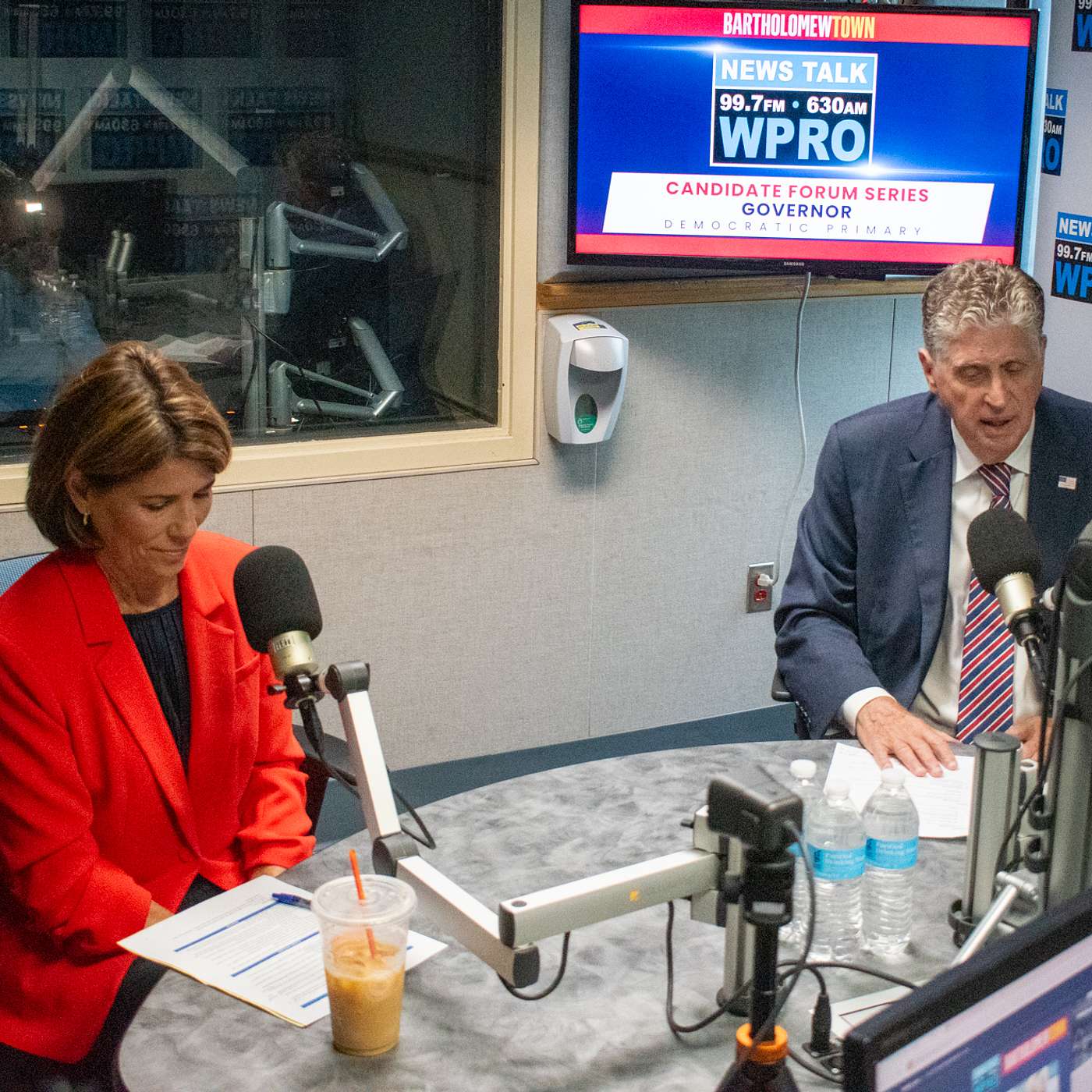
DEBATE: Governor McKee + Helena Foulkes - Democratic Primary for Governor of Rhode Island
1w ago01:04:33Tap to summarizeSend us Fan MailBill Bartholomew moderates a debate between Governor Dan McKee and Helena Buonanno Foulkes, the candidates in the Democratic primary for Governor of Rhode Island. Support the showFollow Bill on Instagram and YouTube
Transcribe →Exploring Legacy, Art, and Community Through Film and Music: The newportFILM Premiere of "John Shearer: American Moments"
2w ago00:16:52Tap to summarizeSend us Fan MailThis episode dives into the multi-layered world of documentary filmmaking, community building, and artistic legacy, with a special focus on the upcoming world premiere of John Shearer American Moments. We explore how film, music, photography, and community spaces intertwine to create immersive cultural experiences that honor history and inspire future generations.Key topicsHow Newport Film creates a "third space" for community engagement through multi-platform eventsThe significance of John Shearer's photography legacy and its artistic reinterpretationJim Spione's approach to combining documentary storytelling with visual arts and musicAlison Shearer's journey in composing era-specific music for the filmThe role of multi-sensory experiences in storytelling and community buildingHighlights of the upcoming film premiere at Rough Point and its cultural significanceThe generational legacy within the arts through storytelling, photography, and music Support the showFollow Bill on Instagram and YouTube
Transcribe →Newport Folk 2026
2w ago00:24:42Tap to summarizeSend us Fan MailBill Bartholomew reacts to Newport Folk 2026.Bartholomewtown was on-the-ground at Newport Folk, covering the performances and people that shape the iconic event. Support the showFollow Bill on Instagram and YouTube
Transcribe →FORUM: RI Attorney General Democratic Primary Candidates
3w ago01:03:04Tap to summarizeSend us Fan MailDemocratic Primary Forum: RI Attorney GeneralA candidate forum for the 2026 Democratic primary race for Rhode Island Attorney General, featuring:Keith HoffmanJason KnightKim AhernJoe Solomon Jr.Moderated by Bill Bartholomew.In this episode: Candidates fielded questions on [topics discussed — e.g., public safety, consumer protection, gun policy, housing enforcement, environmental law, government accountability]. Each candidate laid out their vision for the office and how they'd approach the priorities of the next AG. Support the showFollow Bill on Instagram and YouTube
Transcribe →FORUM: RI Lt. Governor Democratic Primary Candidates
3w ago01:03:30Tap to summarizeSend us Fan MailFour Democratic candidates for Rhode Island Lieutenant Governor squared off in a forum moderated by Bill Bartholomew.The CandidatesSabina Matos — Incumbent Lieutenant Governor First appointed to the office in 2021 when Dan McKee moved up to governor; won a full term in 2022. Previously served on the Providence City Council, including as council president. Seeking a second full term; has made grocery affordability and housing central to her agenda.Sue AnderBois — Providence City Councilor, Ward 3 Elected to the council in 2022; left a job at The Nature Conservancy to launch her campaign in November 2025. Cites her work chairing the North Main Street Task Force as a model for bringing stakeholders together on housing and infrastructure issues.Cindy Coyne — Former State Senator, Barrington Served in the RI Senate from 2015–2023, chairing the Judiciary Committee; a retired State Police lieutenant. First candidate to formally enter the race (June 2025). Points to legislation banning untraceable "ghost guns" as a signature accomplishment.Xay Khamsyvoravong — Former Mayor/City Councilor, Newport Entered the race in March 2026, the last of the four to join. Brown University grad, RWU law degree, spent 15+ years in banking including as SVP at Webster Bank; earlier was deputy chief of staff to General Treasurer Frank Caprio. Has led in fundraising for much of the race and campaigns on housing, infrastructure, and education investment "without raising taxes on working families." Support the showFollow Bill on Instagram and YouTube
Transcribe →Eat Well, Be Well Program Expands Healthy Food For Rhode Islanders
4w ago00:21:12Tap to summarizeSend us Fan MailGuests: Dr. Amy Nunn, CEO, Rhode Island Public Health InstituteChris Buchanan Director of Public Affairs and State and Local Government Relations with Walmart Stores, IncIn this episode, we explore the innovative Eat Well, Be Well program in Rhode Island, which successfully leverages public-private partnerships to promote healthy eating among SNAP recipients. Discover how automating incentives at checkout can increase fruit and vegetable consumption, and the potential for these strategies to scale into other areas of health and wellbeing.Main Topics:The origin and goals of the Eat Well, Be Well initiativeHow the program doubles the value of SNAP benefits for produce in retail locationsThe seamless, no-signup approach that simplifies access to healthy foodsThe role of technology in efficient program administrationData and impact: how the program benefits thousands of Rhode IslandersStrategies for scaling similar incentive models to broader health behaviorsFuture expansion possibilities beyond produce, including active lifestylesThe importance of cross-sector collaboration in shaping healthier communitiesTimestamps:00:00 - Introduction to the episode and guests00:16 - Guest introductions: Chris Buchanan and Dr. Amy Nunn01:04 - The purpose and history of the Eat Well, Be Well program01:33 - How the program supports affordability of healthy foods for SNAP recipients02:10 - Program funding sources and extension through COVID relief dollars02:55 - Walmart’s involvement: why they joined the pilot program03:27 - Making healthy shopping affordable and practical03:57 - Seamless incentive application at checkout05:11 - Behind the scenes logistics of integrating the program into retailer systems06:52 - Advice for retailers interested in adopting similar models09:00 - Evaluation results and program impact on Rhode Island households09:36 - Reaching vulnerable populations: children and the elderly11:43 - The potential for expanding incentives to other health behaviors and products12:19 - The concept of behavioral economics in promoting healthy choices13:21 - The possibility of broader incentive programs across health and activity sectors15:00 - Creative ideas for encouraging physical activity through retail and community efforts16:18 - The importance of partnership among government, private sector, and public health16:35 - The scalability of incentive programs and future opportunities17:21 - Final thoughts on collaborative efforts driving community health improvements18:07 - Closing remarks Support the showFollow Bill on Instagram and YouTube
Transcribe →Dr. Nelly Burdette Could Flip a Rural-Suburban Senate District in Rhode Island
4w ago00:28:50Tap to summarizeSend us Fan MailIn this episode, Dr. Nelly Burdette, Psy D, shares her journey from healthcare professional to political candidate, emphasizing the importance of community engagement, health equity, and addressing local issues like housing and public trust. Her approach highlights how expertise in public health can reshape legislative priorities at the state level, especially in a diverse district.Key Topics:Nelly Burdette’s background in healthcare and what motivated her to run for State SenateThe significance of running at the community level versus higher officeHow her public health experience informs her legislative prioritiesThe pressing issues in her district: healthcare access, affordable housing, and agingStrategies for rebuilding trust and engagement within the communityThe importance of creative solutions to housing shortages, avoiding green space developmentThe role of small businesses and local economic healthThe dynamic district of Lincoln, North Smithfield, and North ProvidenceHer stance on local legislative support and recent political debatesThe challenge of infrastructure and resource sustainability for new housing projectsHer motivation for challenging the incumbent and the potential impact on local politicsThe importance of party involvement and tactical campaigning in local racesTimestamps:00:00 - Introduction / background and political campaign02:03 - Why focus on local community engagement over higher offices04:46 - Support from Democratic groups and her community-based approach08:25 - Major gaps in healthcare access and affordability in Rhode Island10:21 - Vision for a better Rhode Island: Health, Aging, and Small Business13:10 - Creative housing solutions: repurposing abandoned buildings and green space preservation15:21 - Trust issues in Lincoln and rebuilding community ties17:46 - The importance of local legislation and community responsiveness20:06 - Immediate legislative priorities: healthcare and affordable housing initiatives21:02 - Support for local policies and her stance on key political issues22:41 - Challenges with housing development on Wilbur Road and sustainability concerns24:28 - The broader significance of community-level leadership and expertise in governance26:08 - Final thoughts on running to create meaningful change and the role of political strategy Support the showFollow Bill on Instagram and YouTube
Transcribe →How Rhode Island's New Legislation Balances Wildlife Safety and Pest Control Needs
Jul 900:21:19Tap to summarizeSend us Fan MailReducing Toxicity in Rhode Island: How Legislation Shifts Pest Control and Wildlife ConservationIn this episode, we explore Rhode Island's recent legislation to restrict dangerous anticoagulant rodenticides—making it the second state in the US to implement such restrictions. Maxwell McFarland, Advocacy Director at the Audubon Society of Rhode Island, shares insights into the legislative process, ecological impacts, and practical alternatives for pest management that protect wildlife and human communities.Key Topics:The significance and impact of Rhode Island’s new pesticide control lawHistorical context: how past bans (DDT, neonictinoids) shaped current regulationChallenges and strategies in passing environmental legislationThe ecological damage caused by anticoagulant rodenticidesPractical, wildlife-safe alternatives: habitat management, trash containment, and rodent birth controlThe importance of balancing public health, pest control needs, and ecological integrityThe role of open spaces and habitat preservation in natural pest managementCommunity involvement and phased implementation for effective policy adoptionBroader ecological concerns: insect mass decline and ecosystem healthPerspectives on urban planning and wildlife conservation—preserving habitat amid developmentTimestamps:00:00 - Introduction: Rhode Island’s new pesticide legislation00:28 - Why restricting anticoagulant rodenticides matters01:11 - Historical background: from DDT to neonictinoids01:40 - The environmental and wildlife impact of rodent poisons02:24 - The legislative process behind the bill’s success03:25 - The role of wildlife clinics and evidence of poisoning effects04:46 - Natural pest control: owl and raptor impacts05:06 - Practical solutions: substitutes and habitat management05:40 - Legislative exemptions and pragmatic compromises06:30 - California’s model and balance between regulation and use07:21 - Challenges in changing pest control practices08:05 - The limitations of current alternatives and the push for sustainable solutions09:05 - Innovations: GIS technology and rodent population tracking10:27 - Rodent contraceptives as a long-term control method11:01 - The phased approach: experimentation and community involvement11:34 - Opportunities for local experimentation and avoiding heavy-handed regulation12:05 - The importance of community-led pest management strategies12:47 - Ecosystem health and biodiversity’s role in pest control13:47 - The ecological role of rats and the limits of extermination14:16 - Impact of habitat preservation on ecosystem health14:48 - Supporting wildlife habitats through open spaces15:46 - The significance of the estuary habitat project in Newport16:23 - Community discussions around Hazard Road and habitat preservation16:47 - The balance between development and wildlife conservation17:17 - The role of advocacy and community input in urban planning17:44 - Final thoughts: prioritizing wildlife in city development and legislation18:14 - Closing remarks: the future intersection of climate, ecosystem, and public healthResources & Links:Audubon Society of Rhode IslandRhode Island Legislation on PesticidesRelated historical bans: Dichlorodiphenyltrichloroethane (DDT)California’s Wildlife Protection Laws Support the showFollow Bill on Instagram and YouTube
Transcribe →RI's Revolutionary History: Secretary of State Gregg Amore
Jul 200:18:05Tap to summarizeSend us Fan MailThis episode explores Rhode Island’s pivotal contributions to American independence, highlighting its unique history, key figures, and ongoing commemorations for the 250th anniversary. Learn why Rhode Island’s self-governance and revolutionary acts are fundamental to understanding the nation’s birth and how the state is celebrating this historic milestone today.Main topics: Rhode Island's early role in the American Revolution and its unique self-governance Key figures and events, including the Gaspi incident and Stephen Hopkins The significance of Revolutionary-era sites and ongoing 250th celebrations The importance of acknowledging America’s complex history, including struggles with race and equality How Rhode Island’s history informs current conversations about liberty and patriotism Timestamps: 00:00 - Setting the scene in Bristol and Rhode Island’s revolutionary energy 00:31 - Rhode Island’s role in early American history and revolution 00:44 - Celebrating Declaration of Independence displays and public engagement 01:22 - Public reactions to viewing the Declaration and related documents 03:03 - Starting points for newcomers to Rhode Island’s revolutionary history 03:19 - The Gaspi incident as the first shot in anger and its significance 04:04 - The formation of committees of correspondence and Rhode Island’s leadership in pushback 04:44 - Rhode Island’s unique self-governance under the 1663 Royal Charter 05:40 - Rhode Island’s contributions to the Continental Army and Navy 07:04 - Rhode Island’s 250th programming and celebrations across the state 07:50 - Key historic sites such as Colony House in Newport and the Old State House in Providence 08:50 - Notable figures: Stephen Hopkins, Nathaniel Green, and their roles 10:22 - Recent efforts to include Black history and historic revisionism 11:26 - The importance of confronting all aspects of American history 12:55 - Celebrating the principles of liberty and equality in American history 14:45 - Current initiatives to commemorate and reflect on the nation’s founding principles 15:11 - Closing remarks and upcoming merchandise for the Rhode Island 250 celebrationResources & Links: Rhode Island 250 Rhode Island 250 Merchandise Store Rhode Island Black History Connect with Secretary Greg Amore: Rhode Island Secretary of State - LinkedIn Twitter Support the showFollow Bill on Instagram and YouTube
Transcribe →