
Podcast
Based Camp | Simone & Malcolm Collins
Hosted by Based Camp | Simone & Malcolm Collins · EN
Based Camp is a podcast focused on how humans process the world around them and the future of our species. That means we go into everything from human sexuality, to weird sub-cultures, dating markets, philosophy, and politics.
Malcolm and Simone are a husband wife team of a neuroscientist and marketer turned entrepreneurs and authors. With graduate degrees from Stanford and Cambridge under their belts as well as five bestselling books, one of which topped out the WSJs nonfiction list, they are widely known (if infamous) intellectuals / provocateurs.
If you want to dig into their ideas further or check citations on points they bring up check out their book series. Note: They all sell for a dollar or so and the money made from them goes to charity. https://www.amazon.com/gp/product/B08FMWMFTG
basedcamppodcast.substack.com
basedcamppodcast.substack.com
136episodes
Episodes
Newest firstAll episodes

The Girl Gooner Apocalypse (Is A Good Thing?)
2d ago00:56:26Tap to summarizeIn this episode, Malcolm and Simone go deep on the female gooning wave — the explosive rise of erotic romance novels and smut that now makes up a huge share of what women are actually reading.We cover the hard data: romance sales growth, reading frequency stats, and older studies showing romance readers have more (and more satisfying) sex. Simone and Malcolm explain reactive sexuality, why these books can act as exogenous priming, and why the average effect on relationships appears positive rather than destructive.Then they break down the dominant tropes in the biggest current series — Empyrean (Fourth Wing / Iron Flame / Onyx Storm), A Court of Thorns and Roses, The Hunting of Adeline, dark mafia, and Zodiac Academy — and what the power dynamics, possessiveness, and “claiming” language actually reveal about female arousal profiles.Also discussed: the Wicker movie trailer going mainstream, why most men and women want very different things in erotic content, the biblical case against inventing extra sexual prohibitions, and a short closer on premarital sex and the film One Night Only.Episode Transcript[00:00:00] Simone Collins: Your face. What? What? What? So you can see we’ve reached mainstream. No, you, you, you haven’t read these books. You don’t understand what women are reading about-[00:00:14] Malcolm Collins: Did you read those books? ...[00:00:14] Simone Collins: in these books.[00:00:15] Would you like to know more?[00:00:17] Malcolm Collins: Hello, Simone. I’m excited to be here with you today. We have touched on the topic of the rise of the female gooning wave, but I wanted to go deeper into both the research around it and how that wave is changing, because it’s having an, a much bigger impact on society than people think.[00:00:35] About-[00:00:35] Simone Collins: Excuse me, are people researching female gooners?[00:00:39] Malcolm Collins: Oh, yes. We have many re- Simone, when you say female gooners as if they’re the rare thing, the vast majority-[00:00:46] Simone Collins: No, I know ... are women. Look, trust me, I know. Yes. I just-[00:00:50] Malcolm Collins: Oh yeah, I know you know, because I know what you listen to at night,[00:00:53] Simone Collins: Simone. Stop. I’m listening to the Old Testam- Oh, never mind.[00:00:56] Yeah, that’s pretty messed up, so go on then.[00:00:59] Malcolm Collins: I actually wanna ask it for later. Which industry makes more, this or male ?[00:01:06] Simone Collins: Oh, no, we did this before. The, the romance novel industry makes a ton more money. Are you kidding me?[00:01:12] Malcolm Collins: Well, we’ll, we’ll see, we’ll see. It’s[00:01:13] Simone Collins: not even- But, okay, hold on[00:01:14] funny and funny. Yeah So,[00:01:15] Malcolm Collins: A third- Offended you[00:01:16] Simone Collins: would ask ...[00:01:17] Malcolm Collins: a third of all fiction books is that people are reading right now are- ... female gooning books, okay?[00:01:22] Simone Collins: No one reads anymore except for certain reasons.[00:01:25] Malcolm Collins: This has gone up from 23% w- just a decade ago.[00:01:31] Simone Collins: Oh, oh.[00:01:32] Malcolm Collins: The romance sales industry year over year grew 24% this year in the, in the first half of the year circa BookScan And 26% of survey r- readers reported buying more than one romance book in the prior year.[00:01:51] Now, for, I wanna get to this immediately because a lot of people on our channel are gonna jump and be like, “Oh, this is terrible. Oh, these women, their partners, how terrible is this?” So Coles and Sharp in 1984 did a study. And what they found was that readers had sex twice as often per week as non-readers.[00:02:11] Simone Collins: There was- Yeah, that makes sense ‘cause they’re kinda just getting themselves in that frame of mind. Women have to be, like, reminded that they’re sexually interested, I think, more than men do. Men, it’s like, it’s there for the most part. Women need to be reminded that they can be sexual beings. Is[00:02:26] Malcolm Collins: that your thing?[00:02:26] I, I think that’s an absolutely good point. Yeah. I wanna, I wanna expand on this point after I go into it. The, the am- among housewives specifically, readers were significantly more sexually satisfied than non-readers.[00:02:38] Simone Collins: Hmm.[00:02:38] Well, you know, we, we, when you originally wrote The Pragmatist’s Guide to Sexuality, you, you looked at, you, you didn’t do romance novel readers, you just polled people about their erotic material consumption.[00:02:49] But then you found that people who consumed erotic material who were female, like, so women who consumed erotic material, it had much more satisfying and active sex lives. Like, if you are a boyfriend, a husband, anyone who has intimate access to a woman and you want her to be a little bit more forward i- in her advances, you should get, buy, buy her the best-selling romance novels.[00:03:14] The most perverted stuff[00:03:16] Malcolm Collins: So she’s got perversions on her mind all[00:03:18] Simone Collins: the time. Yes. So you need... Yes, she needs to have a dirty mind. If her mind isn’t dirty, it’s your fault, okay? This is-[00:03:23] Malcolm Collins: And women experiment with these things with their partners. So they, the ones who do this do significantly more fantasy play.[00:03:31] But the reason I wanted to, to put that out there to start with is it’s the same as the pornography thing, right? Like, guys who consume porn have more and better sex than guys who don’t consume porn. This has been shown in, like, multiple studies, right? Mm-hmm. You know, it’s, it, it-[00:03:47] Simone Collins: Look, people who watch cooking shows probably have better cooking techniques and cook more than people who don’t watch cooking shows.[00:03:54] Malcolm Collins: Yeah. It’s, and it’s not- So ... now, I, I, I do wanna make an aside here before I go further. There is [00:04:00] clearly a type of woman and a type of man who cannot engage healthily with this type of content. Oh,[00:04:05] Simone Collins: yeah. No, yeah.[00:04:06] Malcolm Collins: There is a type of woman-[00:04:07] Simone Collins: Well, there’s also people who can’t engage healthily with food or exercise, you know?[00:04:10] Malcolm Collins: That gets one shot and goes full goon cave and never leaves her room after that, right? There is a type of guy- But did you[00:04:17] Simone Collins: want her as a girlfriend in the first place, right? If she’s that kind of person.[00:04:20] Malcolm Collins: I, well, you know, she might get obsessed with you if that was her only alternative. Yeah. I don’t think that’s gonna happen, though.[00:04:27] Simone Collins: No, mm-mm.[00:04:28] Malcolm Collins: These types of women are typically, in my experience, pretty histionic and an issue- An issue ... to date. An issue to date. Hmm. You don’t, you, you don’t want a super horny girlfriend or wife. I, I have done that before. It is very exhausting because you’ve got to remember... Sorry, go ahead.[00:04:44] Simone Collins: You had a Friend- a Fred Flintstone moment with that, didn’t you?[00:04:48] Malcolm Collins: What do[00:04:48] Simone Collins: you mean by that? Someone banging on your door, “Wilma.”[00:04:50] Malcolm Collins: Yeah,[00:04:51] Simone Collins: yeah. Oh, sorry. I always say that with a German accent because I was once locked out of a French hotel. Let me in. And there was a German outside- Yeah ... and he was banging on the door screaming, “Wilma,” but in a German accent.[00:05:01] It’s iconic. So and it was the best moment I ever had in Paris. Seeing German locked out of a hotel Sorry Oh[00:05:06] Malcolm Collins: my God. Okay, anyway.[00:05:07] Simone Collins: Carry on.[00:05:08] But you had a girl literally trying to bang down your door to get to that-[00:05:12] Malcolm Collins: Yes,[00:05:13] Simone Collins: yes[00:05:13] notably perfect[00:05:14] Malcolm Collins: something of[00:05:14] Simone Collins: yours But, but[00:05:14] Malcolm Collins: guys forget when they’re like, “No, it would always be great to have, like, a maximally horny girl.” It’s like sex is majority of the work. 99% of the physical effort is the male. If your partner wants to have sex way more than you wanna have sex, that’s just a ton of extra work for you.[00:05:33] Simone Collins: Mm.[00:05:33] Malcolm Collins: And it gets extremely exhausting. When I’ve been in, in relationships like that, you, you hear them at the door and you’re like, “No.”[00:05:41] Simone Collins: Yeah. “[00:05:44] Malcolm Collins: Not again. I’m trying to do my homework.” Yeah. “I’m trying to study.”<...
Transcribe →
Genesis’ “Random” Numbers Map Directly to 10,000 Years (Unique Discovery)
3d ago01:45:50Tap to summarizeIn this episode of deep biblical literalism, Malcolm and Simone Collins unpack Genesis 5–11 not as a list of impossibly long-lived individuals, but as a precise civilizational timeline and map.By treating the genealogies as sequential cultural phases rather than personal lifespans, the numbers align with the archaeological record of the Near East with startling precision — from Göbekli Tepe and Çatalhöyük through the Halaf–Ubaid transition (the “Flood”) all the way to the fall of Ur and Abraham. The Table of Nations emerges as an improbably accurate ethnographic map spanning from Spain to the Gulf, matching modern genetic and archaeological data. The Tower of Babel tracks the Uruk expansion and the collapse of its shared administrative “one language.”They also re-examine the Flood as a literary convention marking a real civilizational rupture, the Cain–Abel story as a lesson in emotional control, the Nephilim/Sons of God problem, the rainbow covenant, and why this reading makes far more sense of the text than surface-level literalism.Companion deep-dive with maps, charts, and full ledger:https://technopuritan.com/genesis5This is “deep literalism” — reading the Bible the way its original audience would have understood its literary forms, then testing those claims against the actual archaeological and genetic record.Episode Transcript[00:00:00] Malcolm Collins: This is not like normal Bible math. This isn’t like I take numbers from the Bible and I assume they’re supposed to be something totally different, or I, I move them around and I add a number here and I add a number here.[00:00:13] We are working with what the Bible appears to be talking about, early human civilization- Mm-hmm ... and just copying and pasting the numbers[00:00:22] To get an idea of just how insane this math is, the Hafal-Unyad transition is bracketed between 5500 BC and 5400 BC. So the boundary is only known to half a century. The computed flood would have happened if you use these numbers at 5444 BC, which isn’t just inside of this bracket. It lands six years from the bracket’s midpoint, which is astonishing when you’re looking at tens of thousand years of human history.[00:00:53] Malcolm Collins: Like, the size of this map, if you’re going to compare it to other maps of the time, would have to be a combination of the Phoenicians’ trading map and the Assyrians’ conquest map, right?[00:01:07] Mm-hmm. Like, the two largest maps anyone would’ve known during that period. If you compare it with the ancient Greek map, it just becomes laughable,[00:01:15] Would you like to know more?[00:01:17] Malcolm Collins: Hello, Simone. This is a crazy day for me because I decided to just sort of be like, well, if the Bible’s true, ‘cause I was, I was reading it. I was like, it’s probably not gonna have, at the very beginning, a bunch of stuff that just doesn’t matter. Because y- near the beginning of, of Genesis, there’s a few lists of names and ages and there’s...[00:01:43] And, and they don’t, like I think a lot of people when they’re reading ‘em generally just skip over them. Absolutely. They’re like, “Okay, whatever. Let’s[00:01:49] Simone Collins: get to the fun part.” Well, it’s very similar to the Iliad and Aeneid where you’re like, “Come on, like, I don’t need the whole lineage of this one soldier in the war over Trojan...”[00:02:00] You know. Yeah. It’s surprisingly... Okay, yeah, so.[00:02:03] Malcolm Collins: So, so you, you hit that and what this unfortunately does, at least after I went into it and I started trying to match these lists to things-[00:02:13] Simone Collins: Mm-hmm ...[00:02:15] Malcolm Collins: is it means you completely misread Genesis.[00:02:18] Simone Collins: Oh.[00:02:18] Malcolm Collins: You, modern reader, get to it. You read the, the first part, which is important.[00:02:23] Then you[00:02:24] Simone Collins: see a bunch of- And it’s so dense, it’s like, whoa, that was, like the, the world was created. Whoa, the Garden of Eden just came and left. Like, it goes so fast, right? Yeah,[00:02:30] Malcolm Collins: and then the, the whole- There’s[00:02:31] Simone Collins: no[00:02:31] Malcolm Collins: like- ... murder thing and that’s interesting. Then list, and it’s like, ah, boring, tuning out for the list.[00:02:35] Yes. Ooh, big interesting flood narrative happening[00:02:38] Simone Collins: here. Yeah, whoa, the, and I, literally the flood comes and goes so fast that I read it while falling asleep and I nodded off for a second and it just, I missed that whole part.[00:02:45] Malcolm Collins: And then a bunch of lists again. Oh, I’ll skip those. What this does is it causes you to read it in an inverted format to how somebody of the period it was written would’ve read it.[00:02:58] Simone Collins: Oh.[00:02:58] Malcolm Collins: They would’ve said, “Oh, some interesting lists that are telling us stuff.” Then they get to the flood narrative and they go, “Oh, another flood narrative. I’ve read a dozen- ... of those this week. Let’s just skip over that.” And, or, or rather they would’ve understood that the flood narrative meant something.[00:03:15] If you have a flood narrative in the middle of a collection of lists, traditionally in Sumerian writing from that period, what you are talking about is a transitional event, something really big transitioned between these two periods.[00:03:29] Simone Collins: Wait, so you’re saying flood narratives didn’t just turn out, up in the Old Testament of the Bible?[00:03:34] Malcolm Collins: Yeah, flood narratives are everywhere during that period. So[00:03:36] Simone Collins: you weren’t kidding, like they, it was just, it was like a literary convention.[00:03:40] Malcolm Collins: It was a literary convention, yeah. It, it, it was a literary convention that meant something big just transitioned.[00:03:46] Simone Collins: Why does no, why does no one mention this? W- okay,[00:03:50] Malcolm Collins: wow.[00:03:50] I think a lot of people mention this. A lot of people are familiar with Gilgamesh at least.[00:03:54] Simone Collins: Yeah, but... God, I read it back in college. Was there a flood in Gilgamesh? I don’t remember there being a flood in Gilgamesh. [00:04:00][00:04:00] Malcolm Collins: Yes, and it, it- I just[00:04:00] Simone Collins: remember the bromance. That’s what we’re all here for, ladies.[00:04:03] Malcolm Collins: But what gets crazier is something I didn’t notice when I was first looking at these lists.[00:04:07] Simone Collins: Okay.[00:04:08] Malcolm Collins: And as soon as you notice it, you notice- That you’re actually looking at three different things. So list number one is unlike any list I have ever seen in my entire life or that we have any archeological evidence of.[00:04:24] Simone Collins: Okay.[00:04:24] Malcolm Collins: And a lot of people don’t notice this about it when they read it the first time.[00:04:28] Simone Collins: Mm-hmm.[00:04:28] Malcolm Collins: It does something very, very strange.[00:04:32] Simone Collins: Okay.[00:04:32] Malcolm Collins: Instead of listing, you know, when people were born and when they die, or how long they lived and who they begat, it instead also lists their age when they had the kid The second list, well, rather the third list, the third list also does this. Yeah. So this is Genesis 5 and Genesis 10.[00:04:58] Simone Collins: And it’s really weird because why are some people waiting until they’re in their 80s to have kids? Like, people are just like, “This doesn’t make sense.”[00:05:03] Malcolm Collins: That’s, that’s not as important. Okay. What’s more important is we don’t have a single list like this anywhere in the Mesopotamian archeological record.[00:05:13] This is not the way people record their ancestors. Okay. And it’s a weird thing to do. Even today, you don’t typically record the age somebody was when they have a kid. Why would you do this? Why would you be recording the age somebody was at when they had a kid?[00:05:28] Simone Collins: Mm.[00:05:29] Malcolm Collins: Because if you do that, you have something other than a list.[00:05:34] You have a timeline. It, you, you can know exactly how long the timeline is If you don’t know when a person was born and their parents lived 800, 900 years supposedly, they could have been born anywhere within that 800 to 900 years.[00:05:52] Simone Collins: That’s true.[00:05:53] Malcolm Collins: So you don’t actually have a timeline of events.[00:05:56] Simone Collins: Yeah, okay.[00:05:57] Malcolm Collins: This gives you a very tight, inalterable timeline. So then the question is, of course, is this timeline must mean something if it was recorded in the Bible for that long. What does it mean? Like, like, i- i- i- you could say, “Oh, it’s just a list of people’s ages and when th...
Transcribe →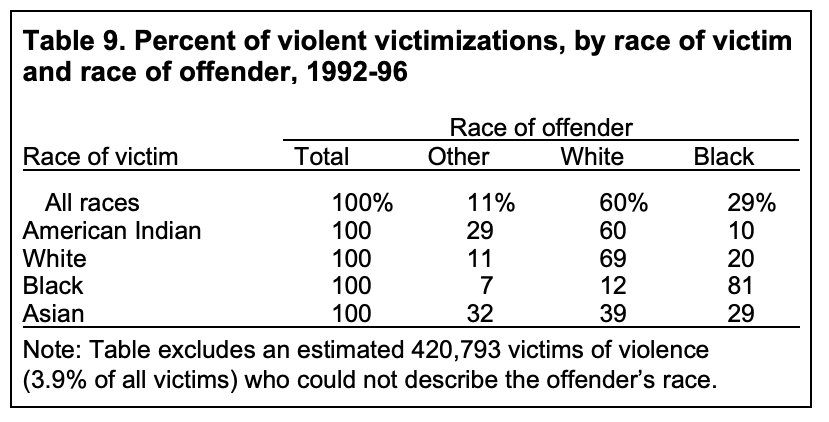
US Indian Women Suffer High Rates of __ (The Why is Hidden)
4d ago01:04:22Tap to summarizeSimone and Malcolm examine the Missing and Murdered Indigenous Women, Girls, and Two-Spirit (MMIWG2S) movement and the dominant narrative that frames high rates of violence against Native women primarily as the legacy of settler colonialism, racism, and systemic failures.They dig into historical intertribal warfare and raiding practices, the actual circumstances of Sacagawea’s life (captured as a child, sold, and one of multiple wives of a fur trapper by age 16), National Institute of Justice and CDC data on perpetrators of violence and homicide, Canadian statistics showing the large majority of accused are Indigenous, reservation versus off-reservation patterns, tribal sovereignty and property rules, residential school claims, the smallpox-blanket episode in context, and internal corruption during the Trail of Tears.The discussion challenges the “noble savage” framing, argues that most violence is intra-community, and questions whether preserving certain cultural and legal structures is helping or harming the people living under them. Strong language and dark historical accounts throughout.Show NotesNote: If you want to know how we’ve been gaslit about historical American Indians, watch Matt Walsh’s What Schools Don’t Teach You About American IndiansAnother note: Acronyms: American Indian/Alaska Native (AI/AN)There’s a movement called called MMIWG2SI first learned about it, ironically, from TheHolyBall, because of his song MMIWG2SLGBTQQIA+I was like… what is MMIWG2S?MMIWG2S stands for Missing and Murdered Indigenous Women, Girls, and Two-Spirit people. It is a grassroots movement and a term used to describe and bring awareness to the severe, disproportionate rates of systemic violence, kidnapping, and murder faced by Indigenous communities across the United States and CanadaAccording to organizations like the Coalition to Stop Violence Against Native Women, violence against Native women and children is primarily framed as a legacy of Spanish and Euro-American invasion, settler colonialism, and continuing structural forces such as anti-Indigenous racism, bordertown violence, police brutality, and failures within the judicial system.Wow, that sounds bad. Is it true? I thought that broadly speaking, most acts of violence and murder are committed by people with whom the victim is close.National Institute of Justice FindingsThe most cited national estimate is NIJ’s 2010 National Intimate Partner and Sexual Violence Survey analysis, published in 2016* It found that 97% of American Indian or Alaska Native women who reported one or more of these forms of lifetime violence had experienced at least one incident involving a non-American Indian/Alaska Native or/interracial perpetrator; 35% had experienced at least one incident involving an AI/AN/intraracial perpetrator.* These numbers do not mean 97% of incidents were committed by non-Indigenous people and 3% by Indigenous people. The categories overlap: a woman who was harmed by both an Indigenous and a non-Indigenous perpetrator appears in both columns. NIJ explicitly says its analysis measured whether someone had any interracial and/or intraracial victimization, not the count of incidents by each group.* For scale, the same survey found that 84.3% of AI/AN women reported one or more of the measured forms of lifetime violence: 56.1% sexual violence, 55.5% physical intimate-partner violence, 48.8% stalking, and 66.4% psychological aggression by an intimate partner.The report PDFPer this report, what percentage of violence against american indian and alaska native women and men is committed by american indian and alaska native people?* Among American Indian and Alaska Native people who had experienced the covered forms of violence, 35% of female victims and 33% of male victims had experienced violence by at least one American Indian or Alaska Native perpetrator (termed intraracial violence)* The same report found that 97% of female victims and 90% of male victims had experienced violence by at least one non-AI/AN perpetrator.About the National Institute of Justice: It’s the Justice Department’s research and evaluation armOlder US DataAn older Bureau of Justice Statistics analysis, using 1992–96 National Crime Victimization Survey data for all American Indian victims, not women alone, estimated that individual violent-crime victimizations involved perpetrators described as:* 60% White* 10% Black* 29% “other”—a category that combined American Indian and Asian perpetrators, though BJS said this group was likely predominantly other American IndiansIMPORTANT: This is an incident-based estimate, unlike the NIJ “ever experienced” figuresTable 9 from the report:Why This is SussFirst: In the older report, they group native americans with “Asians” in a manner that could be done to reduce the percentage of crimes perpetrated by indigenous americansSecond: In the newer report, they group non-indigenous people with mixed-race people.* Recall that the National Institute of Justice found that 97% of American Indian or Alaska Native women who reported one or more of these forms of lifetime violence had experienced at least one incident involving a non-American Indian/Alaska Native or/interracial perpetrator* WELL WHAT PERCENTAGE OF PEOPLE WHO IDENTIFY AS AMERICAN INDIAN/ALASKA NATIVE ARE ALSO INTERRACIAL?Third: In the newer report, they asked behavioral questions rather than using documented proofHow was data collected for this research?* Interviewers called randomly selected landline and mobile-phone numbers.* The relevant analytic sample included 2,473 AI/AN adult women and 1,505 AI/AN adult men, including people identifying as AI/AN alone or alongside another racial group.* The survey used behaviorally specific questions about what respondents had experienced, rather than relying solely on respondents’ own labels for events—for example, questions about force or threats in sexual violence.=What were the exact behaviorally specific questions used?* The questions were asked in respondent-friendly language and were behavior-specific—for example, asking whether particular acts happened rather than asking “Were you abused?” The complete scripted 2010 questionnaire is publicly available from CDC* Below are representative items/wording from the instrument, organized by what the AI/AN report measured. This is paraphrased rather than reproducing the full questionnaire verbatim.* Physical intimate-partner violence: A partner slapping; pushing or shoving; pulling hair; hitting with a fist or object; kicking; slamming the person against something; trying to choke or suffocate them; beating; burning them intentionally; or using/threatening a knife or gun.* Psychological aggression: An intimate partner acting dangerously; calling the respondent names, insulting, or humiliating them.* Coercive control: Threats; interference with family or friends; restricting access to money; monitoring or controlling the respondent’s activities; and controlling reproductive or sexual health.* Stalking: Repeated unwanted calls, messages, emails, or other contact; watching or following from a distance; use of technology such as GPS or cameras; and leaving odd or potentially threatening items—asked in the context of fear or concern for safety.* Completed or attempted forced penetration: Being physically forced into vaginal, anal, or oral penetration; having penetration attempted through force; or being penetrated when unable to consent because of alcohol or drugs.* Made to penetrate: Being physically forced, pressured, or incapacitated and made to penetrate someone else; this measure included completed and attempted incidents for male respondents.* Sexual coercion: Unwanted sexual penetration after nonphysical pressure—such as persistent pressure, threats to end a relationship, or threats to spread rumors.* Unwanted sexual contact: Unwanted sexual kissing, fondling, touching, or grabbing.* Non-contact sexual experiences: Someone exposing themselves or masturbating in front of the respondent; forcing the respondent to show body parts; making them view or participate in sexual images or videos; or sexually harassing them in public in a way that felt unsafe.More Measurable Data: HomicidesWhat percentage of USA-based homicides with American Indian/Alaska Native (AI/AN) victims are perpetrated by American Indian/Alaska Native (AI/AN) people?* In the best available CDC analysis (published 2021, looking at data from 2003 to 2018), 32.1% of homicides with AI/AN victims had an AI/AN suspect. The corresponding figures were 39.6% non-AI/AN suspects and 28.3% with the suspect’s race/ethnicity unknown.* This result comes from 2,226 AI/AN homicide victims reco...
Transcribe →
Does Genesis Argue NPCs Are Real? (Do Pre-Adamites Still Exist?)
5d ago01:33:54Tap to summarizeIn this Based Camp Tract, Malcolm and Simone Collins tackle one of their most provocative religious questions: What does it actually mean to be “human” in God’s view?They dig into classic Genesis puzzles—Cain’s fear of being killed, the sudden appearance of his wife, the city of Enoch, and the strange language of Romans 5:12-14—and argue that the Bible may not treat every Homo sapiens as a full moral agent. Drawing on a techno-puritan reading, they place the Adam and Eve story at the dawn of moral accountability and civilization roughly 10,000 years ago near the Tigris-Euphrates, link it to the sudden explosion of human development, and explore what this means for death, the Tree of Life, pre-Adamite populations, and the difference between biological humans and those God holds accountable.Along the way they examine traditional explanations (incest, rapid population growth, pure allegory), Isaac La Peyrère’s pre-Adamite theory, Genesis 1 vs. Genesis 2, early urban death rituals, God’s treatment of groups like the Egyptians and Canaanites, and modern implications—including NPCs, civilizational decline, and fertility collapse as a kinder “second flood.”A spicy, wide-ranging conversation about moral agency, civilization, and what the Bible might be saying about who counts as fully human.Episode Transcript[00:00:00] Malcolm Collins: Simone, I’m excited to be here with you today. Today we might be doing one of our most offensive religious episodes, because it’s a thought that came to me so for people who like sort of Bible mysteries one of the ones that most people are broadly aware of as like a fun little rabbit hole to go into is it appears from the perspective of Genesis that there were other humans around at the time of Cain and Abel.[00:00:31] Mm-hmm. So four lines that suggest this. Genesis 4:14, “Whoever finds me will kill me.” If only Adam’s immediate family existed, who would pose a threat to Cain afterwards? ‘Cause he’s saying this to God. Cain’s wife she appears, but isn’t given a genealogy. Yeah. In, in the Bible, you’re not supposed to sleep with your sister.[00:00:52] This is, like, one of the rules that God sets up. And it’s never put out that there’s, like, an exception here. Mm-hmm. Now, he was doing this before that law was set out, but that law still would have applied to all of the sons of Ad- kids of Adam and specifically Romans 5:12-14, no matter how you interpret it means it would apply.[00:01:13] The the city in Genesis 4:17 it mentions Cain building a city, the city of Enoch. Now the word used for city here in ancient Hebrew can mean, like, a fortified collection of dwellings, but it still requires, you know, some people, more people than we are aware of at this time.[00:01:33] Simone Collins: Yeah.[00:01:34] Malcolm Collins: Then, and this is not as seen by people, but we’ll go into it, because then it is actually interesting.[00:01:38] Some read Genesis 1:26-27, humanity created male and female, as a different event from Genesis 2:7, Adam formed from the dust, and then Eve formed from a rib, right? Then there is Romans 5:12-14. So this isn’t just in the Old Testament where you find this weird stuff. If you go to Romans 5:12-14 and note here I’m also gonna go through all the traditional explanations to try to get around this.[00:02:04] But the correct explanation I think is so - spicy and I am so excited to drop it, because it makes so many other things make sense.[00:02:14] Simone Collins: Yeah.[00:02:14] As soon as you said this to me I was like, “Ah, of course.” ‘Cause I’m reading Genesis again, or I just read Genesis again and was so confused. Just was like, wait, ‘cause y- all these descendants, you know, so and so and then they had this kid, but then, and then they married so and- like, wait, where did they come from?[00:02:29] Well, we, we[00:02:30] Malcolm Collins: could- Yeah ...[00:02:31] Simone Collins: huh?[00:02:32] Malcolm Collins: So , if we start here, “Therefore, just as sin entered the world through one man and death through sin, and in this way death came to people because all sinned, to be sure sin was in the world before the law was given. But sin is not charged against anyone’s account where there is no law.”[00:02:54] Simone Collins: Mm-hmm.[00:02:54] Malcolm Collins: “Nevertheless, death reigned from the time of Adam to the time of Moses, even over those who did not sin by breaking a command, as did Adam, who is a, a pattern of the one to come.” Hmm. So the problem here being is there are two ways to read this both have problems. One is that, well, even though Moses hadn’t handed down the commandments yet, right? You were still capable of sinning before that period, right? That said it doesn’t really make sense in context., If you think about the line as it’s put out here, him pointing out that death entered the earth through sin entering through Adam, then the law he’s talking about here must be the law handed to Adam, right?[00:03:46] If that’s the case, then it’s implying that people were sinning but without a law, without somebody telling them not to, before Adam came to existence. So I’ll, I’ll read it again so you can see how you can get this [00:04:00] interpretation. “Therefore, just as sin entered the world through one man and death through sin, and in this way death came to all people because all sinned, to be sure sin was in the world before the law was given.[00:04:12] But sin is not charged against anyone’s account where there is no law. Nevertheless, death reigned from the time of Adam to the time of Moses, even over those who did not sin by breaking a command, as did Adam, who is the pattern of the one to come.”[00:04:28] On rereading, this is by far the weakest of these claims, but this verse is still important because what it lays out is that the rules set out within the mosaic laws are what counted as sin even before those laws were laid out, even if you take the most traditionalist reading of them, which has a lot of importance in just a second[00:04:48] Malcolm Collins: So That creates a problem, right? If there were other humans around during this period, how did they get there? Mm-hmm. And we’ll, we’ll get to this as well, but what, what do we know about Adam and Eve, first of all? Because if people are aware of the techno-puritan framing around all of this what we generally believe is we think the Bible, and you can watch our episode on this, does a very good job, a, a supernaturally good job of setting out the evolutionary timeline.[00:05:18] Mm-hmm. Of describing that in a way that a person of that period, a cave Jew, could understand that would make any sort of rational sense to them, that would be able to be transmitted. And then it lays out in the story of Adam and Eve mankind beginning to... Because I, I don’t think that God would actually punish humanity for trying to learn right from wrong.[00:05:39] That seems psychotic to me. Like it seems like God would want us to know right from wrong, right? Yeah. Yeah. But I point out that we know from the story that that’s not really what Adam was punished for. Because the moment he eats the... Well, he doesn’t eat, touches, which is also important. See our original episode on that if you want us to go deeper on it.[00:05:58] Or has the intent to disobey God. It’s not even touches. It, it, it’s reaching out for it. It was the intent to disobey God around that fruit that made that fruit important. It was not the fruit itself. The fruit didn’t actually need any magical powers. The fruit was set apart in that it was the only thing that God had made any sort of a ruling around at that point in human history, right?[00:06:20] Mm-hmm. And, and the thing that Adam did that was special there was to go against what God wanted him to do with that. And I was like, a- and we know this because the first thing that Adam does is tries to clothe himself which doesn’t make any sense. Because it said that he they, they, they...[00:06:36] God let Adam be naked in the garden. Like, clearly God didn’t think it was a problem. And in nowhere in any Bible, in any Old Testament would any, either in ration or in Christian or Judaic tradition is it sinful to be naked in front of your wife and God. That’s like the very thing you’re supposed to be naked around, right?[00:06:59] Like, that is not a, a... He’s not like in a city or something, right? Like, so it’s showing that he what is meant by knowledge of good and evil is a knowledge of good and evil in opposition to God’s knowledge of good and evil. Like man thinking that he knows more than God about what is good and evil to the extent that he would do stupid things.[00:07:23] So the moment Adam gained the capacity to think in terms of morality, like, “This is what I should do, this is what I shouldn’t do,” all of, like, what laws applied to him and made up sin at this point in time,[00:07:38] that line in Romans tells us it’s the[00:07:41] mosaic law that would be handed down later.[00:07:44] So the question is, why didn’t God, like, give Adam a list of the rules, the Mosaic laws, as he was leaving the Garden of Eden? , And I think the answer to this is he thought they were so obvious that any sentient entity, , now that man had [00:08:00] gained true sentience, should have been aware of them. , I mean, they’re, they are really quite basic stuff, like not stealing, not murder, stuff like that.[00:08:10] , But being aware there is a God, but then worshiping other gods above Him. , But then, , Adam and Eve leave. They have a kid, and right away, the kid goes ...
Transcribe →
Did Woke 2.0 Already Fail? An Evolutionary Anthropology of Woke
1w ago01:02:31Tap to summarizeIn this episode of Based Camp, Malcolm and Simone Collins break down the evolution of the culture wars — from Woke 1.0 (SJW/Tumblr era) to Woke 2.0 (post-George Floyd radicalism) and the rapid emergence of Woke 3.0: the anti-AI movement.They argue Woke 2 is already over. The new front is a performative, high-anger rejection of AI that is more central in left online spaces than race, trans issues, or immigration. Key topics include:* The edginess pipelines on left vs. right and how the “terrorist left” evolved* Why anti-AI posting now dwarfs traditional woke content* Hank Green’s very public apology for using ChatGPT and the forced productivity collapse that followed* Extreme backlash against AI tools (Leaflet’s VTuber generator, etc.)* The core arguments the anti-AI side uses (stealing, environment, critical thinking, mental health, creativity, bias, surveillance)* How this creates a self-selected permanent underclass that deliberately opts out of productivity tools* Intentional ugliness in media, media fracturing, and the Brave New World “savage reservation” parallel* Strategy for the pro-AI side and why anti-AI Luddites (left and right) are a liabilityThis is the real culture war happening right now in the meme minds — the one most offline commentators still haven’t noticed.Show NotesThe new culture war is between those who are pro-AI and anti-AI, except this is worse than Woke 1.0 and 2.0 because those on one side of the battle are intentionally opting into a permanent underclass.Headlines:Vulture: Hank Green Can’t Apologize Enough for Using AIMashable: Hank Green apologizes for relying too heavily on ChatGPTTechCrunch: YouTuber Hank Green says his AI usage is ‘not healthy’Business Insider: YouTube star Hank Green says he’s relied ‘too heavily’ on AI in an apology to fans.“Hank Green, one of the internet’s most steadfast and reliable content creators, said he’s slowing down production after fans criticized him for using AI.“Expect less hankschannel. It may need to pause for a while,” Green wrote. “It may be that Hankschannel comes back with writing and research support. It may be that it comes back with just way fewer videos.” Green said SMUSH and 4x3, two online daily word games he produces, will be paused.The fresh discourse surrounding Green’s use of AI was sparked earlier that day on X, where he told users he had used OpenAI’s ChatGPT to research a script. The revelation shocked some X users, who suggested that Green undermined his credibility by using AI without disclosing it to viewers.As tensions grew on X, Green deleted that post and pivoted to Reddit to address the situation. He told Redditors he’s “mortified” that he’s “let so many people down.”“I have been relying too heavily on AI as a research aid. It can be very useful for this task, giving me access to a lot of papers I didn’t know existed really fast, but I think that has been to the detriment of my work because it has not given me the freedom to find all of my own ways into and around a topic,” Green said.…Green told fans that he’s not anti-AI but understands some of their concerns, such as how the tech is trained, its environmental implications, and the consolidation of economic power by tech companies. He ultimately apologized.“It is very likely that you (the reader) and I disagree on how or even whether AI should be used,” Green said. “I think it makes sense for that disagreement to exist. But I have also always believed that my audience is more likely to be right than I am. You know what this feels like in a way I can’t. And I am so sorry for diluting myself in this way and harming the thing that we have all built together.”In the post, Green said he feels pressure when creating content and will strive to manage himself more effectively. He’ll also address his interactions with AI, which he described as unhealthy.“But mostly I need to come to terms with the fact that the level of dopamine I’ve been getting from interacting with LLMs...with doing more and more and more and more...is not healthy for me or good for the world,” Green said. “It is careless, and has disconnected me from where people are on this.””Woke 1.0 and 2.0According to Shoe0nHead, She frames “woke 1.0” as the 2010s SJW/Tumblr/early BuzzFeed culture-war era, and “woke 2.0” as a potential new, post‑2020 wave that would repeat the same patterns in a more intense environment shaped by bigger structural crises and surveillance/war politics.I think Woke 2.0 happened as it’s already beginning to fall, becoming subsumed to the next culture war.* Woke 1.0:* SJW era* Anita Sarkeesian discourse* Tumblr culture* Oppression olympics* Early “manspreading” wage gap discourse* Gamergate* Destructive rot that paved the way for reactionary Trump-style populism* Woke 2.0* Per Shoe0nHead:* George Floyd protests* Abolish the police* I’d add:* Capitalism is evil* “Globalize the intifada”The New Culture War: AI HateWe realized this was a growing war when Leaflit released her AI Vtubing tool.Then, Katherine Dee released a short substack post titled “Woke 2” in which she writes:“One of my running under-theorized theories (that, naturally, I still psychotically want “credit” for calling, whatever credit means, I think in my head it’s being invited to conferences or invited to expand on whatever idea in publications more articulately than I’m doing here) is that we’ll eventually have a “Woke 1.0”-style culture war about technology. I mean, it’s just been in the water for a long time. Just like we’ve always had backlashes against feminism, we’ve also always had techlashes— but I mean, a techlash that has the features of peak woke. Moral panics, opportunists selling “workshops” about how to stay human. I’ve historically been too hard on Jon Haidt—a guy I don’t want to make an enemy of, for whatever it’s worth, please chill with the age-gating stuff man—but in a way, he’s like the Robin DiAngelo of anti-tech sentiment. I just mean that in a market position way—This has been coming in the mail since before the gen AI stuff—see: what’s happening to Hank Green (he accidentally said “I appreciate the pushback” in a YouTube video and now his fans are freaking out, but really, this is becoming about what’s socially sanctioned, I think Ruby Justice Thelot on “Americans love chat and hate AI” is also important here). Like Woke 1, I think Woke 2 is predicated on perfectly legitimate complaints—I’m speaking here about the conversation—not saying “people concerned about AI or tech are somehow ridiculous”. I don’t think tech companies should get free rein to do whatever. I started noticing the whole tech-as-culture-war thing back when I started paying attention to events like NatCon, there was this weird tension between the right wanting to bring Big Tech to new cities in an attempt to revitalize the economy—see: Miami, and then talking about “transhumanism” derisively in the keynotes. It was obvious to me that the next “cutlure war-y” topic would be tech — that’s an unsustainable tension — the right would go luddite, the left would go luddite, then there’d be right and left coded techno-optimists.”This is what AI racism looks like: A YouTuber openly saying that if he learned a supposedly great video essay used AI for parts of its script, his interest would vanish, because he’d feel he was consuming productivity software rather than a person’s genuine thoughts.What the permanent underclass says about AI:* It will reduce critical thinking* Also from the Business insider article: “In 2025, a survey published by Workday found that nearly half of respondents worried the tech would cause a decline in critical thinking.”* It will undermine mental health* Causing AI psychosis* Encouraging self harm* It erodes “genuine creativity” and “authentic human expression”* They view AI as part of a marketing narrative (“frictionless creativity”) that treats the hard, painful parts of creation as a problem to be eliminated, rather than as the very thing that makes creativity meaningful and produces good work.* AI hallucination is possible* It will create dependence and deskill people* It can reproduce or amplify bias in training data* It will trigger job loss and inequality* A lot of training data is ultimately repurposed mass surveillance and AI exposes people to new levels of surveillance* AI is trained on “stolen information” (i.e. copyrighted stuff, human work, etc.* AI can fuel misinformation and power bad actors (fraud, slop, etc.)What this culture war will look like* Death threats* Apology tours* Cancellations* Performative ugliness* Increasingly fractured media environments* The p...
Transcribe →
Black Humans vs. Gay Socialists: The DNC Civil War
1w ago00:52:00Tap to summarizeIn this episode of Based Camp, Simone and Malcolm Collins unpack the Democratic Party’s multi-layered civil war and institutional mess. The DNC just fought an open racial and ideological battle over which state goes first in the 2028 presidential primary—South Carolina (Black voters) vs. Nevada (Latino voters)—while the party sits millions in debt, faces donor flight, phone-throwing drama from Chair Ken Martin, and a delayed, incomplete 2024 election autopsy that buried a chapter blaming Biden’s refusal to step aside.They cover:* Why the first primary state matters so much (and how it historically blocked Bernie and could block AOC-style candidates)* Open racial primacy sniping between Black and Latino Democratic factions* Establishment/moderate Black voters as a firewall against the DSA/progressive left* DNC financial collapse versus the RNC’s cash pile* Gen Z’s extreme salary expectations and accelerating demand for socialism* Younger Democrats’ sharp leftward shift on capitalism, policing, and institutions* Whether the party can hold or is heading toward collapse/replacement by something more radical* Speculations on 2028 candidates (including the Hunter Biden “banished prince” theory)Plus the usual Based Camp mix of data, personal political experience, and unfiltered analysis of identity politics, donor incentives, and what comes next.Show NotesIntra-Democratic Fight* The conflict was triggered by DNC’s choice of which state goes first in the 2028 presidential primaryThe Dispute* Black voters make up a large share of South Carolina’s Democrats and have long been the party’s most loyal national base* Nevada is a diverse battleground with a substantial Latino population.* Black leaders treated keeping South Carolina first as a non-negotiable recognition of Black voters’ centrality—especially after recent Supreme Court rulings that weakened Voting Rights Act protections and triggered redistricting fights that reduced Black representation in the South.* South Carolina Democratic Party Chair Christale Spain put it bluntly in comments that went viral, elevating Nevada over South Carolina “would be because of their Latino vote. So you would then be telling Black voters that you matter less than brown voters.”* Al Sharpton and others echoed the “slap in the face” framing.* Some countered, saying things like: “The earliest primaries should be in competitive swing states. Not South Carolina. Honoring the importance of black voters to the Democratic base is also valid, but that still shouldn’t be South Carolina, it should be Georgia and Michigan” … “The purpose of a primary is to choose the strongest nominee to win the general election. It does us no good to show us a candidate is popular in a state that will be irrelevant when it really matters”* Latino advocacy groups (Voto Latino, Latino Victory Project, etc.) and Nevada Democrats pushed hard the other way, arguing Nevada better reflects the modern coalition Democrats need and that Latinos deserved the symbolic first slot after their 2024 shifts.* This produced open, racially charged sniping between Black and Latino Democratic factions right before the committee vote—exactly the “giant fight between blacks [and] Hispanics” described.* The DNC Rules and Bylaws Committee ultimately recommended South Carolina first (on or around Jan. 22, 2028), followed by Nevada, New Hampshire, New Mexico, Michigan, and Virginia. The full DNC still needs to ratify it.The Broader DSA/Progressive Struggle* Progressives and DSA-aligned voices viewed the South Carolina-first outcome as an establishment move to disadvantage left-wing or socialist candidates.* Here’s how one person in that camp, Christo Aivalis, put it: “South Carolina is an early state for 1 reason only: to block any challenge to right-wing Democrats. It’s got nothing to do with the Black vote. Georgia has a higher proportion of its population that is Black, it’s a swing state, and its Black population is more representative of the national Black population”* South Carolina’s Black primary voters have repeatedly rejected far-left figures (Bernie Sanders lost the state badly in both 2016 and 2020).* Many on the left saw SC as a filter that favors more moderate/Black-establishment-aligned candidates and makes it harder for an AOC-style or DSA-backed contender to survive the opening round.* Nevada was seen as more favorable terrain for progressives (stronger unions, different demographic mix).* Axios reported progressive anger after the vote: some explicitly framed putting South Carolina first as the establishment trying to “shut down” a progressive presidential candidate and fight the party’s leftward shift. Online, DSA/progressive accounts went after the decision as protecting the “Black, Jewish, and Moderate alliance” (a common left shorthand for traditional Democratic power centers that progressives often criticize as insufficiently radical or too tied to certain institutional interests). This is the “DSA and progressive types go at the Black, Jewish, and Moderate alliance” part and the “left is eating itself” dynamic.DNC Money TroublesI did not know the democratic party was having troubles:NY Times: Inside the Phone-Throwing Drama at the Troubled, Broke Democratic Partyhttps://www.nytimes.com/2026/07/26/us/politics/ken-martin-dnc-democrats.html?unlocked_article_code=1.0lA.7wDs.OpuSYQKTgP8r&smid=url-share* “So much is going politically right for Democrats these days. President Trump’s approval is down, gas prices are up and an unpopular war with Iran drags on. But dysfunction and debt inside one of the party’s key institutions — which is getting crushed in fund-raising by its Republican counterpart — are creating rising anxiety for top Democrats.”* “Mr. Trump controls a $400 million super PAC, and the Republican National Committee is sitting on nearly $130 million. Mr. Martin’s D.N.C. is $2 million in debt.”* “For more than a decade, the D.N.C. has transferred millions of dollars every election to sister committees responsible for winning the House and Senate. But the national party is now so short on cash — even after taking out a $15 million loan last year — that officials have privately conveyed to congressional leadership that there will be no such transfers in 2026.”* “Some of the problems are a hangover from 2024. While Vice President Kamala Harris raised record sums that year, her loss left many big Democratic donors disillusioned with the party. Her campaign also had millions in debt that the D.N.C. spent much of last year paying off, with Ms. Harris’s help.”* Part of me wonders if the strategy is good, though? They’re giving all the money to state/local committees to WIN ELECTIONS. They shouldn’t be sitting on cash, they’re spending it, and they are… so maybe I think they’re doing the right thing.* “Mr. Martin’s pledge to increase monthly handouts to state parties has been the centerpiece of his spending agenda. But his inclusion of the territories has caused consternation.”What Can We Expect from the Future of the DNC?Some donation troubles: There was a sharp post-2024 pullback by DNC megadonors frustrated with party direction.Overall Democratic funding has faced real headwinds in 2025–2026 relative to Republicans, especially at the party-committee level, but it is not a simple “drying up.”Turnout is good: Democratic primary turnout has generally outpaced Republican turnout in 2026 so far, reversing or narrowing patterns from recent midterm cycles (especially 2022). This is based on state-level results, multi-state analyses, and reporting through mid-to-late July 2026. Primary turnout is an imperfect enthusiasm signal and does not automatically predict general-election results, but multiple independent reviews describe a clear Democratic edge.Broad Gen Z sentiment is… worrying?A 2024 Empower survey of 2,203 U.S. adults found an overall average salary of about $270,000 to feel financially successful, with generation-specific figures of:* $99,874 for Baby Boomers* $212,321 for Gen X* $180,165 for Millennials,* $587,797 for Gen Z.Younger Democrats (Gen Z and Millennials) tend to be more progressive, more critical of institutions and capitalism, more skeptical of the Democratic establishment, and more left-leaning on foreign policy (especially Israel/Palestine) and criminal justice than older Democrats (Gen X and Boomers).* In Pew’s 2026 political typology, adults under 30 (and Democrats under 30 specifically) are far more likely to fall into groups like “Leftward Progressives” (very progressive across the board, skeptical of the party) and “Left-Out Left” (Democratic-leaning but disillusioned). Older Democrats are more concentrated among “Loyal Liberals,” who feel better represented by the party and its leadership.* <a target="_blank" href="https://fortune.com/2025/09/08/capitalist-is-new-insult...
Transcribe →
As Community Erodes, Women Find New Ways to Bully & Cheat
1w ago00:53:14Tap to summarizeIn this episode of Based Camp, Malcolm and Simone Collins unpack the “Cheating Coven” — the TikTok-to-business pipeline of proud cheaters who turned affairs into a coaching brand, private community, and alleged harassment operation.They dig into the Mary Sue’s coverage of Chelsea Smallwood (“The Other Woman and the Wife”) and the lawsuit filed by a betrayed spouse after private texts, photos of children, health details, and claims of using her sex toys were shared inside a paid cheater community for mockery and humiliation.From the evolutionary psychology of female infidelity and “mean-girl” dominance displays, to the breakdown of real-world community spaces that once contained this behavior, the urban monoculture’s “love justifies everything” framing, code-switching, and practical advice for men navigating modern dating, this is an unfiltered look at a cultural phenomenon that even progressive outlets found too degenerate.Would you like to know more?Episode Transcript[00:00:00] Malcolm Collins: everybody complains that as we’ve broken down our sense of community, that it’s removed the opportunity[00:00:06] Simone Collins: for- To bully and[00:00:07] Malcolm Collins: terrorize[00:00:07] friendships, for, you know, love, for a sense of community. But it also removed the ability for people who get turned on by, like, cheating with people and then harassing their spouses from having a community of, like, mean girls they can do that with, right? Yeah. So they’ve had to reinvent these spaces for the new world of the internet.[00:00:29] Would you like to know more?[00:00:31] Malcolm Collins: Hello, Simone. Today we will be talking about an incident that the Mary Sue, the Mary Sue, the most leftist, you know, degenerate thing you can imagine, right?[00:00:43] As a, as a news article.[00:00:44] Simone Collins: Okay.[00:00:45] Malcolm Collins: Their title on this is what I can only describe as pure degeneracy, Proud Cheaters Sued For Allegedly Using A Cheating Coach Business To Bully Betrayed Spouses.[00:01:01] Simone Collins: Wow. I mean, whoa. I... Wait[00:01:07] The, no, th- this is peak girl... No, this is, okay, I- I’ve come to a conclusion. The, the gear has to finish processing. This is peak girl boss feminism, right? Because what you saw was a whole bunch of influencers all selling their courses, and all the courses on legitimate things, well, they ran out. And so then they went to MLMs, but then all the ML- MLMs, like, they ran out.[00:01:25] Like, they, they’ve gone bankrupt or become scandalous or people have gotten smart to it. So the only thing left for them to sell courses on is cheating.[00:01:34] Malcolm Collins: And the communities that they created, for some examples of the what we’ll get into here- Okay ... and what, what we’ll be able to take away from, ‘cause it’s important to try to learn some lesson from this, avoid this, et cetera, right?[00:01:48] Simone Collins: What’s the lesson? Maybe don’t create a course on how to cheat?[00:01:52] Malcolm Collins: Well, so they would go into the private paid community for cheating women and share stuff like stories about how they had slept with the partner while the other partner was, like, asleep i- in the bed or in the same[00:02:07] Simone Collins: house. Oh.[00:02:07] Malcolm Collins: Or-[00:02:08] Simone Collins: This is a, is this like a cuck thing?[00:02:10] Malcolm Collins: Or that they had used the other partner’s sex toys, or that they had taken pictures of the original partner that included their kids and put them next to pictures of herself[00:02:23] To ask which is more attractive in the community. Like, and th- this is what eventually caused the lawsuit was all the shared private information. But it’s a fascinating phenomenon that I wanted to dig into, that it has even mortified the Mary Sue. And it’s been developing for a while.[00:02:44] It’s been developing as a situation over a number of years. People have been covering it for a number of years, but now we basically have the full story and where things are. All right?[00:02:52] Simone Collins: Well.[00:02:53] Malcolm Collins: So Chelsea Smallwood, a TikTok creator who made being a cheater her entire platform, is now facing a lawsuit after her cheating business shared private information and betrayed spouses to further bully and mock them.[00:03:05] Now note here this is from the Mary Sue article, so you know it’s maximum lefty slop here. They’re... I, I’m not pulling any punches. And what’s also fascinating about this is, is what it really appeared to be. When they talk about bully and mocking them you say, “Is this a cuck fetish?” It appeared to genuinely be a fetish, a, a fetish around basically the other side of an NTR fetish, like getting turned on by the thought of humiliating somebody’s partner by sleeping with their, their partner.[00:03:35] Yeah ... a- a- and in that way, the paid community where they could, without judgment, talk about this the, the, that sort of heightened the erotic nature of what they were doing in their[00:03:54] Simone Collins: mind. Yeah, they seemed... They, they liked this. It wasn’t like, “Oh, phew, I’m glad I got away with that.”[00:03:58] Malcolm Collins: Well, yeah- It was- And [00:04:00] we’ll go over.[00:04:00] It’s also very funny, like what a, what a cheating coach does. Like, the idea that she would like sit down with these people and like talk them through like all the emotional parts of, of cheating with some- Right? Like, you need a psychologist for this, but somebody who won’t judge you, right? So you talk through the emotions of like, “Well, is he spending too much time with her?”[00:04:25] It’s like, well, it is his wife.[00:04:29] Simone Collins: Oh, I thought it was for practical things, like make sure that you guys communicate using this app, and if you wanna receive gift from, gifts from him, make sure that you do it this way so the wife doesn’t find out or things like that. The, no, the[00:04:40] Malcolm Collins: core thing seemed to be about like the bragging and humiliating part.[00:04:43] Simone Collins: Mm-hmm.[00:04:44] Malcolm Collins: But there was stuff on like how to get around tracking apps and stuff like that, and we’ll, we’ll get around that, onto that. So Smallwood started gaining traction on the social, on social media for posting, quote-unquote, “cheating content,” calling herself The Other Woman and the Wife.[00:04:58] She made several TikTok videos bragging about her affair. One such video was titled Things Your Husband Did While He Was in an Affair With Me. In the video, she dances joyously while bragging about things she and her cheating partner did, such as going on a trip with her on his and his wife’s anniversary and setting up a secret bank account to hide all the trips and gifts he was buying Smallwood.[00:05:21] Smallwood made dozens of similar TikToks talking unapologetically about her affair and demonizing victims of cheating, claiming it was relatable affair content. She eventually decided to turn The Other Woman and Wife into a business featuring podcasts, retreats, and private communities for cheaters to congregate and exchange tips and resources.[00:05:45] And I’ll post a video of one of her TikToks here so you guys can get an idea of what these looked like.[00:05:50] Speaker 9: Phone while he was with me, and I could hear everything.[00:05:53] Lied to you repeatedly about where he was. And again, just to check in on the video that she’s posting with, it’s her cheersing while she drinks cocktails with this music. Didn’t tell you the actual full truth when you caught him. “Technically I cheated. I will admit that. I turned away from my spouse of three years and I hurt him because of that choice, but that doesn’t mean I define myself as a cheater.[00:06:14] To this day, I reject the motto of once a cheater, always a cheater. It’s reductionist and judgemental.”[00:06:20] Malcolm Collins: She isn’t the first person to have the idea of turning cheating into a business platform. , From Smallwood to Ashley Madison to the incest spotlight on Amie Roach or TJ Holmes, there have long been pushes to normalize infidelity, provide resources to cheaters, and profit off of affairs.[00:06:37] However, normalizing infidelity wasn’t Smallwood’s only mission. She took things to another level when she allegedly attempted to make cyberbullying and harassment of victims’ infidelity part of the business, too. Chelsea Smallwood and Her Businesses Sued by Cheating Victim. Part of The Other Woman and the Wife actually a coaching business.[00:06:54] Smallwood, who has a BA in economics, has no qualifications to serve as a l- life coach or counselor. I love when leftists gatekeep around counseling. Yet her website has an application form in which individuals can get one-on-one coaching. Oh, no. You’d say, basically The Mary Sue’s problem here is that she wasn’t...[00:07:19] To teach women how to better cheat on their husbands, that she needed to be a licensed psychologist. Like, that seems to be, for them, the bigger problem. Like, how dare she? I, I would assume, actually, that a woman who spends her entire career talking about cheating would know more about cheating than a psychologist would, right?<...
Transcribe →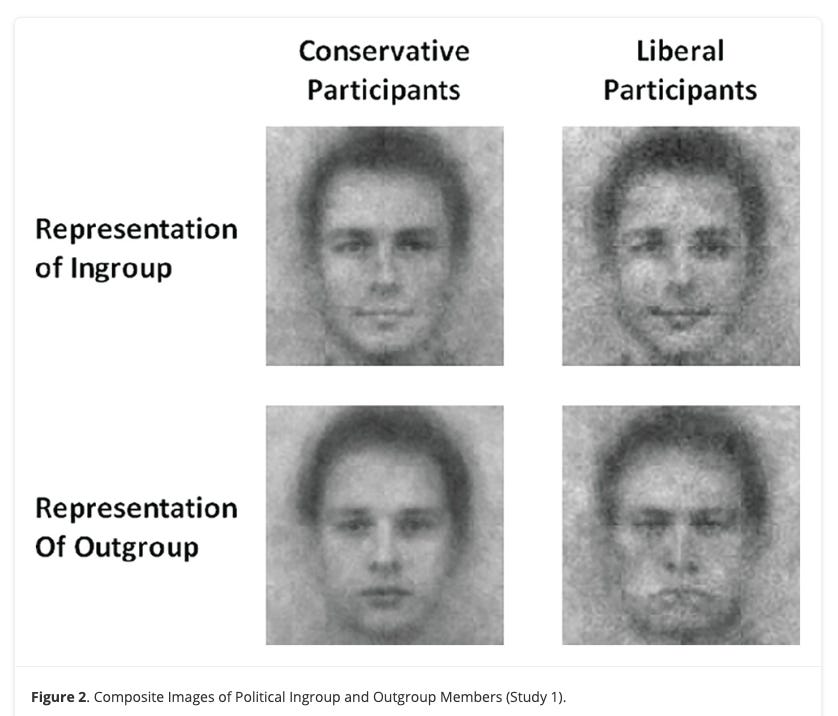
New Research: The Left Hates You WAY More than You Think
2w ago00:48:15Tap to summarizeIn this episode of Based Camp, Malcolm and Simone Collins dig into a recent study on political meta-dehumanization and the striking asymmetry in how liberals and conservatives mentally represent (and dehumanize) each other.Drawing on research published in Personality and Social Psychology Bulletin (“Political Meta-Dehumanization in Mental Representations”), posts from Cremieux and Arctotherium, and the composite face images the study produced, they unpack why liberals tend to see conservatives as savage, aggressive, and barely human, while conservatives tend to see liberals as immature, irrational, and naive. They also examine how each side misjudges the intensity of the other’s hostility—and what that means for political strategy.The conversation covers:* Why the right’s greater empathy and openness has been a long-term cultural advantage (and how it has converted figures from JK Rowling to Elon Musk to RFK Jr.)* The dangers of treating the other side as merely misguided when they view you as an existential threat* Why kindness and inclusivity remain powerful conversion tools—while still refusing to hand over institutional or administrative power* Related findings on empathy asymmetries, institutional capture, and the limits of democratic norms when one side stops playing fair* Practical implications for coalitions, tech/AI companies, and long-term powerA candid, research-grounded discussion on dehumanization, strategy, and how the right should (and shouldn’t) respond.Show NotesCremieux: There’s an asymmetry in how liberals and conservatives evaluate one another.Liberals dehumanize conservatives more than conservatives suspect. Conservatives dehumanize liberals less than liberals suspect.Arctotherium: In the US, liberals think conservatives hate them much more than conservatives actually do, while conservatives don’t realize liberals hate them as much as liberals actually do. The hatred asymmetry is one reason liberals tend to win over time.The research: Political (Meta-)Dehumanization in Mental Representations: Divergent Emphases in the Minds of Liberals Versus ConservativesPublished July 7th in the Personality and Social Psychology BulletinThe Gist:The researchers found that liberals and conservatives dehumanize each other in different ways, and that each side has a surprisingly accurate sense of the type of dehumanization they receive, even while misjudging its overall intensity.The Experiment* They had participants choose faces that “look like a liberal” or “look like a conservative” hundreds of times; these are averaged into composite faces that approximate mental representations.* Then, a new group of people—who didn’t know where the images came from—rated each composite face on:* “Savage/aggressive, lacking morals, barbaric/cold‑hearted” (savagery)* “Immature/irresponsible, irrational/illogical, naïve/gullible” (immaturity)* Plus general warmth and “evolved‑ness.”* Study 2 asks: “How do you think the other side sees your side?”* Again using liberals and conservatives, they changed the prompt in the 300‑trial face task.* Conservatives were asked: “Who would a liberal think looks more like a conservative?”* Liberals were asked: “Who would a conservative think looks more like a liberal?”* From these choices they built two meta‑representation composites:* Conservatives’ guess about how liberals picture conservatives* Liberals’ guess about how conservatives picture liberals* In Phase 2, a new group of raters evaluated these meta‑representation images side‑by‑side with the real outgroup images from Study 1 (the actual way the other side pictured you).* They used the same savagery and immaturity rating scales, plus warmth and “evolved‑ness.”Core Findings* Asymmetric dehumanization:* When conservatives think about liberals, their mental images emphasize liberals as immature, irrational, naïve, and irresponsible more than as savage or evil.* When liberals think about conservatives, their mental images emphasize conservatives as savage, aggressive, morally lacking, and cold‑hearted more than as immature or silly.* Outgroup over ingroup dehumanization* Reverse‑correlation composites of ingroup faces are rated as less dehumanizing than “outgroup” faces for both liberals and conservatives, even after controlling for general warmth/liking.* Inaccurate assumptions around intensity of hate* When people imagine how the other side sees them (meta‑representations), those images show the same relative pattern—conservatives expect to be seen as savage more than immature, liberals expect to be seen as immature more than savage. But liberals overestimate how dehumanized they are by conservatives, while conservatives underestimate how dehumanized they are by liberals.Discussion of the Findings on Social Media* @ReaptheWhirlSL wrote: “Conservatives believe liberals are just misguided but well meaning people. Liberals believes conservatives are either retarded scum or evil demons both of who need to be cleansed from the world to usher in utopia. This is why things are the way they are now.”* To which @JamesQBentley responded: “Yep...I’ve made this point to people on the Left, and instead of it leading to any self-reflection on their part, they usually just double down and say that, yeah - conservatives just *are* evil...So, alas, these studies don’t move the needle”* Scott Wellman posted a cartoon by @GovernmentisthenewreligionWhy This MattersPrior research shows that expecting to be dehumanized (aka meta‑dehumanization) predicts reciprocal dehumanization and support for norm‑breaking, anti‑democratic behaviors (e.g., gerrymandering that advantages one’s own party even if illegal). If meta‑perceptions are systematically exaggerated or distorted, they can fuel cycles of escalation and institutional erosion even when actual attitudes are less extreme.Also:* Content of contempt differs by side.* The stereotypical quip “conservatives think liberals are stupid, liberals think conservatives are evil” maps closely onto their findings: conservatives’ dehumanization is maturity‑focused, liberals’ is savagery‑focused.* This implies different psychological and behavioral consequences—for instance, seeing someone as immature might elicit paternalism or dismissal, whereas seeing someone as savage might elicit fear, moral outrage, or punitive impulses.* Interventions must be tailored.* Because types of dehumanization have distinct downstream effects (e.g., animalistic vs mechanistic dehumanization relate to different forms of mistreatment), knowing that liberals emphasize “savagery” and conservatives “immaturity” suggests that effective depolarization strategies may need to be side‑specific:* For liberals, interventions might highlight conservatives’ warmth, compassion, or moral concern to counter savagery narratives.* For conservatives, interventions might highlight liberals’ responsibility, organization, and seriousness to counter immaturity narratives.* Meta‑dehumanization is calibrated in structure but biased in scale.* People seem to have reasonably accurate mental models of the *form* of dehumanization they face (whether they’re seen as evil vs childish), but not the magnitude.* Liberals in this data expect more dehumanization than they actually receive; conservatives expect less.Episode Transcript[00:00:00] Malcolm Collins: Even in the images you can see the degree of dehumanization that, that liberals have- Yeah[00:00:04] of conservatives.[00:00:04] Simone Collins: Yeah, no, honestly, the liberal- No- ... composite face of a conservative barely looks human.[00:00:10] Malcolm Collins: What I want to point out here is- Yeah the interesting question that comes downstream of this-[00:00:15] Is it tactically a mistake of conservatives to be so forgiving and generous in our perspectives on progressives?[00:00:26] Would you like to know more?[00:00:28] Simone Collins: Hello, Malcolm. I am very excited to be speaking with you today because I saw something on X today that makes me think I should rethink my whole assuming the best of other people thing and politics in general, and I need to... I need a smart man to help me process this. So can we go over it?[00:00:48] Malcolm Collins: No. I’m done.[00:00:50] Simone Collins: Okay, bye.[00:00:51] Malcolm Collins: I am done supporting your dumb womanly mind. Well- ... not intuitively... No, actually you showed me this morning, and it was shocking. It was shocking.[00:00:58] Simone Collins: Yeah, okay. Let’s go over it. What I showed[00:01:00] Malcolm Collins: Malcolm- And it does make me re-rethink some things, too.[00:01:02] Simone Collins: Okay. Yeah, we’re gonna go...[00:01:03] The, the research is actually really fun. But I’ve... What I showed Malcolm and what I had seen was Cremieux posting on X, “There’s an asymmetry in how liberals and conservatives evaluate one another. Liberals dehumaniz...
Transcribe →
How Has No One Caught This In Fauci's COVID Diaries?
2w ago01:08:35Tap to summarizeIn this episode of Based Camp, Simone and Malcolm Collins dive deep into the 1,141-page collection of Anthony Fauci’s private typewritten notes (December 2019–December 2022) released by Senator Rand Paul’s office.Most media coverage has been surface-level and dismissive. Simone spent significant tokens analyzing the full (scanned, hard-to-read) document. What emerges is far more revealing: Fauci’s early private concerns about lab-origin possibilities and gain-of-function research he helped fund, how the narrative hardened over time, his internal framing of expert disagreements, the evolution of mask guidance, vaccine safety signals he tracked privately, and the surreal personal side of sudden celebrity (bobbleheads, prayer candles, celebrity encounters, and more).We walk through the actual quotes so you can judge for yourself. The full original PDF is linked in the show notes.This is one of the clearest windows we’ve had into how the official COVID narrative was managed from the inside.Show NotesHere is the original PDF.What People are Saying About ThisThe mainstream/leftist response to this is that Republicans are out on a Fauci-themed witch hunt.In response to someone asking “what’s going on with anthony fauci and his diary?” on r/OutOfTheLoop, Bignholy (who posted the top-voted comment) wrote:Rand Paul got ahold of Fauci’s private notes internal nonpublic notes from the COVID era. The current GOP being what it is, they are now trying to use that to push for punishing Fauci based on the fact that he wrote in it some things that don’t match the final statements made by the CDC back during COVID.When Fauci was called in to yet again to be questioned yet again by the same people who ignored him and tried to prosecute him previously, he flat out said that they are now seeking to entrap him for political reasons, and plead the 5th rather than play along. Quote from the article, for those who come after and don’t want to click the bloody link:“However, given Senator Paul’s obvious obsession with calling for my prosecution, his repeated slanderous comments about me, and recently his publicly releasing my unredacted personal diary aimed at embarrassing and intimidating me, the only conclusion I can reach is that the sole reason he is calling me before this committee is to get me to say something, anything, that could vindicate his repeated public pledges that I end up in his words, quote, behind bars, unquote,” Fauci said.“Any reasonable person who has followed his unhinged obsession with me would readily come to the same conclusion,” he said.“Therefore, although it pains me to do so, because of the respect I have for the legislative branch of government and my decades-long record of cooperating with Congress under the advice of my attorneys, I will invoke my right under the Fifth Amendment of the Constitution to refrain from answering your questions.”Original-Rush139 added: “I only read through January of 2020 but he seemed convinced the market was where the virus spread not originated. I didn’t see any hypothesis about its origin. People don’t get that he was very careful in public to talk about the data he had. China covered everything up so there never was and never will be data about the origin.”Virus OriginsWhat does Dr. Fauci write about the origins of the COVID-19 virus? Does he seriously entertain the idea that it was a lab leak?* On January 26, 2020, Fauci wrote about the Wuhan wet market: “It now appears using epi data and genomic data that the first infection was in early December and was not connected to the market... Now we know the market was not the source, it was the amplifier. Having said that, somewhere the virus jumped from animals to humans.”* The more striking entries come from January 31, 2020. Fauci describes a call from Wellcome Trust director Jeremy Farrar, conferenced with evolutionary biologist Kristian Andersen: “There have been conspiracy theories that the virus was given GOF by inserted mutations and deliberately or accidentally released in Wuhan... The people on the phone felt that the mutations around the furine cleavage site of the spike protein could not have occurred naturally since it would require an evolutionary ‘jump’ that they found nowhere in bat isolates. They bring up the possibility that this could have been deliberately inserted and either accidentally released or deliberately released by a crazy person in the lab, the former being the most likely.”* On February 1, 2020, Fauci convened a larger group of virologists (Andersen, Holmes, Drosten, Fouchier, Garry, Rambaut, and others) to debate it. His notes are unambiguous that opinion was split: “There was not total agreement about the likelihood of deliberate insertion. Ron Fouchier said he was sure that this could occur naturally... Also, Christian Drosten was with Ron; the rest felt that deliberate insertion was possible.”* By February 6, 2020, a National Academies review he’d helped set up “decided that there was no clear evidence of malfeasance, but it should be looked into.”* Later in 2020 and through 2022 he becomes increasingly confident in natural origin, more dismissive of the lab-leak camp* Looking back on June 7, 2021, he reiterated that he wasn’t the one who raised the lab-leak possibility — the scientists briefed him: “I was briefed by them... After a considerable amount of discussion about half of the people felt that this was possibly a constructed virus and the other half were convinced that this was a natural occurrence. A few weeks later Christian Andersen got together with Bob Garry and Andrew Rambaut... and they came to the conclusion that... this was a natural occurrence.”* On May 23, 2021, after Andersen told him the NIH-funded Wuhan work wasn’t gain-of-function, Fauci wrote he felt “much better now that he is in total support of what I have been saying.”* The most revealing entry is July 7, 2021, describing a National Security Council briefing with Beth Cameron and Maher Bitar: “it became clear that the FBI has no idea what they’re talking about since they are convinced that the origin of COVID-19 is from a laboratory leak. The reasons that they give do not make any sense. In contrast the NSA gave some reasonable hypotheses leaning heavily towards a natural jump of species... I emphasized that I keep an open mind about the possibility of a lab leak. However, in this regard, I emphasized that just because two alternatives are possible that does not mean that they are equally probable.”* When the U.S. intelligence community’s origins report came out in late August 2021, he noted: “They still left open the possibility that it could be a lab leak; However, more elements of the intelligence community felt that it was a natural occurrence compared to the single component (FBI) who seemed to feel strongly that it was a lab leak, although this is based on no data at all.”* By July 2022, his private tone toward lab-leak proponents had hardened further. At a social event, he wrote that Fox News anchor Bret Baier “finally admitted that the 2 recent Science papers by Worobey, Andersen, Rasmussen et al convince him that the lab leak theory is really not true.” Throughout 2021–2022 he repeatedly vents about congressional critics (especially Sen. Paul) over gain-of-function funding, at one point writing the accusations were “totally mind boggling how they are distorting” the record.So the diary shows real, serious scientific engagement with the lab-leak hypothesis at the outset, followed by growing private confidence that a natural spillover was far more likely — a middle-ground picture, not a “smoking gun” of concealment, though Senator Paul’s framing of the release argues otherwise.What does Dr. Fauci write about gain of function (GOF) research?* Across the diary, gain-of-function (GOF) comes up constantly from spring 2021 onward — almost always in the context of Republican senators and outside scientists accusing NIAID of funding GOF research at the Wuhan Institute of Virology that they claim caused the pandemic. Fauci’s own position stays consistent: NIAID’s EcoHealth Alliance subaward funded work that some experts call gain-of-function under a loose definition, but it did not meet the government’s official regulatory definition (P3CO), and — critically — the viruses studied could not have evolved into SARS-CoV-2.* On May 19, 2021, he wrote: “One of the real problems is that people are conflating whether or not we approved gain of function research for Wuhan and the possibility that the Chinese created SARS-C0V-2 in the laboratory. Whether or not one agrees as to the conduct of gain of function research, when you look at the bat viruses that was studied under the grant and compare the genetic sequences with SARS-CoV-2 it becomes clear that SARS-CoV-2 could not have come from the bat viruses associated with the grant that was funded.”* Later, describing the Oct. 21–23, 2021 controversy over a late EcoHealth progress report showing mice getting sicker in the study, he wrote (Oct. 23, 2021): “Larry made it very clear that the research did not rise to the scrutiny of P3CO. In other words by our definition, it was not gain of function.” That “by our definition” caveat is the crux of his position — he acknowledges the science is ambiguous by loo...
Transcribe →
Disability Reveal Parties: Society is Totally OK & Not Collapsing
2w ago00:59:07Tap to summarizeDisability reveal parties are the new gender reveal — and they’re even more unhinged.Simone fell down the rabbit hole after an autism reveal cake-cutting video went viral on X. What started as one awkward TikTok turned into a full cultural phenomenon: color-coded diagnosis guessing games, AuDHD parties, autism cupcake toppers at Walmart, Oriental Trading disability party favors, and people treating their mental health diagnoses like a baby to nurture and celebrate.We watch the videos (including the “my brain is bad” one and the completely unhinged joke-diagnosis party that ends in pure Adderall cheers), dig into the Reddit posts from people who actually have autism and hate the idea, talk about why so many people suddenly want disabilities they don’t have, and connect it to identity collapse, tax-advantaged ABLE accounts, and the pure Darwinian spectacle of watching people turn their diagnoses into their entire personality.Also: the tubes, Octavian’s perfect reaction to a dystopian AI video, Malcolm’s personal “collect the whole set” of diagnoses (dysgraphia is the real one), face blindness, and why your disabilities don’t actually define you.Show Notes@OliviaSorbo posted someone’s autism reveal party video on X and one of our friends shared it with us.* Our friend (as well as many others) observed this woman is not acting very autistic (very sloppy cake cutting)* Our friend said this has ADHD written all over it* @Americanime noted: “Pointing out the obvious, but an autist would cut the cake more perfectly than anyone. Failing to cut the cake is the reveal that she’s NOT autistic. Pic related.” (he posted architectural drawings of a tank)* @Penny_bigred commented: As a mother of someone who was born with autism, she isn’t Autistic she’s just a f*****g moron. Why do so many genz and millenials WANT & NEED to have disabilities they don’t actually have? Stealing resources, medical care and funding from the 1s that do.The Etiquette of Disability Reveal Parties* They almost always involve some sort of cake cutting / cake reveal* Though some have suggested piñatas instead* Before the reveal, guests are often invited to guess what the person has* After the reveal, guests are expected to affirm the disabled personYou don’t need to handmake everything, you can get autism cupcake toppers on Walmart.com (various types, actually) and buy autism awareness party favors from Oriental Trading Company (not cheap at $54.99—they used to be so affordable!!)Go to Tiktok, and you’ll find a bunch posted:I could watch these for hours; I see why the format has gone viral* Many are coming out as two things, like autistic + ADHD, which they’re calling “audhd”* Some get more complex, with things like color codes, and at one party, guests were instructed to put colored stickers on their shirts representing the various disorders they THINK their friend had (e.g. anxiety, depression, BDP, ADHD, complex PTSD)* Parents are hosting this for their young kids (even for things just like ADHD, which it seems like everyone has)* One dad hosted a party for his kid and revealed to him that he DOESN’T have autism and he looks super disappointed* One woman hosted a disability reveal party for her friends where she announced her autism and ADHD and said she’s getting tested for OCD next adding “my brain is bad and I’m really sad about it to be honest, so if you wanna come give me a hug I’d really appreciate it” and I don’t know what to feel about it* There’s one which is particularly unhinged and funny, in which the poster’s friends make guesses about her disability that must be jokes??? Like that she has BPD, fetal alcohol syndrome, schizophrenia, “a festering hemorrhoid that has made her way to the endocrine system, her nervous system, and it has given her FIERCE anxiety” etc., and then when she reveals her disability (just ADHD) at the end they all start cheering: “ADEROL! ADEROL!”The Dark Side of Disability Reveal PartiesPeople with actual autism not always thrilled about thisExpressed by one poster on r/autism: “I’m not sure if this is the right place to put this but I was looking for thoughts. So my psychiatrist has me diagnosed with autism but I already had an evaluation scheduled and she recommended doing that as well. So I’m hesitant to say I’m have autism but would be surprised if I didn’t at this point.… My evaluation is on Tuesday. I was talking to my sister today and she shared that she saw a TikTok where someone did an evaluation and then their friend got their results and did like an autism reveal party. Like a gender reveal thing where if they cut into the cake and it’s colorful then they have autism. She said she thought it could be nice to do that and celebrate it.I don’t like this. I told her I didn’t know if it was something worth celebrating because of how much it affects me. She seemed disappointed and said it could be. I said I would know already and she said we could set it up where she found out first to make it happen.I don’t get it and am not sure if I’m weird or wrong about this but it makes me really uncomfortable. This is a thing that assuming I do have it has greatly affected me in negative ways my whole life.It’s something I’m struggling with and has caused issues even between her and me. I don’t like surprises, I hate having to mask and react as expected to anything while I’m under pressure. This is a very personal thing for me and I’m struggling with how I feel about it to begin with. I also want to get this information first not have my family know before me. Like this diagnosis is about me. I want to go to the appointment where I get my results and be able to talk about it not have my sister go instead or something. I don’t know how that would work anyway.I don’t know if I’m reacting or thinking about this wrong. Like maybe I should do what she wants to make her happy but I hate this idea. It feels really insensitive.”(There’s more but I cut it short)But they make a great point and also PARTIES ARE NOT OFTEN THAT FUN FOR AUTISTIC PEOPLE (sensory overload, heavy masking burden, etc.)The top-voted comment in response to their post was: “This is f*****g giga cringe. It’s also not upto her it’s up to you”Suffice it to say, it may be that actual autistic people don’t like this concept.Making Disability AspirationalOne redditor on r/AutismInWomen posted about her autism reveal party: “Hi. Officially diagnosed yesterday at 26 years old. I hosted an “Autism Reveal Party” and though the community would appreciate it. My friends dressed up as my special interests and I served all of my favorite foods. I made everyone cupcakes and told them if it’s vanilla - neurotypical, funfetti - neurospicy! My name is Amanda and for the first time, I have Autism ❤️🧁”* Photos include her eating the cupcake, her autism-infinity-symbol-themed charcuterie board, and… Bluey-branded go-gurt tubes in a bluey cup??? Her sweatshirt is embroidered with the word: “Overestimated”* Apparently the Bluey thing is a result of her friends coming to her party dressed as special interests:* Someone commented: “Your friends dressed up as special interests? That’s adorable, lol”* Amanda replied: “Haha yes they did! They dressed as Bluey, pageants (I used to compete), a puzzle, a train conductor (who doesn’t love a train), Taylor Swift, and Disney! 😂”* Top-voted comment on her post: “Oh my god. This is absolutely precious. I would give anything for a diagnosis...
Transcribe →