
Podcast
BBC News
Hosted by BBC News · EN
Breaking news, live updates and in-depth analysis from BBC News journalists around the world.
For the latest news, download the BBC News app or visit BBC.com/news
685episodes
Episodes
Newest firstAll episodes

Iran says it has agreed shipping route with Oman, as Trump continues military threats | BBC News
Yesterday00:14:21Tap to summarizeIran says it has agreed a shipping route with Oman in the Strait of Hormuz that could pave the way for the vital waterway to reopen. It follows more military threats from US President Donald Trump, if Iran doesn’t agree to a deal for free passage. Meanwhile, Yemen’s Houthi rebels say they have attacked a Saudi oil tanker in the Red Sea, while Israel has conducted strikes in southern Lebanon, accusing Hezbollah of violating the ceasefire. And inside Iran, the UN say 56 people have been executed since mid-March on charges relating to national security. Subscribe to our channel here: https://bbc.in/bbcnews For the latest news download the BBC News app or visit BBC.com/news #Iran #US #BBCNews
Transcribe →
Deadly night in Ukraine as 21 killed in massive Russian missile attack | BBC News
Yesterday00:04:18Tap to summarizePresident Zelensky has appealed to allies to increase supplies of air defence missiles to Ukraine, after one of the deadliest waves of Russian strikes killed 21 people, 17 of them in the capital Kyiv and surrounding areas. Russian strikes are intensifying with the number of missiles launched increasing significantly in recent weeks. Reeta Chakrabarti presents BBC News at Ten reporting by Dan Johnson in Kyiv. Subscribe to our channel here: https://bbc.in/bbcnews For the latest news download the BBC News app or visit BBC.com/news #BBCNews
Transcribe →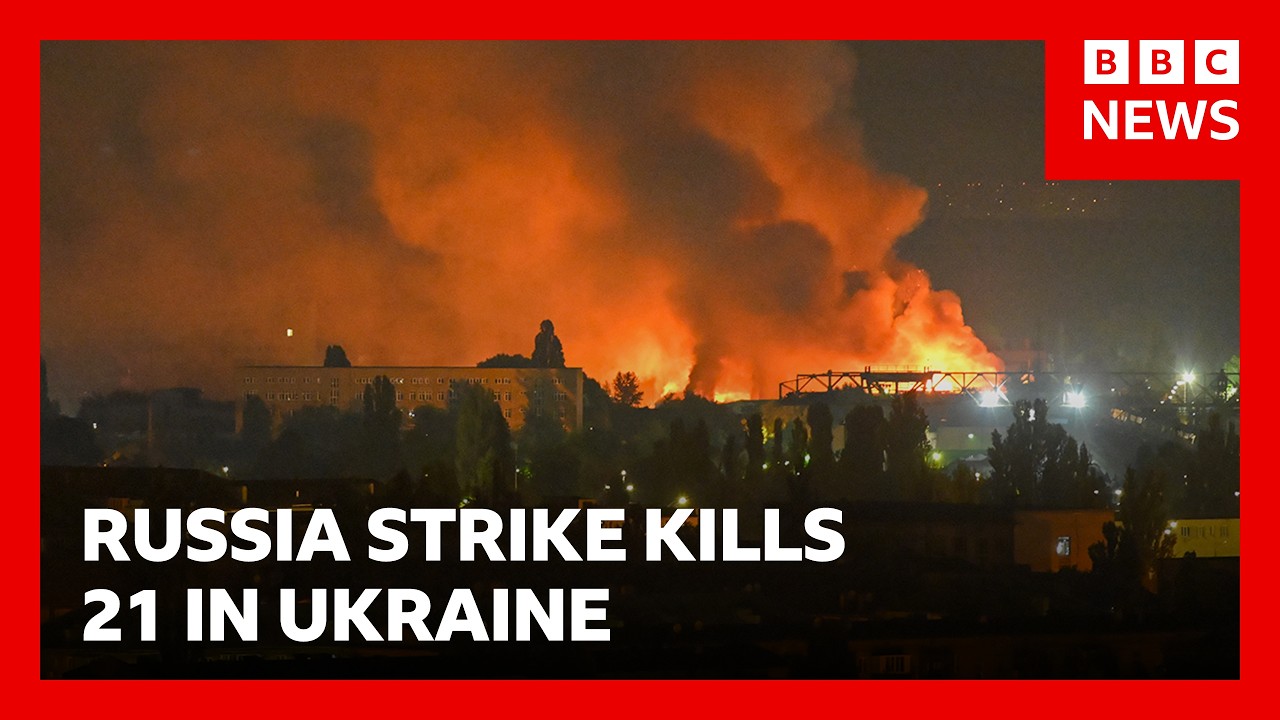
Western parts inside Russian weapons causing Ukraine destruction | The Security Brief
Yesterday00:04:03Tap to summarizeRussian drone and missile strikes on Ukrainian targets have ramped up in recent months, as Ukrainian air defences are increasingly tested. At least 17 people were killed in the Kyiv region overnight in a large-scale attack, with dozens more injured. But did you know many of the weapons inflicting the damage include components made in Western countries including the US, UK and Germany? The Security Brief's Mikey Kay, a former Senior Officer in the British Military, explains. Subscribe to our channel here: https://bbc.in/bbcnews For the latest news download the BBC News app or visit BBC.com/news #Ukraine #Russia #BBCNews
Transcribe →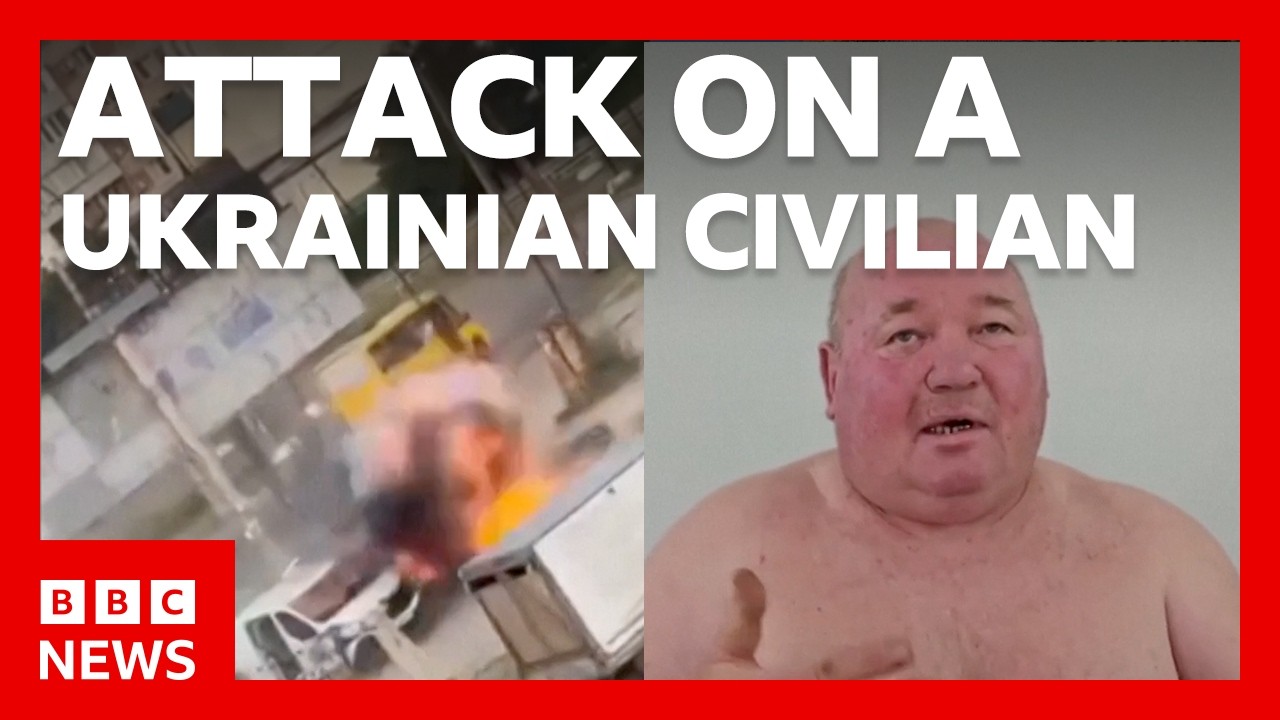
Why did Russia strike a Ukrainian vegetable seller with a drone? | BBC News
Yesterday00:07:28Tap to summarizeUkrainian President Zelensky has shared a video of a street vendor being hunted by a drone before it exploded. The man in the video verified by the BBC, 52-year-old street vegetable seller Yuriy, managed to survive the attack, but sustained shrapnel wounds and a concussion. Russia has repeatedly denied intentionally targeting civilians. Subscribe to our channel here: https://bbc.in/bbcnews For the latest news download the BBC News app or visit BBC.com/news #Russia #Ukraine #Drone #BBCNews
Transcribe →
Why ex-Bangladesh PM Hasina may return from India to face a death sentence | Global News Podcast
Yesterday00:10:37Tap to summarizeTwo years to the day after resigning as prime minister of Bangladesh, Sheikh Hasina has delivered an address vowing to return home from exile in India. The former leader was ousted amid mass protests in 2024, and subsequently sentenced to death in absentia for crimes against humanity. A Bangladeshi court ruled that she had authorised security forces to use "lethal weapons" against protestors. The United Nations has said up to 1,400 people were killed during the unrest. After her speech, the Bangladeshi Ministry of Foreign Affairs released a statement saying it was "outraged" that Ms Hasina was "allowed ... to engage in live interaction with the media in New Delhi, where she and her henchmen launched venomous vitriol against the State of Bangladesh and her people." We ask the BBC's South Asia specialist Anbarasan Ethirajan why Ms Hasina wants to return to Bangladesh now, and what could happen if she does. Plus, we discuss how the new government of Prime Minister Tarique Rahman - which came to power in the country's first elections since Ms Hasina's ousting - has performed in its first six months, and the current state of Dhaka's relations with India, Pakistan and China. New episodes of the Global News Podcast are published twice a day. You can listen here: https://link.mgln.ai/GNP-YT And you can find more of our YouTube episodes here: https://bbc.in/GlobalNewsPodcast Subscribe to our channel here: https://bbc.in/bbcnews For the latest news download the BBC News app or visit BBC.com/news #bbcnews 00:00 Introduction 00:20 What Sheikh Hasina said in her speech 01:38 The 2024 Bangladesh protests 03:49 Why does Hasina want to return to Bangladesh? 05:45 What could happen if Sheikh Hasina returns to Bangladesh? 06:57 How has Tarique Rahman performed as prime minister? 08:28 Bangladesh relations with India, Pakistan and China
Transcribe →
Why are Westerners moving to Russia? | BBC News
Yesterday00:20:54Tap to summarizeA group of prominent, controversial influencers made a visit to Russia this summer. They included Andrew Tate, Candace Owens and British far-right anti-Islam activist Tommy Robinson. They argue that Russia is upholding the traditional conservative values they fear are in decline at home. It is certainly an image Vladimir Putin is keen to project. Two years ago Russia set up a special “shared values” visa, which makes it easier for Westerners to move to the country if they align with its supposed ‘traditional spiritual and moral beliefs’. Russia claims thousands of Westerners have applied. We speak to the BBC’s Dan Hardoon, whose documentary ‘The Russian Dream’ follows Westerners who have moved to Russia, and to Russia expert Mark Galeotti, host of the podcast In Moscow's Shadows. Listen to Dan Hardoon’s BBC documentary, ‘The Russian Dream’: podcasts.apple.com/us/podcast/the-russian-dream/id73802620?i=1000773196519 Subscribe to our channel here: https://bbc.in/bbcnews For the latest news download the BBC News app or visit BBC.com/news #Russia #CandaceOwens #TuckerCarlson
Transcribe →
Is the UK prison overcrowding crisis Andy Burnham's first big challenge?| BBC Newscast
Yesterday00:33:36Tap to summarizeToday, there has been more criticism from victims’ families over plans to release some prisoners early. Under the policy, due to begin in October, thousands of prisoners will be eligible to be released part way through their sentences. Ministers announced last night that prisoners guilty of rape, serious child sex offences and grooming will be excluded. Adam is joined by home and legal affairs correspondent Dominic Casciani and Pia Sinha former prison governor and chief executive of the Prison Reform Trust. And, after a humbling few days for President Trump is he able to reclaim the initiative before the US midterm elections? Adam is joined by Americast’s Anthony Zurcher. Subscribe to our channel here: https://bbc.in/bbcnews For the latest news download the BBC News app or visit BBC.com/news #BBCNews #UKPolitics #Prisons 00:00 Are UK prisons in crisis? 01:40 What is the government’s new plan for early prisoner release? 03:20 Does this change the pressure on prison places? 05:00 How have victims responded? 10:50 Should we explore prison outside prison? 15:34 How have the Conservatives responded? 18:50 The issues confronting Donald Trump 31:05 What to watch out for at the mid terms?
Transcribe →
Russian attack kills at least 17 in Ukraine | BBC News
2d ago00:04:52Tap to summarizeRussia has attacked Ukraine with ballistic missiles and drones, killing at least 17 people, as Ukraine's President Volodymyr Zelensky said interceptors "could have saved lives". In one of the deadliest strikes across Kyiv this year - which started after midnight on Wednesday - at least 44 people were injured after residential buildings, a railway station and warehouses were hit, Zelensky said. The Russia defence ministry said it had struck logistics hubs and supply centres in Kyiv and the surrounding region. Subscribe to our channel here: https://bbc.in/bbcnews For the latest news download the BBC News app or visit BBC.com/news #Russia #Ukraine #BBCNews
Transcribe →
| BBC News
2d ago00:05:13Tap to summarizeA new fund is working to save 100 of the world's most threatened species. The Phoenix Species Project will put $200m (£149m) towards restoring animals in the wild and stopping them from going extinct. It's one of the largest funds ever focused on species recovery. The project is a collaboration between the Bezos Earth Fund and Re:wild - a non profit co-founded by actor Leonardo DiCaprio. It comes at a time when conservationists have warned about a decline in global biodiversity, and just a few weeks after the Trump administration rolled back endangered species protections. Thumbnail images courtesy of Fanamby and Todd W. Pierson. Subscribe to our channel here: https://bbc.in/bbcnews For the latest news download the BBC News app or visit BBC.com/news #BBCNews
Transcribe →
Undercover: Cancer Cure or Con? | BBC News
2d ago00:20:07Tap to summarizeAn undercover investigation by the BBC into the rise of an unproven cancer treatment has found it could be putting patients at risk of harm. Journalist Paul Heaney exposes those selling hopes of a cancer cure to the most vulnerable. Subscribe to our channel here: https://bbc.in/bbcnews For the latest news download the BBC News app or visit BBC.com/news #Cancer #Health #UndercoverInvestigation #BBCNews
Transcribe →