Loading summary
Transcript97 lines
- [00:00]
Mark Roessler
This BBC podcast is supported by ads outside the uk.
- [00:06]
Vrbo/Grainger Advertiser
At vrbo, we understand that even the best of plans sometimes need a little support, so we plan for the plot twists. Every booking is automatically backed by our VRBO Care guarantee, giving you confidence from the very start. Whenever you need help, it's ready before your stay, through the moments in between and after your trip. Because a great trip starts starts with peace of mind and maybe a good playlist. But we've got the peace of mind part covered. With Vrbal's last minute deals, you can save over $50 on your spring getaway. So whether it's a mountain escape with friends, a family week at the beach or sightseeing in a new city, there's still time to get great discounts. Book your next day now. $72 select homes only.
- [01:06]
Valerie Sanderson
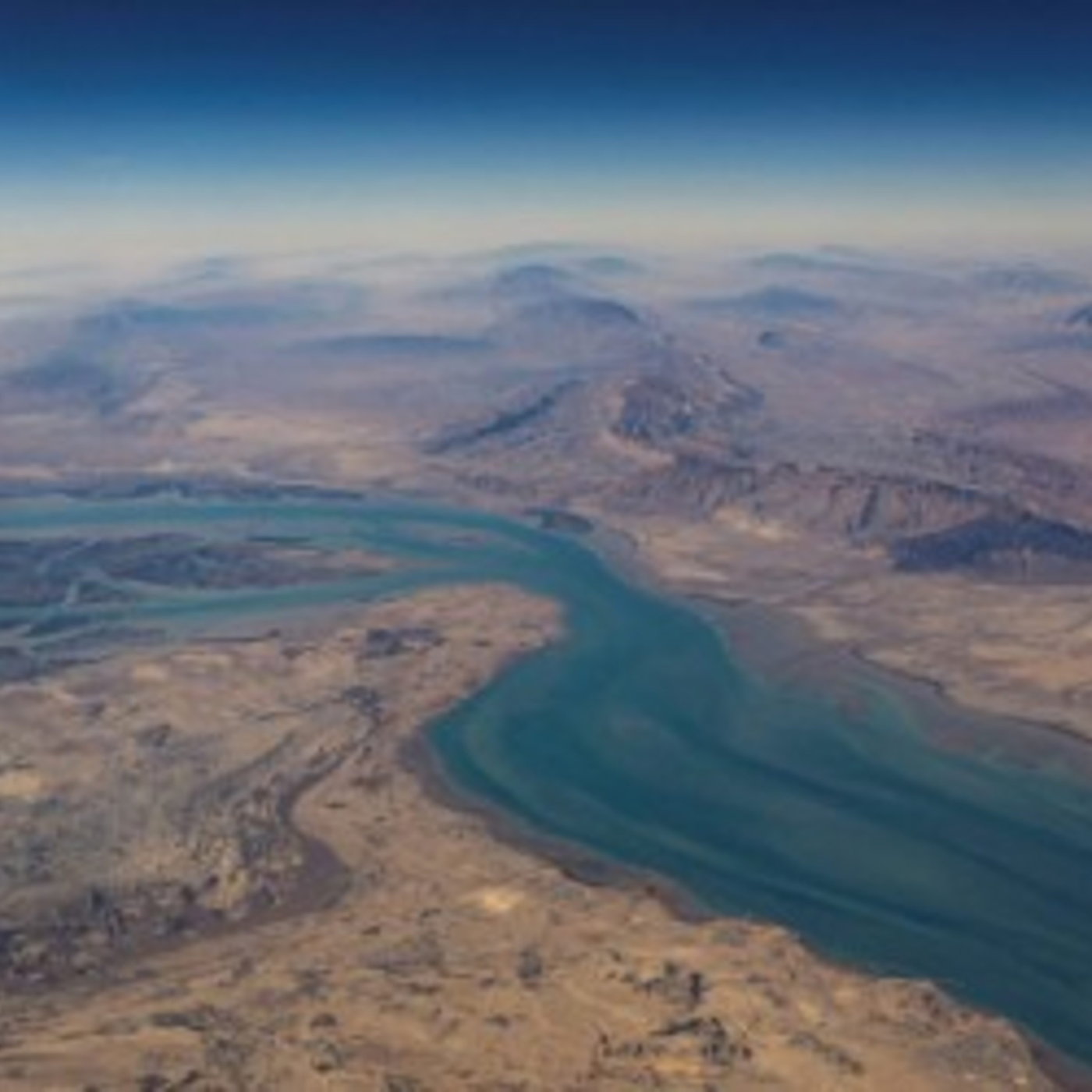
This is the Global News podcast from the BBC World Service. I'm Valerie Sanderson and at 15 hours GMT on Thursday 2nd April, these are our main stories. President Macron of France warned that using military action to reopen the Strait of Hormuz is unrealistic. As Britain hosts a virtual international summit to discuss ways of restoring normal traffic to the vital shipping lane, Israel faces an increased barrage of missiles from Iran. We hear more about the Artemis 2 moon mission from the celebrity astronaut Tim Peake. Also in this podcast, Resurrecting dead celebrities
- [01:47]
Mark Roessler
it's not uncommon for a famous personality for let's call them the handlers, so to speak, to approach us within a month or two after someone passes away
- [02:01]
Valerie Sanderson
and a ship sunk by Admiral Nelson's fleet 200 years ago is discovered in Copenhagen Harbour. Britain has hosted an online meeting of around 40 countries to consider what can be done to reopen the Strait of Hormuz. In the Middle East, a lane usually built busy with ships transporting a fifth of the world's oil. The US did not take part in the meeting. The British Foreign Secretary, Yvette Cooper, described Iran's effective closure of the area in response to the war with the US and Israel as reckless.
- [02:37]
Jorah Nell
In the last 24 hours, it says 25 vessels pass through the Strait, which
- [02:42]
Barasan Etharajan
is an international shipping route that would
- [02:44]
Jorah Nell
normally see 150 vessels a day.
- [02:47]
Barasan Etharajan
There have been over 25 attacks on
- [02:50]
Jorah Nell
vessels in the strait, and There are some 20,000 trapped seafarers on some 2,000 trapped ships. We have seen Iran hijack an international shipping route to hold the global economy hostage.
- [03:06]
Valerie Sanderson
President Trump says he might end the war without the strait reopening, and he called on allies who failed to support his military action to fix the problem themselves. In response, President Macron of France said that a military operation to open up the Strait of Hormuz was, in his words, unrealistic.
- [03:26]
Lis Doucet
It is unrealistic because it would take an inordinate amount of time and would expose anyone crossing the strait to coastal threats from the Iranian Revolutionary Guards, who possess significant resources as well as ballistic missiles and a host of other risks. This can only be done in concert with Iran. So first and foremost, there must be a ceasefire and a resumption of negotiations.
- [03:53]
Valerie Sanderson
So was the virtual meeting in London looking for a diplomatic solution? Here's our chief international correspondent, Lis Doucet.
- [04:01]
Barasan Etharajan
Yes. And as they do it, we've just heard this political ping pong across the Atlantic. President Trump in his speech last night said, well, it's up to you countries and it's easy to open up the Strait of Hormuz, which it's not. And hence that rebuke from President Macron of France. And we can really tell how they're changing their language to President Trump. He has changed what was a war of choice for the United States into a war of necessity for so many countries, including these 35 or so countries over 40 now they're saying, who are meeting virtually foreign ministers to discuss how to open the Strait of Hormuz. But the view is, and it's clear in what Sir Keir Stommer said yesterday, that they would look at it militarily. And there is now a report that after this meeting, the military planners will look at it it, but only once there is a ceasefire. They don't want to get dragged into a war which would be very costly and very risky. Risky. But how do you find ways to open it up? Well, the straight is open for those countries who are negotiating with Iran. So Indian flag tankers, Pakistani flag tankers, they are getting through smaller numbers.
- [05:08]
Lis Doucet
I think the Philippines have announced.
- [05:09]
Barasan Etharajan
The Philippines? Yes. So people are going to Iran. And it underlines that only politically can you find a way out. And for the countries who are not siding with Iran in this war or have been providing bases, et cetera, they can only wait until the war is over. Hence the frustration with President Trump. He didn't make it clear last night when it will end.
- [05:29]
Lis Doucet
And just briefly, what sort of message then do you think is being sent by this meeting?
- [05:34]
Barasan Etharajan
Well, it's a message to Iran, as Yvette Cooper, the Foreign Secretary, said, that it's reckless for you to weaponize the Strait of Hormuz. It has to be open and it's a message To President Trump, we're not going to join your war, but we are going to focus on our national interests and do what we can to open up this strait which is causing economic shocks the world over.
- [05:55]
Valerie Sanderson
Lee Stussett. In his latest speech, President Trump vowed to bomb Iran back to the stone ages, asserting that Tehran's military power had been devastated.
- [06:05]
Sean Allsop
Iran's navy is gone.
- [06:08]
Jia Gol
Their air force is in ruins. Their leaders, most of them terrorist regime they led are now dead.
- [06:18]
Mark Roessler
Their ability to launch missiles and drones
- [06:21]
Sean Allsop
is dramatically curtailed and their weapons factories and rocket launchers are being blown to pieces. Very few of them left.
- [06:30]
Valerie Sanderson
But Iran's military spokesperson Ibrahim Zovakari has responded saying the country's armament facilities are hidden and will never be reached by Israeli or or American attacks.
- [06:45]
Mark Roessler
As we stated before, we declare to the American Zionist enemies, your information about our military capability, power and equipment is incomplete. You know nothing of our vast and strategic capacities. With such assumptions, you will only further increase the depth of the swamp in which you have trapped yourselves.
- [07:03]
Valerie Sanderson
Our World affairs correspondent Jia Gol has more details.
- [07:06]
Jia Gol
Well, we know in the past five weeks, I would say we are entering fifth weeks of the war. Large part of Iranian missile system and also military, military commanders, naval has been damaged or destroyed, severely damaged. But in reality Iran still has a lot of cheap, hard to stop weapons. I mean using asymmetric war like mines, swarm of speedboats and also it has a lot of missiles. Cities across the country has been working on it in the past four decades it seems. Yes, they may be able to. The US and Israeli have been able to destroy the entrance some of those missile cities. But we have seen satellite images as shown in a few hours or few days they have reopened the gate and they made it operational again. But as I said, yes, this has been damaged. The commander has been killed. But so far what we have seen Iran has shown Resistan and the commanders, particularly the Revolutionary Guards, which in fact they are in charge of the government right now as well. I think we don't hear any message of backing off. It's a message of defiance. We are hearing from them.
- [08:23]
Valerie Sanderson
And Jia, if the US says its work is done and it leaves the Middle East, I mean would that leave Iran in a powerful position as after all it holds, as we've been hearing, the key shipping lane of the Strait of Hormuz.
- [08:36]
Jia Gol
I think Iranian Islamic Republic gains leverage in that region and also its image across the region that we stand up to the major power, the world power and even for Iranian regime not to lose it is a win Surviving is a win. And obviously this also might empower those proxies in the region which has been loyally and supported by Iran, like Shia militias in Iraq or Hezbollah, Lebanon, Houthis in Yemen. But in the end of the day, Iran also is fragile. The greatest danger for Iranian regime is its own people. Today in the midst of this war, they executed a young man who was arrested during the protest just in January. It shows the regime is extremely worried about its own population because the economy is in a dire situation. People believe the economy is crippling. And also in the same time, many people are worried about their own long term future. That's why I think the regime is extremely worried about uprising, just like the protests we had a couple of months ago.
- [09:44]
Valerie Sanderson
Despite Donald Trump's assertion that the war will be over soon, the US President made no mention of whether Israel would also be willing to end the fighting. Israel faced an increased barrage of missiles from Iran on Wednesday night as the country began to mark the start of the Jewish holiday Passover. Our Middle east correspondent, Jorah Nell is in Jerusalem.
- [10:03]
Jorah Nell
The Israeli prime minister, when he's given interviews this week, when he's given an address, he's been very careful not to contradict president, especially on this sensitive issue of timelines. He knows the war is very unpopular with the US public. That said, you do detect in the media here some concern that public pressure could force the US Basically to kind of leave this war sooner than Israel would like, without a clear strategy, without really dealing a lasting blow to the Iranian regime. Because although this war has really severely damaged Iran's military capabilities, it has not destroyed the regime. Some commentators saying it's actually radicalized it. And you know, given time, there is the prediction that they will try to rebuild, that they'll continue to pose a threat to Israel.
- [10:50]
Valerie Sanderson
Does Israel and the US do they have different objectives regarding this war?
- [10:54]
Jorah Nell
I think the biggest difference between the two is the way in which, you know, Iran is seen here as being a real immediate threat, even an existential threat is how the Prime Minister puts it. And that is why the war, despite all the disruption to daily life, you know, we had four Iranian rocket salvos in just a few hours. Since the early hours of the morning children among the latest casualties. You know, people here see Iran as being a real threat. And from Israel's point of view, it wants to end Iranian support for proxies. It wants to deal with Iran's nuclear program and its ballistic missile program. And, you know, there is concern without some sort of comprehensive ceasefire agreement that Even if the us, you know, leaves the war or declares it to be over quite soon, the Israelis will still have to kind of over time keep dealing with what they see as threats from Iran, reacting to those taking preemptive action. And they've also been hinting Israeli officials at new alliances with Gulf Arab states because they will see a common threat from Iran after all that's happened in the past four weeks.
- [11:54]
Valerie Sanderson
So is it your sense the Israeli public are happy for this war to continue as long as it takes?
- [11:59]
Jorah Nell
What the polls are suggesting is that, you know, public support for the war is not as high as it was at the beginning when there was this very sort of dramatic killing of the Supreme Leader and military targets hit. And it was very apparent there was this careful coordination between Israel and the us. Polls this week are suggesting that there's a growing percentage of Israelis who think that the war will not effectively deal with those threats from Iran that I mentioned. And people are really divided about whether the war should go on for long enough to try to bring down the regime or whether there should be a sort of, you know, ceasefire after maximum damage or just to have a ceasefire as soon as possible.
- [12:38]
Valerie Sanderson
NASA's latest mission to the moon has gone to plan. The astronauts involved in the Artemis 2 are now in orbit around the Earth, waiting to slingshot off to the lunar body. So far, so good. One man who knows what being in space feels like is retired British astronaut Tim Peake. From 2015 to 2016, he spent 186 days on board the International Space Station and even completed an almost five hour long spacewalk there. He's co presenter of the BBC podcast 13 Minutes presents Artemis 2. So what did he think of the launch?
- [13:14]
Mark Roessler
That was phenomenal. To see SLS lift off the launch pad, we had a, you know, a flawless launch. Incredible to see and to hear the commander's comments on the way up. You know, when that launch abort system was jettisoned and they got the first view outside the Orion capsule and then just a few moments later saw the moon rising over the Earth. And to think that you're riding that huge rocket into space, actually pointing at the destination must have been incredible for the crew. They went straight into what we call a low Earth orbit. That's similar to the orbit that the International Space Station's in, just a few hundred kilometers away from Earth. And then they had to do this thing called an apogee rays burn. And that burn sends it on a highly elliptical orbit a long way from Earth. So they're currently almost at the furthest part of that orbit. And they're about 44,000 miles away and that's about 70,000 kilometers. And they're going to start falling back towards Earth. But if they were to look out their windows right now, Earth would be about the same size of a basketball if you held it at arm's length. So they're actually a really long way from Earth right now. And then they kind of come back in and during this time they've been, they've detached from the interim cryogenic propulsion stage that was part of the rocket that took them up into space and they used it to try and maneuver around it to kind of practice actually flying the spacecraft. That would have been Victor Glover with the hands on the controls, if all
- [14:38]
Lis Doucet
is well and they then head off to the moon. Just talk us through the mission and the key points that we should be looking out for.
- [14:46]
Mark Roessler
Yeah, so the next really big moment will be in the UK around midnight tonight where they'll do a trans lunar injection burn. Now this is the burn. Once they've fallen back towards Earth, that is going to start to really accelerate that spacecraft and send them on a trajectory that is going to allow them to actually escape Earth's gravity. That's about a three to four day mission that will take them out towards the moon and then they'll get pulled in towards the moon's gravity and slingshot around the moon. So a really spectacular event is going to be in about four days time where they pass behind the moon and they're going to get to see parts of the moon that no human eyes have ever set on before. They'll take amazing photographs of that. So we look forward to seeing those images. Until they do that translunar injection tonight, they're not going to the moon.
- [15:36]
Jack Pirie
And for people trying to get a,
- [15:39]
Lis Doucet
get a handle on this particular mission and where it fits into the longer
- [15:44]
Jack Pirie
term goals, what would you say?
- [15:47]
Lis Doucet
What should we be looking out for?
- [15:49]
Mark Roessler
What are the key objectives they're testing out? You know, the mundane stuff like does the loo work, does the water dispenser work? Can we warm our food up? And this is part of the entire Artemis program. We're just at the very beginning of this Artemis Program. We've had the uncrewed launch. Now the first crewed launch, Artemis 3 will be testing out the landing system, the lunar landing system, in low Earth orbit ahead of Artemis 4, which could be as soon as 2028, which has put humans back on the surface of the moon again to actually build a lunar research facility at the South Pole of the moon. So in 10, 15 years, you know, we might see astronauts going off to that lunar research base to live there for maybe six months, a year at a time, just like we see on the International Space Station right now.
- [16:36]
Valerie Sanderson
Tim Peake and we'll have more on this on our YouTube channel. Just search for BBC News on YouTube and you'll find Global News Podcast in the podcast section. There's a new story available every weekday still to come. In this podcast, a blind man explains how he'll run a marathon wearing smart specs, which use volunteers watching on screens to guide him.
- [17:00]
Clark Reynolds
So say, hey, meta, call Be my eyes within about what, 30 seconds I will get a complete stranger from around the world. They said there's a bin or parked car or person.
- [17:18]
Jorah Nell
Early birds always rise to the occasion for summer vacation planning because early gets you closer to the action. So don't be late. Book your next vacation early on vrbo
- [17:27]
Vrbo/Grainger Advertiser
and save over $120.
- [17:29]
Jorah Nell
Rise and shine average savings $141 select
- [17:33]
Sean Allsop
homes only if you work in university maintenance, Grainger considers you an MVP because your playbook ensures your arena is always ready for tip off. And Grainger is your trusted partner, offering the products you need all in one place, from H Vac and plumbing supplies to lighting and more. And all delivered with plenty of time left on the clock, so your team always gets the win. Call 1-800-GRAINGER visit grainger.com or just stop by Grainger for the ones who get it done.
- [18:04]
Vrbo/Grainger Advertiser
When you manage procurement for multiple facilities, every order matters, but when it's for a hospital system, they matter even more. Grainger gets it and knows there's no time for managing multiple suppliers and no room for shipping delays. That's why Grainger offers millions of products in fast, dependable delivery so you can keep your facility stocked, safe and running smoothly. Call 1-800-GRAINGER, click grainger.com or just stop by Grainger for the ones who get it done.
- [18:33]
Sean Allsop
If you work in university maintenance, Grainger considers you an MVP because your playbook ensures your arena is always ready for tip off. And Grainger is your trusted partner, offering the products you need all in one place, from H. Vac and plumbing supplies to lighting and more. And all delivered with plenty of time left on the clock, so your team always gets the win. Call 1-800-GRAINGER visit grainger.com or just stop by Granger for the ones who get it done.
- [19:07]
Valerie Sanderson
From shows featuring a hologram Elvis to Judy Garland, narrating audiobooks A growing industries emerging around the legacies of celebrities after their deaths. But there's a fierce debate over the ethics of digitally reviving stars. As the BBC's Sean Allsop reports.
- [19:27]
Jack Pirie
I'm in a secret location where they're preparing a show for one of the biggest stars the world has ever seen.
- [19:33]
Clark Reynolds
It's very dark, so keep my step.
- [19:35]
Mark Roessler
I can see no particular way.
- [19:38]
Jack Pirie
It's a dark warehouse. There are many technicians around working away. And then a giant screen lights up. It's Elvis Presley in a way you have never experienced him in a brand new show. But how is this possible? Elvis isn't in the building. In fact, he's dead, but that's not stopping him. And others still bringing in millions after death. Firstly, what exactly are estates? In short, an estate refers to the people, usually family members, who inherit control over a celebrity's work after they pass away. They manage the legal rights and finances tied to the artist's legacy. Every October, Forbes magazine publishes a list of the highest earning dead celebrities. In 2024, the top five earned over a billion dollars, with Michael Jackson topping the list, followed by Freddie Mercury, Dr. Seuss, and in fourth place, Elvis.
- [20:43]
Mark Roessler
My name's Mark Roessler. I'm the chairman, CEO and founder of CMG Worldwide. We're in our 45th year. My first client was the Elvis Presley Estate in 1981.
- [20:54]
Jack Pirie
Estates usually work with managing companies, people like Mark Rosler.
- [20:59]
Mark Roessler
It's not uncommon for a famous personality for, let's call them the handlers, so to speak, to approach us within a month or two after someone passes away.
- [21:12]
Jack Pirie
The speed of new technology means another opportunity has arisen. And estates are now asking, should we resurrect these dead celebrities? But I wanted to see myself, something new being made with a star of old.
- [21:26]
Lis Doucet
So.
- [21:26]
Clark Reynolds
Okay, just have a little one?
- [21:27]
Mark Roessler
Yeah, of course.
- [21:28]
Lis Doucet
Do you want to.
- [21:28]
Mark Roessler
We can just walk anywhere you want.
- [21:30]
Jack Pirie
I'm back at the Elvis show rehearsals in London in the uk with its director Jack Pirie. It's called Elvis Evolution and it's an immersive experience being created to tell the story of Elvis.
- [21:42]
Mark Roessler
In some sequences, you are physically walking through an environment. In others you're seated. And in this sequence you'll be seated. So this will happen in 360 around you as you're seated and you experience sun records and 1950s Memphis.
- [21:55]
Jack Pirie
It's a murky world. On one hand, we're preserving the legacies of those we love in exciting new ways. On the other, we might be crossing a line into something that's exploitive but as technology continues to evolve, we'll face more decisions over what we choose to buy from those in the past.
- [22:14]
Valerie Sanderson
Sean allsop More than 200 years ago, the British Navy under Admiral Horatio Nelson fought a battle with Denmark in the harbour of Copenhagen. Now, one of the warships sunk by Nelson in that battle has been discovered on the seabed of the harbor and there's a race on to unearth it. One of the divers is marine archaeologist Marie Johnson.
- [22:35]
Mark Roessler
It's very well known from the historical
- [22:38]
Jack Pirie
sources and described in detail how the ship was built and how it was rigged and all the armaments and how
- [22:45]
Jorah Nell
much gunpowder and firewood there was on board.
- [22:48]
Mark Roessler
But there was no real archaeological material from this kind of environment before. So we can learn a lot more
- [22:55]
Jorah Nell
about the people involved instead of the
- [22:57]
Mark Roessler
ships and the armaments.
- [22:59]
Valerie Sanderson
Our global affairs reporter and Barasan Etharajan told me about more.
- [23:02]
Lis Doucet
Danish marine archaeologists are very excited about this finding. It's very close to the Danish coast, about 500 meters from the harbour. I was talking with Martin Johansson, one of the archaeologists earlier, and they say, you know, even though they have been hearing about the ship Danne Bruga, this was blocking the harbor when Hiroshi Nelson and the British fleet, very powerful fleet, they were trying to enter. So he took a lot of fire and it exploded and sank. People knew the rough area where it was because some of the parts were sticking out. And then over a period of time, most of it disappeared. Now they found it. The reason why they wanted to know what really happened. And also it is part of their national consciousness, like it is history, part of the history. And Denmark had a very vibrant and very traditional history of navigation and shipping. And this is the peak achievement, like building this huge ship. And that's why it is part of, you know, Denmark's, what's called curriculum. And they were talking about it. So now they founded what they say they found the ballast and then the wooden parts and some of the items like shoes.
- [24:17]
Valerie Sanderson
And I see they found somebody's jaw.
- [24:20]
Lis Doucet
Yes, jaw and items and some of the cookery items. So they found all these vessels and stuff. And so that's why they think it is an important find. And what they say is at the moment they're not going to bring it up immediately, so they want to see what else is there and then see whether they can bring those. Some of those items, whether they put it in the museum or elsewhere. But for them, it has revived the memory about this Dannembruja.
- [24:48]
Valerie Sanderson
It's a race against time, isn't it? Though, because there are plans aren't there to brick over that part of the harbour.
- [24:55]
Lis Doucet
What they are trying to do is to build a housing district around this area where, you know, even the part of this harbor. So they wanted to identify this area where they protect this area so that it doesn't get swallowed up because of this huge expansion where they think it will take 20, 30 years to build this entire district. That's the main reason why. And then he was also talking about how difficult it was to find this. It is really pitch dark and the water current and there was fully muddy water. So it took a lot of time for them. For the last one year they've been working on that. So they want to build kind of a barrier so that they can protect this area. They can showcase this for the future generation.
- [25:40]
Valerie Sanderson
What they have found and Barasan Etarajan. Running a marathon when you're blind is a challenge that some have overcome by attaching themselves with a cord to a sighted runner. But now one man is going to attempt the feat on his own. Clark Reynolds, a braille artist known professionally as Mr. Dot, is going to rely on smart specs that allow volunteers watching on screens to be his guide on the route. Nick Robinson asked him how it works.
- [26:08]
Clark Reynolds
It's amazing. The technology for the past couple of years for the blind community as take a leap and bounds off to the rocket launch today, is literally changing our lives. We're pushing the boundaries of what vision impairment is through technology and, and the app is, is more of a human story. It's not just, it's not AI. AI is, is the glasses that allow the app to be a platform, but it's more of a human story. So it's.
- [26:34]
Jack Pirie
Take us back to the fundamentals, if you would. You put on a pair of glasses with cameras built in and those cameras are fed online. So what are you hearing in your ears and who is it that's talking to you?
- [26:46]
Clark Reynolds
It's complete strangers. So I say the magic words. I say, hey, meta call, be my eyes. And I, within about what, 30 seconds, I will get a complete stranger. I have no, no idea who they are from around the world, literally. And they, we have a bit of discussion. I say what I'm about to do and they said, oh, yeah, please, we'll be on board. And, and for five minutes we, we talk and they, they say if there's a bin or parked car or person, and majority of the time it is about a conversation about what it's like
- [27:15]
Jack Pirie
just, just to really get it down to Nuts and bolts. They're monitoring the image through the camera on. And they can see an obstacle.
- [27:22]
Sean Allsop
What?
- [27:22]
Jack Pirie
And say, you know, swerve to the left, go to the right.
- [27:24]
Clark Reynolds
Yeah. It's like, it's like, you know when you. Those peloton bikes and you've got someone guarding you on, on a video screen, they say, oh, yeah, let's go with me, go with me. It's like that. It's just that I'm the peloton and I'm like. And they're the virtual reality and I always say, I'm getting your steps in for you today.
- [27:38]
Jack Pirie
So they're not only being your eyes, they're also being cheerleaders as well. They're supporting you.
- [27:43]
Jorah Nell
Yes.
- [27:44]
Clark Reynolds
So much that. That is the. What I've found out of the last 10 months doing this is the human stories, it's the connections, you know, and it's a different. The lingo, you know, If I've got someone from up north, if they say a bin, they say it's a wheelie bin. If I've got some from America, they say it's a garbage bin.
- [28:00]
Mark Roessler
Yeah.
- [28:00]
Clark Reynolds
And that's great, isn't it?
- [28:02]
Valerie Sanderson
Clark Reynolds. And that's it from us for now. If you want to get in touch, you can email us@globalpodcastbc.co.uk you can also find us on X@BBC World Service. Use the hashtag globalnewspod. And don't forget our sister podcast, the Global Story, which goes in depth and beyond the headlines on one big story. This edition of the Global News Podcast was mixed by Abby Wiltshire. The producer was Charles Sanctuary. The editor is Karen Martin. I'm Valerie Sanderson. Until next time. Bye bye.
- [28:41]
Vrbo/Grainger Advertiser
When you manage procurement for multiple facilities, every order matters, but when it's for a hospital system, they matter even more. Grainger gets it and knows there's no time for managing multiple suppliers and no room for shipping delays. That's why Grainger offers millions of products in fast, dependable delivery, so you can keep your facility stocked, safe and running smoothly. Call 1-800-Grainger clickranger.com or just stop by hi Granger for the ones who get it done.