← Bear Brook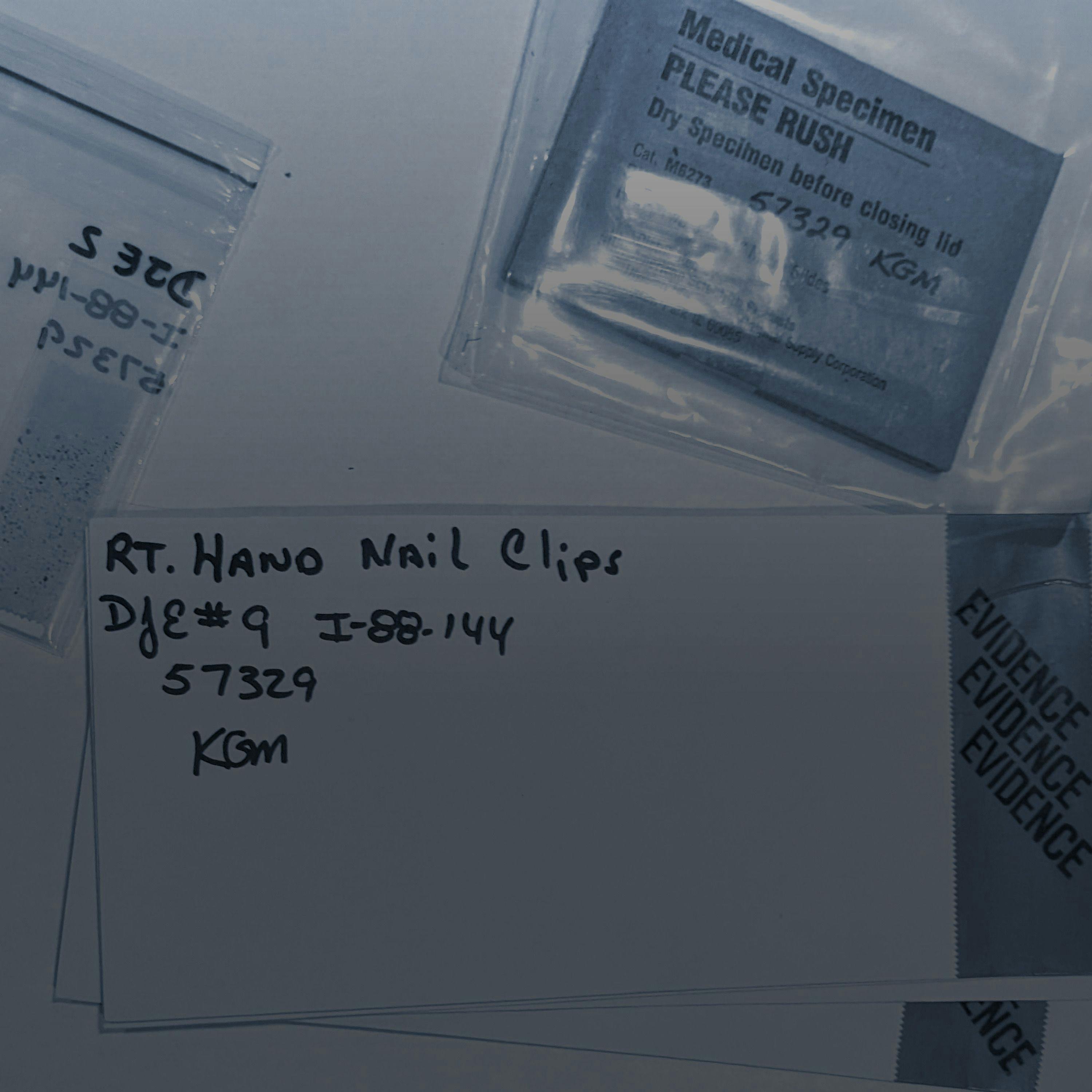
Bear Brook
The Box
00:52:24
A chance encounter leads to a surprising discovery that changes the course of Jason Carroll's case.
Loading summary
Transcript149 lines
- [00:01]
Advertiser
AT T Mobile. We'll give you four free 5G phones and four lines for only $25 per line per month with eligible trade ins. And no, it's not a contest. It's every day for a limited time. Everyone's a winner on America's largest 5G network. Minimum of 4 lines for $25 per line per month with autopay discount using debit or bank account. $5 more per line without autopay. Up to $830 off each phone via 24 monthly bill credits plus taxes, fees and $10 device connection charge. 4 well qualified customers contact us before canceling entire account to continue bill credits or credit stop and balance on required finance agreement too. Bill credits end if you pay up devices early. Ctmobile.com Support for this podcast comes from.
- [00:33]
Narrator
Progressive, America's number one motorcycle insurer.
- [00:37]
Advertiser
Did you know?
- [00:37]
Narrator
Riders who switch and save with Progressive.
- [00:39]
Advertiser
Save nearly $180 per year. That's a whole new pair of riding gloves and more. Quote today Progressive Casualty Insurance Company and affiliates national average 12 month savings of $178 by new customers surveyed who saved with Progressive between October 2022 and September 2023. Potential savings will vary. Don't miss the Hulu Original Docu Series Devil in the Family the Fall of Ruby Frankie My wife created a YouTube channel.
- [01:06]
Rabia Choudhury
Thumbs up.
- [01:07]
Narrator
Subscribe, but only what we wanted to show.
- [01:09]
Advertiser
I'm still recording a three part series of that. She said the children were demonically possessed.
- [01:15]
Narrator
Get out.
- [01:16]
Advertiser
That blew the powder keg.
- [01:17]
Cynthia Musso
Ruby crossed a line to psychotic 911 emergency.
- [01:21]
Narrator
Open the door.
- [01:24]
Advertiser
Hulu Devil in the Family the Fall of Ruby Frankie all episodes now streaming on I'm Todd Bookman, a reporter at New Hampshire Public Radio.
- [01:33]
Narrator
For the last six months, I've been.
- [01:35]
Advertiser
Thinking a lot about a cat named.
- [01:37]
Narrator
Sergeant Tibbs who goes missing, who's then.
- [01:40]
Advertiser
Found, and who would land at the.
- [01:41]
Narrator
Center of so much human pain, anger and confusion. It's not about the cat anymore.
- [01:47]
Melanie Eaton
It's just about everything else.
- [01:50]
Advertiser
The Final Days of Sergeant Tibbs A new podcast from NHPR about what we.
- [01:55]
Narrator
Owe our pets and each other.
- [01:57]
Advertiser
Listen now, wherever you get your podcasts.
- [02:02]
Jason Moon
Previously on Bear Brook.
- [02:04]
Narrator
Season 2 A True Crime story to cut you a break would utterly undermine the public's confidence in the criminal justice system.
- [02:14]
Jason Moon
How do you prove something? How do you prove and I didn't do it.
- [02:22]
Todd Bookman
There's this belief that when you are a Catholic, the priest gives you communion, that the bread turns into the body of Jesus like a literal human flesh. This is essentially the Same thing as what happens once this conviction happens. It's like that story is what happened.
- [02:41]
Melanie Eaton
All I could think of was, remember the TV detective, Kojak?
- [02:48]
Narrator
The system, the culture that our detectives live in and are made to operate in, sets them up for this specific kind of failure of not being able to realize that there's an innocent person in front of them. It's been seven years since Jason Carroll first wrote a letter to the New England Innocence Project. Neiep, as it's called, is a small nonprofit, only about a dozen people on staff. And for the first three years after Jason wrote, they didn't even have an attorney based in New Hampshire who could work on his case full time. Then NEIEP hired Cynthia Musso. Jason's case was on the top of the pile in her desk when she arrived in 2019.
- [03:58]
Jason Moon
And I remember thinking to myself, even when I started this job, like, how am I ever going to figure out what these cases where people are innocent? I was a public defender for a long time. I've only had a few clients claim actual innocence.
- [04:12]
Narrator
And then Cynthia read the documents in Jason's case.
- [04:15]
Jason Moon
The way we want to think about our criminal legal system is that we don't have to rely necessarily on stories that people tell. We want to be able to rely on hard evidence and science and observable, objective fact. So my hope is that when there is a statement made, that statement can be verified by objective scientific fact. And in Jason's case, that's just not true. The police tried to do that and could not do it. They tried to focus on the financial aspect. They got Ken's bank records. Those do not show what they thought they were going to show. You know, they got the knife. They wanted to prove that that was the. That wasn't the knife. He couldn't have been the knife. It's just they don't. They don't line up.
- [05:03]
Narrator
But it's one thing for an innocence attorney like Cynthia to be convinced Jason didn't do it. It's another to get the state of New Hampshire to admit they might have gotten this all horribly wrong. Remember back in episode one, that hearing where Jason asked for an early release from prison? That was one of Cynthia's first moves. It would have been the fastest way out of the prison walls for Jason. But as you heard, it didn't work, in part because Jason has always refused to take responsibility for the crime. The prosecutors for the state and the court system that oversaw Jason's convictions both stick firmly to the original narrative. You confessed to your participation in this murder for hire plot. And you and your accomplice, Mr. Pfaff, kidnapped and murdered a seven and a half month pregnant woman. And you stood by while your accomplice sexually assaulted her as she lay dying dead or dying there in that gravel pit. And you were paid $5,000 for those Inhuman acts. And I don't say inhumane, but inhuman acts by the victim's own husband. Despite the fact that Tony Puff was acquitted and Ken Johnson was never even tried. In the official version of this true crime story, they're still killing. Innocence claims are almost always a long shot. The criminal legal system is built on a bedrock of finality. The courts want criminal prosecutions to end at some point, not be endlessly retried. And there are legitimate reasons for that. Dogmatic ones too. But in New Hampshire, a state that has never exonerated anyone convicted of a murder, it can feel like the hurdles are even higher than usual. What Cynthia and Neep are trying to do has simply never been done before. And so, to help challenge the official narrative, Neiep invited someone from the outside to come tell a new one.
- [07:39]
Cynthia Musso
A lot of times people say, oh, just read the trial transcripts. You know, you'll see why this person is guilty or innocent. What gets brought into a courtroom and what gets left out sometimes tells the story much more fully.
- [07:54]
Narrator
This is Bear Brook Season 2 A True Crime Story. I'm Jason Moon.
- [08:51]
Rabia Choudhury
Do you have saving money written down as one of your New Year's resolutions? What if you could make that automatic? Acorns makes it easy to start automatically saving and investing so your money has a chance to grow for you, your kids, and your retirement. You don't need to be an expert because Acorns will recommend a diversified portfolio that fits you and your money goals. And guess what? You also don't need to be rich because Acorns lets you invest with the spare money you've got right now. Or you can start with $5 or even just some change. You can set your account to do roundups from your purchases with multipliers, or you can do automatic deductions from your bank account. It is so easy. I started Acorns about a year ago and I cannot believe how quickly my savings has added up. You don't need to feel like financial wellness is impossible because Acorns gives you small, simple steps to get you and your money on track. And it builds great habits. It did for me. Basically. Acorns does the hard part so you can give your money a chance to grow. Head to acorns.com brooke or download the Acorns app to start saving and investing for your future today. Paid non client endorsement compensation provides incentive to positively promote Acorns Tier 2 compensation provided investing involves risk. Acorns Advisors LLC, an SEC registered investment advisor. View important disclosures@acorns.com brooke@t mobile we'll give.
- [10:14]
Advertiser
You four free 5G phones and four lines for only $25 per line per month with eligible trade ins. And no, it's not a contest. It's every day for a limited time. Everyone's a winner on America's largest 5G network. Minimum of 4 lines for $25 per line per month with autopay discount using debit or bank account $5 more per line with autopay up to 830 off each phone via 24 monthly bill credits plus taxes, fees and $10 device connection charge for well qualified customers. Contact us before canceling entire account to continue build credits or credit stop and balance on required finance agreement to bill credits and if you pay off devices early CT mobile.com Don't miss the Hulu original Docu series Devil in the Family the Follow Ruby Frankie My wife created a YouTube channel.
- [10:50]
Narrator
Thumbs up subscribe, but only what we wanted to show.
- [10:53]
Advertiser
I'm still recording a three part series of that she said the children were demonically possessed.
- [10:59]
Narrator
Get out.
- [10:59]
Advertiser
That blew the powder keg.
- [11:01]
Cynthia Musso
Ruby crossed a line to psychotic 9 online emergency.
- [11:05]
Narrator
Open the door.
- [11:08]
Advertiser
Hulu Stubble in the Family the Fall of Ruby Frankie all episodes now streaming on Hulu.
- [11:14]
Jason Moon
Substance use disorder and addiction is so isolating. And so as a black woman in recovery, hope must be loud. It grows louder when you ask for help and you're vulnerable. It is the thread that lets you know that no matter what happens, you will be okay.
- [11:35]
Narrator
When we learn the power of hope, recovery is possible. Find out how@startwithhope.com brought to you by.
- [11:42]
Rabia Choudhury
The National Council for Mental well Being, Shatterproof and the AD Council.
- [11:46]
Narrator
Rabia Choudhary is an immigration attorney, an author, a podcast host, but there's a good chance you already know her as an advocate for Adnan Syed. In 2013, Rabia brought the story of Adnan's murder conviction to the people who made the podcast serial, a series that alerted millions to the existence of podcasts and arguably created a genre of true crime ones. Not long after, Rabiat decided to make her own podcast called Undisclosed all, to try and force the court system to revisit its original narrative in that case, a process that so far has taken almost 10 years.
- [12:28]
Cynthia Musso
It's like everything that happens in the courtroom is like, it's like, you know, fly trapped in tar from hundreds of years ago. Like that same rotten piece of tar keeps getting passed from courtroom to courtroom to courtroom as if nothing. As if the entire world is static and nothing has changed and no technology has changed and no witnesses have come forward. But we're just like stuck in time.
- [12:58]
Narrator
As you probably know, the true crime genre ranges widely from exploitation of personal tragedies to high minded journalistic exposes to direct advocacy. I think Rabia's work is probably the best example of what you might call the soft power of true crime. Rabia started her podcast Undisclosed, with two other attorneys, Susan Simpson and Colin Miller. At first it was all about Adnan's case, but then they started looking at others. In each season of their show, they reinvestigate what they believe is a wrongful conviction. They re interview witnesses who may have changed their story. They track down witnesses police never spoke to. They look for evidence of legal foul play, whatever they can find. By now, they've looked at over 20 different cases, and by Rabia's count, they've played a role in overturning convictions in about half of them. About a month before Jason Carroll was back in court in the fall of 2022, Adnan Syed walked out of prison. He was a freed man for the first time in 22 years, though his legal battles still aren't over yet. In another example in Georgia, Undisclosed worked alongside the Georgia Innocence Project and found evidence of juror misconduct and prosecutorial misconduct that recently helped vacate the conviction of Joey Watkins. He'd also been in prison for 22 years.
- [14:29]
Cynthia Musso
I mean, look, true crime has always been big, but when I was growing up, true crime, it was a different angle, Right? It was like getting the bad guy and investigators getting it right and the police getting it right and, you know, everything being resolved. But I think after Serial, Suddenly, it's shifted a lot between Serial, between movements like Black Lives Matter. Suddenly folks are like, well, maybe it's not all wrapped up in a nice little bow like that all the time.
- [14:53]
Narrator
Undoing nice little bows. That's exactly what the New England Innocence Project had in mind when they invited Undisclosed to look at Jason Carroll's case. In the summer of 2021, Rabia arrived in New Hampshire to start investigating, and I went with her. Rabia, do you want to just explain what we're doing today, what you're up to? Yeah.
- [15:20]
Cynthia Musso
So today we're going to be trying to Find some of the original investigators in the case.
- [15:28]
Narrator
Rabia brought with her Sarah Kaling, a former police officer turned private investigator, cold case consultant, and true crime personality. The two of them followed Google Maps down winding back roads across New Hampshire to reach some of the witnesses in Jason's case. I sat in the backseat of their rental car with my microphone, getting a little car sick.
- [15:49]
Cynthia Musso
What did you say? I was turning again. I'm sorry.
- [15:52]
Melanie Eaton
Right there where we just passed on. Right.
- [15:56]
Narrator
I recorded Rabia and Sarah as they recorded interviews.
- [16:00]
Cynthia Musso
So I kind of want to start at the top and ask you, like, what your relationship was with the Johnsons.
- [16:06]
Narrator
Well, like I said, I was a co worker with Sharon, and of course, we talked about true crime podcasts as we happened to drive past the entrance to Bear Brook State park.
- [16:18]
Melanie Eaton
That the idea becomes to produce something that has a value to society, not just retelling gory stories.
- [16:24]
Cynthia Musso
Although, I mean, although, like, the straight reporting also can have plenty of value.
- [16:30]
Narrator
It's all very meta, I know, but that's exactly why I was there. Podcasts like Serial, Undisclosed, and lots of others don't just reflect reality. They help change it. I had my own experience with this when someone who listened to season one of this podcast discovered the names of three of the people found murdered near Bear Brook State Park. And I kept stopping and going back. I was like, you know what? Listening to this podcast makes me think it is this person, these girls. This is actually how I first became interested in Jason Carroll's case. Before I'd read thousands of pages of police reports and trial transcripts, before I'd heard the interrogation tapes, before I fell down the scientific rabbit hole on false confessions, all I knew was a famous true crime podcast with millions of listeners was about to land in my backyard. The official narrative was about to be challenged by a new story. And more than a year later, it is still changing things in ways I never expected. Rabia and Sarah ended up speaking to more than a dozen people connected to Jason's case, some of whom you've heard from in this podcast, and some who wouldn't talk to me. Like one of the detectives who investigated the case before Roland Lammy took it over. And they talked to Lammy, too, who told them he was A, surprised Jason was still in prison, and B, had no problem with the idea of DNA testing in Jason's case. But in the end, undisclosed, did not find new evidence to test or new legal grounds for Jason to appeal on no smoking gun, alternate suspect, and no airtight alibi for Jason on the night of the murder. After all, more than 30 years had passed in between Sharon's murder and undisclosed investigation. People's memories had gotten hazier every year, and it was unclear whether the physical evidence in the case still even existed. But with the facts they did have, Undisclosed put forward a new theory. Or actually, it was an old theory, the one the original investigators had before Lammy took over the case. Rabia and Sarah think that Ken Johnson was responsible for Sharon's murder, but only Ken.
- [19:17]
Melanie Eaton
I think he did it, and he acted alone. It was just him. He killed her by himself and brought.
- [19:24]
Narrator
Her to that site and dumped her.
- [19:25]
Melanie Eaton
There, and then couldn't get his story straight.
- [19:28]
Narrator
The theory is partly based on the same things that made police suspicious of ken back in 1988. Ken changed his story about where he was the night of the murder. His gambling debts were a plausible motive. His ex wife said he'd been violent with her. But undisclosed also points out major oversights in the police's investigation of Ken. Like how in the days following the murder, police got a search warrant for Ken's car, but there's no record they ever made any attempt to search the house Ken and Sharon shared. Rabia and her team also offer an alternate explanation for how Sharon ended up at a construction site. It's an idea based on what Ken and others told police about Sharon and Ken's sex life. Ken told police he and Sharon had a very active sex life. He said they'd often meet during the middle of the day and drive to a gravel pit to have sex. Ken called it a noonie. The undisclosed theory is that Ken took Sharon to the construction site where her body was found under the pretense that they were going there to have sex. When the undisclosed season on Jason Carroll came out in the fall of 2021, I waited in the wings, ready to document the fallout. I was a little naive. The podcast came out. Millions of people did listen. But if you weren't one of those listeners, it would have been hard to tell that anything had happened. There was no local outcry, no op EDS in the local papers or local politicians making Jason's innocence their cause, and no pushback from the state. All seemed quiet, at least on the outside, but not for the people closest to the story. For Jason, undisclosed was exciting. It was validating. For the first time in decades, a new version of the story had been told, and people believed in his innocence.
- [21:40]
Jason Carroll
And then you like the response from people around the world on whatever, whether it was a Spotify or Twitter, whatever. They were Responding to. To have the people out there, you know, and then be like, holy shit, you know, how come we've never heard about this before? Or how does this even happen? And, like, you know, it's horseshit. Let him out.
- [22:01]
Narrator
Ironically, Jason hasn't actually heard the podcast himself. He doesn't have access to podcasts in prison. But he also told me he doesn't want to hear it, or this podcast, for that matter. He doesn't want to relive any of this again. I expected Jason's lawyer, Cynthia Musso, would feel excited about the podcast, too. After all, her office pitched Jason's case to Undisclosed. But for Cynthia, it wasn't that simple. Of course, she likes that this new narrative says Jason is innocent. But as a former defense attorney, it also raised questions for her about when it's okay for true crime storytellers to say someone else is guilty.
- [22:50]
Jason Moon
We're very appreciative of the attention that Jason's case has gotten from Undisclosed. And I would never underestimate the impact of the support to Jason. I think the podcast has, on the whole, been beneficial for Jason. But I'm always very skeptical of, you know, Jason, you and I have been talking for a long time, and you know that I always say it's just like I'm anti hunch.
- [23:20]
Narrator
It's true. Cynthia had told me many times how dangerous she feels hunches can be in the criminal justice system. As far as she sees it, everything that went wrong for Jason was the result of a hunch. Detective Roland Lammy's hunch. And even though Undisclosed theory includes the idea that Jason had nothing to do with the murder, the way it points the finger at Ken, I think for Cynthia, it feels too close to the way the finger got pointed at Jason.
- [23:52]
Jason Moon
And in that way, I don't personally agree with that theory. It's just not based on concrete, observable facts. It's based on assumptions about human behavior and theories about human behavior.
- [24:11]
Narrator
You felt that their theory was a little too hunchy, if that's a word.
- [24:16]
Jason Moon
Yeah, A little too hunchy. Yeah. I think it's based on Ken is not a good guy. So it must be Ken, because there was really nobody else. And I don't know Ken, and I don't know who did it.
- [24:35]
Narrator
But for Rabiot, it seemed only natural that their story provide an answer to what happened to Sharon.
- [24:42]
Cynthia Musso
For me, every innocence case is also a murder mystery. It is justice that still needs to be served for the victim. And so I think it would be really Weird and irresponsible and just bad storytelling to just tell part of it. These are the reasons Jason is likely innocent. But also we're just not going to try to at all figure out what happened to the victim. I think you're not telling the whole story.
- [25:06]
Narrator
Then what is the whole story? Even for two people who believe in Jason's innocence, it's not an easy question to answer. Meanwhile, for those who don't believe in Jason's innocence, it can feel like the whole story is being missed. So can you just start by telling me your name and who you are?
- [25:36]
Melanie Eaton
Melanie Eaton, daughter of Sharon. To me, Eaton, but Johnson.
- [25:41]
Narrator
Melanie Eaton was 14 years old when her mom, Sharon Johnson, was murdered. Melanie cherishes the stories she has of growing up with her mom. Like the time she says her mom bought her a few pet mice.
- [25:56]
Melanie Eaton
Well, the people lied to her and didn't know that it was a boy and a girl, not two girls. So we came home one day, and they had babies. And the babies got out. And then we saw some on the floor. And my mom's like, oh, my God. So we're hurrying up, trying to catch them, and we're walking. I found some in my bedroom, in my closet, all over the place. I mean, they were everywhere.
- [26:21]
Narrator
Melanie remembers the time she woke up to an asthma attack, and her mom soothed and guided her through it. She remembers the funny little dances she says her mom would do to make her laugh. The time her mom let her drive the car.
- [26:36]
Melanie Eaton
I think of my mom every time I see a yellow rose my mom planted. She made a garden box on the side of the house, and she planted roses. And when she found out she was pregnant with my sister, who I also never got to meet, there was one single yellow rose growing. And so every time I see yellow roses, I think of my mom, because to her, that meant something special.
- [27:05]
Narrator
Melanie feels like her whole life has been shaped by her mother's murder. She imagines the different paths it might have taken if she'd only had her mom. And she's logged all the moments her mom wasn't there for her.
- [27:19]
Melanie Eaton
When my son was born, he was born July 24, 1992, almost exactly four years to the date. And I was petrified I was gonna have him on that day.
- [27:29]
Jason Moon
I can't have a happy day.
- [27:31]
Melanie Eaton
On a bad day, begging the doctors, please, I can't have a happy day. On a bad day, my son was born. He was only born with a 2% chance of life. Would have been really nice to have my mom There. Tell me it's gonna be okay.
- [27:47]
Narrator
For decades, Melanie tried to live with this pain. But now new stories are reopening the wounds. In 2021, Melanie got a call from Rabia Chowdhury. They talked, and Melanie's voice was included in the undisclosed season about Jason Carroll. But when the podcast came out, Melanie says she felt duped.
- [28:11]
Melanie Eaton
She didn't clarify. She just said, I'm. I'm working on the case. I'm going through it. I have your transcripts from the. When you talk to the police, do you mind looking at it and then talking to me about it? She wasn't forthright at all, saying, hey, I'm actually an attorney trying to get Jason Carroll out of jail, and, you know, I want you to. To answer some questions. I would have been like, no, screw you. Kiss off right away. But she wasn't forthright. And then when I found out later on, it infuriated me.
- [28:42]
Narrator
Rabia disputes this. She says she made it very clear who she was and what her aims were. And Melanie says she didn't actually listen to undisclosed. Just like Jason, she said, it would be too difficult for me.
- [28:56]
Melanie Eaton
Jason Carroll is where he belongs, where he deserves to be, and he needs to stay there. He has no. Why should he be out? Why should he be out and have his life to live when he was part of taking away my mother's. He took away my mother's life, my life. He took away the chance for all my children to meet their grandmother. Took it all away. Why should he have a life?
- [29:20]
Narrator
My colleague Lauren Chulgin was in the room with me and Melanie for this conversation. And as we talked about Melanie's experience with another True Crime podcast, Lauren asked a question.
- [29:32]
Jason Moon
What's different about what Jason's doing from what they're doing?
- [29:37]
Melanie Eaton
I'm not entirely sure, because Jason is, from my understanding, trying to get the entire story in, its whole out to everybody, which includes how we all feel, the victims.
- [29:52]
Narrator
I'm not playing you this tape of Melanie as a way to suggest my story is somehow morally superior to Rabia's, and I'm not even sure Melanie would agree that it is. I did tell Melanie that I thought what she and others who loved Sharon are going through was an important part of this story, and I hope I've honored that. But no matter how carefully we craft our stories, we can't fully control how people hear them or what they'll lead to. By the fall of 2022, about a year after the undisclosed season on Jason's case came out, I had begun to think that the impacts of the newest version of this true crime story had all played out undisclosed, had brought new attention to the case. It had reopened wounds and stirred hopes, and maybe that would be it. And then I got an unexpected call from Jason's lawyer, Cynthia. So can you just tell me what happened again?
- [30:57]
Todd Bookman
Yeah. So I went to court today with.
- [31:01]
Jason Moon
Jason's sister Jackie, because this was in.
- [31:04]
Narrator
October 2022, about a month before Jason had his hearing where he requested early release. Cynthia explained that this day she took Jackie Carroll, Jason's sister, to the courthouse for a kind of dry rum just to show Jackie the courtroom, the judge, so it wouldn't be all new to her. The day of Jason's hearing.
- [31:24]
Todd Bookman
So we were sitting in the courtroom, and I haven't been there in years because I, you know, I was a public defender years ago. So the clerk who I know came over to chat with me, and she said that she had been listening to undisclosed. She's like, you know, you know what? Like, there's a big box in our basement with Jason Carroll's name on it. And I was like. Like an evidence box in the basement. And she said, yes. And so Jackie and I looked at each other, and my mouth was wide open. Like, I was shocked, you know, in it, it is standard practice in criminal cases for the court to issue a letter to the state and the defense after trial's over saying, come get these evidence exhibits or we're going to destroy them. So for them to be there after 30 years is small miracle.
- [32:17]
Narrator
A small miracle. For months, Cynthia. And separately, I had been asking the state what evidence remained from the investigation into Sharon's murder. The fingerprints taken from the car, photos and video of the crime scene, Sharon's belongings, the alleged murder weapon, and especially important, Sharon's fingernail clippings. The nails with blood under them, blood that could belong to Sharon's attacker, blood that was never DNA tested. I asked the state in June of 2022 if those fingernail clippings still existed. They still haven't responded. But what public records requests did not reveal. A true crime podcast had a mystery box of evidence in a courthouse basement. What was inside?
- [33:11]
Todd Bookman
My pie in the sky hope is that the fingernails are there. My realistic belief is that they are not, but my hope is that they are. But there is. Anything that's evidence in this case is useful to me.
- [33:24]
Narrator
I've never heard you this excited, Cynthia. After the break, the box. A quick reminder. Bear Brooks Season two took more than a year to report, and lots of resources. And as you're about to hear, this story is not over. If you're in a position to do so, please consider making a donation to New Hampshire Public Radio. To Give now, click the link in the show notes and thank you for supporting local long form investigative reporting.
- [34:11]
Advertiser
If you love your phone but not your carrier, just switch to T Mobile. You can keep your phone, keep your number and we'll help pay it off up to $800 per line. You can also use our savings calculator to compare our plans and streaming benefits against Verizon and AT&T. So switch and keep your phone, keep your number and keep more of your moolah. @t mobile.com up to 4 lines via virtual prepaid card allow 15 days qualifying, unlock device, credit service port in 90 plus days with device into eligible carrier and timely redemption. Required card has no cash access and expires in six months. Don't miss the Hulu Original docu series Devil in the Family the Fall of Ruby Frankie My wife created a YouTube channel thumbs up.
- [34:50]
Narrator
Subscribe, but only what we wanted to show.
- [34:52]
Advertiser
I'm still recording a three part series of that she said the children were demonically possessed.
- [34:58]
Narrator
Get out.
- [34:59]
Advertiser
That blew the powder keg.
- [35:01]
Cynthia Musso
Ruby crossed a line to psychotic 911 emergency.
- [35:04]
Narrator
Open the door.
- [35:07]
Advertiser
Hulu Stable in the Family the Fall of Ruby Frankie all episodes now streaming on Hulu.
- [35:14]
Rabia Choudhury
It's time to have your High Five moment with High Five Casino, the top social casino where the action and real prizes never stop. Fun spins and big wins are right at your fingertips. With over a ousand games, including High5 Casino exclusives, High5 Casino is always free to play, with free coins given out every four hours. Sign up today for a free welcome offer that can get you spinning and winning right away. Visit high5casino.com high5casino no purchase necessary. Void where prohibited by law. Must be 21 years or older. Terms and conditions apply.
- [35:45]
Unknown
Did you know 39% of teen drivers admit to texting while driving. Even scarier, those who text are more likely to speed and run red lights. Shockingly, 94% know it's dangerous, but do it anyway. As a parent, you can't always be in the car, but you can stay connected to their safety with Greenlight Infinity's driving reports. Monitor their driving habits, see if they're using their phone, speeding and more. These reports provide real data for meaningful conversations about safety. Plus, with weekly updates, you can track their progress over time. Help keep your teens safe. Sign up for Greenlight infinity@Greenlight.com podcast.
- [36:19]
Narrator
In my mind. I pictured Cynthia brushing aside cobwebs and blowing off years of dust in a dank basement to see what was inside the box. Instead, when we arrive, we're shown to a quiet, mostly empty courtroom. And the mystery box had already been unpacked, its contents spread across the two tables attorneys would sit at during a trial. There's a clerk and a bailiff in the room keeping an eye on us. This evidence is in their custody, so it's not like Cynthia can take anything with her. Just describe what we're looking at here.
- [36:57]
Jason Moon
Yeah. So when we got here, the box was open and the exhibits are out. So we're taking a look at all the stuff that's on the table.
- [37:05]
Narrator
There were stacks of documents, a pile of plastic Ziploc bags with things inside. Large brown paper bags. Photographs, a VHS tape. More than I ever expected.
- [37:15]
Jason Moon
Are you doing garbage somewhere? Yes. I'm going to throw out gloves after glove after glove here.
- [37:22]
Narrator
Cynthia knows DNA is Jason's best shot. She doesn't want to contaminate anything, so she wears gloves and changes them. Between each piece of evidence that she touches. The clerk brings over a trash can. I decide I'm not touching anything. Cynthia reaches for one of the large brown paper bags.
- [37:44]
Jason Moon
I want to know what's in here. So we're going to look at Dje4. That's the jeans.
- [37:53]
Narrator
That's Sharon's jeans.
- [37:54]
Jason Moon
That's the Sharon's jeans.
- [37:57]
Narrator
Wow. Sharon's jeans with an elastic waistband and an 80s acid wash, still covered in the dried mud her body was found in. I wasn't expecting this to be this intimately close to Sharon's death. The room feels heavier. Cynthia becomes methodical. She's brought with her a large roll of white paper and she rips off big sheets of it to put underneath pieces of evidence to catch any dirt or dust that falls off. The jeans are just the beginning. Inside another bag is the bra Sharon was wearing when she died, cut open in the front, still stained with blood. There were Sharon's shoes, tan moccasin style slip ons. There was the watch she was wearing. Bits of paper found in Sharon's car, like a shopping list for coffee and Cheez. Its a Ziploc bag full of cigarette butts from Sharon's car. Then there was Jason's pocket knife. Small, with a brown handle like any old pocket knife you might take camping or have in a junk drawer. Cynthia carefully placed it on a new sheet of white paper, unfolded the blade and then photographed it next to a ruler. There was a yellow Spiral notebook that belonged to Ken Johnson. Full of handwritten scores to sports games from the 80s, evidence of Ken's gambling habit. There were the fingerprint cards taken from Jason and Tony at age 19. On one side, every finger was printed individually. On the other side, their full handprint was taken. For about 30 minutes, Cynthia has been making her way through each piece of evidence, examining them, taking pictures of them, carefully placing them back how they came. Then she opens a large Ziploc bag with a bunch of other Ziploc bags inside of it. Inside each of the smaller bags are tubes and slides and other things that look like they belong in a lab.
- [40:22]
Jason Moon
Sand from abdomen, sand from back. What are you.
- [40:39]
Narrator
A medical specimen? Please rush.
- [40:43]
Jason Moon
All right, we're gonna look at that in a minute. That is the nail clippings. This is the nail clippings. This is the nail clippings. I need to stop for a.
- [41:08]
Narrator
Cynthia walks away from the table. Her eyes are filling with tears. She takes out her phone and calls her boss at the New England Innocence Project.
- [41:18]
Jason Moon
Hey, the fucking nail clippings are here. The nail clippings are here. Yeah.
- [41:27]
Narrator
Cynthia abruptly hangs up and then walks back to the table. The nail clippings are in two normal sized paper envelopes. One envelope for the nail clippings from each hand. Each envelope has a strip of red tape with the word evidence printed three times in all caps. Cynthia holds one of the envelopes up to the light. I can see the silhouettes of the nail clippings inside, like tiny crescent moons.
- [41:53]
Jason Moon
I don't know if I'm shaking, Jason, a little bit.
- [41:58]
Narrator
A lot. So the answer to who killed Sharon Johnson is very likely in that envelope right there.
- [42:07]
Jason Moon
It is possible that the answer to who killed Sharon Johnson is in this envelope in front of us. These two envelopes. And we have been looking for these, and now we know where they are. We only know where they are by a chance encounter in court. I feel like I'm gonna cry.
- [42:40]
Narrator
He's been sitting here for just 33 years.
- [42:42]
Jason Moon
I am gonna cry. Yeah, he's been sitting here for a long time.
- [42:50]
Narrator
Some dishes.
- [42:51]
Jason Moon
Yeah, I'm gonna. Yeah, take some tissues.
- [42:55]
Narrator
The bailiff, who's been looking over with an interested expression ever since Cynthia found the envelope, comes over to offer a box of tissues. The clerk is on her feet, too. She's writing down the exhibit number of the nail clippings to make sure they're preserved. The courtroom is now filled with excitement, a feeling that's reaching across the professional boundaries in the room. The bailiff says out loud. This is incredible. This is incredible.
- [43:23]
Jason Moon
Yeah. And you guys were here for this. This was history in the making.
- [43:26]
Narrator
This is like what you see in a movie.
- [43:28]
Jason Moon
Yeah. Yeah. You know. You know, maybe your job is boring sometimes. Not today.
- [43:35]
Narrator
No, not today. A few weeks after that day at the courthouse, Cynthia filed a motion with the court for DNA testing. She asked the court to order testing for the nail clippings and six other pieces of evidence found in the box that have also never been DNA tested. Those include fingerprint lifts from inside Sharon's car, the cigarette butts from Sharon's car, and Jason's pocket knife. Cynthia had hopes prosecutors for the state might agree to the testing. After all, it could prove Jason's guilt or his innocence. She waited days to hear whether they'd agree, then weeks. Finally, the state filed a document with the court. They were objecting to DNA testing. The state's objection to DNA testing in Jason Carol's case begins with yet another retelling of the official narrative. The state then argues there is no scenario under which DNA testing would exonerate Jason. I had to reread that sentence a few times when I first saw this document. No possible scenario where DNA testing proves Jason's innocence. This means that even if DNA tests on the evidence came back and there was no DNA of Jason's and there was, say, DNA from a known serial killer, the state's position is that that would not exonerate Jason. I tried to talk with Charles Buca, the prosecutor who wrote the objection. I wanted to ask him what makes him so absolutely certain of Jason's guilt, but he declined. It seems for Charles and the state of New Hampshire, they already know what happened. Jason is guilty. He confessed. And it seems nothing, not even a DNA test, can undo that story. Like bread becomes flesh, that story is now their truth. As of this moment, the decision on whether or not DNA testing will happen is in the hands of Judge William Delker, the same judge who denied Jason's request for early release. Even if DNA testing is granted, it will likely still take a long time to play out. There could be fights over which items get tested, which kinds of tests get run, and which lab should do the testing. Then, of course, the results could be argued over. If the DNA tests come back as not Jason, but don't point to anyone else. A judge might decide that's not enough. If the DNA tests come back as Ken Johnson, the state could argue that confirms Jason's conviction. It could all take months, if not longer. And in the meantime, Jason Carroll is inside The New Hampshire State Prison for men, about five minutes from me. I talked to Jason again in January of 2023. His lawyer, Cynthia, was in the room with me.
- [47:11]
Jason Carroll
I am tired of being looked at like a fucking kind of animal, and I'm just tired of being looked at like, you know, oh, yeah, well, you were convicted, and I get how the court systems work, but people, you know, people don't understand the shoddiness and shittiness that happened with this.
- [47:28]
Narrator
Jason has been riding an emotional roller coaster the past several months, appearing in court for the first time in decades, having his request for early parole denied, learning about the discovery of the evidence box, and now finding out the state is objecting to DNA testing. It's been a busy time. Still, Jason seems clear eyed about the road ahead. He says they've lost some battles, but the war can still be won. He tells Cynthia he's ready to keep fighting, ready to be the first man in New Hampshire to ever be exonerated after being convicted of murder.
- [48:04]
Jason Carroll
I'm kind of like the. I'm kind of like the plow right now for people that are behind the wall, in a sense.
- [48:11]
Jason Moon
What do you mean by that? Say more about that.
- [48:14]
Jason Carroll
Well, for what we. What you and I have got going on, you know, with your organization, which has never been done before, there are people in here who need it. There are people in here like me that don't belong here. There's not many, but there are some here. And the thing is, the States never had it before. So, I mean, you and I are like, you know, we're trying to make history. It's tough, but like I said, with the snowplow, you know, open up a path for everybody else.
- [48:40]
Narrator
For a few moments, I stopped interviewing and just listened as Jason and Cynthia talked to each other. They've known each other a few years now.
- [48:49]
Jason Moon
Jason, can you talk about, like, how, like, what's it. What's it been like? Like, you know, you put your faith in the system originally, right? And then the system fails you, of course. How have you felt about, like, trying to put your faith in the system again?
- [49:03]
Jason Carroll
Like, how is that, you know, it's not putting my faith in too much. Put my faith into you.
- [49:11]
Narrator
Cynthia fights back a smile, a look of embarrassment, pride, heartache, and heavy responsibility blooms across her face.
- [49:21]
Jason Carroll
That's what I put my faith into. It's not the system. System sucks. Let's just face it. System's trash.
- [49:39]
Narrator
A word about that system that Jason just mentioned. The public institutions that are supposed to act on our behalf the ones we pay for with our taxes. That system is not always built on science. The number one recommendation of false confession experts is that interrogations should should be recorded in their entirety. More than half of all states in the US now require police to do this. New Hampshire is not one of them. In response to our question about this, a spokesperson for the New Hampshire Department of Safety said they do consider it best practice. We talked to more than a dozen defense attorneys and local police officials who told us interrogations with suspects in New Hampshire are often recorded, though not universally. A bill to require recording police interrogations in most circumstances is pending in the state legislature. Since 2002, close to 100 so called conviction integrity units have opened across 27 states. These are units within prosecutors offices tasked with revisiting their own convictions to make sure they still hold up. Less than half of those units have actually recorded exonerations, but across Those who have 668 people have been cleared of crimes they did not commit. A Conviction Integrity Unit played a role in the exoneration of Hugh Burton, who you heard from in the last episode. There are no Conviction Integrity Units in New Hampshire. Some law enforcement agencies are abandoning the Reid technique because of the risk of false confessions. In 2015, the Royal Canadian Mounted Police, sort of the Canadian FBI, said they were switching to a less accusatory technique. And believe it or not, a sergeant with the RCMP described the new technique to a reporter. This less kojak and more Dr. Phil. For now, this is as far as I can take you. The road to answering who killed Sharon Johnson and whether Jason Carroll will be exonerated ends here. For the moment, in my true crime story, I can't tell you whether Jason is truly innocent. The truth is, I don't know. At least not yet. I do know this. In the late 1980s, all we had to go on were a few clues and words on tape. Today, in 2023, with a box full of evidence that can now be DNA tested and more than 30 years of science on confessions, we finally have a real shot at getting to the truth. The only question left is whether our system of justice is willing to keep looking for it. A True Crime Story is reported and produced by me, Jason Moon. It's edited by Katie Culinary. Additional reporting and research by Paul Cuno Booth. Editing help from Lauren Chulgin, Daniela Allee, Sarah Plord, Taylor Quimby, Mara Hoplamazian and Todd Bookman. Our news director is Dan Baric. Our Director of podcasts is Rebecca Lavoy. Fact Checking by Danya Suleiman. Sarah Plord created our original artwork as well as our website bearbrookpodcast.com additional photography and videos by Gabby Lozada. Special thanks to Maria Savaris, Mary McIntyre, Gabby Healy, Sarah Nathan, Dan Tuohy, Zoe Knox, Jung Yun Han and Ruby Bear. Original music for the series was created by me, Jason Moon. Bear Brook is a production of the Document Team at New Hampshire Public Radio.
- [55:10]
Unknown
Did you know 39% of teen drivers admit to texting while driving. Even scarier, those who text are more likely to speed and run red lights. Shockingly, 94% know it's dangerous, but do it anyway. As a parent, you can't always be in the car, but you can stay connected to their safety with Greenlight Infinity's driving reports. Monitor their driving habits, see if they're using their phone, speeding and more. These reports provide real data for meaningful conversations about safety. Plus, with weekly updates, you can track their progress over time. Help keep your teens safe. Sign up for Greenlight Infinity@Greenlight.com podcast High.
- [55:42]
Advertiser
Five Casino is the top choice for social casino gaming that's free to play. With chances to win and redeem for real cash prizes, free spin rewards and tons of exclusive games, you can experience more high five moments than ever before. You're going to want to high five everyone. The neighbors, the mailman, all your co workers, of course your friends. Well, you get the point. Your High5 moment awaits@high5casino.com no purchase necessary. Voidware prohibited by law. Must be 21 years older. Terms and conditions apply.