← Bear Brook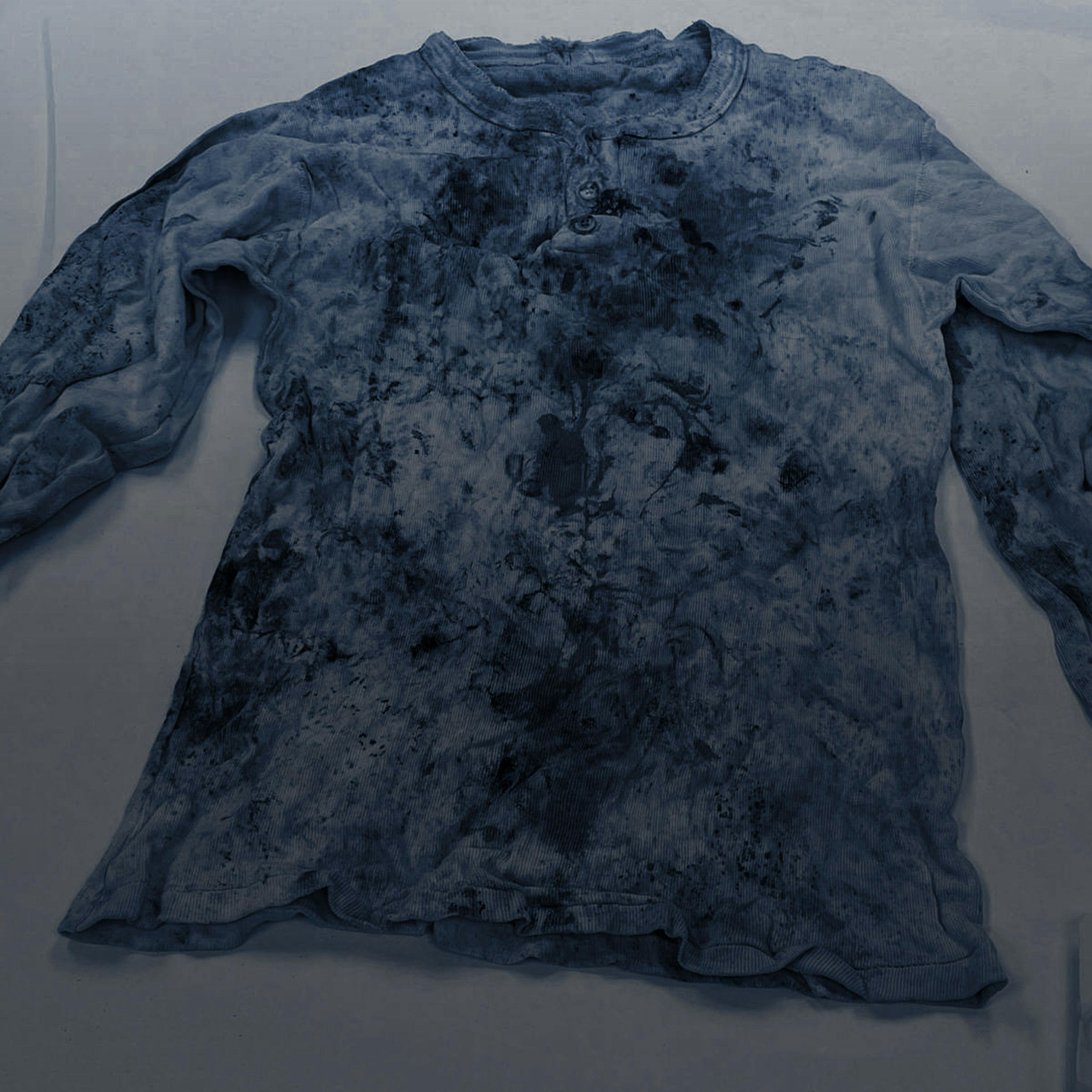
Bear Brook
Update: The Reversal
00:32:39
The state of New Hampshire has made a sudden about-face: Prosecutors have now agreed to DNA test old evidence in Jason Carroll’s case. It’s the biggest development in the case in 35 years – and one step closer to possibly learning who killed Sharon Johnson.
Loading summary
Transcript66 lines
- [00:01]
Rebecca Lavoie
Hey, Rebecca Lavoie here, director of On Demand Audio at nhpr. As head of podcasts at the station, let me say it takes a great team to make a podcast come to life. And I'm also here to say that you don't have to produce, market and monetize your podcast all on your own. For years, NHPR has proudly worked with the podglomerate, the award winning firm specializing in podcast production, marketing and monetization. They've helped launch and grow our shows, including Bearbrook, the 13th step outside in, and the Youth Development Center. And they've worked with some of the biggest podcast clients in the world, including Netflix, NPR, PBS, Harvard and more. Since 2016, the Podglomerate has grown to represent more than 70 podcasts, accounting for more than 30 million monthly downloads. Shows have topped the podcast charts and received features on every major podcast app. With national coverage across print, digital, radio, and television, the podglomerate offers all the marketing and production services you need to move your show from inception to launch. And they've unlocked more than $2 million for monetization clients. To date, the Podglomerate has a proven track record of helping clients, including NHPR, scale content, to find an audience easily, efficiently and affordably. So if you're looking for a personalized approach to podcast growth, production or or monetization, I highly recommend the Podglomerate. Get a free consultation with the Podglomerate right now by going to podglomerate.com connect that's podglomerate.com connect previously on Bear Brook.
- [01:43]
Jason Moon
Season 2 A True Crime Story.
- [01:48]
Cynthia Musso
My main goal is to raise the.
- [01:50]
Charles Buca
Concerns around this conviction to the extent.
- [01:53]
Cynthia Musso
That it would encourage the state to revisit the evidence.
- [01:57]
Jason Moon
The clerk who I know came over to chat with me and she said that she had been listening to undisclosed. She's like, you know what? There's a big box in our basement with Jason Carroll's name on it.
- [02:12]
Unnamed Evidence Handler
Hey, the fucking nail clippings are here. The nail clippings are here.
- [02:19]
Cynthia Musso
To the answer to who killed Sharon Johnson is very likely in that envelope right there.
- [02:23]
Unnamed Evidence Handler
It is possible that the answer to who killed Sharon Johnson is in this envelope in front of us.
- [02:35]
Cynthia Musso
It's been about 17 months since that day with the box, the box of evidence from the investigation into Sharon Johnson's murder. The box had the clothes Sharon was wearing when she died, the knife police say she was stabbed with. The fingernail clippings from Sharon's hands with blood on them. Blood that might belong to her attacker. For 17 months Jason Carroll and his attorney with the New England Innocence Project have been trying to get that evidence, DNA tested. They think there's a real shot that evidence could exonerate Jason, but the state of New Hampshire didn't. You might remember, they said there was no scenario where DNA testing could exonerate Jason. So they objected to Jason's request for DNA testing, that is, until just a few days ago. So did you celebrate?
- [03:35]
Jason Moon
Yes. I mean, I think. I think. I think I celebrate. I guess I would say, yes, I celebrated. It's weird to say that you would celebrate separately from Jason. Right. So, like, the weird thing was that I wasn't able to see Jason that night, so I talked to him on the phone. And so to be able to say, like, celebrating something for someone, it's like celebrating somebody's birthday when they're not there. So when I was finally able to talk with him about what happened, he was shocked. Shocked, I would say. And he essentially said to me, half of me feels like crying like a baby and half of me feels like throwing up. And he said, it's the best news I've had in 35 years.
- [04:18]
Cynthia Musso
He said that? The best news in 35 years.
- [04:20]
Jason Moon
He did. He did.
- [04:28]
Cynthia Musso
This is Bear Brook Season 2 A True Crime story. I'm Jason Moon. So here's what happened. After Jason's lawyer, Cynthia Musso, found that box of evidence, she filed a petition with the court under a state law specifically meant for just such a moment. It's called the post conviction DNA testing law in New Hampshire. The evidence in question belongs to the court. Remember, the box was hanging out for three decades in their basement. So Cynthia needs a court order to get this stuff tested. But the prosecutor on the other side of this case, Charles Buca, objected, by the way. We requested an interview with Buca, but a spokesperson for the AG's office declined on his behalf. So with the state and Cynthia taking different positions that set up a hearing, the two sides were going to duke it out in front of a judge and he would decide if testing was going to happen. That's where we left off in this series.
- [05:48]
Jason Moon
So we were scheduled to have a hearing on this motion in December.
- [05:54]
Cynthia Musso
That's December of 2023.
- [05:57]
Jason Moon
And about three days before the hearing was supposed to start, we got a call from the prosecutor. And I didn't actually, I missed the call, or he had just emailed me maybe and said, give me a call. And I thought that he was going to agree. And I told my co counsel at the time, oh, I wonder if this Is it like they're going to agree to testing now? And we called, and it was clear from, like, the first moment, like his, the tone of voice, that it was not a call about agreeing, that it was a call about something else. And I remember that when he said, we found another box.
- [06:45]
Cynthia Musso
We found another box. Another box with more evidence from the investigation into Sharon Johnson's murder.
- [06:54]
Jason Moon
I remember just sitting there being like, I don't even know what to say. I think the proverbial, you know, your jaw hits the floor is really how I was feeling in that moment. And I think that was a huge shock to me.
- [07:13]
Cynthia Musso
This box, let's call it box number two, was found in the basement of the former headquarters of the New Hampshire Department of Justice. It just so happens the New Hampshire DOJ is moving offices and the building is being torn down right now. So in the process of the big move, someone's down in the basement and they find this box that says, do not destroy Sharon Johnson case. Kind of amazing that the very first box at the courthouse, you stumbled on that because this clerk had happened to have listened to the undisclosed podcast. And then the next box is discovered through another sort of happenstance that, that the building in which it's housed is being demolished. And if not for that, you know, maybe this. Maybe they wouldn't have found it.
- [08:07]
Jason Moon
Exactly.
- [08:14]
Cynthia Musso
Remember, Cynthia has been asking the state for all the documents and evidence from the investigation for years. By this point, the state had told her they'd already turned over everything they could find. In light of box number two, the big hearing that was supposed to happen in December gets postponed. Instead, the two sides meet in front of the judge for what's called a status conference, basically a check in to see what the heck needs to happen now. And at this status conference, Cynthia, she's a little annoyed. It's already been more than a year since she found box number one and filed the petition for DNA testing. And now things are getting delayed because of some sloppy housekeeping by the state. Cynthia wants assurances from the prosecutor, Charles Buca, that this isn't going to happen again.
- [09:03]
Unnamed Evidence Handler
I'm not asking for a lot. I'm just asking for a reach out to those sort of three places to ensure that we have everything that exists.
- [09:11]
Charles Buca
And the three places are Bedford PD State Police. Well, the State police we know because they're the ones that catalog this and are involved.
- [09:18]
Unnamed Evidence Handler
They did, but I would double check and ask because I've asked you for discovery a lot of times and we didn't know until we knew Right, Sure.
- [09:25]
Charles Buca
But I've had those conversations with the state police at nauseam. So the state police have.
- [09:30]
Cynthia Musso
Charles is like, trust me, we've gotten everything from state police.
- [09:33]
Charles Buca
If you'd like me to ask them again, I'd be happy to do that, but we already know the answer to that. So Bedford PD is easy. We can contact them and make another inquiry. Who is the third?
- [09:45]
Unnamed Evidence Handler
You.
- [09:49]
Charles Buca
What would you like me to do?
- [09:51]
Unnamed Evidence Handler
I'd like you to reach out and confirm that all the boxes that were in storage have been cataloged and that there's no longer any remaining boxes that had anything to do with the Sharon Johnson homicide investigation.
- [10:01]
Cynthia Musso
Maybe you heard that. Quiet. Yep. As Cynthia was talking. That was the judge, William Delker. He basically agrees with Cynthia and tells the state, check everywhere again and file a memo with the details of how you did that.
- [10:15]
Jason Moon
And so we were really grateful that the court did that, because what ended up happening was that they found significantly.
- [10:23]
Cynthia Musso
More information at the Bedford Police Department. Three more boxes. And from the state police. Yep. 400 new pages of lab documents about the forensic evidence from the case. And just to be clear, do you believe there was any sort of willful hiding of this evidence?
- [10:42]
Jason Moon
No. No.
- [10:44]
Cynthia Musso
Yeah. Okay. This is bad record keeping and poor communication. Not a cover up. So the state turns over all this new stuff to Cynthia in January and February. She's furiously sorting through those boxes and reading through everything to see what it all means. Meanwhile, the big hearing to argue whether the evidence should be DNA tested is rescheduled to the end of April, as in this April 2024. Let's talk about what was in those new boxes. Some of it was stuff Cynthia already had duplicates of. Police reports from the discovery file, things like that. But it wasn't just paper. Inside one of the boxes was a shirt. I've seen a photo. It's long sleeved, ribbed, three buttons at the top. Looks like a man's undershirt. It's white. Or it was. It's covered in stains. Some black, some brown, some yellow. It was found In August of 1988, just after the murder. A woman saw it lying on the side of the road in Bedford, about two and a half miles from where Sharon's body was found. And called the cops. But interestingly, when it was tagged in Evidence, they labeled victim shirt. Yeah, they labeled it victim shirt. Do you have any idea why that happened? Any guess?
- [12:08]
Jason Moon
I don't know. I don't know the answer to that. Yeah, I have no idea.
- [12:16]
Cynthia Musso
I'm not quite sure what to make of this either. You might remember. The location of Sharon's missing shirt was a big focus of the investigation. When state police interrogated Jason, they asked him about it again and again. They never found it. But we know what shirt Sharon was wearing when she left work that day, and this isn't it. Remember, Sharon was seven months pregnant when she was killed. She was last seen wearing what was likely a maternity T shirt with teddy bears and baby rattles on it. Again, this one looks like a man's shirt. According to the police report, the woman who found the shirt and called police thought it might belong to whoever had murdered Sharon. So I'm not sure how or why it ended up labeled as victim's shirt, but it did. At any rate, it got added to the list of items. Cynthia wants DNA tested. Maybe those stains are blood stains, or maybe it's just a painter or a mechanic's dirty work shirt. Another item that turned up in the new boxes. A knife. This knife was also found along the side of a road in Bedford shortly after the murder. It was another civilian who came across it, thought it might be involved in the murder. They called police. Just to be clear, the shirt and the knife were found along two different roads in Bedford by two different people. The two areas are in opposite directions from the crime scene, but the knife was found less than a mile from where Sharon's body was found. It's described as a long blade wood handle, similar to what you'd find in a kitchen.
- [13:53]
Jason Moon
So those were two big pieces of physical evidence, obviously, that we were really interested in. And then obviously, the lab file has been really interesting for us. And one of the things that we found in there was that there had been some. A profile generated from Ken Johnson's blood.
- [14:11]
Cynthia Musso
Two things I need to point out on this one, it's helpful that there's already a profile of Sharon's husband Ken's blood. It'll make it that much easier to know if any DNA found on the evidence is his. The second, and I think a lot more interesting thing, is when this DNA profile of Ken was generated, it's a very strange scenario.
- [14:34]
Jason Moon
So we had noticed, and by we I include you in that we had talked about this a while ago, that we had seen custody logs of Ken's blood tube. Ken had his blood drawn at the Department of Corrections when he was arrested for the crime. And that blood tube had ended up going to the state lab. And you and I had both noted that in 2004, it was sent to the lab, and it said DNA Analysis.
- [14:59]
Cynthia Musso
2004, 16 years after the murder and 13 years after prosecutors dropped the charges against Ken Johnson, New Hampshire State Police were generating a profile of Ken's DNA. But why would they be doing that in 2004?
- [15:20]
Jason Moon
The only reason I can guess that they were doing it in 2004 is because they were going to try and DNA test things related to this case. I don't know what other reason there would be. The only other thing I can think of is that the national database for DNA was sort of getting online at that time, and perhaps they were trying to put Ken's DNA profile into codis, but I don't think. I don't know if they would even be able to do that. Ken hadn't been, you know, at that point, he hadn't been convicted of anything.
- [15:53]
Cynthia Musso
There's no record of what, if anything, Ken's DNA was compared to in 2004. The lab report only shows that a DNA profile was generated. And as far as CODIS goes, that's the national law enforcement DNA database. Only people who are convicted of certain crimes get their DNA put into it. That's why Cynthia is mentioning that Ken hadn't been convicted of anything in 2004. Complicating this further is one thing that has always bothered me. I don't know exactly when Ken Johnson died. According to records from the state, by 2006, they were told he was dead. So maybe in 2004, Ken was still alive and state police were taking one last crack at connecting him to the murder with DNA evidence. But then how could it? Ken was Sharon's husband. It wouldn't exactly be damning evidence if Ken's DNA was found on Sharon's body. One last thing about this minor mystery of Ken's DNA. It set up a pretty ironic situation where the state was about to argue in 2024 against post conviction DNA testing in this case, when they had apparently done it themselves, or maybe were about to. In 2004, Cynthia added the white shirt and the knife to the list of items she wants DNA tested. The full list was now up to about a dozen, depending on how you count them. It includes the fingernail cuttings, some of Sharon's clothing, cigarette butts from her car, various samples taken from her body, Jason's pocket knife, the alleged murder weapon, and bloody soil samples from the crime scene. And then Cynthia prepared for the hearing again. Cynthia assembled a cast of heavy hitter expert witnesses to explain what might seem like an obvious point that DNA testing could reveal who killed Sharon. There was Tim Pambach, 22 years in law enforcement, Connecticut state trooper, detective. Before he retired, he ran the entire forensic lab for the state of Connecticut. He's been called as an expert witness in lots of high profile cases like the murder trial of Michael Peterson. That's the staircase trial for those who've seen the documentary. More recently, Tim testified in the murder trial of former South Carolina attorney Alex Murdoch. There was Carl Reich, 22 years experience in biochemistry. Cornell, UCLA, Harvard, Stanford. Lawyers for Steven Avery, the subject of the Making a Murderer documentary, hired him as a consultant. There was Hayley Cleary, a psychologist, professor and expert in juvenile false confessions. She knows this case well. She was on Rabia Chaudhry's podcast. Undisclosed. To analyze Jason's confession, Cynthia even consulted with an expert in genetic genealogy, a woman named Barbara Ray Venter. Yes, that Barbara Ray Venter, the one who identified Terry Rasmussen and three of the victims from season one of this podcast.
- [19:06]
Unnamed Evidence Handler
The challenge is going to be getting usable DNA because those bodies were out there exposed to the New Hampshire winters for between five and 20 years.
- [19:25]
Cynthia Musso
You were ready?
- [19:27]
Jason Moon
I was ready, yeah. I'm still ready. Yeah. I was ready.
- [19:33]
Cynthia Musso
And then just last Thursday, on the eve of the hearing, the state reversed course. It is dropping its objection to DNA testing, but it is still reserving the right to argue against about whether any results exonerate Jason. Officially, the deal still needs to be okayed by the judge, but there's not much doubt he will. By the way, the fact this just happened is the reason you're not hearing from Jason in this episode. The logistics of getting on the phone with him can be complicated and there just wasn't enough time. I asked Cynthia what she made of the timing of all of this.
- [20:10]
Jason Moon
This is the thing about the core system is that like, it's not, it doesn't work the way people think it does. So all of the things that you think about core just aren't, they aren't real, Right? So like, the reality is that, like, deals get made on the night before trials all the time. And it comes down to lots of things. I have no idea what the actual reason in this particular case was. I'd like to think that it's the fact that like, we were prepared, we had given our reports over the state, looked at those, and they realized that, you know, as they said in their motion, that we're going to be prepared to be able to prove those things, and they thought that we were going to be successful in that and they decided to agree to testing and save us all the trouble of the Hearing. Do I wish that this happened a long time ago? Yeah. You know, it could be 34 years, not 35 years for Jason if we had rewound the clock to when we, you know, originally had filed this petition.
- [21:14]
Cynthia Musso
After the break, after 35 years, what happens next? Hey, a quick reminder, Bear Brook season two took a lot of resources and time. I've been reporting this story for more than two years now, and as you can hear, I'm still on it. If you're in a position to do so, please consider making a donation to New Hampshire Public Radio. To give now, click the link in the show notes and thank you for supporting local long form investigative reporting. The agreement between Cynthia and the state is that the state forensic lab will handle the first stage of the DNA testing. It's called quantitative testing. Basically, how much DNA is there on any particular piece of evidence to begin with? But even getting there will be complicated.
- [22:21]
Jason Moon
So, for example, the shirt, right? You don't just take the shirt and go, DNA test this shirt. There's not like a machine where you can put the shirt in and then just type in DNA, please, and then it gives you the profiles. Right? It doesn't work like that. So we have to figure out the places on the shirt that we think there's most likely to be DNA that we could even collect in the first place.
- [22:43]
Cynthia Musso
Forensic experts from both sides will have to go through each piece of evidence one by one and decide what's the best place to try and find DNA on this object.
- [22:53]
Jason Moon
You know, what parts of this stuff are we swabbing or cutting or whatever. And. And then after we do the quant, we figure out what the right method of testing will be.
- [23:05]
Cynthia Musso
And about what kind of a time frame are we talking about here?
- [23:09]
Jason Moon
It's hard to tell. We asked for a six month check in to see sort of what was going on.
- [23:16]
Cynthia Musso
That's a check in with the judge in six months. Doesn't necessarily mean anything will have happened by then. This kind of work can take a long time, especially if there's degraded DNA, which is a real possibility given how long this stuff has been sitting around in boxes. There's also a 10 month backlog at the state lab, the only DNA testing and analysis provider in New Hampshire. So it could be a while. All right, the last thing I want to do is briefly talk about some scenarios. Give me the best case scenario for you.
- [23:54]
Jason Moon
I think the best case scenario is we get a profile on some of those items that doesn't match Jason, Ken or Tony. We're able to take that profile and enter it into codis, which is the national DNA database. There is a match in CODIS to sort of a known other perpetrator from somewhere else. That obviously has nothing to do with Ken, Jason, and Tony. And we think that that would be pretty clear at that point that Jason wasn't involved.
- [24:21]
Cynthia Musso
And what about a scenario where, let's say Tony's DNA is found on some of the items?
- [24:27]
Jason Moon
Yeah, so there would be a lot of reasons why that could happen that don't have anything to do with Tony being involved, because Tony was involved with the family. Right. So Tony had connections with Sharon's stepdaughter, Lisa. So there's, like, lots of reasons why we wouldn't be surprised if Tony's DNA was on some things. It's the same with Ken. Right. So, like, it wouldn't be a total shock if we found Ken's DNA, obviously, anything, in Sharon's car, because Ken and Sharon were married. So your DNA can get shed from all kinds of things. It's not just saliva and bodily fluids. It's all kinds of stuff. But those would be trickier scenarios. So in the event that it's something that we're going to have to make an argument about with the state, what would happen is, you know, we would find out some of these things. Possibly some of that stuff would lead us to further investigation or have further investigative leads for us. And maybe not. Or maybe we would get these DNA results and say, you know, none of this matches Jason, but there's some things in here that match Ken. And so then it's a question of, like, well, what does that mean for the case at large? So that's going to be a matter for the court to decide, you know, when we get the results back.
- [25:39]
Cynthia Musso
Do you think, in that scenario you just mentioned, where Jason's DNA isn't found on anything, is that a strong enough case for you to request a retrial.
- [25:52]
Jason Moon
If Jason's DNA is not on anything at all? This is a very close contact, very intimate, very violent encounter. So the fact that Jason's DNA wouldn't appear on anything of Sharon's or anywhere near her would be, to my, from my perspective, very strange. If you were arguing that Jason was involved in this. So from my perspective, I think it's certainly arguable that the jury should have known at the time. If this would make a difference to the jury, then the jury should know it, and I think he's entitled to a retrial.
- [26:35]
Cynthia Musso
So what if the DNA comes back and it is Jason's. Do you, do you think about that? Do you let yourself think about that possibility?
- [26:47]
Jason Moon
I don't expect it's going to be Jason. It's such a. It's such a remote. That's such a remote possibility for me. From my perspective, having, like, viewed all the evidence in this case, I just, I don't, I don't believe that that's going to be the case. But if that was to happen to me, that's not even sort of the worst case scenario. I mean, that would be an end of the case. Obviously it would be the end of that. But the practical reality is it's going to be a lot more anxiety producing for me if there's a scenario where, like, you know, Jason's excluded from everything, because then it's going to be an argument over what does this mean. It's not going to be automatically that Jason gets a retrial. It's going to be like, what does this mean? And then we're going to have to have an argument over what, you know, what it. You know, I believe. I believe Jason, and I believe in Jason and I believe this case, and I, and I would be shocked to find that it was Jason's DNA.
- [27:41]
Cynthia Musso
But now we get a chance to find out.
- [27:43]
Jason Moon
That's right. Now we get a chance to find out. Yeah. 35 years in the making. We didn't go to court and, you know, win in court. We didn't have this dramatic, you know, sort of like big, like, hearing and like a big opinion or any of these things. It's like we have this agreement. This agreement is done right, and that's great, but it feels really like less dramatic than sort of those, like, TV shows or whatever that you get. But this is so massive. Like, this is such a massive, massive win for Jason. There was no guarantees here and now going to be able to move forward. This is a gate, you know, the gate's open. The gate was locked.
- [28:34]
Cynthia Musso
The gate was locked. When we ended this series last year, I said the only question left was whether our system of justice was willing to keep looking for the truth if it was willing to revisit its own true crime story. It's taken 17 months, but now the system, stumbling a little reluctant, has given us an answer. Yes, the gate was locked. Now let's find out what's on the other. Bear Brook Season 2 A True Crime Story is reported and produced by me, Jason Moon. It's edited by Katie Culinary. Sara Plord created our original artwork as well as our website. Bearbrookpodcast.com Additional photography and videos by Gabby Lozada. Bearbrook is a production of the document team at New Hampshire Public Radio.