← Behind The Song: Classic Rock Chronicles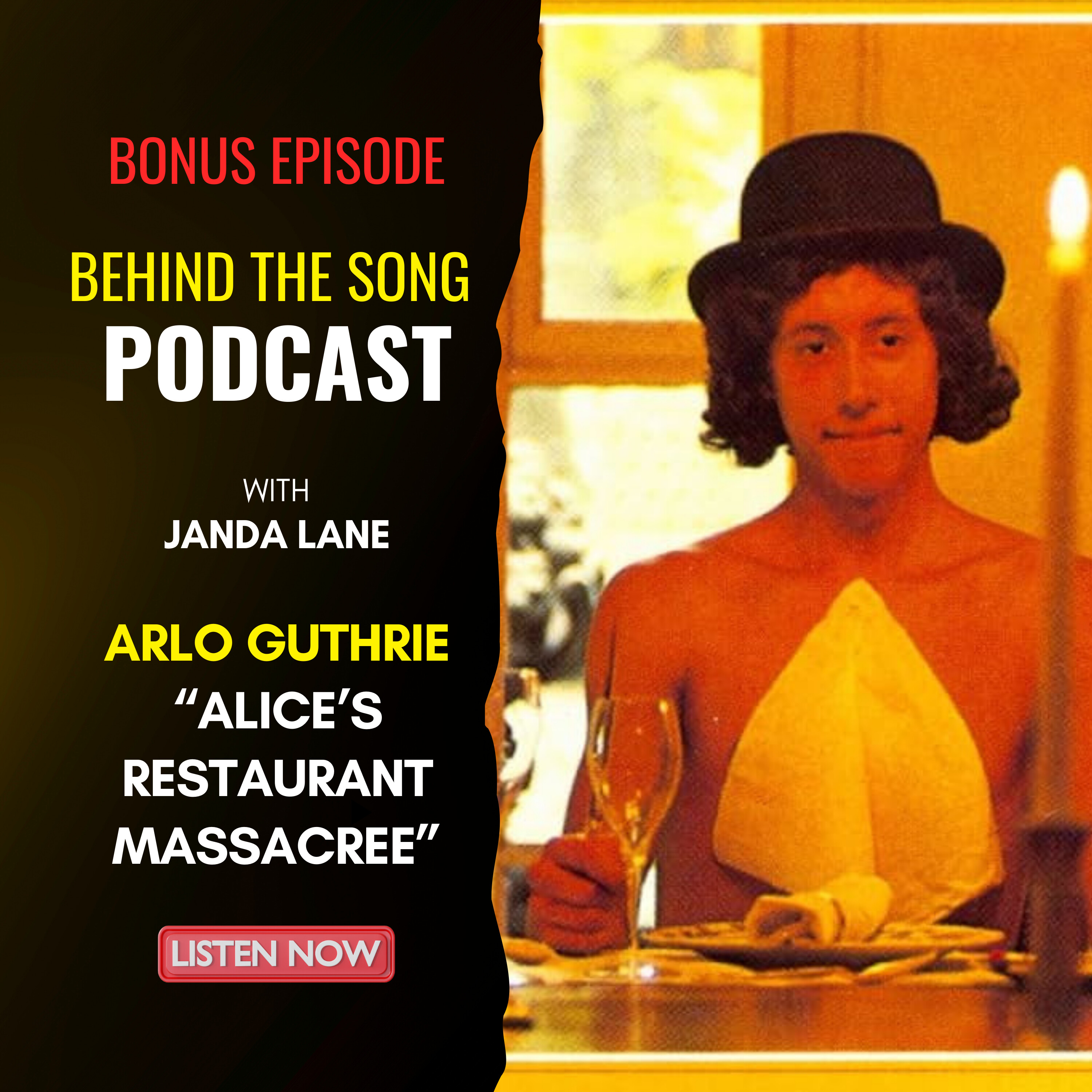
Loading summary
Transcript6 lines
- [00:01]
A
All the games you loved growing up are on the App Store. Looking to spark some friendly competition with friends and family no matter where you're at? Turn your phone into the ultimate game night. You can bankrupt your brother in Monopoly, go shout out hilarious clues to family and heads up. Challenge your best friend to a game of Uno, or get on a lucky streak in Yahtzee with Buddy Stice. Discover tons of classics you already love. It's all the laughter and connection of game night right in the palm of your hand. So what are you waiting for? Relive the games you grew up with now on iPhone. Search for your favorites on the App Store and let the games begin.
- [00:41]
B
Why Choose a Sleep Number? Smart bed?
- [00:43]
A
Can I make my site softer?
- [00:45]
C
Can I make my site firmer?
- [00:46]
B
Can we sleep cooler? Sleep Number does that cools up to eight times faster and lets you choose your ideal comfort on either side your Sleep Number setting. Enjoy personalized comfort for better sleep night after night. It's the final days of our Black Friday sale. Recharge this season with a bundle of cozy, soothing comfort. Now only $17.99 for our C2 mattress and base plus free premium delivery prices higher in Alaska and Hawaii. Check it out at a Sleep number store or sleepnumber.com today.
- [01:13]
C
Welcome to the behind the Song podcast, taking you deeper into classic rock's most timeless tunes. Here's your host, Janda. You can get anything you want at Alice's Restaurant. I'm Janda, and in this bonus episode of the behind the Song podcast, let's review a tune we hear every year when thanks Rolls around, a talking blues story based on a real life incident, Alice's Restaurant Massacre by Arlo Guthrie Arlo Guthrie is, of course, the son of folk music legend Woody Guthrie, one of the most revered protest singers in American history, a man who wrote this Machine Kills Fascists on His guitar, and who wrote our unofficial national anthem, this Land Is yous land in 1944. A huge influence on Bob Dylan and many others who came after him, Arlo Guthrie is one of eight total Guthrie children and the second oldest from Guthrie's second marriage to Marjorie Greenblatt, a professional dancer in New York City, where Arlo was born. After Woody Guthrie died from Huntington's disease in 1967, Marjorie founded what became the Huntington Disease Society of America to combat the illness that Guthrie suffered from for years, of which very little was known at the time. And it was in 1967 that Arlo Guthrie, at just 20 years old, followed in his father's footsteps by releasing his debut album, Alice's Restaurant, with the title track being so long that it takes up the entirety of side one of the album. It's a full 18 minutes and 34 seconds long, a protest song that brilliantly lampooned the process by which the Vietnam War draft was conducted. It's a satirical take on an event that happened to Arlo himself. Wildly exaggerated and hilariously clever, he wrote what is possibly the funniest account of the catch 22 that surrounds bureaucratic process, and in so doing gave us all food for thought. Which is fitting, considering it's a Thanksgiving song, after all, even if it only barely mentions the holiday itself. Alice's Restaurant Massacre is the full title of the song. The word massacre is a term that has its roots in the Ozark Mountains, a sarcastic way of describing something that is so wildly messed up that it begs disbelief. The song starts with Arlo finger picking the melody and the progression on his guitar, a style he learned from his friend, folk icon Pete Seeger, and blues legends like Mississippi John Hurt. And then the opening lines of the song declare that you can get anything you want at Alice's Restaurant, but then explains that it's not a song about Alice's Restaurant at all, but it is a song about a woman named Alice and a restaurant and how everything started two Thanksgivings ago, when he and a friend went to visit Alice in the bell tower of a church she lived in near a restaurant with her husband Ray, and Fasha the dog. Upon visiting, they discovered that nobody had taken the garbage out for a very long time, so they decided to take the garbage to the city dump and packed it in the back of a red Volkswagen Microbus and they were on their way. But the dump was closed on Thanksgiving, so they drove off looking for another place to deposit all the garbage. They came to a cliff and saw a bunch of garbage at the bottom of it and decided to throw theirs down too. Then they drove back to the church and had a Thanksgiving dinner that couldn't be beat and thought everything was hunky dory. Until the next morning when they got a phone call from Officer Obie, who informed them that their name had been found on an envelope in the illegally dumped garbage. And after a long conversation with the police officer, they were told to come down to the police station. When they arrived, they they were arrested and driven to the scene of the crime. Now, this all really happened to Arlo Guthrie, who on Thanksgiving Day in 1965, brought his friend Richard Robbins to pay a visit to Alice and Ray Brock, who worked at The Stockbridge School in Stockbridge, Massachusetts. Stockbridge was a private music and arts school where Arlo himself had graduated from. The Brocks were certainly artistic. She was a painter, he was an architect, and they lived in a church where they often have their friends stay while they were in town. The church was built in 1829 as the St. James Chapel, and years later, Guthrie bought it and turned it into the Guthrie Center, a non denominational interfaith community center. And Alice did own a restaurant called the Back Room prior to the song's release, which was close to the church. Upon arrival that Thanksgiving Day, Guthrie and Robbins did decide to help the couple out by taking out their garbage and not finding the dump open on Thanksgiving, dumped it illegally, for which they were actually arrested by Police Chief William J. Obenheim, or Officer Obie, on the basis of finding an envelope addressed to Ray Brock in the pile of illegal garbage. The arrest was written up in the local newspaper, the Berkshire Eagle, the next day, and it went down on Guthrie's and Robin's permanent record. The song goes on to describe the great investigative lengths that the police went through to collect evidence of the crime, including aerial photography, and Guthrie and his friend were thrown in jail. Alice came and bailed them out, and then they all headed to court the next day. The judge in the song had a seeing eye dog with him, so since he couldn't actually see any of the photographic evidence collected by the police on this case, he fined them $50 and sentenced them to pick up the garbage. And all of that was true or based on truth. Alice Brock did come to bail the two out of jail, and they were fined and ordered to do community service as punishment. The trial was presided over by Special Judge James E. Hannon, who was actually blind, leaving Guthrie wide open to relate that fact to the term justice is blind. In the next part of the song, Guthrie sings that he's actually not here to talk about blind justice, but about the Vietnam War draft, and he describes going to a building on Whitehall street in New York City for a physical examination after receiving a draft notice. He arrives hungover, said a bunch of crazy stuff that made him sound totally psychotic and was drafted anyway, and that's all based in real life. Arlo Guthrie did receive a Vietnam War draft notice not long after the Thanksgiving arrest, and in those days, resisters of the draft would concoct all kinds of ways to avoid having to enlist. On the advice of his brother, Dwayne Gregg Allman famously shot himself in the foot to avoid the draft, and many young men Tried various ways of dodging it by acting insane or by showing up intoxicated to the enlistment officer. Guthrie appeared with his notice at the Armed Forces Annexation and entrance station at 39 Whitehall street in New York City, where during the long examination process it appeared that he would in fact be drafted no matter what. But there was one thing, and one thing only that saved Guthrie from the draft. As the song goes on, he explains that during the process of inspection, he. He was asked one question. Had he ever been arrested? And of course he had, for dumping the garbage. So he was made to sit with a group of really hardened criminals, a motley crew of others who had admitted to being arrested during the draft inspection. And he was told to write out what he had been arrested for, which was, in essence, littering. So he filled out the the Massacre, detailing the arrest account. And when he flipped the paper over, he saw written there a question whether or not he had rehabilitated himself from his criminal ways, which upset him. And he marched over to the sergeant and basically said that that was a funny question since he would be required to do all kinds of things in the army fighting in Vietnam that might go against morality, while his only crime was. Was one case of being a litter bug. In the song, that doesn't sit well with the sergeant who says that they would be sending his fingerprints off to Washington. And at this point, Guthrie suggests that if anyone else finds themselves in the same situation to get two or more people together to sing the line, you can get anything you want at Alice's Restaurant to the officers, suggesting that their voices raised in song together would make them appear to be a collective organization, a movement, an unenlistable resistance group with strength in numbers. This part of the song is based on truth, too. In 1967, when so many young men were being drafted into service to fight a war they didn't understand, Arlo Guthrie was rejected from serving in the armed forces for a littering arrest when so many young men were trying everything they could to dodge having to join up. He was declined for dumping garbage on Thanksgiving Day over a cliff in a small town in Massachusetts as a favor to a friend in the original lyrics. In this part of the song, Guthrie used a word that is derogatory toward homosexuals, which was later changed because it's so offensive. It was used because at that time, homosexuality was also grounds for rejection to the draft, making a person ineligible. Over the years, Guthrie has re released the song several times and updated those lyrics. By using the word in the original lyrics, Guthrie was pointing out the absurdity of policy at the time. You could arrive drunk with your draft notice and get enlisted. But there were some other things that would equal automatic dismissal, and they were often very hard to rationalize. Arlo Guthrie has said that the song isn't about Thanksgiving, that it's not an anti war song, but rather a song about resisting stupidity. He said in an interview with npr, thank God that the people that run this world are not smart enough to keep running it forever. The song was made into a movie in 1969, written and directed by Arthur Penn, who directed Bonnie and Clyde. Guthrie played himself in the film the Real Alice Brock. The Alice in the song passed away at age 83 in 2024. She was a children's book author and she wrote a cookbook, which makes sense since in the song she made a Thanksgiving feast that couldn't be beat. She passed away on November 21st of 2024, very close to the Thanksgiving holiday. Alice's Restaurant Massacre was selected for preservation in the National Recording Registry by the Library of Congress as being culturally, historically or artistically significant. In 2017. It remains Arlo Guthrie's best known and most beloved song, a cynically funny blow up of bureaucracy that continues to entertain. Arlo Guthrie has said that his family doesn't listen to Alice's Restaurant at Thanksgiving time, but that he's grateful that people enjoy it and that if radio stations are going to play one song of his a year, he's glad it's his longest song. And what would Woody Guthrie, the legend who proclaimed that his guitar and the words he put to music could kill fascists? What would he say about his son's epic monologue? Sing along? Arlo Guthrie said this in an interview with the Atlantic. I can imagine the smile on his face is all I can say, because I know he would have enjoyed at least the sense of humor. I'm Janda wishing you and yours a happy Thanksgiving. Thanks for listening to this bonus episode of the behind the Song podcast. If you like it hit, subscribe on the way. Much more classic rock and roll It.