← Behind The Song: Classic Rock Chronicles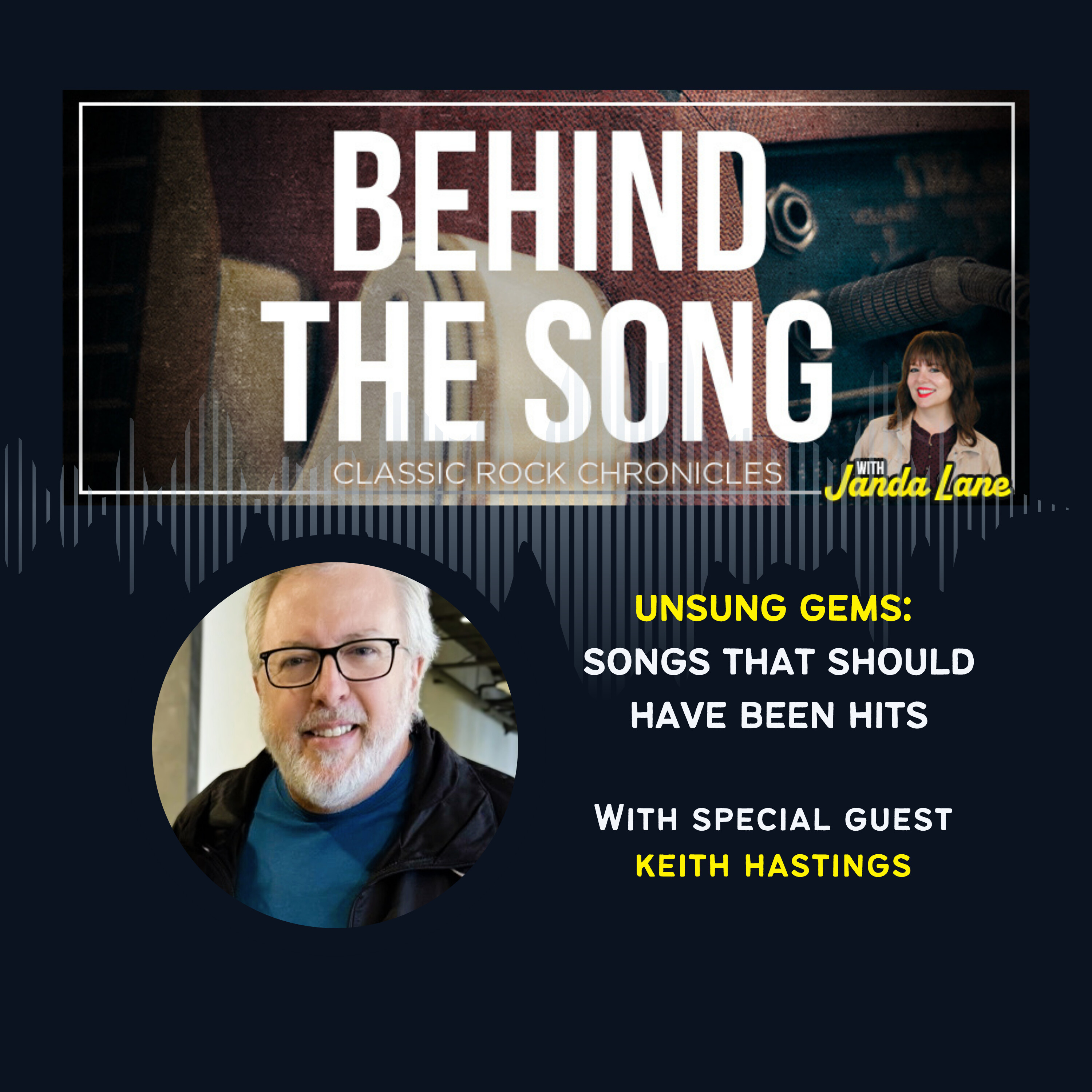
Behind The Song: Classic Rock Chronicles
Rock’s Unsung Gems: Songs That Should Have Been Hits
00:30:16
Loading summary
Transcript105 lines
- [00:00]
A
Mom, can you tell me a story? Sure. Once upon a time, a mom needed a new car. Was she brave? She was tired mostly. But she went to Carvana.com and found a great car at a great price. No secret treasure map required.
- [00:12]
B
Did she have to fight a dragon?
- [00:13]
A
Nope. She bought it 100% online from her bed, actually. Was it scary? Honey, it was as unscary as car buying could be. Did the car have a sunroof? It did, actually. Okay, good story. Car buying you'll want to tell stories about. Buy your car today on Carvana. Delivery fees may apply. Everybody talked about it since I first moved to Oregon. The big one. The earthquake that trashed the whole West Coast. Total destruction.
- [00:39]
B
Officially calling it the largest natural disaster in American history.
- [00:43]
A
I just didn't know what would help me next. So I took it all. Even the gun. It was time.
- [00:50]
B
Cello see why American Afterlife is the number one fiction and drama podcast in America, presented by pair of thieves. Listen on Apple Podcasts, Spotify or wherever you listen to your favorite shows. Available now. Welcome to the behind the Song podcast, taking you deeper into classic rock's most timeless tunes. Here's your host, Janda.
- [01:15]
A
I'm Janda. And in this bonus episode of the behind the Song podcast, powered by Chick Fil? A, I'm talking with my boss here at WDRV in Chicago, Keith Hastings.
- [01:25]
B
Thank you so much for having me back.
- [01:27]
A
You're a repeat offender, Keith. We're here to talk about a subject that I think is really interesting and I think people will get interested in. We want to discuss a few songs that should have been hits but weren't.
- [01:41]
B
It came from a conversation you and I were having, because when you and I talk, sometimes we just go down these rabbit holes. It's awesome. But we were talking specifically about songs that we love that very few people have ever heard. And yet they're out there and should be heard. They're on albums in a lot of cases that have sold very well. And yeah, we started trading licks here and we came up with a pretty tasty list.
- [02:08]
A
I think I have a good starter for us here in this conversation. It is a total mystery to me why the song you See Me Crying by Aerosmith was never a big hit. Now think about it.
- [02:23]
B
You See me Crying.
- [02:28]
A
This is on Toys in the Attic, right? You See Me Crying by Aerosmith sets the stage for everything that came after for their comeback in the 80s and in the 90s in terms of big, huge power ballads that make you feel tear jerker songs sung perfectly and Powerfully by Steven Tyler.
- [02:49]
B
And I would argue that it set the stage really, for every power ballad, certainly in the 80s, from a lot of the metal. The metal and hair bands, totally. That would do the formula. Third single's gotta be a ballad, so we crossed the top 40. But that is an amazing song. I remember in the mid-70s listening to that album and going, gosh, that's just. It's a wonderful song. If anything, it felt maybe just a skosh out of place right on that album. Because in the mid-70s, I mean, toys in the Attic and Sweet Emotion, I mean, you'd never heard music like that before. And it just took your face off and melted it Uncle Salty and handed it back to you.
- [03:34]
A
Right, Right. Well, you know, and that's kind of my theory on this song. Why this particular song from Aerosmith wasn't a hit, because it was kind of an outlier, especially in the mid-70s, when, you know, this is Aerosmith's third album at this point, considering too, what else was on that album. Sweet Emotion. This just wasn't going to work as far as a hit goes. But I take this one every time the lyrics go, you see me crying. Don't let it get you down. You see me crying. I'm back to the lost and found. Honey, what have you done to your head? Honey, what's the words I said? And the way he sings this, this is, you know, the screaming demon at his best with that piano playing that, you know, starts and ends the song. It's just kind of a perfect rock power ballad. And I do believe that if there is a reason for this one of any to not have made any kind of chart position whatsoever, which it didn't, it has to be about the time in which it was released.
- [04:36]
B
Powerful performance and can nearly bring you to tears. Even if you're not reading the lyrics, you're just picking it up. I, being a child of the 70s and growing up in the 70s, it amazes me that I didn't hear that song at more high school dances.
- [04:54]
A
Oh, yeah.
- [04:55]
B
If you've never heard this song, go
- [04:57]
A
now it is on Toys in the Attic. And here's an interesting little footnote about this song. Apparently, Steven Tyler was riding around in Boston about a decade after this song had been released. So this is in the 80s at this point. And he heard the Aerosmith song you See Me Crying on the radio in Boston. And he literally turned to someone and said, this is really great. We should cover this. So suffice to say, the mid-70s were a little Cloudy for Steven Tyler. But, man, did he write a good one. That was actually a co write, which is another kind of an outlier as far as Aerosmith's songs go, especially back then. So, yeah, that was such a good one. You See Me Crying by Aerosmith.
- [05:46]
B
I have a really quick side story. Years ago, I was living in Western Massachusetts. I have forgotten the name of the COVID band, but it was an Aerosmith tribute band. And the lead singer, no joke, looked exactly like Steven Tyler.
- [06:03]
A
Oh, wow.
- [06:04]
B
Would dress like him, would wear the teardrop sunglasses and everything. And urban legend has it that Steve and Joe were somewhere in Massachusetts and they happened upon this band and they decided to go in and see them. And Joe Perry looked at Steve and said, hey, man, he looks more like you than you do.
- [06:26]
A
I wonder how many times that's happened to bands like Aerosmith through the years when they come up on their own tribute acts.
- [06:33]
B
Yeah, amazing.
- [06:34]
A
Especially when you've got to look like his.
- [06:36]
B
So I've got for my first one here, and this is one that if anyone listening to this podcast has ever heard this song, you get extra credit because there's not a lot of copies of it out there. It got a little smattering of radio play in Milwaukee, where I was at the time, in roughly 92 or 3, I want to say.
- [07:03]
A
Okay.
- [07:04]
B
This solo artist was in a band at the time named after his last name.
- [07:11]
A
Okay.
- [07:12]
B
He is a former bass player for Alice Cooper. A lot of people don't know that about Kip Winger.
- [07:18]
A
Kip Winger, Yes. Yes. Wow.
- [07:21]
B
And so, you know, 92 grunge was in full swing, and hair bands could not get arrested if they were out selling drugs on the corner. For sure they could not get arrested. And Winger dropped an album called Pull P U L L. And on it is a. I hesitate to call it a power ballad because it's got a little tempo to it, but it's acoustically driven. And Kip Winger, love him or hate him, and there are both of you out. That man has a powerful, powerful voice.
- [07:53]
A
Sure.
- [07:54]
B
And there is a song on that album called who's the One? And he just delivers this powerful, slick, polished vocal that just pulls me in every time. I can listen to the song over and over and over again. I have played it over the years for people just as a. I'll bet you can't guess who this is, right? And it takes a while. Sometimes people really in the know will get it. But it's a wonderful song, I don't think because of the time and place that it was released on an album that any A and R person ever said, we should give this a shot. This could be a hit. But it's one of those. You go back decades later and you listen to it and you believe that had it gotten its due on the radio, it would have held up.
- [08:49]
A
Right. It's got all of the sort of ingredients for a hit. It's got a powerful chorus. Like you said, he's a great singer, strong hook. But think about when that song was released. This is Kip Winger releasing on his solo album in 1992ish. I mean, that was the era of not only Nirvana and Pearl Jam and the Seattle bands, Blind Melon, no Rain.
- [09:16]
B
MTV was not lining up to play hair bands. I mean, people don't realize there for a couple of years. Def Leppard couldn't get arrested.
- [09:24]
A
Oh, yeah. Yep.
- [09:25]
B
I mean, it was a wholesale change in music, but, yeah, do yourself a favor, Winger, who's the one from the Pull album.
- [09:34]
A
So now for my next one. I must confess, I have been absolutely down the rabbit hole with this next band. The music is so good, and I don't know why this song in particular was not a hit. I am talking about easy to slip by. Little Feet, you're so easy to sniff. You're so easy to find.
- [09:58]
B
Okay, I'm listening.
- [09:59]
A
Okay, so.
- [10:01]
B
Because I've never heard it.
- [10:02]
A
Okay, so like I said, I'm on this sort of Little Feet kick right now. Because what I do is I get fixated on certain musicians, and then I have to hear everything that they've ever done. And I really do go down these weird rabbit holes, and I get kind of obsess. My current obsession musically is Lowell George from Little Feet. This man was a musical genius.
- [10:24]
B
Hell of a resume.
- [10:25]
A
Oh, my God. Okay, so backstory on Lowell George. He's born in Hollywood. His father is a furrier to the stars. Okay. But he is a musical. Almost like a musical prodigy. He starts out playing flute in the marching band. Then he gets onto guitar. And then by the time he is almost an adult, he is playing everything. He can play saxophone, he can play sitar. He can play whatever you want to throw in his hands. He could play it. He was just one of these musical people. So he starts to get a name for himself. And lo and behold, Frank Zappa gets wind of this kid and produces his band's singles. You know, a couple of his from his first band, called themselves the Factory. Frank Zappa produced a couple singles, didn't go anywhere, but Then Zappa says, hey, you need to be in my band, the Mothers of Invention. This is like 1968. Ish. 69. So here's.
- [11:26]
B
You are totally schooling me here today.
- [11:30]
A
So here's this kid, Lowell George, now playing with Frank Zappa, who at that time in the music scene in Los Angeles, Frank Zappa was such an entity. I mean, he produced so many bands, he was such a big deal. And so he had this kid come and join to play with him. But as we know, Frank Zappa was a teetotaler. He did no drugs, smoked no cigarettes, drank no wine. And as good as Lowell George was, he had an appetite. And it was, the legend goes that when he wrote the song Willin', which references weed, whites and wine, okay, that coupled with the fact that he was very interested in those things, kind of made Zappa say, hey, this isn't really going to work out with you and the mothers of Invisible. But even though he kicked him out of the band, or they mutually agreed, whichever story you want to believe, either way, Zappa did help get his band, his next band, his band, Little Feet, a record deal with Warner Brothers. Okay, okay, okay. So this is like 1971, they. They released a self titled album. It sold like 10,000 copies. Okay. I mean, but if you listen to that album, it is so good, particularly the song Willin', which is on, you know, their first album, but it went absolutely nowhere. But they get another try. And their second album in 1972 is called Sailing Shoes. Now that is the album that you will find the song easy to slip on. And man, I just love this song so much. It's so easy to slip it's so easy to fall and let your memory drift and do nothing at all all the love that you've missed all the people that you can't recall do they really exist at all? Now I'm saying those lyrics. But when you hear Lowell George and the band in Little Feet at that time sing that stuff and play that stuff, it seems bonafide to me. It's a mystery to me. I don't understand how this particular song that is so hooky and so immediate and so well played and so lyrically poet in such a resonant way, never ever got on the chart at all. It was released as a single, but it didn't go anywhere. And after that, Little Feat, it kind of crushed Lowell George because he knew that this song should be a hit, I believe. So they went back to the drawing board, made some changes, and then came out in 73 with Dixie chicken.
- [14:09]
B
Doing what you and I do, which is curate a lot of music and share a lot of memories, musical memories, with people on the radio. It's. It just is amazing to me that the very best of the best musicians don't always get their just due.
- [14:27]
A
And that is the case with Lowell George. I think he is the prime example of that. I mean, a guy had a pedigree. He. Lowell George, not only with Little Feet did he write these amazing songs. And they were so good live. If you pull up on Tubi or something, hop on there and pull up some Little Feet performances, you'll be like, my God, this is the best band I've ever seen in my life. They were so good. And Lowell George, so musical and such a studio person. He produced the Grateful Dead Shakedown street album. He played on tracks with everybody from Harry Nilsson to James Taylor and Jackson Brown. I mean, everybody knew that he was ahead, as they say, like a head for music. But unfortunately, Lowell George, those appetites that I mentioned earlier, he died way too young at like 34 because of stuff that he had been doing.
- [15:23]
B
Not the first in the business, not the last.
- [15:26]
A
I just love that song, Easy to Slip. And speaking of the Grateful Dead, of course, Bob Weir did cover it on his solo album in like the late 70s and did a great job on it. And I love Bob Weir, but that Little Feet version is just so killer. I just. Lowell George, honestly should have been a Rock and Roll hall of Fame artist for sure.
- [15:50]
B
And now I've got something to listen to on the way home.
- [15:52]
A
Oh, please do, please do. I love that song. Love that song.
- [15:56]
B
All right. My number two is an album that is also from that early 90s period.
- [16:04]
A
Okay.
- [16:05]
B
Which didn't help it at all when in its attempts to be successful, although it had some success, it is a band who has only released one album ever. It is a band that has an amazing guitarist who is still out there performing. And also a singer that had some top 40 success and some album success. I'm talking about Charlie Sexton. I'm talking about Doyle Bramble Jr. I'm talking about the Archangels.
- [16:37]
A
Oh, wow.
- [16:38]
B
ARK stands for Austin Recording Complex. So it's those two guys with double trouble, Stevie Ray Vaughan's band, the four of them, they had one album in the early 90s. It's an amazing album. It had, if my memory is correct, it had three singles sent by Angels Living in a Dream and Too Many Ways To Fall. Too Many Ways to Fall is an amazing, like six minute song that's just a jam. And as good as it is on the record, if you ever got a chance to see them play it live, if they were on and in the pocket, 12 minutes, couple of solos. And I saw that in the back of a club one night in Western Massachusetts. And I just stood there with my jaw on the floor. And it was one of those nights where maybe 150 people in the club, they were not getting their just due again. Music was changing. I don't know what their record deal was like and maybe they weren't getting the right promotion out there in the big cities and stuff, but I just was really taken by them. So of course I go down the rabbit hole, I get a copy of the album and I come across a song called Sweet Nadine. I'm sure it was never discussed as a single by the muckity muck powers that be. But the intro absolutely owes its existence to Ramble on by Led Zeppelin. There's no denying it. And then nice little chorus. Obviously it's sung from the perspective of a guy who is head over heels about this girl Nadine. And he has got to do what he's got to do to make sure that she is in his life. And then there is this fuzzy guitar lick and they repeat it over and over. By the time you're halfway through the song, you cannot get that out of your head. And to me, that's a one listen hook. So I know I'm talking shop here, radio business wise, but a song like that belonged on the radio and just never made its way there. But I guarantee you listen to that song, you'll be able to hum it to yourself after one listen. Why nobody knows the song, why it never got exposed. Mystery to me.
- [19:09]
A
It's interesting that you brought up that terminology, the one listen hook. I think that so far what we've been talking about, all of these songs, the hook is that catchy.
- [19:18]
B
Yeah. These aren't songs that are like written in seven, six times and have all these weird signatures and things going on where you kind of have to go back and listen, catch all the things that you missed.
- [19:29]
A
Well, and you think about that time too. I mean, again, you know, you got a song like this with players like that, you know, with these blues infused songs, you know, members of Double Trouble in the band and all of that entails. And then on the radio at the time and on mtv it's like GNR November rain, Chili Peppers under the bridge. You know, it just unfortunately wasn't a fit. I think is the sole reason that
- [19:52]
B
you could point to music is when you compare it to, say, like, the restaurant business. You know, there's McDonald's, there's any myriad of pizza places and things like that. Where you know what you get when you're walking in the door. And then there's that strange little deli two blocks over. And not a lot of people know about it. And it's. It's just those two things balance out and they make the world go around.
- [20:19]
A
Music is vast, but the chart is small. So, you know, unfortunately, some. Some of these great ones do. Do go, by the way, and it's a head scratcher, you know, but this next one isn't really a head scratcher. Keith. I don't understand why my third pick here, Mystery Achievement by the Pretenders wasn't a hit. I mean, come on. Yeah, I mean, as far as an album closer goes, when Mystery Achievement comes on with those pounding drums. And then Chrissy's voice kind of sounds snakes in there, and it's just relentless, you know, as what you were talking about earlier with that repetition. I will give you that this song is a little bit different, you know, in terms of, like, the structure of it. I believe that this song, the only reason a Mystery Achievement by the Pretenders didn't become a hit is because of how. How new it was at that time. How this whole style of music that the Pretenders helped usher in, you know, the new wave. In 1980, this album came out, everybody was still trying to get their heads wrapped around it. The song itself is so powerful and so memorable. Like when she says, where's my sandy beach? I had my dreams like everybody else, but they're out of reach. I mean, that's completely relatable. That's like prime. Chrissy Hines singing about, you know, a dream that hasn't been fulfilled. Or when she, you know, some of her other lyrics, when she's talking about, you know, I got a kid, I'm 33. I mean, you know, she sings about real stuff.
- [21:57]
B
90% of the population can immediately relate to that.
- [22:00]
A
I tell you what, too, I don't understand why the Pretenders Talk of the Town wasn't like a top 10.
- [22:05]
B
Same here.
- [22:05]
A
Okay, same here. There's just a couple of Pretender songs now, of course, from their debut, Brass In Pocket was a bonafide hit. And this album did go into the top 10. It did very, very well. But as far as singles go, they only kind of had a few.
- [22:23]
B
Yeah, I never understood that either, because. And I was a very young pup in Radio. But I played the Pretenders as a brand new band from the first album. And I'd be lying if I told you I knew how good they were. Every time you hear a band that good and an album that good, you kind of hear it again for the first time.
- [22:45]
A
Yeah, for sure.
- [22:46]
B
And that, to me, is the mark of really great music. And it's exciting to me that we're talking about these kinds of songs in this way. Winger. I don't know that they can quite go that far on the pedigree, but certainly a band like Pretenders take it all the way.
- [23:04]
A
Well, absolutely. I mean, maybe it had something to do with She's a female fronting a rock band in 1980. Hats off to Chrissy. She's the coolest badass that ever lived, practically just for what she was able to do as not only as a woman musician, but just as a musician and a songwriter. So there's. There's that to that element of it, you know, that, you know, maybe they didn't pick a bunch of singles, you know, because they were still trying to see if this whole thing would work, you know, either way, I mean, if a song is good, like, you know, Winger, he was a classical.
- [23:36]
B
Yes.
- [23:37]
A
Classical composer. He's a classical composer to this day. I mean, we're talking about people that have real serious musical chops.
- [23:44]
B
Yeah.
- [23:45]
A
About them, you know, these aren't like some punters. You know what I mean? Like, these guys that we're talking about are like real serious heads. I don't. I don't know why some of these songs didn't become hits. I mean, we have our theories. We're talking about them.
- [23:59]
B
Well, I've got one.
- [24:01]
A
I get so into it.
- [24:03]
B
And talking about intelligent, articulate songwriters who also understand the business in the game, let's talk about a band called Genesis.
- [24:15]
A
Oh, God.
- [24:16]
B
So we all know.
- [24:18]
A
Talk about Heads.
- [24:19]
B
They started out just as progressive as you want to be, for sure, Gabriel. So now go into the period where they start to lean pop. So this was early 80s, and they'd had some success with a couple of so called, quote unquote hit singles.
- [24:41]
A
Right.
- [24:41]
B
And now I'm in college and this is from that period. And actually that's what started this conversation with you and I about the prolific period of songs that there's so much going on that some songs just never get picked up and brought to the party. So I hear the ABACAB album.
- [25:02]
A
Oh, yeah.
- [25:02]
B
I'm in college. I'm heavily into album radio. So, you know, I. I Don't want to just hear the hit single. I want to hear the whole album. And there are more than one local radio stations that are playing 8, 9 tracks off the album. And so I really am close up front with how cool early and mid period Genesis really was. Now you can't deny they get into the invisible touch phase of their career. And it is what it is. They're making millions. But if you're into the early stuff, you may not be here with this, but to me, the absolute fulcrum of their career is that ABACAB album. Because I mean, A B, A C, A B.
- [25:50]
A
It's brilliant.
- [25:51]
B
Is this musical pattern that I don't understand, but they could tell you all about it and talk about it for three hours for sure. So they're playing this stuff and I'm picking up on time signatures and I'm picking up on hooks and I'm picking up on great songs. And man on the Corner is just a wonderful piece of pop music that really pulls you in. But you go through that album and much like the Archangel song that I just talked about, there is an instrumental hook in a song on Genesis. ABACAB album. The song is like it or Not. And why that song never got more airplay and frankly didn't become a hit. I do not get it. Because it was such a strong emotional instrumental hook that you're humming two times after you hear it to this day. Gives me chills.
- [26:52]
A
The emotional pull.
- [26:53]
B
Yeah. And it's one of the first songs that you hear in that whole body of work from early Genesis on up to, as I call it, the fulcrum point. And then there were Phil Collins solo stuff going on. And Michael Rutherford had a solo album. This was prior to Mike and the Mechanics. And I believe Tony Banks even had something out there. But this was one of the first places where I just heard that unmistakable drum sound from Phil Collins that became so prevalent. That was one of the first places I ever heard it. But bam, bam, bam. And then the guitar hook from Rutherford, it's all there. And the vocals are massively present in your face. And there's this equal balance of rage and desire going on in the lyrics.
- [27:46]
A
Rage and desire. That's how you could often describe Phil Collins singing. The wealth of songs that were coming out. Take the rest of the chart and everybody else out of it. Just between Genesis and Phil Collins at that time, it's like, how do you pick the singles?
- [28:03]
B
And honestly, there's probably more that I could go back to. You know, certainly the Genesis album Which is known for. That's all. There's some amazing songs on that, that dive into that musical genius that the three of them were doing at the time.
- [28:19]
A
Yeah.
- [28:20]
B
That never made it to the radio.
- [28:22]
A
Chances are they had a single or two that piqued people's attention, and they certainly didn't have any shortage of album sales.
- [28:29]
B
And it was that period for Genesis where they went from playing small little ballrooms to filling stadiums. Yeah.
- [28:38]
A
Well, look what we did. Like, three songs each, basically.
- [28:42]
B
We could do 20 more each.
- [28:43]
A
We could do 20 more each. If you care about music, you spend time with the records, you spend time with the songs. You know, they mean something. They're part of the fabric of your life. And then, you know, you sit around and you wonder, like, man, like this little feet tune out of my three that I picked up if I could encourage anyone to go and listen to one song that I've talked about. Personally. Me here, Janda today, Easy to slip by Little feet, you sold me Stone Cold Jam.
- [29:11]
B
It's our life. I occasionally, if I have an adult beverage and I'm in a conversation about music and I'll look at them and I'll say, you know, if I had to make the choice of either losing my sense of hearing or my sense of sight, I would have to go with losing my sense of sight.
- [29:28]
A
I mean, it's. You know, Tom Petty said it. You know, it's. The music is the only evidence of magic. What did he say? Music is evidence of magic here on Earth, I think. Or something to that effect. Either way, he said it better than I did.
- [29:41]
B
Oh, and I've got a bonus Tom Petty that we didn't talk about, but we'll save that for next time.
- [29:45]
A
Okay, good. Because obviously this is a list that could keep on growing.
- [29:49]
B
Absolutely. I appreciate you having me. It's fun. And when I'm in here, I hope it's this way for you, too. I don't come in here thinking I'm the boss. I'm just in here having a great conversation about great music that we love.
- [30:02]
A
Well, that's what I love about you. When we get chatting about music, it's just two fans chatting about music. And I really do appreciate you coming on here today to do this. And, yeah, let's continue this conversation. We'll do a part two of this some point for sure. Right, Got it. Thank you, Keith Hastings, and thank you for listening. If you like this episode, hit, subscribe. Or better yet, tell a friend. Because honestly, that's the best way to talk about music. It's the best way to share music. It really is. Word of mouth is everything. So if, if you mention behind the song to your friend in the context of music that you like, then I would be most honored and on the way, much more classic rock and Roll Hey Chicago Chick Fil? A has your new favorite beverage. Sip on something new and try a strawberry, Hibiscus and Sprite Lemonade, Frosted Lemonade or Sunjoy. Made with natural strawberry and hibiscus. Fl the new Strawberry Hibiscus Lemonade is a mix of classic Chick Fil? A lemonade combined with delicious strawberry and subtle hibiscus flavors. This refreshing new drink can be mixed with lemonade, Sprite or tea to create your perfect flavor. Pair it with the new Jalapeno Ranch Club Sandwich for a perfect combination of sweet and heat. Available only for a limited time, so try it today. Chick Fil? A Eat More chicken Early Birds always rise to the occasion for summer vacation planning because early gets you closer to the action. So don't be late. Book your next vacation early on VRBO and save over $120. Rise and shine average savings $141 select homes only.