← Behind The Song: Classic Rock Chronicles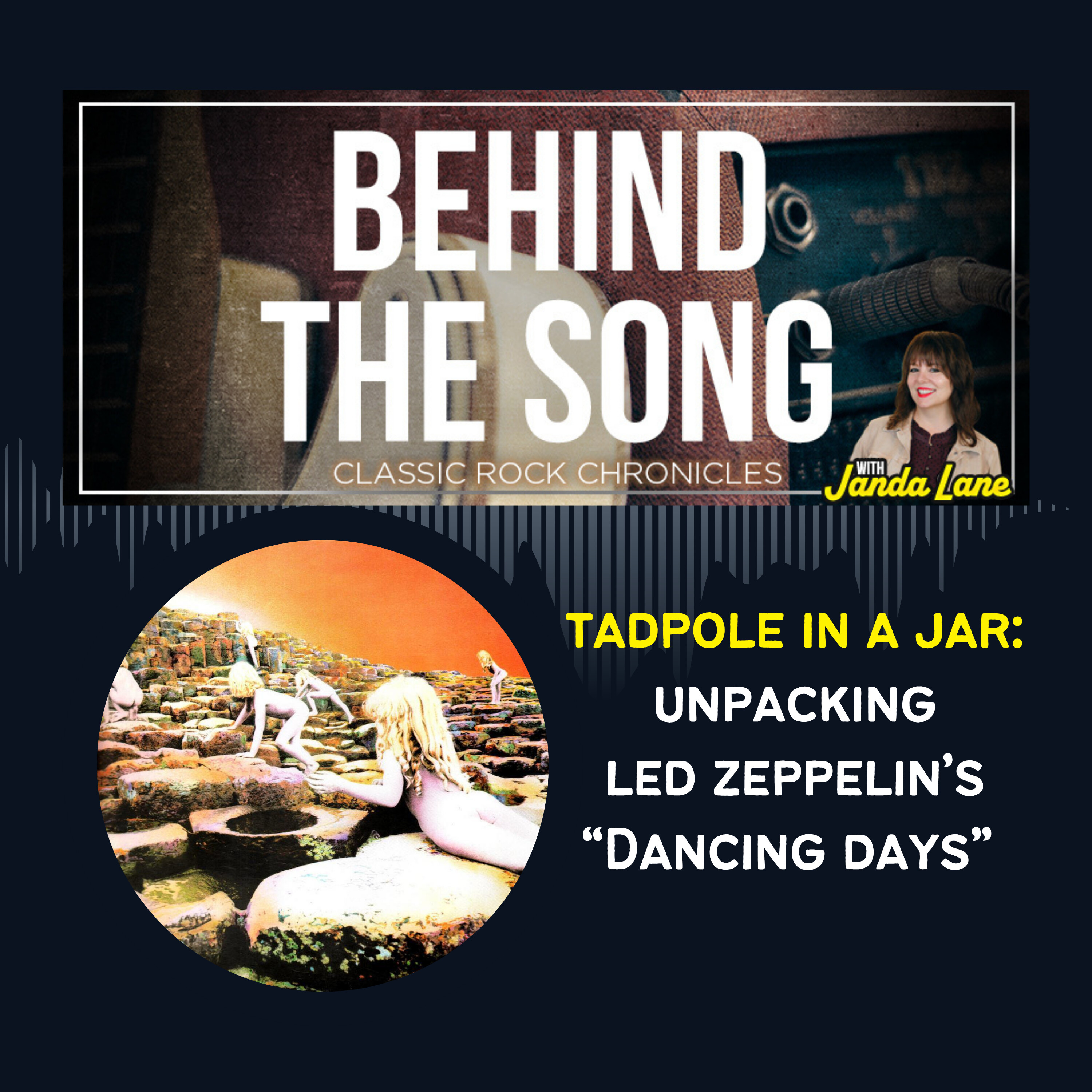
Behind The Song: Classic Rock Chronicles
Tadpole In A Jar: Unpacking Led Zeppelin's "Dancing Days"
00:12:16
Loading summary
Transcript7 lines
- [00:02]
A
You're listening to this podcast, so I know you've got a curious mind. Here's a helpful fact you might not know yet. Drivers who switch and save with Progressive save over $900 on average. Pop over to progressive.com, answer some questions and you'll get a quick quote with discounts that are easy to come by. In fact, 99% of their auto customers earn at least one discount. Visit progressive.com and see if you can enjoy a little cash back Progressive Casualty Insurance Company and affiliates national average 12 month savings of $946 by new customers surveyed who saved with Progressive between June 2024 and May 2025. Potential savings will vary. Truckers aren't just moving goods, they're making sure bakers get their chocolate chips and hotels get their tiny soaps. But truckers can't do this if they're not on the road. That's why Progressive has over 360 heavy truck employees to help truckers stay on time and on track. Quote Truck Insurance Today in as little as eight minutes at Progressive Commercial.com, progressive Casualty Insurance Company and affiliates 97.1fm, the
- [01:07]
B
drive presents the behind the Song podcast, taking you deeper into classic rock's most timeless tunes. Here's your host, Janda Dancing days are here again.
- [01:19]
C
Summer I'm Janda, and in this episode of the behind the Song podcast, I'm unpacking one of Led Zeppelin's most joyful songs. And for me, I'm a must in the summer. Dancing Days. I'm getting into all of it. Where the band was in their career when this song was born, how there's a stone's affiliation in the recording of it. And yes, I'm going to spend real time on the lyric that has totally baffled fans for over 50 years. I saw a lion. He was standing alone with a tadpole in a jar. What does that even mean? Stick around because I'm going to the mat on that one. Here we go. And if you like this episode, you know what to do. Give it a like and hit subscribe.
- [02:00]
A
Ever wonder who's out there making the world go round? It's truckers. Who unites baristas with coffee beans. Truckers who unites dogs with their favorite chew toy? Truckers. That's why Progressive offers truckers even more protection with cargo plus coverage to keep truckers moving right along. Quote Truck insurance today in as little as 8 minutes@progressivecommercial.com Progressive Casualty Insurance Company and affiliates coverage subject to policy terms, limits and conditions. Not yet available in California, New York and Virginia. You're listening to this podcast, so I know you've got a curious mind. Here's a helpful fact you might not know yet. Drivers who switch and save with Progressive save over $900 on average. Pop over to progressive.com, answer some questions and you'll get a quick quote with discounts that are easy to come by. In fact, 99% of their auto customers earn at least one discount. Visit progressive.com and see if you can enjoy a little cash back. Progressive Casualty Insurance Company and affiliates national average 12 month savings of $946 by new customers surveyed who saved with Progressive between June 2024 and May 2025.
- [03:05]
C
Potential savings will vary let's roll it back to 1972. Led Zeppelin were the most powerful rock band on the planet, operating at the peak of confidence, and rightly so. By that point, they had released four studio albums in just under three years. Their untitled fourth record, the one with the four cymbals on the COVID the one with Stairway to Heaven, was released in late 1971 and it was already becoming one of the best selling albums in history. It would eventually move over 37 million copies worldwide. The pressure on them to follow it up was really immense. But here's the thing about Led Zeppelin. They didn't do what most bands would do. They didn't rush back into the studio to replicate what had worked before. Instead, they traveled. They experimented. They deliberately pushed themselves into uncomfortable territory and they had some adventures. In early 1972 they toured Australia. On the way there, they planned to stop in Singapore until the government turned them away. The country had banned entry to anyone with long hair in an attempt to push back on the counterculture. Other victims, bands like the who had to cancel touring in the country while this ban was in place entirely because nobody was cutting their hair. This ban was finally lifted in the 90s anyway. Led Zeppelin refused to cut theirs to enter Singapore, so they diverted and landed in Bombay, now known as Mumbai. What happened in India would leave a permanent mark on the Houses of the Holy album and on Dancing days specifically. Jimmy Page later recalled that the city hit them like a lightning bolt to the senses. The colors, the sounds, the street musicians, the traditions so different from Western culture and music. They went back for more. After wrapping a six day Japan tour, Page and Robert Plant returned to Bombay, this time with music on their minds. They jammed at a nightclub called Slip Disc with local musicians Sitar, Sarangi and Tabla players, and they even recorded alternate versions of Friends in 46 with classical Indian musicians at HMV Studios in Bombay. Those unreleased outtakes can be found on the reissues of Coda, by the way, the Indian rhythms that Paige and Plant absorbed during those trips seeped directly into the DNA of Dancing Days. The song's opening riff carries that eastern quality, that slightly off center groove that feels ancient and fresh at the same time. It was genuine inspiration from a place that had genuinely moved them. So they came back from Asia full of ideas and drove their gear over to Mick Jagger's house. The basic tracks for Houses of the Holy were laid down in April and May of 1972, but in the reception rooms and gardens of Star Groves, a manor house in Hampshire, England, owned by Jagger. He bought the property a couple of years earlier and was renting it out to musicians who wanted to work in a different kind of environment with a more natural setting. The Rolling Stones had used it for parts of Sticky Fingers and Exile on Main street, and the who had recorded Won't Get Fooled Again There and Now Led Zeppelin. This setup worked perfectly for what they had in mind. They wanted to live inside the music. And so the Rolling Stones mobile studio, a custom built recording control room on wheels, was parked in the driveway for them to do just that. Long microphone cables were run through the windows and doorways into the house's rooms. So rather than the tight, dead acoustic environments that most studios of the era used, the house and grounds were part of the natural ambiance. Dancing Days was born in this environment. It was tracked with the band literally dancing on the terrace of the house between takes. They loved this song so much that when they first played it live in Seattle that June, they played it twice in one night. Once in the set and then again for the encore. And you can hear that joy from the band and from Robert Plant's vocal performance. He sounds like a man who is genuinely happy to be alive, which is exactly what the song is about. Dancing Days is a summer song. A song about the intoxicating feeling of being young and in love and free. The verses sketch out a kind of hazy, sun soaked romantic scene. And the lyrics go like this. Dancing days are here again. As the summer evenings grow. I got my flower, I got my power, I got a woman who knows. And then the chorus, I said it's all right, you know it's all right, I guess it's all in my heart. You'll be my only, My one and only. Is that the way it should start? So we have the setup. Basically, they're on a date in the heat of summertime and then it's on to Verse two Crazy ways are evident by the way you're wearing your clothes Sippin booze is precedent as the evening starts to glow the chorus repeats and then Verse three rolls around with that famous line that has caused so much debate and wonder over the years. You told your mother I'd get you home but you didn't say I got no car. I saw a lion. He was standing alone with a tadpole in a jar so now the date is presumably over. She's got to get home somehow. But what the heck is he talking about with the tadpole all of a sudden?
- [08:42]
B
Brought to you by the Capital One Savor card. With Savor, you earn unlimited 3% cash back on dining, entertainment and at grocery stores. That's unlimited cash back on ordering takeout from home or unlimited cash back on tickets to concerts and games. So grab a bite, grab a seat, and earn unlimited 3% cash back with the saver card Capital One what's in your wallet? Terms apply. See capitalone.com for details. This message is brought to you by the Capital One Venture X Card. Venture X offers the premium benefits you expect, like a $300 annual Capital One travel credit for less than you expect. Elevate your earn with unlimited double miles on every purchase, bringing you one step closer to your next dream destination. Plus, enjoy access to over 1000 airport lounges worldwide. The Capital One Venture X Card what's in your wallet? Terms apply. Lounge access is subject to change. See capitalone.com for details.
- [09:42]
C
Robert Plant has never given a definitive explanation for this line other than at times explaining it as a literal observation, having reportedly seen a tadpole in a jar that somebody had put at the foot of a statue of a lion. The most popular interpretation among fans, and let's be fair, the one that makes the most intuitive sense is given the song's subject matter, is that both the lion and the tadpole are metaphors. The lion is a symbol of masculine pride and desire. The tadpole in the jar is, well, it's contained. It's not going anywhere. The young man in the song is full of desire with nowhere to put it. His romantic evening hasn't gone as planned. This explanation would have Plant, as the lyric writer, being kind of cheeky and surrealist at the same time, which is entirely on brand for him. And of course, there's the argument that there's no meaning to decode at all that Plant was doing what poets have always done, placing two vivid, mismatched images next to each other to create a strange visual that jars the senses. The answer to this little Led Zeppelin riddle is that all of these theories are probably correct in some way. That Plant was working in a space where the real and the unreal blurred together into something that lands emotionally before. Before it lands intellectually. It hits you in the gut before it hits you in the head. What we can say for certain is that the line works in the song, and it's had us talking for years. For a song this joyful and carefree, it brings a wonderful little note of the strange, something a little wild just below the surface. Houses of the Holy was released in March of 1973. The first track offered for radio play was Dancing Days. The critical reception at the time was rough. The most famous dismissal came from Gordon Fletcher at Rolling Stone, who called the album one of the dullest and most confusing albums I've heard this year, arguing that the band had wandered away from the blues rock that made them famous into something too eclectic. And this album is eclectic. The reggae of Jermaker, the James Brown funk of the crunch, and the orchestral sweep of the Rain Song. It felt to some like a band who didn't know what they wanted to be. But here's the thing about those critics. The fans didn't listen to them. The album was an enormous commercial success, topping the charts in the UK and spending 39 weeks on the Billboard 200 in the US including two weeks at number one, their longest run at the top since Led Zeppelin 3. It was number four on Billboard's Top Albums of the Year chart for 1973, and it eventually earned diamond certification in the US for over 10 million copies sold. And it's worth noting that the 1973 North American tour that followed the album broke every box office record available at the time. This was a band that had renegotiated the terms of the music industry itself, itself, demanding a 9010 split of ticket sales in their favor and getting it. History has been kinder to the album than the original critics were. Houses of the Holy now holds a place as one of the great albums of the classic rock era, a turning point that showed the band's range and set up everything that came after. Dancing Days has had an unusual Afterlife, too. In 1992, Hollywood Bobby Brown sampled Page's guitar riff for his hit single Humping Around. The song went to number one on the Billboard Hot 100, introducing the riff to a completely new generation and in a new genre of music. It's one of the more entertaining chapter crossings in rock history. And then in 1995, Stone Temple pilots recorded a cover of Dancing Days for the tribute album Encomium, a tribute to Led Zeppelin. Their acoustic version was faithful to the original, and the band repurposed the chorus riff for their song Trippin on a Hole in a Paper Heart. That riff had a second career within their own catalog. Dancing Days is a song that shouldn't work quite as well as it does. It's short, its lyrics are cryptic at best, its riff is simple, and yet it captures something essential about what Led Zeppelin could do. Take a feeling, joy, desire, the dizzying openness of summer and turn it into something physical, something you feel in your body before you've consciously registered that you're moving. The lion standing alone with a tadpole in a jar line is never going to have one definitive meaning, but it does exactly what great lyrics do. It makes you stop, it makes you think, and then it makes you smile. Thanks for listening to behind the Song. If you enjoyed this episode, share it with the Zeppelin fan in your life. You know who they are. They own the vinyl. They know all the words. Special thanks to Christian Lane for the music you hear on these podcast episodes. You can find me on the air at classic rock971 the drive in Chicago and on the way, much more classic rock and roll. Great news. Chick Fil A catering makes summer party planning easy. Choose from a variety of trays, including Chick Fil? A nuggets, Mac and cheese and chocolate fudge brownies. These party favorites are perfect for your summertime gatherings. Place your order through the Chick Fil? A app online or by calling ahead to pick up your order at your local Chick Fil? A restaurant or get it delivered directly to your door. Take cooking off your plate this season and enjoy Chick Fil? A catering. Availability and order requirements vary. See Restaurant for details. Chick Fil? A Eat more chicken.