← Behind The Song: Classic Rock Chronicles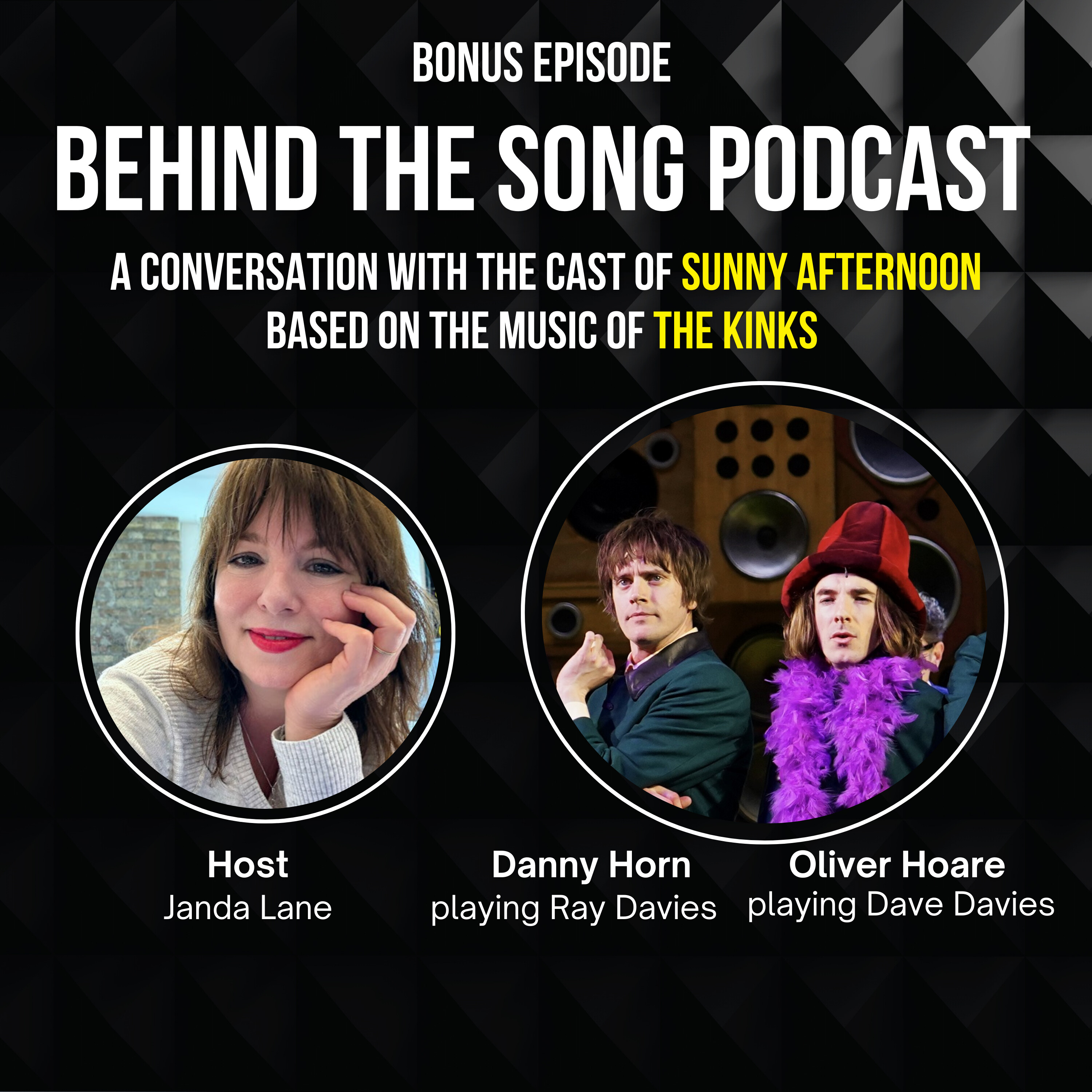
Behind The Song: Classic Rock Chronicles
The Kinks! A conversation with the cast of the Sunny Afternoon musical
00:19:25
Loading summary
Transcript73 lines
- [00:02]
Janda
Welcome to the behind the Song podcast, taking you deeper into classic rock's most timeless tunes. Here's your host, Janda.
- [00:16]
Danny Horne
I'm Janda. And joined today by Danny Horne and Oliver Hoare, who are starring in the North American premiere of Sunny Afternoon, the story about the rise of the Kinks as told through their own music. Hi, Danny. Hi, Oliver.
- [00:34]
Janda
Hello, Janet. Hello.
- [00:36]
Oliver Hoare
Hello there.
- [00:37]
Danny Horne
So where do we begin with the Kinks, right? I mean, one of the most iconic bands ever, one of the most influential bands ever. And I assume that before you took on these roles, Danny, you are playing Ray Davies, and Oliver, you're playing brother Dave Davies, the nucleus of the band. I assume that you were Kinks fans to begin with. So when you first got the call and then you got the gig, you know, how did you. How did you step into this whole production? And I know that you're musicians yourselves, so that must have helped, but I.
- [01:16]
Oliver Hoare
Think we are both Kinks fans prior to our involvement with this. And I remember when I first heard they were doing a musical about the Kinks, I thought, you can't do that. That won't be good. You can't turn a band that kind of wild and unpredictable and rough around the edges into a West End musical. So I was real skeptical. And then I. I read the script by Joe Penhall and realized that it was written by a huge Kinks fan who completely understood the chaotic nature of them. And. And then he obviously worked alongside the real Ray as well. So actually, I was very pleasantly surprised by how, like, an accurate, honest version of them. Crazy story this piece is.
- [02:01]
Danny Horne
Well, and that's so true. The chaos that surrounded the Kinks from basically the get go. I mean, here you have a band who created a new sound and that ended up influencing everything from, like, punk rock to heavy metal. You know, they were doing new things, not just with the melodies that Ray came up with, but the guitar work that Dave came up with and maybe invented riff rock, for crying out loud, among other things. So you have this sort of chaotic band and these chaotic personalities. Very, very musical people, some might say genius. And then they come out with this big hit. They have the hits that everybody knows you really got me and that sort of gritty, nasty sound that really perked everybody's ears up. And they had a hit here in the US and then they couldn't tour here anymore because they were banned for bad behavior, quote, unquote, by the Federation of Music. Kinks fans will know this story. If they're not familiar, then perhaps you won't and maybe if that hadn't happened, then the Kinks would be much more popular here even than they were. And not that they did too badly, but it must have been so horrifying to the band that they couldn't come over here and tour at the peak of their success, when all of the rest of the British Invasion was coming over here and having the ability to do that. And how that must have impacted their vibe, their spirit, their musicality. And that's gotta be in the story, right? I mean, it must be.
- [03:49]
Janda
Yeah. Well, I mean, the. Firstly, what's great about that is that it. It was like. It was sort of like a blessing in disguise really. That. Because yes, they were stopped from, you know, doing what the Beatles and the Stones got to do, but when. When they returned to England, Ray had to re. Evaluate sort of what he was, you know, he was writing music for America. I suppose you were talking about that before, weren't you? About, you know, trying to aim for a broader appeal. But suddenly they can only do Britain. And so suddenly Ray starts to write about Britishness and what it is to be English. And I think, you know, particularly when we did this in the West End, it was so prominent, that feeling that like we're it. That the Kinks are just this quintessentially British band that in a way they. They encapsulate more that more than. Than the Beatles and the Stones. And they probably would never have done that if they weren't kicked out of America.
- [04:47]
Oliver Hoare
Yeah, it's so true what you say about being a blessing in disguise, because everything that they were doing prior us at all was appeal to everyone. Appeal to everyone. Write songs, sing with a semi sort of transatlantic accent, you know, like, here's the formula of. Of what's going to be successful. Follow it. And they were never very good at doing what they were told anyway. And when the American catastrophe happened, which is in our show, Ray kind of artistically was free. He could just write whatever he wanted to write about. And you can really hear that in their albums Face to Face being like the first post American album. And suddenly he's writing songs about having a cup of tea, about weird aristocrat living in a mansion who's got tax man's taking all his money away. And that's really, I think, when the band become more interesting, way more versatile and. And I think like their great songs started to be written obviously prior to that. There are great songs, but that's when they started going in a different direction. And songs like Waterloo Sunset Sunny Afternoon.
- [05:53]
Danny Horne
Et cetera, started being rhythm. That's an interesting point that frankly, I hadn't thought of. You know, of course, it must have pushed Rhea into writing songs that, you know, he was an observational writer to begin with. And so he was in a place and he wrote about that place and the people in that place.
- [06:15]
Janda
Maybe selfishly. Yeah. Because selfishly for us, I mean, maybe it would have been great for Ray and Dave to have explored what that would have been. But we already get the Beatles and we already get the Stones. You know, for us, we get to have the Kinks now in that form.
- [06:29]
Danny Horne
I think the Kinks will always be one of those bands. I mean, Pete Townsend, no less, absolutely adores and will say in just about any time, you know, he's been asked what was the band who influenced him the most. He would point to the Kinks. And I have to always remember that in these early, the early 60s to mid-60s, none of this stuff had been done before. That's why the bands like the Kinks and the Beatles, of course, and the Rolling Stones were so impactful because it was shockingly new. And that had a lot to do with the fact that they were playing as a band on what they had to work with at the time, musically, in terms of equipment. So. So I wonder, in the production of Sunday Afternoon, did that come into consideration? Is there a lot of newfangled stuff going on in terms of instrumentation? Or did you try to keep it to basically the types of instruments that were on hand at the time to give it that authenticity?
- [07:34]
Oliver Hoare
Yeah. One of the most special parts of this production is the attention to detail when it comes to making sure we have period specific guitars, period specific amplification.
- [07:44]
Janda
Cool.
- [07:46]
Oliver Hoare
Like, I mean, painstakingly so. We. We spent so much time and Elliot, where the musical supervisor, you know, went, looked all over the world to get the exact right guitars, the exact right sounds. So when you see this show, it's truly like hearing what the Kink sounded like in 1964. It's not a kind of a clean kind of modern version of it. It's. I think it's something we're all really proud of about this production is it's got this kind of raw, wild quality to the music that if we didn't have it, it wouldn't have been authentic to the Kinks, because that's one of the defining SO features of that band, you know.
- [08:21]
Danny Horne
Am I right in this? One of the things that Dave did was slice the his amplifier to get that sort of nasty sound. Is that right?
- [08:33]
Janda
Yeah, he experimented a lot with. Yes. Slicing up his amplifiers. He was. One story about him nearly killing himself. Nearly electrocute himself and blowing the fuses in the house, trying to get that broken loud.
- [08:51]
Oliver Hoare
Plugging amps into amps into amps.
- [08:53]
Janda
Yeah, yeah, yeah. It's real. You know, he's like a little scientist.
- [08:59]
Oliver Hoare
Yeah, it was. Yeah, it was like, you know, they always kind of. Ray always talked about the. He saw themselves more like expressionists rather than pop stars. They were experimenting with sound, experimenting with words, experimenting with form, musical form and structure. And I think that the. The story of Dave slashing the amplifier is such a great example of that. It's like a painter messing around with paints, trying to find weird new hues and weird new textures. And again, if you want to come see the show, that moment of slicing the amplifier is. That's part of our story, how we created. Or how we. They created that incredible sound and, like you said, created a new type of music. And a lot of people herald the moment that Dave slashed his amp as the moment that heavy metal was born.
- [09:46]
Danny Horne
And, of course, Van Halen covered not one, but two Kinks songs. So there's the proof in that pudding. You know, everybody loves the Kinks, and it was interesting when you were telling that story, Danny. You know, it must be hard for you, while you're doing this production, for both of you as the stars of this thing, to take off the hat of Ray and Dave and put your own hats back on. And I wonder, I know this is the North American premiere of this production, but you both have done this. You did the debut on the West End. So is it difficult to get the Kinks out of your head when you're done doing this and you go back to doing your own, especially your own music?
- [10:31]
Janda
It's definitely hard when the show finishes, to come down, because it's. No matter how tired you are before you do it, by the end of it, you're just completely wired. Yeah, yeah. There's no way of figuring out. I can't figure out how else to do that. But, yeah, as far as long term, I mean, not really. I think that they. I think the Kinks stay with you in the most in a really positive way. They. There's no end to, like, you know, filling your brain with Kink songs, you know, and it being a good thing. Yeah.
- [11:01]
Oliver Hoare
Kind of one of the interesting things about doing it in London and then coming back eight and a half years later to do it here is subconsciously, I suppose, the characters have lived with us just, you know, because we did it for so long in London, they've sort of existed there and through osmosis or just subconsciously or whatever, they've. They've been there waiting to have another go. And so returning to the roles, we've kind of, in a strange sort of way, lived with these characters somewhere in our psyches since we last did it. And also, we both lived quite a lot of life since last time we did it.
- [11:36]
Danny Horne
Sure.
- [11:36]
Oliver Hoare
That only helps when it comes to playing these kind of slightly complicated young men.
- [11:40]
Janda
Yeah. It does mean that the song. Sometimes when you hear them on the radio and in a. You know, in a shopping center, you. It sort of. It's almost spooky. Yeah.
- [11:49]
Oliver Hoare
It's like ptsd.
- [11:53]
Janda
Yeah. You can't tell which way to go with it. It's so far has not got old.
- [11:57]
Oliver Hoare
Yeah.
- [11:57]
Janda
That's really impressive.
- [11:58]
Oliver Hoare
And that's a real testament to their songwriting, you know, hundreds and hundreds and hundreds and hundreds of times you've played these songs and. Yeah, they stand the test of repeated performances.
- [12:09]
Danny Horne
Is there a song every night that you look forward to doing in the production that is kind of like your. Your top, the. The one that you like to do the best on stage out of the entire repertoire?
- [12:23]
Janda
So I think my favorite song of all time is what Lucent said anyway, so that's my favorite song of any song, I think. So. That'll never be a down moment, but I reckon the point in the show, anyone who sees the show, I mean, that there's so many great things that happen in the show up to this point, but once this song happens, it's like there's no turning back. And so. And. And anyone who knows it knows that it's about to come. And it's. You really got me and you're suddenly at the Top of the Pops and it's being introduced and. And we give those first chords and you can feel the audience breathe this sigh of relief that, like, that. That they've made the right decision, you know, and it's loud and it's like. It's like the band that we're playing with, Kieran and Michael, the poor. That. Kira McCabe on the drums, Michael on the. On the bass playing Pete. They're just so good and like, they just pump it. It's just. It's just. Just one. There was wonderful to play with them and. Yeah, I think. Yeah. Playing. You really Got Me is.
- [13:34]
Oliver Hoare
Yeah. It feels like there's probably about. I don't want to spoil this show, but about 20 minutes prior to. You really got me with 25 minutes. And it feels like almost that's like the pre credits scene or something. And you really got me happens. And it's like we kicked down the doors of the theater and said, all right, now it's happening. Now we're on. Now we're going.
- [13:50]
Janda
Yeah. And I'm always really grateful in that moment at the theater. And Ed, the director and Elliot, musical supervisor, haven't decided to dumb it down. You know, they've really cranked it up. And sometimes people complain about the volume and, and that you're always going to get that. But the people, you know, for everyone that complains about it, you've got 10, 20 people who are just so relieved that it's that loud, you know, or 100, maybe more than that.
- [14:15]
Danny Horne
The performance runs through April 27th here, so I'll just go ahead and say bring some earplugs if you're, if you're concerned. Yeah, okay, perfect. All right. Be prepared. We're talking about the Kinks here. Of course it's going to get loud.
- [14:32]
Oliver Hoare
I mean, come on, bones, you know, it's pretty wild.
- [14:37]
Danny Horne
We look forward to having our bones shook then, for sure. I mean, that's, that's kind of what it's all about. I mean, yeah, it's a, it makes sense that the, that their performance of you really Got me would, you know, be a high water mark in this production because that's what it did kick the doors down on the charts, you know, in the UK and in America and elsewhere too. And I think that's what's so fascinating about the Kinks. They were so many different bands along so many different points of the way, and led by Ray and Dave, who then famously always, always squabbled with one another and other people in the band and lots of other people that they ran across. There was always this conflict and chaos.
- [15:28]
Oliver Hoare
Conflict is kind of the running theme of play.
- [15:31]
Danny Horne
Right.
- [15:32]
Oliver Hoare
I think another really important word is love. You know, it's a, it's a play about love, about family, love, familiar love, love of music, love of England relationships. And often when there is so much conflict that comes hand in hand with there being a lot of love. You know, it's. I mean, Ray and Dave love each other. They just don't like each other.
- [15:55]
Danny Horne
Which is often the case with siblings or can be the case with, with siblings. Do I need ask the, the age old question when it comes down to Beatles, Stones, what's the answer?
- [16:08]
Oliver Hoare
I think the secret third option is The Kings.
- [16:12]
Danny Horne
Is there. Is there one song or performance in this production that you found difficult to play or.
- [16:22]
Janda
I've got.
- [16:22]
Oliver Hoare
I mean, so not only do we play all these kind of wild kink songs, but how the story gets told is we borrow songs from later in their career and insert them into the. As sort of musical theater style songs, I guess, like, you know, like ballads. So we have a song like, for me, the big. My big Everest in the show is a song called Sitting in My Hotel Room, which is from the album Everybody's in showbiz from 1972, I think. And we put that in. In a moment where Ray's in a real. He's having a sort of dark night at the soul stuck in America. And it's just a. It's a beautiful, beautiful song, but it's not easy to sing. And it's always. Once I get past that song. I know I'm on the home straight now, but.
- [17:07]
Janda
Well, you sing it beautifully.
- [17:09]
Oliver Hoare
Bless you. Thanks.
- [17:12]
Danny Horne
Well, obviously, even though you play sometimes warring factions in the Davies Brothers, you guys obviously have. You guys don't squabble up, right?
- [17:28]
Oliver Hoare
No, no, no. We don't know each other a long time.
- [17:32]
Danny Horne
All right, well, excellent. We part. And. And thank you so much for. For joining me. I. I gotta ask you here in Chicago, I mean, have you tried any of our famous culinary treats while you're here? Deep dish or, you know, Al Spee dish?
- [17:49]
Oliver Hoare
I haven't had a deep dish.
- [17:50]
Janda
I'm quite embarrassed that I haven't done.
- [17:51]
Danny Horne
I know.
- [17:52]
Oliver Hoare
I feel ashamed of myself. We got two and a half weeks.
- [17:54]
Janda
For a deep dish. Can you bring it? Bring one when you come see the show?
- [17:57]
Oliver Hoare
Yeah, we're always at the theater. It's kind of quite.
- [18:00]
Janda
No, no. What would you suggest? What's the number one?
- [18:04]
Danny Horne
Well, I'm gonna get myself in trouble here because this is a loaded question for Chicagoans. But if it's deep dish, you gotta at least try Lou Malnati's once.
- [18:15]
Oliver Hoare
Other deep dish emporiums are available.
- [18:17]
Danny Horne
Other deep dish emporiums are available that you might find an argument for Pequods or Giordano's.
- [18:24]
Janda
But do they sell Malort there? We've tried that.
- [18:27]
Oliver Hoare
Oh, yeah, Malort.
- [18:28]
Danny Horne
Well, that was my next question. I mean, come on. Okay, so you tried. You're halfway there then. If you've tried Malort, you gotta go with a deep dish.
- [18:37]
Oliver Hoare
Tastes like grapefruit and battery acid.
- [18:39]
Danny Horne
That's exactly. It tastes like grapefruit and gasoline. It's absolutely nasty. I hope you never have to drink it again.
- [18:46]
Oliver Hoare
I'm taking a bottle home.
- [18:47]
Janda
Don't worry.
- [18:49]
Danny Horne
Well, listen, Danny Horne and Oliver Hoare, thank you so much for joining me. It has really been a pleasure to talk to you about the Kinks and the music of the Kinks. Can't wait to see the production and I hope that it comes back again. And I hope everybody that's listening to this comes out to see this performance which has gotten rave reviews so far here in Chicago. So thank you very much.
- [19:12]
Oliver Hoare
Thank you, Janda. Thank you for having us.
- [19:14]
Janda
Thank you.
- [19:14]
Danny Horne
Cheers. I'm Janda and this has been behind the song. If you like it hit, subscribe and on the way, much more classic rock and roll.
- [19:26]
Advertiser
You just realized your business needed to hire someone like yesterday with Indeed, there's no need to stress you can find amazing candidates fast using Sponsored Jobs. With Sponsored Jobs, your post jumps to the top of the page for your relevant candidates so you can reach the people you want faster. And just how fast is Indeed? Well, in the minute I've been Talking to you, 23 hires were made on Indeed according to the Indeed data worldwide. Seriously, there's no need to wait any longer. Speed up your hiring right now with Indeed and listeners of this show will get a $75 sponsor job credit. To get your jobs more visibility@indeed.com wonderyus just go to indeed.com wonderyus right now and support our show by saying you heard about Indeed on this podcast. Indeed.com wonderyus Terms and conditions apply. Hiring Indeed is all you need.