← Behind The Song: Classic Rock Chronicles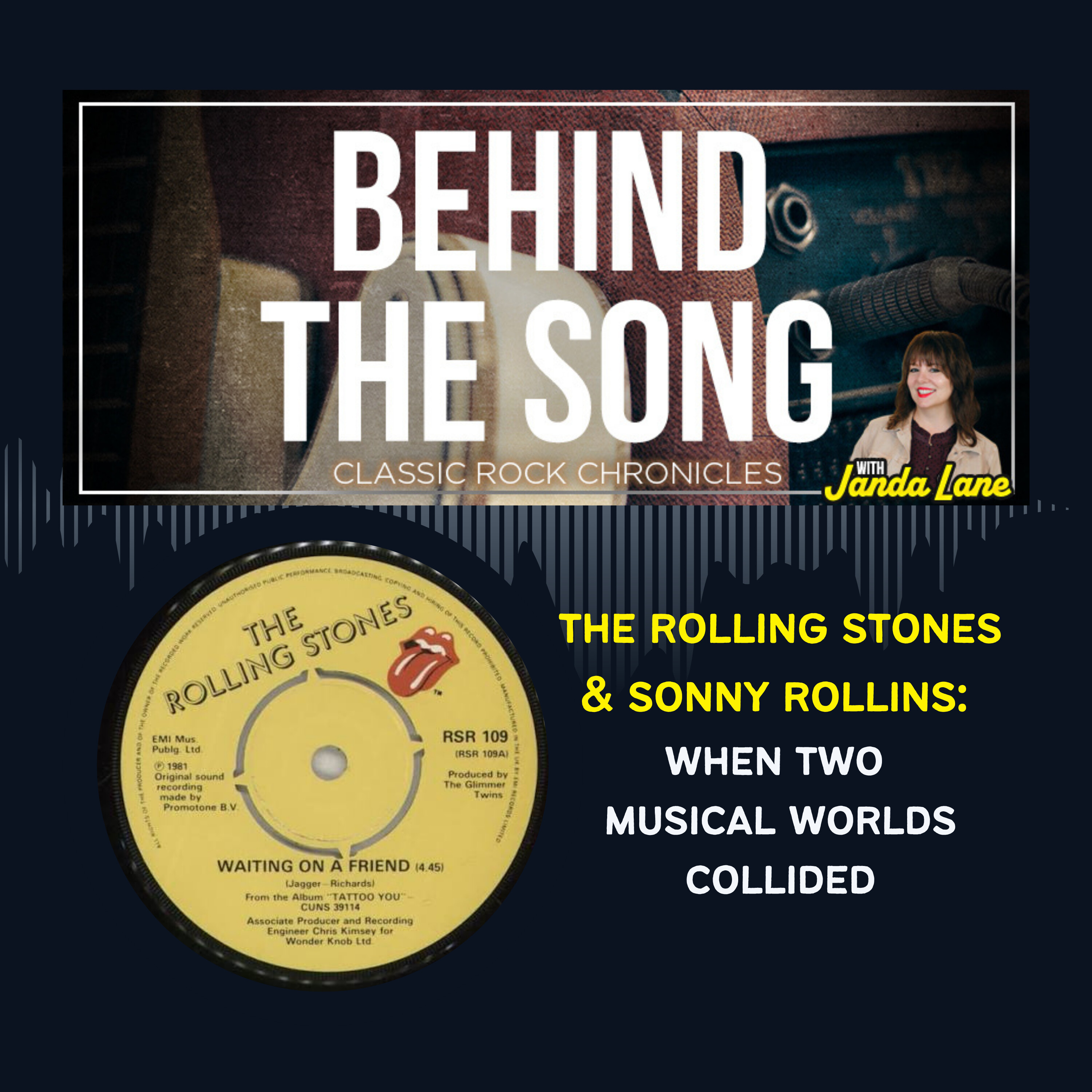
Behind The Song: Classic Rock Chronicles
The Rolling Stones & Sonny Rollins: When Two Musical Worlds Collided
00:09:26
Loading summary
Transcript8 lines
- [00:01]
A
Every day as a small business owner feels like solving a puzzle. One moment you're cruising along, and the next there's a shipping snag that has you scrambling. But here's a surprise you will like with Progressive. Small business owners save 13% on their commercial auto insurance when they pay in full. So go ahead, surprise yourself. Get a quote in as little as 8 minutes@progressivecommercial.com Progressive Casualty Insurance Company and affiliates discounts not available in all states or situations.
- [00:31]
B
Insurance isn't one size fits all. That's why customers have enjoyed Progressive's name your price tool for years now. With the name your price tool, you tell them what you want to pay and they'll show you options that fit your budget. So whether you're picking out your first policy or just looking for something that works better for you and your family, they make it easy to see your options. Visit progressive.com, find a rate that works for you with the name your price tool. Progressive Casualty Insurance Company and affiliates Price and coverage match limited by state law
- [01:02]
C
Ever wonder who's out there making the world go round? It's truckers. Who unites baristas with coffee beans? Truckers. Who unites dogs with their favorite chew toy? Truckers. That's why Progressive offers truckers even more protection with cargo plus coverage to keep truckers moving right along. Quote Truck insurance today in as little as 8 minutes@progressivecommercial.com Progressive Casualty Insurance Company and affiliates coverage subject to policy terms, limits and conditions not yet available in California, New York and Virginia.
- [01:31]
D
97.1fm the drive presents the behind the Song Podcast, taking you deeper into classic rock's most timeless tunes. Here's your host, Janda.
- [01:47]
E
I'm Janda, and in this bonus episode of the behind the Song podcast, powered by Chick Fil A, let's get into how the saxophone colossus the late great Sonny Rollins came to blow his horn on sessions with the Rolling Stones, treating us fans to his deeply soulful sax solo on Waiting on a Friend. If you like this episode, give it a like and hit. Subscribe so here's a little backstory on Sonny Rollins and why he was a giant of jazz. He was considered one of the greatest improvisers in the history of the art form, with a career that spanned more than seven decades. He was born in New York City in 1930, growing up in the vibrant cultural hub of Harlem. By the time he turned 20, he was actively recording and performing with the founding fathers of jazz, Thelonious Monk, Bud Powell, Charlie Parker, and Miles Davis. By the 50s, he had established a reputation for an approach to music called thematic improvisation, where a soloist builds a long, spontaneous narrative around a single music idea rather than just running scales. During this period, he recorded landmark albums under his own name, including the appropriately titled Saxophone Colossus album. At the height of his fame in 1959, he suffered from an intense case of bewildering self doubt, and he totally walked away from performing altogether. He then went to practice up to 15 hours a day on the pedestrian walkway of the Williamsburg Bridge in Brooklyn, night after night after night, and when he returned to the scene three years later, his technique was completely transformed. This was reflected on the appropriately titled album released after that little sabbatical, the Bridge he continuously pushed forward. In the 70s, he embraced jazz, fusion, R and B, funk and global music all all while maintaining his status as a fiery live performer. He was awarded a Grammy Lifetime Achievement Award and a National Medal of Arts award before he was forced to retire due to health issues stemming from pulmonary fibrosis. He passed away at the age of 95 on May 25, 2026, the last great colossus of jazz's golden age and a symbol of artistic perfection. So how did he end up on a Rolling Stones record? Well, it all happened in the summer of 1981, when rock royalty met jazz royalty in a beautiful collision of Worlds. By 1981, the stones were under immense pressure to deliver a new album to support their upcoming American Stadium tour. However, internal friction, particularly between Mick Jagger and Keith Richards, made recording new material from scratch almost impossible. To solve the crisis, associate producer Chris Kempsey was tasked with digging through the band's vault of unreleased outtakes from the previous decade, and there was a lot in there. Among the music he retrieved was an atmospheric, reggae tinged track called Waiting on a Friend, which had originally been rehearsed during the Goat's Head Soup sessions in Kingston, Jamaica, back in 1972. Mick Jagger felt that the song's sparse emotional arrangement needed an instrumental centerpie to carry its outro, and instead of hiring a traditional rock or blues session player, Jagger aimed higher. He wanted a jazz giant now, Kimsey recalled, having doubts about that. But Charlie Watts was downright incredulous. Charlie Watts was a jazz enthusiast, and he knew of Rollins fierce reputation for protecting his artistic independence. And he told the rest of the band point blank that he's never going to want to play on a Rolling Stones record. So Mick Jagger set out to prove his drummer wrong. The courtship began when Jagger and a British filmmaker friend who had directed A documentary on Rollins decades prior, went to watch him perform live. Shortly afterward, the official invitation was extended. When Rollins tentatively agreed to do the session, it wasn't because he was a fan of Satisfaction or Brown Sugar, and he actually admitted later that he didn't fully comprehend what the Stones were doing musically. He and assumed that they didn't really understand his world either. He took the gig primarily because his wife and manager, Lucille, recognized the crossover potential and because he respected the roots of what the Stones did in the blues. As a master of the blues, Rollins knew that blues was the common language that they both spoke. And here's the best part of the story. Once Rollins arrived at the studio in New York City to record with the Rolling Stones, and he and Mick Jagger had to figure out how to communicate across their genre divide. Rollins didn't want charts. He wanted to feel the rhythm of the track. So he looked at Jagger and asked for an unusual favor. To help him time his phrasing, Rollins asked Jagger to stand out on the studio floor with him and physically dance the song while he played. Dance it for me, said Sonny Rollins to Mick Jagger. And Jagger did. He stood just feet away from Rollins, throwing his signature moves and strutting to the playback track of Waiting on a Friend. Rollins watched Jagger's body language, matching the kinetic energy and the rhythmic pauses of Jagger's dancing with the breath and phrasing of his saxophone. If Jagger expected a long, grueling rock session of endless takes, Rollins operated on jazz time. He blew through the tracks with lightning speed. In fact, Rollins later joked that he thought he was merely doing a few warm up runs to get a feel for the chord progressions. He was just starting to loosen up and stretch his musical muscles when the engineer's voice suddenly crackled over the studio intercom, saying, thanks, Sonny, we've got it. Sonny Rollins had been in and out of the studio in no time. He left wondering if they'd even captured anything usable, only to realize later that his warm ups were flawless first takes. He recorded parts for three tracks on the Tattoo you album, that Way, in that Slave, Neighbors, and Waiting on a Friend. When Tattoo you was released, it became a huge commercial success, spending nine weeks at number one on the Billboard 200 chart. Waiting on a Friend went to number 13 on the Billboard Hot 100, accompanied by a music video filmed on the steps of an apartment building in New York's East Village. The very same building featured on Led Zeppelin's Physical Graffiti album cover. He never toured with the Stones. On the tour that followed the Magic had happened where it happened in the studio and on the record. Rollins told the hilarious story years after the Tattoo youo album was released, that he was in a supermarket once and he heard a great sax solo wafting over the speakers on what he called a pop song, only to realize that he was listening to himself playing on Waiting on a Friend For Sonny Rollins, the collaboration introduced his genius to a completely new generation of listeners who might never have stepped foot inside a jazz club. For the Rolling Stones, Rollins provided the emotional heartbeat of one of their great ballads. It stands as a brilliant reminder that that when masters of different crafts respect one another's space, the lines between rock, blues and jazz completely melt away. When Sonny Rollins passed away, Mick Jagger said that he was a very sweet man. He just blew his horn and it was beautiful. What an incredible legacy for Rollins to leave behind, to have made his mark on the jazz music that he helped pioneer and on the rock world with none other than the Rolling Stones. So what other surprising collaborations can you think of between rock bands and artists with different backgrounds? Something to think about. Until next time, thanks for listening to this episode of behind the Song. If you like it, subscribe. Or better yet, tell a friend. I'll catch you back here next week for another episode on the way. Much more classic rock and roll hey, did you know Chick Fil? A helps you save time and earn rewards every time you order with the Chick Fil? A app, it's easier than ever to get your favorites fast. Whether you're craving a crispy Chick Fil? A chicken sandwich, fresh made salads, or those golden waffle fries, it's all just a few taps away. Order ahead, skip the line, and even customize your meal exactly how you like it. Plus, every qualifying purchase earns you points toward delicious rewards like a free treat or your favorite entree, its convenience rewards and that signature Chick Fil? A service all in the palm of your hand. Download the Chick Fil? A app today and make your next meal even better. Chick Fil? A Eat more chicken.
- [10:58]
B
You're listening to this podcast, so I know you've got a curious mind. Here's a helpful fact you might not know yet. Drivers who switch and save with Progressive save over $900 on average. Pop over to progressive.com, answer some questions and you'll get a quick quote quote with discounts that are easy to come by. In fact, 99% of their auto customers earn at least one discount. Visit progressive.com and see if you can enjoy a little cash back. Progressive Casualty Insurance Company and national average 12 month savings of $946 by new customers surveyed who saved with Progressive between June 2024 and May 2025. Potential savings will vary
- [11:37]
C
Ever wonder who's out there making the world go round? Its truckers. Who unites baristas with coffee beans? Truckers. Who unites dogs with their favorite chew toy? Truckers. That's why Progressive offers truckers even more protection with cargo plus coverage to keep truckers moving right along. Quote Truck Insurance Today in as little as 8 minutes@progressivecommercial.com Progressive Casualty Insurance Company and affiliates coverage subject to policy terms, limits and conditions not yet available in California, New York and Virginia.
- [12:07]
F
Support for this podcast comes from Progressive, America's number one motorcycle insurer. Did you know? Riders who switch and save with Progressive save nearly $200 per year. That's a whole new pair of riding gloves and more. Quote Today Progressive Casualty Insurance Company and affiliates national average 12 month savings of $197 by new customers surveyed who saved with Progressive between October 2024 and September 2025. Potential savings will vary.