← Behind The Song: Classic Rock Chronicles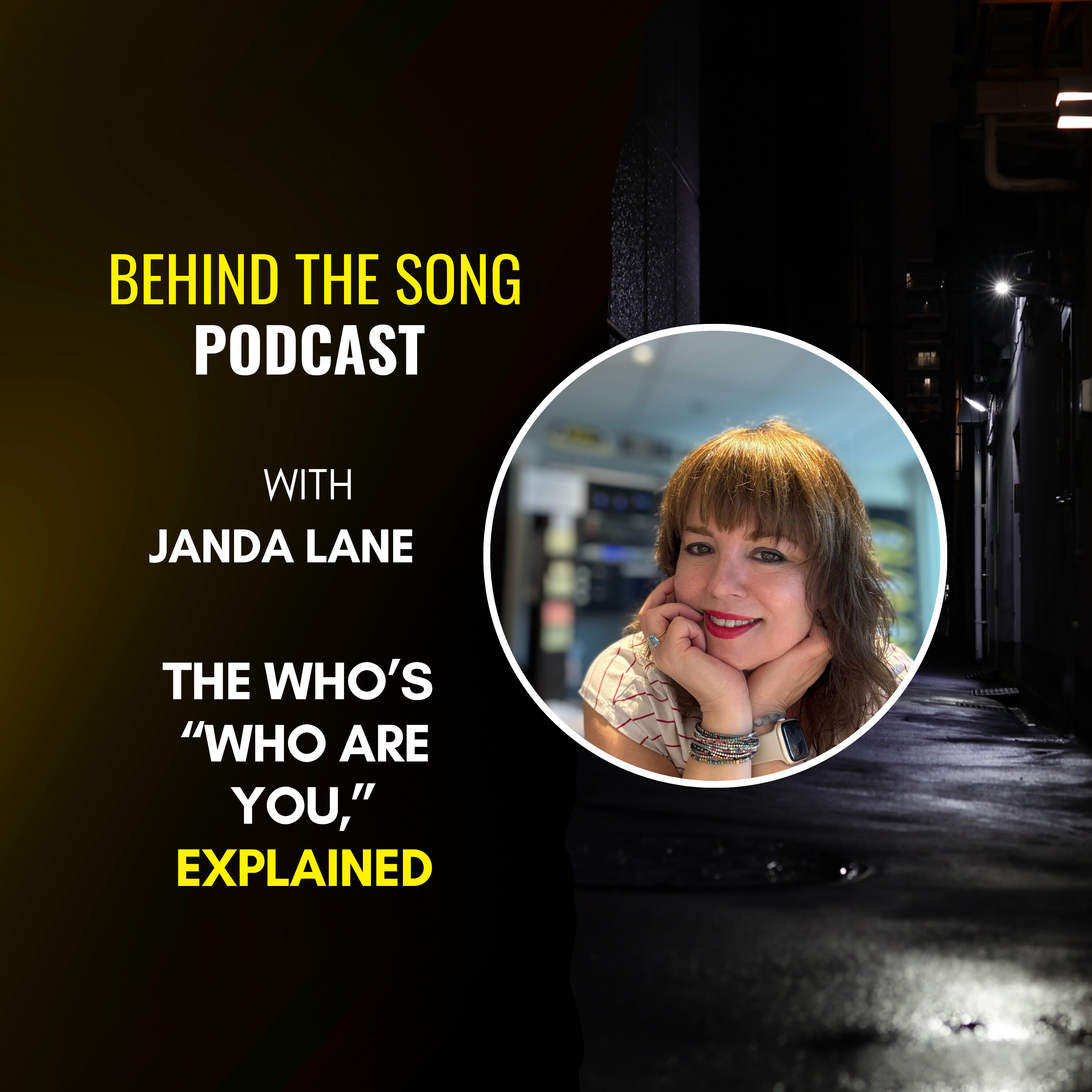
Loading summary
Transcript24 lines
- [00:01]
Progressive Truck Insurance Announcer
Truckers aren't just moving goods, they're making sure bakers get their chocolate chips and hotels get their tiny soaps. But truckers can't do this if they're not on the road. That's why Progressive has over 360 heavy truck employees to help truckers stay on time and on track. Quote Truck Insurance today in as little as eight minutes at progressive commercial.com, progressive casualty insurance company and affiliates from Geico
- [00:25]
Tammy
Subconscious News, I'm Tammy. Racing thoughts broadcasting from your brain. You're you think you live in a pretty safe place, but you just heard about a break in four miles away, which isn't close, but it isn't far either. You know Art Palpitations is on the scene.
- [00:36]
Art Palpitations
I sure am, Tammy. And I don't even know why I drove out here. Because as you know, you got customized renters insurance through Geico, so your stuff is covered.
- [00:44]
Tammy
Oh, well, that's great. Any sign of crime there, Art?
- [00:47]
Art Palpitations
Just some light littering, Tammy. But like they say, a little litter can lead to a lot.
- [00:51]
Tammy
Wise words. It feels good to worry less. It feels good to Geico.
- [00:55]
Elizabeth Reese
Hey, I'm Elizabeth Reese.
- [00:56]
Marjorie Punnett
And I'm Marjorie Punnett.
- [00:57]
Elizabeth Reese
We host a podcast. It's called Best to the Nest. If you want to bring love, balance and joy to your home, relationships or parenting, listen, we do too. We want your home to be your favorite place to be.
- [01:09]
Marjorie Punnett
We bring in experts to guide us along the way. We also chat about pop culture and how it plays in our lives. So learn and laugh along with us as you bring your best to your nest.
- [01:19]
Elizabeth Reese
Best to the Nest, the podcast that brings you home.
- [01:22]
Marjorie Punnett
Get it wherever you get your podcasts.
- [01:26]
Bleacher Report App Announcer
Welcome to the behind the Song podcast, taking you deeper into classic rock's most timeless tunes.
- [01:33]
Janda
Here's your host, Janda. Welcome to the behind the Song podcast, powered by Chick Fil A. I'm Janda. Picture this. It's four o' clock in the morning in 1978. Pete Townsend's had a few too many and he's slumped in a doorway in Soho. A London policeman asks him the question, who are you? That question evolved into a really existential anthem and it became the title track of the who's eighth studio album released in the summer of that year, a new album from the who at a time when the punk rock scene had exploded in London. In fact, Townsend was out carousing with members of the Sex Pistols on the night in question. In this episode of behind the Song. Let's look at the strange booze soaked night that bridged the gap between the 60s mods and the 70s punks and how it helped save Townsend's creative spark. If you like it, hit subscribe and let us know in the comments.
- [02:36]
Progressive Truck Insurance Announcer
Truckers aren't just moving goods, they're making sure bakers get their chocolate chips and hotels get their tiny soaps. But truckers can't do this if they're not on the road. That's why Progressive has over 360 heavy truck employees to help truckers stay on time and on track. Quote Truck Insurance today in as little as eight minutes@progressivecommercial.com Progressive Casualty Insurance company and affiliates ever wonder who's out there making the world go round? It's truckers. Who unites baristas with coffee beans. Truckers. Who unites dogs with their favorite chew toy? Truckers. That's why Progressive offers truckers even more protection with cargo plus coverage to keep truckers moving right along. Quote Truck Insurance Today in as little as 8 minutes@progressivecommercial.com Progressive Casualty Insurance Company and affiliates coverage subject to policy terms, limits and conditions not yet available in California, New York and Virginia.
- [03:30]
Janda
The story of that night is legendary. Pete Townsend spent most of that day about 11 to 13 hours, in a grueling legal meeting with Alan Klein, the notoriously tough former manager of the Beatles and the Rolling Stones, trying to sort out the band's royalties and get paid. After that encounter, he decided to go out drinking to blow off some steam. As fate would have it, he ran into Steve Jones and Paul Cook of the Sex Pistols at a club called the Speakeasy in soho. Despite their obvious differences musically, there was a lot of common ground between Townsend and the Pistols, a kind of like minded rebelliousness and a tendency to question authority. The night wore on and Townsend in particular had imbib a little too much. And just as the song says, he really was woken up after passing out in a doorway by a policeman who recognized him but still asked for his credentials. So Townsend started yelling back to him. In his autobiography, who I Am, townsend notes that while he was shouting who are you? At the policeman, Steve Jones and Paul Cook were actually acting as mates, making sure he didn't get into too much trouble. Townsend was at an uncanny crossroads here, suffering from from industry burnout, getting into a brush with the law and feeling the strange kindness of the new punk generation. What a fascinating night, the moment the godfather of punk was saved by the punks that put the word punk on the map. While the media loved to portray them as enemies, the reality was a lot more like a passing of the torch or a very loud family reunion. I mean, after all, way back in 1965, Pete Townsend wrote the ultimate punk lyric before punk was even a word. I hope I die before I get old in my generation. But by 1978, when this meeting of the inebriated minds happened, Pete was 32. He was a millionaire, a dinosaur of the rock establishment. And he was watching a new generation of kids in ripped T shirts try to burn down the house that he helped build. By the mid-70s, the who were playing massive stadiums. But Townsend was feeling disconnected. He felt by then that the music had become too bloated, too corporate. And then came along bands like the Sex Pistols and the Clash. To the press, these kids were the enemy, but to Townsend, they were a mirror. He saw his own youthful rage in them. He famously said that when he saw the Sex Pistols, he. He felt like he was seeing the WHO 10 years earlier. The interaction between him and the Pistols changed how Townsend approached the who Are youe album. You can hear it in the tension of the songs, a back to basics grit in his guitar playing that hadn't been there on the more polished the who by numbers. The lyrics of the song who Are youe address it all. The exhaustion of being a rock star and wondering not only how he fit into all this anymore and. But also, who were the kids in the front row, the ones coming to see the concerts as the next wave of rock was erupting. The song starts with that percussive chug at the beginning, pure 1970s tech pioneering with Townsend's guitar and an ARP 2600 synthesizer. The chorus comes first, almost like birds calling to one another. Who are you? Hoo hoo hoo hoo. And then the story unfolds, with Roger Daltrey delivering the lines with a swaggering powerhouse vocal. I woke up in a Soho doorway A policeman knew my name he said you can go sleep at home tonight if you can get up and walk away I staggered back to the underground and the breeze blew back my hair I remember throwing punches around and preachin from my chair so here we have the elder rocker, drunk and preaching to the new guard. Punks as saviors as punks. Back to the chorus and then the story unfolds further. I took the tube back out of town Back to the Rollin pin I felt a little like a dying clown With a streak of Rin Tin Tin I stretched back and I hiccuped and looked back at my busy day 11 hours in the tin Pan God, There's Got to be another way this verse describes a very particular reality in Townsend's dealings with his career. The grind of it, the existential exhaustion of it. He's taking the Tube or London Underground back out of town, from meetings in the city center to the rolling pin, which in who lore could either be his wife, another bar, or a reference to pinballs rolling around inside a pinball machine from the band's Tommy days, feeling like a dying clown despite wearing a brave face like the heroic dog in the old Rin Tin Tin films. Looking back on his long day in the tin Pan, that's Denmark Street, London's version of Tin Pan Alley, the historical hub of music publishers and songwriters, and the 11 hours spent wrangling funds from his manager there on the business side of music, this verse literally ends with the plea to God to reveal another way to do all this, more about the soul of the music and less about the mechanical hustle of the business. Then it's back to the chorus, and it includes the first time the F word is included in the lyrics of this song. Dropped in at a little over two minutes in, slightly obscured by Keith Moon's ferocious drumming, but not entirely. The song then opens up into that really beautiful bridge with the Oo wa oo's and piano played by Rod Argent of the Zombies and Argent. And then it builds back up to the chorus, and then the next verse thrusts itself into your ears, even though they're the sweetest lines of the song. I know there's a place you walked where love falls from the trees My heart is like a broken cup I only feel right on my knees I spit out like a sewer hole yet still receive your kiss how can I measure up to anyone now after such a love as this? Townsend said in his memoir that this last verse was actually written way back in 1971. While the who were touring the Southeast, he visited a South Carolina retreat owned by his guru, the Meher Baba, the same guru who inspired Baba O'Reilly. It is so interesting that he included this verse in this song, which is otherwise about being drunk and burned out on the biz, because it expressed a level of total surrender from his younger days that he just couldn't replicate. In 1978, it transformed who Are youe? From a simple song about a night out into a complex meditation on whether a person can ever truly measure up to their own ideals or the love they've received, a stark contrast to the aggression in the rest of the song. Back to the chorus again, and this is the second time the F bomb is dropped. And at almost six minutes in the F bombs in this song, do what curse words should do, really emphasize the point. They aren't gratuitous or used to be shocking. They are simply how frustrated people speak, which fans recognized immediately and delighted in. When Daltrey delivers the final Tell me who are you? At the end, he does it so triumphantly. A stunning end to an anthem. A about finding yourself
- [11:25]
Doug
and Doug there's nowhere I wouldn't go to help someone customize and save on car insurance with Liberty Mutual, even if it means sitting front row at a comedy show.
- [11:35]
Janda
Hey everyone, check out this guy and his bird. What is this, your first date?
- [11:38]
Bleacher Report App Announcer
Oh no.
- [11:39]
Doug
We help people customize and save on car insurance with Liberty Mutual. Together we're married. Me to a human, him to a bird.
- [11:45]
Janda
Yeah, the bird looks out of your league anyways.
- [11:47]
Doug
Only pay for what you need@libertymutual.com Liberty
- [11:50]
Janda
Liberty Liberty, Liberty Pete Townsend didn't fight the punk movement. He championed it. He recognized that for rock and roll to survive, it had to be prepared to kill its idols. By befriending the punks, Pete found the energy to keep the who going into a new decade. He realized that getting old didn't have to mean becoming irrelevant. It just meant that you had to work harder to find out who you really were. And as a band, he the who would soon be forced to do some deeper soul searching. Who Are youe was the last album released before Keith Moon's tragic passing. In this song, you can certainly hear his signature chaotic energy trying to burst through the seams. The COVID of the album, shot at Shepperton Studios in London by Terry o' Neill during the filming of the band's the Kids Are alright documentary, has become legendary in its own right because pictured on the COVID is the band among a bunch of lighting and stage gear with huge electrical cables draped all over the place. The only member of the who seated in this photograph is Keith Moon, sitting with the back of his chair facing outwards. On that chair is a sign that reads not to be taken away. Very eerie, considering he would pass away at age 32 due to his troubles with drugs and alcohol less than a month after the who Are youe album was released. It's been said before, and the accolade bears repeating here there was one of the greatest rock drummers of all time gone way too soon. The song who Are youe Became one of the who's biggest hits in the States, peaking at number 14 on the Billboard Hot 100 despite the F bombs in the lyrics, and it still resonates in a modern world of social media, influencers and personal branding, the question who are you? Feels more relevant than ever. The who weren't just asking the listener, they were asking themselves if they still mattered. It's a song about survival and Pete Townsend's terrifying realization that fame doesn't actually tell you who you are. You gotta figure that out for yourself. It's the sound of a man trying to find his way home in more ways than one. I'm Janda and this has been behind the song. If you like this episode, give it a like and subscribe to the channel. Or better yet, tell a friend. Special thanks as always to Christian Lane for the music you hear on these podcast episodes. You can find me on the air at 97.1 FM the Drive in Chicago and at wdrv.com on the way. Much more Classic Rock and Roll hey, did you know Chick Fil? A helps you save time and earn rewards Every time you order with the Chick Fil? A app, it's easier than ever to get your favorites fast. Whether you're craving a crispy Chick Fil? A chicken sandwich, fresh made salads, or those golden waffle fries, it's all just a few taps away. Order ahead, skip the line, and even customize your meal exactly how you like it. Plus, every qualifying purchase earns you points toward delicious rewards like a free treat or your favorite entree. It's convenience, rewards and that signature Chick Fil? A service all in the palm of your hand. Download the Chick Fil? A app today and make your next meal even better. Chick Fil? A Eat More Chicken.
- [15:17]
Bleacher Report App Announcer
The Bleacher Report app is your destination for sports right now. The NBA's heating up, March Madness is here, and MLB is almost back. Every day there's a new headline, a new highlight, a new moment you've got to see for yourself. That's why I stay locked in with the Bleacher Report app. For me, it's about staying connected to my sports. I can follow the teams I care about, get real time scores, breaking news and highlights all in one place. Download the Bleacher Report app today so you never miss a moment.