← Behind The Song: Classic Rock Chronicles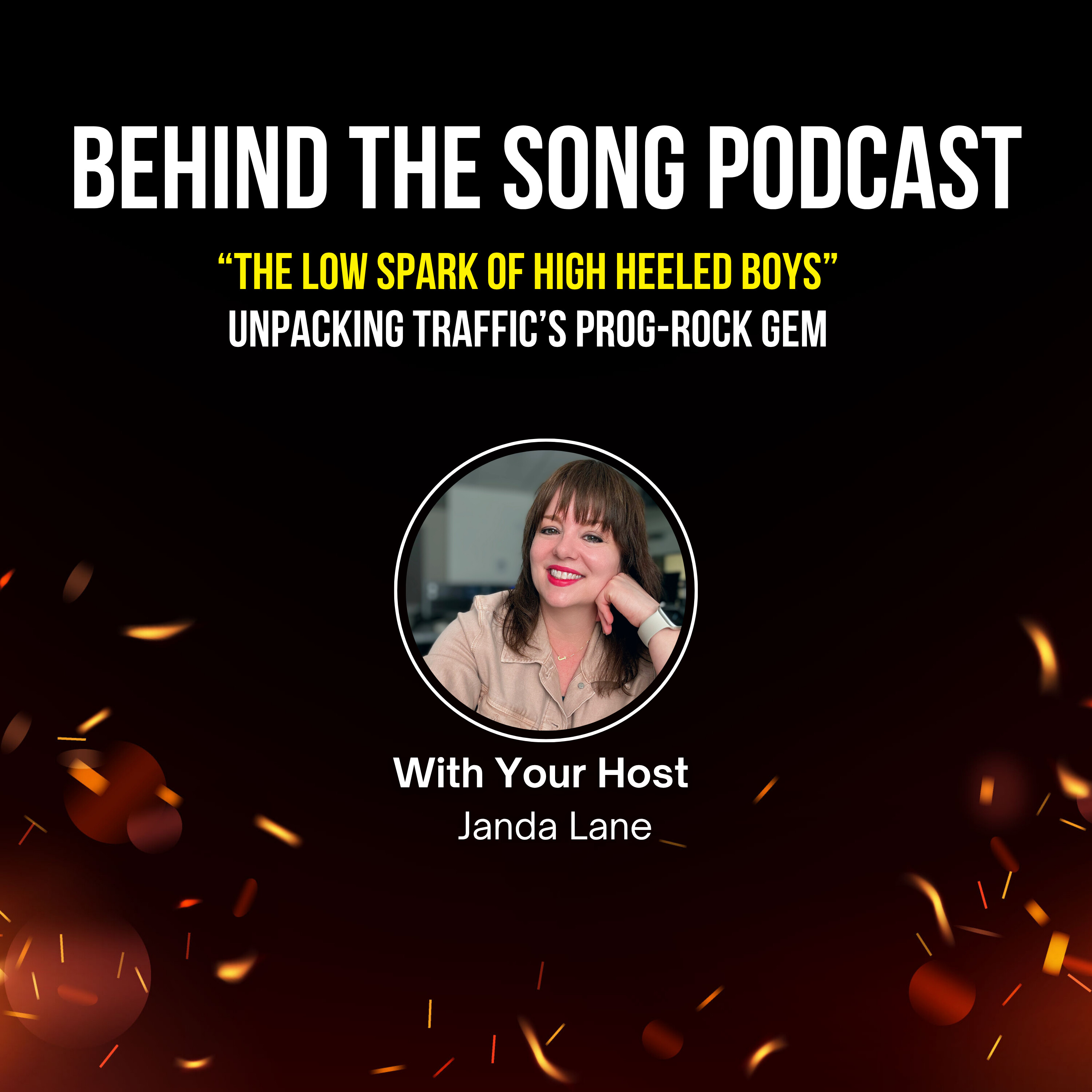
Behind The Song: Classic Rock Chronicles
Unpacking Traffic's Prog-Rock Gem: "The Low Spark Of High Heeled Boys"
00:09:53
Loading summary
Transcript18 lines
- [00:02]
Janda
Welcome to the behind the Song podcast, taking you deeper into classic rock's most timeless tunes. Here's your host, Janda.
- [00:16]
Narrator
Clocking in at around 12 minutes long.
- [00:19]
Jim Capaldi
The Low Spark of High Heeled Boys.
- [00:21]
Narrator
By Traffic was never released as a single because it's way too long. Jazzy, eclectic, with lyrics that are pretty ambiguous, it's a track that defies pop logic, a tune with a kind of gravitational pull for fans so inclined to let the mind wander between its spaces. Written by Steve Winwood and Jim Capaldi, it became the title track for Traffic's fifth studio album released in 1971, and the title of the song was suggested not by either one of its principal songwriters but but by the actor Michael J. Pollard, best known for his role as C.W. moss in the film Bonnie and Clyde. So how did all this come about? Let's get into the story in this episode of the behind the Song podcast. If you like it, give it a thumbs up and hit. Subscribe and let us know in the comments. First, a little history Traffic was formed in 1967 in Birmingham, England after Steve Winwood left the Spencer Davis Group, a band that included his older brother Muff and put him on the map and on the charts while he was still just a teenager. Chris Blackwell of Island Records made Winwood the focal point of the record label as a result and was there to support Wynwood's new musical journey with Traffic and Beyond. The original group formed as a Winwood drummer Jim Capaldi, guitarist Dave Mason and multi instrumentalist Cross Chris Wood who would contribute sax, flute and more to their musical output. Capaldi and Winwood quickly became the songwriting unit with Wynwood handling lead vocals, keyboards and more, delivering lyrics largely written by capaldi. Traffic released three albums between 1967 and 1969. Dave Mason left in 68 and the group disbanded briefly while Winwood formed the very short lived supergroup Blind Faith with Eric Clapton, Ginger Baker and Rick Gretsch. Blind Faith released a one and done self titled album in 1969 which went to number one in the UK and the US and after a tour of the US Blind Faith disbanded in 1970. Winwood returned to the studio with the intention of recording a solo album, but instead rejoined with Capaldi and Wood reforming Traffic. Some new additions were brought on when they recorded the Low Spark of High Heeled Boy's album. This is the first album featuring percussionist Rebop Kwakuba, originally from Ghana, and it's the only one that includes Rick Gretsch reunited with Winwood from Blind Faith and drummer Jim Gordon, who had just come off of another recording project, Layla and Other Assorted Love Songs, the sole studio album released by Eric Clapton's Derek and the Dominoes. Gordon, an incredible and highly sought after session drummer, would sadly later become infamous for a schizophrenic episode in 1983 in which he murdered his mother, resulting in life in prison. He passed away while incarcerated in 2023 in his home state of California. Having these additional musicians on board for the Low Spark of High Heeled Boys album was transformational. It set Capaldi free from focusing on drumming, for one thing, allowing him to focus more on the lyrics. Capaldi started writing this song in Morocco, ostensibly there to make a movie with character actor Michael J. Pollard. The film, which was to be titled, nevertheless didn't work out for one reason or another, but their time together ended up being productive because they sat around talking about songs all the time. Capaldi said that Pollard, who was 5ft 6 inches tall, wrote the line the.
- [04:02]
Jim Capaldi
Low spark of high heeled Boys in.
- [04:04]
Narrator
His notebook before leaving Morocco, and to Capaldi, that line resonated. It reflected his high spirited friend Pollard, who would wear cowboy boots in an effort to gain some height, and it seemed to speak to the rebel energy of the time. At the dawn of the 70s decade, he said that for him, the low spark line spoke to the underground, the street people, and the undercurrent of something insidious creeping in at the end of the idealistic 60s. The lyrics go like if you see something that looks like a star and it's shooting up out of the ground and your head is spinning from a loud guitar and you just can't escape from the sound, don't worry too much, it'll happen to you. We were children once playing with toys and that thing that you're hearing is only the sound of the low spark.
- [04:57]
Jim Capaldi
Of high heeled boys.
- [04:59]
Narrator
Some have interpreted the lyrics of this song to be in reference to drug culture between users and buyers. Others point to the term high heeled boys as a slang term for mixing heroin and cocaine in the uk. High Heeled Boys was a reference to organized crime members, something that caused some degree of outrage there when the song was released, but that quickly faded. The lyrics are often also said to be a commentary on the predatory nature of the music business, the tenuous relationship between the musician's desire for artistic expression and the corporation at the other end desiring a payday. The through line in all of these explanations is a push and pull between forces, something that you can hear in the Arrangement of the music One of the reasons the song is a progressive masterpiece. It goes on to the chorus. The percentage you're paying is too high priced While you're living beyond all your means and the man in the suit has just bought a new car from the profit he's made on your dreams but today you just read that the man was shot dead by a gun that didn't make any noise but it wasn't the bullet that laid him to.
- [06:09]
Jim Capaldi
Rest Was the low spark of High Heeled Boys.
- [06:14]
Narrator
The next verse asks the listener an overarching question. Are you happy with the chance you've taken here and would you do it again knowing the result? It goes if you had just a minute to breathe and they granted you one final wish Would you ask for something like another chance or something similar as this? Don't worry too much, it'll happen to you as sure as your sorrows are joys and the thing that disturbs you is only the sound and of the.
- [06:45]
Jim Capaldi
Low spark of high heeled boys Then.
- [06:48]
Narrator
The chorus repeats and Chris Wood's sax solo winds through a long breakdown with Winwood on both piano and ham and organ, an incredibly nuanced piece of music. And then it's on to the final verse. If I gave you everything that I owned and asked for nothing in return Would you do the same for me as I would for you? Or take me for a ride and strip me of everything including my pride? But spirit is something that no one destroys and the sound that I am hearing is only the sound of the.
- [07:22]
Jim Capaldi
Low spark of high heeled boys.
- [07:25]
Narrator
If you think about the flower power 60s giving way to the grittier reality of the 70s, the song is the perfect reflection of that. When Wynwood sings the spirit is Something that no one Destroys, the the song searches for the light even when facing a more cynical and complex world. It's an ambiguous song about dislocation, the struggle to remain solidly on your own two feet when faced by outside forces. It's that introspective contemplation that you hear.
- [07:53]
Jim Capaldi
In the low spark of high heeled.
- [07:54]
Narrator
Boys unfolding organically in the deliberate pace of the song and the complex layers laid down by each of the performers that makes it such a standout. Once you hear this song, you never forget it. It's a landscape that lets you project your own experience onto the narrative the way all great art does. Traffic released two more albums in the 70s, then were dormant, while Steve Winwood's solo star rose to incredible heights in the 80s. In the 90s, a fan left a message at Bob Weir of the Grateful Deads hotel while they were performing in Chicago suggesting that it would be a great idea for Traffic to tour with the Dead. That message led to a reunion between Wynwood and Capaldi, a new Traffic album, a Traffic tour, and an opening slot on the Grateful Dead summer tour in 1994. Traffic were inducted into the Rock and Roll hall of fame in 2004. Jim Capaldi passed away the following year. In 2005, more than five decades after.
- [08:55]
Jim Capaldi
Its release, the low spark of High.
- [08:57]
Narrator
Heeled Voice still does what it always did, invites us to sink into its layers of meaning, all the while appreciating the incredible musicianship that we hear when we listen to Traffic. And it's a reminder that some of the most profound artistic statements are not found in simple answers, but in the eloquent exploration of life's complex questions. So what other songs give you the space to contemplate like this? Something to think about. Until next time, I'm Janda and this has been behind the song. If you like this episode, give it a like and subscribe to the channel. Special thanks as always to Christian Lane for the music you hear on these podcast episodes. You can find me on the air at 97.1fm the drive in Chicago and at wdrv.com on the way. Much more classic rock and rol.