← Behind The Song: Classic Rock Chronicles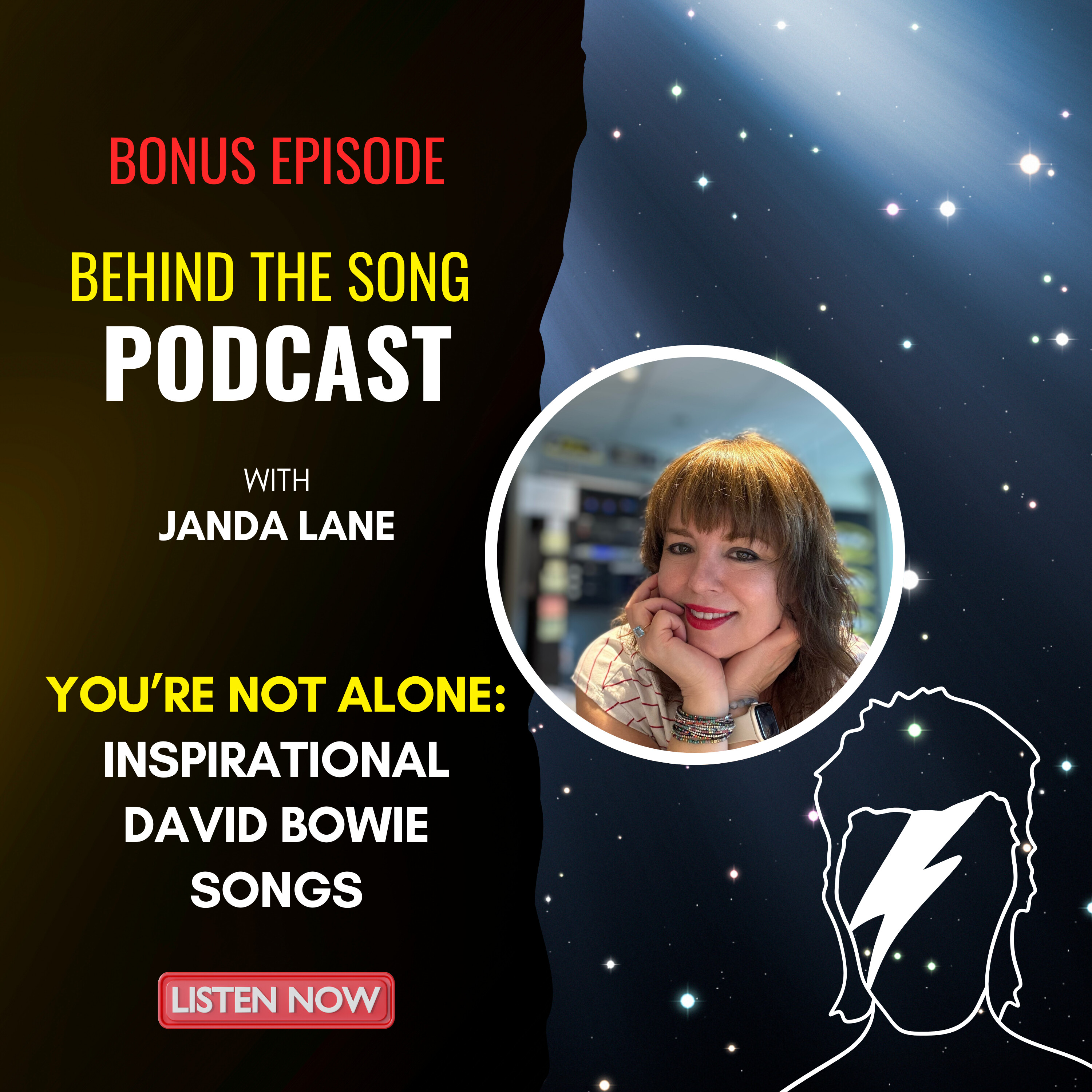
Loading summary
Transcript4 lines
- [00:00]
A
Hey, I'm Elizabeth Reese. And I'm Marjorie Punnett. We host a podcast. It's called Best to the Nest. If you want to bring love, balance and joy to your home, relationships or parenting, listen. We do too. We want your home to be your favorite place to be. We bring in experts to guide us along the way. We also chat about pop culture and how it plays in our lives. So learn and laugh along with us as you bring your best to your nest. Best to the Nest, the podcast that brings you home. Get it wherever you get your podcasts.
- [00:30]
B
Vrbo's Last Minute deals make chasing fresh mountain powder incredibly easy. With thousands of homes close to the slopes, you can get epic pow freshies first tracks and more. Find Last Minute deals with the Last Minute filter on the app. Book a private vacation rental now@vrbo.com welcome.
- [00:47]
A
To the behind the Song podcast, taking you deeper into classic rock's most timeless tunes. Here's your host, Janda. I'm Janda and in this special bonus holiday episode of the behind the Song podcast, let's get into five songs with inspirational lyrics by David Bowie. He didn't always write that way. More often he took an observational approach and looked at things from a distance to offer his very unique viewpoint on life and the world. But when he did do lyrics with weight, the results could be so amazing. Oh no love, you're not alone no matter what or who you play what an album Closer right Rock and Roll Suicide is the climactic ending of the rise and fall of Ziggy Stardust and the Spiders from Mars. It's both a downer and a song that reaches big time heights both in its meaning, a moment of unity and empathy, and in the powerful way that Bowie delivered the lyrics. He explained the lyrics in a Rolling stone interview in 1974. Ziggy starts to believe himself a prophet of the future. He takes himself up to incredible spiritual heights and is kept alive by his disciples. When the infinites arrive, they take bits of Ziggy to make themselves real because in their original state they're anti matter and cannot exist in our world. And they tear him to pieces on stage during the song Rock and Roll Suicide. As soon as Ziggy dies on stage, the infinites take his elements and make themselves visible. It is a science fiction fantasy fantasy end quote. And at the end of the song, Bowie is literally screaming these lines, oh no love, you're not alone no matter what or who you've been, no matter when or where you've seen. All the knives seem to lacerate your brain I've had my share I'll help you with the pain. You're not alone. It was more than an interconnection between the character Ziggy and his audience. It's a kind of love letter to anyone who feels alone or. Or different, or an outsider. Letting people know that they're not in fact alone when they're going through hardships, either real or imagined, is one of the most powerful things that we can do. It's a potent form of kindness that elevates us the same way Bowie's fictional infinites elevated themselves by receiving Ziggy Stardust. This was the final song ever played by Ziggy and the Spiders from Mars. It was the show stopping Closer that ended their final concert in 73 at the Hammersmith Odeon in London, when Bowie announced on stage that it was Ziggy's final performance, much to the surprise of the band. The ultimate cathartic close to a legendary chapter. Such a beautiful song. Word on a Wing, from Bowie's Station to Station album, released in 76, is one of his most spiritual songs. When he was making the Station to Station album, Bowie was totally obsessed with the occult and religious and mystical books. He read the works of Aleister Crowley, studied the Tarot, Kabbalah, numerology and dark magic. This was his Thin White Duke period, when he was also starring in the film the man who Fell to Earth. An experience and a time period that was really tough on him psychologically. He said it was the first time he'd thought about God in a real way and wrote Word on a Wing as a protection, a passionate revolt against the darkness that he was in. The song is the spiritual core of the Station to Station album, an appeal for help, he sings. Lord, I kneel and offer you my word on a wing and I'm trying hard to fit among your scheme of things. It's safer than a strange land But I still care for myself and I don't stand in my own light Lord, my prayer flies like a word on a wing Almost hymn like it was for Bowie, a pivot from the darkness and an exploration of faith during his personal turmoil during the mid-70s. Undoubtedly one of the most uplifting songs of Bowie's career, a song that became an anthem for fans heroes. The title track to the album, released in 77, was part of the Berlin trilogy, the city he moved to to escape the drug addiction that fueled his darkness during that Thin White Duke period. The song is about two lovers meeting under the Berlin Wall, which was in view of the studio that Bowie was recording in. One of those lovers was his producer, Tony Visconti, who really was kissing a girl he met by the Wall while working with Bowie. The song became really important when Bowie performed it at the wall in 1987, singing it across the Wall to fans in East Berlin, a performance that he said was so emotional for him. When the Wall came down in 1989, it became a triumph for fans, a really sweet and powerful song against really any kind of oppression. He starts the song by singing I, I will be king and you, you will be queen Though nothing will drive them away we can beat them Just for one day we can be heroes Just for one day it speaks to anybody facing impossible odds, which Bowie himself had done again and again. What a great song. Absolute Beginners. It brings hope to the low points or uncertain moments in a relationship, a naked moment of truth when a relationship comes into question for one reason or another, he sings, as long as you're still smiling there's nothing more I need I absolutely love you but we're absolute beginners but if my love is your love we're certain to succeed it was a standalone single released in 1986, and it was the title theme of the film by Julian Temple released that year, a story about a young photographer navigating love, fame and his values in 1950s London. Bowie appeared in the film as an advertising executive and Keith Richards, Paul Weller and Ray Davies all make appearances as well, but it was a box office flop. The song, however, was a success in many parts of the world and went to number two on the UK singles chart. It features Bowie's old pal Rick Wakeman, by the way, who previously worked with him on Space Oddity and on the Hunky dory album. Absolute Beginners occupies a unique space, confident in love but aware of the potential pitfalls. And it beautifully explores the idea that, really, life isn't always so simple. And what could be more inspirational or more difficult than writing your own Requiem? David Bowie's final album, Blackstar, was released on his 69th birthday, January 8, 2016. When he died two days later, it was heartbreaking. He told very few people that he was sick, and the knowledge that he'd been working to record and release what he knew would be his final album while battling cancer was something that fans had to really get our heads around. What amazing spirit to leave that final gift. The song Lazarus is a lyrical goodbye. It starts with these lines, look up here I'm in heaven I've got scars that can't be seen, I've got drama can't be stolen Everybody knows me now he knows that he is dying and this was his way of saying that it's okay. Later in the song he sings just like that bluebird I'll be free Ain't that just like me? The song was originally titled Blue Bird, by the way, and went through a couple of title changes before he landed on the biblical Lazarus, who of course was raised from the dead, giving fans even more to ponder. So the final thing that he ever did was say goodbye his way through his songs and in doing so gave us something to think about in terms of having grace when you know your time has come. And that's amazing. Thanks so much for listening to this bonus episode of the behind the Song podcast. I hope that you find these Bowie songs as inspirational as I do. If you like it, give it a like and hit. Subscribe wherever you listen to your podcasts. And even better, tell a friend because I don't think there's anything better than music shared between friends. And on the way, much more classic rock and roll.
- [09:56]
B
VRBO helps you swap gift wrap time for quality time. Go to VRBO now and book a last minute week long stay and save over $390 this holiday season. Book your next vacation rental home on VRBO. Average savings $396.00 select homes only.