← BETTER! with Dr. Stephanie Estima | Strength, Body Composition & Perimenopause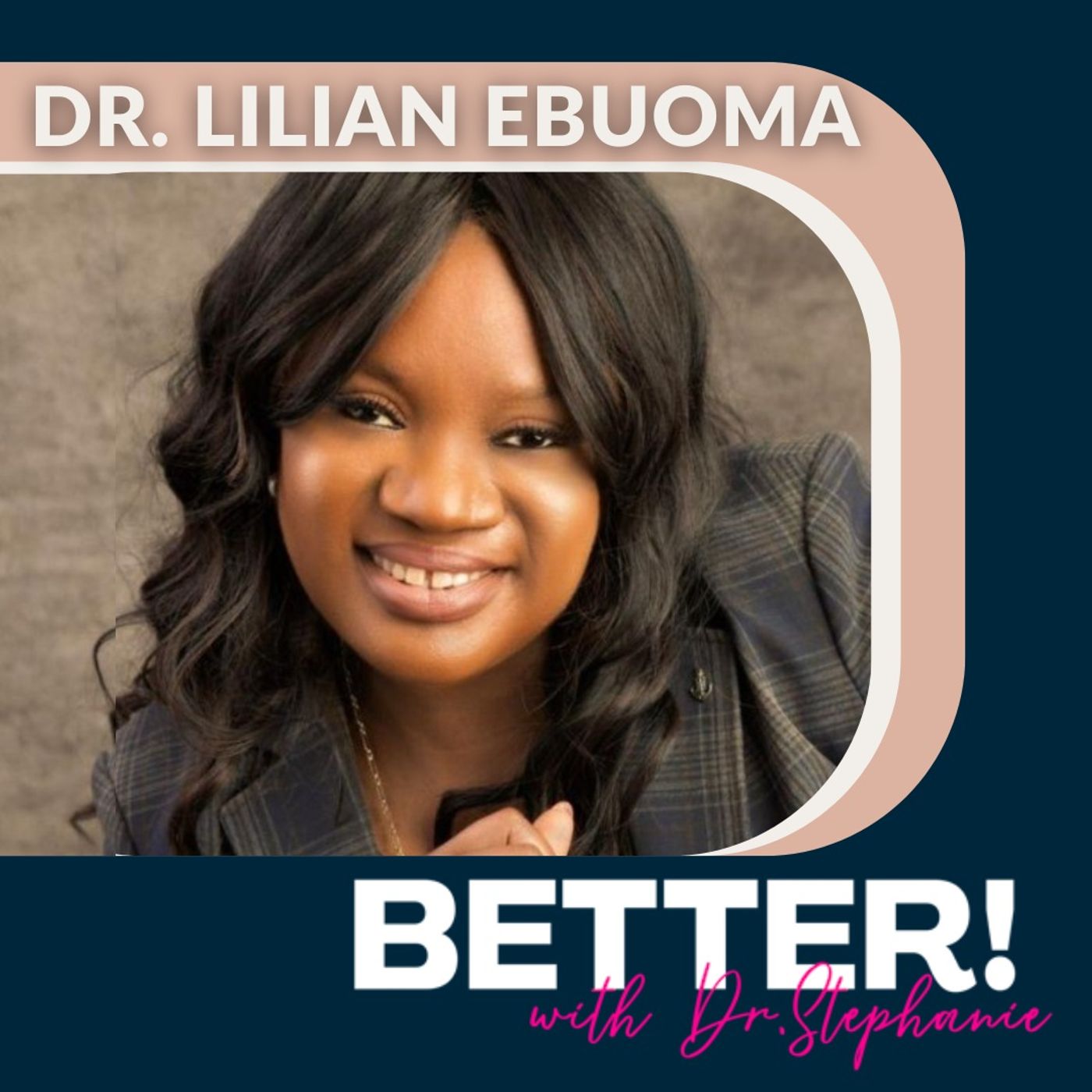
BETTER! with Dr. Stephanie Estima | Strength, Body Composition & Perimenopause
Breast Health Masterclass: Pain, Lumps & Cancer Screening with Dr. Ebuoma
01:19:40
Dr. Lilian Ebuoma (Harvard-trained breast radiologist) breaks down EVERYTHING about breast health—from why 7-year-olds are developing breast buds earlier than ever, to the truth about mammograms, dense breasts, and that 25% stat that'll make you want to move your body today. Watch the full episode at https://youtu.be/vi6U2V3LPok
Loading summary
Transcript136 lines
- [00:00]
Dr. Lillian Iboma
And a fun fact that a lot of people don't know is you develop what they call, like, breast, like ridges. And it actually starts from your mid thigh all the way up actually almost to, like, your armpit area.
- [00:12]
Dr. Stephanie Estima
I had mastitis when I was breastfeeding my first child, and my midwife was like, all right, so you're going to basically, like, extract, like, where you feel the backup. And like, it was so like, I don't know if this is tmi. We're gonna get an explicit rating here.
- [00:24]
Dr. Lillian Iboma
I always talk about pain and breast cancer. What came first, the chicken or the egg? Because some people would swear that they had pain in this breast, and then two, three years later, they developed cancer in that breast.
- [00:34]
Dr. Stephanie Estima
You said exercising daily makes women 25% less likely to develop breast cancer. Now some pharmaceutical companies said, hey, we came up with this pill that drops your risk by 25%. Like, everybody would be taking it.
- [00:51]
Dr. Lillian Iboma
So the big thing, though, that people worry about with the mammograms is the radiation. So does the risk of the radiation that you get to your breast outweigh the risk of fighting a cancer? And one of my professors at Harvard used to describe it like this. The amount of radiation that you get in a mammogram is less than flying from the east coast to the west Coast.
- [01:16]
Dr. Stephanie Estima
Hello, my friends. Welcome back to another episode of better with Dr. Stephanie. It's me, your host, Dr. Stephanie Estima. And today you. You are going to learn everything you ever wanted to know about your breasts. So we are talking about common issues with breast development, asymmetry, the breast buds. We are talking about lumps. We are talking about dense breasts. We're talking about discharge from breath, literally absolutely everything. And of course, we talk about mammograms and ultrasounds and breast cancer. The different types of cancer, different populations, and what we can do about them. My guest today is Dr. Lillian Iboma. She is a Harvard trained breast radiologist, a certified physician, executive social entrepreneur, a US Navy veteran, and a certified professional coach. She has more than two decades of experience in the health and wellness industry, including the United States Navy. She is a medical fellow of the Institute of coaching at McLean, a Harvard Medical School affiliate, and the 2027 Fellow of the American College of Radiology. So in this conversation, we are talking, as I mentioned, about everything that you could ever want to know about your breasts, from development all the way to cancer and optionality there. This is a conversation for you to listen to if you are the owner of breasts. So that is both for men and Women, because men also have breasts, but also I think important for your children, particularly your female children, but certainly a conversation for your sons, but your daughters who are developing breast buds. We talk about the early age or the earlier age of onset set for development of breast buds in, you know, 2026 and of course what that means, how we differentiate normal from abnormal, etc. So if you are a breast owner, male or female, or you have children who are breast owners, male or female, this is going to be a conversation for you to better communicate to them, but also for you to understand your own breast tissue and the way that it changes over the arc of our lives. So without further delay, please enjoy my conversation with Dr. Lillian Iboma. If you're looking to sleep better, recover faster, improve your skin's appearance and thicken your hair, you are going to love the Bon Charge red light therapy panels. Red light stimulates something called cytochrome C oxidase is a protein that enhances energy production in human cells. This essentially boosts mitochondrial efficiency in breaking down nitric oxide and generating more energy that helps the body's healing process. Red light therapy has been shown in peer reviewed clinical trials to help with improve collagen and elastin production in the skin, thereby reducing the appearance of fine lines and wrinkles, improving skin blemishes, roughness and reducing scars, supporting recovery for better sleep, promoting muscle relaxation, AKA soreness and stiffness. And this is also FDA approved for hair loss, which is something that many women in their 40s and 50s deal with. The bon charge red light therapy device uses the most bioactive frequencies of red and near infrared light at 630nm, 660 and 850nm. I personally use the full length panel after a long bike ride. I typically like to do my mobility and stretches in front of the full length panel for about 10 minutes a day. If you want to get these benefits, head over to boncharge.com forward/better and use code better at checkout for 15% off your purchase. All right. Dr. Lillian Iboma, welcome to the show.
- [04:52]
Dr. Lillian Iboma
Thank you.
- [04:53]
Dr. Stephanie Estima
I thought we might just start off with just the biology of the breast.
- [04:57]
Dr. Lillian Iboma
Right.
- [04:58]
Dr. Stephanie Estima
So the breast development from, you know, prepubescent to the breast buds to the development of the breasts themselves. Talk us through breast development and for, for those of us that are mothers with daughters, how we might be able to communicate some of the changes that are happening to her breasts as she is moving through, you know, prepubescent into puberty.
- [05:21]
Dr. Lillian Iboma
Yeah, you know, that's a great Question. So breast development in general is all genetics. And it starts in the utero. And a fun fact that a lot of people don't know is you develop what they call like breast, like ridges. And it actually starts from your mid thigh, the mid thigh, all the way up actually almost to like your armpit area. And then based on, you know, male, female, by both sexes, the ridges start to recess. So they start to recess and ends up in the chest area and then from the thigh area starts to recess as well. But interestingly, sometimes remnants of that ridge remain. So you'd have women who didn't even realize that they had this remnants of the ridge until they start breastfeeding, for example, and then they notice they get engorged in their armpits and have milk coming out of the armpit. Or you might, you know, hear somebody say, I feel like I have something that looks like a nipple of my thigh. So, yeah, so, you know, not, you know, not common, but it's something that could happen when you have this like, you know, remnant of breast tissue along that mammary ridge is what it's called. So and then with development as you, you know, as you're getting older, especially with girls, but to go back to boys. So sometimes a male infant can be born and because of estrogen that's from the mother, you may sometimes see little infant males with a little bit extra breast tissue. They don't necessarily lactate, but they will have extra breast tissue. And some moms get worried to say, you know, why does he have, you know, extra breast tissue? But it usually goes away and it's from stimulation by estrogen. And then, you know, girls might also have the same thing too. And then as development occurs, we're starting to see now that girls are actually having breasts earlier. So I'm seeing like 7 year olds. And the moms may be nervous as to say, my daughter is having this lump. And this is like the classic, my 7 year old is having this lump that's growing. So of course you're worried. Is this cancer? What's going on? And oftentimes it's asymmetric. So maybe one side is what's growing more than the other. And then when we image the child, you see that the breast buds are developing, we call them breast buds at that age. They are developing, but it's asymmetric. So I think the conversation, the most important thing to talk about with development now is we are noticing it early now in children. You know, I think, you know, with our age group, I'm I'm not gonna tell my age, but like you know, 12, 12, you know, and in some, you know, our, our generation, like sometimes 16, 17, 18, it was like 11.
- [07:51]
Dr. Stephanie Estima
12, it was like the, you know, I'm 48, so I'll just say that. Yeah, so it, you know, it was like this. When you get your period, it's somewhere around 11 or 12 years old.
- [08:00]
Dr. Lillian Iboma
Exactly, something like that. Sometimes even 14. But now, you know, I mean, think about a 14 to 7, you know, is when we're seeing and it just gets younger.
- [08:08]
Dr. Stephanie Estima
Almost half.
- [08:09]
Dr. Lillian Iboma
Yeah, almost half. And you know, people are saying, is it because of the environment, you know, what's stimulating, you know, this advancement in development so quickly? So I definitely would like to let people know that, you know, a lot of times if anything is growing in a child in their breasts, it's just that development is sooner, but it's always important to check it out. But you know, somebody under the age of 10, 12, having breast cancer is extremely, extremely, extremely rare.
- [08:36]
Dr. Stephanie Estima
And why is there asymmetric growth? So if you have the breast buds developing, let's say it's seven or eight or nine years old, why would it develop more on one side versus the other? The right. If the, if the, if the system as a whole is being exposed to, let's say environmental dis, like you know, estrogen, you know, estrogenic compounds, why would it be more on the right or the left versus the other side?
- [08:58]
Dr. Lillian Iboma
I think it's just more of a speed thing. Just kind of like how one, one foot is larger than the other. And I think even ultimately with you know, full grown development, you do notice that one breast is different than the other. I think it's just the by, you know, it's just nature how everything is not exactly proportional. So it just happens to be one side starts to grow sooner than the other. So like males for example, who are older, take certain drugs and they have what we call gynecomastia, which is just breast tissue development in a male and can happen for several reasons. A lot of times it is also one sided. But when you image them, you would see the side that they complain about that they notice, but you also usually see a little bit on the other side as well. I think it's just, it's just nature's preferred way. It's not because there's anything wrong with that side per se, and that's the same.
- [09:46]
Dr. Stephanie Estima
The same is true in the face, right? Like the eyes are not exactly the same on either side. Ears are not exactly the Same, et cetera. Okay. So that's. And that asymmetry of the breast. So maybe there's some asymmetry in the breast bud development, but in the fully formed breast, I would assume that that's also, like you're not going to have ident. Like maybe there's one that's slightly larger than the other. Is that right?
- [10:07]
Dr. Lillian Iboma
Exactly. You're not gonna have identical breasts. But in speaking about asymmetry, not to like jump the gun, one thing we do say, for example, when you're breastfeeding is if you notice that the infant just wants to breastfeed on one side, then a lot of times you should check that out. So that's one time, I think the asymmetry thing, you should take notice. Yeah.
- [10:26]
Dr. Stephanie Estima
So if the baby's refusing, let's say, to nurse on the left breast for whatever reason, maybe that's a signal that something might be awry there. Okay, that's good. Love that. Okay. And then the same is true for boys as well. Like, I know we're talking about breast development, which we often, often assume is just females, but males can also, you mentioned they can also have breast bud development. Does that happen in puberty as well or is that abnormal?
- [10:50]
Dr. Lillian Iboma
You could see, you could see it in anywhere from puberty all the way to 90 year olds. And it's just, it just gets. Yeah, because they, they can, they can have an overflow of estrogen as well. So, for example, adipose tissue can get stimulated to create. So fatty tissue can get stimulated to create estrogen. But certain medications or certain recreational drugs can stimulate estrogen pathways in males to make, you know, to have breast development. So we tend to see that a lot in older males who are starting to take a lot of medications. We see it in younger males who are taking certain drugs and, you know, recreational drugs. And we see it a lot.
- [11:28]
Dr. Stephanie Estima
Which drugs in particular?
- [11:29]
Dr. Lillian Iboma
So marijuana is a, is a, is a good one. But then, you know, sometimes people who are working out are taking all these, like, you know, stimulants and steroid based supplements that could activate their estrogen pathway. So you see that too. And I think with obesity as well, you would see younger boys who are not taking any medication potentially say, hey, I'm having growth in my, you know, in my breast area. And we'll check it out. And sure enough, it's just breast tissue.
- [11:58]
Dr. Stephanie Estima
And is that because there's an increase in aromatase activity? That's it in the adipose tissue?
- [12:03]
Dr. Lillian Iboma
Exactly, yeah. So it activates that pathway. Yep.
- [12:06]
Dr. Stephanie Estima
Yeah. Fantastic.
- [12:07]
Dr. Lillian Iboma
Okay.
- [12:07]
Dr. Stephanie Estima
So we talked about asymmetry in the breasts. Let's talk about some other, we'll say common breast problems. I think the one that I would love to talk about first is breast pain or mastalgia. I think that this is really common. I mean, certainly you can comment on this over the, you know, the flux or the, you know, the change in the menstrual cycle. But I would also love for you to talk about this in perimenopause and menopause as well, because I think that that is also a really big time for sort of changes in general in the breast. So let's start with nostalgia in. Over the arc of a woman's life.
- [12:41]
Dr. Lillian Iboma
Yeah. So, you know, you know, breast pain is the most common complaint that we see is breast pain. So usually, you know, and I always feel bad because a lot of times, you know, you say things like, cancer is painless. But now here's a woman showing up with breast pain, which is very worrisome, and you think there's something going on. So we divide breast pain into cyclical breast pain and non cyclical breast pain. So you have a young girl who's developing, she's having, you know, estrogen stimulation, her breast buds are developing. They can hurt. So we will. So. And a lot of times their periods may not be regular just yet. And we're talking about this asymmetry. So theirs may not necessarily be asymmetrical breast pain either. It could just be, hey, one side hurts more than the other. Then you move into, you know, around your period, around a certain time. And it's different for everybody. You know, it's so different. It's, it's, it's all over the place. But you would notice, hey, two, three days for my period, my breasts feel heavy, my breasts are painful, my breasts are tender. So if this is happening every time with your cycle, we try to give reassurance. But I have found that trying to give reassurance to somebody who is having pain because we want to get away from pain as human beings, it's so difficult, you know, but, you know, reassurance, try to avoid caffeine, try to avoid chocolate. Things that you notice aggravate your breast pain, especially when it's a cyclical breast pain. You know, try to try to avoid them. And for everybody's different, the common ones, like we say, is caffeine and chocolate, but everyone is so different. You know, it's like, it's like a widespread gamut. So, but if you notice, hey, this gives me breast pain, right? Around my period or if I take certain supplements, the breast pain gets better. We always recommend, you know, this is just all anecdotal, but we say things like vitamin E oil. I've heard people swear that putting vitamin E oil on their breasts has helped them. Primrose oil, right. The holy grail, you know, supplement. But they're big. But sometimes you say, you know, they're large to swallow, but if you, you know, poke the pill and take out the oil and rub it in. Some people have sworn that that has just night and day for them. And then an interesting one that I over my practice and then of course I'm starting to experience too is when you get into the perimenopausal. So now you're used to, okay, every, every month I get this breast pain. Or some women never have breast pain. So you have like a 45 year old show up and she's like, look, something is wrong with me. I have breast pain right here. They are able to pinpoint that breast pain and it feels different than what they're, than what they're used to, you know, so because you have a 45 year old who knows her body for the most part, and it's like, I'm having this pain here. And sometimes when it's closer to the armpit area, it's even more worrisome because you're thinking, what's going on? I have breast cancer. Always recommend we always jump there, right?
- [15:26]
Dr. Stephanie Estima
We always like it's cancer. You have to you almost because you.
- [15:30]
Dr. Lillian Iboma
Want to be responsible too. Because you don't want to always blow it off. Especially when I get to that non cyclical. That's when things get a little bit like, yes.
- [15:38]
Dr. Stephanie Estima
Yeah.
- [15:39]
Dr. Lillian Iboma
Because like then you hear, well, I'm not even having my periods anymore.
- [15:42]
Dr. Stephanie Estima
There's no pattern.
- [15:42]
Dr. Lillian Iboma
Yeah.
- [15:43]
Dr. Stephanie Estima
There's no pattern to it. Yeah.
- [15:44]
Dr. Lillian Iboma
So why am I having this pain? It radiates. So you come in, you get your mammogram, get your ultrasound and you give reassurance that you know, it's just breast tissue. And I, and I think also with, with what's going on hormonally with a woman with like, you know, estrogen is decreasing, your body's trying to your, you know, your ovaries, if you still have them, just your body is, you know, telling the brain, hey, we need to increase, you know, the lutein and you know, the FH hormones. It's just so it's a little bit disarranged. So you never even know when you're gonna get that pain, like what we're saying, there's no pattern to it, but it's just reassurance and then trying things to help to alleviate it. But it's difficult because I always talk about pain and breast cancer. What came first, the chicken or the egg? Because some people would swear that they had pain in this breast and then two, three years later they developed cancer in that breast. You know, so how do you say that? That was in the genesis of it. That makes sense.
- [16:40]
Dr. Stephanie Estima
And so it would be false to say that the only type of. And I want to talk about lumps. I also want to talk about little lumps as well. Because we often say, okay, a painful lump, that's. We almost get like a. That's okay, right? Or if you can, you know, versus something that's. Or if it can move around, that's okay. But if something is painless and doesn't move, that's when we tend at least. And you redirect me if I'm incorrect here, but that those are the. That's the lump. Let's say that we tend to be a bit more concerned around because we've often been told cancer is painless and pain is non specific. Right. It's not specific to tissue, it's not specific to organ, it's not specific to any kind of mechanism. We just have pain. So speak a little bit on that.
- [17:24]
Dr. Lillian Iboma
So I'm probably gonna be a little bit controversial here. Cause you never, like I said, what came first, the chicken or the egg. So what if you just have pain in your breast and at the same time in that area of pain, you happen to have a painless lump that just happens to be in an area that you usually have breast pain. It's hard to know. But yes, the idea is, you know, checking your breasts. You know, people say if you're still having your periods for lumps, to do self exams, which a lot of times it's still advocated. But you don't see those like shower cards like you used to see before. You don't see that big advocation for like self exams like you're used to anymore because it's. Everybody does it differently. So it's not a consistent wait. It's important to do it to get to know your body better. But we can't say that that's your screening exam. So now you're doing your self exam. Some people say when you have your periods, do it about seven to 10 days after your period, check in your breasts to know yourself. If you're postmenopausal Pick a certain time of the month, do it the same time every month so that you notice changes. So now you notice a lump that's there. Technically, we say if it's a painful lump, it could be a cyst, it could be an infection, it could be nothing. Right. It could actually just be very dense breast tissue that's just painful and there could be cancer in that area. You know, cancers are next to cysts, cancers are next to infections. Cancer is in painful breast tissue. So then the teaching is if you feel a painless lump that's fixed, that doesn't move, and that remains consistent over time to check it out. To me, that's just. That's just a lot. Do you know what I mean? That's a lot to put on the shoulder of a woman to discriminate. Does that make sense? The painless versus the painful versus what? So I just always say, look.
- [19:21]
Dr. Stephanie Estima
Well, because she might not. She might think, well, okay, I have a painful lump, so that's probably nothing. It's probably related to something else that's not cancerous. And then you may be. Potentially run the risk of missing something.
- [19:34]
Dr. Lillian Iboma
Exactly. I do a lot of global health work as well. So with that teaching, I had a lady who I, I saw in my clinics, and she came from Nigeria and she was 35, had a very painful lump, and the doctor was like, it's just public assist. Don't worry about it. It's just a public assist. That's what, that's. That's what will be common. But because she's such an advocate for her health, she went to go check it out and turns out she had breast cancer. So if she had listened to that advice, she wouldn't have had it checked out. So I always say, just get it checked out and get the reassurance that it is a cyst or it's just dense breast tissue or God forbid, there's something else.
- [20:14]
Dr. Stephanie Estima
You're right. You know, I used to see a lot of. Even just in the doctor's office, like, check your, you know, here's how you do a breast exam. And it's like elbow, you know, stick the elbow. And then like, you do like the, like the cross thing, like the up to down and then in the nipple and then the. So first of all, is that still. I mean, maybe we're not seeing it as much anymore. Is that incorrect? Why. Why are we not seeing like a, maybe a pub from a health, Public health perspective, the, you know, encouragement for women to be checking their breasts. And I wrote it down here like seven to seven to ten days after your period starts. So like, you know, when your period finishes is ish, maybe that's the best time to check and then maybe walk us through what the right way to do that is, if that is something that you recommend.
- [20:56]
Dr. Lillian Iboma
Mm, I think there is no right way. And if they stopped pushing it because couple of things, whether you agree with mammography or not, I, I hope to live in a world where we don't have cancer and we don't need to screen. But mammography is the only medical imaging. It actually is evidence based to save lives for right now. So we do advocate that you get your screening mammogram starting at age 40. If you're high risk, it might be sooner depending on when you know your family history, your age, and when the first diagnosis of, you know, breast cancer was in your family. So we want people to always subscribe to that and then getting any other imaging depending on where you fall and we want the compliance rates for that to be ideally 100%. Now there are some people who would do a breast exam and check and say, I checked, so I don't need to get a mammogram. There's nothing wrong. And as you rightly said, there's so many ways. It's like, oh, do it this way and do it that way. Oh, lean over here, do this, do that. And that's from the patient perspective. And that's not a consistent way to check because how did I check last month or the month before? So we didn't want to like, they didn't want to advocate that as the only way because they wanted women to be able to show up to the right place and get the right study done and not have this burden on them. Right. That their, that their self examination is their responsibility. Then when you look at it from a provider perspective, doctors are also doing self exams differently. So we would have patients who had this doctor this year, that doctor would do the self exam their way, maybe feel a lump, send a patient over, check it out. If it looks good, two years later she has a new doctor in the same practice who does a breast exam in a different way and then feel something. So it just was not a consistent way. So it's not. I think you should still do self exams for yourself because you are the best advocate for you. You are the best advocate for yourself always. So if you ever notice anything, so do it. I say do it your way and do it in a way always do things that you're Going to continue to do so for me, just from knowing the anatomy of the breast, knowing the anatomy of the body. Personally, I recommend doing things in front of a mirror. Doing things in front of a mirror because there are things you cannot see lying down, sitting down, looking in the mirror, looking at. And things move. Things move. Breasts, the biggest mover. So things move. And then there are other signs of breast cancer besides a lump. So in addition to the lump, you can have bloody nipple discharge. You can have changes in your skin color that you actually may not appreciate. But if you're looking in a mirror, you may be able to detect differences and then tell us what those are.
- [23:47]
Dr. Stephanie Estima
Does the skin get darker, lighter red.
- [23:50]
Dr. Lillian Iboma
Depending on the pigmentation. You know, the biggest one we're worried about is inflammatory breast cancer where the skin will have this, they call it a pole d'. Orange, like a orange reddish appearance to it, maybe swollen. It would have like dimplings like you're having goosebumps is what you would imagine.
- [24:07]
Dr. Stephanie Estima
Like the orange peel.
- [24:08]
Dr. Lillian Iboma
Orange peel dimplings as well. But everybody's so different because Paul d' orange on a, on an African American or darkest pigmented person is different than somebody who has lighter skin. So just noticing any kind of discoloration that's not symmetric should be evaluated because it could also be an infection, skin dimpling as well. So you could have dimpling here in your armpit that you may not see lying down because it would change. So I personally feel like if you're gonna do it, to use a mirror as an aid so that different things that you may not observe, you get to see it better and you get to look for that asymmetry.
- [24:52]
Dr. Stephanie Estima
There is a new darling in the supplement world and it is showing some incredible applications for recovery. Muscle strength, endurance, joint health in degenerative diseases like osteoarthritis and even brain health with Alzheimer's disease. It is called urolithin A and is something we actually already make in our guts. But like most things, it tends to decline as we age. Urolithin A is anti inflammatory and also has antioxidant properties and it is involved in recovering from workouts. So as our own natural production declines in midlife, the potential for inflammation, poor energy and poor recovery also increases. As a perimenopausal woman, I know that I am in a fight against time to preserve my muscle strength, my muscle endurance and my recovery needs are greater. I take timeline's urolithin A both in pill and now their delicious gummy form to protect against this a serving size is two just delightfully delicious gummies which gives you 500mg which is a clinically revolution relevant dose to get all of the muscle endurance and strength benefits, recovery, bone health and brain health. I am so excited to share that listeners of this podcast that's you now can get 20% off of your first timeline purchase. Head over to timelinenutrition.com better and use code better at checkout. That's timelinenutrition.com Better and use code better to checkout to receive 20% off today. If you've accepted bloating, cravings and that post meal energetic crash after eating as your new normal, I am challenging you with love to feel better and I am giving you the cheat code. The Just Thrive Gut Essentials Bundle. It pairs two clinically proven gut superstars, Just Thrive Probiotic and their digestive bitters. Just Thrive Probiotic is the only probiotic clinically proven to arrive 100% alive in your gut for a difference that you will actually feel. We're talking less bloating, better energy and even clearer skin. And then there's the digestive bitters. It packs 12 science based herbs into one tasteless capsule that jump starts your digestion and supports your GLP1 production so that you control your cravings. Your cravings don't control you. Together they'll transform the health of your gut so that you can feel like your best self and fast. And there's a hundred percent money back guarantee so you have literally nothing to lose. For over a decade, Just Thrive has been helping thousands of people take control of their health with science backed solutions that you can trust. From their award winning probiotic to their full line of gut, immune and brain health supplements, Just Thrive is ready to help you live your healthiest life. Take the Just Thrive Feel better challenge today and save 20% on your first gut essentials bundle. Visit justthrivehealth.com better and save 20% with promo code better at checkout and see the difference for yourself or get a full product refund, no questions asked. That's justthrive health.com better. You might know this better than I with the peau d' orange or the skin dimpling. If someone is if someone does have darker skin, is there let's say someone a black woman or you know, just a darker skin, someone with more melanin? Let's say sometimes you'll see. So for example, when we talk about menopause, there's a difference in the way that people often experience menopause so you'll see people of Latin, let's say their genetic ancestry is Latin American or we're black or African, of African descent. You'll often see that they tend to have more heat dysregulation. So they tend to have more blood sugar dysregulation. And then they also tend to have more like changes in. They'll experience more hot flashes versus women who are, let's say, of age, Asian descent, often will present with more bone frailty and they become weaker and more fragile. And that's, of course, you know, we're painting some broad strokes here. Like that doesn't mean that, you know, a Latin woman will never become frail. But there are some kind of patterns, right? Some maybe stereotypes. I don't know if that's the right word. Yeah, but is there, is there some patterns that we see with breast cancer that change across the, you know, the genetic origin of the individual?
- [29:17]
Dr. Lillian Iboma
The biggest thing that we see is not necessarily the presentation in terms of the symptoms. What we can see physically, the biggest thing that we see biologically is African Americans tend to have triple negatives. So that's a basal type of breast cancer. So extremely, extremely aggressive. And so aggressive that for the first time a few years ago, black women got put into a high risk category because that was gonna be a way for us to start to address the disparities. Like, black women have a 40% higher mortality rate compared to their counterparts because of this. So they got put into a high risk category. So that, that way we are talking about breast cancer early, regardless of their family history. So you're letting them know you have to really pay attention to your health and doing a thorough exam, family history on them to see, okay, if your first family history of breast cancer was 30 and you're 30, you need to actually start screening right now. You don't wait till the 40, you.
- [30:15]
Dr. Stephanie Estima
Don'T wait until 40 and things like that.
- [30:17]
Dr. Lillian Iboma
So it's with the biology is where we see a lot of the differences. And of course, in socioeconomic situations where people don't present early enough for care because of various reasons, but in terms of the symptoms that I'm going to see because of their biology, I can't tell the difference on the, on the surface. Do you know what I mean? Like, symptomatically, I don't see any difference.
- [30:42]
Dr. Stephanie Estima
Yeah, yeah, yeah. Okay. Let's talk about some other common breast issues. You mentioned nipple discharge.
- [30:49]
Dr. Lillian Iboma
Yes.
- [30:50]
Dr. Stephanie Estima
What is normal discharge versus not normal? And then the other one, I wanted to make sure that we Talk about is inversion version of our nipples.
- [30:59]
Dr. Lillian Iboma
Yeah, those are actually. I love that you just asked that because with pain. So pain is like a big symptom that we see obviously lumps. And then another, a third would be nipple discharge. Like if we would be talking about nipple discharge all day, you know, we'll be seeing this in the clinic if we did not educate about this. So the breast is a secretory organ. It's. It's just. It's just skin really. It's a secretory organ and its job is to make milk. And it has ducts. So when you're not lactating, it has secretions. There's always secretions there. So we put nipple discharge into. Is it bloody or clear or is it green, yellow? Anything that's not bloody or clear is typically normal. And if it's spontaneous or non spontaneous. So a woman that shows up with spontaneous nipple discharge is worrisome for me, for breast cancer. So without expressing it, she's seeing blood coming out of her nipple. She needs to get seen. And we thought we do an extensive workup with a mammogram, ultrasound, and then even an mri. And if we still can't find a reason because you have a type of mass called a papilloma, they're the ones that tend to present with bloody nipple discharge. They're high risk lesions. Depend on if they have atypia or not. We take them out of the breast. But then the other end of that is papillary cancers also can present with bloody nipple discharge. So and of course, other cancers as well. So when we hear bloody nipple discharge, spontaneous, we take it seriously. But if I hear green discharge, bilateral, you know, happens all the time and it's when I really squeeze it. We try to reassure the patient that this is normal. The breast is a secretary organ. The most common. You're gonna love it. Is I have milky discharge. But that's what the breast does. That's what the breast does. However, you know, if you have a woman who's like having spontaneous bilateral milky nipple discharge as if she was breastfeeding, but she's not breastfeeding, she's not lactating, she's not pregnant, she needs to be evaluated where they would get a prolactin level to see if she has a brain lesion called a prolactinoma in her pituitary. So, yeah, it gets a little bit. Not complex, but you have to really put things in different buckets and not brush it off, you know. But most of the time they are Normal. But if it's bilateral milk and nipple discharge, when you're the one that's pressing it, it's just a little bit. We just image and give reassurance. But if it's like, look, it feels like I'm breastfeeding. Will draw a prolactin level, and if it's elevated, that already tells you there's a prolactinoma. And then that patient will go on to get a MRI of the. Of the brain to see if they can find the lesion that's causing that. Because it could be, you know, very difficult for you to, you know, to be having bilateral nipple discharge and you're not breastfeeding.
- [34:09]
Dr. Stephanie Estima
Right. And I would. I would assume that the differential diagnosis. So, like, you know, first of all, if blood, you know, if you have bloody nipples, like, that can never be good. Like, I don't think that there's, you know, the DDX there. Like, the differential diagnosis, there is going to be something terrible. So always get that. You know, go to your primary care physician, get the workups that you need. The color is actually really interesting. So green. What are some other. Is it like. What are some other colors? That gabbit, like, all color, like, all like, yellow. Is it kind of like viral, bacterial, that sort of. That's where my mind goes. It's like, if it's green or yellow, it's like some type of bacterial infection potentially.
- [34:44]
Dr. Lillian Iboma
It's not. Because it's just the way it shows up on the bra or on a gauze. It would be. We just really worry. I just want to make sure that it's not frank blood. Sometimes you get clear nipple discharge, which is like clear nipple discharge. We treat as if it's bloody nipple discharge, but we get things. We get orange. We get orange, yellow, brown. A mixture of green and yellow. You know, you get it all milky. But then. So sometimes I always say, when it's brown nipple discharge, I'm always like, well, brown. Brown could also be old blood, oxidized blood. Yeah. So for me, when you're saying brown, I still kind of almost put you in that category of blood and nipple discharge. And it's not the blood and nipple discharge. It can never be good. It could be that entity that's a papilloma, whereby it's not cancer, but it's what typically would cause you to have bloody nipple discharge. Then sometimes women are. Had the Montgomery glands, which is not necessarily your nipple, but the Montgomery glands. The, you know, the indentations you see around your nipple, they could Also have secretions. So that's why it's always important. Tell your, your primary care physician and I always tell people, breast radiologists. I'm gonna give a plug for breast radiologists. Breast radiology and breast imaging. We are like the primary care of breast, breast health. So coming to us as well, then we will check, you know, to see, well, is this nipple discharge or is it just coming from around, you know, the periareolar area? It could just be a Montgomery gland that's infected or swollen. Not necessarily that it's coming from the nipple. So it could just be, you know, something completely different, but not necessarily nipple.
- [36:26]
Dr. Stephanie Estima
Discharge, and forgive my ignorance, the Montgomery gland, is that still in the areola? Is that still in the dark spot or is it in the peri area? Is it right around the darkened area of the nipple?
- [36:36]
Dr. Lillian Iboma
So all of those indentations that you see around around the nipple, aside from the nipple, those are all Montgomery glands.
- [36:41]
Dr. Stephanie Estima
Okay.
- [36:42]
Dr. Lillian Iboma
Yeah.
- [36:42]
Dr. Stephanie Estima
Okay. All right, talk to us about mastitis. I had mastitis when I was breastfeeding my first child. And my, my midwife was like, all right, so you're going to basically like extract, distract, like where you feel the backup. And like, it was so like, I don't know if this is tmi, we're gonna get an explicit rating, but it was like, literally like string, you know, like, it's like Silly Putty, like being like expunged from my breast. So it was really very interesting.
- [37:07]
Dr. Lillian Iboma
Oh, my gosh.
- [37:08]
Dr. Stephanie Estima
I'll say that.
- [37:09]
Dr. Lillian Iboma
Yeah, yeah. Because you continue to get engorged and you want to breastfeed. So I had this. I had a similar experience with my first child as well. And mastitis. So mastitis goes into different categories. So you have infectious mastitis and you have non infectious mastitis. So people with non infectious are people with diabetes. Smokers can have non infectious mastitis. There's a certain kind of mastitis called granulomatous mastitis. It's rare and it's not infectious. And it could be a bit of a nuisance where it needs to be sampled and biopsied. So a woman would show up and would say, oh, it's red. You see a lesion, it looks like mastitis. She gets antibiotics, come back for follow up. It's still there. And sometimes it can look like cancer and tracks through the skin. Actually, you know, very rare. But at one of my former practices, we saw it a lot. So after about a month or two of therapy, we would recommend that you biopsy, actually do a sample, not just drain it actually take tissue samples and then it shows granulomas. Mastitis, which has a very different treatment than non infectious or even regular. You know, you're running a mill. Non infectious myositis, you need steroids or methotrexate because if you keep taking it out surgically, it keeps coming back. It's a bit of a nuisance. So once you know that, oh, it's anitis, they try steroids or they try methotrexate. So now go into infectious mastitis, which is what we see commonly and we see a lot in, you know, not a lot, but you would see more in a pregnant woman because she's got, she's got liquid in there and bacteria likes fluid and depend on how you're breastfeeding. And you see it earlier on, you know, when a woman starts to breastfeed because she's not regular, you know, you're still trying to get your cycle going on how you're breastfed for first time.
- [39:00]
Dr. Stephanie Estima
Moms too who literally have no idea how to breastfeed.
- [39:02]
Dr. Lillian Iboma
Yeah, that's what I feel like. It's like, yeah, you're still trying to get, you trying to get your rhythm going and then you, and then you also get a lot of, you know, milk getting this getting lodged like you get like, oh, that is so, so, so, so painful.
- [39:17]
Dr. Stephanie Estima
I had that. Yeah.
- [39:18]
Dr. Lillian Iboma
And I feel like a lot of times that might even be the genesis of, of some of the abscesses or infections that we see. And of course a baby breastfeeding, they've got bacteria on their, you know, in their mouth, you know, trying to breastfeed properly. They're, you know, there's bites on the nipple. And now you have this pregnant lady who has an infection. Typically we start, you know, you just see redness which is just cellulitis until it forms into a fluid like collection underneath. And a lot of times with just antibiotics and draining it. I try not to stick a needle in a breastfeeding patient because they constantly making milk still and you run the risk of potentially causing a milk fistula. But if it's going to create a bit of relief, you drain what you can do antibiotic therapy and to what you were alluding to. Continue to breastfeed.
- [40:11]
Dr. Stephanie Estima
Yeah.
- [40:11]
Dr. Lillian Iboma
Or continue to pump. But it's very, very painful. So you're just, you constantly just, you know, you're trying to decompress that area is what you're trying to do. But I say don't stop breastfeeding. Like if you, if your desire is to breastfeed your child and you end up getting an infection. It's completely doable, very treatable. Just, you know, take your antibiotics. The baby, when you're taking antibiotics, unfortunately, like, it happened to my. My daughter because I was taking antibiotics. She ended up getting a rash, you know, from the antibiotics because you continue to breastfeed. But we say. I always say, you know, continue to breastfeed, have your doctor, you know, just be in a care of somebody who is doing serial imaging to make sure that it's going away, it's getting better, and not turn it into something else. If, you know, you have an abscess or mastitis to just. To be very. To just get care immediately because she could get septic as well if, you know, if you don't start the therapy, antibiotic therapy quickly.
- [41:10]
Dr. Stephanie Estima
Yeah, I. I was so grateful, like, thank God for my midwives because they were like, all right, you are going to manually express. You are not going to stop. And I don't know if this is evidence based or not. I feel like it worked. I was cutting up potatoes and cabbage. So I was putting potato. I felt like a salad, like, so my nipples were raw. I had mastitis and I was cutting up potato slices, putting that on my nipples until it was like a cold potato and then cabbage on my breast. So I was like, all right, I guess this is what happens when you become a mom. You become basically a salad. But it worked. I felt like I actually never needed to go on antibiotics, so I was able to, like. And I remember there was this one manual expression where it just like this whole little, like. I don't know if this is gross or not. Sorry, listeners, but it was just like, just this cheesy white stuff.
- [41:52]
Dr. Lillian Iboma
String, you know? Yeah.
- [41:53]
Dr. Stephanie Estima
It was like Spider man, you know, like the spider man thing, you know, that comes out of his wrist. Like, that's sort of what I felt like I got rid of. And then it was still very painful to breastfeed, but I was able to kind of work. Work through it.
- [42:05]
Dr. Lillian Iboma
Yeah. And I think sometimes too, like, it goes together. What you're describing is, you know, clogged milk from a clogged duct. And it just, I mean, and clogged. Clogged ducts is probably one of the most painful things of all time. And if it's not relieved, you know, if you don't try to, you know, soften it and express it. Right. It just continues to swell. And now it's under pressure.
- [42:24]
Dr. Stephanie Estima
Yeah.
- [42:25]
Dr. Lillian Iboma
So. Yeah. And can get infected. So you. Yeah, that's what you're describing. It's just like that incipusated milk.
- [42:31]
Dr. Stephanie Estima
Yes, yes, yes. And it felt, it honestly felt like I had like popped a pimple. Like the most satisfying pimple.
- [42:37]
Dr. Lillian Iboma
Yes. Like.
- [42:37]
Dr. Stephanie Estima
Okay, finally got it out. Okay, I'm sorry my listeners, if that was tmi, leave me can let me know how. If that was, I'll make. I'll reel it in for next time, but okay. I am gonna rock your world right now because I am never going back to buying PJs from Amazon again. I have discovered cozy Earth pajamas and let me tell you, they stopped me in my tracks the first time I put them on. They are so soft it is unreal. They're made of this temperature regulating bamboo so they're cooling when you run warm and warming if you run cool overnight. And they're designed to drape beautifully over the body and to sleep cooler than cotton so it keeps your temperature just right without overheating. And honestly, I don't think I fully realized the power of good fabric until trying these. And I love them so much that I'm planning on buying them for everyone on my team. They are that exceptional. If we are trying to sleep like we are paid to so that we can recover and wake up feeling like we can meet the demands of our days, this is gonna help you by keeping your temperature perfect overnight to facilitate that deep restorative sleep. I want you to head over to cozyearth.com and use my code better for up to 20% off. And if you get a post purchase survey, make sure that you mention that you heard about Cozy Earth right here. That's cozyearth.com and use my code better at checkout. I know we've been talking about some of the changes that can happen with the breast over the arc of a woman's life. And I wanted to make sure that we talk about change in density of our breasts as we're moving through perimenopause and menopause. And you said, you know, shout out to the radiographers and people who are looking at this imaging. I wanted to potentially be a little salacious here and I the intention is not to be, you know, controversial, but just to have you speak on some of the risks around mammography. So I have spoken to many naturopaths and other allied professionals who feel like you are doing more destruction by flattening and squishing the breasts to the cellular integrity of the breast when you're taking that image. Because anyone that's ever done a mammography you know that they turn your breasts into pancakes in order to sort of flatten it, to see the image. So there's been some practitioners that I've spoken to that have said this is actually more damaging than the risk itself. And maybe I thought you might, I might give you the floor to sort of respond to that, maybe explain why that has merit, doesn't have merit. What's sort of the standard practice, what's considered evidence based. And the other thing I'll sort of wrap into this is I. And I don't know if this is true or not. So this is like a total. I'm asking you because I don't have a clue. But I have read that sometimes if you do have dense breasts and you have like the mammography, the tool itself is not great at distinguishing between the density of the cell, like the cellular matrix that is your breast and being able to see something that might be potentially cancerous or there's like a lag, like you need like five, ten years for that cancer to become more calcified, more for it to show up on X ray, maybe speak to whether those are right or not.
- [45:54]
Dr. Lillian Iboma
Okay. I mean, it's a big controversy around mammography. So just to start from the beginning, and I think with this, this way, it would answer a lot of the questions. The breasts move. So the reason why we even do mammography and why it became the standard at a certain point is because trying to image the breasts, you know, from when we started to do breast imaging, turns out the best way to do it using an X ray is a mammogram. And because the breasts move for the X rays to come through the breast, we have to hold the breast still and then so that still enough. So the compression is just gonna. Is what's needed enough when, you know, nobody's trying to compress it just for the sake of it. So it needs to be still enough doesn't need to be painful. And a lot of times most women actually just say, some people don't even know that you compress their breasts. And nowadays there's a way you can control. They have these special paddles now that you can control how much compression is tolerable for you. The idea being, so now you have this compression, it's enough for the X rays to come through, enough to create the great resolution that we want because the breast has dense tissue and fatty tissue. So you want that contrast to occur. So. And enough contrast so that we get to see breast cancers which are very bright. So that's the main goal in terms of like, if you compress it, the one big thing is, are we damaging tissue? Typically, no. The other thing, people say, well, if there is cancer there by you compressing the breast, are you making the cancer spread? In all the years that I've been doing this, I have never seen that. So that's usually the big concern. Well, if you get a mammogram, are you going to make the cancer spread? Same thing people say to me. If you do a biopsy, are you going to make the cancer spread by putting a needle in it?
- [47:42]
Dr. Stephanie Estima
Because you're aspirating.
- [47:44]
Dr. Lillian Iboma
And you know, so far there isn't any, like, strong evidence for that. So I always. And then. So the big thing though that people worry about with the mammograms is the radiation. So thus the radiation, you know, does. Does the risk of the radiation that you get to your breast outweigh the risk of fighting a cancer? And you're like, depending on your lifetime is for cancer, et cetera. And one of my professors at Harvard used to describe it like this. You do, number one, do flight attendants have a higher risk of breast cancer than most people? So far the study have not shown that because they are exposed to more radiation than a lot of people. So we always say the amount of radiation that you get in a mammogram is less than flying from the east coast to the west coast. So is that risk, does it outweigh you getting your breast screen and making sure that you don't have a cancer? So that's usually the big thing. The controversy around mammograms. Now why do we want you to do a mammogram versus just going to an ultrasound? There are certain things like calcifications, so you could have rip roaring dcis, which is ductile carcinoma inside you, which shows up as calcifications. As you're starting to get cancer in your ducts, as it starts to outgrow its blood supply, it starts to. It shows up as calcifications because it's outliving its own blood supply. So you get necrosis and it would show up as calcifications on the mammogram. Sometimes we're seeing that just like in a little cluster. It could just be 3 millimeters, 5 millimeters. You get to see, you know, and you compare. Oh, this is a new cluster. What is the, you know, the shape of this cluster? You know, what does it look like? Does it look suspicious? Is it new? Does it need to get biopsied? Is this early stage cancer if it's 5 millimeters or 3 millimeters, I definitely cannot see that on ultrasound. And you may not be coming back for another year or so. And depending on the grade, it could. I mean, I've seen two, you know, three millimeter cancers, five millimeter cancers that you thought was. You couldn't characterize. The woman shows up next year, and it's like, you know, it was just a very aggressive kind of cancer. So that's why we can't just go directly to ultrasound, especially if you've had no imaging ever. Then you go into the dense tissue versus non dense tissue. It's genetic. You can't change the density of your breast. It's a sign at birth. It's just based on genes, typically. And half of the population, roughly half of the population, has what we call dense breast tissue. So heterogeneously dense or extremely dense. So if you put them together as dense, roughly about half of women have that. And then if you put women into fatty breasts or scatter density, half of the population has that. So you'd have a woman say, well, I had a mammogram and three months later I felt her lump. And it wasn't picked. We did the ultrasound and it was. I did a biopsy. It was cancer. What happened? So you would look, you know, you look back at the images and you say, oh, my goodness. Because retrospectively, right. You could see everything retrospectively. Here's the cancer in his dense tissue. But cancer is white on a mammogram. Dense tissue. And if it's extremely dense, is just as white. So it masks breast cancer. I mean, sometimes, even if it's big, if it's dense and it's inside dense tissue, very hard to detect. So different tools were created to help us with this one being tomosynthesis, which is a 3D mammogram. So we went from 2D mammograms where everything is superimposed together. If there's a cancer, you know, there, unless it's. Unless the margins are irregular or there's a distortion, you may not be able to discriminately see that as a cancer there. So around. I'm getting old now. Around, I think it was, I want to say, 20, 2012 or 2013, tomosynthesis got approved by the FDA. And what that does is it, and we call it a 3D mammogram, it cuts the breast into different slices. So that. That way we actually, for the first time, we are able to scroll through a mammogram and so you're opening it up. So sometimes as you're scrolling through boom, right there, you will see the cancer. So that helped us to increase our cancer detection. We really started to recommend dermosynthesis for all women, but especially women with breast dense tissue. Then you started to have, you know, computer aided detection. Now we're using AI a lot to help to assist in, you know, in being able to discriminately tell cancer. Because obviously if there's a fatty breast, you know, and there's cancer there, you know, you're gonna see it. It's when the breast is dense. So what I didn't love is we finally get, last year, the fd. So we had like across the country where women started to advocate, to say, hey, I had this mammogram. Three months later I had breast cancer. What happened? So you started, I think Connecticut was the first state where they now say, well, if you have dense breast tissue, insurance should pay for supplemental ultrasound because you can have dense breast tissue, not have a high risk for cancer where you qualify for mri, for example. But then, so what's your recourse? Just wait and see. So states started to pass these density laws and supplemental screening laws, because some states would have laws to say, make sure that in the lay letter a patient gets, that they know that they have dense breast tissue. Okay, if I have dense breast tissue, now what? So it wasn't uniform what was being done. Some insurance would cover supplemental ultrasound, some wouldn't. Some would just tell you you have dense breast tissue. Okay, what does that mean? So last year, all breast imaging facilities in the United States, you must let the patient know in lay's terms because, you know, you have your report that goes to your doctor and you have your lay letter that comes to you. It's not just saying, oh, you have dense breast tissue, we have to let you know you're dense, you're not dense. And if you're dense, we recommend that you speak with your doctor to see about getting other supplemental tools to check your breasts. And now there's a big move. I think most, most places actually pay for that supplemental ultrasound. So you will hear abus, which is automated breast ultrasound imaging, which I really like because, you know, I think it's gonna continue to get better and more available because ultrasound itself is a very operator dependent study, just like the self exams that we're talking about. So you may miss aris. So with the automated breast ultrasound, it's uniform, takes about 15 minutes, and there's a protocol on how you Scan each side. It's not dependent on human operation. You know, I mean in terms of like they may miss something. So now women get to talk to their doctors about I want to get an A bus a lot of times not necessarily MRI because it's expensive and MRI doesn't really. Insurance won't pay unless it's a high risk. So I'm happy now that we are addressing the fact that women with dense breasts, they have more real estate. So that means, you know, with dense breast tissue you have more tissue to make cancer. And there's a masking effect of, you know, using a tool that we're saying is a life saving tool and the best that we've got right now for population based screening. So I'm happy now that it seems like all hands are on deck, you know, including regulatory wise to talk to patients, to empower them, to give them agency, to have them get their own report to say, this is, you got dense breast tissue. Now these are your options. So speak about these options with your radiologist or you know, speak to your doctor about it. And you know, you have, you have options. So I hope that answered a lot of the questions that you had.
- [55:45]
Dr. Stephanie Estima
Oh, this is so good. So you actually took a couple of the questions that I was like, okay, so if someone does have dense breasts, do they. Can they get an ultrasound MRI like maybe a T2 weighted or something, you know, whatever, MRI to be able to see any lesions. But again it might be cost prohibitive, you know, especially if insurance refuses to pay for it. Or maybe you have to, you know, go to, you know, some somewhere like Canada and get it paid for, have the government pay for it. But I would say yeah, so ultrasound is sort. And that's sort of standard now in the United States where if you are someone who's classified as someone having dense breasts, you can do this a bus at your, this a describing potentially also depending on insurance or availability affordability, something like an MRI too is that when we look at ultrasound versus mri, does there, do we see any differences in the ability to pick up? Because the ultrasound I'm, you know, it's, you're still moving the, you're still moving the probe around a little bit. So the, you know, the, the tissue is moving around a little bit more. Like what is your, what, what are your thoughts for ultrasound versus mri?
- [56:47]
Dr. Lillian Iboma
And speaking about MRI actually continues to get better. And I, and I just, this is why I love breast imaging. The why I love breast health and I, and I chose it. I love that you could I could go into one thing and go into it so deeply and see the change. So we actually have mri. We've created MRI now called FAST mri. It's not available at all facilities, but it's a short, it's a, you know, supposedly, you know, the theoretically is you, you're not gonna need all the sequences for a standard MRI for a patient who has breast cancer, for example. But it's, the theory is it should be fast enough, get the sequences that you want with contrast, because MRI is the most sensitive and most specific tool that we have. And it doesn't have radiation. So it's like, it's what we're trying to, you know, hope to do, I is what I would say. So you do have FAST MRI protocols at certain centers where insurance doesn't necessarily cover it, but it's, you know, some centers will charge as much as like, you know, $250, you know, for cash paying patients. And it's technically less than 20 minutes and it would be the most sensitive and specific. So ideally, you know, when you put MRI head to head with any tool, it's always, it's better, it's the best we've got. So, yeah, I hope for a day like, where we do not have to talk about cancer, I hope. But I think we continue to create a way to screen women with the best tool in a way that's as cost, you know, effective as possible.
- [58:18]
Dr. Stephanie Estima
Fueling my body with whole foods is important, but every diet has its nutrient gaps, including mine. That's why I always start my day with AG1. It ensures that I'm covering my nutritional bases and supporting my gut health. Something, ladies, that definitely declines in perimenopause. I trust AG1 because the entire formula is backed by research that studies not just the individual ingredients. In multiple studies, AG1 has shown to double the amount of healthy bacteria in the gut, including two species known for supporting gut health and whole body inflammation. If there's one product I trust to support my whole body, it's AG1. And that's why I've partnered with them for so long. It's easy and satisfying. To start your journey with AG1, try AG1 and get a free one year supply of vitamin D3 and K2 as well as five free AG1 travel packs with your first purchase at drink ag1.com forward slash Stephanie. That's drinkag1.com forward slash Stephanie. So let's continue with the, the des, the dense breast conversation, or just anyone that has a familial history. Maybe There's a genetic predisposition, the BRCA1,2 gene. Let's say what are some and maybe actually. Let me actually take that last one out. Let me take the genetic BRCA out. What are some and we'll come back to that. Okay, what are some of the manage. What are some of the lifestyle levers that are available to someone to mitigate her risk, to lower her lifetime risk for any type of cancer? Can you comment on whether that's nutrition or exercise? There's a really interesting stat that I pulled from your book that I'll read in a moment. And then, you know, stress management, like talk to us about some of those things that may be contributors to. To risk.
- [60:05]
Dr. Lillian Iboma
Yeah. I think, you know, when you look through literature now, especially in the world that we're in, we are hyper inflamed. There's just a lot of inflammation in our cells. There's just so much cell damage. Right. Cancer occurs because of cell damage and your body not being able to, you know, effectively undergo, you know, apoptosis anymore. So lifestyle change to me is like the crux of everything that we need to do as a society, to be honest with you. And then with breast cancer being, you know, an primarily estrogen driven cancer, obesity. Right. Is, you know what I mean? It's really just ask, you know, when you're looking like African Americans and people who are obese, they tend to have, you know, the WHO has done studies, they tend to have more cancers, including ones that are not estrogen dependent. So you know, healthy eating with the goal being you're trying to become more anti inflammatory is my perspective. So. And everybody becomes, you know, there's general, eat fruits, eat vegetables. But if you know that when I eat a certain thing, I get rashes, that's like a signal that you probably shouldn't be eating that food because you internally, your body doesn't like it. Certain, like, you know, now people are talking about deodorant, right? Like what is in our deodorant people are finding, you know, certain residues like a plastic, you know, in their, like I tell you something that's not necessarily related to breast cancer. But they've in a study recently, they found that they. So African Americans use lye based products to straighten their hair.
- [61:46]
Dr. Stephanie Estima
They use what? Braid?
- [61:47]
Dr. Lillian Iboma
Lye. Lye.
- [61:48]
Dr. Stephanie Estima
Lye, Lye, okay.
- [61:50]
Dr. Lillian Iboma
Base products to perm their hair to make it straighter. It turns out now that they found a connection between those products and endometrial cancer.
- [62:00]
Dr. Stephanie Estima
Oh, wow.
- [62:00]
Dr. Lillian Iboma
So who, who would have thought, right, that I'm putting it on my hair. Right. But it's just shaft. It's connect. Right. It's that connects your blood sugar, there's.
- [62:08]
Dr. Stephanie Estima
A blood supply there and blood supply.
- [62:10]
Dr. Lillian Iboma
There and it's causing the havoc, you know, in the uterus. So you don't know how toxins or pro inflammatory situations will manifest. So definitely eating healthy. You know, exercise has shown, you know, not only is it good for your body, not only is it good for your mental health, it is definitely good in reducing inflammation in your body. And whenever you do it consistently, like I always tell people, just do whatever there is. No, I don't think there's any kind of exercise. You know, people would say muscle building, which I think it's important as we're getting older, you know, to maintain muscle because we're also, you know, running the risk of osteoporosis as well. So anything to increase strength. But if you're increasing strength and increasing muscle mass, you are being anti inflammatory. But anything that's going to make you move and that you're going to do consistently, you know, like they say, you know, 30 minute moderate exercise three to four times a week. I say if you can, if you can do it every day, you know, stack the odds in your favor. That is what we're talking about when we say lifestyle. I personally work out. I use Supernatural is what I do. It's a virtual headset using MetaQuest. It's called Supernatural and it changed my life because I'm not.
- [63:24]
Dr. Stephanie Estima
What is it? Sorry, I've never heard of this.
- [63:26]
Dr. Lillian Iboma
It's so good. It's called. So the app is called Supernatural and I use a Meta Quest headset.
- [63:34]
Dr. Stephanie Estima
Oh, like the Oculus.
- [63:35]
Dr. Lillian Iboma
The Oculus headset, yes. But Supernatural is so it's like not to give a plug, but our product. But it made me become somebody who worked out. I work out when I. Most of the time six days a week. I could do it anytime I get home or before I leave the house, you know, and I break a sweat. And they've done research that even though it looks like I'm just gaming and having fun and you know, hitting bats and stuff like that, it actually shows that 30 minutes of it is equivalent to moderate exercise.
- [64:03]
Dr. Stephanie Estima
Fantastic.
- [64:04]
Dr. Lillian Iboma
So if that's what you can do. Yeah, do it.
- [64:07]
Dr. Stephanie Estima
You know, this is the, you know, you've really hit on a really fundamental point here. It's like the best exercise program for you. Like if I could choose it would be basis strength training and you layer on top of that cardio and some yoga and some Pilates, all of that. But you also have to choose stuff that you love.
- [64:23]
Dr. Lillian Iboma
Yes.
- [64:23]
Dr. Stephanie Estima
Like you, the. The way that you just lit up talking about.
- [64:27]
Dr. Lillian Iboma
I love it.
- [64:28]
Dr. Stephanie Estima
This meta AI thing, you're like. And it's so great. And I look like I'm, you know, whatever, but it's like equivalent to 30. Like that. You're never gonna stop that because it brings you joy. And I think that not only is the activity anti inflammatory, but the psycholog, like the psychological feeling, that bliss that, you know, it's like, oh, I get to do my supernatural thing now. You know, that also is super potent as well, which I think people often overlook.
- [64:55]
Dr. Lillian Iboma
Yes. I'm so glad it is. Exactly. I mean, because it takes you to the Great Wall of China, to the good hope of. I love to travel, so it worked for me. It takes you and it's like real and they use amazing music, great choreography, and it has meditation, which I love. So it's my space, you know, it's like you said, you could tell it's my space and I do it. I've done it now for two years. Yeah. And it's fantastic. Yeah, it's whatever you're going to continue to do. Some people like pickleball.
- [65:26]
Dr. Stephanie Estima
I love pickleball. Any racket sport. I have a perma smile on my face when I do it. I love racket sports. Yeah. Well, in your book, so I wanted to actually highlight this. You said exercising daily makes women 25% less likely to develop breast cancer. Now, if there was a pill, you know, if some pharmaceutical company said, hey, we came up with this pill that drops your risk by 25%, like, it would be. It would be like, you know, like you just. You would run out of it. Right. Because everybody would be taking it. So I think that I really do like what you said, like, lifestyle. I'm paraphrasing you, but you said something like lifestyle is the crux of really making sure that we are living. Like a lot of times, unfortunately, people will only do something when they are in crisis.
- [66:15]
Dr. Lillian Iboma
Right.
- [66:16]
Dr. Stephanie Estima
So they will only change when they've been backed into a corner and they have no other option to. Yeah, but I do. It is my potentially naive hope that having conversations like this will start to move the needle for people saying, oh, okay, so maybe I can look into this meta AI headset, or maybe I can try pickleball or a community class. Zumba class. You know, whatever it is. Finding something that you can do now and it doesn't have. I think that a lot of People think, and I think women do this to themselves, but we always think that, that in order for something to be effective, it has to be tortuously hard. Like, it has to be incredibly difficult. Like, if you are going to build muscle, you have to, you know, become a bodybuilder. You know, it's like, if you are going to do cardio, then you have to do the CrossFit games. It's like, well, those are really great aspirational goals, if you want. If you want those as goals, but it's not necessary in order to affect and bring about the change that you're talking about. I think this 25% reduction is like, as long as you're consistent over a long delt delta, you're going to. You're going to profit from some of the benefits that you're talking about here.
- [67:26]
Dr. Lillian Iboma
No, I mean, you, you couldn't have said it any better. And that's, and that's. That actually got me writing my book and getting into the obesity literature motivated me to just be like, find what you love, find what you're going to continue to do, and do it forever. And when you speak to, like, you know, older people in their 80s and their 90s, when they give advice, what does everybody say, apart from, like, you know, the whole, like, you know, eat breakfast like a king, eat lunch like a this and eat things like a pauper.
- [67:52]
Dr. Stephanie Estima
Prince and a pauper. Yeah, yeah, yeah, that's right.
- [67:54]
Dr. Lillian Iboma
They always tell you to move, you know, they always. They always tell you to move, move, move, move. And so I think that's wisdom, you know, it's wisdom and we just have to get out of our heads. I'm not trying to be an Olympian. It's what I had told myself, you know, trying to be an Olympian. The only solution is not about going to the gym, because the thought of going to the gym, by the way, makes me, like, when I go eat chocolate. Yeah.
- [68:21]
Dr. Stephanie Estima
You know, I'm like, yeah, you're like, not. And not for me, you know, not for me.
- [68:24]
Dr. Lillian Iboma
Or running on a treadmill. So I, I think we. I think we have to. We have to find out. You have to find your own path.
- [68:32]
Dr. Stephanie Estima
Yeah.
- [68:32]
Dr. Lillian Iboma
You know, and as long as you're moving, you're sweating, you're having joy, you know, and you could do it consistently. That is the key. And women, we have to do this, you know what I mean? We have to do it for our cardiovascular health. Right. Because that's also a silent killer. We have to do it for our mental health. And I'M going through all that as well now with perimenopause, there's so much going on and so much that's unaddressed that I think that movement and exercise, it pays so much dividends. You know what I mean? I bet you the more research you do, you're gonna find out it's actually probably good for your skin. You know, like I told somebody, it.
- [69:14]
Dr. Stephanie Estima
Is good for your skin.
- [69:15]
Dr. Lillian Iboma
It's good for your skin. Like I told somebody the other day, I said, you know, with perimenopause, you wake up at like 3am, 4am it's not the end, it's not the end. Now I'm like, okay, 4am let's, I'm gonna do my workout now. You know, 4am I'm gonna do this. Like, so I feel like we just have to always stack the odds in our favor. Stack the odds in our favor. Move, eat healthy, don't overthink things and be your own unique self. Whatever works for you doesn't have to work for anybody else. And what works for other people doesn't have to work for you. You know, do you do what works for you and do it consistently? Get your joy.
- [69:54]
Dr. Stephanie Estima
Get your joy. I love that. Yeah, that'll be part of the title of today's conversation. The other question I wanted to ask you, and maybe this is for populations that are potentially more, how will I say it, like, distrusting of the medical establishment. Like, how do we, how do we get, I mean, even just this basic message of like, move, you know, find something that brings you joy and exercise that's gonna reduce your lifetime risk. But if something does happen, you are someone who, you know, I wrote here before, triple negative, like triple negative. Breast cancer happens more in African Americans and they have a 40% higher mortality rate. It's also a population that does tend to be, with good reason, more distrusting. Distrusting of, you know, advice from the medical establishment. So how do we, how do we build a bridge and meet people where they are and how to educate them without, you know, sort of having their defenses up? Because it's not, it's not just the African American population. Of course you're going to find people in the, you know, I certainly know lots of people in the complimentary and alternative medicine space that have very strong opinions about things and it doesn't really matter what you say to them. They're gonna be like, thanks, thanks so much. But, you know, next. Yeah, so how do we, how do we kind of communicate evidence based practices for these populations that May not want to hear what you're saying.
- [71:20]
Dr. Lillian Iboma
Yeah, no, that's a wonderful question because a lot of populations that I work with have exactly this. So I used to work at the Texas Medical center where I would see women with like, show up with a 10 centimeter cancer, like huge breasts. And it's in America and there's all these services there, but it don't show up for many reasons. You know, I've also done stuff, you know, in Africa and then, you know, I'm, I'm now in rural, you know, Missouri. And the, the basis of a lot of these things, like you're saying, is the trust is. But it's, it's fear.
- [71:57]
Dr. Stephanie Estima
Yeah.
- [71:57]
Dr. Lillian Iboma
People are afraid. They're afraid that you're not going to listen to them. They're afraid you're not going to take care of them the way they should want to be taken care of. The way they want to be taken care of. They're afraid that you're going to. They just can't give themselves up to you. And they want control. So I think a first place to start is to show that we are here for them and that they are their number one advocates. And we are just here because we have certain information. We are here to take care of them, but we must also promise to take care of them the way they want to be taken care of so that they can be compliant. You know what I mean? And I've seen that change, you know, meeting people where they are and sometimes because we're busy, you know, depending on your practice. I've seen the power of navigation, the power of having community health workers, having nurses serve as navigators, because, you know, you're a doctor, you're like, oh, you have this, you have that and you walk away, or you prescribe this, you prescribe that, you're gone. Okay, now what?
- [73:00]
Dr. Stephanie Estima
Yeah, it's the nurses that are doing God's work. It's usually the nurses now what.
- [73:05]
Dr. Lillian Iboma
But then making sure that you have them in place so they can follow up with the patient. But like I said, it's that, like, I see you, I know that you're afraid I'm going to take care of you. What are you concerned about? You know, so navigation in general has been shown to have an amazing effect on outcomes. So much so that navigation and breast health now is actually paid for. It actually has its own ICD code now. And Dr. Freeman in the 80s in New York, that was what he used in that population to help to improve breast cancer outcomes. He was one of the first people to pioneer breast cancer navigation so that you are meeting people where they are so that they can trust you. Because a lot of cultures are also very fatalistic. So I'm Nigerian and my culture is very. We even have a word, we say, God forbid. So if you say, there's something about us, there's something, you know, we need to get it checked. They're like, nope, God forbid. That's not for me. Don't tell me about, you know, it's from the evil spirits, you know, I don't want to hear about it. I'm fine. No news is good news kind of thing. So I think.
- [74:10]
Dr. Stephanie Estima
Or I won't get evaluated because I won't have the potential to get any bad news, right?
- [74:14]
Dr. Lillian Iboma
No bad news. So I feel like, you know, as healthcare providers, we really have to work on being intentional. That whenever we're faced with a patient, we let them know that they can trust us and that we are going to do right by them. And sometimes just asking, what are you afraid of? And the answers to that question has been so interesting in so many. The. You will be surprised. You know what people are afraid of and what it just. The biggest one is always, I'm afraid you're not gonna see me. I'm afraid you're not gonna listen to me. And a lot of times, like in my practice, it starts with a patient who needs a biopsy. She's like, nope, I don't wanna have a biopsy. So most people get upset. They're like, you have cancer. We're telling you that you have cancer. Why don't you wanna have a biopsy? You know, well, you could be AMA if you want to. And then I always say, look, that's fear. She's afraid. So instead of, you know, dismissing, ask her, why don't you want to have a biopsy? Because you don't have to have treatment yet. We just want to know what this is. So what are. I think, what are you afraid of? But that pause, it's a fantastic question, pausing one minute of pausing to ask somebody, what are you afraid of? What can I do? How do you want me to take care of you? I believe it changes everything.
- [75:42]
Dr. Stephanie Estima
Fantastic. I love that. And I think that's a perfect place to wrap because that would be. I mean, we started off saying, like, we hope one day that there's a society where there is no cancer. And I also hold that vision that we can have healthcare practitioners with better bedside manner, maybe a little bit more cultural awareness of where our patients are coming from and how they see the world, and then taking the pause, as you said, and asking, what are you afraid of? So it also gives the patient an opportunity for self reflection because sometimes they don't even know why they don't want the biopsy. They just know they don't want it, you know, So I think that there's some opportunity to grow together and develop rapport and trust between the medical provider and the patient. So that's wonderful as well.
- [76:19]
Dr. Lillian Iboma
Yes.
- [76:21]
Dr. Stephanie Estima
All right, tell us where. If we want to find out more about you and your work and your book, tell us where we can find you.
- [76:28]
Dr. Lillian Iboma
So my book can be found anywhere books are sold. Barnes and Nobles, Amazon.com, any bookstore at all. And you can find me at. @www.lillianeboma.com. you can also find me on Facebook, Pinterest, and Instagram @DoctoroEboma.
- [76:45]
Dr. Stephanie Estima
Thank you so much, Doc. This was a wonderful conversation.
- [76:47]
Dr. Lillian Iboma
Thank you so much for having me. I've enjoyed my time.
- [76:52]
Dr. Stephanie Estima
All right, the breast masterclass has been completed. I thought that this was. Honestly, when I was preparing for Dr. Iboma to come on the show, I was like, like, I don't think we've ever talked about breasts just as the only focus point on the show. So I am really glad that we had her on. And certainly we've talked about, you know, breast cancer with the layer, you know, breasts and breast cancer with the filter of hormone replacement therapy. Are you a candid, Are you not? We've had guests on the show who've talked about that, but just breasts in and of themselves. Just talking about these. These glorious organs on the body. Really happy that we did. So first thing that I don't think I remember from school is the mammary ridges and that they rescind so that you can sort of get remnants of this ridge in your thigh, potentially, or your armpit. That was really fascinating to me. So I don't know. I'm trying to think embryology. If I ever learned that, I feel like I probably would have remembered it. Anatomy, I don't think I ever learned that. So that was something fascinating that I learned. I also thought it was really. You really got a sense of how she thinks. Like, you could literally see the differential diagnosis as she was talking about all the different ways that she categorized common breast complaints. So when we were talking about pain, she's like, okay, pain is either cyclical or non cyclical. And then she would further categorize from there. When we were talking about discharge from the nipple, she's like, well, we categorize discharge as bloody or clear or colorful. We also further subcategorize it as spontaneous, non spontaneous. So you can kind of see this, like, differential diagnosis, like her mind map, you know, as she was kind of going through it. She did the same thing with mastitis. Infectious, non infectious, like, so it was really, really, really lovely for me to sort of observe that in her. And of course, all of those topics are really, really relevant. I. I don't know if you picked up my. My little French there. So she was talking about when we were talking about breast cancer and she was talking about skin dimpling, and then she said, I didn't catch what she said the first time. And I said, oh, do you mean like, it looks like an orange peel? And she said, yeah. And then she said, paul d'? Orange. And I said, oh, you mean Paul d'. Orange. Just, you know, whenever you see memes, when you know French people, you say, you know, bonjour. And they're like, what? I don't understand what this is. And then you say, you know, oh, bonjour. Ah, bonjour. Okay, okay. That was my little, like. Oh, you mean my little stupid accent? Not stupid. I'm very proud of my accent. So just my little. That's my own. That's my mind that I'm just opening, exposing myself to. That's the way lots of French people think. It's like, bonjour. Bonjour. Okay. So she was so pour. And then the other thing I wanted to actually just take a moment to explain because we didn't explicitly explain explain this in the show was she was saying at one point, she said African Americans have more commonly they have something called triple negative breast cancer. And typically African Americans have a increase, like a 40% increase in mortality rate. So I was like, okay. And I forgot to get her to define this. So this is on me. So I want to come back in the afterparty and explain it to you. So when we are talking about triple negative breast cancer, what that means is that these particular cancer cells don't have estrogen receptors, they don't have progesterone receptors, and they don't have the HER2 protein receptors. So that's 1, 2, 3, estrogen 1, progesterone 2, HER2 protein 3. So they don't have either, any of those, which makes it extraordinarily more difficult to treat. So you might. Usually the main option that someone with triple negative breast cancer has is chemotherapy, and then they might do adjuncts like radiation therapy et cetera but that is on me for not getting her to define it. So this is what the after party is for. It's like what I loved, what I hated, and also what I forgot to ask. And if I forgot to ask it, I'll define it for you here. So an estrogen, like an ER negative. So when you have a cancer that's E, like estrogen receptor negative, it doesn't grow with estrogen. If you have a PR negative progesterone receptor negative, it doesn't grow with progesterone. And then the HER2 protein, if it's negative, then of course, same thing. It doesn't overproduce that HER2 protein, which is a growth factor. Okay. So this usually means that they're far more difficult to treat and far more aggressive as well. Okay. The other thing that I really liked about our conversation, she's like, oh, the breasts, they can have, like, it was like, basically like a rainbow of color. She's like, I see every color. I see green, I see pink, I see orange, orange, I see brown. I see. You know, I was like, oh, green and yellow. Isn't that bacterial? Sometimes.
- [81:38]
Dr. Lillian Iboma
Sometimes.
- [81:38]
Dr. Stephanie Estima
There's many other things. So I thought that that was really interesting. I didn't actually think that the breasts were capable of producing such an array, wide array of colors. But again, really liked how she differentiated between, again, thinking, like, her differential diagnosis, like, if it's bloody, then we're thinking of papillomas or papillon, papillary cancer. Like, a very, very specific and very, very precise language. You can see, you can tell that she's seen a lot of patients and a lot of different presentations of breasts. And I just, you know, really appreciated the lifestyle piece as the crux for prevention. I think that this is really where medicine and alternative care, or alternative medicine, if you want to call it that, really do pair well together. Like, you really have to exercise. There's just no getting around it. And I loved how she was explaining, you know, that she loves this, like, meta AI headset, the supernatural game that she's been playing for two years, and that keeps her moving. And I offered, you know, racket sports. Those are things that I, like, bring me a lot of joy. And of course, weight training. You know, I love weight training. She's like, I'm not a gym girl. I'm like, I am like, I am a gym girl. But those differences are totally okay because she's been able now to find something that really works for her. And that's really the key, right? It's like, find something that you can apply over a long delta and 25 reduction in breast cancer. Like, I'll take that every day of the week, all day to the bank. Yeah. So I also brought up with her the fear that we have around the medical establishment. I specifically called out the African Americans and some of the alternative healthcare practitioners who are also very wary of the medical establishment. And both populations, you know, they have. They are, you know, well within their rights to be suspicious. Right. So we have the Tuskegee Experiment, which, you know, every. You know, we learn about this pretty much on, like, the first day of school in terms of the. The syphilis scandal where these African Americans were lied to about what the treatment was. And of course, we have. There are many, many, you know, we don't have to get into it at this moment, but there are many, many examples of fraud, lying and deception, changing reports in terms of effectiveness of certain medications, et cetera, et cetera. So it's left a lot of people really wary of fully trusting someone with an MD behind their name. And I understand why. And I really liked the way that she talked about building a bridge. Right? So it's like, okay, what are you afraid of? I think that that is such a simple but powerful question. And I think that when we can really, as doctors, start to understand our patients, like, where they're coming from culturally, what is the filter that they look there, you know, through the lens of life with, and then maybe where that distrust is coming from, there's really an opportunity, if you have good bedside manner, to build that rapport with your patients. So I really liked how we ended that conversation as well. I hope that you learned something about breasts today. I think I certainly did. And I think that it was a. You know, as I've said before, I think this is like a masterclass in. In breast anatomy, common breast. Breast problems, and then, of course, breast cancer and what that looks like and how we can prevent it. So let me know what you think. What was your big takeaway? You can leave a comment on all the places that you can. You can leave a rating or a review if you feel like this podcast is serving you in ways that is enriching your life. And until then, I wish you a great day, and I'll see you next time. All right. All right. I hope you enjoyed today's episode, and I must give you the obligatory legal and medical disclaimer here. This podcast, Better with Dr. Stephanie, is for general information only, and the advice recommendations we discuss do not replace medicine chiropractic or any other primary healthcare provider's advice, treatment or care. In the consumption of this podcast, there is no doctor patient relationship that has been formed and the use and implementation of the information discussed are at the sole discretion of the listener. The information and opinions shared on this podcast are not intended to be a substitute for primary care diagnosis or treatment. In other words, guys, be smart about this. Take it with a grain of salt. Take this information to your primary health care care provider and have a discussion with him or her to make the best choice. That is for you. Remember, I am a doctor, but I am not your doctor and these conversations are meant for educational purposes only.