← BETTER! with Dr. Stephanie Estima | Strength, Body Composition & Perimenopause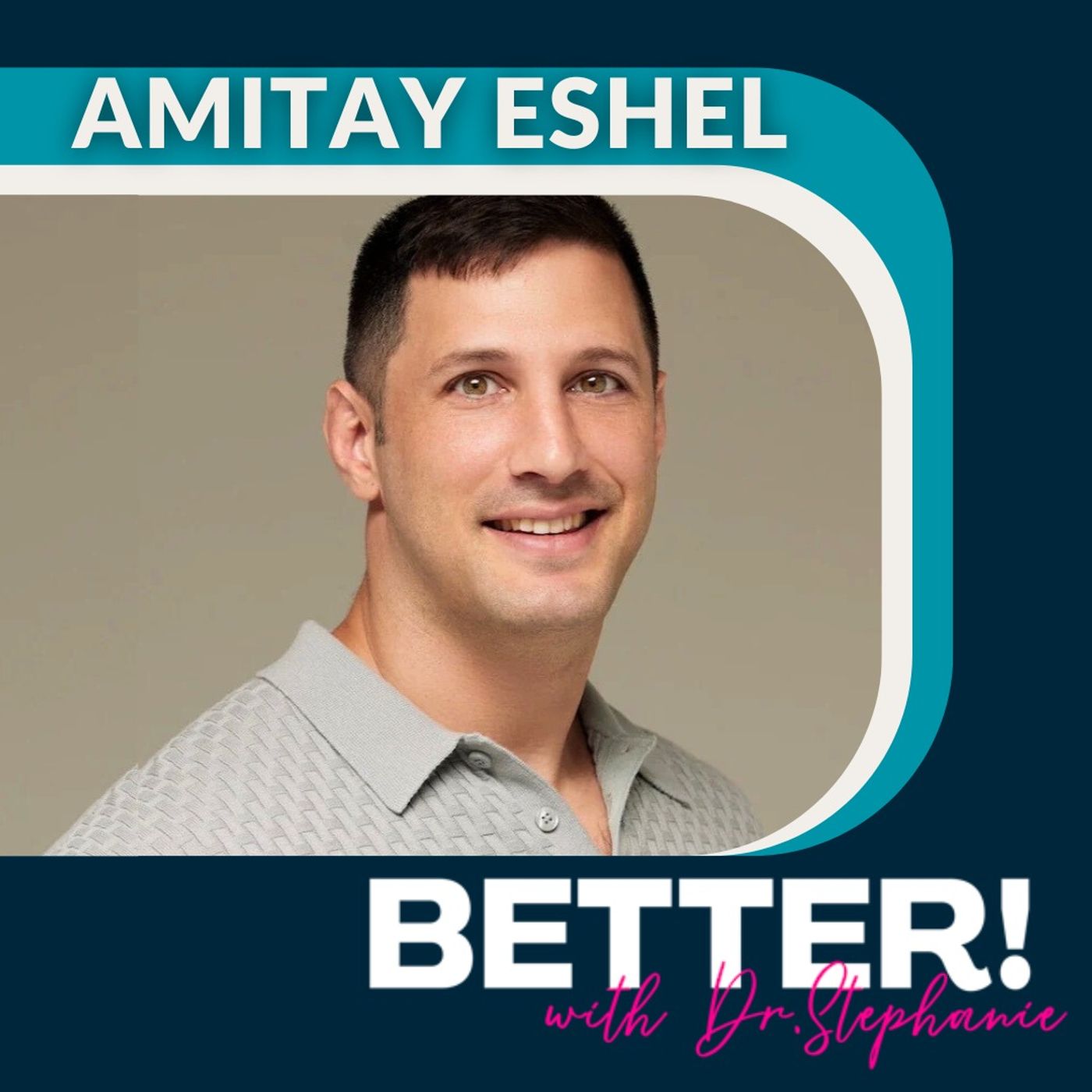
BETTER! with Dr. Stephanie Estima | Strength, Body Composition & Perimenopause
Skin Aging Explained: Collagen, Supplements & Medical Procedures with Amitay Eshel
01:49:43
Ready to unlock the secrets to radiant skin at any age? Join skin expert Amitay Eshel to learn all about your new skincare routine. Say goodbye to misinformation and hello to science-backed beauty! Watch the full episode at https://youtu.be/SHPFOeir9MI
Loading summary
Transcript128 lines
- [00:00]
Amitai Eshel
Nothing that we consume can just remain out in the open forever. We need to eat it in a certain amount of time. And it also has freshness levels. Right? Very fresh, very good. And not so good in the case of avocado. This is also.
- [00:15]
Dr. Stephanie Estima
I was just thinking, I was like, just like an avocado. You put it on the counter, it's ready. You go to the bathroom, you come back, it's done.
- [00:23]
Amitai Eshel
Avocado is like, oh, yeah, not yet, not yet. Not late now. Too late.
- [00:27]
Dr. Stephanie Estima
Yeah, not too late.
- [00:29]
Amitai Eshel
So collagen, elastin, might have chondria. Anything, any function, any organism, any protein in our body has freshness. Even collagen, for example, decays, degrades, becomes less efficient.
- [00:50]
Dr. Stephanie Estima
Hello, my friends, and welcome back to another episode of better with Dr. Stephanie. It's me, your host, Dr. Stephanie Estima. Today I am welcoming Amai Eshel. He is the CEO and founder of Young Goose, which is a skin care line. And as you might guess, all we are talking about today is biohacking the skin, how we can be aging well. And we talk about a whole bunch of things particularly geared towards perimenopausal women. So we talk about the role of estrogen and testosterone and progesterone in skin aging. And then we really get into the nitty gritty. So this is like a medium to dark roast episode. There's lots of action items and lots of takeaways. So if you're just like, I don't care about the sign, just give me the takeaways, you're going to find those in here as well. We talk about energy, energy production. We talk about the molecules for energy production. We talk about antioxidants. We talk about how to protect your skin from aging. We talk about how to repair and restore your skin. And there was a lot of. For me, I personally learned a lot from the conversation. I will say Amitai is almost too smart for his own good. So he takes a couple minutes to kind of get into it. So it's a little slow to start. So give the episode a chance. Don't, like, don't switch off after two or three minutes. Give him, like, you'll see after, like five minutes. Like, oh, yeah, like, I'm really into this conversation. That's sort of how I felt. I was like, all right, we're slow to start, but once we got into was, it was fascinating and phenomenal. So I think you're going to really. What you're going to take away from this is how to target skin aging, whether you're using topicals like skin care creams, what procedures to use, maybe even more importantly, which procedures to avoid. And yes, we name drop them. Skincare routines for the morning, skincare routines for the evening. And how the skincare industry in some ways can be very cor and how we have to really think about who we're getting our information from and sort of thinking about, okay, is this person being paid? Is this, you know, is this person only telling you to get this prescription medication because they're the only ones who can prescribe it? So I think there's a lot of learning to be done here as long as well as some action items. So please enjoy my conversation with Amai Eschel. What if you could get the benefits of a 45 minute run in just five minutes? Well, that's exactly what Carol Bike does. It is an AI driven workout that is scientifically proven to improve your fitness, your metabolism and your brain performance in record time in just three sessions per week, clocking in at five minutes each. This can roll back your metabolic age by a decade. Carol is not just another exercise bike. It is a time machine for your health. And this is so important for us ladies because our VO2 max, which is how well our bodies use oxygen, is one of the biggest predictors of our longevity. The problem is that it naturally declines with age and in fact, 95% of people never sprint again after the age of 30. And I do not want to be part of that statistic, and I know you don't either. Carol Bike is the first workout scientifically proven to reverse that decline in VO2 max in just five minutes three times a week. And the result is a 12% boost in VO2 max in only eight weeks, meaning better cardiovascular fitness, sharper brain performance, and a younger metabolic age. It is efficient, evidence based, and designed for consistency. No excuses, just science and action. Head over to carolbike.com and use code better for $100 off of your purchase. Again, that's carolbike.com and use Code better at checkout. All right, and we're live. Amitai, I am so thrilled to welcome you to the Better Show. Welcome.
- [04:31]
Amitai Eshel
I'm so thrilled to be here.
- [04:33]
Dr. Stephanie Estima
I had the grace and opportunity to be on your podcast a while back, maybe a year or more ago now, and I wanted you on the show. Perimenopausal Skin. We see lots of changes to the skin as we are going through the aging process. And even though we understand that aging is a privilege, it can be really hard, especially when we're seeing changes to the skin texture, hyperpigmentation, fine lines and wrinkles, et cetera. So I wanted to start off with talking about hormones and skin and maybe having you lay the groundwork for my Betty's my audience on how testosterone, estrogen, progesterone, how those affect the skin. And then when we lose those sex hormones, what happens? What's the net effect that we see on the skin?
- [05:26]
Amitai Eshel
Yeah, first of all, it's interesting that we're calling them sex hormones, which obviously they are, but. They are, but I would say like, reproduction or. Yeah, I mean, like, reproduction is such a huge, or maybe the predominant, like, driving force in anything obviously from evolution to the way that we function day to day or the way that the stream of evolution floats towards. Right. That they affect so much more than just reproduction. And what's interesting with hormones in general is that the same, as opposed to, for example, like body temperature, which affects many, many systems in more or less the same manner, hormones can. The same hormone can affect different tissue in a completely different way. So when we talk about the skin, you know, we might be talking about hormones that people have heard before, whether it's estrogen, progesterone, testosterone, et cetera, but we would be talking about things that they are doing that they are very different than what we are thinking of them when we're talking about, you know, the brain, the, you know, muscle tissue, etc. So that's something I think that is important to understand that we do lose, you know, we especially women, lose sex hormones or the levels of them as we age, as they age, particularly obviously estrogen during menopause. That's the main reason. But there it could be also, like, due to things like premature ovarian insufficiency. And this would in turn profoundly, profoundly affect skin health, skin aging. And when we talk about estrogen, which is kind of the poster child for, for, for that estrogen is very interesting because it, it plays, I mean, it plays a critical role again, in the skin in maintaining skin structure, hydration, something that people don't talk about often, which is resilience. So we can, we can, if you want, we can get, get much deeper into that. But that's basically the, the way that I, like, I would like people to think about that.
- [07:52]
Dr. Stephanie Estima
Yeah. And I think this is why specifically with hydration, when we're talking about the role of estrogen, it actually helps us retain sodium. So as we are losing estrogen, then we are starting to notice that maybe that plumpness or that firmness go away in the skin and I would also say the, maybe the fine lines and wrinkles are some of that can be dehydrated skin. I'd actually love for you to dive a little bit into the resilience of the skin. You mentioned that. Not a lot of people talk about that. So when we're talking about estrogen and the resilience of the skin, what is the connection there?
- [08:26]
Amitai Eshel
So it's, it's funny, it's, it's, it's a good way to segue into resilience would be what you just mentioned, which is dryness. Right. So aside from the effects on sodium, estrogen also regulates sebum production. And in turn, sebum is that natural oil that we produce and we excrete to the surface of the skin. And that in turn helps us retain moisture. And with it, another thing that estrogen regulates is hyaluronic acid. So when we have less estrogen, we would have anything from a dysregulated skin, micro skin barrier and we would have less hyaluronic acid, which would, which is kind of what helps our cells kind of retain moisture. So that's just as far as like moisture. But that the resilience aspect is very interesting because our skin barrier is kind of the first, obviously as exactly as the name, that's the first line of defense against the environment. So when the skin barrier's function weakens, it increases anything from sensitivity to the environmental irritants all the way to what we call tewl, which is transepidermal water loss, which means like how much water we lose to the environment. And that is something that I think most people don't realize that we actually can't introduce more moisture through topical products. All we can do is prevent water from leaving the skin. That is what moisturizers do as far as far as like being a good moisturizer. So estrogen is kind of our natural way of doing that. And when it comes to, when we have less of it, we, we are becoming more sensitive and less resilient to environmental stressors that would, could even, could even express itself with things like delayed wound healing, for example. So one of the things that estrogen does is promoting angiogenesis, which is the growth of and repair of blood vessels, interacts or modulates inflammation. So these things help us heal from whether it is, you know, serious wounds or even just again, micro injuries that are happening every day to our skin, whether it is from again, environmental stressors, us even rubbing our skin, et cetera. So its decline really propagates, you know, slower Healing, it increases the ratio between good healing and scar tissue to the negative. And it, it in general slows recovery, which can accumulate and kind of slowly age the skin over time.
- [11:23]
Dr. Stephanie Estima
And talk to me about collagen loss, because this is the stat I keep hearing over and over again that within the first year of menopause you lose 30% of your collagen. And this may be systemically, but obviously collagen and elastin are, you know, to your point earlier, around the structure of the face certainly keep the, the structure of the skin looking, looking good and also functioning well as that skin barrier, as you've mentioned. So talk to us a little bit about collagen, collagen loss with perimenopause and menopause as well.
- [11:52]
Amitai Eshel
Yeah, so first of all, I think most people are now, you know, it kind of goes back and forth between the people that you do here. It really depends who you're listening to. But the, the agreed upon statistic is that a, there is a 30% reduction in collagen content within the first five years post menopause. So that is due to the things that we just mentioned because again, like estrogen supports collagen and elastin production, which to me would be more important because elastin doesn't only tain things like skin thickness or strength, but it also is maintaining the ability of your skin to function properly and to not accumulate kind of wear and tear. So both of those, we should think of them as one group, elastin and collagen. But these are the two major protein that kind of indicate skin youthfulness as far as its appearance and function. So we can see two dips in the, in the content or density of those two proteins. One is late 30s and one is early 50s. And guess what happens in those stages. Statistically it's perimenopause and menopause. So when we, we are going through those shifts, it is not ne. It's not only the reduction in the levels of estrogen, it's actually that decline. It's the discrepancy between what your body is used to and what it has now to deal with that also causes a lot of the issues.
- [13:42]
Dr. Stephanie Estima
One of the things I appreciate about you is you are a bit of a disruptor in the skin care industry. So I'm going to be asking you to disrupt for us some myths. I was telling you right before we got started, I was like, there's all these dermatologists that I'm following. So with the collagen loss, what is Your. What are your thoughts on is collagen supplementation useful? I mean, obviously you can't be like, hey, I'm gonna drink this collagen, but I want it all to go to my cheeks. Like you can, you know, it's gonna be systemic, which is all is. Was. Which, you know, I would assume is a good thing. What do we. What are some good ways that we can both from a diet and lifestyle perspective maintain or at least promote collagen production? And then also from a skin care, maybe topical perspective, what are some things that would help with that collagen production as well?
- [14:31]
Amitai Eshel
That's a good question. So first, I think there are two major things that we need to address because collagen is a huge. It's an outcome. Okay, it's an outcome. Although it's a process. One protein, and we can, you know, look at it in the lab. We can take it as a supplement. We could, we can do many things. And we know what it is. It's an eventuality of many, many different actions that your body is taking. So because of that, we just need to understand that the body doesn't work in eventualities. It's not like if I give my body, you know, if I lost my toe, I can't eat a toe and it's going to grow a toe, right? Like, that's not how our body works. And many, many, many things.
- [15:20]
Dr. Stephanie Estima
The carnivore community right now is devastated. Just, just. Sorry. Even if I don't have liver, I'm not going to have better liver. Okay, you might, but.
- [15:32]
Amitai Eshel
But what I'm saying is, is that when we in ingest collagen, that your body doesn't keep it as collagen. That I think is important to understand. It's not that even that it goes systemically. It. It gets broken down to the most fundamental building blocks of that protein that you took. So collagen actually is not one protein. It is. It is a makeup of different protein. And the percentage and the ratio between them is what we call collagen. It would be. It would be something else if the ratio would have been different. And so that's the first thing that I think is important to understand. It also would make more sense as to why it would not directly correlate with like, less wrinkles or where or with higher collagen density. Where we want it, that's number one. So it is just a building block that your body now can use if it wanted, if it needed to, to create collagen. And by the way, most of us are, most of us, if we eat a high protein diet, we will wouldn't be deficient in those amino acids, any building blocks anyway. Meaning your body wouldn't necessarily care if you supplemented on more collagen. As far as it now creating more collagen, it would. These two would actually be inconsequential. And science kind of shows that. So there are many studies that show no correlation between ingestion of collagen and collagen density. Some of them do. So really science is still out as far as like, do they help at all? But the studies that show that there is a significant improvement is because people were deficient to begin with, that cohort was deficient to begin with. So that's number one. But why am I saying it's more complex than that? It's because the other thing we're hearing a lot is either it's skin care or devices or treatments, or whether it's at home or in office, things that promote collagen production and that, that they don't do that by adding nutrients or by adding building blocks. They do it through stimulations. They are actually called biostimulants, most of them. And what happens is, is that collagen is a part of, of a resilient and, and well functioning skin. So if I stimulate recovery in the skin, one of the things that I'm going to stimulate is more collagen. But because I said collagen is an eventuality and there are many different types of collagen, scar tissue is actually very dense in collagen. So most of the things that I'm going to do to stimulate collagen production, what I would be actually doing is promoting scar tissue formation, which is a negative, which doesn't look good, doesn't look more youthful, doesn't look smooth or whatever, doesn't actually provide a lot of volume because that's one of the issues that people are dealing with when they get older. It's like more volume, volume loss. So they're looking for more volume. So scar tissue is not great at promoting more volume. So that's something that I think, I know it's a pretty kind of vague answer to what you're asking, but I think it's like super important to inoculate people to the kind of the claims that they're bombarded with every day, which is like collagen, collagen stimulation. I see now another wave of topical products that quote unquote, like have collagen in them. So all of those things the talk around collagen to me is a little bit of a. Of a. A little bit of a. Like a clickbaity type type scenario.
- [19:28]
Dr. Stephanie Estima
Yeah, yeah. I've seen. I've seen. Gosh. Of Auxate Korean skincare where they have collagen masks. And I always thought that that was bizarre because I'm like, isn't it too big? Like, if you put collagen on your face, like, that doesn't seem like. It's just like you're saying, like, if I eat a toe, I'm not just gonna be able to have it. Like, it's like if you just put collagen on the face, it just seems too big to cross the skin layer. So that seems a bit, I don't know, maybe scammy. I'll just call it not.
- [19:56]
Amitai Eshel
It wouldn't be necessarily scammy because stuff can be on the skin and that's, you know, things that improve skin micro. Skin microbiome or skin barrier could be extremely beneficial for the skin, even though they are not penetrating. So technically speaking, it's not that if it doesn't absorb, it is not good. Or if it does absorb, it's good. Like, that doesn't. That's not necessarily my first litmus test if something is benefiting your skin. But in the case of color, what would be a bigger red flag to me would be I am talking about what the body needs to produce. I'm saying I'm giving that to the body. And I'm not connecting the dots as far as, like, how does the body accept it as its own and then goes ahead and uses it. I think one of the examples that we're seeing a lot now is, by the way, and we can go back to hormone replacement therapy because we definitely can see it there, but we can see it with glutathione, for example. So glutathione is the body's master antioxidant. We can see many supplements now with glutathione. We can see skincare with glutathione. But glutathione, your body doesn't like to receive as a whole molecule. It doesn't like to receive it topically, orally. Injections are. Or IVs are debatably better because it's tricking the body at a deeper level, if you would. But in general, your body is very finicky with, like, accepting this as a whole molecule. So what the body's gonna do, for the most part, it's going to break it down to the building blocks and then it's going to say, oh this I recognize this is something that I get from nature and I know what to do with this. I'm going to make glutathione from it, for example. I'm going to make this ox antioxidant from it. So this is just an, as an example but most things function like that. We can talk about. You know, synthetic hormones are also similar to some extent. We know it with, for example, if anyone here had Pitocin as a, as a inducer for labor, which is basically the same hormone that creates love and connection, I would assume they felt, they felt no love and connection during that, that, that time where they got an infusion of Pitocin. Having said that, because that's not how your body normally produces it, your body produces it in your brain and in your gut together for the, or in your brain and in your body together for that matter. The red flag would be, as I said, trying to, trying to give you the end result without explaining how it would do that. Basically how it would get to where it needs to get.
- [22:54]
Dr. Stephanie Estima
If your 40s has brought a little brain fog, little moody energy, some creaky joints, welcome to the club. You're not broken, you, you're in perimenopause. And this is where smarter basics really can help. Two daily staples on my counter, the purality health. Liposomal zinc and liposomal turmeric. But honestly their entire line is pretty incredible. And here's the win. Purality wraps nutrients in tiny micelles, then in liposomes. These are tiny fat bubbles that your body recognizes so they actually make it through your gut and into your bloodstream so that you can feel what you're taking and it gets delivered where it should be going. Zinc is my go to for immune resilience, skin integrity and just day to day energy and vitality. It's a blueberry flavored liquid, so just a quick tablespoon I can take straight from the bottle or mix it in with water and turmeric is my move. Well, think clear ally. It supports healthy inflammation response. It's great for joints, it's great for muscles and it's great for focus. Their formula includes a full spectrum turmeric with fulvic acid and vitamin D and it's sugar free. Both are non GMO and free of gluten and dairy. And Purality backs them with a 180 day money back guarantee which is pretty incredible. So if you don't love how you feel, you can send it back, no questions asked. Head over to puralityhealth.com better and use code better at checkout for 10% off of your first purchase. There is a new darling in the supplement world and it is showing some incredible applications for recovery, muscle strength, endurance, joint health in degenerative diseases like osteoarthritis and even brain health with Alzheimer's disease. It is called Urolithin A and is something we actually already make in our guts, but like most things, it tends to decline as we age. Urolithin A is anti inflammatory and also has antioxidant properties and it is involved in recovering from workouts. So as our own natural production declines in midlife and the potential for inflammation, poor energy and poor recovery also increases. As a perimenopausal woman, I know that I am in a fight against time to preserve my muscle strength, my muscle endurance and my recovery needs are greater. I take Timeline's Urolithin A both in pill and now their delicious gummy form to protect against this. A serving size is two just delightfully delicious gummies, which gives you 500 milligrams, which is the clinically relevant dose to get all of the muscle endurance and strength benefits, recovery, every bone health and brain health. I am so excited to share that listeners of this podcast that's you now can get 20% off of your first timeline purchase. Head over to timelinenutrition.com better and use code better at checkout. That's timelinenutrition.com Better and use code better to check out to receive 20% off today. Okay, so let's talk about a couple of things that I've seen online that I think when we think about collagen as the outcome. You mentioned that collagen. We will see more collagen when it relates to recovery. So would something like a microneedling session where you're creating essentially micro trauma to the face, would that be something that would be a reasonable. You would reasonably expect that you're going to increase collagen and elastin from that. And my same question is going to go for. We were talking about these before we got started, but the Morpheus and the. Yeah, the Morpheus 8, where it's. I think it's heat and radio frequency where it's supposed to penetrate deeper layers of the skin. You know, it's always like snatched. You're going to get a snatched face. That's like what I always hear. So talk to me about like. And this is why I want you on the show because you're going to Help us understand what science, what's fact, and what's fiction.
- [26:49]
Amitai Eshel
So first, let's say, let's say, let me tell you another, like, rule that we want to follow when we talk about collagen stimulation. We actually want to have a minimal effective dose. Like, we want to do just enough to stimulate collagen production and try to do things that are. That can be done over and over and over again without any downtime and allowing your body to recover quickly from them. Okay? So any. The more downtime, the more recovery you need, the less this would be, you know, as a rule, the less that would be something that you should be doing. And the reason is this. Your body, as we kind of started, we kind of started by saying, you know, estrogen, loss of estrogen leads to more scar tissue than healthy collagen production. And then we talked about, you know, you really should be having your body create collagen, but that could also be a scar tissue. So how do we control. How do we biohack, if you would like, how do we control that relationship between scar tissue and healthy collagen formation? That would be by allowing, but by making it as easy as possible for your body to resolve the injury quickly. Okay. As we grow older, our body is more. I would say, is more trigger happy with scar formation. So the minute it has an issue with repairing something. So just think about nature, okay? Just think about you in the savannah in Africa, injured, and your body is now trying to make sure that the scar looks nice after you, you recovered from that lion attack or whatever. That's obviously not your body's main concern. And as the older the body is, the more its concern is just survival and quick fixes rather than aesthetic whole processes. Right? So the body doesn't know we are out of the savannah. The body doesn't know we're in San Francisco drinking, sipping on matcha, okay? It still thinks that the rules of the jungle still apply. Therefore, when your body has. It's like a ticking clock, right? When the body, it's gone too long, it can't resolve the injury quickly. It just starts to result, to resolve itself in scar tissue. And that scar tissue, I'm just gonna, you know, I'm gonna get. I am gonna give you the bottom line, which is scar tissue is a negative as far as appearance and healthy aging. So what we need to do is to. Is to empower the body. First of all, we need to empower the body as far as our daily life in our habits and our general health and resilience, etcetera. And a useful function as far as like empower the body to resolve injury well and quickly. But the other part is that we need to use technologies that, that are, are not introducing injury to the body that the body has, has not evolved to deal with. And now this is why microneedling that doesn't have any radio frequency associated with it is a really nice stimulation, stimulatory aspect because downtime is extremely low. When I say downtime, for those who don't know what I mean, is how fast does your body recover and, and, and can move on? Basically downtime is extremely low and you're, you're basically introducing injury that your body has seen before. Your body knows what it means to have a scratch, to have some, some external object pierce it. And now it needs to recover. And the thing about micro needles is that they are very thin, so they introduce an injury, but it's a very pinpoint injury. It doesn't have a lot of collateral damage around it, which allows the body to have a lot of resources to focus in a very small area, which allows it to recover like really well. So that's a great example for something that works really well. Now what's the difference between that and radio frequency microneedling or what most people would know by the brand Morpheus 8, but there are many, many, many, many brands and hundreds of brands, they do basically the same thing. So what is it? They use needles. They're not really micronized to be honest, but they use needles to bypass the top layers of the skin and then they emit radio frequency, which you said heat and radio frequency, it would be the same thing. So radio frequency is a freak. It's very close to microwave and it basically creates, creates rapid movement of water, which creates friction, which creates heat. The problem with that is there is a lot of collateral damage. You're actually looking for collateral damage. You want to heat up a large area of the tissue. And that issue is very deep. And the problem is, is that your skin isn't, or it's by the way, it would get to the fascia. So you're in, you know, subdermal tissue, isn't used to that type of damage. It immediately swells, contracts and swells. So the results actually look pretty good. You don't look bad very quickly afterwards because the insurance is not superficial. And for the next you do, you do a couple of those treatments and for the next three to six months you actually look better. That's not because you've had some magical rejuvenation this is because the tissue under your skin is swollen and is contracted. But that is the injury your body now takes a very long time to resolve. Resolve to resolve that injury. It will resolve it in most part as scar tissue. And by then your, that that scar tissue is actually very thin and very not impressive as far as like how the results looked like. So within, you know, let's say six months, all that swelling has gone away. And people normally think in air quotes that the results went away, but the result didn't went away. That's the result my friend, that the result is scar tissue. You've now ended up with the results of that process. But what they think is the results went away and then they are going to do it again. And that's why we meet people that have done, you know, five sessions, ten sessions of radio frequency along the years. And when, let's say a plastic surgeon would open up that tissue instead of being able to open up your different layers of the skin and subdermal tissue like a book with different pages, it is literally like a book that someone spilled water on the pages. So they're all clumped up together and they're very brittle. And these are very difficult patients actually worse than cigarettes for that matter. But also the way that your skin would age is a negative through the years. Yeah. So that's as far as that. And so all of these wave based medical devices, lasers are different. Intense, intense pulsed light or BBL are different because they go from the outside in. But all of the high frequency ultrasound, all therapy, softwave, whatever that would be, all of those work under the same premise of going deep, bypassing the top layers, heating up internal tissue. There are other issues that could arise. Whether it is damaging the thyroid, whether it is damaging fat tissue, fascia, all of those things, they are irreversible for the most part. But that's like, that's just to tell you why you shouldn't do it. Even if it were to create a good results when it, when it doesn't.
- [34:59]
Dr. Stephanie Estima
This is why I wanted you on the show because I think that there's going to be people listening who maybe have been considering a procedure like that. And maybe after hearing that, I always was very hesitant. I was like, I don't know, heating up. And you've explained it much better than my understand. I was like, I don't think we should heat up the fat in our face. Like we need to preserve the fat in our face. I don't want it melting. But I'm, I'm thinking About the women who are like, oh, you know, like, my skin's changing. Maybe I need like some more or whatever, whatever brand. Like, not just specifically that one. If there are women who are listening, they're like, oh, no, I've done like four or five, 10 sessions. What is the path for them? Is there a way to walk back some of that scar tissue that has been accrued? Is it. Or is it just. Is it gua sha? Like, do they have to break up? What do we do with them? How do we.
- [35:51]
Amitai Eshel
Gua sha is one of those things. Facial massage is another one. Facial yoga, Facial massage is another one that the, the. Here's the thing. So first of all, most people do it to, to avoid doing plastic surgery. So it's important to, to, to tell those people that it doesn't prevent, it doesn't kind of, you know, replace plastic surgery. And you're becoming a worse patient. So the results that you're gonna, at the end of the day say, hey, I'm not getting the results that I wanted. I'm going to go get plastic surgery. You are now a more worse patient. Let's just say that. Now how do we reverse that or how do we at least like, mitigate some of the damage created? The good news are we have a few things that we can do. One of them is gua sha. We can do facial. Again, microneedling is very good for that. We need to have very deep microneedling. So that would be with professionals. That would be blood drawing microneedling, which for the most part I would recommend to do once in a while. But another thing would be actually a jaws. A sizer. I don't know if, you know, if you've ever seen a jawsizer.
- [37:01]
Dr. Stephanie Estima
I have those things you put in your mouth and you massage for the masseter. Yeah. Okay.
- [37:06]
Amitai Eshel
The reason is, is that one of the issues is damaging of blood vessels. So we need to kind of get more blood to the skin to, to your face, to the tissue. And you know, facial exercises are one of the things that can do that. So all of those things together are. They can be, they can be positive. But again, the best thing is just not to do it at all. Another thing I'm going to say about the Jaws sizer, which doesn't have much to do with, with procedures. One of the things that we know that happens as we grow older is that we have reduction of bone mass, not only muscle mass or fat. And the only thing you can do to really preserve. Well, you could also do like a vibration. But the only real thing you can do as far as like your, your masseter or your facial bones, but also for your body, it would be to load that tissue. And loading the tissue, whether it is lifting weights or as far as we're talking right now, is by, you know, chewing on something hard. And again, if anyone, if someone doesn't know what a jazza sizer is, I would recommend Googling it. And there are. That's just a brand. There are different variations of that. I actually use a variation which sits on my. Further down my, My, my mouth and, And I chew on two of those kind of rubber pieces like a gum, basically.
- [38:32]
Dr. Stephanie Estima
Yeah.
- [38:32]
Amitai Eshel
These would be things that improve bone mass and not only, you know, blood circulation, et cetera. So that's something I, I would recommend.
- [38:40]
Dr. Stephanie Estima
I'm actually really glad that you, you brought that up because we do get bone resorption all through the body, but certainly in the face as well. And I think as humans have gone to eating softer and softer foods, you know, we're not chewing on bones anymore. You know, we. We give our dogs bones, but we are no longer doing that. And it is very important for us to be. The jaws are. I think that jaws are size or any of the other devices that you can just chew on are going to help strengthen the masseter. And also just the. So we have like the. We have the jawbone, which is called the mandible. We have this sort of middle face bone called the maxilla. And so the maxilla also tends to be resorbed as well. That's like the top of the mouth, top of the palate kind of thing. So love that you're bringing that up. I want to pivot, though, because I want to come back to. You said something really interesting. I just made a note of it. So I want to make sure that we come back to this because I think it's really essential to the way that you think and your thesis and even just the product formulation with young, as you said, you know, as we get older, the priority for the skin is less aesthetic. And I've heard you talk about this before, and I just wanted to address this for a moment around the skin being as we age, it is more of it. And I'll let you explain this better than I certainly than I can. But it's better as a barrier. It acts more as a barrier versus versus a signal, let's say, of youth. So talk to us about autoluminescence. Talk to us about. And this is kind of coming back to that trend of like Glass skin. I saw this trend. I don't know if it's actually current anymore, but I would see it all the time on Instagram where it's like glass skin. Everyone just has like super shiny faces, right? So talk to us about auto luminescence, that glowy skin, and how that changes as we age.
- [40:22]
Amitai Eshel
Okay, so autoluminescence is a factor, but really what's going on is, is the skin is a, is a communication organization since the day we're born. And probably, and obviously also before that, it is always communicating both inward but also outward. So what do I mean by that? Our skin has recess, you know, has a straight shot, a straight highway to our brain, which is called the skin brain axis, which it relays anything from environmental stressors, UV radiation, heat pressure, anything that the environment that we expose our skin to, as far as the environment. But it has another role which is to present a mirror of our internal health. Obviously there are other markers such as our, the, the, the brightness of our eyes, the, the ratio of our, of our hip, chest to hip ratio, for example. There are many aspects how shiny our hair is. There are many teeth, for example. There are many aspects of the ability to carry and care for healthy offsprings. And we need to understand that whether we are wherever we are as people who want to empower women, empower our society to think of things in a certain way. All of that I would not argue with. But we have to understand that this is an evolutionary process that our body is going through. Where as we grow older, our body needed to make a decision in years past, where does it invest its dwindling resources? And we can talk about those dwindling resources, such as nad, for example, a little bit later. But what happens is, is that we get dwindling, we have less resources, and our body needs to decide what does it preserve and what does it sacrifice. And the skin past our reproductive prime is one of the first, the, the, the first organs, if not the first that we are sacrificing. We're saying that is not going to be a communication organ outwards that we are sexually viable. It is now going to morph more and more into an internal or internal communication primarily, but a protective organ, a shield from the environment. Because the reason that humans live until 80 years old and that evolution corresponded with that is because we have. One of the biggest advantage we have as humans is the preservation of knowledge, is the ability to pass on knowledge and care, by the way, and care both to our elderly and young. So the communal care aspect, these Are significantly more important as we pass a reproductive prime. And these do not rely on sexual viability. They do not. They do not rely on even feeling good, for example. That is. And we can go back to, you know, our. Our sex, sex hormones and why they decline. That's all of this part of the same symphony. So our skin becomes. Starts to pack on more and more dead skin cells in its. In its outer layer, in the stratum corneum. It becomes less. Less hydrated for the most part, but also more coarse. There is less blood supply, as I mentioned before, that would reach the skin. And in general, the health of the skin is not as important. And if it's important, it's mainly to, again, to prevent pathogens from entering our body. That is the conundrum that we are in as far as people living in the 21st century and people who want to feel and look close to our prime, you know, during our entire lifetime. And that also our internal happiness is because of the, you know, social construct or whatever you want to call that. Our internal happiness has. Is corresponding with the way that we look in the mirror. So that is where longevity science and skin health kind of converge and come in. And that's where we found ourselves as a company, young goose, the company that my wife and I founded. We found ourselves as kind of a canary in the coal mine, if you would, of skin longevity producers, researchers, however you want to call that. And we found. What we found is. Is that it all starts with one molecule. And that molecule is called nad. And NAD is the currency for repair in the body. It's not a new molecule. The person who won a Nobel prize for it won it in the 1920s. And even then he said, hey, what took you so long? This was discovered in 1903, you know, so this is a molecule that's been with us for a very long time, you know, as far as science is concerned. But for the majority of that time, we thought its role is pretty minimal As a kind of a shepherd of energies of electrons in our mitochondria, in the powerhouse of the cell. So we thought its role is pretty minimal. And we didn't even know that it's declining as much as we understood later on, it's declining. But what happened when longevity research kind of advanced? We recognized that this molecule is responsible for over or is the currency for repair for over between 4 to 600 repair processes in the body. And that by the time we are 60 years old, we have half of what we started or of what our body needs in order to repair properly. So basically, you know, heuristically, we can say one of every two repair processes that our body is under undergoing just fails. And we can really think of, of, of aging as the, as the, of, as the accumulation of unrepaired damage. So in the skin it is more stark because our body just does not prioritize skin nad, okay, doesn't again, we have less blood, all the things that I mentioned before. But at the end of the day, the body does not provide the skin the amount of NAD that it needs in order to survive. You know, UV radiation to survive environmental stressors, to survive normal wear and tear that happens to the skin, but also to engage in processes of maintenance. You know, nothing that we consume can just remain as far as like food just remain out in the open forever. We need, we need to eat it in a certain amount of time. And it also has, you know, freshness levels. Right? Very fresh, very good. And not so good. In the case of avocado. This is also, I was just thinking.
- [48:03]
Dr. Stephanie Estima
I was like, just like an avocado. You put it on the counter, it's ready. You go to the bathroom, you come back, it's done. All window.
- [48:10]
Amitai Eshel
Yeah, not yet, not yet. Not late now. Too late.
- [48:13]
Dr. Stephanie Estima
Yeah, not too late.
- [48:15]
Amitai Eshel
So, but, but as far as our, our, our everything. So we mentioned collagen, elastin, mitochondria, anything, any, any, any, any function, any, any organism, any protein in our body has freshness, it has a freshness label. So it's not only that in those environmental stressors, it's. We can't just stay in a dark room like Brian Johnson, never go outside to the sun and think we're going to not age. No, no, no. Even, even, even collagen for example, decays, degrades, becomes less efficient. Collagen we can imagine like a spring, so loses its springiness. And our body now needs to use NAD to create a recycling type scenario which is called autophagy. Okay? So NAD is at the precipice of any type of maintenance, repair, youthful process that you can imagine. And that is why as a skin longevity company that was founded to do three things, Delay, stop and reverse skin aging, we first and foremost knew that we need to innovate within the, the paradigm of, of NAD. We first need to at least double the available NAD that that cells have on average that a 50 year old has. Okay? Because we want to get it to, to normal levels. And that was the first thing we innovated in. So we started with a product that just does that just doubles the amount of NAD your skin cells have.
- [49:52]
Dr. Stephanie Estima
What is the name of that product?
- [49:53]
Amitai Eshel
That was called Care. That's the first product we came out with for. By now, most of our products would first raise your NAD levels. But here's what we learned. We learned that exactly like a broken bone that didn't heal well, it's not enough. So imagine you, you had a broken bone, didn't heal well, and then I give you more nad. It's not. Your body's going to go back and fix that bone, right? We need to kind of re. Break that bone. And that applies to most aging set aging things that already happen to your skin. We meant, we mentioned the scar tissue from, from Morpheus 8. We mentioned, you know, the blood vessels. We mentioned a lot of things, wrinkles that we can get back to. But all of those things, your body has no idea. No idea. Your body, when you tell your body, hey, I want you to go back and fix those and reverse those, your body can't believe it. It's like what you, that's what you want? You want me to go back and repair the wrinkle, the hyperpigmented spot, the laxity. Anything that we, that we know as part of skin aging, it has no.
- [51:02]
Dr. Stephanie Estima
Idea because it's not a threat, because.
- [51:04]
Amitai Eshel
It'S not, because it doesn't have inflammation associated with it. And you're correct, because it's not an a survivor. Again, it's not a part of survival. And the part of survival that is that, that your, that your body is concerned with as far as proportion propagating its genes is over. And if it's not over, it's least, at least past its prime. So we understood past that first product conducting, you know, about like four research papers later, we, we understood that your body needs signals for repair. And the different types of repair require different signals. So collagen, elastin, pigmentation, laxity, inflammation, all of those things, they require different type of signaling. And that was the next five years of Young Goose as a company, which is our company, it's called Young Goose. It was okay, we need to raise energy levels and we immediately need to act on it and signal a type of repair. So now we're 17 products later because, because what needs to happen is really a orchestrate, an orchestrated symphony that, that presses the right buttons in order for Dr. Stephanie Esteema to wake up in the morning and to look in the mirror and say, hey, my skin looks a little bit more snatched every time, Clearer, more resilient, thicker, which is Another important aspect, and as you mentioned, more luminous. And there is a difference between luminosity and oiliness. These have nothing to do with each other. What is luminescence? So I mentioned the mitochondria, the powerhouse of the cell. So what people are going to start talking about probably in the next year or so, but that's something that we've been talking about for forever. Is that a part of that mitochondrial function, part of that energy production? Exactly like when we burn a wood in the fire, if you would. Part of that energy is emitted in the form of infrared light. So it's a light that we can barely see. It's not correct to say we cannot see it, but we can barely see it. If anyone here has like a red light therapy panel, if they only use the near infrared function, it's not true that we don't see it. We see a very, very light hue coming out of those diodes and we can actually recognize it in people's skin. That light hue, that what we call photoluminescence or autoluminescence, it means that we emit that light is the amount of energy our cells make. And when we make more of it, the person looks glowing, they look healthy, they look radiating. And when, you know, we're functioning at an older biological age and we make less energy because again, more NAD equals more energy, less NAD equals less energy. When we make less of that energy, we look more dull, more pale or sickly or, you know, greenish even, but we look less lively. And that's when someone would take. Would. Would apply NAD topically or NAD again, the building. Building blocks of nad. By the way, like everything that I said before, we need to give the body the building blocks rather than the full NAD molecule.
- [54:51]
Dr. Stephanie Estima
This is my question. Okay. I'm so happy you're going here.
- [54:53]
Amitai Eshel
Yes, but that's about. That's the bottom line. The bottom line is when you do that, that's the first thing that people are going to notice. And you're going to notice a lot of people equate it to a good night's sleep, which definitely they should, but that's the first thing you're going to notice.
- [55:07]
Dr. Stephanie Estima
Once a patient came into my office with a new complaint of a quote, unquote, sleeping injury. I had no idea what this meant, but she told me that now that she's in her 50s, she wakes up with new injuries without any real reason, and hence the term sleeping injury. I thought this was hilarious because it is so true. Aches and pains can pop up somewhat randomly in midlife, and it can be super frustrating. I have long been a fan of peptides for this reason, and BPC157 is one of my favorites and probably the most famous one. Peptides are small proteins, and BPC157 is one we naturally make ourselves. It protects, it heals, it restores tissue and upregulates growth factors by interacting with the nitric oxide system to promote the building of new blood vessels. I have used BPC 157 for years, in practice for my own long standing knee injury that I sustained while ego lifting and of course, various other sleeping injuries. Most peptides are injections, but the BPC157 from level up is taken orally, and it is almost completely resistant to gastric juices and high temperatures, making it an effective alternative to injections. Go to leveluphealth.com Dr. Stephanie and use code Dr. Stephanie to save 15% off of your purchase. That's L V L-U-P-H-E-A-L-T-H.com Dr.Stephani to save 15%. So my question, so with. Okay, so nad. This is the. I've been taking notes as you've been talking. So it's the currency repair. It's the currency of repair for the body. It's involved in 400 to 600 repair processes. You mentioned before when we were talking about collagen. You can't just take collagen. Just like you can't just eat a toe and then you just get. So obviously n a D. Like, I was following David Sinclair's work for a long time, and he. I think that the challenge that he was running into, and I'm curious if you found the same in. In with young goose, is that you can't just give NAD to the. To the body. You can't just have an N a D infusion or an IV drip or whatever. You have to. Almost is the same way when you have protein. Like, the body's gonna break that down into amino acids and then reassemble it into peptides and, you know, whatever it needs to do. So there are precursors to nad. There's nicotinamide, riboside, and nmn. I'm forgetting mononucleotide. Yeah, yeah. So there's NR and nmn. Do we have to give that? So if you are. If we're talking about, okay, so we want to give the skin energy. Is it. Do we give nad? Do we give the precursors to nad? How does. What is the delivery mechanism? And this is. I'm asking this as a bit more of a technical question because I know.
- [57:40]
Amitai Eshel
That'S a great question. Yeah, yeah, it's a great question. And I would actually start with IVs, because. Okay, so we have a rate limiting factor here, which is how much can we give, how quickly and how efficiently. So when we have injections or NAD IVs, we could actually technically give the full molecule. And that is because your body indeed is going to break it down to its building blocks and then reassemble it. And that, by the way, is a very unpleasant process when. When NAD is concerned. So if anyone has had NAD infusion and try to push the. Push the.
- [58:23]
Dr. Stephanie Estima
I had a huge headache. I had a stomachache and a headache for.
- [58:26]
Amitai Eshel
Yeah, you. You're gonna. It's good. It's very diffic. It's actually very difficult. Okay. Someone, I'm telling you, someone who is a very extreme person, such as myself, who wanted to see how far I can take it. There was a limit to how far I could take it. That your entire body aches. And the reason is that you're. You're releasing adenosine, which is a different discussion. But, but as far as like IVs or injections are concerned, we could, technically speaking, use the full NAD molecule. But now there is a new IV of nr, which is a building block that doesn't have any of those side effects. That's number one. When we talk about oral supplementation, which is most of what David Sinclair is talking about, even though he did mention topical as well, or when we apply things on the skin, there is a limit to how much our gut is going to allow us to absorb or how much our liver is going to process, or our skin is definitely an issue there. How much is it going to absorb? So all of those things limit us to the amount that we can provide the skin. That's number one. So we definitely want to be efficient and just give the skin the most, only the pure building blocks that your skin is going to be able to use efficiently. Because when it breaks down NAD as a full molecule, it breaks it down to really crappy building blocks, really good building blocks. It's kind of an era of building blocks. When we choose the building blocks that we give it, we can give it the Rolls Royce of building blocks, basically. And these also change. So, for example, we're going to start using a new building blocks called MN20. Okay, that's a new one. We're going to launch it probably January, actually maybe in September. We're Going to have like a product with it.
- [60:19]
Dr. Stephanie Estima
What is that? Just what is MN20?
- [60:21]
Amitai Eshel
Methyl nicotinate 20. Okay, so but basically you want to use building blocks that are very easy for your body to then use as far as like construction of nad. And these are NR and nmn. And for your skin specifically, you even need to do a couple things that are going to make them survive in a solution for a long period of time because that's not easy in room temperature, which is not easy. If anyone is taking supplements, I recommend putting them in the fridge and to survive as small enough molecules because normally they like to clump up together and that's another issue. So NAD is too big to absorb. So we need molecules to be small, we need NMN or NR to be small enough to absorb. And the smaller it is to a certain extent, the better. So we want to micronize it. So we need it micronized. We need to have a stability issue. So we use vesicles basically that are liposomal. So we use these little, little wooden, little liposomal boats that allow it to first of all survive. It's like a defense, like a barrier to each NMN molecule and it also allows it to absorb through your lipid layer. So your skin, anything that's water based, your skin is going to have a very hard time absorbing because it has a layer of fat basically on top of it. That that oil, that sebum that I mentioned before, that doesn't allow it to absorb that easily. So we coat it in that fat layer. So you know, fat and fat can go through each other whereas water and fat do not. So these are all things that need to happen at a very high level in a quality type of way. Because if it's not high quality, all of that breaks down and it's not great and survive all the way to you, Stephanie, in Canada, you know, survive the shaking and the rattling of the.
- [62:32]
Dr. Stephanie Estima
Canadian customs and officer, the UPS delivery.
- [62:38]
Amitai Eshel
So all of that needs to happen. That is the majority of really what you are paying for. When you're paying for Young Goose, you're not paying for the nad. You are definitely paying for NAD precursors, but you're paying for a very complex set of processes that we had to many, many man hour and machine hour to have it bioavailable and to have it absorb and like the survivability of the product. Survivability, absorbability, bioavailability.
- [63:09]
Dr. Stephanie Estima
Yeah, yeah, I heard you saying something about. It was a conversation about vitamin C and it was like the vitamin C that you're buying in the store like 5 years old, like 2 to 5 years old on average when you get it. So I think that this is actually a really important point as well. It's like, is the product that you're purchasing actually still alive? Right. It's like, is it going to do what it is supposed to do or did the expiry, you know, because it, it's not in a vesicle or it's not in a lipid bi. You know, because it's not packaged in the right way in the formulation. Is it just sort of dead on arrival? Right. So I think that's important to.
- [63:45]
Amitai Eshel
Yeah. And by the way, the, the, the, your skin has defense, defense mechanisms against pathogens and stuff. So it can change things chemically when, when they pass through it. So that's that even if it survived all of that, it may not survive your skin's acid mantle or again, lipid layer or whatever that is. So there are many things to take it into consideration. And as I said before, NAD alone is just potential for repair. Now we need to trigger repair, whether it is through molecules like resveratrol, whether it is through molecules like retinol, like different peptides, ergothioneine, or you know, different enzymes, a lot of things can trigger repair to different degrees and different directions. But that was the, the big, the big journey that we've, that we've undergone in the last, you know, five, six years.
- [64:41]
Dr. Stephanie Estima
Okay, so I actually want to talk about one of your products that I'm obsessed with. It's lad. It's the LADR serum. So what I will do in the morning, I do a red light mask. I have a red light mask that I use when I'm checking my emails. But before I do that, I put on this LADR serum. And I think that this follows in with what we're talking about. So you have the NAD that gives the energy to the skin, which is just like, here's some energy skin so you can repair. And then maybe for the ladies who are listening, they're like, oh no, I did the Morpheus or whatever. Talk to us a little bit about how we can begin to. So that's the like step one is like the nad, and now step two is sort of undoing things. Talk to us a little bit about DNA repair and then how, and maybe this is a conversation about sunlight as well, but talk to us about DNA damage as one of those things that accumulate with time and how something like the LADR serum, or maybe I'm using it incorrectly, I don't know, but I was told to use it with lights to put it on, and then I put the red light.
- [65:38]
Amitai Eshel
Okay, so first of all, you know, I, it's, it's, it's an acronym for Light Activated DNA Repair. Now the thing is, is because it's like DNA repair, I thought it would be cool to call the product ladder because it's like a DNA, so like the helix. That's the idea of the serum anyway. But this serum is really cool because it's very similar to products that we make for skin rejuvenation in general, for youth line of products, for example, that has the, our patented NAD complex that, that gives those precursors and actually makes your skin create its own energy. It's a whole different discussion, but it also has ingredients that are kind of going and using that created energy. But there is a gap here, because even if you have the energy and you have the trigger for a pair, there is an issue which is the knowledge of how to repair, okay? And that is your DNA. Your DNA is the recipe of what it means to be a skin cell as far as our conversation is concerned. And your heart cell is going to have instructions of how it, what it means to be a heart cell, et cetera, et cetera. Every cell in your body has parts of the DNA shut off because it doesn't need them. And the parts that are turned on are parts that are, that are essential for the function of that specific cell. It's important to know that when we grow older, that may become a little murky, and parts that it needs turned on are turned off and vice versa. And that NAD is the, is the major thing that would allow this to be reversed. But what NAD doesn't do well is support repair of physical damage that has happened to DNA, mainly through UV radiation, but more broadly from environmental stressors. Okay, so when we're exposed to sunlight, and this is not a discussion if sun is good or bad for you, and when are we exposed to artificial blue light? When we're exposed to emf, when we're exposed to pollution, heavy metals, glyphosates. All of those things create free radicals which pass through our DNA. And I'm making a long story short here. And, and literally imagine like, like someone's some, some car accident survivor survivor's spine, they go and they fuse parts of the DNA. And as we know from, you know, people that we know that have gone through spinal fusion, that spine doesn't work very well anymore. And there are things that they cannot do. And as far as our DNA is concerned, now these areas of the DNA are dysfunctional. Okay. These are called pyrimidine dimers, these parts of the DNA. And it was thought that you cannot go back and repair those. But due to longevity science, we found that there are enzymes that are present in some animals that can, like a phoenix kind of repair themselves and that we can use this in our own DNA. So how does it work? It works basically when there is a very, a light rich environment. These enzymes until that point are dormant. They're asleep. You apply them on the skin, they're asleep. They go into your cell, they're still asleep. They go into the parts of your DNA, it's still asleep. Then that takes about a minute or two. Then we basically saturate the skin with red and near infrared light. It can work with other types of light, but red and near infrared is a beneficial form of light. And it's much easier to have high levels of that light and actually benefit the skin. But to our discussion, not damage the skin, if we did it.
- [69:45]
Dr. Stephanie Estima
This goes back to what you. I'm sorry to interrupt you, but that just goes back to what you were saying before around. If it's a smaller recovery time, then you're gonna get a better benefit, right?
- [69:53]
Amitai Eshel
Yes.
- [69:54]
Dr. Stephanie Estima
Okay.
- [69:54]
Amitai Eshel
Yeah, yeah, you're correct. If we did it with UV radiation or with blue light, yeah, we would activate those enzymes, but we would be creating damage alongside that. So, yeah, you're correct. We. The idea with red and infrared, it's just like we get all the benefits and none of the harm. But I'm mentioning it for a reason, which I'm gonna say later. But the idea is that we take those enzymes, we embed them into the cell, into your DNA, and then we activate them and they go after those fused parts of the DNA and they can actually repair them. And their results are incredible. There are a couple of studies, you know, showing, you know, reversal of 10, 8 to 10 years of biological age. And the cool thing is, is that aside from what you're doing, if I know I'm going to the sun, aside from sunblock, I'm also going to use the LADR serum because I know I said before that we don't want to activate it with UV or blue light, but if we're already going to an area that's going to have high UV or blue light, it's a good idea to have something that's going to repair DNA at the same time. So it's a very versatile serum. Aside from the fact that it has the NAD precursors, a really, really cool mitochondrial antioxidant that's called ergothioneine. It has a lot of other like extremely high end advanced longevity molecules. But it does have that extra umph of being light activated.
- [71:18]
Dr. Stephanie Estima
Okay, so let's talk about the sun. Because there's people in the pro sun camp, people in the sun, like, there's people that literally, like head to toe, they have visors, you know, gloves on in the middle of summer. I think that there's some nuance to it, but I would love your thoughts on is the sun a major factor in skin aging at the level of the cell? And if so or if not, why or why not? And what can we do? And if it is, what can we do if it isn't? You know, you mentioned environmental factors, pollutants. You know, I live in a big city, there's like trucks and you know, like, there's just general pollution everywhere.
- [71:59]
Amitai Eshel
Yeah.
- [72:00]
Dr. Stephanie Estima
How can we mitigate some of these factors that age the skin?
- [72:03]
Amitai Eshel
Okay, so first of all, yes, the discussion of does the sun cause cancer? I think I would, I would also say yes, but that's not this discussion. And even if someone were were to argue with me about that, what is, I mean, undisputed is that the sun ages, causes what I've just explained about DNA damage, but in more general term really increases the amount of oxidative stress that our skin has, which in turn would lead to early onset aging. So just, you know, does the sun create more wrinkles, a more coarse skin and more laxity and uneven skin tone? The answer is yes. And it is again, like, that is the. If anyone doesn't believe me, they should try it out and become my, my, our customer later because they, they are going to panic. The, the nuance there is that we really need the sun for optimal health. And what I would say to that is most of that's not a facial skin discussion. You have your, you have areas in your body that are normally not exposed to the sun. Your torso, back, thighs, back of the thighs, etc. The less sun they're exposed to, the better they are at absorbing those rays because they have less melanin, they have less pigment. And that would mean that these areas are the areas that you should be exposing first because they're more efficient at converting, you know, UV rays to vitamin D. Another thing that I would say.
- [73:44]
Dr. Stephanie Estima
Are you making the case for yani sunning? Is that what you're, that's the ultimate case? Is it?
- [73:49]
Amitai Eshel
Okay, I mean, that Is the end case scenario of that, right? Or you know, people see like they're.
- [73:57]
Dr. Stephanie Estima
So young, just like a baby's bottom, you know, and it's like, well, that's because bottoms never see the sun.
- [74:02]
Amitai Eshel
Exactly. Yeah, that's exactly the point. So, and another thing is then we can do the biohacky thing, which is, you know, do work smarter, not harder. But the way that we do it is now we can expose our skin to 10 minutes, let's say 15 minutes of pre, of like early morning or late afternoon sun and get all the benefits that we need. And that would be enough if you wanted to do more. We can talk about sunblock, et cetera. But really that's enough if you're interested in that vitamin D synthesis, no sunscreen on.
- [74:37]
Dr. Stephanie Estima
When you're like before 10:00am, after, let's say 2 or 4:00pm no sunscreen or sunscreen.
- [74:42]
Amitai Eshel
By the way, sunscreen doesn't necessarily block completely your ability to synthesize vitamin D, but within the parameters of what they said. What of what I said? Yes. No sunscreen screen on. Okay, now what can you do? What can you do? Because you live in a city. And by the way, if you live in a city, research shows that the, that 60% of the reason your skin ages has nothing to do with UV radiation, but more with pollution, heavy metals, non native emf, et cetera. So what can we do now? We need to be really, really smart and understand that it is, that it is through longevity strategies that we can mitigate some of that. So how do we do that? There are really cool marine extracts that can be used in cleansers and shampoos, by the way, that would make it harder for things like pollutants to adhere to the skin. There is actually a term to that that's called sticky skin. And sticky skin means the ability of your, how sticky your skin is to pollutants. Pollutants accumulate on the skin and it's not only about washing them off, but also having the skin not sticky and not, not allow them to stick on the skin. And there are a few brown algae extracts that allow your skin to become less sticky. And we use it for example, in our adaptogenic cleanser. Another thing you want to do, which we do with our adaptogenic cleanser and a few other products, is lower an enzyme called CD38 which is raised by exposure to contaminants. And CD38 is what I call NAD pacman. It goes around, it just has, it just loves NAD and just gobbles up all the NAD So we have it in our cleanser. Apigenin does clears that out and also spermidine clears that out. So we use spermidine, which I'm going to touch on in a second in many of our products, but that's going to be the main factor to kind of lower CD38. Now we. Now your strategy apropos would be really to really ramp up your NAD levels. And the second thing you want to do is trigger autophagy, which is cellular recycling, which I mentioned, that's through nad. And the third thing would be to use very, very strong, very efficient antioxidants. This is a three pronged approach here. The way I would recommend to approach it is use liposomal micronized NMN, topical. As far as I know, we're the only brand that does it right now. But this is a very easy patent to copy. So I'm really, I'm sure, I'm sure other companies are on their way to copy our patent and basically find a way to do it without infringing on it. I'm sure it's, it's, it's inevitable. But by now I think we're the only ones that have that. Another thing is spermidine. We're the only company that has it currently, but I know of a couple more companies that are gearing up to introduce spermidine products to the market. And the reason is spermidine is a fasting mimetic. It tricks your cells to think they're fasting, which then they go. And if you remember I said you need to recycle, collagen, elastin, all of those things. So when you're exposed to all of those pollutants that I mentioned, all of those environmental stressors, they age. Collagen, elastin, hyaluronic acid cells, mitochondria, they age all of those faster. So we need to recycle them and make them young again more often. And that's going to happen through autophagy, which is triggered by spermidine. You could do it with urolithin A, by the way, both orally or topically, but it doesn't do it as well as spermidine as far as the mitochondria is concerned. And it doesn't do any of the other ones. So although it's nice to have, it's less efficient. Urolithin B might be more efficient, but there is no commercial product to offer that at the moment.
- [79:09]
Dr. Stephanie Estima
You mentioned resveratrol. Yes. So spermidine is gonna be like an autophagy it's going to promote autophagy because it's a fasting mimetic. What does resveratrol do? Is that also a fasting memetic? Does that also trigger autophagy?
- [79:24]
Amitai Eshel
It is a fasting mimetic to a certain extent, but it wouldn't be, it wouldn't activate autophagy as much as it's going to activate enzymes that repair DNA. I mentioned before that nad can kind of tackle some parts of DNA aging, which is like some parts turn on, some parts turns off, turn off. It does it very well with resveratrol. And resveratrol is a very good antioxidant. So that's gonna be from the antioxidant. The third, the third category. So we talked about more nad. We talked about triggering autophagy or recycling. And the third thing would be really, really strong antioxidant ability in the skin. So that would be your resveratrol. That would be fat soluble vitamin C. The one to look for is thda or.
- [80:12]
Dr. Stephanie Estima
Okay, let's just. This is one of my questions. So this. I hear this all. It's like vitamin C. Vitamin C, Vitamin C, Vitamin C and sunscreen. That's all I hear from dermatologists. I have friends who are surgeons who like just vitamin C, but the vitamin C that you typically see. And I looked this up in preparation for this, for this conversation with you. Oh, gosh, chemistry. Is it L ascorbic acid? Yeah, for the face. And I don't know if this makes your skin sticky, but I have literally some of those products are sticky like when I've used them in the past. And yes, I've used vitamin C that has the ascorbic acid in it. My skin is literally like tacky afterwards. So I don't know if that makes the skin sticky or if it's just because it's water soluble.
- [80:55]
Amitai Eshel
Yeah, it's water soluble.
- [80:56]
Dr. Stephanie Estima
Okay, so that's. So because the L ascorbic acid is water soluble, that's not going to get. And that's not going to provide the antioxidant.
- [81:04]
Amitai Eshel
You are correct that water soluble vitamin C sit on the skin. That I wouldn't say that this is the bad part about ascorbic acid. Ascorbic acid. The problem with ascorbic acid is that it, it is a synthetic version of vitamin C that doesn't follow the rules of nature. So in nature, vitamin C is always bound to minerals and other enzymes, other factors. And the problem is that these keep it stable. But also it has an expiration date, obviously. I mean, fruit go bad, et cetera. Again, like in nature we don't have something sitting on a shelf for two to five years, as you mentioned that I mentioned. So ascorbic acid, you can see it where you're going to buy a product that if it has like a dropper, you know, let's throw a company like SkinCeuticals under the bus. You're going to buy their CE Ferulic and it's going to start as a clear water, like visually product and by the time you're halfway through the bottle, it's yellow. And the reason is orange. It's orange.
- [82:08]
Dr. Stephanie Estima
Yeah. I bought that once and I was like, I am never buying this again because it turned orange on me. Yes, okay. Yep.
- [82:15]
Amitai Eshel
So it oxidized. And that is not only that, it is not efficient. If it was just not efficient, I would have probably not mentioned it because there are billions of inefficient products out there that I haven't mentioned today. Even though when I scroll through Instagram and I see them, the thing is, the worst thing to my health is scrolling through Instagram with the Young Goose account. It's so different than my algorithm and I just see mounds of bs. So I'm not mentioning any of those. Right. I'm not mentioning, for example, I'm going to give you one mention, which is exosome products that have something aside than exosomes in the product, which would tell you, by the way, that you shouldn't buy them because exosomes are gonna be destroyed by everything. But the problem with that is that ascorbic acid has no ability to stay stable. So any exposure to air, any exposure to oxygen, any exposure to other things in the formula are immediately going to turn it harmful pro oxidative instead of anti ox antioxidant, it's going to increase oxidative stress in your skin. And so much so that the therapeutic doses that are, that you're seeing in skincare products, which is anything over 5%, but some companies are having 15, 20.
- [83:43]
Dr. Stephanie Estima
30%, well skin ferulic again. I'm like, I feel bad because I spent so much money on them. It's 20%.
- [83:49]
Amitai Eshel
Yes. What it does, it actually kills your drives skin aging through a product process of cellular death called ferroptosis, which is oxid basically exciting of ox of iron atoms through oxidative stress. So you're again like, you're not only not getting your money's worth, you're actually aging your skin. That's not to say that If I. So why is that so? Ascorbic acid is the only the outer shell of, of the, of the vitamin C complex in nature. Having said that. So we need to find the complexes that have the other. Other factors that are not that. That are, that are present in nature. And the best form is thda.
- [84:37]
Dr. Stephanie Estima
And what does that mean?
- [84:38]
Amitai Eshel
Thd. Ascorbate.
- [84:40]
Dr. Stephanie Estima
Okay, okay.
- [84:41]
Amitai Eshel
Tetrahexodexyl, Ascorbate.
- [84:44]
Dr. Stephanie Estima
So the other thing I hear is retinols. Vitamin A, Retinol. Retinoids.
- [84:50]
Amitai Eshel
Retinaldehyde. Retinal, yes.
- [84:52]
Dr. Stephanie Estima
Yeah.
- [84:53]
Amitai Eshel
Retinoic acid.
- [84:53]
Dr. Stephanie Estima
The retin party. Yes. So tell us, tell us about what. Is that something that we want to be thinking about? Like, for the women who like myself. I have some hyperpigmentation, you know, like summers in Greece, you know, whatever you get burned. I have some like dark spots on my cheeks. Is retinol or the retin a retin form going to be helpful for that? And then what are the better. Is there forms that we see on like TikTok and Instagram that are just. We shouldn't be paying attention to and are there ones that we should be?
- [85:23]
Amitai Eshel
So actually that's funny because it's a great question and it's a very easy to answer. It would be very easy to answer if someone listened to this podcast. It's a little bit more tricky to answer to someone that just came and asked that off the bat. But it again, retinol or vitamin A in general is something that makes your cells renew faster. But the problem is, is that in order to get to that area in the skin, it passes through your skin barrier and damages it. So that is the two things that we need to understand. It. It stimulates renewal, but it creates damage. What we want to understand is how do we create the most amount of renewal with the least amount of damage. What's very popular right now in the world. And the same dermatologists that are gonna recommend ascorbic acid and Morpheus 8, they're also recomm because they're paid. They're also gonna recommend a prescription version that is called tretinoin or retinoic acid. It's Tretinoin is the commercial name. Now, even if they mean well. The first reason they are recommending that is because this separate as a, as a, as a provider, it separates them from Sephora because this is something that they can offer you and Sephora cannot because it's prescription. And it's important to understand that even if they, if it's subconscious to them, it's A better idea when they prescribe something than if it's over the counter. The problem is, is that most of the time retinoic acid is something that people can use only a few times a week because they need recovery period from the application. Yeah, because it's too strong. Some people can, can just use it every day if you want it.
- [87:14]
Dr. Stephanie Estima
In Europe. In Europe they don't allow that anymore.
- [87:16]
Amitai Eshel
They didn't ban it in Europe. What they did ban what they do off. What they do in Europe is they limit more and more and more what you can, what you can buy over the counter. Okay. So that doesn't, it's not like they would be banning like, like a red 40 or anything like that because it's bad. What they don't want to do is basically have people use something that's too strong for them and create damage.
- [87:40]
Dr. Stephanie Estima
Okay.
- [87:41]
Amitai Eshel
So retinol, what you what Another thing to consider is that the active, the, the half life of retinol is 20 hours or a vitamin A is 20 hours. So if I can. So that's the, the kind of the, the peak benefit time that I'm going to have with that product. So if I use this product twice a week, but it only provides benefits for a total of 40 hours a week, that's not great for me because for the majority of the time I'm not getting benefits. Right. So we want to find a product that we can at least work up to using daily, if not twice a day, by the way, without getting irritation. We developed a liposomal retinol that, you know, 99% of people will be able to use daily. Having said that, what I'm excited for in the future and that's something that we've been working for for the last year and it seems like we've created some headway there. There are now peptides that are mimicking retinol. They sit on the same receptors. They trick your skin to think that it, that, that you use tretinoin on it, that you use retinoic acid on it without you, without any vitamin A. So you trigger all the good stuff, but there is no irritation. So these are to come, I don't know when, probably in a year or so. But this is the best case scenario for now, in my opinion. Second best case scenario is what we have right now, which is what we call bioretinol, which is a liposomal retinol that, that, that minimizes the irritation.
- [89:19]
Dr. Stephanie Estima
And is that fat? Is that when you say is it, is that lipophilic, then?
- [89:24]
Amitai Eshel
Yeah, yeah.
- [89:25]
Dr. Stephanie Estima
Okay. Awesome. All right, now tell me. So this is maybe again just highlighting some of the products here in at Young Goose. There's one that I have been using for years. It used to come in a pump. I know. It doesn't come in a pump anymore. It's called the hyperbaric mask. And I usually put that on in the evening. I put my hair up in leggings because I. And I look crazy. I do my. Like my evening is. When I do my skincare in the morning is nothing. It's like sunscreen, some moisturizer and. Well, moisturizer, sunscreen, and I'm out. But in the evening, this is sort of when I really take my time. And so this, I put this on last.
- [90:00]
Amitai Eshel
Yes.
- [90:01]
Dr. Stephanie Estima
It sort of seals everything, everything that I've done before that. So talk to us about hyperbaric. Does that mean. Is that mimicking hbot, like hyperbaric oxygen therapy?
- [90:11]
Amitai Eshel
So, so here's the thing. So where do, where, where does it need to go in your regimen? So I mentioned before that we need to kind of boost our NAD levels, all of those things, right? So first you're going to use your, you know, adaptogenic cleanser or whatever you use. Then you're going to use hoping that you use Young Goose products. You're going to use our youth line of products which have all of those longevity ingredients that we spent most of the time here talking about. Youth Reset Serum, Youth Daily Moisturizer, Youth Firming Neck and Chest, Youth for Youth Firming Body Cream, whatever that is. But after you're done with all of that, maybe you use bioretinol. After you're done with all of that, before you go to sleep, you apply hyperbaric mask, which is a gel that mim that activates the same pathways that your skin is going to. That the same pathways that are going to be activated in your skin when you're in a hyperbaric oxygen therapy chamber. So it doesn't increase the pressure on the skin. It just. Again, like the kind of like the peptide I, I talked about before, it tricks the skin to think that it is in hyperbaric oxygen therapy chamber. So how does it do that? So we have a compound called VITA cell LS7979, which is A. A type of, like a yeast extract that goes to your mitochondria and basically it breathes together with it and helps it use more oxygen. So you can go through much. You can create much more energy, which we mentioned before is good for anything from renewal to that auto luminescence to all of those things, you can now have more energy to repair. Okay, we can, if, if nad is kind of potential energy, we can now turn it into real energy like, like burning fuel kind of. But then it has a, a cousin of resveratrol called telluroside that activates the, the, the sirtuins which are your longevity genes. These are genes that go and, and kind of, kind of push youthful function in your cells. It increases hydration dramatically. In the skin. It, it, it activates genes that are responsible for, for hydration. It activates genes that are responsible for collagen. That's where the set of peptides that we use there, it, it's. And a lot of what it does is the kind of symphony between what you've used before and that added energy and the activation of collagen, elastin, hyaluronic acid, peptides or pathways. So all of that together. You wake up in the morning even after one time and you're, your skin looks, you know, better and if you do it on a regular basis, it's, I mean to be honest to me, this is the cheat code of youthful looking skin.
- [93:01]
Dr. Stephanie Estima
Yeah, I love that I, it's maybe my favorite product from your line. Like there's a lot I use the youth, I use the eye care, I use the LEDR with my, my mask. But I love, love, love that I always feel like I get very dewy. It's like I'm locking everything in and then the next day it's like things are dewy. It feels great. So if you're thinking about best practices. So we have, we've talked about a lot today in terms of the science.
- [93:24]
Amitai Eshel
Yeah.
- [93:24]
Dr. Stephanie Estima
What are some best practices in terms of skin care? Maybe a, like a simple AM routine, PM routine if there's one that you recommend. And then if you can integrate. You know, we've talked about hydration, we talked about sunscreen, we talked about red light therapy. Like what are some things that you would as a, you know, a longevity science skincare company, what would be some things that you'd be encouraging your customers to also be doing alongside or in step or parallel with some of the products that you offer?
- [93:53]
Amitai Eshel
Okay, so it's great question. So in the morning you could think of your morning routine as a protection routine and in the evening as a repair routine. So in the morning we're going to opt for as far as like Yang Goose products. Most of them have both ingredients that are gonna, that are. Because we're talking about youthful function There would be good for protection and repair. But for the most part we want to look at more like an ox antioxidant heavy routine in the morning. Again, youth products have ergothioneine, which is the strongest antioxidant anyone can ever use. And the evening would be more those, you know, peptides for repair or that the enzyme LS7979 that I mentioned which kind of boosts the amount of energy your skin can make. So these are going to be more your repair processes, heavy type scenario, retinol, all of those things. So you're correct. And of course in the morning that will be when we apply a sunblock. But another thing, remember, if you're going to work, if you're going to be sitting in front of your computer, if you're going to be walking around the city, your problem is not necessarily UV radiation. It is heavy metals, glyphosates, EMF and artificial blue light. That's why you don't have to use the Yangoos sunblock which is called BioShield SPF 40. But I want people to look for ingredients and I'm going to name them now that mitigate some of those other environmental stressors. So here are some of those ingredients that mitigate those. One of them is an a molecule called ectoin. Ectoin is, I call it everything that hyaluronic acid wish it wished it was. So it really is incredible hydration. It's an incredible molecule. We use it in most products but really what it does, it structures water around protein and it's incredibly beneficial to protect against blue light and that pollution aspect. And emf by the way, you want to look for a product called LPC6.
- [96:07]
Dr. Stephanie Estima
LPC6?
- [96:09]
Amitai Eshel
Yeah. LPC6 is very similar to C60. It's an antioxidant, but it's very good at protecting against basically like exhaust pollution, okay, Free radicals that are not oxygen based carbon or nitrogen free radicals. And of course zinc oxide as your sunblock because that has properties that will protect you against other environmental stressors as well. I'm not talking about even the debate between, you know, chemical or, or physical sunblocks, although we definitely recommend that for those reasons. But zinc oxide is better at protecting you against artificial blue light, for example. And if you are debating between tinted and non tinted tinted sunblock are also better at protecting you against those other environmental factors. So we use, we have all of those in our BioShield SPF 40, but you could find them in other ones as well. Maybe not all of them together, but you could build a routine that would have all of them. So that's as far as that. In the evening. Again, that's gonna be when you're using things like your, your bioretinol or your hyperbaric mask. In both cases, you're gonna be using hopefully Youth Reset Serum, Youth Daily Moisturizer, Youth Firming Neck and Chest, if that's something you're interested in. Youth Firming Body Cream, if that's something you're interested in. Because these have all the longevity molecules that we talked about today. The NAD precursors, the spermidine, the resveratrol, all of those things. The peptides, all of those things. Now, you asked another question. I forgot what you asked yesterday. Like a really good question.
- [97:47]
Dr. Stephanie Estima
Thank you. The question was the AM And PM routine, which you've done.
- [97:50]
Amitai Eshel
Yeah.
- [97:50]
Dr. Stephanie Estima
But then also, what are some other.
- [97:53]
Amitai Eshel
Yes.
- [97:53]
Dr. Stephanie Estima
Supplements or lifestyle modifications that you do in step with some of these skin care protocols that you're describing?
- [97:59]
Amitai Eshel
Great question. Now, nothing, no product, no peptide, nothing can replace sleep. Okay? Quality sleep is the number one thing that is going to drive overall health, skin health, et cetera. So quantity, consistency, but also quality of sleep. You know, wear some kind of monitor. If you don't want to wear it all the time, at least wear it for a week. See your sleep score. If it's not good, understand why it is not good. May, maybe you have obstructed airways, you know, AKA you snoring or, you know, maybe you're, you're, you know, maybe you are exposing yourself to a lot of blue light before you go to sleep. So. So that if it's not good, you should really, you know, go down that rabbit hole. That's number one. Definitely. Weightlifting is extremely important for, for skin health, important for your hormones, hormones, important for blood flow, important for bone density and muscle autophagy.
- [99:07]
Dr. Stephanie Estima
And autophagy, isn't it?
- [99:08]
Amitai Eshel
And autophagy. Yes, that's how you trigger autophagy and nad. So this is extremely important. And I would say that's kind of a cliche, but it's so, so important to have some kind of mindfulness or gratitude practice. There is a newsletter now, once in a while, the newsletter team Tiangoos decides that they want me to write a newsletter. And that's what I'm writing about. Like research showing improvement in skin quality due to mindfulness practice. That is your number one key to kind of offload some of that stress molecules that are driving skin aging. And if you are doubting, if there is a correlation between the two, just take a look at any American president after four years.
- [99:57]
Dr. Stephanie Estima
Even if they had hair before white, they come out right. Yeah.
- [100:03]
Amitai Eshel
I don't know who looks, looks worse, Obama after four years or Emperor Tatooine after his hair.
- [100:10]
Dr. Stephanie Estima
I remember seeing pictures of Obama's hair. He had like black or brown hair. Whatever.
- [100:15]
Amitai Eshel
He looks like Obama's son.
- [100:16]
Dr. Stephanie Estima
Yeah. Crazy. Yeah. Came out full white hair. Yeah.
- [100:21]
Amitai Eshel
So that is what no sleep and a lot of stress is going to do to you. Maybe there's a lot of pollution in the Oval Office, I don't know. But yeah, that is definitely. I mean so these are the things, they are pretty simple, but they're profound supplements wise. I think you know, one of, one of the again oral, oral NAD precursors pretty good. Another one that I would say is alpha ketoglutarate akg, calcium AKG is another one. For the most part I really like berberine or dihydroberberine. And that is for. Because sugar spikes also stimulate something called AGEs advanced glycation end products which degrade collagen production. And a good, a good multi supplement I take beef organs. But you know, to each his own. One product that I have no affiliation with, but I will say that serves, you know, covers most, most of those bases for me is a, is a supplement kind of pack called Hop Box.
- [101:28]
Dr. Stephanie Estima
That's killing. That's Amy's. Yeah, yeah.
- [101:30]
Amitai Eshel
No affiliation.
- [101:31]
Dr. Stephanie Estima
Yeah, yeah.
- [101:31]
Amitai Eshel
I wish to be involved in an, in an Amy Killing product. Although I am not. But this is, you know, just as a consumer something I take and is extremely easy for me to the extent that, you know, we reached out to them to try to do some kind of travel pack to, to, to help people just like have better supplementation regimen when they're traveling. Because I can tell you for me it's, it's much more difficult. So that's my, my tip. I also am a big proponent of injectable peptides, so I'll do. I, I recommend a peptide called GHKCU or copper peptide.
- [102:12]
Dr. Stephanie Estima
Yes, yes. And that's topically or injected did you say?
- [102:15]
Amitai Eshel
We have it in almost every product because topically it's extremely, extremely difficult to formulate with. It's super, super, super reactive because of the copper. So 99.9% of the products in the market are not to be trusted. If they say copper peptide and they have a bunch of things that can react with it like ascorbic acid, it's just irrelevant. Having said that, as an injectable, it's super great. And that's something I'll do periodically and I would really recommend like consulting a physician or your favorite influencer. No, I'm kidding. But someone that, that can guide you through that. I think it's, it's bordering on like medical advice if I give a protocol here. So I'm gonna refrain from doing that. But yeah, but that's something I do. CJC hyperborelin is, is, is another, is another good peptide for skin health. One that I don't take personally, but one that we've, we've, we have people in the company who take and their skin looks great. So.
- [103:19]
Dr. Stephanie Estima
And you're playing in the company now if I, if I read that right, that you're playing with peptides that at least when we were talking about retinols or tretinoin that, that there's going to be peptides maybe in the future in the line of, of young goose that are going to be. That you can topically apply.
- [103:33]
Amitai Eshel
Yeah. So we have, we have peptides that we've developed that are topically applied. We have a complex of copper peptide that is, has the very not creative name of advanced copper peptide complex. But it actually is copper peptides and neural peptides together which make it not only more stable but significantly increase its affinity. Which means it can, it can more bioavailable. But in general peptides are very hot right now as a selling point I guess to try to sell products. But I would not necessarily make a decision on what product I would use according to just companies waving the word peptide around. I would want to see some research around that.
- [104:22]
Dr. Stephanie Estima
And that's why I think that, that this conversation is so important because I think what we've done is we've given everybody sort of a heuristic and like an algorithm to almost think through things with and like why we see certain, why we see certain let's say dermatologists or whoever online saying the only thing that's going to help turn over your skin is a prescription medication or you know, medical clinics that are like, you know, what's really great for collagen is this radio frequency product that we have. So I think that you've given us a really good framework. One of the things I was thinking of actually all throughout our conversation is why isn't, why aren't more people talking about some of the peptide, like some of the ingredients that you have formulated your, you know, in the various different. Like whether it's NAD or resveratrol, spermidine.
- [105:08]
Amitai Eshel
I would even say nothing will work if you don't have enough nad. Like this is the, the, the first, that's the first thing you need to get over when you, when you talk about longevity science. Like everything relies on nad. So, but to your question, the reason no one or most people don't talk about it is because their consumer doesn't know what NAD is. So they're going to have to start there. They're going to have to have their own podcast like we have that, that goes deep into it. And in 10 second clip on Instagram. It's not possible. So it's, it's, it's, it's just not, it's too difficult. So they'd rather just give people what they want. You know, I know of three different dermatologists. This is a true story that get $50,000 per post from Neutrogena to post on Instagram. $50,000 per post. You know, if you want to pay me $50,000 per post. 50, sorry, $1,000 per post. Yeah, you could get me to post about a lot of things, to be honest. So.
- [106:14]
Dr. Stephanie Estima
Yeah, yeah, yeah, yeah. Okay. Well, I thank you for your time. If you want to check out the Young Goose line, I believe that there is a code which is better at checkout. We'll make sure that all that is in the episode show notes. But I just really want to thank you for your focus and your energy today. Like, I have learned so much just in speaking with you. And I can tell you as a customer of Young Goose, it's been like there's only a few products that I'm willing to work with now. Like, this is the thing for me. I used to spend, I used to buy so much crap like from TikTok, Amazon, you know, Instagram influencers. I was. And I have de. Influenced myself. So now there's like just a couple of things. It's, it's an. You know, when you look at sort of the cost of what I was spending before versus what I'm spending now, I'm probably spending less now, even though the price per item is maybe more expensive. But I know that there's R and D behind it. There's research and development behind it and there's some really solid science to, to support it. So I am just no longer willing to like, stuff my shelves with crap that I can't have to dig for. And I can't remember why, you know, I bought it anyway. So, yeah, I'm, I'm just very thankful for you to spend the time with, with us today and educating Us and helping us make better decisions around skin and skin aging.
- [107:25]
Amitai Eshel
Thank you. It was, it was great being here.
- [107:30]
Dr. Stephanie Estima
All right, my friends, you know what this is? This is the after party. If you don't know what this is, this is the after party. This is where I give you my post post interview thoughts. And the after party is my loving term for menopause. And since we are all on our way to the after party, why not get the invite a little early with this segment of the show? Okay. So y' all know I am a vain woman. So I want to. And I want to age well, right? So I am really excited to be here and aging alongside with you. And I also want to look the best that I possibly can. And skin, of course, is a part of that. I have been watching ametai for many years. I have been sort of a dabbler in their products as well. And so I was really, really excited to have him on the show. Particularly because I think that there's a lot of garbage online about skin care and how to, you know, promote better looking skin. I think there's a lot of misinformation. So I really liked the way that he talked about. I mean my, like, there's so many favorite parts of this, this, this conversation. But the NAD piece, it's like you can't do anything. It doesn't matter how much retin if you don't have enough NAD to do the job. Like, it doesn't matter how much retinol you have. It doesn't matter how much vitamin C. Like your skin is not going to have the energy to do it. So just for maintenance and repair of the skin. I loved this idea of putting NAD first and foremost. And, and you know, he has obviously the youth, his, his brand, Young Goose has this youth line which has that nad like, like the serums and the, and the moisturizers and whatnot. So I liked that. And I also thought it was really interesting. If you're listening this far, you listen to the entire episode that at the end he was like, it's really hard to educate on the value of nad. So most companies will skip over it and they'll just be like, here's some shiny vitamin C or here's some shiny retinol or whatever. Without actually addressing that, the skin's capacity to take that, that compound, whatever it is, whatever its intended use is, and actually do something with it because the skin is exhausted, you know, just like a woman in perimenopause. Like we exhausted, you know, so we need a Little bit of energy. So the NAD conversation I really liked. A couple of like highlights for me, I'm just looking at my notes here. I loved. He simplified this so well when he. I asked him what is the biology of aging? Like what, what like at the cellular level, like what causes aging at the cellular level. And he basically said its resources dwindling and it's basically unrepaired damage. And so he mentioned a couple things like accumulation of zombie cells, like senescent cells, decreased hydration, decreased resilience, the structure collagen and elastin degradation. We had a whole thing on talking about collagen and elastin. But I love that simplicity of the biology of aging is like unrepaired damage. I thought that that was really cool. Certainly in the other thing I really appreciated again was his reframing of collagen. Collagen is the outcome and the less downtime you have, the more effective it's going to be. So we don't want scar tissue, which is also collagenous, right. But we want look like things like red light therapy, micro needling, things like that. We don't want like the big radio frequency thing that's, you know, with heat that is going to be causing scar tissue under the surface. I really, really love that as well. I thought that the vitamin C conversation was also very interesting. So when we're talking about talking about protecting the skin and putting antioxidants on the skin, I almost felt a little validated because I bought this very expensive product and it was like orange before I was done with it. So I think that we want to be mindful when we are thinking about antioxidants that they don't turn into pro oxidants. Like they are not actually causing more damage and more aging on the skin. And I have so many notes, like if you're watching on video, like I, I don't know if you can see like all these notes here. Very, very small writing as well. So I'll be referring back to this, this episode a lot. And then the last thing I thought which was really interesting was the sun piece. So yes, we want to be exposed to the sun, he said before 10 after 2pm but most skin aging is not especially, you know, someone like me who lives in like a, you know, an urban setting is not coming from the sun itself, but it's actually coming from the environmental pollutants. It's like when you're filling up your gas and you're inhaling the benzene that's at the gas station or the pollutants in the air, the EMF radiation, the cell phone towers, like all that kind of stuff that is the stuff that, that propagates and accelerates the aging more so than the sun. And I liked his nuanced approach to the sun. It's like, yes, if you're baking in the sun, you're going to get fine lines and wrinkles, you're going to decrease that glowiness, etc, but it's not. If you're, if you're strategic about the sun, like you're sort of getting out of those peak hours of sun exposure, it's actually quite good for you. And then I think that the last piece maybe where I want to leave off here. And I don't know if this is like a perimenopausal thing for me, but I am really into refinement right now. So we a couple months ago moved into this new place. I purged like, I got rid of clothes, I got rid of books, I got rid of glassware that I don't use. I got rid of all. Just an assortment of accumulation of stuff that I don't use that had been gifted to me or I bought because I thought I needed it and I didn't. And I think that the same is also true in my clothing and in my skincare. Like, I only want to have a couple of products that I am using that I know are working and that I'm going to use all the time, not just like some impulse purchase on Amazon. Like, I know I've been there and done that. Maybe you've been there and done that too. I really just want like the best in class in my skincare cabinet, which is now one shelf instead of like five. In my old place before I moved here, and now I just have like literally three products, like three brands that I use. Young Goose is one of them. I've mentioned Oneskin before. I'm a huge fan of their work and Timeline as well. Love the Timeline products. So that's kind of all that I have and that's all that I use. And I'm in a way very proud of myself because I'm probably spending less now. Even though the price points of these, these, these products are more expensive than like the Amazon purchase or whatever. I'm using less product, I'm buying it less frequently and I don't have like 400 products that I'm circulating through. So I hope that you enjoyed this, this conversation as much as I did. I'm really into skin care and figuring out how to skin like to age, you know the best way that I can. So I hope that you enjoyed this. Let me know what you thought of this episode. Clarifying points I feel like I could probably get a better back on for another hour and forty minutes or however long we went. But let me know what you think. And until next time I will see you very soon. All right? All right. I hope you enjoyed today's episode and I must give you the obligatory legal and medical disclaimer here. This podcast, Better with Dr. Stephanie is for general information only and the advice recommendations we discuss do not replace medicine, chiropractic or any other primary health care provider's advice, treatment or care in the consumption of this podcast. There is no doctor patient relationship that has been formed and the use and implementation of the information discussed are at the sole discretion of the listener. The information and opinions shared on this podcast are not intended to be essential substitute for primary care diagnosis or treatment. In other words, guys, be smart about this. Take it with a grain of salt. Take this information to your primary healthcare provider and have a discussion with him or her to make the best choice. That is for you. Remember, I am a doctor, but I am not your doctor and these conversations are meant for educational purposes only.