← BETTER! with Dr. Stephanie Estima | Strength, Body Composition & Perimenopause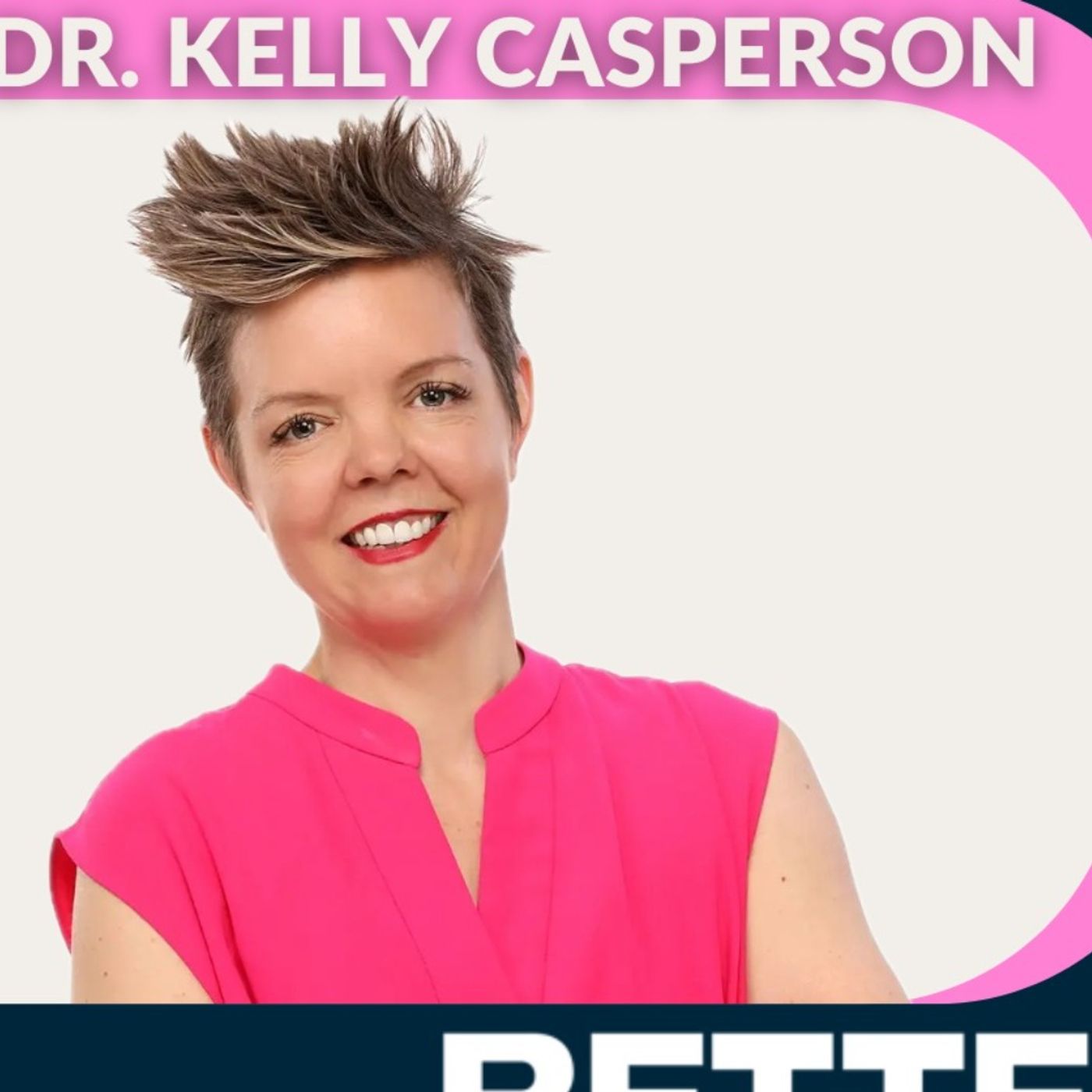
BETTER! with Dr. Stephanie Estima | Strength, Body Composition & Perimenopause
Your Guide to Estrogen Down There: Pelvic Health & Hormones for Menopause with Dr. Kelly Casperson
01:10:52
Discover the truth about hormones and women's health! Join me as I chat with Dr. Kelly Casperson about the misunderstood power of hormones, informed consent, and debunking myths. Get ready to own your hormonal journey! Watch the full episode at https://youtu.be/RNP6-u2FMGM
Loading summary
Transcript142 lines
- [00:00]
A
The psychological construct called the naturalistic fallacy. And what the naturalistic fallacy is is the belief that if it comes from nature, it's therefore more holy, it's more spiritual, it's more perfect, it's more better, it's more. And it's like this whole like living 40 years past your ovarian functions actually not natural. Like lifespan is at a record high right now. Like, you know, average life expectancy In America is 76, but average health expectancy in America is like 64. Right. And so you're like, how do you get the health expectancy and the life expectancy to closer together on the upward side of things? And that's what this hormone conversation is.
- [00:42]
B
Friends. Welcome back to another episode of better with Dr. Stephanie. You know the drill. It's me, your host, Dr. Stephanie Estima. And today I am joined with Dr. Kelly Casperson and we are talking all about hormones and how to make an informed decision for your individual needs. And that is really the big why in terms of if you are going to spend any amount of time listening to this show, the reason why you should listen to this particular episode is it is because it is going to help you delineate between facts and fear. So we talk about some of the facts. What are some of the things that hormones do for the body, who hormones may not be good for, where some of the misinformation comes from, why we have this perseverating fear around hormone replacement therapy and what is the best course of action for you? I love Kelly because she talks about informed consent. It is probably one of the big drivers of her entire practice and why she became a medical doctor and I share that with her and that's part of the reason why this podcast exists. Because I want you to be able to make better decisions. Get that better wah wah, better decisions for your health in all verticals of your health. So who is Dr. Kelly Casperson? She is a medical doctor, a board certified urologist with over 15 years of of experience who now specializes in women's sexual health and hormone therapy. After realizing traditional medicine training left a gaping hole in addressing women's intimate needs, she created the you are not broken podcast and has authored you are not broken and her latest book which we discussed today, the menopause moment. She also founded the Casperson Clinic. It is a membership based model that provides tailored unhurried care. She is known online. Her online personality is like a big sister who's a doctor. Dr. Casperson delivers clinical expertise with humor, candidness and unwavering support. And this is not part of her bio, but I will add it in. She also needs a Netflix special. So what do we talk about today? We talk about testosterone. We talk about estrogen. We talk about them in the context of bone health, brain health, cardiovascular disease risk. We talk about pelvic health and reproductive health. We talk about the genital urinary syndrome of menopause. We talk about vaginal estrogen and vaginal dha. So this is a conversation that if you are probably listening to this with little ones in the back, maybe you want to listen to it in your ears or a time when we don't have little ears listening. I will leave that decision up to you. But I think that you're going to find this conversation very honest, very transparent. There's no broad strokes. Everybody should be doing this. Nobody should be doing that. There's a lot of nuance in this conversation. So without further delay, please enjoy my conversation with Dr. Kelly Casperson. If you're looking to sleep better, recover faster, improve your skin's appearance and thicken your hair, you are going to love the Bon Charge Red Light Therapy panels. Red light stimulates something called cytochrome C oxidase is a protein that enhances energy production in human cells. This essentially boosts mitochondrial efficiency in breaking down nitric oxide and generating more energy that helps the body's healing process. Red light therapy has been shown in peer reviewed clinical trials to help with improved collagen and elastin production in the skin, thereby reducing the appearance of fine lines and wrinkles, improving skin blemishes, roughness and reducing scars, supporting recovery for better sleep, promoting muscle relaxation AKA soreness and stiffness. And this is also FDA approved for hair loss, which is something that many women in their 40s and 50s deal with. The bon charge red light Therapy device uses the most bioactive frequencies of red and near infrared light at 630 nm, 660 and 850 nm. I personally use the full length panel after a long bike ride. I typically like to do my mobility and stretches in front of the full length panel for about 10 minutes a day. If you want to get these benefits, head over to boncharge.com better and use code better at checkout for 15% off your purchase. My friend Dr. Kelly Caspersen welcome back to the Better Podcast. Thrilled to have you here today.
- [05:03]
A
Thanks for having me.
- [05:05]
B
We are talking about your new book. I know currently as at the time of this recording you are on tour for said book. So tell us A little bit about the name of the book and what we are gonna find in the book. And then we're gonna dive into all the good things that you discuss in the book.
- [05:20]
A
Yeah. So the name of the book is the menopause moment. It's mindset, Hormones and science for optimal longevity. And the reason that I wrote this is my first book is called you are not broken. Stop shooting all over my sex life. And I. I struggled with, should I put a menopause chapter in that book? Is anybody going to read it if I put a menopause chapter in that book? And I came to the conclusion of, like, everybody should know what's coming or what's happening. And it's part of health literacy, of understanding your body. Right. So I threw that menopause chapter in that book, and people really liked it. They're like, I had no idea. You know, this is good. So it was actually, like, a lot of feedback about having put that in a sex book. And so my. I was talking to my publishers, and they're like, will you write another sex book? And I'm like, I want to write a menopause book. And they're like, yes, do that. And I'm like, okay, great. So it's. I really wanted to write kind of the 2.0 menopause book because I think there are really great one on ones out there. There's really great, like, what's happening? And ask your doctor if hormones are right for you. And, like, that's out there. I feel like. And I want it to be like, here's the receipts. This is why we say start early. This is why we say it's likely helping the brain. This is why. And so I wanted to give people that information and let them ultimately make the decision for themselves. In a perfect world, that's informed consent. That's body autonomy, that you're gonna. You're gonna know as much as you can. I don't expect you to be a physician, but you can advocate for yourself and make the decision for you. And I think that's an important distinction because, you know, the critics of, like, the menopause and the people who are, you know, publicly speaking about midlife hormones, they're like, you just want everybody to be on hormones. And I'm like, I don't care actually if you're on hormones or not. Like, it's your body. I am not making any money off of that. I don't care what you do, but I care deeply that you are educated about what's happening to your body, and you're able to advocate for what you want. That's my mission, and that's what this book is about. Ultimately, I'm like, here's all. Here's the receipts. We got 300 pages worth of data. I mean, the other interesting thing is people are like, we need more research. We need more research. And I always say, yes, I agree. We need more research, and we need to use the research that we already have. Yeah, stop ignoring that. We have decades of hormone research, and we can use what we have while we're waiting for more research to happen. So that's why I was. This is pretty research science heavy, because I'm like, I don't. It can't be. You know, Dr. Caspersen says I should go on hormones. I actually. I cringe to think that somebody would say that. Right? Like, I would. I much more happy when people are like, I feel pretty confident that the risk benefit is in my favor, and I want to choose to be on this for me. And thanks, Dr. Casperson, for the education.
- [08:02]
B
Yeah, that's my. That's my hope, too. And that's actually one of the reasons why this podcast exists. It's like, it's really one of the. Through lines is informed consent. Like, understand the risk, understand the benefits, and then you make the decision that's right for you. And if I can just reflect and in terms of my observation of you online and in person and the times that we've had to, you know, interact together, you live what I would. What I would categorize as you're sort of walking the walk, talking the talk. Right. So you may or may not be on hormones and whatever that concoction looks like for you, but you're also dialing in the lifestyle. Like when we, you and I were at Vonda's event, actually, last August, November, whenever it was, we were in Florida together, and there was, you know, I went to the gym in the morning, and you, along with Kristen, it was like just us three in the gym, bonded forever. It bonded forever.
- [08:50]
A
There was like, nobody else in the gym. It was just like the. The experts at the conference were in the gym that morning.
- [08:56]
B
Exactly, exactly. So you're also, you know, you're balancing, I think, the information and the literature that's available around hormone therapy, and you're blending that in your. At least in your own life. My observation of you is also blending the lifestyle component, too, which is super important. Like, you really can't have one without the other.
- [09:12]
A
Yeah, you can't have one without the other. And that's why this book isn't a three chapters about testosterone, progesterone and estrogen, right? This is like, what about weights? What about sleep? What about alcohol? What about protein? What about mindset, right? Because if you slap an estrogen patch on and you still hate yourself, like, you know, I. I haven't helped everything. So the.
- [09:31]
B
Right.
- [09:31]
A
Like, it's, you know, hormones are. This is. This is my, like, new metaphor with hormones is hormones are bricks. Bricks make houses. If you don't have bricks, it's hard to have a house. But once you've laid the bricks, it doesn't make a home, right? You need all the other things to make the house a home. And so to me, I'm like, hey, these are bricks. They're essential. They literally make mitochondria function. And I think that's the other important thing about hormones is people don't actually know what a hormone effing does, right? And so then they're like, oh, that sounds dangerous. And like, you understand, they help cells be healthy, like on a cellular biomechanical, you know, and then so that's the thing is, like, get educated, understand what this is. Because at the end of the day, I want you to make a decision based on facts, not fear. And, you know, it's one thing to read a book, but you actually have to, like, implement it, right? Like, ideally, it's like you are a student, but then you go out and you work it and you see if it works for you and you try things, and that's ultimately what I hope women will do.
- [10:33]
B
Yeah, I mean, I can talk to you about squats, but at the end of the day, you got to do them. No, you got to get out at the end of the day.
- [10:37]
A
Squats are heavy, my friends.
- [10:39]
B
Yeah.
- [10:41]
A
All right, well, I just. I was literally squatting like 10 minutes ago before I.
- [10:46]
B
And that's why you're. That's why you're glowing. I love it.
- [10:48]
A
I have a squat glow right now for sure. Zone four cardio with squats.
- [10:52]
B
Zone. You know, squats are one of those things where I feel. So I gotta say, I just feel so powerful after doing them. It's. It's like I can get down, I can get up. And, you know, it's for, like all the. For all the reasons, right? For the glutes, for sure, for the aesthetics, but also for my old lady body, right? My ability to get down on the floor and be able to get back up again and, you know, play with my grandchildren and all the things Maybe.
- [11:12]
A
What people don't know, which is. Might be fun to tell people, is, like, feeling strong feels amazing. And, like, if you don't feel strong, you have to borrow somebody else's belief. It's kind of like, you know, being like, hey, not having alcohol in your life feels effing amazing. But you don't know that yet. So you don't. It's. You're not, like, motivated to do it, but it's like, even if you can hear other people be like, dude, it's a beast. Come on over. Try this out. It feels amazing. And people who feel amazing want people to know, like, feeling amazing feels really good. Come on over.
- [11:44]
B
Yeah. Yeah.
- [11:45]
A
And it's a way. It's not that hard, but it requires getting off the couch.
- [11:49]
B
Totally. And I would say it also forges confidence as well in a way that I don't think I ever expected. When I started lifting weights, I only got into it to look good in a. In a pair of jeans. But then, you know, you're like, actually, it's.
- [12:00]
A
The side benefit is a really nice ass.
- [12:03]
B
Yes. All right, so let's. Let's actually talk about. I actually want to get into what people get wrong about menopause, and maybe what's most misunderstood and why timing, specifically around hormones, is very important. I'd love to sort of invite this, like, critical window explanation that you talk about in the menopause moment.
- [12:24]
A
Yeah. Like, there's so many myths. I think one myth is people have no idea it's a decline in hormones, and that is what actually causes the cessation of periods and fertility. Right. People think like, oh, yeah, I just can't get pregnant. And I have some hot flashes, and I have some. I don't have bleeding anymore. And I'm like, no, that's a consequence of the hormones going down. Like, that's the missing education piece that people don't get. So here we are being like, dude, estrogen's so good for your bones. And they're like, I don't get that. Like, you know, they don't understand that we're just replacing what's actually happening, because midlife is outliving ovarian function. So it's a blessing. I mean, it's an absolute blessing to reach 50. And I'm like, it's horrifically optimistic to call age 50 middle age. It's awesome. Right? And. But we're gonna live 40 years without hormones unless we choose to replace them. God bless. We live in a time and a place that actually has things we can take that, help our bodies be healthy. It's fantastic. So the timing hypothesis is it was originally monkey studies, and the cardiologist kind of grasped onto it, and they're like, listen, cells do better with hormones. And if you take hormones away, the cells will start to age without hormones. And that's where plaques come in and stiffening of the arteries and all of these things, the tau proteins, like, you know, the neurologic changes. And the timing hypothesis really has to do with cardiovascular health, saying hormones don't treat cardiovascular disease very well. There's some studies, but it's not currently a treatment for heart disease. But it works best with prevention. And again, it won't prevent everything. Right. Like, when we talk, everybody's like, we're all humans. We're all different. We all have cardiovascular risk factors. But by and large, estrogen works best to prevent. And in order to prevent, you have to keep it in before it ages without it.
- [14:14]
B
And when we're talking about estrogen and its effect on the cardiovascular system, let's actually get into some of the mechanisms here. So is it because we are preventing endothelial, like the stiffening of the arteries, is it. Is it accentuating nitric oxide? Like, tell us what is happening. What is estrogen preventing? Or what is it continuing to support as our own endogenous production is declining?
- [14:35]
A
Yeah, it's all of the above. So it's stiffening, it's nitric oxide production. That's. The nitric oxide supplements are getting kind of hot right now. And I'm like, does nobody know that hormones make nitric oxide and green leafy vegetables make nitric oxide? You know, like, it's crazy that that's. We're missing that. We're like, we've got a cheap, cheap nitric oxide producer that insurance covers. It's called an estrogen patch. But, yeah, if you actually read the cardiology data on it, it's like 10 different things that hormones do for the cardiovascular system. Women who are on hormones have less ventricular, you know, decline, have less heart failure. So it's not just heart attack. It's really a lot of different types, because heart disease is kind of this group of things, and hormones decrease a lot of that risk. But in order to get prevention, you have to start on it early. Which is kind of vague, right? But they said, hey, maybe within 10 years of your last period. Like, that's an absolute. But, like, we. We don't know. Like, they just split the WHI into groups of, you know, 10 years.
- [15:35]
B
Well, let's okay, so that, okay, so there's a couple things I want to, I want to piece apart here. So the Recommendation, I mean, 10 years is a really long time. From the, you know, from your last period. My, the first question that came into sort of my consciousness as you were, as you were saying, that is. Okay, so if it's within 10 years, is there any benefit to actually doing it before your period stops completely?
- [15:58]
A
That's a great question.
- [15:59]
B
So in the perimenopausal window, is there any validity or benefit or clinical data that we might have that supports estrogen prior to menopause?
- [16:08]
A
Yeah, so the, I mean, the best data we have that I've seen is the bone loss data. Right. So our largest rate of bone loss is in the two years prior to your period. Periods ending. Well, that's crappy. When you're, when do your periods plan on ending? Right. Like it's not a, it's not a date, you're gonna know. Right. And so I think that fact alone begs the question of why shouldn't, why are we waiting for bone loss to happen instead of preventing bone loss? And to me, that's the argument for considering hormones in perimenopause. Besides the fact that perimenopause is arguably the more symptomatic time compared to post menopause. And again, like the current menopause experts or midlife hormone experts, they kind of hate the word menopause because menopause by definition means one year with no natural period, which is a completely arbitrary made up line. Right. Like, hormones have been declining much before that. So it actually harms women to continue to use this menopause line because you're like, she's symptomatic, she's losing bone. But like, you still have a period, so we can't do anything. Like it's, that's totally made up and arbitrary. So like the current menopause experts are like, could we, we're just gonna stop calling this menopause. We're gonna just call it midlife, you know, hormone decline or some whatever word we can think of. But that's the argument. And I think the current hormone experts do treat perimenopause with bioidentical natural hormones because mostly because of symptom relief. Now what we need is the 20 year data to say the women who've started hormones in perimenopause have less heart attacks when they're 62. We don't have that. So we have to, we do have the whi.
- [17:44]
B
Like, the whi did show benefits with the estrogen only arm. So maybe we can maybe talk. That was the other thing.
- [17:51]
A
WHA is all post menopause. Right?
- [17:53]
B
Right. Right, that's right.
- [17:54]
A
So it's, it's to answer the question, should we start in perimenopause? The WHI does not help us.
- [18:00]
B
Okay, so the other, okay, so the other question I had was with the WHI you mentioned, you mentioned that. So I wanted to maybe talk about some of the, one of the things that I hear still consistently. What about breast cancer risk? What about breast cancer risk? What about breast cancer risk? So talk to us a little bit about the whi, the different arms of the WHI and what was actually shown versus what was maybe sensationalized and reported.
- [18:24]
A
Yeah. So the whi, just to back up for people, it was a like $250 million study, federal funded. 40, 40 some sites in America, randomized placebo, controlled trial. Now nowadays it would be a billion dollar study. So to the reason of like, why can't we just repeat this? Right? It's like it's not going to happen. But what they did is they, they did it to answer a very specific question. Their primary hypothesis was, is starting oral synthetic hormones post menopause, average age 61. So 10 years, average age is already 10 years past. So the timing hypothesis is, you know, already passed for these women. Is starting women at an average age of 63 on oral synthetic medications going to decrease their risk of heart disease? That was the, that's the question. And then we got a lot of other data out of it because there's other things we're going to look at. Right. So what happened in 2002 is that some of the researchers, not all said we're going to stop this, we want. And we're going to go to the media and we're going to say that we stopped this because of increased risk of breast cancer. And some, some of the other doctors said if you do that, the genie will be out of the bottle. We'll never be able to put the genie back in the bottle as far as like fear of hormones and breast cancer. So like people who are involved and I wasn't there. Right. But this, this is the stories is, and here's the other thing. It's, it's a no, no to go to the press before you can actually read the data. Like that's not usually the sciences. It's a no, no. But in 2002, we didn't have social media, we didn't have podcasts, we didn't have email. The scientific paper came in your mailbox a week later, right? So it went to the media, it exploded and said this study was stopped because of the increased risk of breast cancer in the estrogen Again, synthetic estrogen, synthetic progestin arm. And nobody could read the study until a week later when you had a subscription to the Journal of the American Medical association, which the layperson doesn't. And you could actually read it. And if you read it, it said, came close but did not reach statistical significance. And I liken that to be like, you're kind of pregnant. Like, no, you're not kind of pregnant. You're either pregnant or you're not pregnant. There's no kind of pregnant. And that's how statistics work. You're either statistically significant or you're not statistically significant. So they. And the crazy thing about this is that paper is free online right now. Every single human on the planet can go read the 2002 Jama Whi paper and it says, comes close to statistical significance for the synthetic progestin estrogen arm. Now that basically created a shit, like a shit show, right? People when women are afraid, they stop their hormones. The, the doctors who knew knew it was not that bad of a study. They're like, didn't reach statistical significance. And, and then further analysis showed that the placebo arm of the estrogen progestin combo was actually tainted because they'd already had hormones. And so once you factored in the placebo, because remember, these women weren't randomized for breast cancer risk or history of being on hormones in the past. So the long story short is estrogen alone in that arm decreased your risk of breast cancer by like 20 to 30%. If you got breast cancer, it decreased your risk of death from breast cancer having been on hormones and the estrogen progestin arm, once you factor in the placebo, you know, and actually did the right calculations, was not statistically significant. And I, this is what I take. I'm like, even if it was, let's say it was statistically significant, we're talking like one more breast cancer per 1,000 women a year. It's like still in what in science is considered a very rare risk. So long story short, we know that now, but the, the fear's in the ether. You know, when women, women are like, I don't know why I'm afraid of this, because they can't say that they know the whis why they're afraid. They just know they're afraid. Cause like an aunt told them that hormones are bad. Right.
- [22:26]
B
And I think that that's the. I think that's still the general conversation. And the reason why I wanted to sort of compare and contrast is I would argue, and I'm sure you would as well, that cardiovascular disease risk for women is much higher than starting at the third.
- [22:40]
A
Like in our 30s, more women die of heart disease than breast cancer.
- [22:43]
B
Right. Hydration isn't just about how much water you're drinking, but it is how well your body is holding on to that water. And this is especially true in perimenopause and menopause because as our estrogen declines, so does our ability to retain key electrolytes like sodium. And then you add in exercise sessions and hot flashes and night sweats. And women in midlife can very easily get dehydrated and disrupt our mineral balance. This is one of the reasons why I love Peak's deep hydration protocol. It is a synchronized day to night electrolyte protocol to restore your nervous system to keep you hydrated. And it has the added bonus of being drinkable skincare. It strengthens your skin barrier and helps to unlock a luminescent youthful glow from the inside out. It's a two part electrolyte ritual. The first one is BT fountain. You take this in the morning to deeply hydrate smooth skin and fuel all day energy. And this electrolyte has clinically proven ceramides visibly to improve skin elasticity and reduce fine lines. It has the ceramides that support hair thickening, follicle strength, elasticity and shine. Hyaluronic acid which supports a youthful dewy glow. And of course, electrolytes and minerals that provide that deep cellular hydration. The second part is re fountain, taken at night and this helps to calm the nervous system down and promote deep restorative sleep. It has magnesium, L threonate, glycinate and taurate. And this is going to help to calm your nervous system and your brain for rest and recovery in the evening. It's electrolytes and minerals that help to nourish hydration from the cells all the way up to the skin. So start your daily ritual today with 20% off for life plus a free gift to elevate your routine. Head over to peaklife.com Dr. Estima. That's P I Q U E l I f e.com-r e s t I M A. This is hydration redefined. You're gonna feel it and see it. All right, friends, how many of these symptoms are you currently dealing with? Bloating, indigestion, or reflux, New food sensitivities that's popped out of nowhere. Leaky gut, Autoimmune flares, post antibiotic issues or mold exposure, or just gut problems that never fully go away. Now ask yourself, did these symptoms get worse around perimenopause? If they did, I promise you are not imagining it as estrogen and progesterone decline. They will affect profoundly gut health like motility, microbiome balance and your gut barrier. That is why so many women in perimenopause suddenly struggle with gut issues that didn't bother them before. When your gut lining is weakened or it's inflamed, it disrupts nutrient absorption, it ramps up inflammation and worsens hormonal symptoms. Because gut health is directly tied to hormone detoxification, your ability to produce energy, your mood and your immunity. So that's the bad news. The good news is that you can totally repair your gut with peptides. Level Up Health has formulated the most powerful gastrointestinal healing product, Ultimate GI Repair. It is a clinical grade formula designed to rebuild your gut barrier and calm inflammation from the inside out. Using peptides like BPC 157 and GHK Copper. These are very powerful peptides that rapidly repair the gut lining. Lorazatide, which is another peptide that seals leaky gut and improves barrier integrity. Then you have other compounds like zinc, L, carnosine and truterine. These are things that will soothe inflammation and support digestion. And then coretin and sodium bicarbonate. These will enhance nutrient absorption and gut resilience. This product, Ultimate GI Repair, is designed to target the root cause of gut issues and it will help heal and protect your digestive system so that you can feel your best whether your symptoms are tied to perimenopause, chronic stress. Hello, that would be me. Or past gut issues. Ultimate GI Repair will give your body the ingredients it needs to finally heal. Head over to leveluphealth.com that's L V L-U-P-H-E-A-L-T-H.com and use code Dr. Stephanie to get 15 off of the entire website. That's L V L-U- P-H-E-A- L-.com and use code Dr. STEPHANIE at checkout. And so I don't know why we are not more afraid of cardiovascular disease. I mean, well, you just explained why. You know, like it's because it's whi and everyone's talking like hormones cause breast cancer. But if we look at the Data, we look at what hormones can actually do in terms of a protective effect to the arterial wall, the endothelial lining, production of. No, et cetera, et cetera. I think that there's a, there's a very strong use case, at least in, in Menopaus. And I would also, I think that there's a lot of clinicians with experience treating women say, and, and in perimenopause as well, we don't wanna just wait for this one date on the calendar that you qualify for this retroactive diagnosis that you are now. You know, if you are 47, 51 and you're still menstruating, you are by definition in a relatively deficient state of your reproductive hormones. And so maybe there can be some. I know it's a bit of an art. There's a science and there's an art to it, but maybe there can be some play or some discussion around what hormone therapy can do in terms of a prophylactic effect on the cardiovascular system.
- [28:20]
A
Yeah, I mean we, in the 1990s, the cardiologists knew like, they knew this. Right. And there's, there's still some very current, strongly, I would say strongly supportive, strongly worded cardiovascular literature saying like, this is cardio protective. Right. So it's like, it's not new. We're just relearning and we're like, you know, having to forgive the big harm that we did to women with fear. But it's like 40% of women were on hormones in the 90s. And so it's not like this brand new thing. It's like we're kind of trying to get back to where we were with even more safe medications because they're transdermal, bioidentical. They're not getting first an estrogen patch 0.05 or less has no increased risk of stroke. So that, and that's well published. So it's like getting it out of the first pass metabolism. Like it's safer now than it even was in the 90s. And 40% of people were on it. In the 90s, women were on it. It was one of the top five bestselling pharmaceuticals in the nation. And so same thing.
- [29:20]
B
It's a different kind, right? Even. Yeah, yeah, yeah.
- [29:23]
A
Primpro was, was the, the bestseller. But here, like, here's the deal. Prempro got sued for a billion dollars because of the whi. Now, incorrectly, like I would say incorrectly because. Oh, turns out the data was wrong. Sorry. But they, they lost some pants off of that. And I don't Think anybody's gonna stick their neck out and say, we should, as a country, as a world with aging women, put everybody on hormones. It's too high of a bar. We don't do that with aspirin. We don't do that with statins. Like, we don't do that with anything. So I think the conversation of like, well, let's wait around and get some guidelines for prevention of heart disease is like, it ain't gonna happen. Like, read the history books, right? This is what happened with a bad study back then. Nobody's gonna stick their neck out and say everybody should. It's a very high bar. But what that means is you get to make an individual choice on if you know the data enough, do you wanna do this for your body? Knowing the history enough to be like, nobody's gonna stick their neck out and say, we should put all women on hormones. Does that make, does that make sense?
- [30:27]
B
Totally. Well, I think that there's a, there's a, there's an element of bio, individual. Like what you're talking about is again, informed consent and individual risk tolerance. Right? So we are going to have, you and I have the same parts, you know, more or less. And we are going. But we're going to have like, our genetics are going to be slightly different. Our family histories are going to be slightly. So there's going to be different risks between you and I. And I think that what most of the menopausy really advocate for, I haven't heard anything to the contrary, is just like to have the right to have the conversation with your provider. I think that's the big. It's like, okay, maybe, you know, and a lot of, you know, like, Mary Claire, she feels really great on estrogen. Like, I think she said something like, I am going to die with my estrogen patch, you know, like on my leg or whatever. And it's like, okay, that's the, that's the choice that she has made. And all that she and everybody else I think is saying is you just deserve the client to have the conversation. So if someone's saying to you, you can't, it's too late, or it causes cancer or whatever, that's not having the conversation. That's not having an individualized conversation for that patient.
- [31:33]
A
Yeah. And I want to, I mean, I wanna speak to the healthcare system. So what happened after 2002 is hormones became the bad guy. Nobody got taught about em, right? Even in the gynecology world, nobody got taught about em. And so what we're doing, what you're doing with your podcast. What I'm doing with my book is we're educating the lay population and, and saying, hey, if you want this, you got to go in and advocate right now. Because you might know more than your doctor who's well meaning and loves helping people, and loves helping people stay healthy, but did not get this training. And it's hard to have a, have that conversation in a 10 minute visit.
- [32:09]
B
Yeah, yeah. And I think it's also it, it can be difficult because when you go into an office, they only have 10 minutes and you can't go in with papers and be like, let's go through the papers together. Right. So maybe even maybe talk to us a little bit about how we might have this conversation with our, with our providers if they are hesitant or reticent to recommend or have the conversation around hormones.
- [32:32]
A
Yeah. So my first option is like, if you already have a well established relationship, awesome, fantastic. It's precious. Hang onto that. Not everybody has that in this day and age. And if you don't have that, call the office and ask the receptionist, like, hey, does Dr. Jones treat perimenopausal women? Does Dr. Jones give females testosterone? Whatever. Because the receptionist tends to know who these people see. Right. And because if they don't, like, don't take a day off work, don't pay for parking, don't pay for your co. Pay, like they don't do that. Right. And that's where luckily in America, we have the privilege of getting second opinions. I know, you know, I live very close to British Columbia. In Canada, you're kind of stuck with the doctor you're assigned to. Like, there's not a lot of options if that doctor is not educated.
- [33:16]
B
Yeah. I'd say the same is true in Europe too. Yeah. With like nationalized healthcare systems as well.
- [33:22]
A
Yeah, yeah. And so, you know, going private, if that's an option. Also in America, we have a lot of online healthcare clinics now that are designed for perimenopause and menopause. So like that's their whole shtick. That's what they're doing. So, you know, it's like a friendly audience when you, when you make an appointment with them and then when you get into your doctor's office, say, you know, I've been reading a lot about X, Y and Z. I have X, Y and Z. Can I try X, Y and Z? I will make a follow up appointment in two to three months and we will adjust as needed. Doctors love follow up. We love knowing how you're doing. We don't love, especially if we're not comfortable with it, like putting you on it and then not hearing how it's going to.
- [34:03]
B
Yeah.
- [34:03]
A
So that closing the loop and adjusting as needed. Because I think what a lot, I see this a lot is in women who are like, hormones didn't work for me. And I'm like, you didn't have a follow up visit, you didn't get things adjusted, you didn't try other options. Like, there's always something to try. And yeah, you do get into like the more menopausy level experts when we're like, hey, did you try this? Hey, did you try that? But like you said, we're not all Toyotas. Sometimes we need to try different things. And that's the worry, like on social media, because people are like, well, Susie's on this, I want that. And you're like, well, Susie's not you. Like, you know, there's this like race to the best, the best hormone thing. And it's like, best is individualized, right?
- [34:45]
B
Totally. So what is the difference? And maybe you can help parse this apart. I hear this a lot. All the time is okay, do I need, if I'm taking estrogen, do I also need like vaginal estrogen? I hear a lot about vaginal estrogen. So is, are those two things separate? Should we be considering just vaginal estrogen as well as systemic estrogen and maybe talk to us about the difference between those two?
- [35:09]
A
Yeah. So just to break it down, for people, systemic means full body. Whether I'm swallowing a pill or I'm using a patch or I'm using a gel on my skin that is dosed to get into your bloodstream. That's what systemic means. So then it can go to your bones and it can go to your muscle, it can go to your heart and it can go to your brain. That's systemic, local vaginal estrogen. Think of it like skincare. If you put sunscreen on your forehead, it's not gonna protect your elbow. It's just on your forehead. Right. So vaginal estrogen and vaginal DHEA just stay in the pelvis. And so I like to explain it like it's a math equation for people who like that is like a systemic level of estrogen will raise your blood levels. X vaginal estrogen, because it's not systemic, raises your blood levels zero. What's X plus zero? X? Cause so like the big argument is like, you can't be on both. And you're like, why not? This is skin care. This is systemic, they're separate things. And many people, you know, many people are like, they don't understand that most hormone therapy, this is not whomper doses of hormones. This is like, this is like in the like enough category, right? Like get the job done but not have too much. And so it's like, like we're not giving you 28 year old estrogen. Like the vulva still might be atrophic, painful when you pee, recurrent urinary tract infections, pain with intimacy, what we cons, what we call now genital urinary syndrome of menopause. And you might need a little bit of skincare down there to help it out.
- [36:39]
B
Yeah, and I think, you know, I was saying too before we got going, I was like, and if we want to break the Internet, why don't we talk about vaginal estrogen or estriol on the face?
- [36:46]
A
Oh my God, it's like, like estriol, estradiol or estrel, those are the two that are used on the face. Like it literally breaks the Internet because it like freaks people out. And people are like, you're gonna hurt people. And I'm like, we celebrate Kris Jenner having a however much thousand dollar facelift to look freaking 28. So we're like, women like you should have surgery to look beautiful and to feel good, good on you. But like something your ovary makes to put on your skin to increase blood flow and collagen. Like malarkey, shame. The shame, the shame of you, like the risk, right? I'm like, plastic surgery has a risk of death, Let me remind you. So I just think there's like a huge hypocrisy when it comes to like, you can do this to look youthful and young, but you can't do what your ovary always gave you and just put a little bit back on your skin. And the other, I mean the other crazy thing is like in the 1950s the FDA was created and the FDA decided these are a prescription, this is not a prescription. Before then, estrogen was in skincare over the counter in America. What? Yeah.
- [37:51]
B
Oh, that's awesome. I didn't know that.
- [37:53]
A
Isn't that great? So I wasn't old enough to benefit from it, but like my grandma was. So it like we, we've had hormones forever, we put it in skin care until the FDA said you can't anymore, which is kind of an arbitrary thing. And there's lots of data. Just this past month, there were two basically review summaries published in the dermatology literature, reviewing the Health benefits of estrogen in the skin. And so I did a podcast on one of them because podcasts about skin always go very well. And because it's a $60 billion industry, because women care about what they look like. And I'm like. So I'm like, basically, like, reading the paper and going through my opinions on it and. And saying, like, where this paper is incorrect and where it's correct and blah, blah, blah, blah. But it breaks down like, dude, the skin is an organ. Let's remember, this is not just vanity. This is actually an organ. But we can see it, right? And so it helps blood flow to this organ. It helps collagen, which is the support structure to this organ. It helps this organ heal when it's injured. Right? Going back to, like, what the hell do hormones do? It does all of these things to this organ. But we're like, that's vain. You can't. That might be dangerous. And I'm like, you, that's insane. Talk like you don't understand. This is an organ. And, like, it's not just that you look like the organ is healthier. Right. Like, wounds heal faster when you have hormones in your body.
- [39:18]
B
And it's a primary. It's your prime. It's your primary defense. Organ, Right? It's your primary defense.
- [39:23]
A
Yeah.
- [39:23]
B
Like, most pathogens are going to come into contact with your skin first. So if you have a healthy skin barrier, or you have, as you were saying, the collagen and the elastin to sort of support that. That cellular matrix, you're going to be better off for it. And, yes, your skin's going to be glo. Great. But we're also thinking about this from a functional perspective as well.
- [39:39]
A
Totally. Like, to me, I'm like, if you want to really get into it, like, hormones help collagen and, like, the supporting structures. So if you're looking at a face and it's got tons of wrinkles, you know, sun exposure, genetics, all that thing. But the point is, some people are saying how many wrinkles you have might be correlated with bone strength, because, Satan. It's just the outward appearance of the microvascular structural changes that are happening in your body because of low hormones. And so to me, I'm like, I would love to actually see a study on that, but we don't have that. But it's like, it may. Once you understand hormones and how they affect all organs, you're like, well, can't see your bones thinning, but you can see your face. You can see your skin thinning. And you can see your skin wrinkling, which is the outward appearance of what's happening when your hormones go down.
- [40:31]
B
As we age, our ability to digest complex foods like protein declines. This is because our body produces fewer enzymes, which are the proteins responsible for digesting food. Even organic foods won't provide enough enzymes to properly digest them. This is especially true if you cook any of your food because cooking and the heat kills those enzymes that are responsible for digestion. This is where supplementing with a high quality enzyme supplement can be a huge help. I personally recommend masszymes by Bioptimizers. It's the best in class supplement loaded with a full spectrum of enzymes for digesting proteins, starches, sugars, fibers and fats. Taking masszymes daily helps to top off your enzyme levels and replace the enzymes in your body that your body is no longer producing. This means that you'll be able to eat all sorts of delicious foods and digest them quickly and effortlessly. After you start taking Mazzymes, you may notice that you no longer feel bloated after meals. That's a huge bonus. And that your belly might even feel flatter too. If you have leaky gut Mazzymes can reduce that gut irritation and help you absorb more nutrients. Listen, life is too short to suffer from digestive problems. If you want freedom from your food, try Maszymes risk free and experience for yourself the magic of high quality enzymes. For an exclusive offer for my listeners, Please go to buyoptimizers.com better and use code better at checkout to get 10% off your order. That's B I O P T I M I z e r-s.com better and make sure you use better at checkout. And we didn't mention it before, but maybe it's worth mentioning briefly now is that what estrogen does is it basically puts the brake on these osteoclasts, which are cells that are involved in bone resorption. So as your estrogen is declining that that inhibition is much harder. So you tend to get more bone resorption as there's bone turnover, which is natural and normal. We have blasts, osteoblasts and osteoclasts. But as estrogen is declining, we see an increased activity of these bone resor. These osteoclastic cells. So as we are. And our, you know, the zygomatic arch and the mandible and the maxilla and everything, these are all bones in the face. So they're all, they're no different than let's say a humerus Or a femur or a fibula, whatever. So as we are keeping the bones healthy, again, systemically, that would also, that would also include bones in the face as well.
- [42:54]
A
And the crazy thing that people don't know is that if estrogen is the osteoclast, you know, I'd say helper, right? Like modulator, testosterone helps the osteoblasts. So anabolic simply means to build, right? That's all it means. But it got a very bad name in like the doping bodybuilding community. But it's like you want, you want anabolic in your body because you want to repair things that are constantly being degraded as, as we live life, right? So it's like testosterone is an anabolic agent, which is not a bad word. It just means to build. And so testosterone works on the osteoblasts, which help build bone. So these things are actually very complimentary when people are like, do I? And I, I, I, truthfully, I kind of hate the word need. Like, I need oxygen, I need food. But like, you don't, you don't need hormones, you can live without them. And I want people to understand that, Like, I don't think anybody in the menopause is going around saying, you need anything. Asterisk, vaginal estrogen, probably, because we probably have enough prevention data at this point to say need vaginal estrogen. But you know, when people are like, do I need this, do I need that? I'm like, no. Like, no, the need is too strong of a word of like. But your quality of life might be better if you're on it. You can choose to choose it, you can want it. But again, just socio culturally is interesting, right? Because a woman's like, I'll take it if I need it. And I'm like, you're gonna wait for some other expert to give you permission to take care of your body versus I want this, I'm choosing this. Are you seeing how it's like an active decision versus a passive decision, right?
- [44:28]
B
Yeah, there's something also about this like, martyr. There's also a bit of like this martyr character too. It's like, well, I don't, I don't, I don't need it. So I'm just gonna, you know, tough it out and like, you know, barebacking or whatever. It's like, yeah, good luck with that.
- [44:42]
A
You know, psychological construct. I write about it in the book called the Naturalistic Fallacy. And what the naturalistic fallacy is is the belief that if it comes from nature, it's therefore more like, it's more holy, it's more spiritual, it's more perfect, it's more better, it's more. And it's like, that only has happened since we've moved indoors and not actually lived in nature, which is like a brutal freaking place. Right? So this whole, like, living, Pat, living 40 years past your ovarian functions, not actually, not natural. Like, lifespan is at a record high right now. And so this conversation about, like, do you want to be on hormones? Because we got 40 years, ideally, you're going to be without ovarian function. This is a brand new conversation to have, which I think is why it gets so heated and gets so contentious, is like, this is a brand new discussion. Prevention, longevity, getting to 84, living the life you want to live. Like, you know, average life expectancy In America is 76, but average health expectancy in America is like 64. Right. And so you're like, how do you get the health expectancy and the life expectancy to get closer together on the upward side of things? And that's what this hormone conversation is.
- [45:55]
B
If anybody wants to see how brutal nature is, like, there's a. There's many Instagram accounts. The one that I follow, I think is called Nature is Metal. I don't know if you. If you've ever come across this, but it's literally like animals ripping each other apart. You know, it's like the. The brutal, the brutality of nature. And I think that there is this. This fallacy that you're describing where we're like, oh, it's organic. It's like, so is cancer. You know, so there's many things that. Yeah, so is mold. Exactly. There's all these things that are natural, but natural doesn't necessarily mean gentler or better for you when. When. And I. I also see this with sort of this. I don't know what to call it other than like a primal movement. Like, we have to live, like, you know, primally. Those people were dying of being pulled apart and torn apart by wolves or lions or whatever their predators were, and they would discard their children. They were brutal. It was a brutal life. And I think that people are very nostalgic and selective, especially in that. Like, privileged.
- [46:54]
A
Like, how privileged are you that you actually get to think about all of this? Right. And I just read this amazing book called the Comfort Crisis by Michael Easter.
- [47:03]
B
Yes. Change my life. Yeah.
- [47:06]
A
Isn't it so good?
- [47:08]
B
Yeah.
- [47:08]
A
Yeah. And so, like, I love everything about that. And I like. It's like, pull the good stuff, like, side tangent but like, the Internet freaked out about weighted vests for women. And they're like, that might hurt women. And we don't have enough data. And I read the Comfort Crisis book where he basically lays out the decades of study of weighted backpacks in like multiple military. Like, that's who's studying it. Right. But it's like we have like decades of data on carrying. Everything's on our back besides the fact of like, you know, the cavemen, people before us. And I'm like, here people are freaking out about like, not enough data for a woman to wear eight pounds on her back when she goes on a walk.
- [47:45]
B
And I'm like, and you're called a grifter. You're like, there's these Internet trolls that are like, you're a grifter. If you. It's like, you know what? There is quite a bit. I've actually done a little series on weighted vests because. Because of this in particular, it's like, there's quite a bit of evidence to support wearing them. And also, women almost from the beginning of time have had an 8 to 15 pound child on them. Front loaded, back loaded. You know, in many different. In many different communities across the planet. Like, this is not unusual. Like, I remember when I first read that book, I. I bought like a goruck thing.
- [48:19]
A
Yeah, Yeah. I bought a company too. Yeah. I was like, all on their website after that book. Yep.
- [48:23]
B
And I was like, oh, this is just like how it was when my kids were young. Cause I just, I had a sling. Like my babies were in a sling. I would just do my, you know, housework or whatever. What I was doing when the babies. And it's like, that's what it is. Women have been doing this from the beginning of time. We've been rucking since the beginning of time. So why are we now saying like, oh, this is, you know, like there's. And I know again to bring up a mutual friend, Mary Claire. Like, she's come under quite a bit of heat for her weighted vest use. And I think that a lot of it is just completely unjustified. Like, it's completely unjustified.
- [48:53]
A
And it's like, you can't say that taking hormones is unnatural, but then you. We can't use weighted vests because that's unnatural. Because that's more natural. Then like, the whole thing just falls apart. It's like, what we want to do here is live as healthy as long as we can. I would say most people agree with that statement. So it's like that's all we're talking about, how to get the job done.
- [49:16]
B
Age like men do.
- [49:17]
A
What's it.
- [49:17]
B
Yeah, why can't we want to age like men do? Like, men are given hormones if they're. They, if they have before they even get the word out of, like, I think I'm low on tea. Like, they have a script. They have, they have a prescription, right? So, like, that's all we're asking for, is the same converse, just conversation and.
- [49:34]
A
Opportunity that men do is a powerful argument. And I think that's kind of where, because I'm a urologist, I take care of the men. And the gynecologists can't have that conversation because they don't take care of the men. But I'm like, you wanna talk about Unnatural Viagra, best selling, most successful drug out of the docket ever, made a billion dollars in Today's dollars within two years of its release in 1998. Nobody in 1998 didn't have the Internet. But can you imagine being like, guys, treat your erectile dysfunction naturally. Like, nobody's selling that. I mean, yes, we should exercise, we should sleep. Cut out the alcohol. Alcohol is effing horrible for erections, right? There are natural things we can do for erections, but men don't get that sort of stay quiet, stay, stay pure. Like this culture that women get thrown at them of like, you better do this the right way. And I think that's why they're looking for permission for, like, do I need hormones? Because then I have Dr. Caspersen's permission and I'm like, I want you. It's like being pulled by, like, water skiing. It's like, I want you on top of the water. I don't want you pulled under the water. That's a shitty place to be. I want you on top of the water. It's like, how do you get women there to be the active participant in their life?
- [50:53]
B
Well, this is a good philosophical question to have over an extended coffee, Kelly, because I, I, I struggle with this as well. Like, I have women in my. So I talk a lot about, as, you know, like, I talk a lot about aging well with muscle and bone and joints and mobility and all that, because that is my area of specialty. And it's the same thing. Even when I talk about food. It's like, does this break my fast? How many times? How long should I rest in between sets? It's like, what are you doing right now? Like, that doesn't matter. Like, just do it. Like, it doesn't matter. Yeah, yeah, right, exactly.
- [51:26]
A
That's a good one.
- [51:27]
B
But that, that's what I try to. That's what I try to. I think that we have delegated our decision making ability as women, as a collective, to the doctor or to the whomever, so that we can't even make decisions for ourself anymore. And I don't blame women because there is like this infobesity, right? There is so much information, it is overwhelming.
- [51:50]
A
Heard that word.
- [51:50]
B
Yeah.
- [51:50]
A
That's so good.
- [51:51]
B
Yeah, yeah. Infobesity, it's like my favorite because I think that there's so much like there women are trying to parse. Like they hear someone on like some shirtless dude being like, kale's gonna kill you. And then someone else is like, no, vegetables are great for you.
- [52:04]
A
So then they spend so much time, like trying to figure out.
- [52:07]
B
Yeah, right. And so they're like, who's right? Who's right? And then the energy is, is spent there, like, which one should I listen to? And then they don't take any action on it, right? And then tomorrow it's like, then it's oatmeal, like, oats are going to kill you. Oats are peasant food. It's like, is it, you know, so you, so you, so you have peasants doing.
- [52:25]
A
In 14th century England, we actually don't want to live like that, truthfully, because they died when they were 28. I put this in my book again, like breaking down this naturalistic fallacy thing is like in 14th century, what is now England, the wealthiest people were the landed aristocratic males, right? They're the only people they're going to waste money on like paper and pen to actually say, Benjamin got born, Benjamin died. Right. Nobody else got like birth and death certificates then because you had to be like wealthy to have paper. Right? And so if you go back and look at longevity data in 14th century, the. Well, these are the wealthiest people who by definition can't die in childbirth because they're male. Average age of life, 47. And this is like, fact. Because the, the haters will be like, that's, that's not factoring in infant mortality. I'm like, yes. A lot of this data is if you made it to five. So we can factor out, get out, get out. All the infant deaths. If you made it to five, how long did you make it? Right. Wealthiest men, again, didn't die in childbirth. 47. Average age of menopause, 51. You can imagine how the women did.
- [53:35]
B
Right?
- [53:35]
A
And so it's like, I just want to wake people up to the fact that like, yes, we made it multiple decades, if you were lucky to not die in childbirth, but we didn't make it to 84, 90, 100. This is brand freaking new as a society, right? And I think that's the conversation of, like, we've never had to be proactive to make sure those final years are in health. And what we know now is you gotta frickin start. Start early. You can start lifting weights when you're 72, but it sure is nicer to already have that lifestyle going on before 72. Right? And so I'm like, that's what I think we're talking about is like educating people of like, wake up to where we are now. Which we've never. Like, we have shelter, we're not freezing. I don't have to haul food or starve. Right. Like we're immensely privileged. And then we're like, I don't know if hormones are natural. And I'm like, none of this is effing natural, you guys. At this point, I actually wanted to.
- [54:30]
B
You're listening to the show on your phone. That's not natural either, right?
- [54:34]
A
Yeah, you're listening on to this with things in your ears and a computer in your jean pocket. Like, none of that's natural. And I actually wanted to name this book. So somebody was like, I did a podcast yesterday and they're like, why'd you name it the Menopause Moment? And I'm like, Amazon search terms. Like, I'm just gonna be honest because of the, you know, the publishers. I'm like, I wanted to name this book Aging in Captivity.
- [54:56]
B
Oh.
- [54:57]
A
Because for a nod to Esther Perel for mating into captivity. Because it's a brilliant book for anybody in a long term sexual relationship. Read that book, it'll help you. Yes. And then to be like, we're living caged, right? Like zoo animals live past menopause. That's the other argument I hate. There's only four mammals. There's only four whales and a human that live past menopause. First of all, most mammals don't bleed. And the definition of menopause is no periods. So, like, the definition doesn't even work. What they want to know is, do you live longer than your reproductive capacity? Because they don't. Most mammals don't bleed. So if you take an animal from fruit fly to yeast, to harbor seals to whatever besides orcas, because orcas do worse in captivity. Because captivity is very shitty for orcas. Killer whales. Exclude the killer whales. But if you take everybody else and you're like, here's some food, here's some shelter. I got rid of your predators. I'm going to treat all of your infections. Here's clean water. They all live longer than their reproductive capacity. And I put that in the book because I'm so sick of the like. Like, humans are unique and natural. And we did this to give, to have grandbabies and to be grandmas. And I'm like, average age of first period is like 15, which means you could be a grandma at 30, which means you could be a great grandma at 45. You're still having your periods and have pregnancy risk through all of that. The grandmother hypothesis is absolute effing bullshit.
- [56:17]
B
That's. That was like. So I guess you're not a fan of the grandmother.
- [56:20]
A
No. Besides the fact that society, I mean, it's like, so well studied. And the guy who actually coined the grandmother hypothesis is like, I'm not sure about this. And most of these people died when they were 47 anyways. Like, the guy who, like, coined it was like, maybe, right? So for society to take it and be like, it's so that we can be grandmas. Like societies that, where grandparents or grandfathers are involved, they do well, too. So basically it's like people who help out families, those, those cultures do well. But it's not a reason for you not to take hormones because you're meant to be a grandmother. Like, it's, it's just stupid.
- [56:57]
B
Let's actually come back to. You mentioned testosterone upregulating, osteoblastic activity, and then you mentioned sort of in very quickly vaginal dha. So we've talked about vaginal estrogen on the show a lot. But I wanted to just come back to DHA as a moment. So as, as a, for a moment of explanation, let's say, talk to us about DHA as the precursor to some of these hormones that we're talking about and then how one might take it, what are some of the benefits? And then I would love for you to maybe even go a little bit into the gsm, like the genital urinary syndrome of menopause. Because I think that the last time you were on the show, I think my jaw dropped when you said, I think it was something like 80% of women will experience clitoral atrophy. And you're like, and I think it's higher because people don't report it. Like, they're not, you know, people are too embarrassed to say it or they don't even notice the changes because the degradation is.
- [57:47]
A
So, yeah, doctors don't know how to examine the clitoris, too. So, like.
- [57:49]
B
Like.
- [57:50]
A
Right.
- [57:51]
B
So there's that.
- [57:51]
A
Yeah, so there's that.
- [57:53]
B
Yeah.
- [57:54]
A
Okay, so DHEA is dihydroepiandrosterone, and it is produced by the adrenals, by and large. So naturally produced, it's like a hormone in our body. Right. And it declines with age, as do all the. All the other sex hormones. So there's two main ways to get dhea. DHEA in America is a supplement, so it's not regulated like a pharmaceutical. That said, the vaginal DHEA in America is a prescription. Everything's made up and nothing makes sense. But here we have it. But I know DHEA in Europe and in Canada is a prescription. I don't know. You guys can't get dhea?
- [58:32]
B
I don't think so. No, not in Canada.
- [58:34]
A
Yeah, so. So that's like, an interesting thing in and of itself, but. So DHEA is a. What they call a precursor hormone which converts to estradiol and testosterone. Intrachronology, meaning in the cell. The DHEA goes in. In the cell, it converts. So basically all of these things are, like, on a pathway of. They can convert into each other. For anybody who's, you know, gone to medical school, it's the cholesterol pathway and the adrenal pathways. So DHEA in the genitals converts to both estradiol and testosterone. Why is that important? Because our genitals have a lot of androgen receptors. They have a lot of testosterone receptors. Getting into. Why it bothers me when people say testosterone is only for libido. Testosterone has been shown to help all domains of female sexuality, which include arousal, which is blood flow, orgasm, which is pelvic floor muscle contraction and blood flow. Right. And testosterone helps the genitals be adult genitals. And when you take hormones away, those genitals can atrophy. The bladder muscle gets more spastic. So that looks like. Like urinary urgency, urinary frequency. Getting up at night to pee. The estrogen goes away in the vagina, so the vagina loses its microbiome. When you lose your lactobacillus, you don't make lactic acid. And the acidity of the vagina is actually a protective medicine mechanism for the poop bugs not getting up to the pee place, because the poop bugs don't like an acidic environment. So your microbiome literally changes when your hormones decline. And that's why we see an increased risk in urinary tract infections. So, yeah, that's local dhea. The brand name in America, again it's a prescription is called intrarosa or prasterone, but it's actually just dhea. I went to Australia, I was speaking at the Sydney Opera House, which was insane March 1st, and all the women I'm talking to, they're all on vaginal dhea. And I'm like, why is everybody in Australia on vaginal DHEA? Because in America it's quite expensive. It's like $80 a month. Month. And a lot of insurance doesn't cover it. And they're like, oh. Cause it's only 40 bucks a month here. And I'm like, damn you guys, you're all the good stuff.
- [60:41]
B
So go Australia. Yeah.
- [60:43]
A
Dollar, yeah. Dollar for dollar, I would choose vaginal dhea, but because would you do that in lieu of estrogen or together with, again, it's individualized. Like some women just need more. And the, the DHEA in America is a vaginal suppository. And so that goes in the vagina, but it does it, it is enough where the vulva actually does get better. But I think a lot, some women are on both. So it's an individualized thing. But dollar for dollar, I think DHEA is awesome and probably better because it has the mechanism of giving us some androgens as well as some estrogens. So testosterone converts to estrogen because it loses carbons, but estrogen cannot convert to testosterone. These are one way paths. Right?
- [61:26]
B
Right.
- [61:26]
A
Did I, did I answer all your questions?
- [61:29]
B
I believe you did. Noticing your hair isn't as full as it used to be. One of the absolute keys to thick full hair is scalp health. Good hair starts with your scalp. So instead of wrinkles and sagging skin, poor scalp health affects your hair, causing thinning of the hair shaft and a shorter growth cycle, which means that the hair is going to fall out sooner, which is why you see clumps of hair after your shower. Oneskin, the company that I trust for my skin, has just launched their new peptide scalp serum, OS1 hair. It is the first scalp serum with the OS1 peptide, which is scientifically formulated to target cellular senescence, which is a primary cause of age related hair loss and thinning. Now I've been using this for about four weeks with the Oneskin Derma Roller. So I dermaroll the areas where I'm seeing thinning hair and I apply the serum afterwards and I have already noticed in just four weeks, less shedding. And I have new little baby hairs in the areas on my scalp where there was thinning hair. Get to the root of hair loss and thinning with One Skin's new peptide scalp serum OS1 hair. Use code better for 15 off of your first order of hair products@oneSkin Co better. That's O N E S K I N CO better and use code better to get 15% off.
- [62:52]
A
The other DHEA question is, what about the oral supplements?
- [62:55]
B
That was my next question. Yeah.
- [62:56]
A
So what about oral oral DHEA in America, there's decent data. We have some randomized placebo controlled trials looking at both perimenopause postmenopause way past menopause and we have it in the male population as well. From, by and large, from all of that, it's safe, it's likely, it's unlikely to cause harm, but there isn't overwhelming data to say that this is something that should be a standard part of your routine. I think some people do see benefit from it and I think the risk is very low. But it tends to like side effects would be like greasy skin. It helps some people's sexual function, but it isn't. It isn't. And again, in America it's a supplement, so. Which is unregulated. And so you can't always say what's on the bottle is what you're going to get. And so there's a lot of issues with it.
- [63:43]
B
It.
- [63:44]
A
But by and large I usually say if, if you find that it helps, great, probably won't hurt you. It's pretty safe. Start low with the doses. The, the oral doses are across the board from like five milligrams to a hundred milligrams. So it's like if you're, if you want to do it, just start slow and start low. But not great data, but pretty safe.
- [64:05]
B
I, I like that because I don't think that there's many people talking about dha. I think this might even be the first time that I've had this conversation on the show. And when I think about men in terms of sexual health, erectile dysfunction, this is usually, and you can speak to this certainly more brilliantly than I can, but it's usually an early sign of cvd. Right. It's usually coming back to this heart. On cardiovascular disease conversation, would you say that the equivalent is also true in women? So low desire, let's say in women, or maybe low arousal or if there's evidence of. She's might, she might be saying like my orgasms aren't as strong or I'm having a hard time reaching climax. Is that Also. Would that be also a homologue? Could you say that that also might be an early sign of cardiovascular disease as well?
- [64:50]
A
Yeah. So arousal, whether it's erection or blood flow in women. Right. Female erection. Right. That's blood flow. And so it's kind of just an. Again, an outward sign of. That's microvascular disease. That might be. If you've got low blood flow in your pelvis. We might have low blood flow in other places, but horrifically understudied in the female population. But I think, you know, that's where it's like, we study drugs in men, and then we just give them to women without any female study. And then we're like, yeah, but maybe not with heart disease and erections. And I'm like, well, no, it. Like you said, our bodies are.
- [65:23]
B
Well, women have erections too, right? Women have erections, yeah.
- [65:27]
A
Yeah. So arousal, I would say desire is the most studied of the female. Sexual health issues. Arousal is much less studied. But again, looking into, like, nitric oxide and, you know, how can we get blood flow? Certainly pelvic hormones. Right. Which increase blood flow. You give a woman systemic testosterone. There's a study on this. Give a woman systemic testosterone, you throw an ultrasound probe on her clitoral artery, and her clitoral artery has better blood flow. Which begs the question, if you give systemic testosterone, it's probably not just helping the clitoral artery. It's probably helping lots of. Right.
- [66:02]
B
Yes.
- [66:03]
A
So it's like, we have. And that's the thing about, like, you know, know, my book is like, we've got some studies. We have to take what we have. And don't. Don't wildly extrapolate, but be like, hey.
- [66:13]
B
But there's some logical deductions. You can.
- [66:15]
A
There's some logical deductions that we can take. Yeah.
- [66:19]
B
Okay. So I think that mo. I think what I'm taking away is that most women, maybe barring a few very obscure contraindications, should be considering something like a vaginal DHA or vaginal estrogen or both in order to prevent some of the GSM symptoms that we've been talking about. And then we want to be thinking about how do we want to age? Well, so how do we want to close what you've been talking about? Like, close that gap between health span, which. Did you say 68? I didn't quite catch it.
- [66:49]
A
Between 64 and 68. Yeah.
- [66:51]
B
Okay, 64 and 68. And lifespan, which is like 76, 77. You know, the average woman, the men.
- [66:56]
A
Bring it down Women's women is a little bit higher, at least in America. You know, it's crazy. In America, women have four years longer life expectancy than men, but they don't have more years in good health. Yeah, right. And so it's like, we can kind of say we're winning, but. But are we? Right. So. But I think that's very. Like, nobody's talking about the gender age longevity gap, which is very, very interesting. Think.
- [67:23]
B
Yeah. And I think you're trying to bridge it. You know, I think that with this book and with your general messaging, I think that we can, if we so choose to use hormones as a. As a way to age well, of course, responsibly. And we don't want to be overdoing. Like, we're not trying to have. We're not trying to still be able to have babies. We're 65. Like, who the hell wants that?
- [67:42]
A
Some researchers are looking into it. You know, one of my chapters in the book is called is Can Menopause be optional? Right? So it's like, here we are being the thought leaders of, like, hey, maybe consider hormones. Like, I'm so radical. You know, I get so much heat for that. This. And then I'm sitting in, like, south by Southwest in the front row, sipping a cup of coffee, listening to these PhD researchers who are like, we're figuring out why the follicles exhaust themselves. And is there something we can do to make the follicles continue to produce hormones a. The egg route for people who delayed having babies for a career or finding the right partner or whatever.
- [68:14]
B
Sure.
- [68:15]
A
Because so those people, they want to have babies later. How can we preserve that function? And then the other one's like, what if we, you know, like, fuck the eggs. We're done having babies, but let's have the follicles continue to make the hormones. We don't actually have to put the hormones back. Just figure out how to make the ovary continue to do its thing. And I'm like, hold my beer.
- [68:31]
B
I like that. Yeah, yeah, yeah, Same.
- [68:34]
A
So, yeah. So to me, I'm like, okay, here we are being like, why don't you treat. Why don't you help treat women who are suffering, thinking, like, we're at the edge of this, right? And then these other women are like, what if we make the ovary never stop working? And I'm like, oh, my God. So that's the. Those are the. I think, the true thought leaders of, like, how do we actually keep the body doing its own function as long as we Can.
- [68:58]
B
So last question that I'll. I'll throw out to you then. I know that there's gonna be a lot of women that are listening, that are past menopause, that were denied menopause, you know, menopause, hormone therapy for whatever reason, cultural doctors misinformed, whatever it is. So for the 62 year old or the 65 year old, that's like, hey, I was denied. Is it still too late for me? What do we say? Did she miss that critical window? Like, what do we say for that woman? How do we, how do we care for her?
- [69:24]
A
So the first part, the first B would be like the critical window is it's kind of an arbitrary 10 years. Like it falls apart. Like, what about 10 years and 2 days? What about 9 years and 11 months? Right? Like you really. It's a. It's a kind of a soft made up thing, right? But what we can tell older people is you're very likely to not get the preventative health benefits because you have spent 15 years without hormones. But that doesn't mean you shouldn't be allowed to try hormones if you want. Hormones will always help your bones. Hormones will always help your sleep. Hormones will always help your. Your genitals, right? And I think when people say, am I too old for hormones? And when people say that, they tend to think systemic estrogen, right? And I'm here to be like, dude, hormones are many things. You're never too old for vaginal estrogen. There's no age limit on oral micronized progesterone. There's no age limit on testosterone, right? So it's like this whole like, too old for hormones is. I'm like, stop calling everything a hormone, right? Like, be specific because the specificity matters. And then that opens up all this possibility for these older women who by no fault of their own, turned 51 in 2002 with the WH.
- [70:39]
B
Kelly, I love talking to you. I gotta say, I love talking to you. I'm gonna see you in a couple months. We're gonna be at Vonda's event together. So we'll spend a little bit more time there and. But I want to just thank you. I know that right now at the time of this recording, you are in podcast, you are in your doing your book tour and promo. So just want to congratulate you on this book, on everything that you continue to share online. And I think it is just such a. I was saying to you last time that we were in person, like, you need your own Netflix special because I think that the way that you present information is so easy to. It's easy to digest and absorb and it's really done in a. In a way that is accessible to everyone. You know, you're not saying one thing or the other. It's very, very non biased. You're like, take it or not, but here's the information. Make your. Make the best decision. That's good for you. So I just want to applaud you for that. Yeah, thank you.
- [71:27]
A
I mean, to me, I'm like, I want to just make women think. Like, I love thinking, right? Like, I love like a big, juicy, complicated problem. And so I'm like, dude, this isn't easy. Like, this isn't easy. This isn't black and white aging's. We haven't figured it out, but like, there's a lot of things that we get to think about. Not to overwhelm people, but to be like. Like, no, this is challenging. Like, society's never tried to figure this out before. And if I get to be part of the voice in trying to figure it out, it's an incredible honor.
- [71:55]
B
Thank you so much.
- [71:56]
A
Thanks for having me.
- [71:59]
B
Hey, friends, welcome to the afterparty. What I felt like that entire conversation, I was just drinking out of a fire hose. Like, Kelly has so much good stuff to say and we got through a lot of. We got through a big conversation in the time that we had together and I. This section of the podcast, if you are not familiar, we call this, lovingly, the after party, because everybody wants to be invited to the after party. And the after party is also menopause, which we are all heading to. So as Kelly is a friend, I have gotten to know her over the last several years. And I would say that one of the things I admire the most about her is her dedication to informed consent. And if you have been listening to the show for any amount of time, you really know that that is the. That is one of the main objectives of the Better podcast is to give you information. Good, bad, ugly. And for you to make the call yourself whether or not an intervention or a strategy or an action is for you. And it's like, no, like, all love either way, right? So if you want to do something or you don't want to do something, I just want to know that you have been able to make that decision from a place of confidence and clarity because you've had a thorough conversation with a healthcare provider or you listen to a show like this that has given you resources and something to think about, that maybe you wouldn't have otherwise. So couple things that I absolutely loved about. I mean I love the whole conversation. I think that a couple things stood out for me. One vaginal dha. That is something that we have not discussed on the show, I don't think up until this point, but I did like the conversation around hey, yes, vaginal estrogen, of course. I think that most people, most women should be considering vaginal estrogen as a way to age. Well certainly with genital, the genitourina urinary syndrome of menopause and any like pelvic health in general. So clitoral atri, atrophy. As we were talking about helping with all types of incontinence, helping with pelvic organ prolapse. I know we didn't specifically talk about that, but an overactive bladder or a bladder or a uterus that has fallen from age or pregnancy and delivery. Vaginal estrogen is also going to help with that when you pair it of course just on, on itself. But I would also say also pairing it with either pelvic floor, physical therapy, Kegels if your, if your pelvis is weak, et cetera. So vaginal estrogen always and yes. And vaginal DHA like kind of was like huh. I really like this conversation. I was really digging it. I also really liked the, the conversation about skin. So can we put some estriol on the face as a, as a way to also augment skin function? Will you have glowy dewy skin? Yes. And that might be the be all we need to get you to start doing that. But also this is going to be as we discussed like the skin is your, you know, it is your primary defense organ. It's what most pathogens, fungi, viruses, parasites, that is what we are going to come into contact with first. So if your skin is really healthy, you are also going to be able to stave off infection, wound healing, etc so loved that conversation. And also, holy crap, in the 1950s there was estrogen or estradiol in, in skin care and skin cream. I thought that that was really awesome. And actually I was just saying to my, my AV producer before we, before I started recording this, as Kelly was talking, there were so many moments where I felt like we've burned the books, you know, like especially with the skin care, you know, where we had estradiol in skincare in the 50s and now 75 years later we're arguing for women to, you know, or we're just arguing for the opportunity for women to have the conversation around vaginal estrogen or Estrogen on the face. It feels like there's been a, you know, in the world. I know in World War II, they were burning lots and lots and lots of books. And I think that when you lose that wisdom, it takes a long time to, to recoup it. And it sort of feels like when you hear that the women in the 50s were getting estrogen in their skincare and now this is sort of a new topic where we break the Internet every time we talk about it. It just feels like, like we've, we haven't, we haven't progressed in that area is what I'm trying to say. So loved that, loved that conversation. And I loved her, her com. Her this naturalistic fallacy that she talked about where she doesn't really believe that it's the grandmother hypothesis. Like we're not supposed to be. It's not just grandmothers. That's not just why humans are living longer. And this is a unique and new question that us as a species has to answer, that we are living longer than ever before through a variety of, of mechanisms, you know, medical interventions and whatever, and we are outliving ovarian function. So how do we live well? How do we close the gap between healthspan and lifespan? That's something that I actually really like thinking about in my, in my spare time, because I'm a nerd. But I really appreciated her thought around that. And, you know, and that, that is a puzzle that we have to solve. That is a modern question that I don't think any society that's come before us has really had to answer. Cancer. So really, really enjoyed that. And I think the last part of our conversation where she was talking about the thought leaders who are thinking about, hey, how can we just restore so that our follicles just continue to produce these hormones where we don't have to now take exogenous hormones or whatever, we don't have to answer the question that we can just continue producing hormones as we always have. And maybe that's the real. Maybe that's, that's the real winning. Like, maybe that's the real solution there. So really loved that little snippet of our conversation too. And I'm curious, as I am for my community, what you thought of this episode. What were some of your big aha moments? What were some of your takeaways? Did you learn something new? Are you going to start putting vaginal estrogen on your face? Let me know in the comments. You can comment on Spotify, on Apple, itunes, all, any place that you can rate our podcast. If you feel like we are worthy of a five star rating, we will receive that with love and take that because it helps more people certainly find the show. And so yeah, kind of curious. What were your big takeaways? What are you going to do with this information? How are you going to apply it in your life? All right, so with that I bid you adieu and I'll see you next time. All right, all right. I hope you enjoyed today's episode and I must give you the obligatory legal and medical medical disclaimer here. This podcast, Better with Dr. Stephanie, is for general information only and the advice recommendations we discuss do not replace medicine, chiropractic or any other primary healthcare providers, advice, treatment or care in the consumption of this podcast. There is no doctor patient relationship that has been formed and the use and implementation of the information discussed are at the sole discretion of the listener. The information and opinions shared on this podcast are not intended to be a substitute for primary care diagnosis or treatment. In other words, guys, be smart about this. Take it with a grain of salt. Take this information to your primary healthcare provider and have a discussion with him or her to make the best choice that is for for you. Remember, I am a doctor, but I am not your doctor and these conversations are meant for educational purposes only.