← BFFR with Sydney Leroux & Ali Riley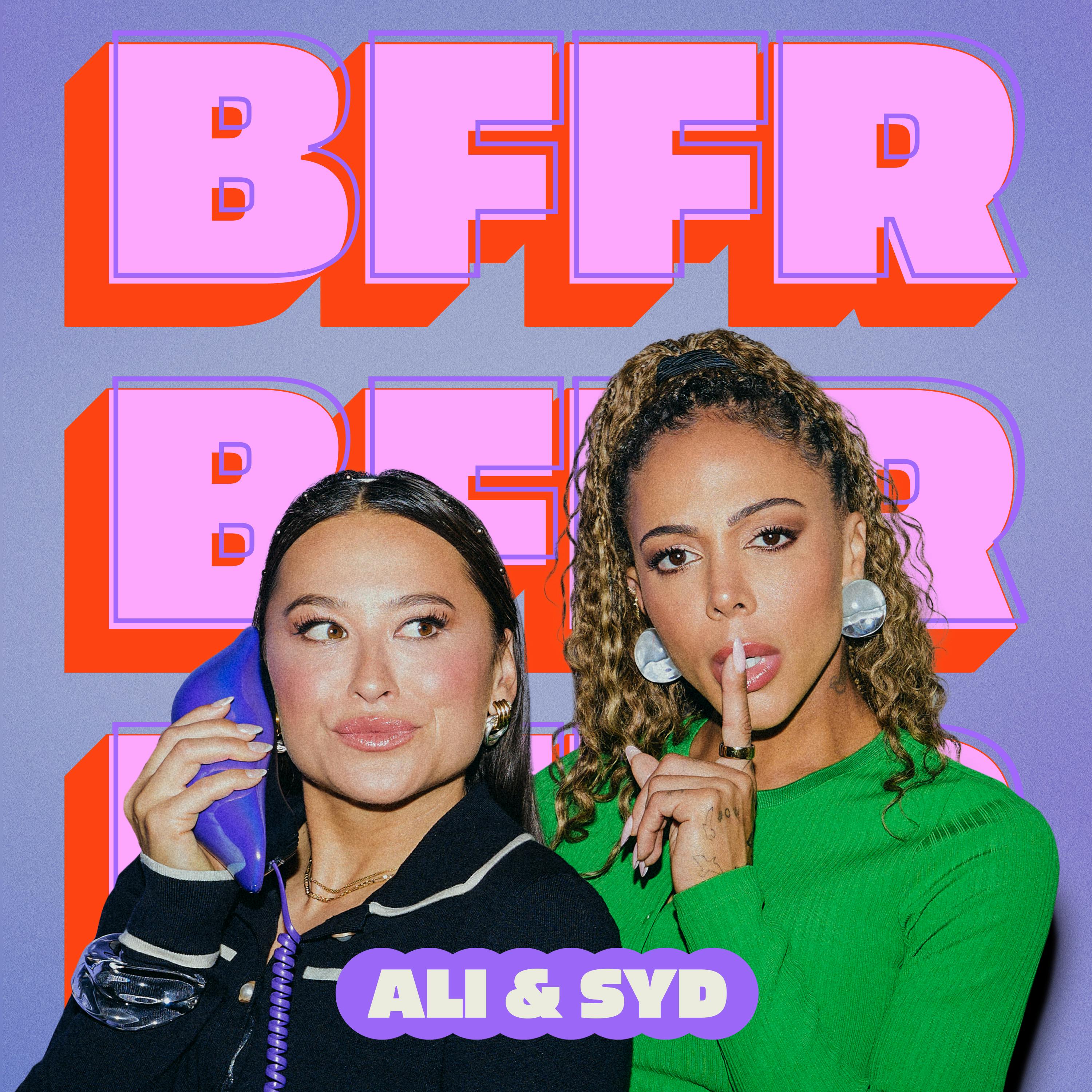
Loading summary
Transcript327 lines
- [00:00]
A
Poos kick it here, period.
- [00:03]
B
Seeing the big D. Hello. What? Welcome to the first ever episode of bffr.
- [00:26]
A
I can't believe this.
- [00:27]
B
No, me neither. How did we get here?
- [00:28]
A
I don't know. I don't know, but I'm so happy.
- [00:30]
B
I don't know. We're here.
- [00:31]
A
We're here. And before we get into it, because we're going to get into it.
- [00:35]
B
Oh, we're going to get into it.
- [00:37]
A
May we remind you to follow us on social media at BFFR Show. Subscribe to the show on YouTube and follow us on Apple Podcasts or Spotify or wherever else you get your podcast.
- [00:47]
B
Yeah, honestly, we don't really care how you're listening or where you're listening from, as long as you're listening to us, period.
- [00:54]
A
And if you rate and review the.
- [00:55]
B
Show, we only accept five stars.
- [00:57]
A
It helps others find us, and we definitely want to be found. You can even call us at 1-833-txt-BFFR.
- [01:07]
B
That's 1-833-898-2337. We love hearing from you. Your question or comment might end up on the show. It's got to be good, though.
- [01:17]
A
All right, Sid, kick us off with an affirmation.
- [01:21]
B
All right, besties and testies, we don't discriminate. We don't fake it. We face it. You know, let's start out with a bang.
- [01:33]
A
Yeah, let's do it.
- [01:34]
B
Yeah.
- [01:35]
A
Tell us, Sid.
- [01:36]
B
Yeah. If anyone watching this show doesn't know that I took mentally from soccer, that's what I did. I think this is why we kind of started the show is just to be very honest and real and open about everything. Relationships, life, friendships, teammates, teams, all the things. And, yeah, I was really struggling, and I just had a lot of things kind of on my plate all at once. And, um, it was really hard, and I definitely didn't take the time that I needed in the moment. That's just not who I am. Um, but then, you know, my best friend and. And my friends who are also my teammates came to me, and you basically said, you need help, and we're worried about you. And my family was as well. And I think that that was really important for me to be able to, like, not only see what I was putting myself through, but to see what I was putting everyone else through. I think that was really hard. And of course, like, I appreciate you so much for guiding me through this and. And still continuing to do that. And I'm just so thankful, you know, I think that there's always going to be room to improve with some of the things that I'm going through. But I have taken major steps into getting better and getting healthier. And I'm just excited to be back on the field and honestly, back with my bestie.
- [03:22]
A
I'm so proud of you. And when you're going through something, I feel it with you because you are like a sister to me. And, yeah, we had some. Some hard conversations, but I think when you love someone, it's important. And again, it's. It's why we wanted to have this show. And I'm. I'm really proud that you are sharing your story and what you're going through, and I feel really lucky. And I have wanted us both to be smiling on a soccer field for a very long time. So it means the world to me.
- [03:55]
B
I think that we have gone through so many things together.
- [03:58]
A
We have.
- [03:59]
B
Like, it's actually crazy. Yeah. But I'm really happy to be doing it with you and be doing this show with you. Like, this is crazy, to be honest.
- [04:08]
A
I know. Well. Wow. That was.
- [04:10]
B
Yeah, it was a little much. A little awkward, but that's. You know, we said we're going to start out with a bang, so here we are.
- [04:17]
A
Buckle up.
- [04:18]
B
Yeah.
- [04:19]
A
Should we talk about how we got here?
- [04:22]
B
Should we?
- [04:22]
A
I think we should.
- [04:23]
B
Okay. You started off. You started off.
- [04:25]
A
Okay. Well, we. We had a really good thing going with our Instagram content. I think it. It started off with a. An Usher music video where you were performing in the rain, There were worms coming up out of the grass. Did not deter you. You were grinding up on. On that mat out there, and it was kind of a big hit.
- [04:49]
B
It was. It was then we realized, hey, we're kind of funny.
- [04:54]
A
Well, according to Rocky, you are funny.
- [04:59]
B
Oh, yeah, yeah. I remember this.
- [05:00]
A
Yeah. Yeah.
- [05:02]
B
So we.
- [05:02]
A
We did the Usher music video. We did a Valentine's Day expectation versus reality.
- [05:07]
B
Everyone can. Yeah, everyone can see themselves in that, for sure.
- [05:12]
A
I think so, too. Resonated with. With a lot of. A lot of women and their partners, I think, especially the athletes who. Yeah, we're putting our retainers in. Weird. We're using the massage gun, the boots.
- [05:23]
B
Yeah.
- [05:23]
A
No time for any hanky panky.
- [05:25]
B
No, no, don't look at us. Once the retainers go in, you know, it's. It's time to get.
- [05:29]
A
Exactly. Exactly. And so we started doing the intros on Instagram, and we had Rocky Rodriguez, our teammate at Angel City last season, help us out with one of the videos. She was throwing water, basically, in Sid's Face.
- [05:44]
B
I didn't know that it was just going on to me. And I also didn't know that it was below freezing.
- [05:50]
A
It wasn't supposed to only go on you. I didn't, like, plan that with them. That was just unlucky.
- [05:57]
B
Okay. Yes. So she kind of agree to disagree.
- [06:01]
A
She kind of. Well, I was the producer and editor at the time.
- [06:04]
B
Yes, you were.
- [06:05]
A
So Rocky asked kind of, oh, what is this for? What are you guys doing? And I said, sid and I, we're. We're starting a show. And she said, that is so great, because Sydney is really funny. And I was like, oh.
- [06:20]
B
She was like, oh, thank you. Thanks. But now you've proven to everybody else that you're also funny.
- [06:28]
A
Thanks, Syd.
- [06:30]
B
We're funny together.
- [06:32]
A
That's why we're here. I'm glad you feel that way.
- [06:34]
B
I always knew you were funny.
- [06:35]
A
I'm really glad you feel. I feel like I bring out the best in you too.
- [06:39]
B
Yeah. Yeah. But crazy story. In, like, March of 2023, I got a tweet sent to me that was basically like, you should start a podcast called bffr. And I was like, that's a really good idea. But you know me. You know me.
- [06:57]
A
Yeah, it goes to the back.
- [06:58]
B
It goes to the back. It's forgotten about. And then Ali really brought it to life, and we. That's how we kind of came to be. We started with Ali's iPhone 11, the storage.
- [07:10]
A
It ran out.
- [07:11]
B
It ran out. And we got ourselves a podcast because the storage was tough.
- [07:16]
A
Yeah. Yeah. So kind of kind of forced the issue. But when we tried to describe what this was, when we first started posting videos on social media, one of our first episodes, we tried to explain to Alyssa Thompson. Yeah, she didn't get it.
- [07:33]
B
No, she was judging us.
- [07:34]
A
The comments. Nobody got it.
- [07:36]
B
What is this? It is what it is.
- [07:38]
A
And we said it was a walking podcast and, like, a living podcast. And I'm actually relieved now that we have a sitting podcast, because we're too old for that. Too old for that. Too tired.
- [07:50]
B
Not saying that we won't be walking around and. Oh, no, no, it'll happen, but that.
- [07:55]
A
Content will still be there. But it is nice to be seated.
- [07:57]
B
Yes.
- [07:58]
A
Right now.
- [07:58]
B
Yeah, I absolutely agree with that. But, yeah, that's what BFFR is. It's being for real all the time, which is kind of what we've always been doing.
- [08:09]
A
I know, I know. And it's the good, it's the bad, it's the ugly.
- [08:14]
B
Like, my really, like, my really intense intro yeah, yeah. Sorry about that.
- [08:18]
A
But, yeah.
- [08:19]
B
How to get it out? How'd you get it out?
- [08:20]
A
That's okay. And our lives aren't just about kicking a soccer ball. That is definitely part of it. But we just want to be real with you. We want to be authentic, and we want. We're gonna have some great guests. We're gonna have some hot takes.
- [08:34]
B
Yeah. Hopefully not bad takes, but I know me. And that might be a possibility. So just forgive me now.
- [08:42]
A
And we definitely do not always agree.
- [08:45]
B
No, we don't.
- [08:46]
A
But that's real. And of course, we will talk about soccer. It's the game we both love. We've been doing it for a very, very long time.
- [08:55]
B
And since before some of our teammates were born.
- [08:58]
A
A lot of our teammates.
- [08:59]
B
Most of our teammates.
- [09:00]
A
Yeah. And the game has come a very long way. Not just over our own careers, but the history of the sport in this country. And we are in an entirely new era of women's sports. And I really think soccer is at the forefront of that.
- [09:16]
B
Yeah. And we're really proud of that.
- [09:18]
A
We are.
- [09:19]
B
Yeah.
- [09:19]
A
And I have to say, of course, we've come a long way, but we still have quite a ways to go. And we will be pushing for that because just in March, FIFA came out with a report that showed that the average annual salary for a female professional soccer player globally is around $10,900.
- [09:40]
B
It's tough.
- [09:41]
A
That's really tough. And that number is actually on the high end because it's skewed by the few clubs and leagues that actually pay more, like the nwsl.
- [09:51]
B
Right.
- [09:51]
A
So the NWSL is the top paying league, but last year, the minimum salary was still only $37,800.
- [09:58]
B
Imagine making $40,000 and living in Los Angeles.
- [10:02]
A
Yeah, I. Tough. Yeah, it's tough. Every season because of this number. We talk about ways we could actually supplement our soccer income and help pay the bills. And I think the big bucks. I feel like these ideas escalate very, very quickly. We had one teammate, had a great idea, maybe a beer.
- [10:23]
B
Angel tears.
- [10:24]
A
Yes. Something with the Angels and connect with the brewery. We wanted to make T shirts. And then we're like, okay, maybe we do feet pics. Maybe a nude calendar. Like, we need the money.
- [10:36]
B
And then I just thought we needed to up the ante and go for the big bucks. I told Ally, like, we should sell our game worn Spandex, because, like, first of all, it's worth even more if you score and it's a win.
- [10:51]
A
Bicycle kick. Spandex.
- [10:54]
B
Your goal as a defender, September 22. People would pay big money for that. Out.
- [10:59]
A
All right, on that note, it's time for a quick break, but we'll be back with more bffr, so don't go anywhere.
- [11:05]
B
I do want to say, though, people are buying farts in a jar and people's dirty bathwater, and I don't think that game Warren Spandex are that big of a deal.
- [11:14]
A
Hello. Okay, so how did you get into sports?
- [11:25]
B
I mean, there's only one answer for that. I think you know, it. It's Hurricane Sandy, which is my mother. Yeah, I come from a baseball family, actually. No one had any idea what soccer even was until I came out and I was a little nuts, and my mom put me in absolutely everything because I was crazy. She was also crazy. Like, I think we talk. We've talked about this before. Like, when I would do cross country, I never lost one race. Okay. My mom would be at the, like, roundabout, the curve, running with me, screaming, she's catching you. She's catching you. She was like a mile.
- [12:10]
A
They weren't catching you.
- [12:11]
B
No. And she was trying to race me to the finish line.
- [12:15]
A
It worked.
- [12:16]
B
It did.
- [12:17]
A
I know it worked, Sandy. Don't worry.
- [12:18]
B
It did. And then, you know, baseball, she. She played as well. She played softball. She's very good. National team. And it's actually a really cool story. We haven't actually talked about this part, but my mom did the same thing with me when she was playing, as I've done with my children, which is really cool. It's like very much full circle moment, you know, breastfeeding me in between innings and me. I mean, you've been a part of that breastfeeding at halftime. And it's just like an amazing thing that I get to share with her, which is really cool. But, yeah, she put me in soccer. Didn't know anything about it. And of course, she was my coach at some point down the line. But the first. First year I played soccer, she used to stand behind the opposition's goal, where I would be going to score, and she would be screaming bloody murder.
- [13:14]
A
Kick it here, Kick it here. She was your target.
- [13:18]
B
Yeah, she was my target.
- [13:19]
A
And again, it worked.
- [13:21]
B
It worked. It worked. Yeah.
- [13:24]
A
She definitely got positive reinforcement for her efforts.
- [13:26]
B
Yeah, she really did.
- [13:28]
A
You and Sandy watching Rue play soccer.
- [13:32]
B
I know you said that.
- [13:34]
A
It is the most endearing and funny, and you guys are so intense, and you sound the same, and you're trying to coach her, and she's just out there. She's there for the vibes she. And you guys get so serious and you can't help yourself.
- [13:48]
B
She gives zero shit, to be honest. And I'm like, I love you for it. I love her because she is so just herself.
- [13:57]
A
Yeah.
- [13:58]
B
Doesn't give two shits what I do. What you do, What Auntie's nothing. She's just her. Her own little person. And I love that about her because I think, you know, when you talk about having a little girl, even though she's so stubborn and sometimes I can't stand it, I know that, like, whatever she does in the world, it's because she wants to do it. It's because she's passionate about it, and she'll never do anything that she doesn't want to do.
- [14:22]
A
She reminds me of someone.
- [14:25]
B
I don't. I don't. I don't know what that is.
- [14:28]
A
Well, yeah, it's funny that it was your mom, because my dad was my coach and also had never played soccer.
- [14:35]
B
Yeah, that's. That's the best. Yeah.
- [14:37]
A
Yeah. I'm not sure how we got here, but he was my coach, and my mom, she was the opposite. She came and watched me play when I was, you know, four or five. And she said, john, that is not soccer.
- [14:51]
B
Oh.
- [14:52]
A
And she went home.
- [14:53]
B
Oh.
- [14:54]
A
And a few years later, she said, john, she playing soccer yet? And my dad's like, she's the best. She's amazing. She's, you know, pele. And so my mom biked down to.
- [15:04]
B
The field that tracks with Beth, took.
- [15:07]
A
One look and biked home because we were still just. Well, I actually was just sitting. Sitting in the grass, picking flowers like Roo. And then I would schedule play dates with my teammates, probably on the other team, too. It was networking for me. And honestly, it still kind of is. Yeah.
- [15:23]
B
You are a networker.
- [15:25]
A
It's just about community and fun and being an only child. It was that sisterhood, too. I just. I know. I know. Those were. That was my big family. And having my dad there, we.
- [15:39]
B
We just.
- [15:40]
A
We loved.
- [15:42]
B
Yeah.
- [15:42]
A
Going to practice together, and he was the best, and he would chase us and come up with the best games. And then eventually it was. It was time for me to move on, find a. A better. A better coach. But do you remember the 99 World Cup?
- [15:59]
B
Okay. So crazy. I was in Canada at this time, and, like, we didn't even, like, have the channel that would have played that game. So. I remember it because I know about it now. Like, I know about it because, you know, I moved here and you just. You just know about the 99ers.
- [16:19]
A
Yeah, well, and then you followed in their footsteps. You became part of that legacy, playing for the US Women's national team. But I forget that, that you weren't a 10 year old girl watching that don't age me.
- [16:35]
B
I was nine.
- [16:36]
A
Okay, Well, I was, I was older, actually, than ten. I just picked a nice round number.
- [16:40]
B
Oh, you tried to get it.
- [16:42]
A
Yeah, I get it. So I, I was a little bit older, but that just made such an impact on me. And it wasn't, oh, I can play soccer for a living or even play for the national team, but it was women, strong women. Brandi Chastain, the sports bra moment.
- [17:02]
B
Shirt off with the abs. Come on.
- [17:04]
A
And the 90,000 people there to watch women play sports. I think that was so inspirational for me. But it wasn't something. There wasn't then a pathway for any of us to follow. But seeing then the Sports Illustrated cover, Mia Hamm having commercials with Michael Jordan, that really was so influential, I think, for me. But, yeah, I mean, I, I didn't think it was anything that I would necessarily do.
- [17:32]
B
Right.
- [17:33]
A
But it definitely made me love soccer even more. Speaking of kind of the 99ers, do you have a Mount Rushmore of soccer.
- [17:45]
B
Players based on talent? Based on talent alone, yes. Okay, I'm gonna go with, you know, I'm gonna go with.
- [17:56]
A
I think so.
- [17:56]
B
I'm gonna go with Chaney. That's my girl. Like, I'm always gonna choose her. Always. And it's like just more than, you know, a soccer player. It's like everything about that. I mean, she was the first person I stayed with going to college.
- [18:11]
A
Yeah, we'll get her on the show because there are a lot of stories there.
- [18:13]
B
She's got a lot of stories about me, but.
- [18:15]
A
And you need to hear them. The world needs to know.
- [18:18]
B
Yeah, but I just looked up to her so much. I still do. And like, we both have two kids now, and I still just, like, look up to her as such an amazing human being. But I would have Cheney, Marta, of course. Of course I said, like, formiga, because it's just insane.
- [18:41]
A
I, like, should we sign her?
- [18:43]
B
Should we sign her?
- [18:44]
A
I think, I think I saw she's playing tsd.
- [18:46]
B
Oh, wow.
- [18:47]
A
And she probably still got it.
- [18:49]
B
Yeah, she. She definitely does. And then I'm choosing. I'm. I'm choosing Hope Solo.
- [18:55]
A
Best goalkeeper in the world.
- [18:56]
B
Yeah, I mean, I got to see her play and I played against her and I played with her. And yeah, some of the saves that she made were, like, unbelievable. Yeah. So, yeah, she's definitely part of my Mount Rushmore. What's your Mount Rushmore?
- [19:14]
A
Whew. Okay. I definitely have Marta and Chani on there. I. It is a bit. I don't want to say weird. Bizarre. It's surreal that my memory and the impact that players have had on me kind of starts with 99, because. I didn't know.
- [19:34]
B
I thought you were going to say it's weird because there are teammates.
- [19:37]
A
They are. Because besides the 99ers, which, for me, the third face would be Michelle Akers, Julie Foudy, Mia Hamm. Kind of mesh together. Yeah. Like, when they do the. Like, make the AI Baby. Like, it would be. It would be the love child of. And. And it really shows how times have changed because there is so much women's soccer.
- [20:04]
B
Yeah.
- [20:04]
A
Out there and publicity and engagement, and it's on tv and you can stream Champions League. But when we were growing up, Nanya Nya, there was nothing. And so it really starts with them. And then we think about players that we played with and against being on our Mount Rushmore having this huge impact. And speaking of the fourth one for me is Christine Sinclair getting drafted to FC Gold Pride and her being one of the stars of that team. Marta was on the team later in the off season because LA Sold folded, but Sink was the star of the team. And I didn't realize I had played against her with. With Canada and New Zealand. I had no idea that someone who was that prolific and that famous could be that humble. And she worked so hard and she led the team, and I really got to know her. But I love that she is the greatest goal scorer of all time. And everyone thinks it's Cristiano. Everyone thinks it's a man. It's Christine Sinclair. She holds the record. And I love that for us.
- [21:10]
B
Yeah, I do love. I love that for us, too.
- [21:12]
A
We talked about how things have changed so much. We didn't really have women athletes on TV very often when we were growing up. Who did you look up to?
- [21:21]
B
I looked up to my mom.
- [21:23]
A
Hurricane Sandy.
- [21:24]
B
Hurricane Sandy. I mean, I. Everything that I have and. And, like, gold medals, whatever, anything and everything, especially when it comes to soccer, is because of her. You know, she sent me on my way and I had said, I want to play on the best team in the world. And, like, I want to win a World cup and I want to. Want to win an Olympics. And I was 14 years old, and that's what we set off to do, and it was really hard. I really wanted to Quit so many times just because it's hard being on your own at that age. Like, I feel like I've been. I have been on my own for basically most of my life, but she was like, I promise. I promise. You have to trust me. One day it will all be worth it. And then I got into college and I was like, yeah, she's arrived.
- [22:16]
A
Did you know from a young age, like, you could recognize that your mom was sacrificing so much for you and. Yeah, that's really special.
- [22:25]
B
Yes. I mean, it's always just been me and her.
- [22:28]
A
Yeah.
- [22:29]
B
And so we have a very. I mean, you know, my relationship with my mother is very, very different. And she is still the person who screams behind the goal for me to score. It's just in different ways. Yeah. Yeah. So I look up to her. I still do. You know, she's. She's amazing, and she's why I'm here, why I'm here today. What about you?
- [22:55]
A
I think I realize that about my mom now, but she was so tough on me, and I couldn't see it then that she wanted me to go to the best school and have the best opportunity to have the best life. That didn't include soccer for her. She didn't see that that could be a future where I could be financially stable. I mean, it wasn't really, at the time. She got her PhD at Harvard and my dad at MIT, so they really wanted me to be an academic. And I just felt. I didn't feel so supported.
- [23:27]
B
You were smart, though. Though.
- [23:29]
A
I. I mean, I worked. I worked really, really hard, but I. I felt so much pressure.
- [23:34]
B
Yeah.
- [23:34]
A
And she made me cry in college because I got an A minus.
- [23:39]
B
Oh, no.
- [23:39]
A
Like, it was serious. I know she's gonna try to deny.
- [23:44]
B
This, but she will.
- [23:45]
A
I remember.
- [23:45]
B
Yeah.
- [23:46]
A
Where I was walking my bike, crying, when I had to tell her I got an A minus.
- [23:49]
B
A minus in English. That's tough.
- [23:51]
A
Yeah. So, yeah, I got some kind of wound up there.
- [23:55]
B
A little trauma.
- [23:56]
A
Yeah. Yeah. And now I really understand. And she was the disciplinarian out of my mom and dad, you know, good times, John. So she just wanted me to have the best. And I appreciate her so much now, but growing up, no, she was not the person or the woman that I would have been like, yes, this is my role model. This is someone who inspires me. And.
- [24:19]
B
But now she is.
- [24:20]
A
She is now. And when I think back to, you know, we have Women's History Month every year, and what I remember from inspirational women was in School talking about Amelia Earhart and Harriet Tubman. And I was like, wow, women are great. But I didn't feel like I identified with Harriet Tubman or Amelia Earhart.
- [24:41]
B
Yeah, I don't think so.
- [24:42]
A
And I didn't feel like there was really anyone that looked like me or like. Yeah. That I could really see myself pursuing the thing that they were doing because I love sport, and I didn't really see that. Lori and Ronnie Fair played for the National Team, and they are half Asian, and that definitely, like, I saw something in that and Michelle Kwan. But again, we weren't seeing these women.
- [25:08]
B
Right.
- [25:09]
A
There was no social media, and we weren't seeing them on tv. What makes me so happy is that things have changed so much, and you have a very special story about how someone saw themselves in you.
- [25:21]
B
Yes. Um, I. I felt like. I mean, when we were on the national team, like, boxy and I made one full black person. We also made one full white person, so it was. It was just different. And I'm a different kind of person. I am very loud, and I'm here, and, you know, I. I speak the truth. And I felt like I didn't have anyone to look up to that was different. And so now I look at the National Team and I'm like, wow.
- [25:55]
A
Yeah, wow.
- [25:56]
B
Like, we've just come so far from being, like, this tough beast of, you know, a player. And I'm just, like, so happy and proud that I get to witness that now, being away from that. But, yes, I. I have this crazy story. I was at Target shopping, as one does.
- [26:20]
A
Oh, you were?
- [26:21]
B
Yeah.
- [26:22]
A
Weird. You never do that.
- [26:23]
B
I love Atari J. And this woman came up to me and she was like, are you. Are you Sydney LaRue? And I'm like, yeah. And she was like, my. My daughter, like, loves you. She's, like, your biggest fan. And. And she was like, she's going actually to, like, the Youth World Cup. And I'm like, wow, that's so amazing. And she's like, can you do a video for her? And I was like, yeah, of course. And I'm like, well, what's her name? And she's like, her name's Savvy. And so I was like, hi, Savvy. This is Sydney Larue. I'm so excited for you. I mean, who knows? It was a long time ago, but that was kind of the gist of it. Like, I'm. I'm so proud of you. Like, go Crush. You know, like, I'm gonna be cheering for you, I think. Yeah. Yeah, that was, like, basically it. And now Savvy sits right next to me, the next locker over. And it's just so crazy that, you know, I. We do feel like, you know, we're. We're towards the end of our career, but to be able to play with people who have looked up to you for so long, like, as a. As a little girl, is something that we never had.
- [27:36]
A
I know.
- [27:36]
B
And so it's, like, emotional, you know?
- [27:38]
A
It is. It is. And you've inspired so many young girls in this country and, well, around the world. And speaking to Alyssa, I just know that having someone who looked like her, who she could see herself in on the national team, scoring goals, being outspoken and expressive and having style and being her authentic self. I'm talking about you. It meant a lot for her growing up. And it is. It is. The US national team is led by triple espresso. And that's, you know, this quirky, fun people coming up with these names for them, but they're a big deal.
- [28:19]
B
They're exactly who they are.
- [28:21]
A
Exactly.
- [28:22]
B
And they're all so different. And it's so amazing because I think now when, you know, young girls come up playing soccer, they can look at us, at our teammates, and they can find somebody who, like, they see themselves in. And, like, same for you. Like, look at, you know, when you did the camps and all of these.
- [28:44]
A
So many Asian girls. I can't believe it, you know, and.
- [28:48]
B
It'S like, you just, like, have to take a step back and be like, wow.
- [28:53]
A
Yeah.
- [28:53]
B
Like, this is so much bigger than anything we ever could have imagined.
- [28:58]
A
Yeah, it really is.
- [29:00]
B
Yeah.
- [29:00]
A
Do you think that these young players get it that, you know, we fought so hard so that they would have. Have it better and we're far from getting there.
- [29:13]
B
Yes.
- [29:14]
A
Where they would never have to work another day in their life after they retire. Getting. We're not really closing the gender gap so much with the payment, but do you think they will keep the fight up? Do they. Do they know what it takes?
- [29:27]
B
I think they know that they have to, because I think that even they know with what they get now that they deserve so much more. And so, yeah, I think, you know, the kids are all right. I think. I mean, I'm very excited for this new young generation to come through, because that's what it is now. It's the youngins taking over, and I'm just so excited for them.
- [29:51]
A
It's very powerful to see the diversity of the team, to see the players, to hear them when they speak, too. And not just the national team, but this league is full of women who just are fighting, who wear so many hats. The NWSL Players association was started by a player, ya'll Averbush, and led by players and have made the league so much better and safer. And I just feel like there are so many players who are dedicating their lives while they're active players. And then beyond two, continuing to grow this sport. And I love listening to a broadcast and having former players looking at the GM of a team and having former players. 100% owners now. Former players. I never considered any of that when I was growing up. No, Coach, that was the one thing where. Okay, maybe if you want to continue in the sport. Oh, great, Coach, I thank you, but I don't. I don't. I don't know if I have. You can do it, but it's. Yeah. I never considered that we could be a GM or an owner or anything bigger than that. Tiny being a player, being a coach.
- [31:16]
B
Yeah, I agree. Future's in good hands, though.
- [31:18]
A
I think so, too. I think so.
- [31:21]
B
They better be.
- [31:23]
A
When I think about women in these roles, we've talked a lot about if women's teams need to have a woman for a coach.
- [31:32]
B
Okay. This is the hot take. You know, that people may not agree with me and I think you feel similar. Of course we want women in these jobs, but we didn't really have the same opportunity as men for so long. And at this point, we want there to be something for them to be able to be like the best coach. But to be honest, like, I think we just want the best coach. We want the best person for the job, like male or female, and that's everywhere. And we hope that one day we can see females in every single aspect. But yeah, it's like you want the best person for the job.
- [32:17]
A
Yeah. And Angel City just announced the hire starting in June. And I know a lot of fans, supporters, people who. Who cheer on Angel City were really hoping for a woman.
- [32:32]
B
Yeah.
- [32:33]
A
And I think what you're speaking to is like, we need more investment in developing coaches, referees, so that in time, the best. When we say we want the best person for the job, there is just hundreds of women to choose from.
- [32:50]
B
Yeah.
- [32:51]
A
I think now we feel sometimes that people are asking us to maybe sacrifice the quality of a ref or a coach to have a woman. And it's a hard one because like you said, we want to have women in leadership roles and in management roles, and we want young girls to see women in those roles.
- [33:11]
B
100 but we just started seeing it.
- [33:13]
A
Yeah.
- [33:14]
B
You know, at our age. And I also think, like, you know, I've been in a lot of situations where, like, yes, you want women, but sometimes it's not like, the healthiest environment or something's going on. Like, there can still be issues that we've dealt with throughout the league and throughout, you know, for however long we've been playing that those issues still exist with women as well.
- [33:37]
A
Yeah.
- [33:38]
B
And I feel like that's really important to understand.
- [33:41]
A
So I said I wouldn't be a coach. Would you be a coach? You know, you told me that you want to be a coach.
- [33:48]
B
I know, but I think I was. I wasn't in the right frame of mind.
- [33:51]
A
You weren't yourself. No.
- [33:54]
B
No.
- [33:54]
A
Well, you and I could talk about soccer, football all day, and we will definitely add our. Our onfield bits every episode, but I think that's all we have time for for this episode. So it's time for another break, but stick around because there is more BFFR coming up soon.
- [34:12]
B
You'll love this part.
- [34:16]
A
Hello.
- [34:19]
B
It's time for happy hour at Bar bffr. Finally, when we serve up our L's and dubs of the week and answer some of your burning questions. Little chug.
- [34:34]
A
Okay, let's start with something that we're loving.
- [34:37]
B
Go ahead.
- [34:38]
A
For me, I just rewatched all seasons of Bridgerton and Queen Charlotte, and I just love that show. It makes me feel so good. I was a little bit stressed out, and I watched it, and I also think that I would do well there and would love to speak like them. I burn for you, my lady.
- [34:58]
B
Don't ever speak like that again. It gives me a ptsd.
- [35:00]
A
Oh, the British accent.
- [35:03]
B
Oh, it used to many, many moons ago.
- [35:08]
A
Okay. What are you loving?
- [35:10]
B
I'm loving the fact that I am back with Angel City.
- [35:18]
A
We are loving that.
- [35:19]
B
Thank you.
- [35:20]
A
We are loving.
- [35:23]
B
That's what the kids do nowadays.
- [35:25]
A
I. Yeah, I've seen that. Do you have a win of the week?
- [35:30]
B
A win of the week? Well, it's like getting back on the field, like I said, and just being in a healthier place than I was when I left.
- [35:46]
A
Yeah. I think for me, a win would be running laps around the field.
- [35:51]
B
Ally ran for the first time.
- [35:54]
A
Yes.
- [35:55]
B
In how long?
- [35:55]
A
Pain free. Pain free. First time. Pain free in a long time. I. I was running a lot, but.
- [36:01]
B
It didn't feel so it was not pain free.
- [36:03]
A
Yeah. Yeah.
- [36:04]
B
Uhhuh.
- [36:06]
A
Do you have a. An L?
- [36:08]
B
An L of the week? Yeah, I. You know, I love to cook you know I love to cook.
- [36:16]
A
Yes.
- [36:17]
B
And I got this, like, really nice steak, which I thought. And it was.
- [36:22]
A
The butcher.
- [36:22]
B
Yeah. It was rotten.
- [36:23]
A
What do you mean rotten?
- [36:25]
B
Nasty.
- [36:27]
A
The. The cut of meat. The meat itself or how you cooked it?
- [36:31]
B
No, no, no. Cuz I cooked two.
- [36:34]
A
What?
- [36:35]
B
And mine was great. The other one rot.
- [36:39]
A
Did you tell them?
- [36:42]
B
No.
- [36:43]
A
Okay.
- [36:43]
B
No, I didn't. So. Well, what's your OWL of the week?
- [36:47]
A
So, a little update. My parents lost their home in the Palisades fire. And we were great. We're fine. But there is a whole process with what happens after the fire with the debris and the rubble and the land and the soil and the house. Just all the debris was removed. Our big tree in the front yard was cut down and taken away. So it's just this bare leveled piece of land. And it is bittersweet. It is. Now we can look forward to rebuilding, and my parents are going to rebuild. But it's. It is this. This weird sense of loss. Like, even when everything was rubble, it was still there. Like nothing was recognizable, but it was there and now it's gone. So I think I'm just kind of processing that. But it was a loss that is still positive because we're moving forward.
- [37:44]
B
Well, I feel like an. With my rotten steak. Next time I think you should probably go first because. Whoa, boy. But yes, I.
- [37:55]
A
You started it. Intense. And I kind of. Okay, I took it there. Yeah, my bad.
- [38:01]
B
You'll just go first next time.
- [38:02]
A
Yeah. Just too real. Too real? No, never too real.
- [38:06]
B
No, for real.
- [38:08]
A
Is there a trend that we need to talk about?
- [38:12]
B
Okay. This week I heard about this trend, and it's called soft girl rage.
- [38:18]
A
Okay.
- [38:19]
B
And it's basically allowed to rage. It's basically a combination between being kind and feminine. And also done with, like, all the.
- [38:30]
A
So amazing.
- [38:32]
B
Unreal.
- [38:32]
A
May this trend never go out of fashion.
- [38:35]
B
Yeah, I think, you know, I'm trying to get into my soft girl era, but I'm trying for a while. I'm just. Rage. Just rage.
- [38:43]
A
Soft girl rage.
- [38:44]
B
Yeah.
- [38:44]
A
Okay. Yeah.
- [38:45]
B
So we. We make soft together.
- [38:49]
A
Okay. And now we answer a little fan question. I love this part of happy hour. Sarah in Denver asks, what's up? Cinema? That's us. I heard a new NWSL expansion team is headed to my city, Denver. I'm so stoked because I don't go to the men's games because I have no one to go with and I'm nervous about going alone. Ooh. Do you have any tips about how to find my own soccer girl gang?
- [39:13]
B
Wow. Okay. First of all, I go alone every. Everywhere. It is my favorite thing to do. Movies, dinner, dinner, lunch, breakfast, anything. I will go alone. And then your people will find you there.
- [39:30]
A
I think if you go and are repping the.
- [39:36]
B
Repping the team, repping the D.
- [39:40]
A
If. If you've got the D with you and you are cheering and when someone scores, if you are just yourself and you go all out, the people will find you and they'll be like, see you here next week.
- [39:54]
B
Yeah. The crazies, the normal ones, the quiet ones, whoever your people are as a person, you'll find them there.
- [40:03]
A
Yeah.
- [40:03]
B
So in the big D, be yourself.
- [40:06]
A
Embrace going alone.
- [40:09]
B
Embrace.
- [40:10]
A
And don't forget, when you do find people you like, get their phone number or their Instagram handle. I don't know, whatever we do these days, don't be shy. And if someone isn't vibing with you, they're lost.
- [40:23]
B
Bye. Bye.
- [40:24]
A
Yeah. So see you in Denver.
- [40:26]
B
Yeah.
- [40:26]
A
If we make it there, seeing the big D. All right, well, it's over.
- [40:34]
B
It's over.
- [40:34]
A
Our first ever episode.
- [40:35]
B
Chicken. Wake up. It's over.
- [40:37]
A
Chicken. Thank you for tuning in to our first ever episode of BFFR, the podcast. Remember to subscribe on YouTube, Apple Podcasts, Spotify, wherever you get your podcasts and follow the show across all social media platforms.
- [40:53]
B
At BFFR show, there's obviously going to be bonus content. Probably not the sitting podcast that you're seeing, but it may be a walking podcast.
- [41:03]
A
Living podcast. Living and breathing.
- [41:05]
B
Yeah.
- [41:06]
A
Thank you to our listeners for joining us. Have a great week and we will be back next Monday with more bffr. And don't forget what was our affirmation.
- [41:17]
B
We don't fake it. We face it. Chicken.
- [41:20]
A
Boom. Amen.