← Big Ideas Lab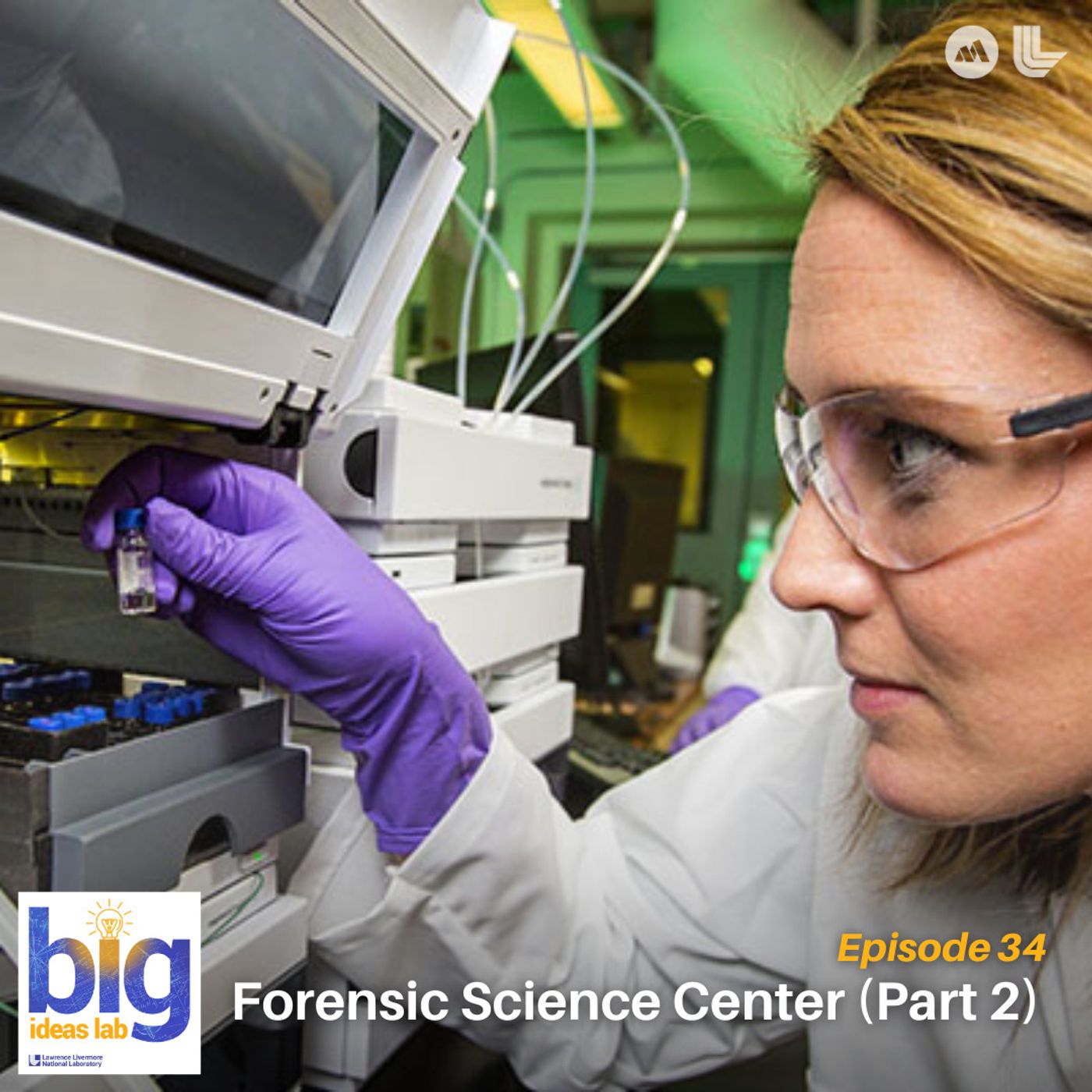
Big Ideas Lab
Forensic Science Center (Part 2)
00:19:35
In the world of chemical forensics, every molecule tells a story. Every impurity is a clue.
Loading summary
Transcript77 lines
- [00:02]
Narrator
August 21, 2013. Damascus, Syria. In the pre dawn darkness, families huddled in basements seeking shelter from what they thought was just another night of shelling in the country's brutal civil war. But the rockets that fell on eastern Ghouta that morning carried something different, something invisible, something that would turn their underground refuge into a deathtrap. You could hear the sound of the rocket in the air, but you could not hear any sound of explosion. One witness told the Guardian. No blast, no shrapnel, no fire. Just silence. And then people started having trouble breathing because it was heavier than air. The deadly gas seeped down into those basements where people had taken shelter and hundreds of people died. 85% of blood samples from the attack site tested positive for sarin. Thousands of miles away in Northern California, scientists at Lawrence Livermore National Laboratory's Forensic Science center were thinking about how they might help answer the crucial questions. Who was responsible for the chemical attack? And how can we prevent another tragedy like this?
- [01:36]
Audrey
First question is always, is there a chemical warfare agent present? If the answer is yes, which in the case of Syria it was, then it's what other information can we get from that? From this chemical information that you have, can you tell where this came from? Which side of a conflict, use the weapon? Whose material did this come from? What that really relies upon is some ground truth.
- [01:57]
Narrator
In the world of chemical forensics, every molecule tells a story, every impurity is a clue. Truth that creates justice for the past and safety for the future. Welcome to the Big Ideas Lab. Your exploration inside Lawrence Livermore National Laboratory. Hear untold stories, meet boundary pushing pioneers and and get unparalleled access inside the gates. From national security challenges to computing revolutions. Discover the innovations that are shaping tomorrow. Today.
- [02:46]
Audrey
We'Re the scientists that work in the shadows. If we're doing our job well, you don't hear about it.
- [02:51]
Narrator
Audrey is the director of the FSC at Lawrence Livermore National Laboratory.
- [02:56]
Audrey
The Forensic Science center has been around for a little over 30 years and our mission is really twofold. We function as an operational forensic science lab. We can get casework from local law enforcement, state law enforcement, federal law enforcement.
- [03:11]
Narrator
That's what we focused on in the last episode. With cases like a mysterious, seemingly toxic woman, a mortuary scheme, and even the Unabomber. But here in part two, we're talking about the second prong of the fsc.
- [03:26]
Audrey
We do research and development, cutting edge, developing new techniques related to counterterrorism for weapons of mass destruction.
- [03:35]
Narrator
It's a pursuit of both national and global security and As a member of the designated laboratory network that supports the opcw, the Organization for the Prohibition of Chemical Weapons, the Forensic Science center has a major role in investigating suspected chemical weapon use. Like in Damascus, that was the case.
- [03:57]
Audrey
In Syria about 10 years ago. Both sarin as well as sulfur mustard were used.
- [04:03]
Narrator
These, along with other nerve agents wreak cruel havoc on the human body. They work by interrupting brain signals before they can reach vital organs, essentially paralyzing many automatic body activities, including digestive and lung function. Many die from asphyxiation because they simply stop breathing. After an investigation by the opcw, the United nations took swift action together.
- [04:33]
Carlos Valdez
The world, with a single voice for the first time is imposing binding obligations on the Assad regime.
- [04:39]
Narrator
A resolution was passed later that year demanding Syria's complete dissolution of their chemical.
- [04:45]
Carlos Valdez
Weapons program, requiring it to get rid of weapons that have been used to devastating effect as tools of terror.
- [04:52]
Narrator
This was a measure that aim to prevent another catastrophe because the suffering these chemicals cause is nearly incomprehensible. Of course, if your only exposure to chemical weapons comes from Hollywood, you might have a very different picture of what we're talking about.
- [05:08]
Carlos Valdez
What exactly does this stuff do?
- [05:10]
Narrator
Take The Rock, a 1996 action thriller about chemical weapons on Alcatraz Island. The movie gets some details about the effects right, but not everything.
- [05:22]
Carlos Valdez
It's a cholinesterase inhibitor. Stops the brain from sending nerve messages down the spinal cord within 30 seconds.
- [05:28]
Narrator
Carlos Valdez, one of the leading chemists at the fsc, knows firsthand the difference between real life chemical agents and those in the film.
- [05:38]
Carlos Valdez
Really elegant string of pearls configuration. Unfortunately, incredibly unstable.
- [05:42]
Unnamed Chemist
VX is not glowing green material.
- [05:46]
Narrator
It's actually a clear tasteless liquid or vapor. And to counteract its effects, inject it.
- [05:54]
Unnamed Chemist
In your heart before your soup melts. How big does it say, you want.
- [05:57]
Narrator
Me to stick this into my heart?
- [05:59]
Unnamed Chemist
First of all, you don't stab yourself in the heart. You just do it in your thigh, on your leg.
- [06:06]
Narrator
That's an atropine shot which functions as an antidote to some nerve agents. The movie got the drug's name right, but not its method of injection. And in real life, it's more often a precautionary measure than a solution. The chemists at the FSC think those treatments can be strengthened and improved.
- [06:26]
Unnamed Chemist
My projects have been more developing antidotes that are more efficient for some of those chemical agents that are coming through. Talking about sarin, you're talking about vx. That's where the research part comes into finding ways of destroying them. More efficiently.
- [06:40]
Audrey
At the end of the day, a chemical warfare agent is an organic chemical. And so a lot of the methods and capabilities that we use for those types of identification we can use for other things as well.
- [06:51]
Narrator
The FSC studies a wide spectrum of threats. They deal with anything biological or chemical, radioactive substances, and explosive and nuclear materials. In short, anything that makes the FSC one of a kind.
- [07:10]
Audrey
The Forensic Science center is the only place in the US that could accept a truly mixed hazard sample. So theoretically, if there was a biological material, a chemical agent, an explosive, radiological and nuclear material all mixed in one, our detection limit depends on what the compound is. We're commonly down in the parts per trillion. So one piece of the molecule that we're detecting in 1 trillion other molecules, if we know exactly what we're looking for, sometimes even lower.
- [07:42]
Narrator
But the FSC also works to study and understand the makeup of unknown samples.
- [07:47]
Audrey
You don't know what you have until you've identified it. If the reference data doesn't exist, we can make some of that on the fly to help us answer the questions that we need to answer.
- [07:56]
Unnamed Chemist
With my background in synthesis, I help out in projects that have to do with the identification of unknown compounds. They come up with a structure and they tell me, Carlos, is this structure feasible? And if I say no, it's not, then they go back to their analysis and they try to come up with another one. You need to do the experiments to figure out what's going on. You need to have the real material in your hands.
- [08:17]
Audrey
That's the other reason we have the two missions, our operational sample analysis and our R and D mission. That kind of weave back and forth like this, because we can also do that synthesis.
- [08:29]
Unnamed Chemist
You need to test them. That's the bottom line. If you don't have them, you can't test the stuff you're making to destroy them or to help people out.
- [08:36]
Narrator
One of Carlos main projects takes the same techniques used to evaluate and fight nerve agents and applies them to a different substance. Fentanyl. It's a man made synthetic opioid that's 100 times stronger than morphine. It's odorless, tasteless, and an amount equal to a few grains of salt is enough to kill. It's the main drug in today's opioid overdose epidemic. Fentanyl.
- [09:14]
Unnamed Chemist
Fentanyl is a drug that once it enters your body, it binds a receptor known as a mu opioid receptor. This receptor mediates signals that your nervous system sends to various parts of your body, for example, respiration. So Your brain sends a signal to your muscles in your respiratory tract, in your rib cage to, in unison, breathe. The problem with this is this is a very highly regulated event.
- [09:42]
Narrator
Your body actually creates its own natural opioids, not fentanyl. In small amounts, they join and separate from different nervous system receptors and are able to operate your internal functions like a light switch, depending on what the brain requests.
- [09:58]
Unnamed Chemist
Now, fentanyl, what it does is it goes in and it binds that receptor and it locks it in place, meaning when the signal goes out to say, okay, contract the muscles. Then it cannot send the signal for muscles relax. Now you're gonna start having trouble breathing, but some of it is also gonna still be circulating in your blood, meaning that even if those come off from the receptors, you still have a lot of it that can bind and lock in place and basically kill you by suffocation.
- [10:24]
Narrator
The most common treatment for a fentanyl overdose is naloxone, commonly known as Narcan.
- [10:30]
Unnamed Chemist
What it does is goes in and binds the receptor, but it comes off quickly. It doesn't stay in there. But it is that dynamic in and out, in and out, in and out, that prevents the fentanyl from going in and locking in.
- [10:43]
Narrator
Basically, it ensures that the light switch can't get stuck in one position.
- [10:47]
Unnamed Chemist
Now, the problem is that, like I said, fentanyl can stay in your body for up to, like, nine hours. Naloxone only stays for about four. So you need to get dosages of naloxone every other two hours to keep you going in the fight until the fentanyl, you eliminate it from your body. So naloxone is a great antidote. It works really well. But is there a way that we can actually accelerate, for example, the elimination of fentanyl out of the body, or neutralize it until it gets eliminated so it doesn't keep coming back?
- [11:17]
Narrator
A treatment like that would be revolutionary. It would be a significant victory in the opioid epidemic battle and save countless lives. But can it be done?
- [11:30]
Unnamed Chemist
So the work with fentanyl started back in 2014. My idea was to see if we can use compounds known as cyclodextrins. They look like donut shaped molecules. And I was thinking maybe we can use them to trap fentanyl in their interior. So in the donut, the fentanyl will sit in and we can hopefully neutralize it.
- [11:48]
Narrator
Carlos and his team worked for three years to find a viable molecule, and in 2017, they did.
- [11:57]
Unnamed Chemist
We found a candidate that was able to bind fentanyl and trap it really well.
- [12:01]
Narrator
After that, the Defense and Threat Reduction Agency funded the project for an additional three years. The FSC used that time to refine and test the antidote before human trials. But it's not just a more powerful type of naloxone. This can be used as a preventative measure before exposure.
- [12:21]
Unnamed Chemist
We're developing what we call medical countermeasures. The idea was to have a compound that you can inject yourself, and it circulates in your body, and it just provides a layer of protection so that if you get hit with fentanyl, this is already in your body monitoring things. This is to give you an extra layer of protection prior to going into a place where you might be exposed to fentanyl.
- [12:44]
Narrator
The project is currently seeking approval from the FDA for distribution after some more studies to ensure it's safe for human use. This treatment could be used in countless ways, including by first responders during emergency.
- [12:58]
Unnamed Chemist
Services, paramedics responding to a call where somebody is showing signs of opioid poisoning, Right? So at that point, you want to protect them from becoming exposed to it by grabbing the person and trying to carry them into the ambulance or something like that.
- [13:14]
Narrator
The treatment is cheap and easy to make, and its uses go beyond accidental overdoses and exposures.
- [13:23]
Audrey
At the stage from the auditorium, jumps a man in a military cloth and with Kalashnikov gun.
- [13:35]
Narrator
In 2002, Chechen rebels took over a theater in Moscow holding over 700 people hostage. Russian special forces responded by pushing fentanyl. Fentanyl through the vents.
- [13:47]
Unnamed Chemist
And this is the first time that I know of that fentanyls were used as an actual weapon.
- [13:53]
Narrator
Were fentanyl to be used as a weapon. Again, an antidote like Carlos's could be vital to a military response. So in addition to helping civilian response teams, the project is a national security measure. But FSC's innovations don't just protect soldiers and spies. They've made their way into the hands of local law enforcement, fire departments, and even private citizens. Take, for example, a simple swab test they developed to identify explosive material.
- [14:25]
Audrey
The Elite kit is an acronym Easy Livermore Inspection test for Explosives. It's like a little swab that you could rub any surface with that you had a suspected explosive contaminant on it. You put that back into the kit and break these two little ampoules, looking for a color change in the piece of paper if an explosive is present. So it can give that easy indicator of is there an explosive present on this surface? If you see a white powder, is it an explosive? You can get that quick information that may help first responders with entry to a scene. It's commercially available. You could go online and buy your very own elite kit if you wanted one.
- [15:04]
Narrator
Explosives, fentanyl and chemical warfare agents seem like very obvious threats. But sometimes the FSC discovers insidious chemicals hiding in plain sight.
- [15:16]
Audrey
Just started maybe six, eight months ago looking into pesticides that are being used on marijuana crops. They're cheap, they're easy to get their hands on. Unfortunately, they're also really hazardous. If you're buying marijuana, you want to know that it doesn't have these pesticides in it.
- [15:31]
Narrator
Even if you don't personally smoke or ingest THC products, the pesticides used in its growth could still get into the water supply and affect, say the strawberries you buy at the farmer's market.
- [15:44]
Audrey
And looking at those health implications, environmental implications, implications in the water as all this runs off or unfortunately affects the neighbors crops too.
- [15:54]
Narrator
The problem is a lot of these illegal pesticides are imported and unstudied.
- [15:59]
Audrey
We are doing some research here to determine what are those hazards, what are these actual pesticides? That's sort of step one, getting a bag of pesticide unlabeled off the Internet. What does it actually contain? And then the next step is we're going to start exposing marijuana plants to these pesticides. That way we're able to look at how any of those pesticides remain on the plant. How easily can they be removed from the plant, and are they actually leaving signatures within the plant? If they're actually being incorporated into the plant, then that's something that people should know.
- [16:31]
Narrator
This investigation came to the lab through the California EPA as they were concerned about the use of these illegal and uncharacterized substances. But the FSC finds its projects from multiple sources, including law enforcement, special government requests, and even in house suggestions. It's one amazing thing about the center and Lawrence Livermore as a whole. If you're passionate about solving a particular problem, you can probably do it.
- [17:01]
Unnamed Chemist
One of the good things working in this lab is that we have an internal process for funding ideas called the ldrd.
- [17:08]
Narrator
That stands for Lab Directed Research and Development. It's what funded Carlos current work. A preventative measure for opioid overdoses, one of the leading causes of death in the United States. And because the projects the FSC takes on are driven both by necessity and passion, it makes for an ever changing, always exciting work environment.
- [17:30]
Audrey
It's not just science for the sake of science. There's names and faces on the end of it. Of people that we're actually helping.
- [17:37]
Unnamed Chemist
It's a great feeling. I think that's what keeps me always smiling and loving the job that I do.
- [17:42]
Audrey
Everyone wants to make the world a better place. Keeping a world free of chemical weapons or aspiring to have a world free of chemical weapons is a great goal to be working towards.
- [17:53]
Narrator
It's a massive undertaking, but with the entirety of Lawrence Livermore National Lab at their disposal, the fsc, adri, Carlos and their colleagues have access to experts in any scientific field you can think of.
- [18:08]
Audrey
We always say we've got 9,000 coworkers around us here that we can pull in as needed. So anytime there's any forensic expertise needed, we likely have it at the lab. If it's not already within our center, it's here on site and we can pull those people in right away. When we put our heads together, we can do great things.
- [18:26]
Narrator
It's the type of job everyone dreams about.
- [18:29]
Audrey
Out it's never the same thing twice. You never know what's going to come through the door every night.
- [18:33]
Unnamed Chemist
Basically, that's where my brain is going. It's always working on solutions, things that we can do, and I write it down on a notepad next to my bed and off I go to work the following morning and try these things out.
- [18:44]
Narrator
Never boring. A great support system and the opportunity to make a real difference.
- [18:52]
Audrey
We all want to leave some sort of legacy. We all want to matter. The work we do at the FSE matters.
- [19:13]
Narrator
Thank you for tuning in to Big Ideas Lab. If you loved what you heard, please let us know by leaving a rating and review. And if you haven't already, don't forget to hit the Follow or Subscribe button in your podcast app to keep up with our latest episodes. Episode. Thanks for listening.