Loading summary
Transcript61 lines
- [00:00]
IBM Representative
So there's a lot of noise about AI, but time's too tight for more promises. So let's talk about results. At IBM, we work with our employees to integrate technology right into the systems they need. Now a global workforce of 300,000 can use AI to fill their HR questions, resolving 94% of common questions, not noise. Proof of how we can help companies get smarter by putting AI where it actually pays off, deep in the work that moves the business. Let's create smarter business IBM when you're
- [00:31]
Nathan Hager
running a business, the best days are the ones where priorities stay on track. For midsize and large companies, that isn't always easy. Risk can touch multiple parts of an organization at the same time, often in ways that aren't immediately obvious. It might involve property liability or cyber. It could stem from regulatory requirements or challenges tied to a specific industry or the scale of an operation. At that level, managing risk becomes an ongoing discipline, not a one time decision. the Hartford, the focus is on helping businesses manage risk before it turns into something more disruptive. That means working with companies to identify where they're exposed, decide what matters most, and put practical standards in place so risk is managed as part of day to day operations. And when losses do happen, the Hartford can pair that risk control work with insurance coverage grounded in underwriting, risk engineering and claims experience developed over time. Learn more@theheartford.com riskmitigation when you own your
- [01:29]
Chase Bank Representative
own business, you own every decision. Now own the card that rewards you for it. Chase Sapphire Reserve for Business is a pay in full card that elevates your travel experience and offers premium benefits that will take your business to the next level. Sapphire Reserve for business offers 8x points on all purchases through Chase Travel, 3x points on social media and search engine advertising, Internet, airport lounge access and more. Chase Sapphire Reserved for business it's the card that gives back all you put in. Learn more@chase.com reserve business chase for Business make more of what's yours. Accounts subject to credit approval restrictions and limitations apply. Cards are issued by JPMorgan Chase Bank NA member FDIC, Bloomberg Audio Studios Podcasts Radio Radio News Stock markets in South
- [02:22]
Rebecca Chung Wilkins
Korea and Taiwan have been on a wild ride lately. Record highs, sharp drops and dramatic swings in between.
- [02:31]
Nathan Hager
Taiwan overtakes India as the fifth largest stock market in the world.
- [02:34]
Rebecca Chung Wilkins
The cost about a month ago was down 8% two days in a row and then up 8% on the third day and then rallied to new highs. Especially better roller coaster week for the KOSPI in South Korea, now down there's been plenty of volatility. But if you zoom out, the bigger picture tells another story.
- [02:52]
Charlotte Yang
Korea's cost per index has nearly tripled over the past year. And Taiwan's Taiex has more than doubled. That kind of gains makes the US Market looks like it's a standstill.
- [03:03]
Rebecca Chung Wilkins
Charlotte Yang covers Asian markets for Bloomberg. She says the rally comes down to one thing. AI tech giants like Amazon, Google, Meta and Microsoft are spending hundreds of billions a year building, building out AI infrastructure. And all of that runs on advanced chips and semiconductors, many of them made in Korea and Taiwan.
- [03:26]
Charlotte Yang
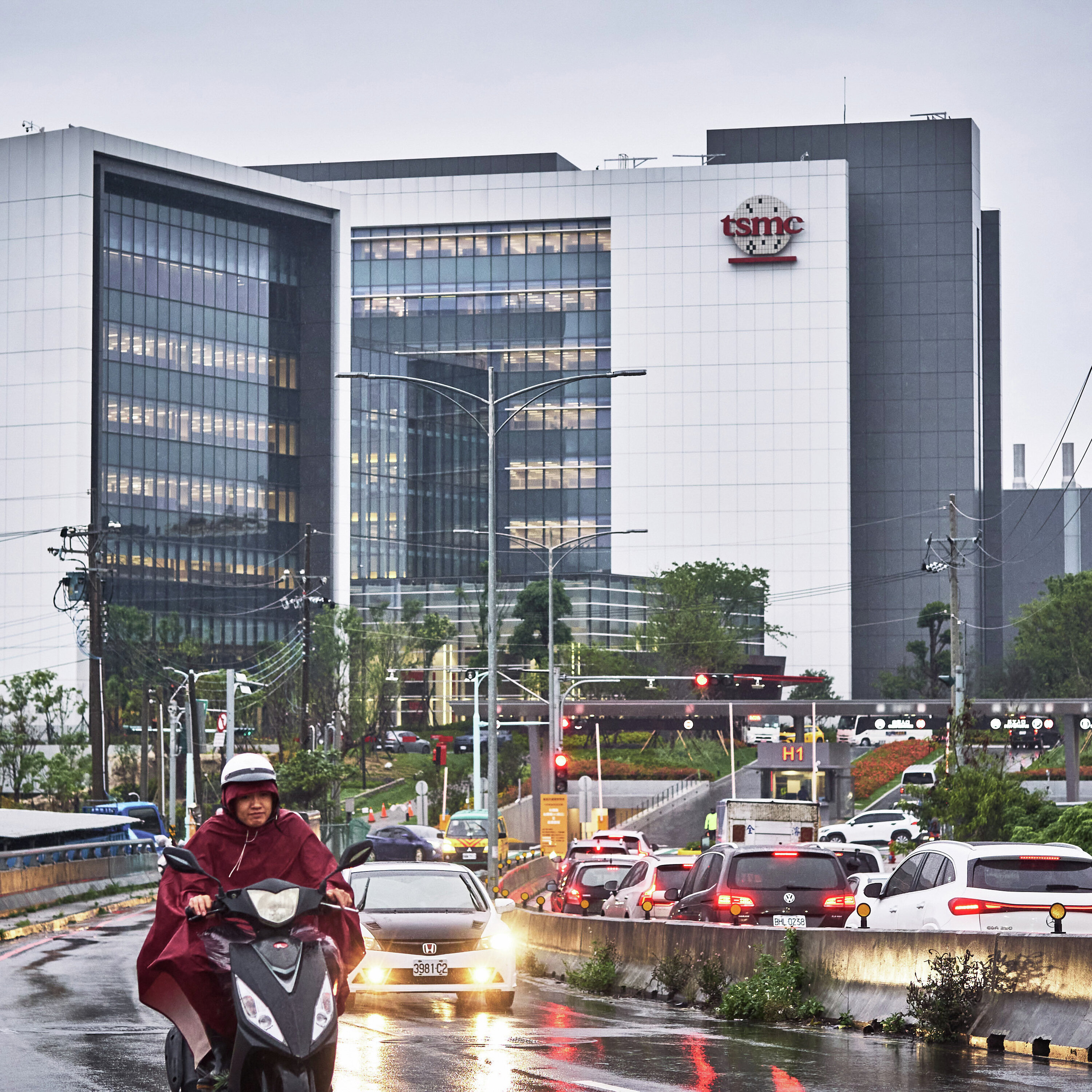
We're talking about companies like Taiwan's tsmc, that's the world's largest chip foundry. And in Korea, the edge is laser focused on memory chips, sk, Hynix and Samsung that really dominate this segment.
- [03:41]
Rebecca Chung Wilkins
The explosive demand for these chips has helped turn these firms into some of the most profitable in the world. And as these Asian chip maker stocks kept climbing, retail investors piled in, hoping to cash in on the rally.
- [03:57]
Charlotte Yang
They think that this is a one single generation rally. And with property so expensive, my salary is not keeping up with inflation. Going into the stock market is my best way to make quick money.
- [04:09]
Rebecca Chung Wilkins
Retail investors in both markets have always been active, but this time their behavior looks different. In Taiwan, many are borrowing heavily to buy more stocks. In Korea, some are turning to risky structured products to boost returns. Bloomberg opinion columnist Shui Ren says it's this rapid buildup of leverage that's now raising alarm bells.
- [04:33]
Shu Li Ren
Until you sell your holdings, these are just paper gains that can evaporate overnight. If the market suddenly turns, you end up with nothing. And possibly the capital came with a lot of leverage and the kind of wealth destruction that we could see. It could be tremendous, right?
- [04:50]
Rebecca Chung Wilkins
And those risks may not stop with individual investors. As markets grow more volatile and retail investors dive in deeper, Charlotte says the consequences could spread further.
- [05:02]
Charlotte Yang
I think today the markets are far more interconnected than before. And just looking at the sharp downturns the other day we saw with Cosby, Cosby experienced a 10% drop and it's quickly filtered into Nikkei, into Chinese market and ultimately into the US Overnight session. So I think that illustrates how a shock in Korea or anywhere in Asia's tech sector can quickly ripple through and affect US Markets in way people didn't anticipate before.
- [05:35]
Rebecca Chung Wilkins
This is the big Take Asia from Bloomberg News. Rebecca I'm Rebecca Chung Wilkins in for 1ha. Every week we take you inside some of the world's biggest and most powerful economies and the markets, tycoons and Businesses that drive this ever shifting region. Today on the show, how individual investors in Taiwan and Korea are rolling the dice to try and cash in on the AI rally. What are the consequences for them and their economies? And if things go wrong, how far could the fallout spread? To see just how widespread Taiwan's investing frenzy has become, Bloomberg went to a small stir fry joint in Taipei, the island's capital city. The restaurant's called Pin Xian Re Chao and lately it's become famous for something other than the food. Nvidia CEO Jensen Huang was recently spotted having dinner there.
- [06:36]
Charlotte Yang
They have roundtables with plastic stools. It's loud and a bit messy, but it's cheap and always you can expect good food.
- [06:43]
Rebecca Chung Wilkins
Since then, it's become a meeting place for Taiwanese people who are interested in investing in the stock market.
- [06:50]
Charlotte Yang
So it was a Monday evening and the stock market that day actually sank earlier, so the benchmark index was down 3.5%. But the mood there and the conversations people were having about the stocks were just still very upbeat. In one corner there was excited chatter about AI and the market and whether they should be taking advantage of the day's decline and buy more stocks on the cheap. And in another corner you have a middle aged man. You can hear him lecturing on his friends about the ins and outs of these PE ratios and how to use them to pick winners.
- [07:26]
Shu Li Ren
Bloomberg.
- [07:26]
Rebecca Chung Wilkins
Charlotte Yang has spent weeks speaking to retail investors in Taiwan and she says stock trading has become a regular part of daily life there.
- [07:36]
Charlotte Yang
The common phrase that come up in my conversation with them is that they say this has almost become like a national pastime or national movement, Charlotte says
- [07:45]
Rebecca Chung Wilkins
that's a real shift. Until recently, investing in the stock market was largely seen as something for finance professionals. But close to half a million people have opened accounts to trade in the Taiwan stock market in the first half of this year. Many are investing for the first time, attracted by the prospect of getting rich quick.
- [08:05]
Charlotte Yang
If you buy a thousand shares of TSMC over the past year, you just buy it and then you put it there, you'll be making $41,000. To put into context, that is more than double the median annual salary in Taiwan. And it's also more than the annual salary of many hard working white collar office jobs. Their big argument is that this rally is really backed by the fundamentals and strong earnings delivery. So unlike the dot com era which is dominated by companies with minimum revenues or like some unproven business models, this time the leaders of this AI rally like tsmc, SK Hynix Samsung. The highly profitable was real technology edge and also strong client demand that the supply capacity simply just cannot meet up with and so on. As that continues and the valuation is not expensive, the rally has more to go.
- [08:58]
Rebecca Chung Wilkins
That belief has helped push stock investing to a fever pitch in Taiwan. For some investors, putting in just their savings isn't enough. They're borrowing money to buy even more stocks.
- [09:11]
Charlotte Yang
With the market frenzy in full swing, people are really putting whatever idle cash they have into the stocks. And also they're borrowing from brokers in margin loans and also in unrestricted loans. What that means is people would pledge their stock holdings and ETF holdings to get more cash. They also turned to the borrowing from banks like in personal credit or in other type of loans.
- [09:35]
Rebecca Chung Wilkins
For many investors, borrowing to invest looks like a smart bet. Interest rates in Taiwan are low. And if stocks like TM TSMC keep delivering huge returns, investors figure they can easily cover the cost of a loan and still come out ahead.
- [09:50]
Charlotte Yang
So if you get bank loans, you annualized interest rates about 2 to 3%. And if you do a little bit of calculation like I put my money into TSMC or like the mainstream popular ETFs, I will be generating 50% return year to date.
- [10:04]
Rebecca Chung Wilkins
Over the past 12 months, margin loans, or money investors borrow from brokerages to buy stocks, have surged 160%. Last week, margin loans hit an all time high, overtaking the previous record set just before the dot com bubble burst in 2000. Meanwhile, loans backed by stocks and ETFs where investors pledged their portfolios as collateral hit a record high in April. That's what worries some market watchers. Not just that stocks have risen so fast, but that more of the rally is being built on borrowed money and and too much optimism.
- [10:45]
Charlotte Yang
The biggest worry people have right now is what if you see a quick shift in global AI sentiment? And because Taiwan's market and economy are so tied to AI, so tied to the tech industry, we have 80% of the benchmark tied to tech and 20% of GDP is from the tech industry. So any of that shift combined with a rapid buildup in leverages, you could easily see very ugly selling.
- [11:14]
Rebecca Chung Wilkins
So what happened if people suddenly lose confidence in AI? How bad could it get and how far could the damage spread? That plus the hidden dangers behind one of the most popular and riskiest trades on Korean stocks. That's after the break.
- [11:33]
IBM Representative
The thing about AI for business, it may not automatically fit the way your business works. At IBM, we've seen this firsthand. But by embedding AI across hr, IT and procurement processes, we've reduced costs by millions, slashed repetitive tasks, and freed thousands of hours for strategic work. Now we're helping companies get smarter by putting AI where it actually pays off, deep in the work that moves the business. Let's create smarter business.
- [12:02]
Nathan Hager
IBM support for the show comes from public.com if you're actively involved in your portfolio, you probably catch yourself repeating the same actions. Buying the dip, manually sweeping idle cash, putting on a hedge on public, you can now create AI agents that handle all these tasks on your behalf. Just describe what you want to do in plain English, like if the Vix hits 25, buy a put option on the S&P 500 or if my cash balance goes above $20,000, move the excess into my direct index. You approve the workflow and your agent handles the risk, monitoring the market, watching for your conditions and executing your strategies exactly as defined. An investing platform driven by your intent, not just your clicks. You can also get full read and write access to your account via the public API. Go to public.com market and fund your account in five minutes or less. That's public.com market paid for by Public
- [13:00]
Rebecca Chung Wilkins
Investing Brokerage Services by Open to the Public Investing Inc.
- [13:03]
Nathan Hager
Member FINRA and SIPC Advisory Services by Public Advisors, LLC, SEC registered advisor Complete disclosures available@public.com Disclosures get the news you
- [13:14]
Rebecca Chung Wilkins
need in just 15 minutes.
- [13:16]
Nathan Hager
Start your day with Bloomberg Daybreak, the podcast with a global view on the stories that matter. I'm Nathan Hager.
- [13:22]
Rebecca Chung Wilkins
And I'm Karen Moscow. Join us each morning for curated stories on current events, politics, business and foreign
- [13:28]
Nathan Hager
relations, plus one conversation on the day's biggest developments, all in just 15 minutes.
- [13:33]
Rebecca Chung Wilkins
Subscribe to Bloomberg Day Daybreak for a precise, thoughtful take on the stories that matter.
- [13:37]
Nathan Hager
Listen to Bloomberg Daybreak each morning on Apple, Spotify, or anywhere you listen.
- [13:51]
Rebecca Chung Wilkins
As AI stocks keep climbing, financial firms are rolling out new ways for investors to bet on the Korea Taiwan rally. Before we get into the nuts and bolts of this, you first need to understand one of the fastest growing products. They've promoted leveraged single stock ETFs. Now, most ETFs, or exchange traded funds are pooled investment vehicles like mutual funds. They hold baskets of securities like stocks, bonds or commodities. But unlike mutual funds, they trade on major stock exchanges just like an individual stock leverage averaged single stock ETFs, however, are different. For one thing, they track just one stock instead of a basket. For another, they use derivatives to magnify returns, and that can make them much riskier. Here's Bloomberg opinion columnist Shu Li Ren.
- [14:43]
Shu Li Ren
Leverage the single stock ETFs amplify exposure to some stock that the investor is very bullish on. You can say buy 2x leveraged ETFs. So with this kind of ETFs you don't need to maintain a margin account. You don't have to understand options, which can be quite complicated. And they trade kind of like stocks. That's why it's very popular.
- [15:07]
Rebecca Chung Wilkins
Super popular in Korea, where more than a dozen of These new leveraged ETFs debuted in May. And where most of the buyers more than 90% aren't pension funds or insurance companies. They're retail investors who have pumped $9 billion into these products. They buy them because the returns can be staggering. Take for example a Hong Kong listed single stock leverage ETF tied to SK Hynix, the Korean memory chip maker. It's designed to deliver twice the stock's daily return.
- [15:40]
Shu Li Ren
If you are investor who bought into this ETF at the beginning of the year, you are up 790%. That's because Hynix has been doing very well throughout the year.
- [15:51]
Rebecca Chung Wilkins
But the math behind these products gets complicated fast. Shui says these products are built for short term trading, sometimes just over a single day, not long term investing. Most retail investors buy and hold for a period of time. Great if a company's stock keeps going up. But if it falls or cycles up and down, things can get messy.
- [16:16]
Shu Li Ren
When markets get choppy. Even if the underlying stock is ending up breaking even this kind of 2x ETFs, you'll still be losing money. So if you bought into this ETF at the beginning of June, when the stock starts to become very volatile and it starts to whipsaw, you are actually better off buying the underlying stock.
- [16:39]
Rebecca Chung Wilkins
Do you think there are risks that retail investors are not getting the that the institutional investors are seeing?
- [16:46]
Shu Li Ren
Well, the biggest risk is valuation. I mean, I'm sorry to say this, but the Samsung and Hynix are starting to trade like mean stocks. And they're trillion dollar companies investors. They're not really considering valuation. In fact, imagination matters a lot more than valuation. And that's quite dangerous because if the market suddenly turns, some retail investors will be getting margin. Course, and that's quite dangerous.
- [17:12]
Rebecca Chung Wilkins
Investors who borrowed money to buy stocks get margin calls from their brokerages. When the value of the stocks fall below a certain level, investors are asked to put in more money to make up for the losses. For most people, the easiest way is to sell the stock. And this kind of forced Selling propels prices into a downward spiral. Shui says what worries her even more is the all in mentality taking hold among some investors.
- [17:41]
Shu Li Ren
I heard from a teenager from Taiwan, she was saying that the saying is, sell your house, sell your cars, and buy tsmc. That's the problem. Until you sell your holdings, these are just paper gains that can evaporate overnight. So the risk is that you think you are making 100% returns this year on paper. If that return reverses suddenly, you end up with nothing. It could possibly traumatize a new generation of investors. What we saw after Japan's economy's bubble burst was that Japanese people have turned very cautious, right? Like if you get burned very early on in your 20s or 30s, that could really change your risk appetite and the risk attitude for decades to come.
- [18:29]
Rebecca Chung Wilkins
That's the risk for the investor. The risk for the company is that these ETFs have become so popular with speculators that they can drive a stock artificially high. And then there's the risk to the market itself. There's now a concern that these kinds of risky bets are becoming large enough to influence trading in some markets. In Korea, retail investor demand for certain stocks has created volatility so extreme that the country's securities exchange had to temporarily suspend trading five times this year to curb losses.
- [19:01]
Shu Li Ren
The retail investor participation is a global trend. It's not just in South Korea and Taiwan or US, right? Hong Kong, China. I mean, in China, everyone is a retail trader. And I think that's a trend that's worth watching.
- [19:17]
Rebecca Chung Wilkins
The retail buying frenzy is already affecting the Korean and Taiwanese stock markets in another, potentially more serious way. These investors are buying at the same time that foreign and institutional investors are selling. Since the beginning of this year, foreign investors sold more than $90 billion in Korean stocks and $20 billion worth of Taiwanese stocks.
- [19:41]
Shu Li Ren
Institutional investors, they just feel like they're being overexposed to South Korea and Taiwan. They have been selling this year. So retail investors, on the other hand, have been buying whenever foreigners are selling. They are actually the ones that are pushing Taiwan and South Korea's markets to new record highs. If there is a real unwind, we can can see stocks down by 20, 30% overnight. And that can create a lot of shock to the financial system because Taiwan and South Korea have so many semiconductor companies. If there are crashes in these markets, the US Market is not going to do so well because they, they all have to benchmark against each other. If, say, Hynex tumbles by 20% that day, you will see the US market not opening so well and we have already seen that.
- [20:37]
Rebecca Chung Wilkins
Still, Shu Li says she doesn't think the AI boom is about to unwind just yet.
- [20:43]
Shu Li Ren
We are unlikely to see a bubble burst this year. What we are seeing is that the supply demand dynamics is very tight until all the way until 2027. Basically each cycle lasts maybe three to four years, right? Right now we are already a year two. Whenever the markets detect that the demand may have peaked and that the supply demand mechanics is turning against the suppliers, then the valuation will have to fall. Just because they are cyclical industries, what
- [21:17]
Rebecca Chung Wilkins
comes up must come down.
- [21:18]
Shu Li Ren
Yes, absolutely, because the supply demand dynamics change very quickly.
- [21:25]
Rebecca Chung Wilkins
This is the Big Take Asia from Bloomberg News. I'm Rebecca Chung Wilkins. To get more from the Big Take and unlimited access to all of bloomberg.com, subscribe today@bloomberg.com podcastoffer if you like the episode, make sure to subscribe and review the Big Take Asia. Wherever you listen to podcasts, it helps people find the show. Thank you for listening. See you next time.
- [21:51]
Chase Bank Representative
The Bloomberg Sustainable Business Summit returns to Singapore on July 22. Our 5th annual Asia Pacific Summit will explain explore how business and finance leaders are shaping the next phase of globalization by strengthening resilience and driving a multi speed energy transition across Asia's diverse markets. Join us for solutions driven discussions and networking opportunities. Thank you to our Summit advisor, Bangkok Bank. Learn more at BloombergLive.com SBS-Singapore.