Loading summary
Transcript34 lines
- [00:01]
IBM Representative
The thing about AI for business? It may not automatically fit the way your business works. At IBM, we've seen this firsthand. But by embedding AI across hr, IT and procurement processes, we've reduced costs by millions, slash repetitive tasks, and freed thousands of hours for strategic work. Now we're helping companies get smarter by putting AI where it actually pays off, deep in the work that moves the business. Let's create smarter business.
- [00:29]
Commercial Announcer
IBM Sonesta Travel Pass is the most rewarding way to travel. Sign up@sonesta.com for instant savings, bonus points and perks like early check in, late check out, room upgrades and free stays. Choose from 1100 hotels across 13 brands and unlock their best rates when you book with Sonesta Travel Pass here today, Rome tomorrow. Join now@sonesta.com terms and conditions apply.
- [00:58]
Cincinnati Insurance Narrator
If you follow markets, you know the value of long term thinking. You plan, you diversify, you prepare for volatility. But in life, even the best strategies can't prevent every bad day, a fire, a loss, a disruption that demands immediate attention. When that happens, what matters isn't just what you planned, it's who shows up. That's where Cincinnati Insurance comes in. For more than 75 years, they've helped individuals and businesses navigate life's toughest moments with care, expertise and personal attention. Together with independent agents, Cincinnati Insurance focuses on relationships, not transactions. Their approach is grounded in experience, follow through and trust built over time. Bad days happen, and when they do, you deserve an insurance partner who understands risk, respects what you've built and is ready to help you move forward. The Cincinnati Insurance companies Let them make your bad day better. Find an independent agent@cin fin.com Bloomberg Audio Studios podcasts Radio News Today the United
- [02:08]
Military Correspondent
States military continues to carry out large scale combat operations in Iran.
- [02:13]
Sarah Holder
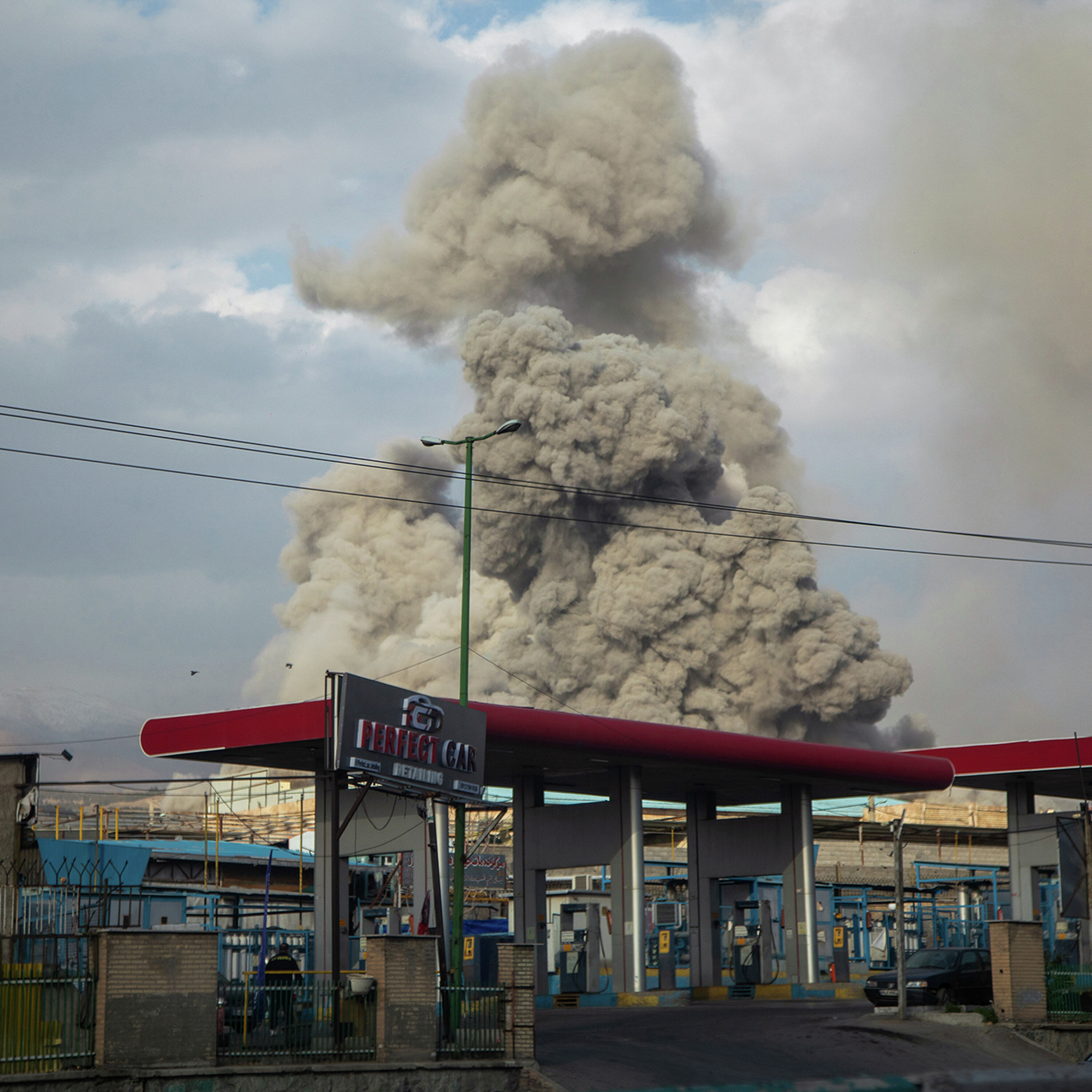
The U.S. and Israel's attacks on Iran have entered their third day and President Donald Trump said Monday that the U.S. s military operation could continue for weeks or more.
- [02:24]
Military Correspondent
Whatever it takes, we will always and we have. Right from the beginning, we projected four to five weeks, but we have capability to go far longer than that.
- [02:37]
Sarah Holder
The US Is now sending additional forces to the region and Trump told the New York Post that he hadn't ruled out putting US Troops on the ground. As of Monday afternoon, six US Service members and hundreds of Iranians have been killed. The attacks have set off a chain reaction across the region. The Iranian regime and its proxies launched targeted strikes in Qatar, Saudi Arabia and Kuwait after Hezbollah fired missiles towards Israel. Israel struck Lebanon. Saudi Arabia it was reported that One of their oil refineries was targeted in one of the Iranian strikes.
- [03:13]
Golnar Motavalli
We have several fronts opening up. A number of Gulf Arab countries that
- [03:17]
Cincinnati Insurance Narrator
also found themselves in the firing line.
- [03:19]
Commercial Announcer
We've seen Hezbollah joining the fight right now.
- [03:22]
Sarah Holder
And on an advisor to Iran's Revolutionary Guard commander announced on state television that they would not let any oil pass through the Strait of Hormuz and would set fire to any ship attempting to pass. Oil prices had already spiked off the news of the weekend attack. European gas prices surged more than 50% on Monday and Brent crude was up as much as 13% at the market open, clearing $82 a barrel. The attack on Iran and killing of its supreme leader, Ali Khamenei leaves open questions about who will rule the country now, what the war could mean for global oil prices and how long the US Involvement might last.
- [04:01]
Military Correspondent
Somebody said today, they said, oh well, president wants to do it really quickly. After that he'll get bored. I don't get bored. There's nothing boring about this.
- [04:14]
Sarah Holder
I'm Sarah Holder and this is the big take from Bloomberg News today. On the show, Bloomberg's Golner Motavalli on the succession plan for the supreme leader in Iran and the efforts to keep oil prices in check amid the widening conflict across the Middle East. Bloomberg's Golnar Motavalli has been following this story since news of the US And Israel's attacks on Iran broke along with our reporters across the globe. Golnar, you've been anticipating this conflict could erupt for weeks now.
- [04:46]
Golnar Motavalli
Yes, I think generally since Israel last attacked Iran in June and triggered the 12 day war, which obviously the US joined at the very end with the attacks on Iran's nuclear sites. I think there was generally a sense that the Israelis, if not the Americans, would attack Iran again. And I think it was clear that the Iranians themselves were definitely preparing for that. And my sense is that they went into these last round of nuclear talks with the Americans knowing that it was a possibility.
- [05:20]
Sarah Holder
Well, Iran's supreme leader, Ali Khamenei was killed in a targeted strike over the weekend. Iran was preparing, as you said, they also had a plan for the death of the supreme leader. What do we know about it?
- [05:31]
Golnar Motavalli
We've seen reports over the past couple of weeks that again, since June there has been a real serious effort to just strategize and make plans for various scenarios and eventualities. And part of that is increasing the layers of succession for different leadership roles across these different security institutions and military bodies, whether it's the IRGC Whether it's the Supreme National Security Council, whether it's the new National Defence Council that was established after the war with Israel in June. So these contingencies exist and they are a number of layers thick, according to some sort of unconfirmed reports we've seen in terms of personnel. So if there's one strike that gets rid of one echelon, then, you know, there'll be someone underneath it to take over. That's going to be increasingly challenging, because I'm guessing that there is a point at which you've gone through all the layers of seniority. Having said that, Iran's armed forces are substantial in size and there is a sizable proportion of Iran's population that is still very loyal to the regime. It's questionable whether they are the majority of. I do not think they are at all. But Iran is a country of 90 million people, and I still think there is a large number of people who are very loyal to the Islamic Republic and who are part of the governing political military apparatus that runs the country. Most of the ranking individuals who were lost over the weekend, they've been replaced. They've announced this interim Security Council that consists of of three very senior individuals, one of whom is from the Guardian Council, a very senior cleric who's also rumoured. This is completely speculative, but rumoured as someone who may also be in the running to ultimately replace the Supreme Leader. But that three member council are at the moment caretaking for decisions that would have otherwise been taken by the Supreme Leader. And they're working very closely with the head of the Supreme National Security Council, who is Ali Larajani. And the elected president, President Massoud Pezeshkian, takes on an even more prominent role than before as well.
- [07:57]
Sarah Holder
Well, on Saturday, in the hours after the attack, President Trump made a statement urging the people of Iran to, quote, take over your government. How likely is it that the Iranian opposition will take power now? And what would that look like?
- [08:10]
Golnar Motavalli
One of the achievements, if you want to use that word, of the regime of the Islamic Republic in the past 50 years has been to very successfully ensure that an effective opposition just cannot exist in the country. And anyone who does speak up for the rights of women, just basic human rights, civil liberties, they face prosecution and most of them are in jail. And the reformists, they've always been pushing against this kind of like, brick wall because hardliners have kind of dominated the country for so long, and hardliners are ostensibly, in very simple terms, who Khamenei has always represented. So in that sense, Internally, there's little organized opposition to speak of, but the population by and large are very opposed and have been very opposed to the Islamic Republic for some time. And much of the opposition comes from a very simple idea, which is that the regime treats its own people often appallingly. And we saw that during the protests. The latest protests that started on the 28th of December and kind of reached a sort of a peak of violence and brutality over the weekend of January 8th and 9th, where we know that thousands of people were killed. And Iranians have known at least since 2009 that Khamenei has been prepared to give orders to the security forces to kill people if it's necessary. And the more the Iranians have gone out to protest as they've become increasingly dissatisfied with the system, the harder and the more ruthless the security forces have been in dealing with them. And we have seen, especially since 2019, the numbers of not just people killed actively in protests go up, along with the numbers of protests that actually take place, but also the number of judicial executions as well that happen in the country.
- [10:30]
Sarah Holder
After the break, Gulnar and I discuss what we know about the U.S. s endgame and how the war is already impacting the flow and the price price of oil.
- [10:43]
Public Investing Advertiser
Support for the show comes from Public. Public is an investing platform that offers access to stocks, options, bonds and crypto. And they've also integrated AI with tools that can assist investors in building customized portfolios. One of these tools is called Generated Assets. It allows you to turn your ideas into investable indexes. So let's say you're interested in something specific like biotech companies with high R and D spend, small cap stocks with improving operating margins, or the S&P 500 minus high debt companies. Chances are there isn't an ETF that fits your exact criteria. But on Public you just type in a prompt and their AI screens thousands of stocks and builds a one of a kind index. You can even backtest it against the S&P 500. Then you can invest in a few clicks, go to public.com market and earn an uncapped 1% bonus when you transfer your portfolio. That's public.com market ad paid for by Public Holdings Brokerage Services by public investing member FINRA SIPC advisory services by public advisors SEC registered advisor crypto services by ZeroHash sample prompts are for illustrative purposes only, not investment advice. All investing involves risk of loss. See complete disclosures@public.com disclosures so there's a
- [11:56]
IBM Representative
lot of noise about AI, but time's too tight for more promises, so let's talk about results. At IBM, we work with our employees to integrate technology right into the systems they need. Now a global workforce of 300,000 can use AI to fill their HR questions, resolving 94% of common questions, not noise. Proof of how we can help companies get smarter by putting AI where it actually pays off, deep in the work that moves the business. Let's create smarter business.
- [12:25]
Cincinnati Insurance Narrator
IBM if you follow markets, you know the value of long term thinking. You plan, you diversify, you prepare for volatility. But in life, even the best strategies can't prevent every bad day a fire, a loss, a disruption that demands immediate attention. When that happens, what matters isn't just what you planned, it's who shows up. That's where Cincinnati Insurance comes in. For more than 75 years, they've helped individuals and businesses navigate life's toughest moments with care, expertise and personal attention. Together with independent agents, Cincinnati Insurance focuses on relationships, not transactions. Their approach is grounded in experience, follow through and trust built over time. Bad days happen, and when they do, you deserve an insurance partner who understands risk, respects what you've built, and is ready to help you move forward. The Cincinnati insurance companies let them make your bad day better. Find an independent agent. @cin fin.com.
- [13:31]
Military Correspondent
We're ensuring that the world's number one sponsor of terror can never obtain a nuclear weapon. Never going to have it on the
- [13:40]
Sarah Holder
US Side I want to talk about what Trump and Trump administration officials have said is the U.S. end game here. How have officials explained why the U.S. attacked and what the plan is now?
- [13:51]
Golnar Motavalli
The rationale behind the US Decision to attack Iran has changed. Donald Trump's motivations for threatening Iran or threatening regime change have sort of flipped between wanting to protect the protesters, many of whom who were under arrest, were also at risk of execution, but also then using the nuclear program, Iran's nuclear program, as a pretext to threaten and to attack Iran. And one thing that's been interesting is that both Donald Trump and Keir Starmer have referred to this idea of, you know, Iran cannot have a nuclear weapon. American officials have been saying this repeatedly for years, and Iran has been saying repeatedly for years that we do not intend to have a nuclear weapon. Our program is for peaceful purposes only. Now, you know, obviously it's not good enough to just say that. The negotiations, the round that they were meant to have this week before the attack started on Saturday, was to provide Americans with a sense of confidence, an ironclad guarantee that Iran would not weaponize its nuclear program. And there's also been this argument that the more that you push Iran and threaten it and do various things like pile on sanctions, designate the IRGC as a terrorist organization, kill someone like General Qasem Soleimani, abandon the nuclear deal that Barack Obama agreed with the Iranians on the basis that it was Barack Obama's deal and you felt that it wasn't a good deal, there's a school of thought that says doing this actually pushes Iran further toward the calculation that having a nuclear weapon is actually probably what it needs. And that is something that Lara Jani, who is now very prominent at the moment in Iran's decision making apparatus, has said in the past. Right now, Iran is a member of the Nuclear Non Proliferation Treaty, and that means that it is prohibited from trying to acquire or developing nuclear weapons, but it is also allowed to pursue a peaceful civilian nuclear program. And Iranian officials have been insisting this is what they want. The problem is, is that there is no trust between them and between countries like Israel who have been threatened by Iran for years and years and years and years and are deeply uncomfortable with the idea of a country like Iran having indigenous nuclear enrichment capability.
- [16:42]
Sarah Holder
So, Gulnar, I want to talk about the economic impacts of this war. Oil prices have spiked, but not to the extent that some have feared. Why is that?
- [16:51]
Golnar Motavalli
I think a lot of people are, or the market at least may be taking into consideration the fact that this can't go on forever, that there's a limit to what both sides are able to maybe tolerate. There's certainly a limit to what the Gulf Arab states in the Persian Gulf can stomach. They did not want to get dragged into this war. They didn't want this. From what we know from our sources is that they tried to dissuade Donald Trump from going into this war. They were very active in trying to facilitate the negotiations and mediate between Steve Witkoff and the Iranian foreign Minister Abbas Arakchee, because they didn't want a war. They don't want missiles flying around their countries and populations. And these are oil producing countries whose budgets depend on their ability to sell oil at a certain price.
- [17:48]
Sarah Holder
And OPEC has responded by saying, you know, they're going to resume oil production increases. Could that continue to moderate oil prices if this conflict continues?
- [17:59]
Golnar Motavalli
Yeah, if they're not deciding to cut and they're actually deciding to even ramp up production, that will definitely have an impact on prices. It's just unclear at this stage to what extent how much of the gains that a decision like that will help to erase at this point.
- [18:16]
Sarah Holder
And Golar, this is a very fast moving situation. There's questions about Iranian succession plans, about further attacks in the region, about the ripple effects on the global economy. But where do you expect this conflict to go from here? What are you watching for in the hours and days ahead?
- [18:32]
Golnar Motavalli
I think the one thing that concerns me a great deal is the civilian toll, the number of civilians that are being killed right now, particularly in Iran. It's very difficult to rely on the state media in Iran to give a death toll and to kind of break down that death toll in terms of civilians. And the same with infrastructure, with the loss of infrastructure in Iran and just the basic, basic idea that there doesn't seem to be any long term planning or thinking on the American side or amongst the Israelis about what happens in Iran next. I think Pete Hegseth said today that this wasn't a regime change war, but it did change the regime. And then he said something along the lines of we'll leave it to Iranians to decide what to do. And I think there's a recklessness in that inherent in that statement because it's a way of saying we're just gonna, you know, do the attack. This phrase that often people use, cut off the head of the snake and then just let people to get on with it. And I don't know what that means, getting on with it. I'm not sure that anyone's really thought that through. And that's what worries me. I think the concept of regime change as we know it is freighted with the weight of that question and always has been. And partly the reason why it has been is because I don't think there are that many examples in history where this type of intervention has ever been successful or led to any anything good fast.
- [20:36]
Sarah Holder
This is the big take from Bloomberg News. I'm Sarah Holder. To get more from the Big take and unlimited access to all of bloomberg.com, subscribe today@bloomberg.com podcastoffer thanks for listening. We'll be back tomorrow.
- [21:01]
Cincinnati Insurance Narrator
If you follow markets, you know the value of long term thinking. You plan, you diversify, you prepare for volatility. But in life, even the best strategies can't prevent every bad day, a fire, a loss, a disruption that demands immediate attention. When that happens, what matters isn't just what you planned. It's who shows up. That's where Cincinnati Insurance comes in. For more than 75 years, they've helped individuals and businesses navigate life's toughest moments with care, expertise and personal attention. Together with independent agents. Cincinnati Insurance focuses on relationships, not transactions. Their approach is grounded in experience, follow through and trust built over time. Bad days happen, and when they do, you deserve an insurance partner who understands risk, respects what you've built and is ready to help you move forward. The Cincinnati insurance companies let them make your bad day better. Find an independent agent@cin fin.com.
- [22:06]
Commercial Announcer
With volley from iShares, you get access to both monthly income and growth potential in one simple etf. It's the best of both worlds. Discovery Discover Bali Ishares Large Cap Premium Income Active ETF iShares the market is yours. Visit www.ishares.com to view Prospectus for investment objectives, risks, fees, expenses and other information that you should read and consider carefully before investing. Risks include principal, loss and the use of derivatives, which could increase risks and volatility. Monthly income is not guaranteed. Prepared by BlackRock Investments, LLC with 4 imprint, finding the right promo products can be easy. They call it four Imprint Certainty, which means you get free samples, expert help, art assistance and their assurance your logo looks great. 4imprint offers thousands of options to choose from, including branded apparel, drinkware, outdoor and more. And it's backed by their 360 degree guarantee. That's 4imprint's promise that your order will be packed with care and delivered on time. Need your order faster? 4imprint offers quick turnaround options too. Visit 4imprint.com to explore 4imprint for certain.