Loading summary
Transcript50 lines
- [00:00]
IBM Representative
So there's a lot of noise about AI, but time's too tight for more promises. So let's talk about results. At IBM, we work with our employees to integrate technology right into the systems they need. Now a global workforce of 300,000 can use AI to fill their HR questions, resolving 94% of common questions, not noise. Proof of how we can help companies get smarter by putting AI where it actually pays off, deep in the work that moves the business. Let's create smarter business IBM when you
- [00:31]
Chase Bank Representative
own your own business, you own every decision. Now own the card that rewards you for it. Chase Sapphire Reserve for Business is a pay in full card that elevates your travel experience and offers premium benefits that will take your business to the next level. Sapphire Reserve for business offers 8x points on all purchases through Chase Travel, 3x points on social media and search engine advertising, airport lounge access, and more. Chase Sapphire Reserved for business. It's the card that gives back all you put in. Learn more@chase.com ReserveBusiness Chase for Business make more of what's yours Accounts subject to credit approval restrictions and limitations apply. Cards are issued by JPMorgan Chase Bank, NA member FDIC wise is the smart
- [01:15]
Wise Representative
way to manage the currencies you need around the globe. When you send money abroad using your bank, you could get hit with hidden fees and exchange rate markups. There's a better way. Try Wise. Wise uses the exchange rate you'd usually find on Google, with no unwelcome surprises. Plus, most transfers happen in under 20 seconds, which means you your money arrives in less time than you've been listening to me. It's simple and free to sign up when you download the Wise app. Be Smart Get Wise T's and C's Apply.
- [01:46]
Chase Bank Representative
Bloomberg Audio Studios Podcasts Radio News Every
- [01:52]
Edward Evans
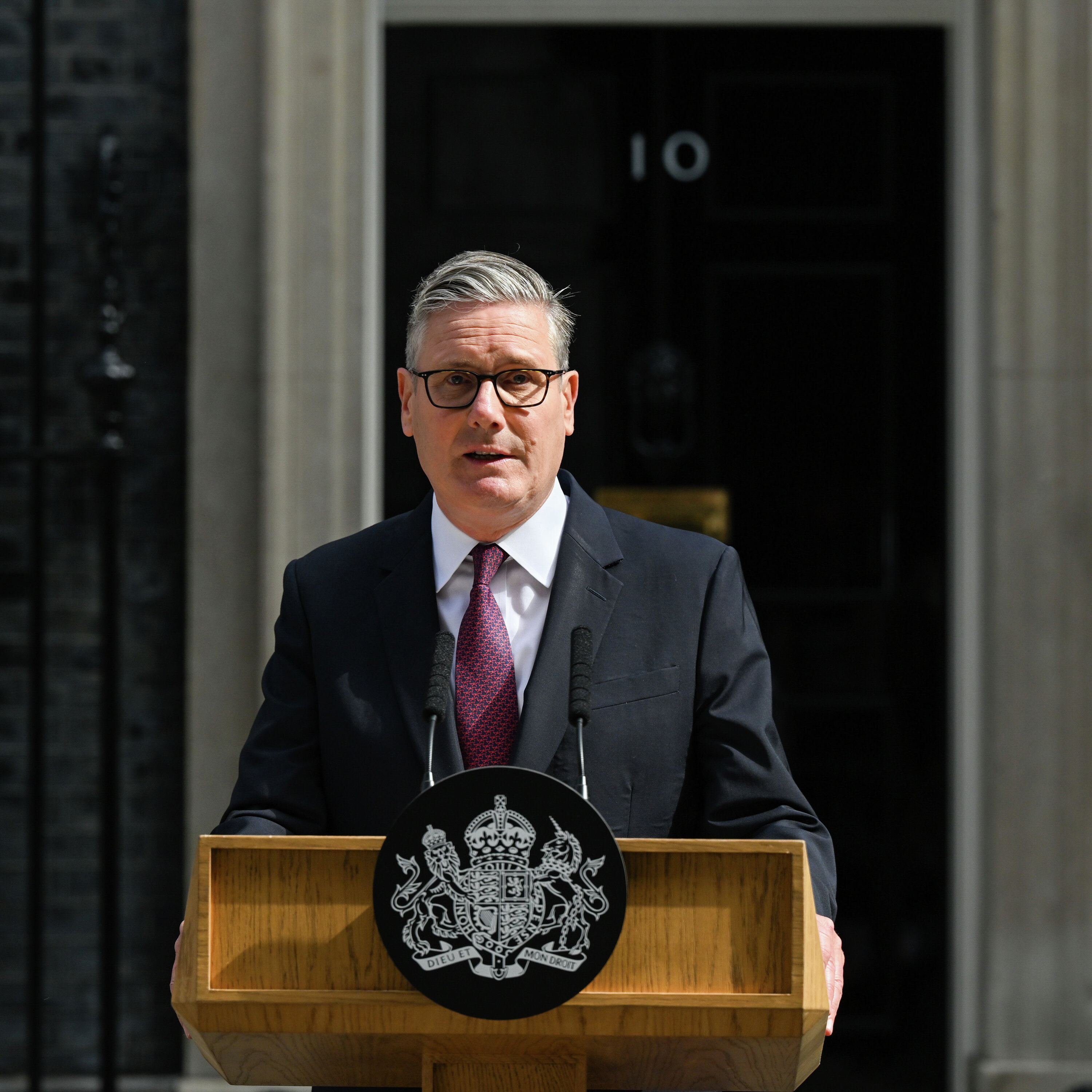
decision I've taken has been about putting the country I love first. That is why I will resign as leader of the Labour Party.
- [02:03]
Wendy Benjaminson
Less than two years into the job, Britain's Prime Minister Keir Starmer is stepping down.
- [02:08]
Edward Evans
It's an extraordinary turnaround in his political fortunes. This is somebody who won a landslide majority in 2024, 174 seat majority, something Labour hadn't won since the days of Tony Blair.
- [02:22]
Wendy Benjaminson
Bloomberg editor Edward Evans says Starmer suffered a series of early missteps.
- [02:27]
Edward Evans
Nobody was quite clear what the policy was, what the big picture was then.
- [02:31]
Wendy Benjaminson
This May, Starmer's Labour Party had a disastrous showing in local elections that prompted about a quarter of his party's MPs to call on him to resign. That resignation leaves the UK facing its seventh leader since the country's Brexit vote 10 years ago. This is the big take from Bloomberg News. I'm Wendy Benjaminson in for David Gura and Sarah Holder today on the show. How did the UK get here? Who's next in line to replace Starmer? And can Britain's next PM hold onto the top spot longer than he did? Less than two years is not a long time to last as Britain's Prime Minister. But Edward Evans tells me Starmer's downfall has been underway from the beginning.
- [03:21]
Edward Evans
Very quickly he came in and there were a series of early missteps that really started to undercut his authority. There was an attempt to cut winter fuel payments for pensioners, which he put through, which was incredibly unpopular with many in his party, particularly on the left. But it was then subsequently reversed. There was also an attempt to cut benefit payments, again later reversed. So you saw at that point, you know, blood was in the water, his political authority was starting to drain away. Then, of course, more recently, we had the appointment of Peter Mandelson as the UK Ambassador to the us. Mandelson subsequently emerged, was a close associate of Jeffrey Epstein. That was particularly damaging for Starmer because this was an appointment that Downing street had particularly gone out of its way to put through. And it's one of the most, if not the most senior post in the diplomatic service, and one that's absolutely crucial right now with Donald Trump. Then you fast forward to the local elections, a disastrous result for Labour. And many in his party in Westminster were extremely nervous at that point about their own seats if the party continued on that course. And then more recently still, he lost his Defence Secretary over a dispute over increased defence spending. And then, you know, above all this, you know, this fiscal straitjacket that the Government's been operating under a set of rules essentially imposed by the Chancellor. And they hold that the Chancellor must balance day to day spending with tax revenues by 2029, 30 and reduce debt as a share of GDP by the same point. There's very little room to increase borrowing, there's very little room to increase spending. And, you know, squaring that circle has proved impossible for Starmer with his own party.
- [05:00]
Wendy Benjaminson
You mentioned the Peter Mandelson appointment, which I'm interested in where it ranks in all of these problems that Starmer had in his term, because, as you know, in the United States, almost no one has faced any consequences for their relationships with Epstein. And this has not only cost Peter Mandelson his job, but now Keir Starmer
- [05:19]
Edward Evans
as Well, I think that the point with Mandelson was it was, it's a political appointment and it was made clearly by Downing Street. So this was very much on the Prime Minister's own judgment too. It came out only over a period of days and weeks and you had the drip, drip, drip of news. And Parliament took the unusual step actually of forcing Downing street to release a lot of the papers surrounding the appointment of Peter Mandelson. So again, that dragged the whole process out even further.
- [05:47]
Wendy Benjaminson
So the favorite right now to lead Britain is Andy Burnham, who was just sworn into Parliament today. Who is he and why has he become a major player so quickly?
- [05:55]
Edward Evans
I think the first thing to say, he's a long term figure in the Labour Party. This is not someone who's a stranger to Labour. He's grown up in the Labour movement and has been active in it since the days of the Blair governments. He was, I think, most recently known for being mayor of Manchester. And I think that was the really, you saw the political reinvention of Andy Burnham. He came out colloquially known as the King of the north. And the emergence of this thing called Manchesterism, which is essentially a mix of state control. He nationalized the local buses in Manchester, mixed with working with business to promote development. And you know, if you look at Manchester skyline over recent years, there has been a huge, huge change there. Before Manchester, he was a Labour MP for many years. And it's important to note this is someone who he ran for the Labour leadership in 2010 and lost. He ran in 2015 again and lost to Jeremy Corbyn. So this is somebody who's no stranger to the Labour Party.
- [06:51]
Wendy Benjaminson
So, Edward, last week Burnham won a seat in Parliament during a by election, which is a special election to fill an empty seat representing Makerfield in northwest England. Why was that significant?
- [07:03]
Edward Evans
Well, firstly, it was extraordinary. There was a by election in the first place in that the previous MP who had just been elected, Simons, had to step down to clear the way for Burnham to do it. Normally by elections caused by the resignation or the death of somebody in office. This was essentially somebody stepping aside to create room for Burnham. You can't be party leader unless you're in Parliament here. The vote itself was interesting. I mean, Makerfield, the constituency, it's a northern seat. It's very close to where Burnham grew up. You know, it's an area he knows. The fight there was against reform. Now, this is Nigel Farage's party. They did very well at the local elections. Very recently in the local elections in Makerfield they had great hopes with their candidate. Now, obviously, Burnham beat him and beat him by a much bigger margin, I think, than people had expected. So I think, you know, for that election, I think there have been question marks now about, you know, Farage and peak reform. But for Burnham, it's really a sign and many in Labour are taking it as a sign as. As somebody who can energize the electorate and can bring political support and popular support that's been lacking.
- [08:10]
Wendy Benjaminson
And maybe some parallels to the upcoming US midterm elections. But tell me about Burnham's possible path to Downing street from where he is today.
- [08:19]
Edward Evans
There is a process. Nominations the party leadership will open on July 9th and close on July 16th. Assuming nobody else runs. Burnham could then become Prime Minister. Essentially, if it does go to a vote, if another candidate does emerge, and I must stress at this point, that looks unlikely. One possible contender where Streeting fell in line behind. Behind Burnham earlier today. But it is possible somebody else comes out of the woodwork, then it would go to a vote of Labour members and you would see a result in early September. Starmer, it's important to note, would obviously remain Prime Minister until the new leader is appointed by the party.
- [09:00]
Wendy Benjaminson
And if Burnham does become pm, he'll be able to appoint his own cabinet that will include the Chancellor of the Exchequer, which is equivalent to the U.S. treasury Secretary.
- [09:10]
Edward Evans
I think that's gonna be a really big moment. It will send a big signal about the direction of the government. Is he going to go more radical? Is he going to go and be continuity? Now, there are two names that are in all sorts of names in the frame. Obviously, Ed Miliband has been name has been suggested. Wes Streeting's name, I think, has also been suggest two potentially very different paths. The question for Burnham is how much of a break is he going to represent with Starmer? And if he is going to break with Starmer's government, the difficulty he's got is that he has not won a general election and won a mandate from the electorate. And so there are questions about does he then possibly go and call another general election. He's been quite careful not to rule that in or out. Today he's been a bit cagey around that. We talk about him being elected Prime Minister, but he's being appointed essentially by his own party. He hasn't faced a popular. And without that, does he have a popular mandate?
- [10:05]
Wendy Benjaminson
Edward, you mentioned a general election. Britain has to call the next one by August 15, 2029. So the next PM could actually be in the job for quite a while.
- [10:14]
Edward Evans
The general election date, that's the last date it can be held by. But the prime minister has the power obviously, to call a general election at any point before then. It's a tremendously useful political power if you're prime minister. The question for Burnham is does he go long? Does he wait for something to improve? Does he bet that things will turn around over time? Or does he say, look, I want to do something more radical. We've got to break free of these fiscal rules that were set by previous governments and adopted by the previous Labour government. I want to take a more radical line on things like Brexit and the relationship with the European Union. And to do that, I need to take that to the people again. That's really one of his early big political calls he's going to have to
- [10:53]
IBM Representative
make
- [10:56]
Wendy Benjaminson
after the break. How a new PM might handle Trump and how Starmer's downfall reflects the changing British party system.
- [11:09]
IBM Representative
So there's a lot of noise about AI, but time's too tight for more promises. So let's talk about results. At IBM, we work with our employees to integrate technology right into the systems they need. Now a global workforce of 300,000 can use AI to fill their HR questions, resolving 94% of common questions, not noise. Proof of how we can help companies get smarter by putting AI where it actually pays off, deep in the work that moves the business. Let's create smarter business.
- [11:38]
Public.com Representative
IBM support for the show comes from public.com if you're actively involved in your portfolio, you probably catch yourself repeating the same actions. Buying the dip, manually sweeping idle cash, putting on a hedge on public. You can now create AI agents that handle all these tasks on your behalf. Just describe what you want to do in plain English like if the Vix hits 25, buy a put option on the S&P 500 or if my cash balance goes above $20,000, move the excess into my direct index. You approve of the workflow and your agent handles the risk, monitoring the market, watching for your conditions and executing your strategies exactly as defined. An investing platform driven by your intent, not just your clicks. You can also get full read and write access to your account via the public API. Go to public.com market and fund your account in five minutes or less. That's public.com market paid for by Public
- [12:35]
Edward Evans
Investing Brokerage Services by Open to the Public Investing Inc. Member FINRA and SIPC Advisory Services by Public Advisors, LLC.
- [12:43]
Okta Representative
SEC registered advisor complete disclosures available@public.com disclosures these days it seems like AI agents are just about everywhere you turn every field and every function. But without identity, you can't trust they'll serve your business instead of jeopardizing it. Fortunately, Okta helps you get identity right by securing your AI agents identities, giving you a single layer of control, a single standard of trust. So whether an AI agent supports a single user or your entire enterprise, with Okta you'll turn risk into opportunity. Secure every agent, secure any agent. Okta secures AI.
- [13:25]
Edward Evans
British politics can be famously brutal at times.
- [13:29]
Wendy Benjaminson
That's Bloomberg's Edward Evans about yet another British Prime Minister forced to resign.
- [13:34]
Edward Evans
You lose authority over time and then very suddenly it becomes clear and people you pointed people who owe their seats to you turn around to you and say, no, Prime Minister, your time is up. We think you've become a liability.
- [13:47]
Wendy Benjaminson
Tell us more about the dynamics of recent UK parliamentary by elections. For decades these races have largely been between Labour on the left and Conservatives on the right. How has the dynamic changed?
- [13:59]
Edward Evans
I think that what you're seeing in British politics is the splintering essentially of what was a two or three party system where you had the Conservative and Labour Party on the right and on the left and then the Liberal Democrats in between perhaps. And you're seeing that now splinter into five, seven parties or more. And on the right you're seeing the growth of reform under Nigel Farage. And on the left you're seeing the growth and support for the Green Party under Zach Polanski. And that's been a challenge for Labour left wing voters moving from Labour to the Greens. So that's having some really interesting consequences. We have a first past the post system here. It's not proportional representation, so it's the party with the most votes that wins at a by election still. And you know, Makerfield was fascinating in that sense because you know, you had a big question going into it. Would reform outperform? You had a split within a split as it were, a Restore, which is another right wing party and you know, were they going to take votes off reform off Farage's party? How would that split out in the event Burnham out polled and out polled everybody by some margin. So if you're sitting in the Labour Party there, that will give you, I would imagine, hope that the two party system, there is still some mileage in it yet.
- [15:17]
Wendy Benjaminson
Which parties stand to gain the most from Labour's problems?
- [15:20]
Edward Evans
Well, I think, you know, Labour's already, I mean Labor's already fallen behind in the polls. And if you look at the sort of average of opinion polls, Reform has obviously. And Farage has been by and large ahead for some months now. Obviously that wasn't what happened in Makerfield. So you've got to then question which is the outlier, will that be replicated? And again now, what happens with Farage's polling numbers? Do they start to move downwards? Obviously, any party, any new leader comes in, you get a bounce. Traditionally you get a bounce in the polls from that. Can Burnham hold onto that if it materializes and for how long?
- [16:01]
Wendy Benjaminson
Edward, how would you describe Starmer's relationship with US President Donald Trump? We know yesterday Trump posted that Starmer was going to resign, so clearly he was excited for this to happen. Do we have any sense yet of how Burnham's gonna navigate this relationship?
- [16:15]
Edward Evans
I think at this point, no. I think it's very, as you say, it's a very, very delicate relationship. It is traditionally, you know, the most, one of the most important relationship, diplomatic relationships for a British Prime Minister. And I think that you certainly saw with Starmer a lot of, and attention and delicacy given to how do you handle Trump. It was not always an easy relationship and one of the early tasks for Burnham coming in will be to make contact to develop that, establish that relationship and cultivate it. If you're in Downing street, you want to have a close relationship with the U.S. but equally, Trump does not poll well in the UK. It's a difficult relationship to navigate.
- [17:03]
Wendy Benjaminson
Tomorrow, June 23rd is the 10 year anniversary of Britain's vote to leave the European Union. As you've said, PMs have had a lot of trouble keeping their jobs since then. Is anyone going to be able to hold on to this position?
- [17:16]
Edward Evans
We will see. I mean, it is extraordinary. I mean, in Britain, certain people look across the Channel and look at the political instability in Italy and make unfavorable comparisons. It is a sign that, that there is a political turmoil. There is something, there's something deeply, deeply in the political system that is changing. I think with Brexit, with May, with Johnson, each of those they were trying to grapple with Brexit or the markets in the case of Truss or the electorate in the case of Sunac. I mean, it's very. Right now it's very, very difficult for anybody of any party to square the markets, the voters, Brexit and spending. And, you know, that's why you're, I think, seeing this sort of instability in British politics. And, you know, it will be very interesting to see how long Burnham stays in office.
- [18:12]
Wendy Benjaminson
This is the big take from Bloomberg News. I'm Wendy Benjaminson in for David Gura and Sarah Holder together to get more from the Big Take and unlimited access to all of bloomberg.com, subscribe today@bloomberg.com podcastoffer if you like this episode, make sure to follow and review the Big Take Wherever you listen to podcasts. It helps people find the show. Thanks for listening. We'll be back tomorrow.
- [18:47]
Public.com Representative
When you're running a business, the best days are the ones where priorities stay on track. For midsize and large companies, risk can affect multiple parts of the organization at once, from property and liability to cyber and regulatory challenges. At that level, managing risk becomes an ongoing discipline. At the Hartford, the focus is on helping businesses manage risk before it turns into something more disruptive. And when losses do happen, that work is paired with insurance coverage shaped by years of underwriting, risk engineering and claims experience. Learn more@the Hartford.com riskmitigation policies provided by Hartford Fire Insurance Company and its property and casualty affiliates.
- [19:26]
Chase Bank Representative
Hartford, Connecticut as industries evolve faster than
- [19:29]
Wendy Benjaminson
ever, companies need an environment that accelerates strategic growth, and Michigan delivers on that promise. From emerging startups to global enterprises, Michigan
- [19:38]
Chase Bank Representative
offers what executives value most a resilient,
- [19:40]
Wendy Benjaminson
innovative ecosystem, diverse communities that attract top
- [19:44]
Chase Bank Representative
talent, and a quality of life that supports work life.
- [19:46]
Wendy Benjaminson
Balance with our unified T Michigan approach,
- [19:49]
Chase Bank Representative
businesses scale faster and compete at the highest level. Michigan Pure Opportunity Seize your opportunity@MichiganBusiness.org these
- [19:58]
Okta Representative
days, it seems like AI agents are just about everywhere you turn every field and every function. But without identity, you can't trust they'll serve your business instead of jeopardizing it. Fortunately, ultimately, Okta helps you get identity right by securing your AI agents identities, giving you a single layer of control, a single standard of trust. So whether an AI agent supports a single user or your entire enterprise, with Okta you'll turn risk into opportunity. Secure every agent. Secure any agent. Okta secures AI.