Loading summary
Transcript81 lines
- [00:00]
Adobe Acrobat Studio Announcer
You need to make a huge presentation in an hour. Luckily, Adobe Acrobat Studio uses AI to take all your documents and generate a presentation with a single click, building slides faster than ever before. So if you need a last minute pitch deck, do that with Acrobat. Need to level up your presentation design? Do that with acrobat. You have 30 plus documents that need to be simplified into a proposal. Do that with Acrobat. Learn more@adobe.com do that with Acrobat so.
- [00:30]
CVS Caremark Advertiser
Have you heard the story about the prescription plan? With savings automatically built in, it's where a family of any size can feel confident the cost of their medication won't hold them back. Go to CMK Co Stories to learn how CVS Caremark helps members save just by being members. That's CMK Co. S T O R.
- [00:53]
Public.com Advertiser
I E S Support for the show comes from public on public, you can build a multi asset portfolio of stocks, bonds, options, crypto and now generated assets which allow you to turn any idea into an investable index. With AI it all starts with your prompt. From renewable energy companies with high free cash flow to semiconductor suppliers growing revenue over 20% year over year, you can literally type any prompt and put the AI to work. It screens thousands of stocks, builds a one of a kind index and lets you back test it against the S&P 500. Then you can invest in a few clicks. Generated assets are completely customizable and based on your thesis, not someone else's. Go to public.com market and earn an uncapped 1% bonus when you transfer your portfolio. That's public.com market paid for by Public.
- [01:44]
David Gura
Investing Brokerage Services by Open to the Public Investing Inc. Member FINRA and SIPC Advisory Services by Public Advisors, llc. SEC Registered Advisor Generated Assets is an interactive analysis tool. Output is for informational purposes only and is not an investment recommendation or advice. Complete disclosures available at public.com disclosures.
- [02:06]
Chase for Business Advertiser
Bloomberg.
- [02:06]
David Gura
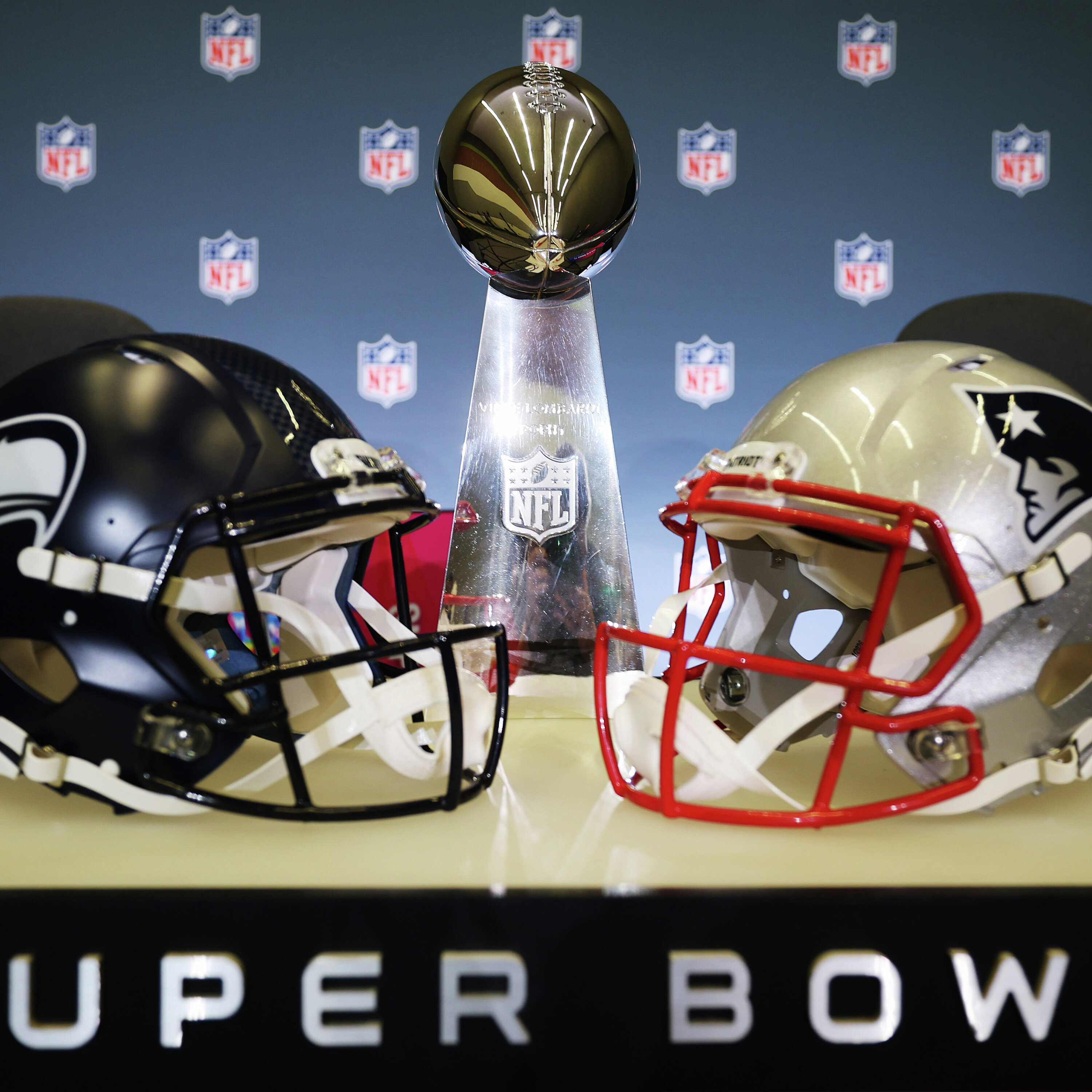
Audio Studios podcasts radio news on Sunday, 100 million or more Americans plus fans from around the world are expected to watch the Seattle Seahawks take on the New England Patriots in Super Bowl 60. For some, it's a chance to gather with friends around plates of nachos and wings, to root for a team casually or not casually, and maybe to place a bet or two. For others, it's the biggest work deadline of the year.
- [02:38]
Rufus Peabody
I'm betting right up until game time and so it's not like I can be a host ever. I'm not really eating that much during the game anyway. Or maybe stress eating occasionally.
- [02:47]
David Gura
Rufus Peabody got his start in the sports gambling world more than 15 years ago. He was a college junior when he heard about a company that consulted for bookmakers in Vegas casinos.
- [02:58]
Rufus Peabody
It was like academia for sports basically. I didn't know a job like that existed. I didn't know this whole world existed. So I cold called them and tried to talk my way into an internship.
- [03:09]
David Gura
It worked. Rufus says he bugged the company for a month until finally he landed a call with the boss.
- [03:16]
Rufus Peabody
It's the ultimate eight leg parlay.
- [03:18]
David Gura
In other words, it was a risky bet. But Rufus got the offer. And that summer, a major sports betting scandal broke. An NBA ref had been betting on games he officiated.
- [03:29]
Public.com Advertiser
Former NBA referee Tim Donaghy pleaded guilty to two felony charges at a federal court in Brooklyn earlier today.
- [03:36]
Rufus Peabody
And so I was able to break down the numbers and they sent my analysis to the FBI and to the NBA and they got the NBA as a client. So I basically was able to show my worth and then they hired me.
- [03:49]
David Gura
Today, Rufus still spends a lot of his time in Vegas and a lot of his money betting on sports in those same casinos. But recently he's been placing more and more of his bets through prediction markets.
- [04:01]
Rufus Peabody
I predicted that the Patriots would not win the super bowl earlier in the year on Kalshee at 91%. So I'm a Seahawks fan.
- [04:09]
David Gura
For professional gamblers like Rufus, who are known as Sharps, prediction markets offer a lucrative new betting opportunity, one that's taken off in the past few months.
- [04:18]
Justina Lee
A lot of these sports contracts have taken over these prediction market sites, you know, like Kalshi and Polymarket. And because of they kind of haven't really met that much like regulatory pushback. So it's kind of exploded.
- [04:32]
David Gura
Justina Lee is a reporter on Bloomberg's Cross Asset Markets team.
- [04:36]
Justina Lee
We write about everything in markets and now including sports betting, thanks to prediction markets.
- [04:41]
David Gura
Justyna has been working with Ira Budway, a Bloomberg reporter who covers the business of sports, to break down how a wave of savvy full time sports bettors like Rufus are looking beyond casinos and sportsbooks and embracing prediction markets.
- [04:55]
Ira Budway
These are people who, you know, have just a lot of them make their living as professional gamblers. That's their job. And they're not betting on this because it's necessarily fun or they have a favorite or they want to make watching the game more entertaining. They're doing this to try to make steady margins over time.
- [05:16]
David Gura
I'm David Guerrera and this is the big take from Bloomberg News today. On the show we Dig into the platforms that are fielding an increasing number of bets and the pros who may be on the other side of your amateur wager. Since online sports betting became legal in the US in 2018 after a decision by the Supreme Court, its growth has been staggering. In 2019, Americans bet $13 billion on sports. Last year it was 145 billion. The super bowl is the sports betting mother lode. Americans are expected to wager an estimated $1.8 billion on this year's game through legal sportsbooks. But the matchup also has more than 800 million coming in through a rapidly growing alternative prediction markets websites like Kalshi and Polymarket, where you can place all sorts of bets.
- [06:12]
Justina Lee
You might remember that Kaushi got really famous around the presidential election in late 2024, and that's because they only kind of were allowed to start hosting election betting around that time because of a legal victory.
- [06:26]
David Gura
Before that, betting on election outcomes had been illegal in the US in 2022, polymarket had to settle with the CFTC, the Commodity Futures Trading Commission, and restrict its election betting to users outside the US. But in 2024, Kalshi challenged that in court. The company argued that it was a market like the stock market, that the election outcome bets were a kind of derivative.
- [06:50]
Justina Lee
Kaushi was arguing in court that the reason they should be allowed is because they're all about kind of hedging economic outcomes and people using Kalshi to figure out, you know, what are the odds of the government being shut down for a long time? Or kind of what are the odds of each presidential candidate.
- [07:11]
David Gura
Kalshee won that case and the right to let users bet on elections, clearing the way for people across the US to put money on all kinds of things, but mostly sports. Today, sports bets make up 90% of Kalshi's trading volume. And placing one of those bets is simple. On Kalshi's or Polymarket's homepage, you'll see a ton of different areas you can bet on, say the 2028 Democratic presidential nominee, or Taylor Swift and Travis Kelce are going to get married. And of course, who's going to win the Super Bowl? Ira, when I last checked, Polymarket had the odds of the Seahawks winning at 69 on call sheet was 68. What exactly do those numbers mean?
- [07:51]
Ira Budway
That means that you could buy a contract for 69 or 68 cents, and if the Seahawks won, that would pay.
- [07:58]
David Gura
You back a dollar on the back end. What's happening when you place a bet on one of those platforms?
- [08:03]
Ira Budway
They are matching you up with some other traders who is taking the other side of that. So they're on a no for the Seahawks, and you're on a yes for the Seahawks. And if the Seahawks lose, then they get the dollar and you lose your money.
- [08:16]
David Gura
The whole business is matching up people on opposite sides of a bet, and the odds or price fluctuate based on market demand. If more people think the Seahawks will win, it'll cost more than 69 cents to buy a yes, and your profit margin gets smaller if they do win. Prediction markets do operate kind of like the stock market. In order to sell at a certain price, you need someone to buy at that price. Polymarket or Kalshi is just the exchange.
- [08:45]
Ira Budway
They are passing money between the winner and the loser and taking a small cut, typically like 2 cents on every one of those dollar contracts. And so theirs is a volume business. They don't care who wins and who loses those trades because it's the same to them.
- [08:58]
David Gura
This is different from a traditional sportsbook wager, a bet you might place at a casino or on a site like FanDuel or DraftKings.
- [09:06]
Ira Budway
The sportsbook because they're taking the other side of your bet. When you wager that 10 bucks to win 30. If the sportsbook loses, they're paying you that $30 out of their pockets. And so their business is to basically balance their books and to get losing bettors to wager a lot. And typically the sort of margin for, for a sports book is about 10%. If they're good at their jobs, then they will keep 10% of the handle as their margin. And so in that regard, it's a better business. It's more profitable than exchange. But it's also, it's really difficult, the sort of churn of customers and limiting out the best bettors so that they don't take all your money. And encouraging the worst betters so that they drive your profits takes a lot of work.
- [09:51]
David Gura
That's why sportsbooks will offer free bets or other promotions to keep less sophisticated betters betting. And why they'll limit activity among professional gamblers or sharps to keep from losing.
- [10:02]
Justina Lee
Too much if you're too good, you know, if you're a Sharp, you could find that your account size could be limited in that they're not really letting you put down a lot of money. Whereas prediction markets don't have these restrictions.
- [10:15]
David Gura
Some of those sharps come from the world of sports, applying what they know about the game as they learn the ins and outs of trading. But others come from Wall Street. They're taking their trading and prediction expertise and applying it to sports.
- [10:28]
Justina Lee
Prediction markets operate a lot more like traditional stock or futures markets. So it's attracting a lot of these, like giant, you know, trading firms like Jeff Yass's Susquehanna Group or, you know, even jump trading in Chicago. And these people are bringing, you know, all their quant power, their computing power to sports gambling.
- [10:49]
David Gura
Can I ask you about relative riskiness, Justina? So are prediction markets inherently more or less risky than sportsbooks, traditional kinds of betting?
- [10:57]
Justina Lee
It's kind of hard to say. I think on one hand it could be better for gamblers in the sense that it's meant to facilitate more competition for your bets. Right. Because on a prediction market, like, anyone can come in and be on the other side. So because of that more competition, it could mean that you should get better odds and lower fees. But at the same time, it's sort of a more competitive market.
- [11:23]
David Gura
Prediction markets also offer new options when it comes to gambling, ones that can allow sophisticated bettors to take advantage of their expertise. These are liquid markets, so you can buy and sell your position throughout a game as long as there's someone willing to take the other side. The contracts aren't locked in until the outcome is set. One team wins, the other loses. And you aren't limited to whatever bets a sportsbook is offering.
- [11:47]
Ira Budway
What you and I would traditionally think of as betting is you go on, you see a price offered that you know will pay, let's say plus 198 for the Patriots to win the Super bowl. If I bet $100, they're going to pay me $298. Right. And it's the house that's taking the other side of that bet. With a prediction market, you can go on and say, I will pay a certain price if the Patriots win, if you want to take it. Right. And you can just sit there and wait and see who else on the exchange is willing to pay that price. And so you are now essentially acting like a sportsbook.
- [12:20]
David Gura
So not to put too fine a point on it, there's a saying among gamblers that the house always wins. In the context of prediction markets, there is no house. It doesn't operate in that in that way.
- [12:29]
Ira Budway
Right. And in fact, you can become the house.
- [12:35]
David Gura
Coming up, what that growth in prediction markets means for everyday bettors, whether letting anyone originate bets on anything increases the risks of rigged outcomes. And who is in charge of policing that.
- [12:53]
Public.com Advertiser
Support for the show comes from public on public. You can build a multi asset portfolio of stocks, bonds, options, crypto and now Generated Assets which allow you to turn any idea into an investable index with AI it all starts with your prompt. From renewable energy companies with high free cash flow to semiconductor suppliers growing revenue over 20% year over year, you can literally type any prompt and put the AI to work. It screens thousands of stocks, builds a one of a kind index and lets you back test it against the S&P 500. Then you can invest in a few clicks. Generated Assets are completely customizable and based on your thesis, not someone else's. Go to public.com market and earn an uncapped 1% bonus when you transfer your portfolio. That's public.com market paid for by Public.
- [13:43]
David Gura
Investing Brokerage Services by Open to the Public Investing Inc. Member FINRA and SIPC Advisory Services by Public Advisors llc. SEC Registered Advisor Generated Assets is an interactive analysis tool. Output is for informational purposes only and is not an investment recommendation or advice. Complete Disclosures available at public.comDisclosures being a.
- [14:02]
Chase for Business Advertiser
Small business owner isn't just a career, it's a calling. Chase for Business knows how much heart and effort go into building something of your own. That's why they make business growth their priority. The Chase team takes the time to understand your mission, where you are now and where you want to go. Their broad range of solutions is designed with you in mind so you can bring your ideas to life. From banking to payment acceptance to credit cards, you can conveniently manage all your business finances all in one place with their digital tools. Looking for tips and advice, their online resources are always available to give you the solutions you need to help your business thrive. See how your business can get stronger and go farther with Chase for Business. Learn more@chase.com business chase for business Make More of what's yours the Chase Mobile app is available for select mobile devices. Message and data rates. May apply JPMorgan Chase Bank NA Member FDIC Copyright 2026 JPMorgan Chase Co. You.
- [15:01]
Adobe Acrobat Studio Announcer
Need to make a huge presentation in an hour. Luckily, Adobe Acrobat Studio uses AI to take all your documents and generate a presentation with a single click, building slides faster than ever before. So if you need a last minute pitch deck, do that with Acrobat. Need to level up your presentation design? Do that with acrobat. You have 30 plus documents that need to be simplified into a proposal. Do that with Acrobat. Learn more@adobe.com do that with Acrobat.
- [15:37]
David Gura
There's good reason for the competition between traditional sportsbooks and emerging platforms like Kalshi and Polymarket. Unlike sportsbooks, prediction markets can operate in all 50 states, including places like California and Texas, where sports betting is currently illegal.
- [15:53]
Ira Budway
Prediction markets kind of found a loophole in the CFTC rules. Whereas regulated sports betting is regulated on a state by state basis. And so those states where they have legal sports betting have all pretty much tried to fight this and come forward and brought lawsuits and cease and desist orders.
- [16:10]
David Gura
I imagine part of that has to do with the fact that a number of states are making good money, tax revenue off of sportsbooks.
- [16:15]
Ira Budway
Yeah, I mean, and it's really the states more than the sports books that are leading that charge because it is their tax revenue that is at risk. So, you know, in a lot of states, your winnings for sportsbooks are taxed at really high rates, 30, 40, 50%. And that's not happening in the prediction market context because these are federal trades. It's sort of like in a whole different tax context when you do that. And so there's actually a sense that this is going to push more states to jump in the pool of regulated sports betting, because if this is going to happen anyway in their state, they would like to get the taxes from it. And then you have to figure out, okay, well, how are prediction markets going to be taxed? And in the meantime, a lot of the sportsbooks are saying, well, we're just going to start offering prediction markets in the states where we can't run regulated sports books. We'll just go there and do prediction markets so that Kalshi and these other prediction event exchanges don't sort of steal our business before we can get there. We are going to make some investment there.
- [17:10]
David Gura
That's the CEO of DraftKings, Jason Robbins, on Bloomberg, back in November.
- [17:15]
Ira Budway
First, of course, in getting a product developed and making sure that that's, you know, the best in class, you can't win. And we've always said this product is the most important thing. You can't win if you don't have a great product.
- [17:24]
David Gura
The prediction markets, meanwhile, have tried to distance themselves from the gambling industry, which is known to take a heavy financial toll on participants. At Axios BFD Summit in November, polymarkets founder Shane Copeland said the way traditional sportsbooks can profile users and ban the ones that make too much money is, quote, a scam.
- [17:43]
Rufus Peabody
Now, you can't expect to run a.
- [17:46]
Public.com Advertiser
Business that is that rigged against the.
- [17:47]
Rufus Peabody
Consumer in perpetuity in America.
- [17:49]
David Gura
But as the sports betting landscape continues to change, both traditional sportsbooks and prediction markets are navigating some potential Problems with an increasingly popular kind of wager betting on whether some pretty specific events will happen within a game. It's called prop betting. Here's Rufus Peabody explaining his prop betting for this weekend's game.
- [18:09]
Rufus Peabody
So I'll price out things from how many rushing yards Kenneth Walker will have to, you know, whether there'll be a two point conversion attempt. The super bowl is kind of a unique betting event in the sense that there is this wide array of prop offerings that aren't really offered for any other NFL game. And so it's kind of a big opportunity.
- [18:30]
David Gura
The value comes because with more people betting yes, the price of no gets cheaper. So a sharp like Rufus can profit from wagering against the casual bettors.
- [18:39]
Rufus Peabody
And there's a lot of recreational action. So oftentimes prices can be sort of skewed towards what the public wants to bet on. People like betting that players will score touchdowns. They like betting on things to happen. And so there's often value betting against things to happen, betting that there won't be a safety, that there won't be a two point conversion.
- [18:59]
David Gura
The problem for both prediction markets and sportsbooks is that prop betting creates opportunities for athletes, coaches and others to work with betters to influence outcomes. This fall, some NBA players and coaches were indicted for manipulating game outcomes. Two MLB pitchers facing similar accusations are scheduled to go on trial this spring. Here's Bloomberg's Ira Budway.
- [19:21]
Ira Budway
That is actually one of the most sort of pressing issues around all of this is when these prediction markets first started offering contracts tied to sports. A couple of sports leagues, Major League Baseball, the NBA. Since then the NFL came forward and said, well wait a second, we've been working with state regulators to protect our interests when it comes to sports betting. So we do things like track and monitor for unusual and suspicious betting activity and have lists of prohibited bettors. And we've built these agreements in this infrastructure to make sure that these markets are not corrupted. And are you doing that?
- [19:54]
David Gura
One of the quirks here is that prediction markets are not regulated by gaming authorities. Remember, Kalshee's argument is that its contracts are like the financial futures regulated by the Commodity Futures Trading Commission. The CFTC has said it will clarify its position on these contracts soon.
- [20:09]
Ira Budway
This isn't what the CFTC was built to do. This is usually like corn futures, not sports betting. The answer from the prediction markets is kind of actually no. There's a lot of know your customer and anti money laundering rules that we have to follow. And we have started working with some of the very same Companies that help sports betting operators monitor markets for suspicious trading, doing that in this context, and they will sometimes argue, look, it's even more transparent. You can see every trade and you can watch the market move. And if something suspicious happens, every market participant can watch it happen. But I think that is actually a question that has not really been ironed out. How effectively are they monitoring for suspicious bets? How much do they care about insider trading? And how good will they be at catching bad actors? We've seen leagues start to partner with them. The NHL did deals with polymarket and Kalshi MLS did a deal with polymarket. And so they're saying when they sign these deals, this is so that we can protect ourselves. But if you ask different people, you'll get very different answers about whether prediction markets can really and are really doing this job already of monitoring for integrity.
- [21:23]
David Gura
Last month, polymarket users traded over $7.6 billion in volume. Kalshi users traded over 9.5 billion. That's up from 1.3 billion on polymarket and under a million on Kalshi just six months earlier. Like any good professional, Rufus Peabody has been following the trends in the sports betting industry. Today he says he makes as much as a quarter of his bets on prediction markets, but even he isn't sure they'll last.
- [21:49]
Rufus Peabody
I think myself and other professionals are all kind of trying to gauge that, to figure out how much we should invest in building things for prediction markets. I'm banking on them remaining sort of a viable option for the next, I'd say three years or so at least, based on, like, the political climate.
- [22:10]
David Gura
Well, if you ask Rufus for advice as someone placing amateur bets on this weekend's game or any other for that.
- [22:16]
Rufus Peabody
Matter, well, hey, first, don't. But. But if you do it, you know, it's realize it's for entertainment value. And if it's like going to the movies and you accept that there's a cost to it and you're paying that cost to make watching the game more entertaining, then by all means.
- [22:32]
David Gura
Seahawks or.
- [22:32]
Ira Budway
Patriots iron, I'm going to take the underdog, you know, because I'm not a pro.
- [22:37]
David Gura
Justina, how about you?
- [22:38]
Justina Lee
Oh, man, I feel I have to take the other side.
- [22:42]
Ira Budway
We can find an exchange to line it up.
- [22:44]
Justina Lee
I know, because that is how prediction markets.
- [22:47]
David Gura
We've made it happen. Justina. Ira, thank you very much. This is the big take from Bloomberg News. I'm David Gura. The show is hosted by me, Juan Ha and Sarah Holder. The show is made by Aaron Edwards, David Fox. Eleanor Harrison Dengate, Paddy Hirsch, Rachel Lewis, Christie Naomi Ng, Julia Press, Tracy Samuelson, Naomi Shaven, Alex Skura, Julia Weaver, Yang Yang and Taka Yasuzawa. To get more from the Big Take and unlimited access to all of bloomberg.com, subscribe today@bloomberg.com podcast podcast offer. Thanks for listening. We'll be back on Monday.
- [23:34]
CVS Caremark Advertiser
So have you heard the story about the prescription plan? With savings automatically built in, it's where a family of any size can feel confident the cost of their medication won't hold them back. Go to CMK Co Stories to learn how CBS Caremark helps members save just by being members. That's CMK Co Stories.
- [24:03]
David Gura
With volley from iShares. You get access to both monthly income and growth potential in one simple ETF. It's the best of both worlds. Discover Volleyball iShares Large Cap Premium Income Active ETF iShares the market is yours. Visit www.ishares.com to view a prospectus for investment objectives, risks, fees, expenses, and other information that you should read and consider carefully before investing. Risks include principal loss and the use of derivatives, which could increase risks and volatility. Monthly income is not guaranteed. Prepared by BlackRock Investments, LLC these days.
- [24:30]
CVS Caremark Advertiser
It seems like AI agents are just about everywhere. You turn every field and every function. But without identity, you can't trust they'll serve your business instead of jeopardizing it. Fortunately, Okta helps you get identity right by securing your AI agents ident, giving you a single layer of control, a single standard of trust. So whether an AI agent supports a single user or your entire enterprise, with Okta you'll turn risk into opportunity. Secure every agent. Secure any agent. Okta secures AI.