Loading summary
Transcript59 lines
- [00:01]
Bank of America Announcer
Introducing B of A Rewards a new way to reward your every ambition. It all starts with a Bank of America checking account and grows from there. You get cash back deals on brands you know and love, plus a credit card rewards bonus, helping you earn more rewards on things you buy every day. Join B of A Rewards today for rewards tailored to your lifestyle. What would you like the power to do? Bank of America Open or enroll your account@bankofamerica.com bfarewards bank of America Corporation all rights reserved.
- [00:31]
Amazon Pharmacy Announcer
Amazon Pharmacy Presents Painful Thoughts it's been
- [00:36]
Amazon Pharmacy Patient
a long, bumpy road dealing with yet another bladder infection and driving to the pharmacy to pick up meds. I went over a pothole and a
- [00:44]
Sarah Holder
little pee came out so now I get to stand in line with pee pee pants.
- [00:50]
Amazon Pharmacy Announcer
Next time, skip the pain and get fast free delivery with Amazon Pharmacy. Healthcare just got less painful.
- [01:01]
Commercial Announcer (Wasabi/General Ads)
Wasabi is purpose built to free your business from skyrocketing storage costs and fees from the big guys. Wasabi is the go to provider for professional and collegiate sports teams around the world. Check out Wasabi's AI enabled intelligent media storage, Wasabi Air and the industry's only cloud storage service with triple protection against cyber criminals. Wasabi driving innovation in data storage for up to 80% less than market competition. Try for free@wasabi.com Wasabi Hot Cloud Storage proud partner of iHeart Podcast Network
- [01:34]
Sarah Holder
Bloomberg
- [01:35]
Chelsea Handler
Audio Studios Podcasts Radio News
- [01:40]
Sarah Holder
Brent crude goes higher, up by 6.6% as we don't get any clarification on the straight of Hormuz. Big drop in oil Apparently a couple of days of a pause between the US And Iran in terms of strikes. Oil prices have swung wildly since the start of the US And Israel's war in Iran, which has caused major disruptions to key shipping routes in the Middle east and put pressure on global energy supplies after surging in July, prices of Brent crude and West Texas Intermediate both fell over the weekend in response to President Donald Trump's announcement that diplomatic talks with Iran would start up again this week. Oil prices stumble as much as 7% on optimism the United States and Iran will reach a deal to reopen the Strait of Hormuz by this afternoon. Prices were bouncing back yet again after Tehran said talks weren't on and Trump attacked Iranian leadership on Truth Social. For oil markets, it's been a volatile time, but for the world's biggest oil companies, this energy crisis has created an opportunity. It's big Oil's turn now for earnings.
- [02:50]
Mitchell Fuhrman
Most reported massive increases in second quarter profit as the war drags on Exxon and Chevron.
- [02:56]
Sarah Holder
The two biggest US Oil companies released second quarter earnings on Friday, reporting their highest profits in years.
- [03:03]
Mitchell Fuhrman
The last time they saw profits this big was right after Russia invaded Ukraine.
- [03:08]
Sarah Holder
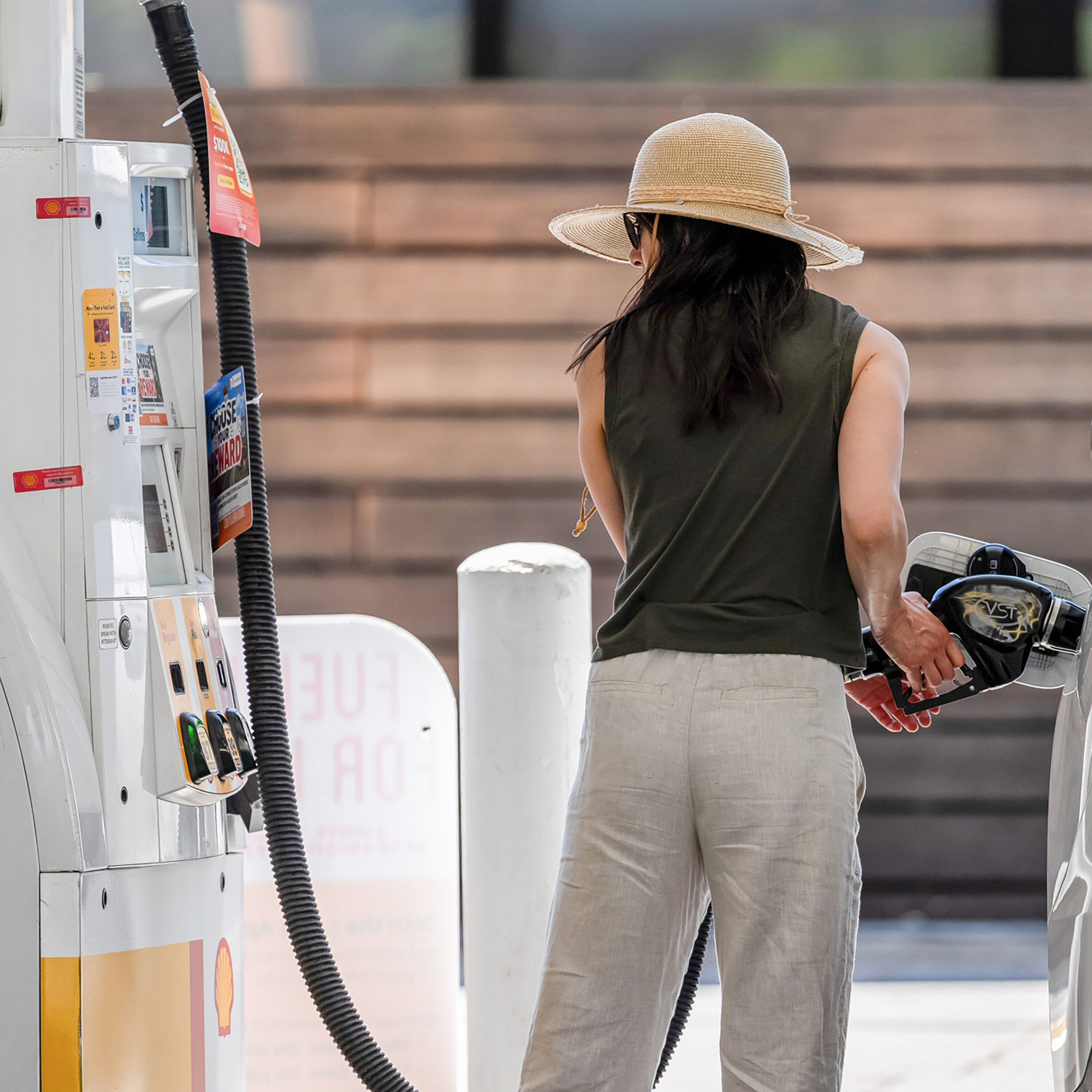
That's Mitchell Fuhrman, who covers oil markets for Bloomberg. European oil majors like Total Energies and Shell had standout quarters, too. And all these gains are coming as US Consumers face month after month of high gas prices.
- [03:24]
Preparation H Announcer
They're quick to increase the prices and
- [03:28]
Mitchell Fuhrman
slow to lower the prices. They're gouging the American people. I hear I am getting shafted at the pump. That's how I feel.
- [03:36]
Sarah Holder
That backlash is also coming from the president, who asked the Justice Department in June to look into the gas prices these companies have been charging and said on Monday afternoon he was not happy about those big profits.
- [03:48]
Commercial Announcer (Wasabi/General Ads)
They got to give some of that back to the public and they better cut the retail price.
- [03:53]
Mitchell Fuhrman
Ultimately, they are responsible for the world's oil and gas. And the world consumes 100 million barrels of it a day. And so, you know, because of how oil and gas feeds through to the economy, that consumers care, politicians care. And so if those prices are out of step, then there's going to be strong reaction.
- [04:21]
Sarah Holder
I'm Sarah Holder and this is the big take from Bloomberg News today on the show how oil companies are profiting off the war in Iran and why gas prices can stay high even when oil prices fall. So, Mitchell, I want to start by getting an update on where oil markets stand right now, Monday morning, New York time. After the news yesterday that Trump was calling off a strike in Iran and planning on renewing talks this week, crude
- [04:51]
Mitchell Fuhrman
prices since the start of the war have been on a roller coaster. They went above $120 a barrel, which is very high. But the oil market's worst fears for decades has been that the Strait of Hormuz is shut and the Strait of Hormuz has effectively been shut. And oil never reached anywhere near the $200 barrel number that many feared. And part of that is due to Trump kind of signaling to the market that peace was near. And so as we saw, we started the weekend with the US Saying that, you know, there might be some more fighting coming, right? And then we ended the weekend with peace maybe advancing. So oil then comes off when there's some sort of possible indication that peace is near. And so oil has been in the $80 a barrel range today. That could change based on the direction of the talks tomorrow.
- [05:49]
Sarah Holder
This tumult in energy markets that you're describing caused by the Iran War has been profitable for oil companies. And on Friday we got a sense of just how profitable. When the two biggest US oil companies, Exxon and Chevron, reported second quarter earnings, what did those earnings reveal?
- [06:08]
Mitchell Fuhrman
Yeah, those earnings revealed one big misconception, that this is simply an oil story. It's really a fuel market story. Crude prices have certainly risen during the Iran conflict, but they weren't the biggest driver of earnings. The biggest driver was what happened after crude left the production sites. For these companies. Refining margins surged because gasoline, diesel and jet fuel markets became much tighter than crude markets. At the same time, volatility created exceptional opportunities for commodity traders. These large integrated oil and gas companies, particularly the Europeans, have massive in house commodity trading arms. So the biggest winners this quarter weren't necessarily the companies producing the most oil, but the companies best positioned to profit from what happened after the oil was produced.
- [07:09]
Sarah Holder
The Strait of Hormuz has been closed and opened multiple times. Tensions between the US and Iran have flared and cooled and flared again. Has this uncertainty been working in these oil companies favor? How does that work?
- [07:21]
Mitchell Fuhrman
It does work for some parts of their company. I mentioned the Europeans being big traders. I mean, people tend to think of ExxonMobil, Chevron, Shell, BP as companies that just pull oil out of the ground. They're also refiners, commodity traders, fuel marketers, chemical manufacturers. So that means they generate earnings at multiple points along the value chain. Shell lost a significant amount of gas production because of war related outages in Qatar, which included a missile striking one of its facilities. Yet Shell recorded its second best ever quarterly profits because refining and trading more than made up for the production losses.
- [08:07]
Sarah Holder
And I'm wondering where supply and demand fit into this conversation. Is it just simply a matter of these companies are now able to set higher prices on the oil they are producing and therefore they're making higher margins.
- [08:20]
Mitchell Fuhrman
Ultimately, it's a global market. And the fuel market piece of all of this is the refining element, the fuel processing. A lot of this fuel processing has been knocked out due to both the Iran conflict, but also Ukraine's attacks on Russia's refineries. Russia's a huge exporter of diesel, for example, and so refined products markets are tighter. Refiners, which these large integrated companies are, they're running their refineries all out. The other side of this refining story is that these companies, Shell, Exxon, bp, they're running their refineries hard. They're running them all out to make the products that consumers are using. That's unsustainable. These refineries are going to have to go down for maintenance and turnarounds at some point.
- [09:12]
Sarah Holder
So these companies are at a structural advantage here because they have the refining capacity. Are other oil companies that are not refining seeing these kinds of gains?
- [09:22]
Mitchell Fuhrman
Some of the, you know, in the US Shale patch, for example, in West Texas and southeast New Mexico, where a lot of these independent operators, that's all they do is just produce oil and gas. So they are seeing the benefits of these elevated prices. However, everything is costing more. You know, they also have to buy gas and diesel to power some of their operations, which in turn is more expensive. So they're seeing some benefits, but they're also seeing higher costs.
- [09:52]
Sarah Holder
So Mitchell, on one side of the equation are these oil companies that are making profits they haven't seen in years. And then on the other side of the equation are the people who actually buy these products, including people buying gasoline at U.S. fuel pumps. They've been paying a lot more for gas recently. Given that, what has the public reaction been to the news that these oil companies made $14 billion, $12 billion and more in the second quarter?
- [10:21]
Mitchell Fuhrman
Ultimately, drivers don't want high prices to fill up their cars. And so of course in America, the gasoline price is the most visible price across the country. Everybody drives past these giant illuminated signs every day. So naturally the public is not pleased with higher gas prices. But as we've laid out a bit, there's a whole industrial process between crude oil and the pump. Somebody has to refine it, transport it, blend it, distribute it. And during the Iran conflict, those parts of the system have become much tighter than crude itself.
- [10:59]
Sarah Holder
And what, if anything, have Exxon and Chevron said to criticisms that they're making these, you know, years long record setting levels of profit in an energy crisis in a time of war?
- [11:15]
Mitchell Fuhrman
Yeah, Exxon talked about how they're standing with these countries and that they have the capacity and the operations to be able to make the products and the fuels that the world uses at a time when those products are tight. And so that's kind of their argument that they are producing, they're refining, they're transporting fuels around the world at a time when there's less of that ability to do so. Chevron's also talked about how the they call it middle distillates, which is like jet fuel, diesel. Those products are tight and that's when they see a need to step up and get those products to the world. And a big thing that these companies lean into is that they are global and they have portfolio of assets all over the place. So while a company like Exxon, for example, has a sizable presence in the Persian Gulf and they've had hundreds of thousands of barrels of oil equivalent knocked offline as a result of this war, they can lean into the nature of their global portfolio and they have assets in the US And South America and Africa. They're able to kind of optimize in a way to try to make up for those losses.
- [12:45]
Sarah Holder
After the break, oil reporter Mitchell Fuhrman on President Trump's problem with big Oil and why the frustration goes both ways.
- [12:59]
Amazon Pharmacy Announcer
Before we had AT and T Business Wireless coverage, our delivery GPS wasn't the most reliable. Once our driver had to do a 14 point turn to get back on route. A 14 point turn. An influencer even livestream the whole thing. Not good for business. Now with AT&T business Wireless, routes are updating on the fly and deliveries are on time. And the influencer did get us 53 new followers though.
- [13:24]
The Hartford Announcer
AT&T business wireless connecting changes everything
- [13:29]
Amazon Pharmacy Announcer
Amazon Health AI presents painful thoughts I I
- [13:35]
Bank of America Announcer
can't stop scratching my downtown. Yeah, but I'm not itching to go downtown and tell a receptionist I'm here to talk about my downtown. Some things you'd rather type than say out loud.
- [13:49]
Amazon Pharmacy Announcer
There's no question too embarrassing for Amazon Health AI. Chat your symptoms and get virtual care 24. 7 Healthcare just got less painful.
- [13:59]
Chelsea Handler
This is Chelsea Handler from Dear Chelsea. Every week the news gets worse, the world gets crazier, and Yamaneika is here to tell whoever's responsible, you're the problem.
- [14:09]
Yamanika Saunders
If you come over here to play games, I' ma check you. Okay? If you do some in the news that don't sound good, I' ma play you.
- [14:18]
Chelsea Handler
Join Yamanika Saunders as she breaks down the week's most problematic stories on her new podcast. You're the Problem with Yamaneika do you
- [14:26]
Yamanika Saunders
know I just found out who Sydney Sweeney was.
- [14:29]
Chelsea Handler
New episodes weekly every Wednesday as part of my new network, the Dear Chelsea Network.
- [14:34]
Yamanika Saunders
If he got a bunch of women, then I should have a bunch of men do better or do less so I don't have to do so much.
- [14:41]
Chelsea Handler
So join Yamaneke each episode as she answers one One question. Who's the problem?
- [14:46]
Yamanika Saunders
I'm Yamanika and I'm out. Listen to youo're the Problem with yamaneika on the iHeartRadio app, Apple Podcasts, or wherever you get your podcasts.
- [15:07]
Commercial Announcer (Wasabi/General Ads)
And the oil companies are possibly gouging. I hope they're not, otherwise they're gonna be in Big trouble.
- [15:14]
Sarah Holder
Mitchell, I want to talk about the political element here a little bit more because in the US Midterm elections are just a few months away. And the latest Quinnipiac poll, which came out last week, showed that 66% of U.S. voters disapprove of how Trump's handling the situation in Iran. And 73% of voters said he bears some or a lot of the blame for the recent rise in gas prices. But as you alluded to, Trump himself, as many presidents have done in the past, has instead singled out these big oil companies.
- [15:46]
Commercial Announcer (Wasabi/General Ads)
So it's Exxon Mobil, it's Chevron, it's Shell, it's bp, it's a lot of them.
- [15:56]
Sarah Holder
About a week after Iran and the US Signed a memorandum of understanding that started the flow of oil through the Strait of Hormuz again, Trump said gas prices should be back down to $2.25. And he said it was the oil company's fault that gas prices aren't lower. What exactly was his argument there?
- [16:13]
Mitchell Fuhrman
Ultimately, these companies have their names on the gas stations, right? And people see if they're going to fill up their vehicle at a Chevron or ExxonMobil station. Those two things without understanding the further system can easily be correlated. So it can be politically advantageous for Trump to single them out. Oil companies are profiting from this situation. That is clear. Whether there is a legal or antitrust case, here is a higher bar that the U.S. department of justice is looking into and others, and we'll see the findings.
- [16:52]
Sarah Holder
I want to talk more about how the oil companies respond to this criticism because a spokesperson from the American Petroleum Institute recently told Bloomberg, quote, gasoline prices don't move in lockstep with crude oil, especially during a major global disruption that is still affecting supply, supply, refining and inventories. Can you dig into this idea a little bit more? Why is it that crude oil prices can come down as they did over the weekend, and gas prices don't come down for much longer?
- [17:24]
Mitchell Fuhrman
Yeah, there's enough oil for the world right now, but the oil needs to be processed in order to make those products. It needs to be blended and transported in order to make that happen. And because the world's refining capacity has been dwindled due to both the Iran conflict and the Russian war, that these products are more expensive crude purchased now. You know, the price will be felt later, just like the prices we're seeing now are kind of a reflection of crude purchase before.
- [17:59]
Sarah Holder
Now, as you mentioned, Mitchell, one of the reactions that Trump has had is he's ordered this Department of Justice investigation into these oil companies. What exactly has he called for, and what could the outcome of an investigation like this be?
- [18:15]
Mitchell Fuhrman
Yeah, he wants the Justice Department to look into market manipulation and whether these companies are artificially impacting prices. We've seen these sorts of investigations in the past, and ultimately they don't result in major penalties or major findings that lead to any fault in a major way. These companies have been big donors to Trump. They, to some respect, drove his election victory in 2024. But we've also seen Trump cheering lower oil prices. And oil companies don't love lower prices. So some people in the US Shale patch, for example, were a bit confused at that. Oil companies at the same time don't love super high prices either. There's a sweet spot. It's usually probably in the upper $70 per barrel range. Ultimately, they like stability. And the thing about the Trump administration is that there's very little stability in the oil market. We've been hearing oil companies talk for months about how their traders have been capitalizing on this market volatility. But oil traders typically think in fundamentals, and they're analyzing every piece of the supply and demand picture. What they can't model is posts from Trump on social media that indicate peace is near or not, or a bombing campaign in Iran is starting or being called off. And all of those things impact the price of oil.
- [20:07]
Sarah Holder
This is the Big Take from Bloomberg News. I'm Sarah Holder. To get more from the Big Take and unlimited access to all of bloomberg.com, subscribe today@bloomberg.com podcast. If you like this episode, make sure to subscribe and review the Big Take. Wherever you listen to podcasts, it helps people find the show. Thanks for listening. We'll be back tomorrow.
- [20:32]
The Hartford Announcer
When you're running a business, the best days are the ones where priorities stay on track. For midsize and large companies, risk can affect multiple parts of the organization at once, from property and liability to cyber and regulatory challenges. At that level, managing risk becomes an ongoing discipline. At the Hartford, the focus is on helping businesses manage risk before it turns into something more disruptive. And when losses do happen, that work is paired with insurance coverage shaped by years of underwriting, risk engineering and claims experience. Learn more@thehartford.com Riskmitigation policies provided by Hartford Fire Insurance Company and its property and casualty affiliates. Hartford, Connecticut.
- [21:12]
Amazon Pharmacy Patient
The Hulu original series Furious is now streaming on Hulu and Hulu on Disney. Starring Emmy Rossum as Alice Black, Furious follows a rookie FBI agent on the hunt for Catherine, played by Lola Petticrew, a mysterious and calculating female serial killer. While Alice upholds justice, Catherine kills for it, terrorizing the rich and powerful men of New York in her pursuit of vengeance. With secrets that change everything, Alice discovers there's a thin line between hunter and prey. Watch the Hulu original series Furious, now streaming on Hulu and Hulu on Disney for bundle subscribers. Terms apply.
- [21:51]
Preparation H Announcer
Sometimes the butt goes through a lot. When the butt speaks, you listen. Preparation H is the butt care expert known for helping people care for their hemorrhoids, offering relief in different forms that adapt to needs and moments. Medicated wipes formulated with witch hazel, aloe and vitamin E to help keep things calm, cool and collected. Rapid Relief spray with maximum strength Lidocaine provides fast relief from itching, burning and swelling. There's also a multi symptom relief cream when broader support is needed. Preparation H treats the issue rather than just masking it. No shame here, only solutions. So if a butt has been begging for a little kindness, wipe and treat for better relief with the number one doctor Recommended brand, Preparation H.