Loading summary
Transcript52 lines
- [00:01]
Lowe's Advertiser
At Lowe's get up to 35% off select major appliances plus members get free delivery, install and more. When you spend $2,500 on select major appliances, Lowe's we help you Save valid through 225 while supplies last. Selection varies by location. Excludes Massachusetts, Maryland, Wisconsin, New Jersey, Florida loyalty program subject to terms and conditions. Visit lowe's.com terms for details. Subject to change.
- [00:25]
Premier Protein Advertiser
Visit your nearby Lowe's on Colorado street in Kennewick. Premier Protein it's for getting after life, not just fitness. Because life isn't lived only in the gym. It's lived in the moments that matter most. That's where Premier Protein shakes come in. With 30 grams of protein, just 160 calories and no sugar added, they're made to help people fuel their joyful lives. We all know the feeling when life gets really busy, taking care of yourself can feel impossible. But with Premier Protein, you can say yes to more. Yes to crushing that big presentation at work. Yes to building an epic fort with the kids. Yes to hitting the hiking trail with friends and still having energy left to laugh at the top. And with a wide variety of flavors, from cafe latte to cake batter, from chocolate to cookies and cream, it never feels boring. Premier Protein makes it easy to keep going strong no matter what your day looks like. Find your favorite flavor@premierprotein.com or pick them up at Amazon, Walmart and other major retailers. Premier Protein Fuel your life and say yes to more.
- [01:32]
Amber Tong
Bloomberg Audio Studios Podcasts.
- [01:35]
David Gura
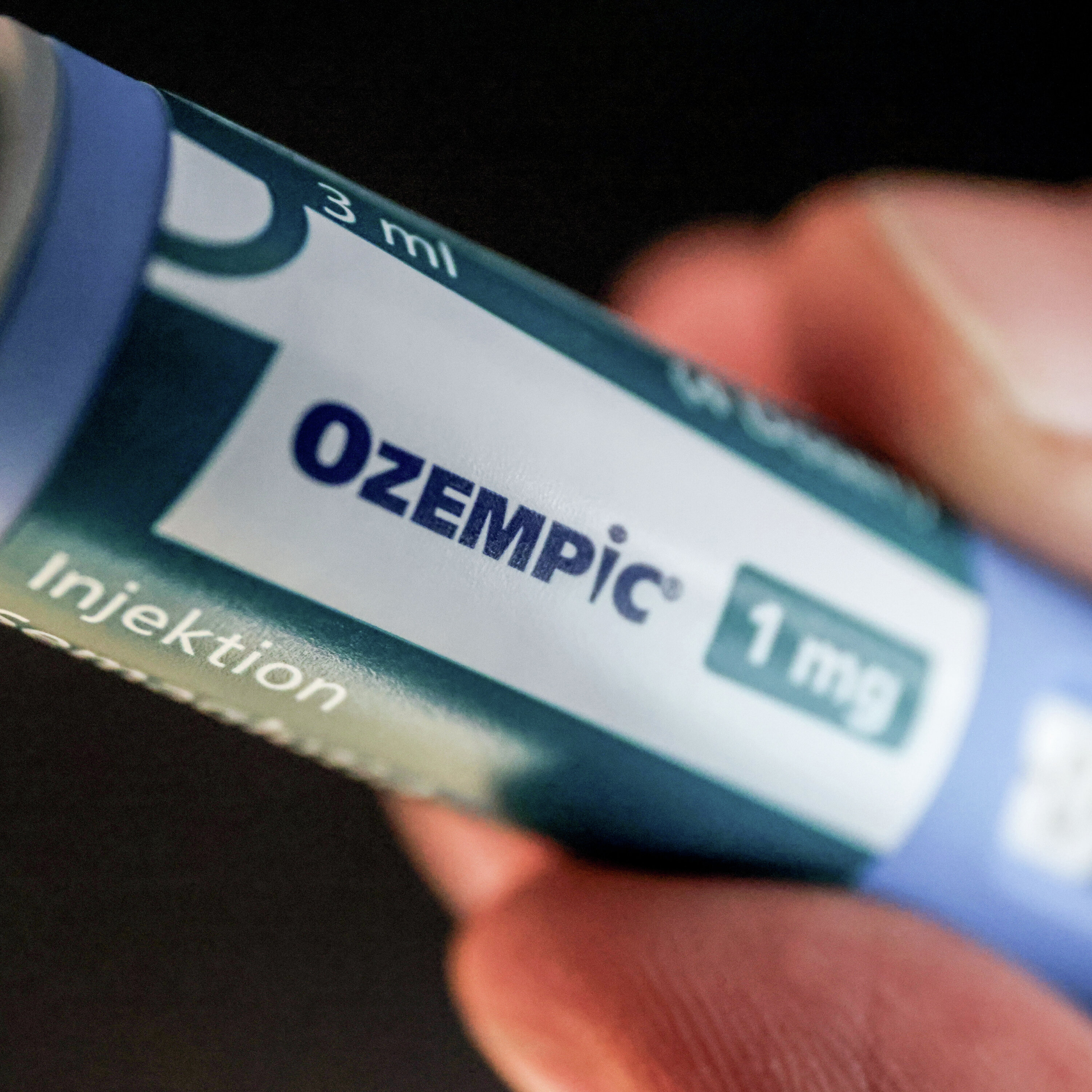
Radio news It's been a little more than eight years since the FDA approved the medical use of semaglutide. That's the key ingredient in Ozempic. Since then, the market for diabetes and weight loss drugs has exploded 300%, which is the increase in US sales of Ozempic or similar medicines between 2020 and 2022. The popularity of those drugs on social media and in clinics is soaring and many for years, the patent for semaglutide in many countries has been held by one company, Novo Nordisk.
- [02:12]
Mike Dewstar
Right now we are focusing on diabetes, weight loss and overweight, and the main reason for it is that the combinations of these three areas basically has 2 billion people in the world suffering from it.
- [02:26]
David Gura
That's Novo CEO Mike Dewstar. On Tuesday, he spoke to Bloomberg TV about the release of their 2026 sales guidance. Do Star also spoke to Novo's earnings projections for 2026.
- [02:37]
Mike Dewstar
While today you see a negative growth on the financial numbers, I see a lot of positive growth on the other.
- [02:43]
David Gura
Sides of the business Novo stock slumped as much as 20% on Wednesday after the company's Tuesday forecasts showed that sales would fall by as much as 13% this year. And the company's market value has fallen to about $215 billion, 20 from more than 600 billion in 2024. Not a good start to the trading day on Wall street this Thursday. We've got shares of Novo down another 4%, Eli Lilly down 5.3%. Kim's and hers reportedly launched a copy of the Wegovy weight loss pill starting at $49. One of the key factors in the company's projections, competition from generic versions of its blockbuster drug.
- [03:25]
Naomi Kresge
We're now reaching a moment where generic versions of this drug will start being available in large markets around the world, outside the US and outside Europe.
- [03:36]
David Gura
That's Bloomberg health reporter Naomi Kresge. Previously, most of the world had only limited access to Novo's drugs. But Novo's patents for semaglutide are starting to expire in some big markets.
- [03:48]
Amber Tong
We saw the first patent fall in Canada in January. A bunch more patents are going to lapse or expire in March in China, in India and a number of other countries.
- [04:02]
David Gura
Amber Tong covers the Asian pharmaceutical industry for Bloomberg. She and Naomi have been tracking patent expirations for semaglutide and the ripple effects those expirations will have. This effectively clears the way for drug makers to start creating generic alternatives to Ozempic and Wegovy, another Novo Nordisk drug that uses semaglutide. The FDA approved that one for weight loss in 2021. Amber says these changes won't happen overnight, but once generic versions of those drugs hit the market, the ramifications could be huge. And Novo's sales forecast for 2026 could be just the beginning.
- [04:37]
Amber Tong
So we imagine it's going to be slow starting to start, but then when you look back, it will be a seismic change.
- [04:51]
David Gura
I'm David Guerrera and this is the big take from Bloomberg News today on the show. As Novo Nordisk's patents on semaglut run out, other companies are looking to cash in. We take a look at what new generic weight loss medications could mean for the companies that pioneered them and for the consumers who could benefit from them. Today, the majority of the world's GLP1 medications come from two pharmaceutical companies. The first is Danish drugmaker Novo Nordisk, which uses the active ingredient semaglutide to make Ozempic and Wegovy. The other big player in weight loss drugs is the American company Eli Lilly. Which makes the drugs Mounjaro and Zepbound using a different ingredient called Tirzepatide. That ingredient still has another decade of patent protection. But even with Novo facing more looming competition from generics and a drop in its 2026 sales forecast, its CEO told Bloomberg TV he's optimistic about the company's prospects.
- [05:54]
Mike Dewstar
Everyone notices that GLP1 market as a segment is growing, and we have been able to actually show that we can take part of that growth.
- [06:04]
David Gura
Bloomberg's Amber Tong says generics could complicate the picture of that growth in 2026. Amber how quickly is the market poised to change? Is this something that's going to happen overnight? We see these patents expire, we go over this patent cliff and then boom, a host of new drugs pop up, or how long is it going to take?
- [06:23]
Amber Tong
It's definitely not going to be overnight. We actually have to wait until that crucial moment after the patents fall, and then the regulators may come in and start issuing these approvals.
- [06:34]
David Gura
Regulators in each market will have to approve the generic semaglutide before it's available to consumers, a process Amber says that can take months or even years. First up is Canada, where the market opened a semaglutide from companies other than novo Nordisk on January 4th.
- [06:50]
Amber Tong
Canada is currently the second largest market for semaglutide in the world, and it's really a good example or a case study of what's going to happen in a wealthy developed market after the patents fall.
- [07:05]
David Gura
Novo's US patent on semaglutide won't expire until 2032, but it'll be a useful litmus test. Generics hitting the market in Canada, a.
- [07:14]
Amber Tong
Pre game of sorts for what's going to happen in markets like the U.S.
- [07:20]
David Gura
Amber says the rollout in Canada will give her a sense of which brands are likely to get more traction in the years to come and how the market for weight loss drugs is going to change. And while it'll be more than five years until generics go on the market in the U.S. some generic semaglutide sold in Canada could make its way south before then.
- [07:40]
Amber Tong
We learned from reporting this story that Canada could basically cause this market leakage problem for the U.S. people in the U.S. may actually cross the border to get their drugs from Canada, or drugs from Canada could be imported into the US through states like Florida.
- [07:56]
David Gura
But Canada isn't going to be a perfect parallel for what the rollout of generic weight loss drugs in the US Is going to be like. For one thing, Prices of generic drugs in Canada are more highly regulated than they are in the U.S. some analysts told Naomi and Amber that China, where pricing is more dynamic, may be a better comparison. And Novo's patent on semaglutides there is set to expire in March.
- [08:21]
Amber Tong
One of the big similarities of the US and China is that they are both very large countries with a pretty sizable population living with obesity. But the current penetration of obesity drugs in China is very small compared to the US some estimate it to be around 1%.
- [08:43]
David Gura
GLP1 medications are much more popular in the US where recent polling has found roughly 12%. One in eight adults have taken them. But Amber says the market for obesity drugs in China is poised to take off.
- [08:58]
Amber Tong
So the obesity drugs like Wegovy and Mounjaro, relatively they have only been introduced to the market for a very short amount of time. But people in China have read from social media, they've read from the news, they've heard Elon Musk talk about the life changing effects of GLP1 drugs. So China has actually, I guess in a sense been hearing about the drugs for longer than they have been able to use the drug. I think one very distinguishing factor about the China market is that Chinese people are really used to shopping online. Like e commerce platforms are everywhere. And people are just so used to shopping, buying things off e commerce platform for their everyday needs. And this actually created a really fertile soil for the obesity drugs to kind of take hold. We see companies like Novo Nordisk and Eli Lilly partnering with e commerce giants like JD.com and Alibaba Group. They're building these education corners on these e commerce apps to educate the public about obesity drugs and providing a very easy way, accessible way for consumers to buy these drugs. So I think in that sense, China is much more primed for the consumerization of obesity drugs.
- [10:28]
David Gura
In India, the newest and most powerful GLP1 drugs were only approved in 2025. In March of that year, Eli Lilly started selling Mounjaro in India and Novo Nordisk followed three months later with Wegovy. And Naomi says that set off a wave of demand.
- [10:45]
Naomi Kresge
As soon as obesity drugs were available in India, people did start queuing up at the doctor's offices where they could get prescriptions to get these medicines. And there is a sense that this avalanche of patients is just going to become bigger as the generics go on the market.
- [11:02]
David Gura
The patent for Semaglutide in India is also going to expire in March. And Naomi says the country's generic drug makers are preparing to jump in for a chance to compete for a slice of the country's weight loss drug market. Worldwide, the financial services group Nomura projects the market for generic semaglutide will reach nearly $8 billion by 2030. About 15% of that market will be in India. With all that competition, analysts expect the prices of weight loss shots there will drop by as much as 50%.
- [11:33]
Naomi Kresge
The price that Semagluchad is sold at in India was attainable for, you know, well off people there. But if we have a price war where the cost goes as low as $15 in India, that just opens up a much larger market and enables just a much broader cross section of the society to try out these medicines.
- [11:54]
David Gura
Naomi picking up on that, it makes me wonder sort of how these pharmaceutical companies that have been making these drugs, so Novo and Eli Lilly are thinking about this moment, how worried they are about the prospect of generics now coming onto the scene. What are we hearing or seeing from those companies as we approach this moment?
- [12:12]
Naomi Kresge
So Novo has tried to put an estimate on the impact of generics for this year and they've told investors that it'll have an impact on sales. And I think one really interesting thing from a Novo perspective to watch is to see how they have dropped the price of the name brand Wegovian Ozempic in China and in India as well. And they've also introduced these second brands, so like their Semaglutide, but sold under a different brand name like their own low cost version. So one surmises that that must be an effort to also capture some of this market and hang on to some it.
- [12:54]
David Gura
While the arrival of generic semaglutide is likely to drive down the price of weight loss drugs everywhere, the patent falls. This is not the first market challenge drug makers like Novo Nordisk and Eli Lilly have faced. What's different with generic GLP1s? That's next. Charmin, we heard you shouldn't talk about going to the bathroom in public, so we decided to sing about it.
- [13:17]
Lowe's Advertiser
Charmin ultra strong you can use less better than the rest. Shaman ultra strong Booty pass the clean text salmon weave texture it's the best. Study up, teach a lesson on fresh your booty Pass the clean test. Charmin ultra strong.
- [13:36]
Premier Protein Advertiser
Charmin Ultra strong with diamond weave texture.
- [13:38]
David Gura
Cleans better than the leading one ply brand so you can use less. Enjoy the go with Charmin. In early 2022, Novo Nordisk was struggling to manufacture enough Ozempic Wegovy to keep up with demand. That March The FDA added those two drugs to its shortage list, which opened the gates for compounding pharmacies to make their own copycat versions of the semaglutide medications. I asked Bloomberg's Amber Tong what makes the arrival of generic versions of Ozempic and Wegovy different.
- [14:12]
Amber Tong
Compounding is quite unique to the us, right? Pharmacies are allowed to take the active ingredient of Ozempic or Wegovy, namely semaglutide, and create their own concoctions when the drugs are in shortage or when the patients require a specialized formulation for individual needs.
- [14:35]
David Gura
Hims and hers reportedly launched a copy of the Wegovy weight loss pill starting at $49, which compares to 150 at.
- [14:45]
Mike Dewstar
The lowest end for the starter dose of Wegovy, so that send shares of.
- [14:50]
David Gura
Novo Nordisk as well as Eli Lilly down.
- [14:53]
Amber Tong
Compounded Semagluha doesn't need to be approved, but generics need to be approved before they can be sold on the market. And there's much more scrutiny on the regulator side on how they're manufactured and how they're sold.
- [15:07]
David Gura
Bloomberg's Naomi Kresge says the market for compounded semaglutides in some ways may have helped cede the production of generic semaglutide.
- [15:16]
Naomi Kresge
People have told me that, interestingly enough, part of the reason why compounders could be so successful in the US with compounded Wegovy is that, you know, the compounders weren't making the drug ingredient themselves. They were buying it from somebody. So who were they buying it from? They were buying it in some cases and probably in many cases from generic drug makers that had already figured out and planned and, you know, started producing semaglutide in anticipation of the drug becoming generic in a lot of markets. And so it's not an overnight, sudden clap your hands and it's done thing for a generic drug maker to figure out how to copy a complex medicine like semaglutide. And so people have told me in the industry that that availability and existence of this drug ingredient that had been prepped already just meant that some companies could ship it to the US and sell it to compounders.
- [16:17]
David Gura
Essentially. Drug manufacturers in China and India got a head start on semaglutide production, and they have those compounding pharmacies to thank. As it stands, roughly 1 in 4 generic drugs Americans take relies on key ingredients from China. And the bulk of the US's generic pharmaceuticals are made in India.
- [16:35]
Amber Tong
China is better at making the raw ingredients, the building blocks for the drugs. But Indian companies are better at actually doing the development work and filing the paperwork to secure approval and actually market those drugs overseas.
- [16:49]
David Gura
And now that patents on semaglutide are ending, they're positioned to get even more dominant.
- [16:55]
Amber Tong
I think it's mainly going to underscore the key role that China and India have in manufacturing drugs for the world. So for a lot of Chinese and Indian companies, this is actually a great business opportunity that they're really hoping to seize.
- [17:13]
David Gura
Amber and Naomi say the arrival of generic semaglutide is not just a huge event for the pharmaceutical industry. It's also potentially a game changer for global health, one that comes at a critical moment.
- [17:27]
Amber Tong
I think we should take a step back and imagine what the world is going to be like without these drugs. We spoke to someone from the World Obesity Federation for this story, and she noted that currently 1 billion people around the world are living with obesity or overweight. And by 2035, that number could grow to 4 billion. And a lot of that burden is falling on global south countries, developing countries like China, India and Nigeria. So if nothing is done, if things don't change, then the population of people with obesity and at risk of the consequent cardiometabolic complications and other health issues that's going to really balloon over the next decades. So the availability of the generics could play a big role in stopping that or at least alleviating that huge growth.
- [18:30]
Naomi Kresge
I think it will be crucial to see how health systems can utilize these generics because it's not just about, you know, in a consumer type setting, people deciding to use generic wegovy to lose a few pounds. You know, these are powerful medicines. Health systems need to address the drugs not as kind of a cosmetic thing, but really use them for their cardiovascular benefits, for their liver benefits, for all of the health benefits that they can provide in a responsible way.
- [19:14]
David Gura
This is the Big Take from Bloomberg News. I'm David Gura. To get more from the Big Take and unlimited access to all of bloomberg.com, subscribe today@bloomberg.com podcastoffer if you like this episode, make sure to follow and review the Big Take wherever you listen to podcasts. It helps people find the show. Thanks for listening. We'll be back tomorrow.