Loading summary
Transcript37 lines
- [00:02]
Chase Sapphire Reserve Advertiser
With LPL Financial, we provide the services to help push you forward when it comes to your finances, your business, your future. The only question should be what if
- [00:10]
Sarah Holder
you could Paid Advertisement Anna Kendrick is not a client of LPL Financial LLC
- [00:13]
IBM / Mint Mobile Advertisers
and receives compensation to promote lpl. Investing involves risk, including potential loss and principal.
- [00:16]
Sarah Holder
LPL Financial LLC Member Finras IPC so
- [00:18]
IBM / Mint Mobile Advertisers
there's a lot of noise about AI, but time's too tight for more promises. So let's talk about results. At IBM, we work with our employees to integrate technology right into the systems they need. Now a Global workforce of 300,000 can use AI to fill their HR questions. Resolving 94% of common questions. Not noise. Proof of how we can help companies get smarter by putting AI where it actually pays off, deep in the work that moves the business. Let's create smarter business.
- [00:46]
Chase Sapphire Reserve Advertiser
IBM when you own your own business, you own every decision. Now own the card that rewards you for it. Chase Sapphire Reserve for Business is a pay in full card that elevates your travel experience and offers premium benefits that will take your business to the next level. Sapphire, reserved for business, offers 8x points on all purchases through Chase Travel, 3x points on social media and search engine advertising, airport lounge access and more. Chase Sapphire Reserve for Business it's the card that gives back all you put in. Learn more@chase.com ReserveBusiness Chase for Business make more of what's yours. Accounts subject to credit approval restrictions and limitations apply. Cards are issued by JPMorgan Chase Bank NA member FDIC Bloomberg Audio Studios Podcasts Radio News we start the week with
- [01:39]
Nick Wadhams
the news that we have all been
- [01:41]
Chase Sapphire Reserve Advertiser
waiting for for months. A Middle east deal on the prospect and not quite in time.
- [01:47]
Sarah Holder
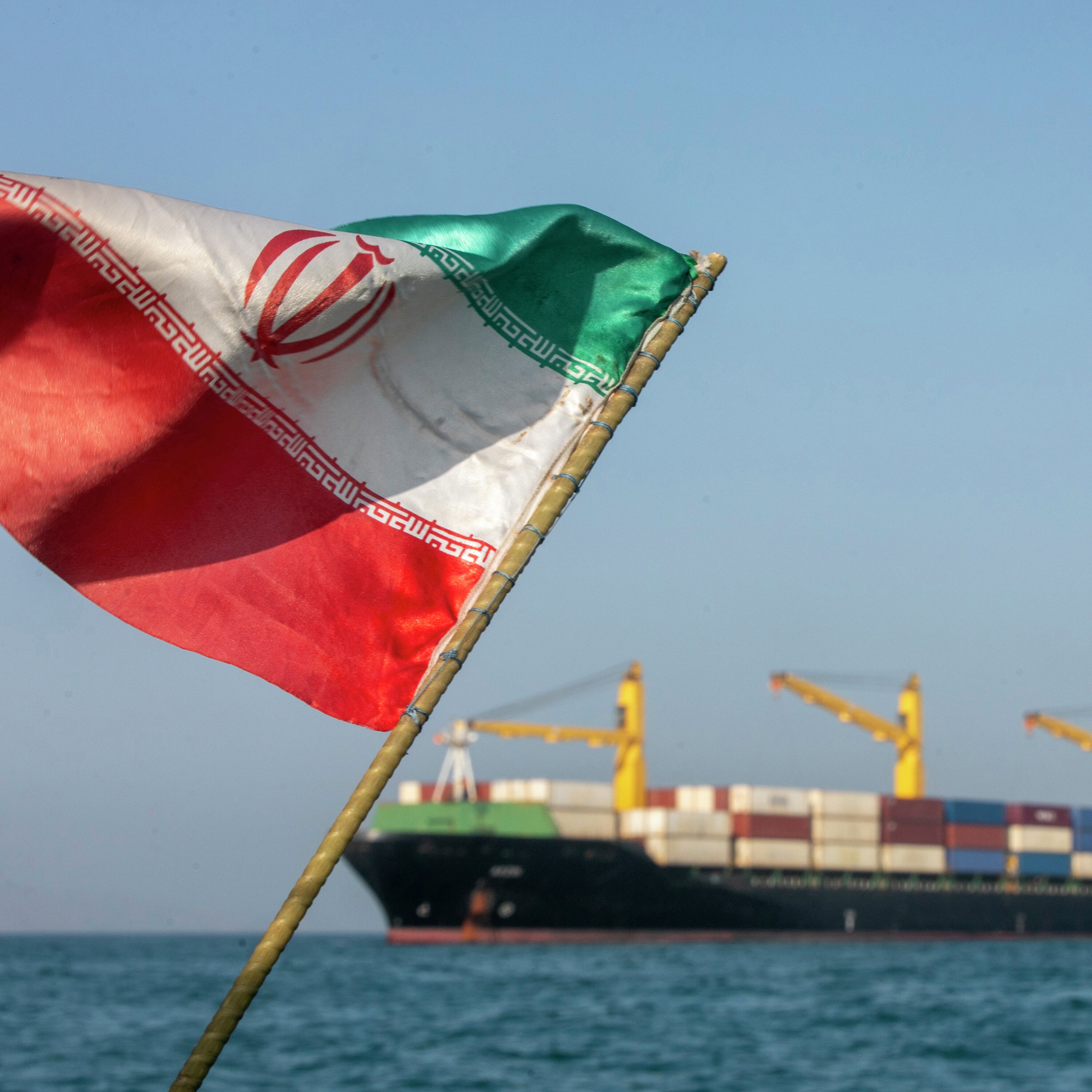
The US And Iran announced a proposed interim peace agreement that would end nearly four months of fighting and reopen the Strait of Hormuz. Trump saying the Strait will reopen entirely and toll free after the deal is signed later this week. Saying ships of the world, start your engines. Let the oil flow. Brent oil traded below $85 a barrel in reaction to the news, down from a peak of over $125 a barrel at the height of the war.
- [02:15]
Nick Wadhams
And the stock market is shooting up like a rocket today, like record kind of numbers.
- [02:21]
Sarah Holder
But neither the US nor Iran has released the text of the 14 point negotiating blueprint, what they're calling a memorandum of understanding, which is scheduled to be signed Friday. And Israeli officials said on X that they are not bound to the agreement. This is the big take from Bloomberg News. I'm Sarah Holder. Today on the Show Bloomberg's national security editor, Nick Wadhams on the US And Iran's latest deal to make a deal, what it will take for the two sides to come together and what it means for global markets. Nick, neither the US Or Iran has yet released details of what is in this memorandum of understanding. But based on what you're hearing, what are the main areas that the two sides have agreed to hash out over the coming days?
- [03:16]
Nick Wadhams
What we're seeing here are broad contours right now with not a lot of specifics. And the main things are one, essentially extending the ceasefire between the US and Iran for a further 60 day halt in fighting and then as quickly as possible reopening the Strait of Hormuz to get oil flowing again. Obviously, markets have responded quite favorably to that, but there is so much here we do not know. And we just got off of a briefing with a senior administration official talking to reporters, and they made clear that essentially there's going to be this 60 day window where the strait will be open. But a lot of the details and mechanics about how ships will pass through the strait in the future still has to be negotiated. So it's a little bit of a situation where the more we learn about this Memorandum of Understanding, the narrower its objectives seem to be and the more it seems to leave the thorniest issues for later.
- [04:13]
Sarah Holder
In a sea of unknowns. The clearest outcome from these talks over the weekend is that the Strait of Hormuz will reopen for this 60 day window. Talk through what that actually means, what mechanics still have to be negotiated, and how long it could take global shipping operations to go back to normal, you know, during these 60 days or beyond.
- [04:33]
Nick Wadhams
Well, there are a bunch of things there. One, we don't know how many mines are actually in the Strait of Hormuz right now. So what you've heard President Trump say yesterday was essentially, okay, we're going to sign this deal on June 19th because we need those four or five days to clear the mines from the strait and essentially reassure shippers that they can send their vessels through. We had senior administration officials on a call this morning telling us they had actually already signed the deal and shipping should resume almost immediately, though they didn't expect traffic to really get back to more robust levels for a couple of weeks. The big issue there, of course, is that as much as the US and even Iran can offer those reassurances, it's the shippers that are going to decide whether they want to risk sending their ships through that very narrow waterway. And so far Everything we're hearing from the shippers is they are not ready to just sort of fire up the engines and head through the strait. They want to wait and see. They want to see the text of the document itself. And they also want reassurances about what's going to happen. It seems right now that Iran will not charge any tolls for ships moving through. But what we do know is that Iran has already made some indications that it's going to charge sort of a service fee, which feels a little bit like a toll by another name. But again, those details have not been
- [05:56]
Sarah Holder
explained to us in terms of the timeline here. What happens next?
- [06:01]
Nick Wadhams
Well, this is one of the big questions that we are all trying to answer. It's still very much unknown. We do have some broad outlines. So they sign a deal in Switzerland on the 19th that then starts the clock ticking on what's meant to be a 60 day window to negotiate these big issues around Iran's nuclear program. But these are the type of negotiations that are extremely technical and would take weeks or months. I mean, when the Obama administration was negotiating its own deal with Iran, that took years to do so. There is that possibility that negotiations could extend well beyond the 60 days. But then that brings up another issue, which is that President Trump is under a lot of pressure from hawks at home who believe that Iran's sole goal here is to essentially drag out these talks for as long as possible. So if things move past that 60 day deadline, he's going to come under a lot of pressure to either walk away from the talks, get a solution, or restart the military campaign.
- [07:00]
Sarah Holder
There's also pressure coming from voters. Right. The midterms are looming. Trump's approval rating is slipping. How does that context play into the timeline here?
- [07:11]
Nick Wadhams
Right. I mean, this is an unpopular war. There are a lot of criticism on both sides that this was not something that President Trump really needed to do. And obviously, you're seeing the pain points at the pump. And of course, when he campaigned for president, he billed himself as the peace president who didn't start any new wars. The question for his voters, of course, is does this MOU and whatever comes from it allow him to essentially declare victory even if the situation remains unresolved? You have a precedent there with the Gaza conflict where they announced a first phase deal even though none of the big issues resolved. It essentially allowed the president to walk away from that and to divert some of the scrutiny around his handling of what happened between Israel and Gaza.
- [07:55]
Sarah Holder
Another thing we've seen reported is this question of whether or not billions of dollars of frozen Iranian assets will be released under the terms of this deal?
- [08:05]
Nick Wadhams
Well, it's believed that Iran has about $24 billion in frozen assets that are essentially it's money locked in foreign bank accounts that the US Is not allowing to be released. Iran has insisted that it get essentially $12 billion, half of that at the start, and then get the rest later on. US Officials have been adamant, no, Iran is not going to get any financial reward until they take certain steps. But this is again, a very, very thorny issue that's going to open up the president to a lot of criticism from the right as well as the left, because you don't only have the frozen funds, $24 billion, a lot of money. You also have this sanctions regime. And the US could either lift sanctions or push to lift sanctions or it could decide not to enforce.
- [08:51]
Sarah Holder
Is that on the table?
- [08:52]
Nick Wadhams
Yeah, I mean, very much so. So Iran's argument and demand is that as a result of the negotiation, 60 day negotiation, it get to a point where all sanctions and secondary sanctions on its economy are lifted. That would require approval from the U.S. congress. It would be a big risk for the president because what happens if Iran only makes tentative steps and says, okay, we're not going to take another step until you release or ease these sanctions. But the president does have dials that he can turn there because he can say, okay, we're going to waive sanctions and allow you to sell your oil to China, or we're not going to waive these other sanctions, but we're not going to enforce them. We're not going to try to punish companies that do business with you. So there are a lot of signals that the president can send to the market that would essentially give an indication of whether, even if those sanctions remain in effect, they're not enforced.
- [09:46]
Sarah Holder
After the break, where Israel stands in the negotiating process and how nearly four months of war have affected President Trump's relationship with Benjamin Netanyahu.
- [10:00]
IBM / Mint Mobile Advertisers
So there's a lot of noise about AI, but time's too tight for more promises. So let's talk about results. At IBM, we work with our employees to integrate technology right into the systems they need. Now a global workforce of 300,000 can use AI to fill their HR questions, resolving 94% of common questions, not noise. Proof of how we can help companies get smarter by putting AI where it actually pays off, deep in the work that moves the business. Let's create smarter business.
- [10:29]
Public / Genius Advertisers
IBM support for the show comes from public. Lately it feels like there are two types of investing platforms. Some are traditional brokerages that haven't changed much in decades, and others feel less like investing and more like a game. Public is positioned differently. It's an investing platform for people who are serious about building their wealth on public. You can build a portfolio of stocks, options, bonds, crypto without all the bugs or the confetti. Retirement accounts? Yep. High yield cash? Yes again. They even have direct indexing. Public has modern design, powerful tools and customer support that actually helps go to public.com market and earn an uncapped 1% bonus when you transfer your portfolio. That's public.com market ad paid for by Public Holdings Brokerage Services by Public Investing member FINRA SIPC Advisory Services by Public Advisors SEC Registered Advisor crypto services by ZeroHash all investing involves risk of loss. See complete disclosure@public.com disclosures when you own
- [11:29]
Chase Sapphire Reserve Advertiser
your own business, you own every decision. Now own the card that rewards you for it. The Chase Sapphire Reserve for Business Card brings the best Sapphire Reserve benefits to business owners who expect hardworking rewards. Designed to meet the needs of business owners at scale, this Pay in Full card elevates your travel experience and offers premium benefits and value toward business services that will take your business to the next level, fuel your business and maximize rewards with 8x points on all purchases through Chase Travel, 3x points on social media and search engine advertising, annual partnership credits and more. Make every journey more rewarding with a $300 annual travel credit and access to a network of airport lounges. Whether you're looking for pre flight productivity or time to rest and recharge. Chase Sapphire Reserved for business, it's the card that gives back all you put in. Learn more@chase.com reserve business chase for Business make more of what's yours Accounts subject to credit approval restrictions and limitations apply. Cards are issued by JPMorgan Chase Bank NA member FDIC.
- [12:39]
Sarah Holder
Nick A key player in the Iran conflict is Israel. Its Prime Minister, Benjamin Netanyahu was instrumental in persuading Trump to strike Iran. But we've been talking about a possible framework, the US and Iran, that doesn't include Israel. Israel is reportedly dissatisfied with the terms of this potential path for an agreement. Is it possible to broker a lasting peace without Israel? And how?
- [13:06]
Nick Wadhams
This is essentially the fundamental question. I mean, and Israel's attitude toward Iran really has not changed. They were vehement opponents of the Joint Comprehensive Plan of Action, the deal that the Obama administration did with Iran. They continue to have grave concerns around the extent of Iran's ballistic missile and drone program and Most crucially, its support for proxy groups in the region like Hezbollah and Hamas. And Israel's argument is, listen, this is a country whose leadership chants, death to Israel, death to America. Until that changes, until we essentially have a different type of leadership in Iran, there is nothing that is going to stop Israel from protecting itself and defending itself against what it sees as grave and extremely dangerous Iranian aggression. And you also see Israel sort of newly emboldened, and especially since October 7, where it's willing to go after these proxy groups with devastating effect. Obviously, Hamas in Gaza and then Hezbollah in Lebanon. And there's very little indication that Israel is going to let up on that campaign, even if it makes life harder for Donald Trump.
- [14:17]
Sarah Holder
I mean, in fact, Israel launched attacks on Sunday in southern Beirut, striking what it said were Hezbollah targets there. Trump was not happy with that. He told Axios that Israel's strikes had delayed the signing of an agreement. How much has this conflict changed or damaged the relationship between Trump and Netanyahu?
- [14:35]
Nick Wadhams
Well, it's an extraordinary situation because on the one hand, Benjamin Netanyahu has gotten so much of what he wanted out of President Trump. I mean, he got the president to commit to a full scale military campaign against thousands of targets across Iran. That was something that no US President had previously been willing to do. So it's like Benjamin Netanyahu can say, wow, Trump gave me so much of what I want. On the other hand, Israel is not going to be happy if there is an agreement that essentially returns to the status quo, which is partly why you see a lot of the dissatisfaction around the deal, because there is that anxiety that in pursuit of the deal, President Trump is going to essentially tell Benjamin Netanyahu to cool it, but at the same time, very little indication that he's going to be willing to do that in the long run.
- [15:25]
Sarah Holder
Trump and Israel attacked Iran and started this war at the end of February for various reasons. Trump initially said the strikes were aimed at keeping Iran from developing a nuclear weapon that could pose a threat to the U.S. he said the attacks would let the Iranian people rise up to overthrow their government. As the war continued, Trump voiced other priorities. Now, reopening the Strait of Hormuz, which was was open before the war started, is a key demand. So, Nick, if this blueprint leads to a deal with some kind of compromise, what will have actually changed from four months ago? And what has this war achieved? At what cost?
- [16:05]
Nick Wadhams
This is a huge question. I mean, what has the US Actually achieved here? In some ways, what the President can say is, listen, I have shown you the extent to which I am willing to go to achieve my objectives, even if that means launching all out war on another country with the exclusion of ground troops, of course, in a way that no president had previously been willing to do. And what you saw was that while markets were certainly roiled by this and oil spiked, it didn't provoke the sort of global economic meltdown that a lot of people had feared. I mean, the human cost of this war has been devastating. Thousands of people have been killed. Of course the economic fallout for other countries that depend on fuel moving through the Strait of Hormuz has also been devastating. But in other ways the economic fallout has not been as severe for the US Economy. But then there's this other element of sort of a geopolitical element where Iran, which is a significantly weaker country than the United States, has a much less powerful military, has shown an ability to essentially exert the leverage it does have to in some ways push the US into these negotiations. So just by being able to control the strait, it has shown that it has a way to inflict pain on the United States. So you have this weird contradiction where the more the US has exerted and flexed its power against Iran, in some ways the weaker its standing has been in the world. Because you can be certain that other countries are looking at this and saying, wow, okay, well the Iranian regime remains in place. It has not fallen, Regime change has not occurred. Iran was able to exert this control and now we're in this 60 day peace conversation with the potential for a long term deal that could actually benefit Iran. So the lessons that are being drawn here are not necessarily that they, the US won this war that demonstrated this sort of awe inspiring power, but in some ways it looks a little bit weaker than it was when the war began.
- [18:20]
Sarah Holder
This is the big take from Bloomberg News. I'm Sarah Holder. To get more from the Big Take and unlimited access to all of bloomberg.com, subscribe today@bloomberg.com podcastoffer if you like this episode, make sure to subscribe and review the Big Take. Wherever you listen to podcasts. It helps people find the show. Thanks for listening. We'll be back tomorrow.
- [18:50]
Public / Genius Advertisers
Game night Rush or any night of the week really. Genius keeps every order moving from online ordering to your kitchen to the front counter. Big league reliability for any business, that's genius.
- [19:05]
IBM / Mint Mobile Advertisers
Ryan Reynolds here from Mint Mobile. I don't know if you knew this, but anyone can get the same Premium Wireless for $15 a month plan that I've been enjoying. It's not just for celebrities. So do like I did and have one of your assistant's assistants. Switch you to Mint Mobile today. I'm told it's super easy to do@mintmobile.com
- [19:23]
Sarah Holder
Switch upfront payment of $45 for 3 month plan equivalent to $15 per month required Intro Rate First 3 full price plan options available Taxes and fees extra. See full terms@mintmobile.com when you own your
- [19:36]
Chase Sapphire Reserve Advertiser
own business, you need to keep things moving. Need to book a last minute flight? Earn a $300 travel credit to cover that. Need to take a meeting before takeoff? Do it from the comfort of the Chase Sapphire Lounge by the club. Need to catch your breath before you board? Done. Chase Sapphire reserved for business the business card that gives back all you put in. Visit chase. Com Reserve Business to learn more. Cards issued by Morgan Chase Bank Any member FDIC subject to credit approval terms apply.