Loading summary
Transcript45 lines
- [00:00]
David Gura
So there's a lot of noise about AI, but time's too tight for more promises. So let's talk about results. At IBM, we work with our employees to integrate technology right into the systems they need. Now a global workforce of 300,000 can use AI to fill their HR questions, resolving 94% of common questions, not noise. Proof of how we can help companies get smarter by putting AI where it actually pays off, deep in the work that moves the business. Let's create smarter business IBM you need
- [00:31]
Podcast Narrator / Advertiser
to make a huge presentation in an hour. Adobe Acrobat uses AI to take all your documents and generate a presentation with a single click. Build slides quickly and streamline the process. Need a last minute pitch deck? Do that with Acrobat. Need to level up your presentation design? Do that with acrobat. You have 30 plus documents that need to be simplified into a proposal. Do that, do that do that with Acrobat. Learn more@adobe.com do that with Acrobat Small businesses are the pulse of every community. They bring people together, create opportunities and drive growth. Chase for Business helps business owners like you with personalized guidance and convenient digital tools all in one place. With that guidance and your determination, you can take your business farther and help build a brighter future for your community. Learn more@chase.com business chase for business make more of what's yours the Chase Mobile app is available for select mobile devices. Message and data rates may apply JPMorgan Chase Bank NA Member FDIC Copyright 2026 JPMorgan Chase Co. Bloomberg Audio Studios Podcasts Radio News
- [01:49]
David Gura
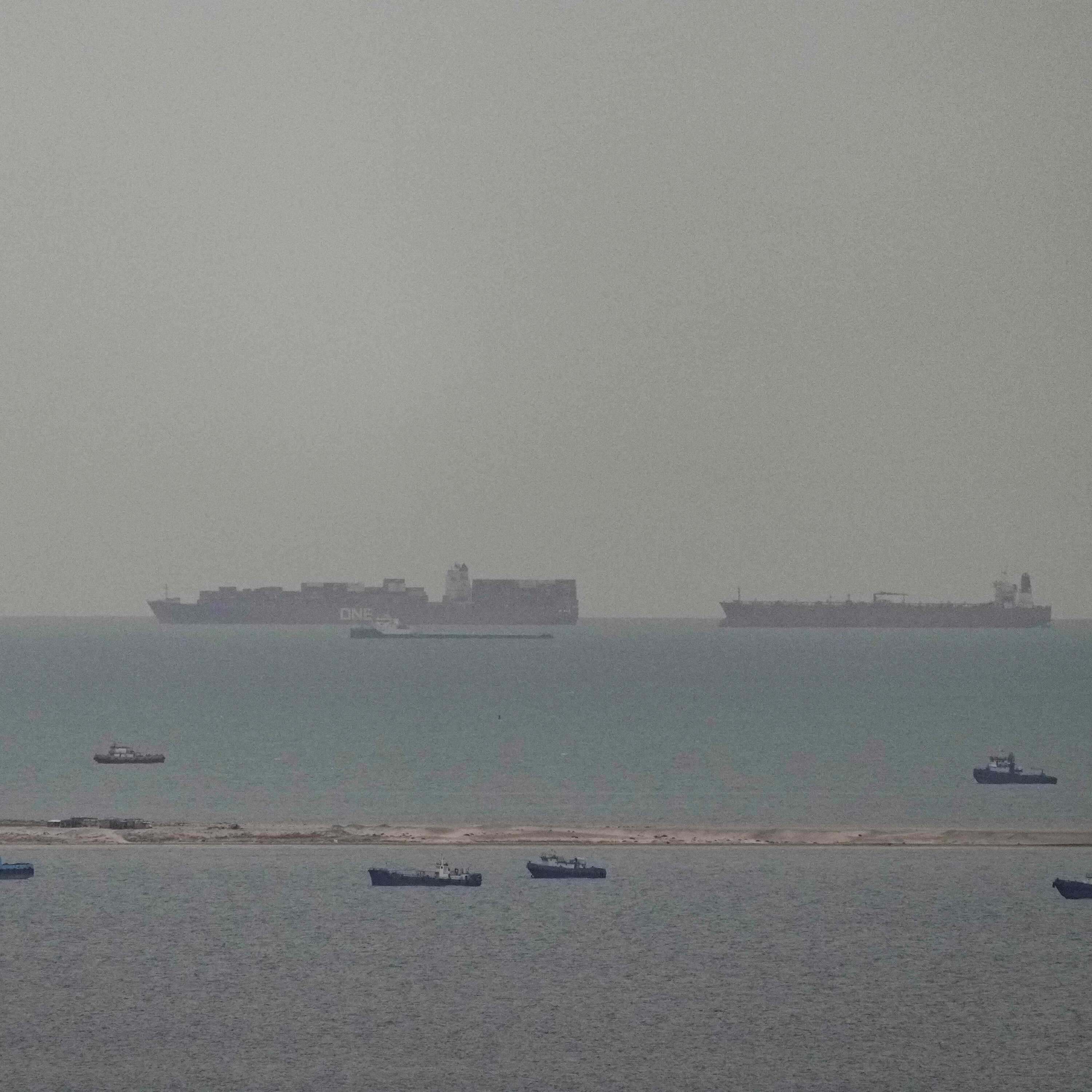
the war in Iran is four weeks old. The US has deployed tens of billions of dollars of munitions in thousands of strikes, and more than 4,500 people have been killed in the conflict. That's according to governments and non government agencies. And despite 10 ships passing through the Strait of Hormuz on Thursday, in what President Trump has described as a gesture of goodwill, the Strait remains effectively shut, choking off roughly 20% of the world's oil and gas, which has sent energy prices soaring. President Trump has threatened to strike Iranian energy sites if the country doesn't come to terms and reopen the Strait of Hormuz. And he's issued a deadline that he's now pushed back twice to game out how the conflict could unfold from here. I reached out to someone who is no stranger to high stakes military decisions, retired Admiral James Stavridis, who's also a columnist for Bloomberg Opinion. He is, among other things, the longest serving combatant commander in recent US history and the co author of a series of novels. The latest, 2084, will be published in May. And Admiral Stavridis sees the pressure rising on both sides to make a deal.
- [02:57]
Admiral James Stavridis
There are two clocks ticking right now. One clock that's ticking is in Washington, and it's for the Trump administration. It's the gas prices, and it's the cost of doing this. It's the public support, and it's November. It's the election in November. So that clock is ticking, and certainly it strikes midnight pretty soon. And for Iran, the clock here is their infrastructure. How much of their military do we destroy? How much of their defense industrial base? How much of their oil? How much of their electric grid? That clock strikes midnight in probably three to four weeks.
- [03:41]
David Gura
He says both countries have good reason to come to the table, but that's far from a guarantee.
- [03:47]
Admiral James Stavridis
I think there's a 2 in 3 chance. We get to a negotiated conclusion, call it 65%. But the bad news is, and this is uncomfortably high, 1 in 3 chance, therefore, a 35% chance that the Iranians do not follow the logic of this situation, decide they want to keep fighting. We keep bombing. We then go after their critical infrastructure. They go after Gulf Arab critical infrastructure. Then we have a much more serious global economic challenge ahead.
- [04:25]
David Gura
I'm David Gura, and this is the big take from Bloomberg News today. On the show, retired Admiral James Tavridis on how sending thousands more U.S. troops troops to the Middle east changes the chances of a diplomatic resolution to the Iran war and raises the risks. Admiral Stravitas, you were the head of U.S. southern Command, U.S. european Command, and from 2009 to 2013, you were supreme allied commander of NATO. But before all of that, back in the 1980s, you spent some time as a young sailor helping ships make their way through the Persian Gulf. So before we get into the details of US Strategy and options in this particular war, I'm curious how that time in your life shapes the way that you're thinking about this conflict.
- [05:10]
Admiral James Stavridis
It does, immensely. And that's a smart question. This was in the late 1980s, and we were escorting Kuwaiti tankers, which were flagged to the United States through the strait. This is during the Iran Iraq War, when the Iranians again closed the Strait of Hormuz. Two takeaways that continue to rattle around in this grizzled old admiral's brain. One is it's hard. It's navigationally challenging. And to do it under Iranian fire, as we did in the 1980s, is doubly challenging. But a Key thing to remember is they did not have drones. Then. Number two, you have to open the strait. You cannot cede control of it to this rotten theocracy in Tehran. So how we get there, I hope we can do it diplomatically, but if necessary, see paragraph one. We will open that strait.
- [06:09]
David Gura
In recent weeks, the US has ordered some 7,000 more troops to the Middle East. Around 1,000 soldiers from the 82nd Airborne, 5,000 troops from two Marine Expeditionary Units. The 31st, which deployed from Okinawa, should arrive in the coming days. The 11th MEU will be in the region in three to four weeks. What does the decision to send those troops indicate to you about the broader objective here that the US has at this point?
- [06:31]
Admiral James Stavridis
My supposition is that President Trump wants those troops to kind of hold them like a hammer over the head of the Iranians and threaten actually seizing Carg island, which, as you know, David, is 90% of the Iranian oil flows through it. You really put a stake in the heart of the Iranian oil based economy. So President Trump is signaling to the Iranians. Not only am I bombing broadly across the entire vast nation of Iran, but I also have precise boots on the ground options. 7000 troops is not a huge force. They're not going to conquer Iran. But. But you could use them in precise ways to try and move the negotiation along.
- [07:21]
David Gura
Could you walk us through what the stages of a mission to take Carg island would look like and maybe give us your sense of what the US could stand to gain or lose by undertaking a mission like that?
- [07:30]
Admiral James Stavridis
Sure. Let's go back to those Marines at sea. The first tranche of them, the 31st Marine Expeditionary Unit have arrived just outside of the Strait of Fort Moos. They got to get through the strait, which the Iranians will oppose deeply. That's they got to get through mines, ballistic missiles, small boats, above all the drones. Once they get through that now they still, David, have 350 miles to go to get up to Kharg island in that stretch of water. Iran will continue to attack them. I could see terrorist attacks against them from small Iranian, supposedly civilian craft, more drone attacks. Now you're off the coast of Carg Island. So here you depend on Central command air cover to make sure there's a bubble over you in effect and at the sea, the fifth Fleet is protecting you. Now those Marines will get on Osprey aircraft. They're kind of in between a plane and a helicopter. They'll start going ashore by air. There'll be some seaborne component of them. You bring them ashore At a relatively undefended corner of this island. Kharg is about a third of the size of Manhattan. You pick a couple of points. Bring in the marines, seize the base. Now they're locked down in a well known place and it's within artillery range of the Iranian coast itself. And they're 20,000, maybe 30,000 Iranians on the island that you have to control. Most of them are civilian oil workers who just want to stay out of the line of fire. They have no interest in getting in the crossfire between U.S. marines and the Iranian Revolutionary Guard. If I'm Tehran right now, I'm increasing my forces on the island. I'm putting booby traps in place, putting landmines at the places where I think you might land. I'm putting drones overhead, very small ones, so I can maintain surveillance. So they're preparing for this. It's a very challenging mission. It's kind of easy for me to sit here and say it, but to execute that mission will be costly in terms of lives and equipment. Final point, if I were advising the administration, I would say maybe a better idea, blockade the island. Have the fifth Fleet just shut it down. Tell the world, don't bother going to Kharg island, it's no longer open for business. Tell the Iranians you can do all you want with the oil that's stored there, but it's not leaving Carg Island. I think that might make more sense.
- [10:14]
David Gura
What else might be on the table for the US as they think about where they might deploy troops in this region?
- [10:20]
Admiral James Stavridis
I'll give you three other options that kind of pop into my head. One is the island of Larocque right at the very northern tip of the Strait of Hormuz. And Laraque is very important because controls the top of the strait. It's heavily defended. But seizing that I think would, would have some military utility. A second one is there are a pair of islands that are claimed by both Iran and the uae. This is Abamousa island and Toomb also in that vicinity. So if you took those islands, you'd have land right at the top of the strait that would help you defend it and keep it open. But if you really want to lock down the strait, you got to control both sides of it, both the Arab side and the Persian side. And then third, and actually more dangerous than anything we've talked about, would be going into Iran, deeply into Iran, and going after the nuclear material that they have. They have 900 pounds, maybe a thousand pounds of enriched uranium. It's not quite Weapons grade, but it's very close to it. Where is it? It's at the bottom of, supposedly of Isfahan under concrete. You'd have to have a thousand plus troops to defend the area, put up all the air cover, and then have the seals and the Green Berets with, wait for it, civilian technicians who know how to manage all this. It is a very difficult mission. It would be literally the largest special forces operation in history. I want to say I'm not advocating those missions. I firmly believe we need to get to a diplomatic resolution here. But, you know, soft power without the ability to apply hard power is no power. So move the forces, set the table, and then go to the Iranians and say, look, we really want to settle this at a negotiating table, not on Carg Island.
- [12:38]
David Gura
I want to shift to opening up the strait. And you've laid out ways in which the US could take over Carg island, other islands? Do those military options do much to hasten the process of getting oil flowing once again? Just draw the line for me from doing that to effectively opening up this strait once again.
- [12:56]
Admiral James Stavridis
The theory of the case is that by holding hostage this 90% of the Iranian oil, we could then go to the Iranians and say, carg Island. Nice little operation you got going here, boy. It'd be a shame if we had to blow it all up. How about if we go ahead and open the straits and then we can have a conversation. Let's get to a very simple deal at this point. We stop bombing, you open the strait.
- [13:27]
David Gura
And what would that take?
- [13:28]
Admiral James Stavridis
Let's start by observing that what Iran has done is they have not hard closed the strait. They have virtually closed the strait. And they've done that by blowing up a handful of tankers, saying any other tankers we don't like, we're going to blow up with drones. They put some smart mines in the water that they have control over, but they haven't really hard closed it. I think it's worth noting they haven't done that, which means there's still room to maneuver here. And I would say that if we were to fail diplomatically and have to militarily open the strait, you need more minesweepers to be on station, prepared. You need more guided missile frigates, destroyers, cruisers to protect shipping going in and out. You need special forces on small boats to counter the Iranian small boats. You need to destroy more of the Iranian attack capability along the littoral of the strait itself. But again, it'll be costly. It would be far better that we got to a negotiation here.
- [14:35]
David Gura
Is it possible to do that kind of clearing that you just described militarily while fighting is still underway, or does the fighting have to cease?
- [14:42]
Admiral James Stavridis
Effectively? Fighting has to cease as follows. You have to bring complete air superiority over that particular area, meaning you've got to be able to stop the drones. You have to go after the longer range Iranian capabilities. By the way, there happens to be an admiral in overall command of the mission, Admiral Brad Cooper, the commander of Central Command. That's what Admiral Cooper is doing right now, and I think the Iranians are cognizant of that as well.
- [15:18]
David Gura
Retired Admiral James Stavridis was the supreme Allied Commander of NATO. After the break, his thoughts on what role the alliance could play in helping to reopen the strait.
- [15:31]
Ana Navarro
I'm Ana Navarro and on my new podcast, Bleep with Ana Navarro, I'm talking to the people closest to the biggest issues happening in your community and around the world. Because I know deep down inside right now we are all cursing and asking what the BLEEP is going on. I'm talking to people like Julie K. Brown, who broke the explosive story on Jeffrey Epstein in 2018. These victims have been let down time and time again for decades and decades and decades by local law enforcement, by federal law enforcement, by administration after administration.
- [16:07]
Podcast Narrator / Advertiser
The Justice Department through I think we counted four presidential administrations failed these victims.
- [16:15]
Ana Navarro
Listen to BLEEP with Ana Navarro as part of the My Cultura Podcast network, available on the iHeartRadio app, Apple Podcasts or wherever you get your podcasts.
- [16:30]
Lala Kent
Hello gorgeous. It's Lala Kent, host of Untraditionally Lala. My days of filling up cups at Sur may be over, but I'm still loving life in the Valley. Life on the other side of the hill is giving great grown up vibes. But over here on my podcast Untraditionally Lala. I'm still that Lala. You either love or love to hate. I've been full on over sharing with fans, family and former frenemies like Tom Schwartz. I had a little bone to pick with Schwartzy when he came on the pod. You don't feel bad that you told me I was a bootleg housewife? I almost flipped a pizza in your lap.
- [17:00]
Admiral James Stavridis
Oh my God.
- [17:01]
David Gura
I literally forgot about that until just now. Sorry. I don't want to. I don't want to blame all that. I gotta blame that.
- [17:06]
Admiral James Stavridis
One on side the other alcohol.
- [17:08]
Lala Kent
This is about laughing and learning when life just keeps on life in because I make mistakes so that you guys don't have to. We're growing, we're thriving. And yes, sometimes we're barely surviving, but we do it all with love. It's unruly, it's unafraid, it's untraditionally. Lala. Listen to Untraditionally lala on the iHeartRadio app, Apple Podcasts, or wherever you get your podcasts.
- [17:31]
Admiral James Stavridis
Right now we are living through some of the most tumultuous political times our
- [17:35]
David Gura
country has ever known. I'm David Remnick, and each week on
- [17:38]
Admiral James Stavridis
the New Yorker Radio Radio Hour, I'll
- [17:40]
David Gura
try to make sense of what's happening alongside politicians and thinkers like Cory Booker, Nancy Pelosi, Liz Cheney, Tim Waltz, Ketanji Brown Jackson, Newt Gingrich, Robert F. Kennedy Jr. Charlemagne, the God, and so many more.
- [17:54]
Admiral James Stavridis
That's all in the New Yorker Radio Hour. Wherever you listen to podcasts,
- [18:07]
David Gura
You've had a lot of big jobs. You served as NATO Supreme Allied Commander. You've spoken passionately about the importance of that NATO alliance. This is what the President posted on social media on Thursday morning. NATO nations have done absolutely nothing to help with the lunatic nation now militarily decimated of Iran. The USA needs nothing from NATO. But never forget this very important point in time. Over the last few weeks, we've heard the President disparage long standing US Allies, then call for their help, then criticize them once again. How do you see this conflict, the Iran war, impacting relationships between the US and its allies, many of which were already under strain?
- [18:43]
Admiral James Stavridis
We've been under kind of a roller coaster with NATO since Trump came back into office. The good news is NATO has been gradually increasing defense spending from, you know, kind of sub 2%. Now NATO's pushing up to 3.5%, maybe 4%, depending on how you score it. So that's a positive event. On the other hand, the Greenland episode where the United States appeared to really lean in, talk about the 82nd Airborne. I saw actual tweets from people saying, yeah, the 80 seconds on their way to Nook, Greenland. That really rattled Europe's confidence in the United States. And by the way, I think the Danes would have fought, they would have blown up those runways, they would have put Special forces there. That was a pretty dangerous moment for the alliance. That was kind of a trough. Now we're kind of, we've come back out of that, but now we have the current crisis in the Gulf. And so for the Europeans, as you assess their behavior, you need to kind of put it through the filter of how they've been treated in Trump 1 and in Trump 2, we tend to not remember this in the United States somehow, but I commanded a mission in Afghanistan for four years. We were fighting in Afghanistan because we were attacked in New York and in Washington, D.C. thousands of Americans were killed. We went to war. And who came with us? The Europeans. And they fought and died in great numbers. So don't tell me NATO hasn't stood with us in combat. Now we come to the current moment. By the way, President Trump tends to use the word NATO. He really means the European Union more than anything else, but he means the nations of Europe. I think President Trump would be wise to say to the Europeans, look, we've got the offensive part of this. We're going to do the bombing. We will put the troops on the ground if necessary. Israelis are going to do the bombing. Europe, here's what we need. We need mine sweepers, we need guided missile frigates. We need guided missile destroyers. We need you to help open the Strait of Hormuz. I think Europe would take that mission gladly. And Mark Rute, the Secretary General of NATO, former Prime Minister of the Netherlands, know him well. He's kind of nudging the European allies in that direction.
- [21:26]
David Gura
I'm genuinely curious if there's been a moment in history where we've seen this much military might brought to an area and not used. I think of the conversation that was happening around Venezuela ahead of the capture of Nicolas Maduro. But there's an awful lot of equipment and personnel being brought to the Middle east now. I think of Chekhov's gun. If you see the gun, it has to be fired. As you think about history, have there been moments when there has been this much, again, military might marshaled and not used in the end?
- [21:54]
Admiral James Stavridis
Not that immediately leaps to mind. You should ask Claude that question. But I think that what is germane is about 25 years ago, we marshaled this level of forces off of Iraq and we did invade and we were at war for 20 years. To me, that's the cautionary tale here. It's the forever wars. That's what we desperately must avoid. I think we will again. I think we will either negotiate or if we have to have boots on the ground, they'll be used in a precise, directed, military way. But let's remember 25 years ago, we attacked Iraq 23 years ago, I suppose, and that experience was not the best for the United States.
- [22:43]
David Gura
This is the big take from Bloomberg News. I'm David Gura. The show is hosted by me, Sarah Holder and Juan Hannah. The show is made by Aaron Edwards, David Fox, Jeff Grocott, Eleanor Harrison Dengate, Paddy Hirsch, Rachel Lewis Christie, Katie McMurran, Naomi Ng, Julia Press, Tracy Samuelson, Naomi Shaven, Alex Segura, Julia Weaver, Yang Yang, and Taka Yasuzawa. There's Much more on Bloomberg.com get unlimited access to all of our coverage at a special rate for listeners@Bloomberg.com podcastoffer thanks for listening. We'll be back on Monday.
- [23:25]
Podcast Narrator / Advertiser
In the fall of 2023, Romana Didalo, a woman calling herself the Queen of Canada, drove into Richmond, Saskatchewan with a fleet of RVs and set up her kingdom in an abandoned school. So the town banded together to get the cult out by any means necessary. My name is Rachel Brown, and in this season of Uncover, I explore what happens when a conspiracy theory lands in your backyard. The Cult Queen of Canada. Available now on cbc. Listen and everywhere you get your podcasts.
- [23:58]
Lala Kent
Hello gorgeous. It's Lala Kent, host of Untraditionally Lala. My days of filling up cups at Sur may be over, but I'm still loving life in the valley. Life on the other side of the hill is giving grown up vibes. But over here on my podcast, Untraditionally Lala, I'm still that Lala. You either love or love to hate. It's unruly, it's unafraid. It's untraditionally Lala. Listen to Untraditionally lala on the iHeartRadio app, Apple Podcasts, or wherever you get your podcasts.
- [24:28]
David Gura
You know Roald Dahl, he thought of Willy Wonka in the bfg, but did you know he was a spy? In the new podcast the Secret World of Roald Dahl, I'll tell you that story and much, much more. What you probably won't believe it either
- [24:42]
Podcast Narrator / Advertiser
was this before you wrote his stories, it must have been okay.
- [24:46]
Admiral James Stavridis
I don't think that's true.
- [24:48]
David Gura
I'm telling you, the guy was a spy. Listen to the Secret World of Roald Dahl on the iHeartRadio app, Apple Podcasts, or wherever you get your podcasts.