Loading summary
Transcript55 lines
- [00:01]
IBM Representative
The thing about AI for business? It may not automatically fit the way your business works. At IBM, we've seen this firsthand. But by embedding AI across hr, IT and procurement processes, we've reduced costs by millions, slash repetitive tasks, and freed thousands of hours for strategic work. Now we're helping companies get smarter by putting AI where it actually pays off, deep in the work that moves the business. Let's create smarter business.
- [00:29]
Optum Representative
IBM Healthcare doesn't always work great. If you've ever waited on a refill or couldn't schedule an appointment, you get it. That's the kind of stuff Optum is changing. They're using data and technology to integrate patient care, pharmacy and everything else. So healthcare is connected, not complicated. What's that look like? Cheaper prescriptions that are easier to get and care that looks at the whole person how you need it. Optum is helping make healthcare work as one for everyone. Learn more@business.optum.com wise is the smart way
- [01:01]
Wise/Wasabi Advertiser
to manage the currencies you need around the globe. When you send money abroad using your bank, you could get hit with hidden fees and exchange rate markups. There's a better way. Try Wise. Wise uses the exchange rate you'd usually find on Google, with no unwelcome surprises. Plus, most transfers happen in under 20 seconds, which means your money arrives in less time than you've been listening to me. It's simple and free to sign up when you download the Wise app. Be Smart, Get Wise T's and C's Apply.
- [01:33]
Optum Representative
Bloomberg Audio Studios Podcasts Radio News this
- [01:38]
David Gura
week we got a lot of new indicators about the state of the U.S. economy.
- [01:43]
Reid Pickert
The headline it's doing pretty well.
- [01:47]
Wise/Wasabi Advertiser
Stocks rose on Wall street after a report showed that inflation wasn't as bad as expected last month. Consumer prices fell 0.4% last month from
- [01:56]
Reid Pickert
May, the biggest so this week has been a mix of data that's been surprising and some that hasn't been so surprising.
- [02:03]
David Gura
That's Reid Picker, who leads the US Economy team at Bloomberg.
- [02:07]
Wise/Wasabi Advertiser
Analysts were anticipating a slight rise in
- [02:09]
Katherine Ann Edwards
first time claims for jobless benefits. Instead, the number has fallen.
- [02:13]
David Gura
Inflation is cooling. Consumers are spending. The job market is showing signs of stability. But still the vibes are off. Consumer sentiment reached a record low in May and looked only a little better by June. And a Pew survey ahead of the country's 250th anniversary in July found that over 50% of Americans expected the economy to get weaker in the coming decades.
- [02:42]
Katherine Ann Edwards
There is something particularly unsatisfying about the economy right now, even though unemployment's not that high and even though inflation is not as high as it was.
- [02:52]
David Gura
Katherine Ann Edwards is a labor economist and the host of the Optimist Economy podcast. This week she argued in a piece for Bloomberg Opinion that one way to make sense of the gap between official data and how Americans actually experience the economy isn't to discount how people feel, but to look closer, measure more and read between the lines. And she says that's becoming even more important as the overall picture of the economy gets more complex.
- [03:23]
Katherine Ann Edwards
We rely on statistics as economists because we're like doctors gauging the vital signs of the economy. But for people, for advocates, for those of us who in the economy who are having a hard time, it is a validation to be seen to be able to point to a number and say, see, I told you it's hard right now.
- [03:43]
David Gura
I'm Sarah Holder and this is the big take from Bloomberg News. Today on the show, we take stock of the US Economy. What the official data tell us and what other markers could reveal about Americans financial reality. Some of the economic data we got this week were in line with expectations. But Reid Pickert, who leads the team at Bloomberg covering the U.S. economy, said one indicator in particular stood out.
- [04:15]
Reid Pickert
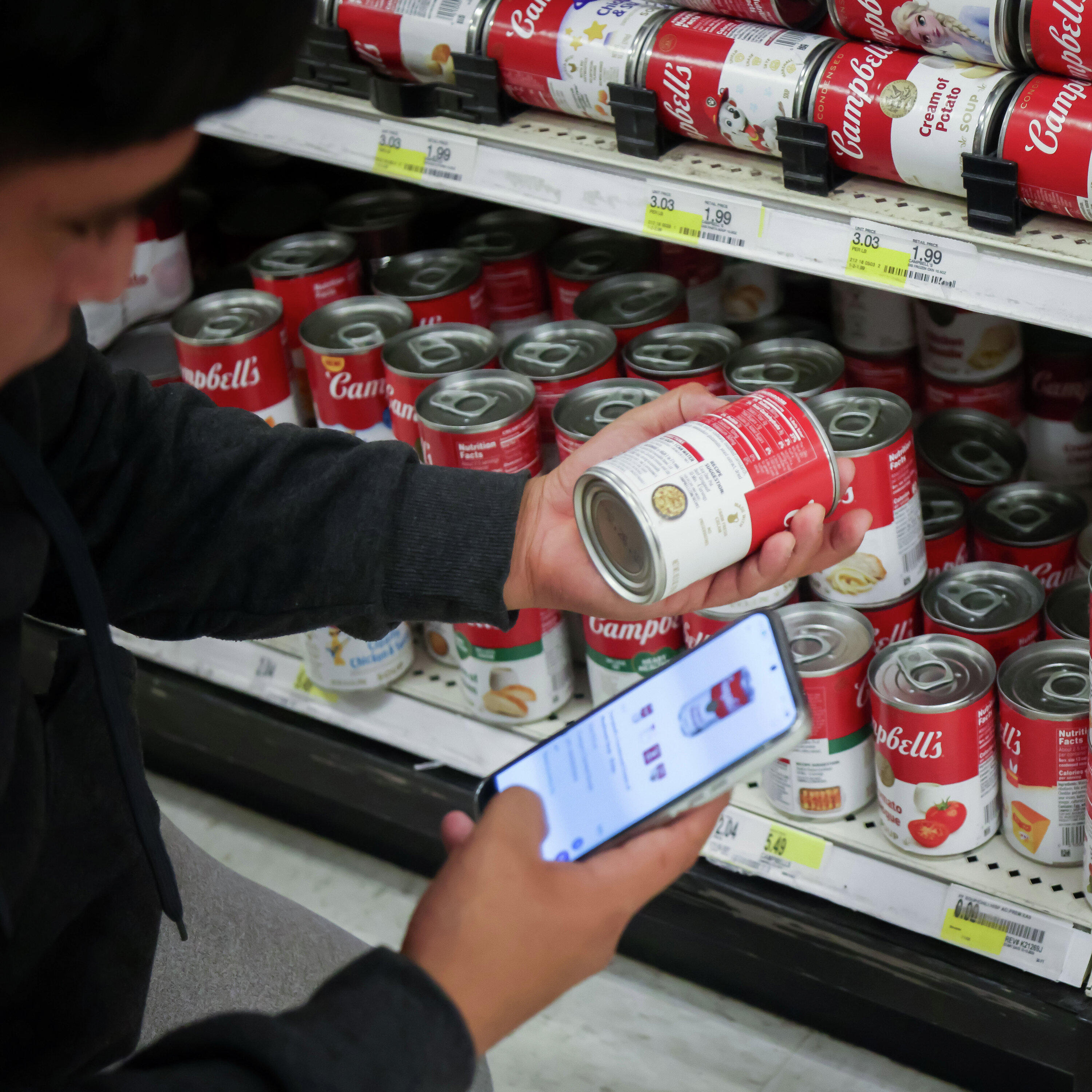
To start with the surprising side. We started our week with much better than expected inflation data. We saw consumer prices fall last month by the most since the onset of the pandemic. And you know, we knew and expected that inflation would fall to some extent on a month over month basis just because gasoline prices fell so much in June. But it was more than that. It was also when you stripped out gasoline and energy prices and food prices, you saw this so called core gauge of inflation which the Fed looks at as a sign of underlying inflation. You saw that it was unchanged in the month of as well.
- [04:52]
David Gura
So one of the biggest headlines was that the U.S. consumer Price Index had fallen for the first time since 2020. Give us a little refresher. What is that index and what does that milestone really mean?
- [05:04]
Reid Pickert
Yeah, so the consumer price index is one of the major indicators that we look at in terms of gauging inflation in the U.S. so the Bureau of labor statistic looks at a basket of goods and services. And so when we think about what the last five, six years have looked like, you know, at the beginning of the pandemic we saw this sharp decline in prices and that was because we saw this pullback in demand as the broader US Economy and global economy shut down. But we all remember as the economy started reopening, people started spending again, and there were all of these different supply chain snarls. There was this massive ramp up in inflation. And while the pace of inflation has slowed a fair bit since peaking back in 2022, it's been this persistent problem where inflation has been well above the Fed's target for a long time now.
- [05:58]
David Gura
So since the CPI measures that market basket of goods, when you really peek inside that basket, prices are rising at different rates.
- [06:08]
Reid Pickert
Yeah. And one, one to point out, because this has come up a lot, is really how AI is playing a role in this inflation picture. So when we look at the latest C report, for instance, computer software, prices were up more than 17% from a year earlier. That's the most on record. And that's really getting into this challenge that we have right now of this rush to invest in AI and how much demand is growing, but supply is struggling to keep up. We've seen this be something that Federal Reserve officials are talking about and thinking about whether this is something that is a temporary factor at play or if this is a more sustained pressure on inflation that the Federal Reserve may need to respond to.
- [06:52]
David Gura
As you mentioned, Reid, inflation is not rising, but it's still at 3.5% annually, which is above the Fed's annual target of 2%. How do you read that overall inflation rate?
- [07:07]
Reid Pickert
Inflation is too high right now. And when it comes to what Americans are experiencing, it's hard to make financial decisions when you don't know where prices are going. And I think all of this needs to also be in the context of the news moment that we're in right now with the war. You know, this sharp decline was when there was an interim deal between the US And Iran. And July has totally shook up that picture. So we're back to oil prices rising. We've started to see gasoline prices start ticking up again. And this uncertainty on the outlook is just still hovering here.
- [07:46]
David Gura
And Reid, let's turn now to jobs. We saw jobless claims fall modestly this week. The US labor market has been kind of a confusing place over the past year. It's been described as unexpectedly resilient. Hiring has been slow, but the unemployment rate has also been slowly dropping. So what do the latest jobs numbers add to this picture?
- [08:06]
Reid Pickert
Heading into this month, there was this moment where we thought we'd been talking about the labor markets slowly gaining its footing this year because hiring was really uneven last year. You'd have a month where hiring was up and then a month when hiring was down. And we have all heard kind of this low hire, Low Fire Environment 2026, we started to see the labor market gain that footing again and really stabilize out. And then we saw this blockbuster jobs report, and we're like, well, is the labor market actually heating back up? Like, are things picking up again? That would be very good news for job seekers. That could be great news for wage growth. But what the latest jobs report showed us was that June hiring was about half of what economists had expected. And it wasn't just that hiring was half. It was also that the prior month's blockbuster report, while still good, was revised lower. So it took a little bit of the shine off of this excitement around momentum in the labor market.
- [09:05]
David Gura
Another consumer indicator we got this week was that retail sales ticked up slightly. What did you make of that?
- [09:12]
Reid Pickert
One of the disclaimers I always have to remind folks on retail sales is that it's one of the things that we get that's not inflation adjusted, it's not price adjusted. And when I started in this job, that didn't matter because we weren't seeing a lot of inflation. But now big price swings can really change the picture. And so what we saw with retail sales data was that this big drop in gasoline prices that we were talking about that influenced the CPI as well, really pulled down how much people were spending at at gasoline stations. But when you look outside of gasoline stations, you continue to see this picture of consumer resilience underneath the hood.
- [09:52]
David Gura
Reid, you're painting a really interesting picture here. Right. Even though Americans have felt prices go up, they felt that this job market is a little hard for a lot of people. The unemployment rate isn't rising. Inflation is pretty flat. What do these figures mean for the Fed, which has this dual mandate as it sets future rates?
- [10:13]
Reid Pickert
It really erased any kind of bets from investors that the Fed would be raising rates later this month. But when we look out further than this month, there's a lot still going on. I mean, we heard Kevin Warsh say, you know, we can't look at these numbers and think mission accomplished right now. Investors do think that we'll see a rate hike by the end of this year. And there's a lot of things to factor in for the Fed. So they not only have the uncertainty of the war, but they also really need to think about this AI question, because in the long run, most folks believe that AI to some extent will boost productivity. But in the short run, we do have this mismatch that's putting upward pressure on prices. And typically when the Fed views something as temporary, they can look through it. They don't have to act. But if you think that this is something that's more persistent and will keep upward pressure on inflation for a while and keep you from reaching your 2% goal, that's when you have to start thinking about potentially raising rates to combat that.
- [11:20]
David Gura
Coming up, I sit down with labor economist Catherine Ann Edwards to talk about the story this economic data could be missing and how to better capture the economic reality for different groups across the US.
- [11:38]
Public.com Advertiser
Support for the show comes from public.com if you're actively involved in your portfolio, you probably catch yourself repeating the same actions. Buying the dip, manually sweeping idle cash, putting on a hedge on public you can now create AI agents that handle all these tasks on your behalf. Just describe what you want to do in plain English, like if the Vix hits 25, buy a put option on the S&P 500 or if my cash balance goes above $20,000, move the excess into my direct index. You approve the workflow and your agent handles the risk, monitoring the market, watching for your conditions and executing your strategies exactly as defined. An investing platform driven by your intent, not just your clicks. You can also get full read and write access to your account via the public API. Go to public.com market and fund your account in five minutes or less. That's public.com market paid for by Public
- [12:34]
David Gura
Investing Brokerage Services by Open to the Public Investing Inc. Member FINRA and SIPC Advisory Services by Public Advisors, LLC. SEC registered advisor complete disclosures available@public.com disclosures
- [12:48]
Optum Representative
let's talk about health care for a second. It doesn't always work the way people expect it to. If you've ever waited on a prescription refill or had a hard time getting the care you needed, you know the feeling the system should just work better for everyone. That's exactly what the people at Optum are trying to do every day. They're a healthcare company linking patient care and pharmacy services and using data and technology to drive the whole system so care is connected, not complicated for patients and providers. Things like making it easier to get care that looks at the whole person, from primary care doctors to mental health support and even in home care. And then using technology to make sure they all work together. Technology designed to help doctors spend less time on busy work and more time with their patients and those prescriptions. Optum is working to bring costs down, save patients money and make it easier to get refills. Little by little, Optum is helping make healthcare work as one for everyone. Head to business.optum.com to see how the
- [13:48]
IBM Representative
thing about AI for business, it may not automatically fit the way your business works. At IBM, we've seen this firsthand. But by embedding AI across hr, IT and procurement processes, we've reduced costs by millions, slashed repetitive tasks, and freed thousands of hours for strategic work. Now we're helping companies get smarter by putting AI where it actually pays off, deep in the work that moves the business. Let's create smarter business IBM.
- [14:20]
David Gura
Katherine Ann Edwards, you're a labor economist, the host of the Optimist Economy podcast, and you recently wrote a piece for Bloomberg Opinion about the difference between people's perception of how the economy is doing and what traditional economic data sources are telling us. You focused on the Consumer Price Index specifically. Tell me about your argument. What does the CPI miss about how people are feeling about and experiencing prices right now?
- [14:50]
Katherine Ann Edwards
I think where there is a gap is in how this data is compiled and presented. I mean, if you think of it as taking the economy's vital signs. We have dozens of measures of unemployment rates that we look at every month. You know, every jobs day it comes out and we can immediately look at, you know, what's the unemployment rate for prime age female workers? Right. Like it just, we can have it on hand. On the price side, we've typically monitored prices from the point of view of a single good or service. What I think would be helpful is to have instead indices that reflect household types. What's the consumer price index for single women, for a married couple without kids, for a retired couple, for a family with three children. And to, you know, break that down by things like gender or income or race. So we can get more of a heat map of who is suffering from price increases as opposed to a heat map of prices kind of on the shelf.
- [15:46]
David Gura
And how might the Bureau of Labor Statistics do that? What other data could they collect or present to get this better picture of how different kinds of households experience inflation and prices?
- [15:58]
Katherine Ann Edwards
Well, they actually have all of the data they need to do it in hand. So it's really just a matter of taking the information we have and compiling it, you know, in the best way possible. Which is something that the BLS economists themselves are the most poised to do. They have done this kind of for one off investigations. They produced a few years ago a report on inflation as experienced by income quintile and what kind of inflation the highest income households feel versus the lowest income households based on the baskets that differ across them. And they found that over about a 20 year period, inflation is higher for people at the bottom because the Goods that they purchase tend to see faster price increases. This was one way to say like we're in the same economy, but we're not on the same path.
- [16:44]
David Gura
Running these reports, creating new ways of visualizing and understanding this data does take time, it takes money, it takes staff. Does the Bureau of Labor Statistics have those resources right now after federal budget cuts, Trump's attacks on BLS data, changes in leadership there?
- [17:04]
Katherine Ann Edwards
No. They have basically been starved for funding since the sequestration of 2012. They've been basically being asked to do more with. And then after Doge, I think the latest number I've seen is they lost about a fifth of their staff. I mean, we took one of the most successful and high performing, high functioning agency within the federal government that carries enormous weight in the economy and we attacked it. What I argue in the piece and what I think most people who rely on things like jobs day and CPI day would acknowledge is that this is hardly a risky endeavor to give money to economists and statisticians to help us measure the economy when they have a track record of doing so. I mean, keep in mind the Bureau of Labor Statistics is older than the Department of Labor.
- [17:50]
David Gura
What do you think having this better breakdown of how inflation impacts different households and different demographics differently would tell us? What could economists and policymakers really do with those insights that say families with kids are seeing their costs rise at a different rate than single adults?
- [18:06]
Katherine Ann Edwards
I mean, the types of things that you could learn from this are there have been price spikes that have affected people with infants. And so being able to say, okay, well we've seen that for households that have multiple kids, their cost of living is going up much faster and it's because of food. You can do more interventions to say, have packed lunches sent home with kids at school, backpacks of food sent home on Friday afternoon. So I think being able to draw attention to who is struggling helps them organize to attack the source of the struggle.
- [18:40]
David Gura
Well, another way that economists try to capture different consumers feelings about the economy, not just their spending and prices and, and, and those kinds of impacts is through the Consumer Sentiment Survey from the University of Michigan. May's number was the lowest ever, June's was the second lowest. On Friday, we'll get the latest number. What's your reaction to that?
- [19:01]
Reid Pickert
Sure.
- [19:02]
Katherine Ann Edwards
So yeah, I mean, let's, you know, step back. This number goes back, it's a series that goes back to the 70s. So this, this is the lowest number on record and it's seen six recessions, the financial crisis, the oil price Spike and the pandemic, and this is the lowest it's ever been. There are two kind of like very kind of auspicious aspects of the consumer price index right now. One is, you know, we have re engaged in hostility in Iran and oil prices are going back up. And the other is that the producer price index, which is kind of like the price index for what producers are buying as opposed to consumers, that is running much hotter. It's around 5.5 as opposed to the 3.5 for consumers. And the general rule of thumb is if producers are paying more for goods that they're selling you, you will eventually pay for it too. And that also augurs higher CPI down the line. I think the larger question is why is now so much worse than horrible periods we've been through in the past? What is it about today's economy that is particularly unsatisfying to Americans? My take is that the US Economy has had structural weaknesses for decades, and these are a lot of bills coming due.
- [20:17]
David Gura
Are there other possibly more informal data points you'd like to see the US Government collecting or looking at in order to better capture the way the economy is working for Americans?
- [20:27]
Katherine Ann Edwards
Oh, yes. Can I do just like pure, like fantasy draft for the BLS of what I'd like them to do?
- [20:33]
David Gura
Yes, this is dream mode.
- [20:35]
Katherine Ann Edwards
Dream mode. All right. I think that we should have regulations on the job search process. Things like if you post a job posting, you have to give people a timeline of when they will hear back. You have to notify people if they are not selected for the job, and you have to give a timeline for notification. That reporting would generate a lot of data. And that data creates basically a receipt of how many people applied for a job, what kind of job. I think one of the most frustrated but invisible aspects of our labor market right now is just how hard it is to get a job and how demeaning it is. That's like a few regulatory changes. Data generated on the back end. And now we've got a flow of data of what it looks like as people are applying for jobs.
- [21:25]
David Gura
Right. Not just how many people are looking for a job, how many people are unemployed, but what it's like to be in that job search.
- [21:32]
Katherine Ann Edwards
Yes, we don't really see the labor that it took to get visibility for certain aspects of our economic measurement. But like, you know, W.E.B. du Bois, you know, 130 years ago, was trying to advocate for black people in Philadelphia and he wrote his treatise, the Philadelphia Negro. And part of that was going door to door and asking black men if they had looked for work, if they were trying to look for work, and what their employment status was so that he could generate an unemployment rate before unemployment rates even existed to prove that black men weren't shiftless, they were just not being given an opportunity in the economy. And like now we just take for granted of like, yeah, policymakers understand not only that the economy could be hot as hell and we have unemployment still and there are people who will not find work, but that that differs based on your race and your gender and your education and where you live if you're urban or rural. Like we take for granted that we know our all that, but that was like, that took decades of Someone had to ask. Yeah, someone had to ask. I mean we were like standing on the shoulders of giants when it comes to having an agency like the BLS who could do something like this. They just need resources and permission.
- [22:47]
David Gura
This is the Big Take from Bloomberg News. I'm Sarah Holder. The show is hosted by me, David Gura and Juan Hann. To get More from the Big Take and unlimited access to all of Bloomberg.com subscribe today@Bloomberg.com Podcastoffer if you like this episode, make sure to subscribe and review the Big Take. Wherever you listen to podcasts, it helps people find the show. Thanks for listening. We'll be back tomorrow.
- [23:20]
Optum Representative
Healthcare doesn't always work great. If you've ever waited on a refill or couldn't schedule an appointment, you get it. That's the kind of stuff Optum is changing. They're using data and technology to integrate patient care, pharmacy and everything else. So healthcare is connected, not complicated. What's that look like? Cheaper prescriptions that are easier to get and care that looks at the whole person how you need it. Optum is helping make healthcare work as one for everyone. Learn more@business.optum.com Wasabi is purpose built to
- [23:52]
Wise/Wasabi Advertiser
free your business from skyrocketing storage costs and fees from the big guys. Wasabi is the go to provider for professional and collegiate sports teams around the world. Check out Wasabi's AI enabled intelligent media storage, Wasabi Air and the industry's only cloud storage service with triple protection against cyber criminals. Wasabi driving innovation and data storage for up to 80% less less than market competition. Try for free at wasabi.com wasabi Hot Cloud Storage Proud partner of Iheart Podcast
- [24:20]
Kohler Ambassador
Network When Kohler, global design leader in luxurious kitchen and bath products, asked me to be their ambassador for timeless, elegant, durable cast iron, I said, I'm in soon after I was in their Kohler, Wisconsin foundry watching molten iron, poured, enamel applied by hand, and the beautiful finished pieces ready to ship. Since 1883, Kohler cast iron has been crafted by incredible artisans, and seeing it firsthand gave me a whole new appreciation for their craftsmanship. Now I'm proud to lend my stamp of approval to my favorite Kohler cast iron products for their durability, beauty and enduring style. Shop my curated picks@kohler.com as the Kohler Cast Iron Ambassador, I say long live cast iron.