Loading summary
Transcript56 lines
- [00:00]
Commercial Announcer
So there's a lot of noise about AI, but time's too tight for more promises. So let's talk about results. At IBM, we work with our employees to integrate technology right into the systems they need. Now a global workforce of 300,000 can use AI to fill their HR questions, resolving 94% of common questions, not noise. Proof of how we can help companies get smarter by putting AI where it actually pays off. Deep in the work that moves the business. Lets create smarter business.
- [00:29]
Sarah Holder
IBM Small businesses are the pulse of every community. They bring people together, create opportunities and drive growth. Chase for Business helps business owners like you with personalized guidance and convenient digital tools all in one place. With that guidance and your determination, you can take your business farther and help build a brighter future for your community. Learn more@chase.com business chase for business make more of what's yours the Chase Mobile app is available for select mobile devices. Message and data rates may apply JPMorgan Chase Bank NA Member FDIC Copyright 2026 JPMorgan Chase Co.
- [01:09]
Commercial Announcer
From coast to coast, Unlock adventure at Red Lion Hotels by Sinesta, where restful sleep, friendly service and local knowledge await. Whether for business or pleasure. Spend less and make more of every trip. When you sign up for Sonesta TravelPass, you'll get their best rates instantly. Go to sonesta.com to book your stay and unloc unlock their best rates with Sonesta Travel Pass here today, Rome tomorrow. Join now@sonesta.com terms and conditions apply.
- [01:38]
Sarah Holder
Bloomberg Audio Studios Podcasts Radio News On Monday, NATO announced it had shot down a second missile fired toward Turkey, sparking concerns that the Iran war could widen. Oil prices briefly topped $100 a barrel for the first time in four years, as oil production slows in several Gulf states and traffic through the Strait of Hormuz remains at a near standstill. As the US And Israel continue their attacks, Iran has shown little sign of changing course. Over the weekend, the country appointed the son of Ayatollah Ali Khamenei as the new supreme leader, and it seems to
- [02:20]
Jerry Doyle
me that there are two critical factors to look at markets and munitions.
- [02:25]
Sarah Holder
Former US Secretary of State Antony Blinken sat down with my co host David Gura last week to talk about the factors that could bring a quicker end to the war. Big market losses, he said, could cause President Donald Trump to pull back.
- [02:40]
Jerry Doyle
Or munitions. There's really a race on to figure out who expends their munitions first and fastest.
- [02:47]
Commercial Announcer
We can be clear with the American people that this is not a fair fight.
- [02:51]
Sarah Holder
In an interview on CBS's 60 Minutes, Defense Secretary Pete Hegseth said the US and Israel's military resources can overwhelm Iran's.
- [03:00]
Commercial Announcer
The ability for us to be up over the top and hunting with more conventional munitions, gravity bombs, 500 pound, 1000 pound, 2000 pound bombs on military targets. We haven't even really begun to start that effort of the campaign.
- [03:13]
Sarah Holder
As the costs of the war continue to mount, the the U.S. ability to stay in this fight depends on more than the Trump administration's appetite to continue. It might also come down to weapons. I'm Sarah Holder and this is the big take from Bloomberg News today. On the show, the munitions powering each side of this conflict, how much they cost and who could run out first. I sat down with Bloomberg's global defense editor Jerry Doyle and Bloomberg Economics defense lead Becca Wasser to find out. Jerry and Becca, thank you so much for joining us. As the war in Iran escalates, there have been mounting consequences. There's the human toll. More than a thousand Iranians have died. According to Iranian officials, seven US Service members have died as of this taping. Attacks on oil reserves have sent oil prices mounting. But today we're going to talk about weapons because they can be a useful proxy to understand how and how quickly this war might end. Jerry, you wrote in a story last week that just three days into the conflict, the Iran war has become attritional. What did you mean by that?
- [04:30]
Jerry Doyle
Whoever runs out of their crucial munition first is going to be in a much worse position. As Iran burns through its missile inventory firing them, the US And Israel destroy those missiles on the ground and destroy launchers on the ground. And at the same time balancing the other side of it, the US And Israel and its partners using large numbers of air defense missiles to protect themselves.
- [04:54]
Sarah Holder
How much does one of those Patriot air defense missiles that the US And Israel are using cost? And what's the lifespan of this technology?
- [05:02]
Jerry Doyle
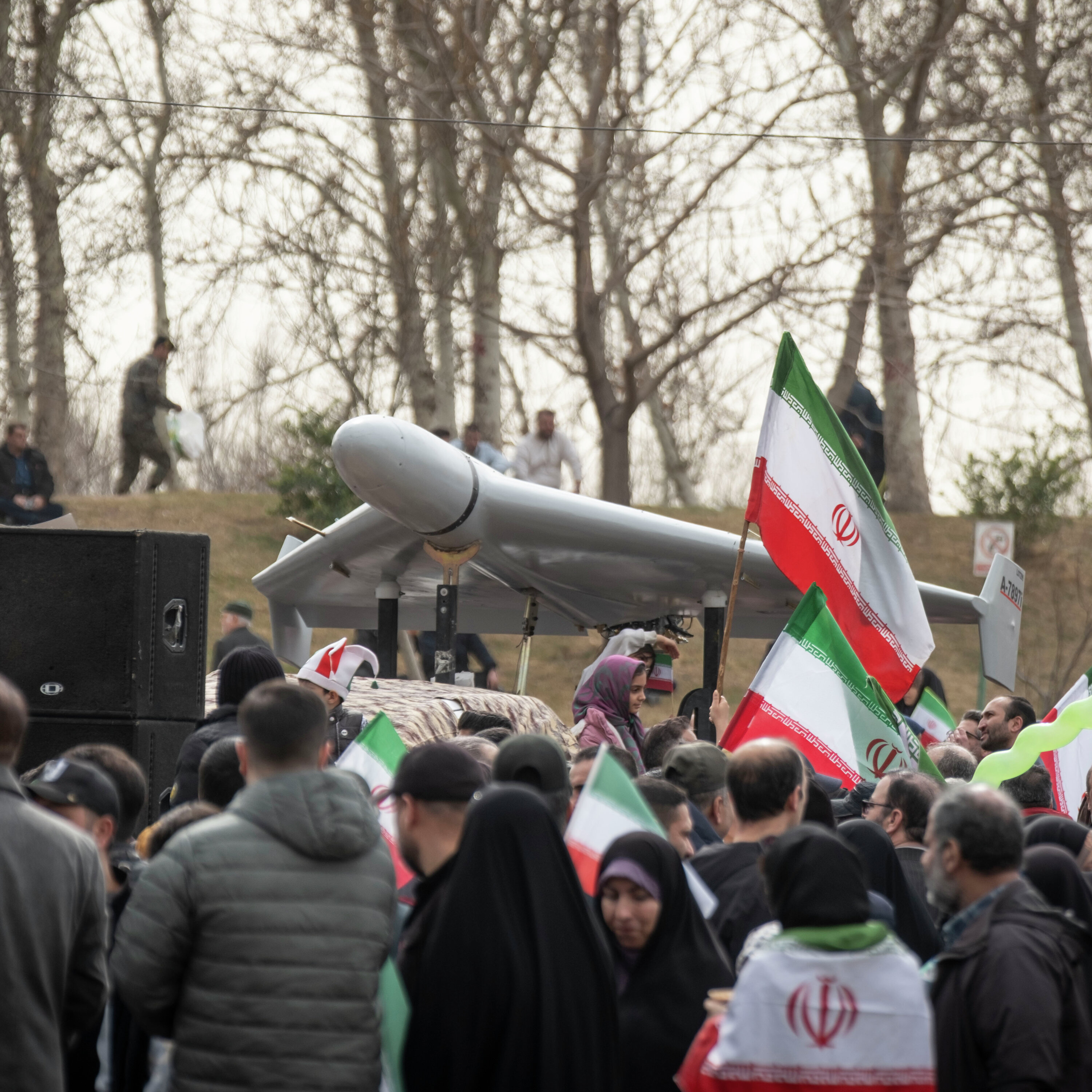
It's a missile, so you fire it once and it's done. And they cost about $4 million, maybe a few hundred thousand dollars more. So you can kind of see the mismatch between using a relatively expensive weapon like that to defend against something smaller and cheaper like the sort of shahed 136 one way attack drone, basically rudimentary, cheap, slow cruise missiles that Iran has and is launched in large numbers. If you use your air defense missile to defend against a system like that, you're losing the money battle.
- [05:35]
Sarah Holder
And Becca, you've been crunching the numbers on this can you walk us through what we know about the supply of munitions on either side and how we know what we know?
- [05:46]
Becca Wasser
All right, so let's start with Iran. Iran, we don't have a very good sense of their missile and drone stockpiles, and part of that is by design. Last numbers that we have is Iran had about 2,000 or so ballistic missiles prior to the 12 day war, and that some of those were fired in great number and then it has tried to rebuild in that interregnum period. In terms of drones, we don't have good data on what Iran drone production rates are specifically shaheds, but we do have some decent data on the Russian side. They've been able to crank out upwards of 400 a day. So if you assume that Iran has a very similar production rate, you could imagine that their drone arsenal is quite large. Shifting over to the US and its Gulf partners, the Gulf partners have spent years and years buying US weaponry, including a lot of very expensive air defense systems. We don't have a good sense of their stockpile numbers, but we have heard that they are running low on some of the precious air defense interceptors that they've been using, as Jerry said, to take out the missile and drone threat emanating from Iran since the start of this conflict. There's just never enough air defense systems to go around. There are never enough missiles and interceptors. So we don't have a good sense of stockpile numbers because they are classified. But at the rate at which they've been used, you could imagine that some of those are running a little bit low. That doesn't mean that the US Is running out, but it does mean that the US May need to pull them from other theaters if possible. When you look at some of the long range weapons, they're pricey and those have been used to great effect already in this conflict. And the US Is trying to shift away from using those standoff weapons to now using closer range stand in weapons, in part because those joint attack munitions are more plentiful. But that requires the US to be able to get a little bit closer in order to drop these largely by
- [07:57]
Jerry Doyle
air, maybe to put a sort of a quantifiable point on that. Right. So if the US used say 250 Tomahawk missiles in the opening days of this operation. So each of those is going to cost, let's sort of ballpark at a million dollars each, so probably a little bit more than that.
- [08:11]
Becca Wasser
1.7.
- [08:13]
Jerry Doyle
1.7. All right, so let's say 2, let's just call it an even 2 million. So that's a half billion dollars spent just on the munitions. Right. And we currently manufacture something like 90 tomahawks a year. So it would take two and a half years to replace the Tomahawks that were fired over the course of one day at the cost of half billion dollars.
- [08:35]
Sarah Holder
What we're talking about here in terms of the cadence of how many munitions have already been deployed just, you know, 10 days into this war, is this typical? Becca?
- [08:46]
Becca Wasser
I think the intensity of US And Israeli strikes is quite notable. The United States has said that they alone have conducted over 3000 strikes. You also have the Department of Defense saying that they have used more air power in the first few days of this conflict than the they did in the opening days of the war on Iraq. So, you know, if you look at this historically, it's a massive use of air power, it's a massive use of missiles, it's a massive use of American force. Which leads to the question of how long does this go on, Becca?
- [09:24]
Sarah Holder
What are the plans to replace weapons that have already been used in this conflict? Is production ramping up and how quickly could that happen?
- [09:35]
Becca Wasser
Production is ramping up, but I wouldn't say that it's quick. More recently, there have been efforts to try and scale missile production. Missiles and munitions are very volatile in terms of their procurement, and the thing that usually ends up on the cutting room floor had traditionally been munitions. I think, you know, Ukraine was a wake up call for the United States in that it needed to get after this problem. So we did see some efforts there. More recently we, we have this announcement of a potential supplemental for munitions to try and ramp up supply of some of the most critical munitions, including those air defense interceptors that have been used like Patriot Thaad as well as the standard missile series. But those are going to be longer term efforts. When they're saying that they're going to ramp production, we're looking at, you know, what the White House says, quadrupling it, but that's not until the2030s. So it's going to take a while for that to happen, in part because it's a lengthy endeavor and there's a lot of bottlenecks that exist in the munitions production process.
- [10:45]
Sarah Holder
And what about on the Iranian side? How is Iran thinking about replacing munitions as they run through them? Jerry?
- [10:53]
Jerry Doyle
It's very difficult to tell from the outside what they're able to produce. Most of their production facilities at this point in the war are going to be in places where you can't see them easily from a satellite, maybe ground buried in a mountain disguised as something else. And it's going to be much easier for them to replace the cheaper lower end ammunition they're using like the Shahed, you know, sort of these small cruise missiles, which you know are just a small step up from being a remote control airplane with an artillery shell strapped to it. Missiles are obviously much more difficult to produce in terms of materials, in terms of the expertise and machinery that you need to do that and get them to work well. So it strikes me as very unlikely that Iran will be able generate more missiles while the war is going on.
- [11:43]
Sarah Holder
It seems like what you're both describing is that the US Is using missiles like Patriots that take lots of time, millions of dollars to produce to shoot down drones like the Shaheds that are cheap and quick to produce. I'm wondering whether that poses a sustainability challenge for the US Here or gives Iran a leg up.
- [12:02]
Jerry Doyle
It's a sustainability challenge in the sense not that the US Is going to run out of munition, even air defense missiles full stop. It's more that they would have to confront strain on their inventory that would force them to pull from other places that are very important to the US military, such as the Indo Pacific where you have China, which has the world's largest conventional ballistic missile inventory with US bases obviously in Korea, Japan, Guam under threat from those missiles. So that would be the danger there for the US side that they start having to rob Peter to pay Paul in order to keep their air defenses in the Middle east robust.
- [12:47]
Sarah Holder
After the break, Bloomberg's global Defense editor Jerry Doyle and Bloomberg Economics defense lead Becca Wasser on what we know about the economic cost and the opportunity cost of the war so far.
- [13:00]
Jerry Doyle
Foreign.
- [13:04]
Ana Navarro
I'm Ana Navarro and on my new podcast Bleep with Anna Navarro, I'm talking to the people closest to the biggest issues happening in your community and around the world. Because I know deep down inside right now we are all cursing and asking what the BLEEP is going on. I'm talking to people like Julie K. Brown, who broke the explosive story on Jeffrey Epstein in 2018. These victims have been let down time and time again for decades and decades and decades by local law enforcement, by federal law enforcement, by administration after administration,
- [13:41]
Becca Wasser
the Justice Department through, I think we counted four presidential administrations failed these victims.
- [13:49]
Ana Navarro
Listen to BLEEP with Ana Navarro as part of the My Cultura Podcast network, available on the iHeartRadio app, Apple Podcasts or wherever you get your podcasts.
- [14:03]
Sarah Holder
Early birds. Always rise to the occasion for summer vacation planning because early gets you closer to the action. So don't be late. Book your next vacation early on VRBO and save over $120. Rise and shine average savings $141 select
- [14:17]
Commercial Announcer
homes only Safeway and Albertsons have made saving easier than ever with great savings on family favorites this week. 16 ounce sweet strawberries are two for $5 member price. And don't miss the incredible deal on Signature select boneless skinless chicken breast value packs for $2.97 per pound limit. One plus medium avocados or mangoes are five for $5 member price. Fresh and delicious savings for every meal. Hurry in. These deals won't last. Visit Safeway or albertsons.com for more deals and ways to save.
- [14:55]
Sarah Holder
Becca, I'm hoping you could help us put the overall cost of this war into context. How much has this been costing the US Already, even in its first few days?
- [15:08]
Becca Wasser
So I haven't crunched the numbers yet, but some smart analysts in D.C. already have, and we are looking at billions, billions of dollars just in pure operational cost alone. We don't have full numbers of what has been expended yet, and once we do, I think we're going to see an enormous cost. But I think it's worth remembering that the human cost of war is probably the greatest cost already. We are seeing civilians in Iran taking the brunt of this conflict. We are also seeing human loss of life throughout the Gulf and elsewhere in the Middle east as well. And we've also seen now seven US Service members killed, which is very, very notable for the United States. So we have the financial costs. But war is not just about financial cost. And even in an attritional war, materiel is not going to be the most decisive factor. At the end of the day, the decision to end a war is often political and sometimes it's more on the human cost that actually brings folks to the table.
- [16:16]
Sarah Holder
I mean, and how long might it take for those costs, those real costs of human lives and those billions of DOL that have already spent on this war to filter into the political arena and make a difference in terms of how the administration is thinking about continuing this war?
- [16:32]
Jerry Doyle
To a certain extent, some of the war is already funded through the Pentagon Defense Department budget that was approved last year for 2026. Additional costs like the, you know, $50 billion for additional munitions and operations. That stuff is it's going to have to be paid for somehow. And I'm sure that senators and representatives in Congress are going to make hay one way or the other about who's paying for it.
- [16:59]
Sarah Holder
I mean, this obviously is not the only conflict that the US has waded into this year.
- [17:04]
Becca Wasser
Right.
- [17:04]
Sarah Holder
We've seen Trump mount an operation to topple the leader of Venezuela. He's made noises about Greenland and Cuba, which is currently under an oil blockade. So politics and cost aside, from a perspective of troops, personnel, weaponry, you know, how many more battles can the US Military sustain? And is that something that weighs on Trump or the U.S. right now?
- [17:26]
Jerry Doyle
I mean, I can say that 25, 30 years ago, the U.S. military was sort of the idea that it was designed to fight two wars at once, much as it did in World War II, sort of fighting in the Pacific and fighting in Europe. That's not really the case anymore. So that shifted to, we're going to be able to fight one war at a time and deter another war.
- [17:46]
Becca Wasser
And I think all of this speaks to a longer readiness challenge for the US Military. Already we're seeing such wear and tear on equipment. We are seeing forces overseas or out at sea for extended deployments. We're seeing a ton of weapons being used that aren't quickly and easily replaced. And that just means that the United States might be less prepared to deal with unforeseen crises, to mount another operation, say, against Cuba or elsewhere, or even in the long term, be able to deter and, if needed, defend against potential aggression in the Indo Pacific if something were to pop off with China.
- [18:33]
Sarah Holder
I mean, as we talk about other conflicts, you know, the Russia, Ukraine war is waging on. Ukraine has been seeking U.S. missiles for its defense, and it recently came up with a proposal for a swap of sorts to help the US Defend against Iran. I'm wondering if you could talk about what they're offering and how that fits into this conversation.
- [18:50]
Jerry Doyle
So Ukraine has sort of helped develop this theory of layered air defenses for protecting against a drone threat that until the Iran war, we hadn't really seen at large scale anywhere else. What Zelenskyy has proposed publicly is that Ukraine would help out with some systems that it uses to intercept drones cheaply. They can provide that sort of hardware, that sort of equipment, but also the expertise they have in sort of arranging and layering drone defenses, because this is something, this is a problem that they've confronted every day for years and gotten pretty good at solving. And Ukraine has also, in exchange, asked for more air defense missiles, specifically Patriot PAC 3 missiles, which are being burned through in the Middle east right now.
- [19:35]
Sarah Holder
We talked at the top about the Iran war Becoming attritional. So I want to wrap up this conversation by asking Becca, from where we sit today, which side is positioned to outlast the other in this war?
- [19:50]
Becca Wasser
If you're judging by pure hardware alone, the answer is probably the United States, based on its much larger military, its much larger arsenal, and everything that it could bring to bear in this conflict. But at the end of the day, war is not just about the number of missiles that you have or the capabilities. It really does. It does come down to will and will to fight. And for Iran, this fight is an existential one. So you can imagine that even if the US could outlast Iran in terms of weapons and capabilities and number of forces, Iran is going to continue this for as long as they possibly can.
- [20:39]
Jerry Doyle
It sort of depends on what the operational goal is for the US Is it regime change? If that's the case, then by that standard, maybe Iran ends up on top. If their campaign continues and they're saying that the goal is for Iran to be completely disarmed, then maybe, maybe you could come up with some sort of a theory of victory for that Iran runs out of weapons or its stockpiles are destroyed, Then maybe you can say the US Wins that scenario. But like Becca was saying, it's sort of a Pyrrhic victory. You know, the US Would have burned through a tremendous amount of hardware. It would have suffered, you know, casualties, both dead and wounded. It would have inflicted quite a bit of destruction and death on Iran, destabilize the region and sort of destabilize the oil markets. If it comes to a scenario where the US Stops bombing because Iran stops shooting, then it's really hard to view that in any terms other than sort of a stalemate. And then it's about rebuilding and trying to repair all the damage, not just in the Middle east, but around the world.
- [21:49]
Becca Wasser
Yeah. And I think if you look at the historical record of protracted conflicts, you have these intense periods of fighting followed by bouts of reconstitution and where you're trying to rebuild your forces before restarting the fighting again. And that's a really scary thing to think about, because that puts the US And Iran potentially in a cycle of conflict for a very long time and very much invokes the idea of some of the forever wars that Trump campaigned against and said that he wouldn't get involved in in the Middle East.
- [22:23]
Jerry Doyle
I think it's also important to look again at the outcome. What is the goal that the US Is trying to bring about with this military action? You can be completely dominant. You can destroy the other guy's military completely. But if you aren't achieving an effect, whatever effect it is you're going for, then you're just fighting.
- [22:43]
Becca Wasser
Operational success is not the same as strategic success.
- [22:52]
Sarah Holder
This is the Big Take from Bloomberg News. I'm Sarah Holder. To get more from the Big Take and unlimited access to all of bloomberg.com, subscribe today@bloomberg.com podcastoffer thanks for listening. We'll be back tomorrow.
- [23:16]
Ana Navarro
I'm Anna Navarro and on my new podcast, Bleep with Ana Navarro, I'm talking to the people closest to the biggest issues happening in your community and around the world. Because I know deep down inside right now we are all cursing and asking what? What the bleep is going on? Every week I'm breaking down the biggest issues happening in our communities and around the world. I'm talking to people like Julie K. Brown who broke the explosive story on Jeffrey Epstein in 2018.
- [23:44]
Becca Wasser
The Justice Department through we counted four presidential administrations failed these victims.
- [23:51]
Ana Navarro
Listen to Bleep with Ana Navarro on the iHeartRadio app Apple Podcasts or wherever you get your podcast us 30 years
- [23:59]
Commercial Announcer
ago, blinds.com broke the mold and made custom window treatments easy for everyone. Over 25 million windows later, we're celebrating by giving our customers up to 50% off site wide during our anniversary sale. Whether you DIY it or want a pro to handle everything from measure to install, blinds.com has you covered. Shop online, access real design professionals and get free samples. Thank you for 30amazing years. Shop the anniversary sale now through March 11th and get up to 50% off site wide@blinds.com.