Loading summary
Transcript86 lines
- [00:00]
Chase Business Advertiser
Small businesses are the pulse of every community. They bring people together, create opportunities and drive growth. Chase for Business helps business owners like you with personalized guidance and convenient digital tools all in one place. With that guidance and your determination, you can take your business farther and help build a brighter future for your community. Learn more@chase.com business chase for business Make More of what's Yours the Chase Mobile app is available for select mobile devices. Message and data rates may apply JPMorgan Chase Bank NA Member FDIC Copyright 2026
- [00:35]
Sonesta Travel Pass Advertiser
JPMorgan Chase Co. Sonesta Travel Pass Makes traveling More Rewarding Designed to help you get more out of every stay, sign up@sinesta.com to enjoy instant savings, bonus points and valuable perks like early check in, late checkout, room upgrades and free stays over time. With Sonesta Travel Pass, every stay brings you closer to your next reward. Choose from more than 1100 hotels across 13 distinctive brands and unlock the best available rates when you book direct with Sonesta Travel Pass. Here today, roam tomorrow join now@sonesta.com terms
- [01:11]
The Hartford Insurance Advertiser
and conditions apply when you're running a business, the best days are the ones where priorities stay on track. For midsize and large companies, risk can affect multiple parts of the organization at once, from property and liability to cyber and regulatory challenges. At that level, managing risk becomes an ongoing discipline. At the Hartford, the focus is on helping businesses manage risk before it turns into something more disruptive. And when losses do happen, that work is paired with insurance coverage shaped by years of underwriting, risk engineering and claims experience. Learn more@thehartford.com riskmitigation policies provided by Hartford Fire Insurance Company and its property and casualty affiliates, Harmony Hartford, Connecticut
- [01:55]
Bloomberg Audio Announcer
Bloomberg Audio
- [01:57]
Stacey Vanek Smith
Studios Podcasts Radio News in late January, Todd Gillespie was at a hotel in El Salvador listening to a man in a T shirt and track pants talk about the global financial system and the end of the world as we know it.
- [02:14]
Todd Gillespie
New regulations plus, you know, wars plus economy, instability, monetary debase, AI and all that. These are all variables. If you look at all of them, you can predict the trajectory of society.
- [02:34]
I was in this big ballroom in this hotel in San Salvador, darkened lights and chandeliers and this man is standing on this stage in front of, you know, a thousand odd people, really, and presenting this PowerPoint slides with, you know, pictures of dark storm clouds.
- [02:50]
Society cannot be stable if really half of the population, billions and billions of, don't have access to what maybe many of us in this room are used to.
- [03:01]
But how we can, you know Basically talking about the shackles of the current financial system and the political decline and geopolitical dangers that the world is seeing and basically how his company is going to thrive through that.
- [03:18]
Stacey Vanek Smith
Todd is a reporter on the finance team at Bloomberg. He normally covers large investment banks including Goldman Sachs. The guy on stage that was Paolo Arduino, the CE of Tether, a cryptocurrency linked to the value of the US dollar. Arduino told the crowd in that ballroom that he's building Tether not just to survive Armageddon, but to thrive in Armageddon
- [03:41]
Todd Gillespie
when many other companies will fail, when countries might fail, when we might see migration crises, when we might see. Yeah, exactly. He sees Tether as this sort of life raft.
- [03:50]
Stacey Vanek Smith
In just over a decade, Tether has grown from an idea into a global crypto juggernaut. It has faced some major hurdles along the way. But under President Trump's crypto friendly administration and with investors looking for alternatives to traditional financial systems, Tether could now be seeing some of its fastest growth yet.
- [04:10]
Todd Gillespie
It is one of the most increasingly powerful companies in the world that you've already never heard of.
- [04:20]
Stacey Vanek Smith
I'm Stacey Vanek Smith in for Sarah Holder and David Gura and this is the big take from Bloomberg News. Today on the show Tether, one of the world's most powerful and most secretive companies. We unpack how its business model of issuing dollar linked stablecoin is turning it into a deals machine and whether scrutiny over its political connections could complicate its meteoric rise. I am a little bit embarrassed to
- [04:51]
Daisy
say I had not heard of Tether, but it is a huge company. Will you describe Tether a little bit? What is and what does it do?
- [05:00]
Todd Gillespie
Yeah, of course, Daisy. And you're not alone in thinking, you know, in not really knowing what Tether is.
- [05:05]
Q Care Plus Advertiser
What makes you feel better.
- [05:06]
Stacey Vanek Smith
Essentially Tether offers a kind of cryptocurrency, a stablecoin.
- [05:11]
Todd Gillespie
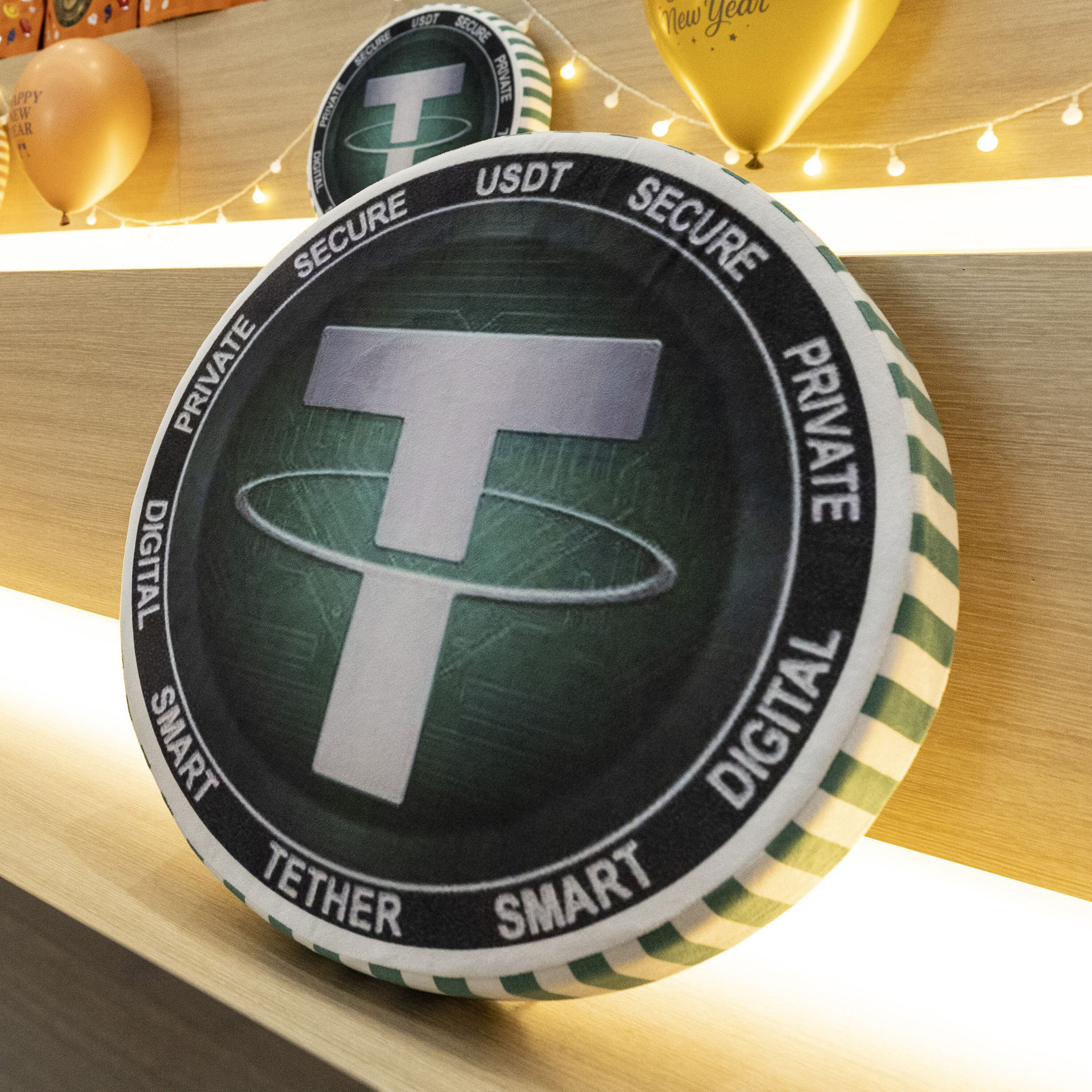
Its main product is this thing called usdt, which is a token that essentially mirrors the value of the US dollar.
- [05:18]
Daisy
It's pegged.
- [05:19]
Todd Gillespie
It's pegged. Yeah, exactly. It's tethered, right? That's the whole point. Yes.
- [05:23]
Stacey Vanek Smith
Got it.
- [05:24]
Todd Gillespie
Smart.
- [05:24]
Stacey Vanek Smith
Todd says the Tether origin story goes something like this.
- [05:29]
Todd Gillespie
About like 15 odd years ago, some very smart people had this idea of having this token that was pegged to the US dollar but operated outside of the traditional financial system. You know, this comes from the same portion of the sort of crypto world that is somewhat libertarian, it's somewhat anti the control that central banks have over the monetary system, anti fiat currency, anti fiat currency, anti, you know, inflation, essentially anti the ability of the federal government and central banks to, you know, devalue a currency and essentially deval value, what a lot of normal people and common people, you know, get affected by. And they're basically saying you should have some kind of fixed money supply that is outside of the traditional financial system that allows the free flow of money and takes some power out of the hands of central banks.
- [06:19]
Stacey Vanek Smith
By tethering the value of USDT to the US dollar, the idea is that the value of their stablecoin will remain stable. One USDT is supposed to always equal $1. Its value doesn't rise and fall like Bitcoin and other cryptocurrencies. And because it's on the blockchain, you can send Tether to anyone else with a crypto wallet instantly online without having to involve a bank. Todd says both those qualities, the stability and the transferability make it really appealing for people in emerging markets.
- [06:52]
Todd Gillespie
When you buy a Tether coin, or you essentially go to Tether's website and you, you buy a Tether, a usdt, you give it a usdt, you give it a dollar, you give the company a dollar plus a small fee, you get a Tether in return which enables you to send things, enables you to remit payments, for instance. One of the main use cases that Tether has is for people, for instance, who might live in the US who want to send money home to their family and don't want a Western Union or a traditional bank to take a huge cut of that. Tether allows you to do that with minimal fees, essentially. So it basically is a much more efficient way of doing that, of processing payments. And fundamentally like that' it says, makes it so popular.
- [07:32]
Stacey Vanek Smith
But those same reasons, the stable value, the ability to store it and send it without involving banks, have also made USDT a popular way for people to conduct illicit transactions. And that is something Tether says it has tried to clamp down on.
- [07:47]
Todd Gillespie
Tether says that partly because it's on a blockchain, it allows you to trace these transactions. So once you can identify whose wallets are sort of on the other side, who these users are, who the sender is, who the receiver is, allows you to freeze that actually better than you would for, for instance, with cash, right? Like, if it's better to at least have something on a blockchain where you can isolate it, you can trace it, you can trace it, versus like having, you know, some drug cartel go over borders with, with bags and bags of cash.
- [08:15]
Stacey Vanek Smith
In a statement, Tether said it, quote, takes fraud, consumer harm, and the misuse of USDT extremely seriously and maintains a zero tolerance policy toward illicit activity, end quote. The company added it works with law enforcement agencies worldwide and and has frozen about $4 billion worth of USDT tokens at the behest of authorities. But a central question around Tether is its reserves. For every dollar's worth of usdt, the company needs to hold a dollar in some kind of stable, relatively liquid asset to back it up. If not, the whole currency could collapse. But it is really hard for anyone outside the company to know exactly how much money Tether holds or how that money is invested.
- [09:01]
Todd Gillespie
Tether has never had a proper audit, which has led to a lot of skepticism over the strength of its reserves.
- [09:08]
Stacey Vanek Smith
Tether has announced it's aiming to undergo a full audit by the end of 2026. But for many years, that uncertainty gave U.S. regulators pause. In February of 2021, the New York Attorney General's office found that Tether misrepresented its reserve holdings and banned the company from doing business in New York. Later that year, the Commodity Futures Trading Commission found that between 2016 and 2018, Tether only had enough fiat reserves to back up its USDT tokens about a quarter of the time and fined the company $41 million. But when the second Trump administration began, the political winds shifted for Tether.
- [09:50]
Todd Gillespie
In the Trump administration, you have a Commerce Secretary, Howard Lutnick, who was formerly the CEO of Counter Fitzgerald, which is Tether's longtime banker. You have him in the cabinet.
- [10:00]
Daisy
His family owns some of the company, from what I understand.
- [10:03]
Todd Gillespie
Indeed, yeah. So essentially, through the company, Howard Latnick's children own a convertible bond that represents about a possible 5% stake in Tether, which at a valuation of $500 billion. Potential valuation of that large, that's obviously a lot of money.
- [10:20]
Daisy
That's like private island money.
- [10:21]
Todd Gillespie
It's private island money.
- [10:23]
Stacey Vanek Smith
Last October, Commerce Secretary Lutnick sold his multi billion dollar ownership interest in Cantor Fitzgerald, the financial services company he led for more than three decades, to trust benefiting his four children. At about the same time, one of those trusts took the unusual step of borrowing an undisclosed sum from Tether. A spokesman for Cantor Fitzgerald and the Lutnick children declined to discuss the size of the loan or whether it was used to finance any part of the asset sale. And in response to questions about Lutnick's divestiture and Tether's loan, a White House spokesperson said, quote, the only special interest Guiding the Trump administration's decision making is the best interest of the American people. During the same period of time, US Lawmakers also fast tracked legislation to encourage the adoption of stablecoins.
- [11:14]
Todd Gillespie
We've seen the Genius act being passed through Congress, which essentially creates a regulatory framework for stablecoins. So not just Tether, but also Circle, which is its biggest rival, but is a smaller company, are basically now given guardrails to issue tokens that are compliant with US Government regulations, which put them under greater obligations in terms of compliance and also mandate them to back their currencies, back their tokens with reserves of U.S. treasuries, which the government wants because essentially, the more buyers you have for US Treasuries, it allows you to lower the cost of your debt.
- [11:50]
Sonesta Travel Pass Advertiser
Right.
- [11:50]
Todd Gillespie
Increase in demand helps you lower the price for the government. Right. So it increases the cost.
- [11:56]
Daisy
This is like how the government gets a lot of its money. These are little loans.
- [11:59]
Todd Gillespie
Exactly. So on a purely commercial level, for Scott Besant or the U.S. treasury, you know, it's a great deal.
- [12:05]
Stacey Vanek Smith
In late 2025, Tether CEO posted on X that his company held about $135 billion worth of U.S. treasuries, which he said made it the 17th largest holder of U.S. debt in the world and the only entity in the top 20 that was not a country. Treasury Secretary Scott Besant has lauded the stablecoin industry purchasing all of that debt, a move he says will lower U.S. borrowing costs and cement the dollar's status as the world's reserve currency.
- [12:35]
Todd Gillespie
They don't really care all that much about, you know, what Tether might be doing with its profits that it gets from interests on its reserves.
- [12:42]
Stacey Vanek Smith
But it's counting on that demand.
- [12:43]
Daisy
I mean, $100 billion worth of treasuries, if that demand goes away, that's a big deal for our entire economy.
- [12:50]
Todd Gillespie
Potentially, yeah. That's a concern that has been raised at meetings among finance chiefs of major economies. We've reported that last year at the imf, there were discussions about the potential for stablecoins to become a much larger part of buying government debt around the world. And that is a potentially, if not worrying, thing. It's a thing that people have to think carefully about. Right. Because if there's a run on a stablecoin, if these companies aren't set up properly, if there are compliance failures, or, you know, if you simply can't trust the folks who are running them, that leaves your whole economy open to potentially a lot of. A lot of danger on a financial level.
- [13:35]
Stacey Vanek Smith
So what's the company doing with all that money and how is it positioning itself to move into the US market? That's next.
- [13:46]
Bloomberg Audio Announcer
Everyone has been there. Your team's feedback is scattered across emails, chats and sticky notes. It's a mess, but PDF spaces in Adobe Acrobat gives you one collaborative workspace to streamline every file and comment. So if you need six departments to finally agree on a proposal, do that with Acrobat. Need to turn a mountain of feedback into one plan of action. Do that with Acrobat. Want to stop searching for files and finally get everyone on the same page. Do that, do that, do that with Acrobat. Learn more@adobe.com do that with Acrobat it's
- [14:23]
Q Care Plus Advertiser
the original HBIC here. If you are out here living your life, being fabulous, being booked, being busy, being the hbic, you need to be taking care of yourself. That's why I love Q Care Plus Prep Doxy Pep baby. It's fast, it's easy, it's online and it comes straight to you. And now they even offer easy and hair loss treatment with a prep prescription. Get into Q Care plus and stay ready.
- [14:53]
PJ Vogt
Hi, I'm PJ Vogt. My podcast search engine has a new two part series for you. Of all the new technologies coming out of AI, the most transformative one might be driverless cars. They're already on the road in 10American cities and they're quickly coming to more. We tell the story of how we got here, the secret team at Google that spent 15 years building what might be the safest vehicle on the road. And we cover the fights brewing in blue cities where unions and politicians are working to keep those cars off the streets. Listen to Search Engine wherever you get your podcasts.
- [15:29]
Stacey Vanek Smith
Tether has traditionally invested most of its $193 billion worth of assets in U.S. treasuries. That model has led to a lot of profit. Last year, with only 300 people on staff, Tether reported a profit of $10 billion. And now Bloomberg's Todd Gillespie says Tether is looking to grow even bigger.
- [15:51]
Todd Gillespie
It is now trying to raise money at a 500 billion plus dollar valuation, which would cement it really for the first time as one of the most valuable private companies in the world when it started its fundraising process that we broke the story of late last year on par with what SpaceX was raising money at. So it gives you an idea of the kind of ballparks that we're talking about. SpaceX OpenAI tether with so much capital,
- [16:16]
Stacey Vanek Smith
Tether is poised to become a big player wherever it chooses to invest its reserves. And it's not just US debt.
- [16:23]
Todd Gillespie
They have been buying land in South America. They've been supporting commodity trading companies. They've been buying up gold, huge, huge quantities.
- [16:32]
Stacey Vanek Smith
By the way, last year Tether bought 70 tons of gold. That is more than the reported purchases of almost any central bank.
- [16:40]
Daisy
It's interesting that a crypto company is investing so heavily in gold and US Treasuries. I mean, those are sort of the two traditional safe havens from volatility. And crypto is not a place to go to avoid volatility generally.
- [16:57]
Todd Gillespie
And it's interesting to think about how they're hedging that. I mean, it seems like a huge hedge because they are, they are, they are investing heavily in very, very safe assets. But they also see Bitcoin as increasingly a safe asset. Their argument is that, you know, as you see other stores of value become less and less predictable, the demand for Bitcoin will go up, you know, as a safe haven asset as well. So from their mind, that's what they're doing. They are future proofing the company, but also showing a way to have a future proofed economy.
- [17:29]
Stacey Vanek Smith
Buying gold and US Treasuries is one thing. Governments, companies and individuals all over the world can do that. But Tether is looking to expand its operations to America. Before the passage of the Genius act In July of 2025, stablecoins were in
- [17:43]
Daisy
a sort of legal limbo in the
- [17:45]
Stacey Vanek Smith
US which limited their popularity and growth in this country. But back in August, Tether announced a new hire to help change that.
- [17:53]
Todd Gillespie
One of the key people involved in this is a guy called Bo Hines, who by the way, is just 30 years old, but he was one of the key crypto advisors in the Trump administration and left recently and is now CEO of of Tether's US operations.
- [18:07]
Stacey Vanek Smith
And in January, just a few months after Heinz joined Tether, the company launched a new stablecoin, the usat.
- [18:15]
Todd Gillespie
So the main Tether token is usdt, but USAT is essentially a token that is compliant with the Genius act, compliant with US Government regulations.
- [18:25]
Daisy
So it's a special coin Tether's issuing just for the US market.
- [18:30]
Todd Gillespie
Right. They're essentially interchangeable. But this one complies specifically with the restrictions of the US Government's new regulations.
- [18:39]
Stacey Vanek Smith
Like usdt, the USAT token is pegged to the US dollar. What makes USAT different is that US Regulations restrict where Tether can keep the reserves. USAT is exclusively backed by assets like US Treasuries. Tether also cannot place USAT reserves into precious metals like gold or into Bitcoin. And the company's pitch for US Consumers is different too. Since people in the US Already have access to dollars. Having a dollar linked Stablecoin doesn't really have the same appeal. It's not the same safe haven from inflation as it is in other parts of the world. In the US Todd says the company is looking to push Tether as a better way to process payments.
- [19:24]
Todd Gillespie
What they're enabling people to do here, for instance, what they think will be an appealing characteristic for companies and individuals here, is that you can avoid things like credit card fees. If you're a restaurant, you might pay
- [19:35]
Daisy
for my dinner at a restaurant with USAT.
- [19:39]
Todd Gillespie
Yeah, you can avoid a 3% credit card fee, for instance. They might give you a discount in the same way that if you pay in cash, they might do. Yeah. And also the transaction would be settled immediately because it's done on the blockchain, which is essentially instantaneous.
- [19:55]
Stacey Vanek Smith
To bolster that effort, Tether has invested in a wide network of online companies that cater to US Consumers. Todd says the strategy in part is to use those platforms to help push Americans into using usat.
- [20:09]
Todd Gillespie
So Tether has invested in Rumble, for instance, which is a sort of right wing free speech video platform. Arrival to YouTube, where they already have a big base of millions of users who use that all the time. A lot of the events at the conference in San Salvador were streamed onto rumb. So they're looking to grow. And Paolo in our interview told me that they are looking increasingly for digital platforms in the US to invest into, and that allows them to increase their use case, increase their relevance essentially to the US Economy.
- [20:40]
Stacey Vanek Smith
Tether has also used its fortunes to make inroads into Washington. An entity that identified itself as Tether America signed on as a donor to Trump's White House Ballroom project. The New York Times has reported that Tether is also expected to back a new political spending group ahead of the midterm elections this year, which it could do through its new US Arm.
- [21:01]
Daisy
So after having done a deep dive into this company and followed this company and its sort of recent inroads into the U.S. economy and political system, what is your takeaway here? Is there sort of a systemic danger that Tether poses, or how do you feel after having reported out all of this?
- [21:22]
Todd Gillespie
I think I'll answer your question with two points. I think the first one is that we've seen stablecoin adoption actually plateau a bit recently in the past year or two.
- [21:29]
Stacey Vanek Smith
Yeah.
- [21:30]
Daisy
Crypto has not had a good right couple months.
- [21:33]
Todd Gillespie
Crypto as a whole. Yeah, the crypto as an industry certainly has, hasn't had a whole, whole great couple of months. And that will obviously like hit faith in the sector and hit faith in stablecoins as a proxy as well to some degree. There's no doubt about that. My takeaway is I, you know, I don't think tether is going to become the most mainstream currency in the US or payment token in the US Anytime super soon. But there is a growing use case that I think they will work out somehow a way to expand in the US and increase adoption some ways, whether that's through digital platforms or elsewhere. But the other thing that really interests me is really what they're going to do with their profits. And they've invested, as we've said, in Rumble, but they've also invested in dozens of other companies. I mean, their investment portfolio across the world is about 130 different companies that they've invested their profits in. And what are they really going to do with all that money is a huge question.
- [22:32]
Stacey Vanek Smith
This is the Big Take from Bloomberg News News. I'm Stacey Vanek Smith in for Sarah Holder and David Gura. To get more from the Big Take and unlimited access to all of bloomberg.com, subscribe today@bloomberg.com podcastoffer if you liked this episode, make sure to follow and review the Big Take. Wherever you listen to podcasts, it helps people find the show. And thank you for listening. We'll be back tomorrow.
- [23:01]
Q Care Plus Advertiser
It's the original HBIC here. If you are out here living your life, being fabulous, being booked, being busy, being the hbic, you need to be taking care of yourself. That's why I love Q Care Plus Prep Doxy Pep, baby. It's fast, it's easy, it's online and it comes straight to you. And now they even offer ED and hair loss treatment with a prep prescription. Get into Q Care plus and stay ready.
- [23:31]
Antonia Cundi
Opus DEI is a controversial Catholic group known for its orthodoxy and discipline. There's always been an idea in Opus
- [23:40]
Chase Business Advertiser
DEI of trying to be near the elite of society.
- [23:44]
Antonia Cundi
I'm Antonia Cundi. I'm a journalist with the Financial Times, and I've been investigating how Opus DEI has become central to the American conservative movement.
- [23:53]
The Hartford Insurance Advertiser
We were the closest tabernacle to the
- [23:55]
Antonia Cundi
White House from the Financial Times. Listen to untold Opus DEI wherever you get your podcasts.