Loading summary
Transcript75 lines
- [00:01]
Lauren Grusch
Opus DEI is a controversial Catholic group
- [00:03]
Stacey Vanek Smith
known for its orthodoxy and discipline.
- [00:05]
Lauren Grusch
There's always been an idea in Opus DEI of trying to be near the elite of society. I'm Antonia Cundi. I'm a journalist with the Financial Times, and I've been investigating how Opus DEI has become central to the American conservative movement.
- [00:22]
Podcast Promoter (Secret World of Roald Dahl)
We were the closest tabernacle to the
- [00:24]
Lauren Grusch
White House from the Financial Times. Listen to untold Opus DEI wherever you get your podcasts.
- [00:30]
Podcast Promoter (Secret World of Roald Dahl)
You know Roald Dahl. He thought up Willy Wonka in the bfg. But did you know he was a spy? In the new podcast the Secret World of Roald Dahl, I'll tell you that story and much, much more. What you probably won't believe it either.
- [00:45]
Stacey Vanek Smith
Was this before you wrote his stories?
- [00:47]
Lauren Grusch
It must have been okay, I don't think that's true.
- [00:50]
Podcast Promoter (Secret World of Roald Dahl)
I'm telling you, the guy was a spy. Listen to the Secret World of Roald Dahl on the iHeartRadio app, Apple Podcasts, or wherever you get your podcasts.
- [01:00]
Blinds.com Advertiser
The right window treatments change everything. Your sleep, your privacy, the way every room looks and feels. @blinds.com, we've spent 30 years making it surprisingly simple to get exactly what your home needs. We've covered over 25 million windows and have 50,000 five star reviews to prove we deliver. Whether you DIY it or want a pro to handle everything from measure to install, we have you covered. Real design professionals, free samples, zero pressure right now. Get up to 45 off with minimum purchase plus get a free professional measure@blinds.com rules and restrictions apply.
- [01:33]
Lauren Grusch
Bloomberg Audio Studios Podcasts Radio News we
- [01:39]
Stacey Vanek Smith
recently received confirmation that the Orion spacecraft and its crew have officially entered the lunar sphere of influence. Over the past eight days, four astronauts on NASA's Artemis 2 mission have been flying through the cosmos. It is a mission that could pave the way for future moon landings. And along the way, the crew has sent back some incredible dispatches from their
- [02:02]
Artemis 2 Astronaut
journey from the Cabin of integrity here. As we surpass the furthest distance humans have ever traveled from planet Earth, we do so in honoring the extraordinary efforts and faculty of our predecessors in human space exploration. You can see Copernicus, Rainier, Gamma. It's just everything from the training but in three dimension and absolutely unbelievable. This is incredible.
- [02:31]
Stacey Vanek Smith
Kathy Moonjoy moonjoy It's something that has been a long time in the making, according to Bloomberg Global Space reporter Lauren Grusch.
- [02:39]
Lauren Grusch
In fact, this mission, I would say I've been reporting on it or some version of it for the past 10 years. Basically my entire time being a space
- [02:50]
Stacey Vanek Smith
reporter, Artemis 2 is scheduled to splash down back on Earth in the Pacific Ocean tomorrow. And in addition to that much needed moon joy, Lawrence says the mission could also open up a new frontier in the business of space exploration.
- [03:05]
Lauren Grusch
So it's always been some kind of this, like, nebulous idea of a mission that's always been off in the horizon. So to have it be here and happening and seeing the people on board, their smiles, hearing their speeches, I have to say it has warmed this cynical, skeptical space reporter's cold heart.
- [03:32]
Stacey Vanek Smith
I'm Stacey Vanek Smith in for Sarah Holder and David Gura. And this is the big take from Bloomberg News. Today on the show to the Moon and back again, we look at NASA's historic Artemis 2 mission, what it means for humanity's ambitions among the stars and for the future of the lunar economy. All right, Lauren, so tell us what are some of the basics about this mission that we should know? Give us some of the nuts and bolts, right?
- [04:04]
Lauren Grusch
So the basics of Artemis II is really to test out the safety and efficacy of both the Boeing built Space Launch System rocket, which is the massive rocket that launched the crew, and then the Lockheed Martin built Orion capsule, which is currently carrying the crew through space right now and is bringing them back home. I call it an elaborate dress rehearsal for the moon landings to come.
- [04:32]
Stacey Vanek Smith
For the last week and change, the four crew members of the Artemis 2 have packed into a capsule the size of two minivans, traveling more than 250,000 thousand miles away from Earth. And given that it's a dress rehearsal for future lunar landings, I asked Lauren to walk us through the run of show.
- [04:53]
Lauren Grusch
So the Artemis 2 mission launched more or less on time on April 1st from NASA's Kennedy Space center in Florida.
- [05:03]
Podcast Promoter (Secret World of Roald Dahl)
4, 3, 2, 1. Booster ignition and lift off.
- [05:10]
Blinds.com Advertiser
The crew of Artemis 2 now bound for the moon.
- [05:13]
Lauren Grusch
I was there for that launch. It was spectacular. And it sent the crew riding inside the Orion crew capsule into Earth orbit. They stayed in Earth orbit for a few laps, if you will, and basically further refining their trajectory. They also did something known as a Prox Ops demonstration where they did some manual flying of Orion just to test out that capability.
- [05:40]
Artemis 2 Astronaut
Much quieter that little rumple, like we're driving on a rocky road, but much quieter than in the sim. Great flying with you, Houston. Nice vehicle.
- [05:48]
Lauren Grusch
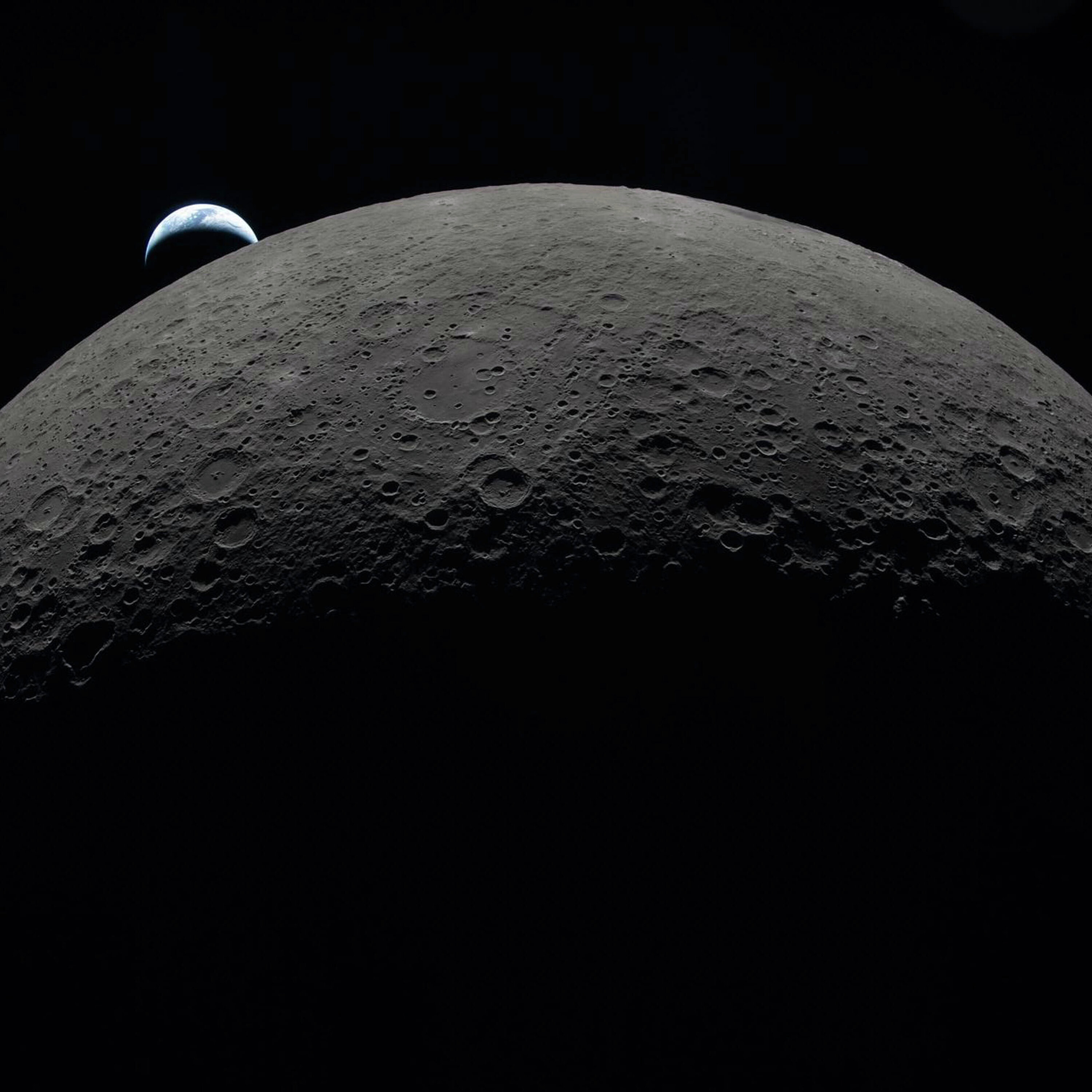
And then on Thursday, they did something, what is known as a translunar injection burn integrity. Looks like a good burn. We're confirming integrity copies where they basically ignited the main engine on Orion, which sent them on A journey to slingshot around the moon. And this was a really critical move because it kind of puts them on this dance with gravity, with the Earth moon system, where they, you know, they arc out around the backside of the moon and then Earth basically starts to pull them back and so it commits them to splashing down. But until that happens, they were on their way out to the moon and they did their lunar flyby on Monday and it was a multi hour long journey on the backside of the moon, on the far side of the moon. And it was just, you know, such a spectacular day.
- [06:44]
Artemis 2 Astronaut
The moon is about three to four times the size of the Earth and it is almost full. And the Earth is just a small crescent out there. It's magnificent.
- [06:54]
Lauren Grusch
We got to hear them describe what they were seeing on the far side, how it looked to their eyes. And then we got to see some really just incredible images that they were able to take on board, which NASA has been sharing since that close approach. And during that time they've been breaking all sorts of records. They broke the record for the farthest distance any humans have ever gone into space, breaking the record that was set by the Apollo 13 mission back in 1970. They're also, the crew themselves is just really incredible. Christina Koch is the first woman to go to the far side of the moon. Victor Glover is the first black astronaut to do that. And then Jeremy Hansen is, is the first Canadian. And so yeah, right now they're on their journey home. And they'll splash down in the Pacific Ocean under parachutes on Friday.
- [07:44]
Stacey Vanek Smith
That's when the astronauts come home and their vessel lands back on Earth.
- [07:48]
Lauren Grusch
Yes, they'll be re entering Earth's atmosphere. And that's kind of the scary portion of the trip because plasma builds up on the outside of the capsule and reaches really high temperatures. And they have a heat shield that is supposed to protect them during that reentry. And there has been some debate over whether or not this heat shield will be up to the task. You know, during the Artemis I mission, when the Orion capsule returned, large chunks of the heat shield did break away, more so than they wanted it to. The capsule did come back fine. And if people had been on board, I think the consensus is that they would have been okay. They changed the trajectory of this mission in order to mitigate the amount of heat buildup that they will experience during that reentry. But there have been some people that have expressed concern about that decision. NASA's pretty confident that, that it will be okay. Lockheed Martin is as well. So that's a real big test that is coming up on Friday, and we'll all be watching very closely.
- [08:57]
Stacey Vanek Smith
So one of the things I think that's been especially captivating so far to a lot of us is that this is the first furthest that humans have been out in space so far. And they went around the back of the Moon, the far side of the Moon, the side that we on Earth don't see. Why did they do that? We've seen all these amazing images, but what was the point of that exercise?
- [09:19]
Lauren Grusch
This really is meant to just test the ability of the SLS and Orion to get to that vicinity of the Moon. They asked them to be extremely detailed and descriptive during that flyby to talk about what they were seeing, what colors they were seeing, how things changed as the light changed, you know, as they were traveling across the surface, because the eyes are the best cameras in the universe. And so being able to see and describe what they were seeing with their own two eyes was, you know, something that scientists were really eager for them to experience.
- [09:55]
Stacey Vanek Smith
What are some of the things they're looking at out for? Like, what would this set NASA up to do next? Potentially?
- [10:02]
Lauren Grusch
Well, apart from the science of also just trying to learn more about the Moon itself, obviously what they see and study will be used and evaluated for potentially future landing sites. And that's going to be a big deal going forward, just making that decision of where they're going to land. Up until now, NASA has been discussing the landing on the South Pole of the Moon because that area is thought to be pretty interesting from a resource perspective. So in recent years, there has been discovery of large quantities of what we think are water in the form of ice on the South Pole's surface. Yeah. And they're thought to be in these permanently shadowed craters that never see the sun. And the temperatures are extremely cold. And that's really exciting for various reasons, because. Because water, if you break it apart, becomes propellant. Hydrogen and oxygen. Those are the basic constituents of rocket propellant. It's that basic. It's not simple, but it's basic. And so the idea is, okay, well, if we can mine that water, then we could potentially break it apart, make it rocket propellant, and then we don't need to bring all of that propellant.
- [11:19]
Stacey Vanek Smith
Lawrence's research like this is key for NASA's next ambition, building a base on the Moon. Earlier this year, the agency announced an ambitious plan for a base on the Moon's south pole, which it hopes to have fully operational by 2036. Estimated cost, $30 billion.
- [11:39]
Lauren Grusch
NASA is making it very loud and clear that they want to be on the moon. They want to create this base. And so they would serve as the anchor customer. And then companies could go, NASA would buy their services, whatever services they're able to provide. And then from there, perhaps a lunar economy could start to grow as more and more companies come and there's a self sustaining base up there.
- [12:08]
Stacey Vanek Smith
So what could that lunar economy look like? After the break, what Artemis 2 means for the future of capitalism in the cosmos.
- [12:23]
Podcast Promoter (Secret World of Roald Dahl)
You know Roald Dahl, he thought of Willy Wonka in the bfg, but did you know he was a spy? In the new podcast, the Secret World of Roald Dahl, I'll tell you that story and much, much more. What you probably won't believe it either was this.
- [12:37]
Stacey Vanek Smith
Before he wrote his stories, it must
- [12:39]
Lauren Grusch
have been okay, I don't think that's true.
- [12:42]
Podcast Promoter (Secret World of Roald Dahl)
I'm telling you, the guy was a spy. Listen to the Secret World of Roald Dahl on the iHeartRadio app, Apple Podcasts, or wherever you get your podcasts.
- [12:52]
PJ Vogt
Hi, I'm PJ Vogt. My podcast, Search Engine has a new two part series for you. Of all the new technologies coming out of AI, the most transformative one might be driverless cars. They're already on the road in 10American cities and they're quickly coming to more. We tell the story of how we got here. The secret team at Google that spent 15 years building what might be the safest vehicle on the road. And we cover the fights brewing in blue cities where unions and politicians are working to keep those car off the streets. Listen to Search Engine wherever you get your podcasts.
- [13:22]
Iris Palmer
I'm Iris Palmer and my new podcast is called Against All Odds. And that's exactly what the show is about. Doing whatever it takes to beat the odds. Get ready to hear from some of your favorite entrepreneurs and entertainers as they share stories about defying expectations, overcoming barriers, and breaking generational patterns. I'm talking to people like award winning actress, producer and director Eva Longoria.
- [13:44]
Stacey Vanek Smith
I think I had like $200 in
- [13:47]
Ana Navarro
my savings account and my mom goes,
- [13:49]
Stacey Vanek Smith
what are you gonna do? And I was like, I'll figure it out.
- [13:51]
Ana Navarro
We had a one bedroom apartment for like $400 a month and we all could not afford. Like, I was like, how am I gonna make $100 a month?
- [13:58]
Iris Palmer
I'm opening up like I've never before. For those of you who think you know me from what you've seen on social media, get ready to see a whole new side of Me listen to Against All Odds with Iris Palmer as part of the My Cultura podcast network, available on the iHeartRadio app, Apple Podcasts, or wherever you get your podcasts.
- [14:25]
Stacey Vanek Smith
So, Lauren, the last time humans got this close to the surface of the moon was more than 50 years ago. And back then, NASA was really one of the only entities in the world, certainly the only entity in the US that was capable of doing that. Today is a very different picture. There are a bunch of private sector companies that are competing to be kind of at the cutting edge of space commerce. Very notably, of course, SpaceX, Elon Musk's company that is slated to go public later this year and what is expected to be the biggest IPO of all time. So how does this Artemis mission shift the broader picture of the business of space exploration?
- [15:04]
Lauren Grusch
So that's what makes the Artemis program so interesting is because I, I like to think of it as a mashup of the old way NASA used to do business and the new way that NASA is trying to do business. So the thing about this mission is it relies on many of NASA's longtime old school defense contractors. So Boeing made the Space Launch System rocket and Lockheed Martin made the Orion crew capsule. And the old way that NASA used to do business is very much, you know, they would put out a call that they'd want to make something and they would guarantee that whatever contractor made it, they would cover all the costs. But then NASA would oversee the design process, would be very intimately involved in that, in that design and the execution. And then once the vehicle was created, they would own that vehicle and then they would operate that vehicle. Now there's been this shift which has kind of coincided with the rise of SpaceX, of maybe NASA not necessarily needing to be the ones that dictate the intricacies of the design so much. And so NASA's been, you know, they've been experimenting with this new way of doing business where they're more of a customer that buys a service rather than the overseer that demands, you know, all these changes. It's been a rocky process because NASA doesn't like to cede control from this after this long history. But that's what they've been doing. So that's one of the best examples of this new way of doing business has been the commercial crew program and the commercial cargo program. And so if you Recall, back in 2020, SpaceX launched its first crew of astronauts to the International Space Station. 3, 2, 1, 0. Ignition. Liftoff of the Falcon 9 and Crew Dragon go NASA, go SpaceX, Godspeed, Bob and Doug. And that program with the way they did that was that NASA said, okay, we will partially fund the development of both your rocket and your crew capsule. And the rocket was that was funded through the cargo program. And when you hit these certain development milestones, we will give you money, but then when you're done, we will purchase rides on your vehicle and you can ultimately own that vehicle when it's done.
- [17:42]
Stacey Vanek Smith
What is in it for the private vehicles?
- [17:45]
Lauren Grusch
So the big benefit is this idea that they own the vehicle when they're done. They own that ip. So not having to hand over that vehicle to NASA when it's over I think is a huge positive that they see. Because the idea is, okay, well, we'll make money from these, these services that we sell to NASA, but then we can also take that vehicle and use it to make money maybe outside of NASA. Right.
- [18:11]
Stacey Vanek Smith
Lawrence says this happened with SpaceX's Crew Dragon. NASA helped SpaceX develop the spacecraft which the company has now used both for NASA related flights and, and to conduct tourist missions to space.
- [18:23]
Lauren Grusch
One example is Jared Isaacman, the now NASA administrator bought an entire ride on the Crew Dragon spacecraft and took people with him into space. Actually twice.
- [18:37]
Stacey Vanek Smith
How much are the tickets?
- [18:38]
Lauren Grusch
It's estimated to be about 55 million to 60 million per seat. It's not something mere mortals like you and I are ever going to experience.
- [18:48]
Stacey Vanek Smith
Okay, good to know, good to know. I'll stop saving up. So tourism, is there other stuff, like other commercial uses?
- [18:55]
Lauren Grusch
I think that's kind of open for debate right now. We're kind of learning that in real time. So obviously tourism was one application with the lunar landers. I think there's kind of this open question mark of whether or not there is actually a market outside of NASA for these vehicles. Now don't get me wrong, these are still, these are still big contracts. But at the same time, if you're having to still put in front the cost of that deficit that NASA doesn't give you, then you're going to want to make up that money elsewhere. And I think the jury is still out about who's going to actually want these lander vehicles.
- [19:39]
Stacey Vanek Smith
I've done several stories in my career over the business of space asteroid mining, all kinds of hypothetical businesses. And it's always seems so far in the future with such an enormous initial investment and so kind of dreamy, how practical is the business case here? Is there a business case like in the next five years or is it more? Is this just more sort of Humans, like the human, need to explore and discover and dream.
- [20:12]
Lauren Grusch
Well, one thing for sure, there is a business case for space, but most of that is wrapped up in satellites that are much closer to Earth. Right? So communication satellite, you know, SpaceX's Starlink constellation, which, you know, provides broadband Internet to the ground. There are business cases for space. It's just not the, it's not as sexy as what we think of, for, you know, when we think of going to space. Right. It's typically satellites. So the business case for human spaceflight and going to the moon is still very rocky, pun not intended. And it's also very hypothetical at the moment. The reason people do it, I think, is not to make money. I think it is because most of the people working in this industry either saw the moon landing at some point or, you know, saw what we were doing in space and got inspired and want to be a part of that.
- [21:19]
Artemis 2 Astronaut
It's one small step for man, one
- [21:24]
Lauren Grusch
giant leap for mankind, and then we're trying to find the ways to make the money so that we can keep doing it and see if we can spread even deeper into the solar system.
- [21:34]
Stacey Vanek Smith
It's the moon, joy.
- [21:36]
Lauren Grusch
Yeah, exactly. It's the moon joy.
- [21:44]
Stacey Vanek Smith
This is the Big Take from Bloomberg News. I'm Stacey Vanek Smith in for Sarah Holder and David Gura. To get more from the Big Take and unlimited access to all of bloomberg.com, subscribe today@bloomberg.com podcastoffer if you like this episode, make sure to follow and review the Big Take wherever you listen to your podcasts. It helps people find the show.
- [22:12]
Podcast Promoter (Secret World of Roald Dahl)
You know, Roald Dahl, he thought up Willy Wonka in the bfg. But did you know he was a spy? In the new podcast the Secret World of Roald Dahl, I'll tell you that story and much, much more.
- [22:24]
Lauren Grusch
What?
- [22:25]
Podcast Promoter (Secret World of Roald Dahl)
You probably won't believe it either.
- [22:26]
Stacey Vanek Smith
Was this before he wrote his stories?
- [22:28]
Lauren Grusch
It must have been okay, I don't think that's true.
- [22:32]
Podcast Promoter (Secret World of Roald Dahl)
I'm telling you, the guy was a spy. Listen to the Secret World of Roald Dahl on the iHeartRadio app, Apple Podcasts or wherever you get your podcasts.
- [22:41]
Anna Navarro
When a birthday party in suburban San Jose turns deadly, 18 year old identical twins are arrested for suspected murder. One of them spends nearly two years in jail before the truth comes in out authorities locked up the wrong twin. How could one brother let his twin take the fall? And why would the other give up his freedom for a crime he didn't commit? Blood Will Tell is a modern day Shakespearean saga. About what we're willing to sacrifice for the people we love, and whether our most tragic mistakes are worthy of redemption. Listen to Blood Will Tell, a new series from Audible and Campside Media. Wherever you get your podcasts, I'm Anna
- [23:31]
Ana Navarro
Navarro, and on my new podcast, Bleep with Ana Navarro, I'm talking to the people closest to the biggest issues happening in your community and around the world. Because I know deep down inside right now we are all cursing and asking what the BLEEP is going on. Every week, I'm breaking down the biggest issues happening in our communities and around the world. I'm talking to people like Julie K. Brown, who broke the explosive story on Jeffrey Epstein in 2018.
- [23:58]
Lauren Grusch
The Justice Department through we counted four presidential administrations failed these victims.
- [24:05]
Ana Navarro
Listen to Bleep with Ana Navarro on the iHeartRadio app, Apple Podcasts, or wherever you get your podcast.