Loading summary
Transcript48 lines
- [00:01]
Dr. Guy Winch
For many men, mental health challenges aren't recognized until they've already taken a toll. Work pressure, financial stress, changing relationships, and traditional expectations around masculinity can quietly wear men down, often without clear warning signs. In season three of the Visibility Gap, Dr. Guy Winch and his guests explore how these pressures show up, how to spot them earlier, and how men can access meaningful support. Listen to the new season of the Visibility Gap, a podcast presented by Cigna Healthcare.
- [00:31]
Malcolm Gladwell
The thing about AI for business? It may not automatically fit the way your business works. At IBM, we've seen this firsthand. But by embedding AI across hr, IT and procurement processes, we've reduced costs by millions, slashed repetitive tasks, and freed thousands of hours for strategic work. Now we're helping companies get smarter by putting AI where it actually pays off, deep in the work that moves the business. Let's create smarter business.
- [01:00]
Adobe Representative
IBM Small businesses are the pulse of every community. They bring people together, create opportunities, and drive growth. Chase for Business helps business owners like you with personalized guidance and convenient digital tools all in one place. With that guidance and your determination, you can take your business farther and help build a brighter future for your community. Learn more@chase.com business chase for business make more of what's yours the Chase Mobile app is available for select mobile devices. Message and data rates may apply JP Morgan Chase Bank NA Member FDIC Copyright 2026 JPMorgan Chase Co. Bloomberg Audio Studios Podcasts Radio News
- [01:47]
Sarah Holder
as the war in Iran drags on and draws in more countries, it's had unlikely benefits for one of Iran's key allies, Russia.
- [01:56]
Malcolm Gladwell
The US has cleared the way for
- [01:57]
Dr. Guy Winch
India to temporarily increase its purchases of Russian oil.
- [02:01]
Sarah Holder
With the Strait of Hormuz effectively closed, choking off global oil supplies, the Trump administration has taken the remarkable step of temporarily loosening sanctions on Russia.
- [02:12]
Natalia Drozdiak
It started with a limited waiver for India to purchase this oil that was already in transit and for a limited time for only one month. You know, we've seen the Trump administration widen that waiver, and the European allies have come out and condemned that.
- [02:31]
Sarah Holder
Natalia Drozdiak covers U.S. defense and intelligence for Bloomberg. She says that the U.S. decision to roll back some sanctions on Russia hasn't done much to move the price of oil, which is still hovering above $100 a barrel. But it has been a symbolic win for Russia as it continues to wage war in Ukraine and and forges a closer relationship to Iran.
- [02:53]
Natalia Drozdiak
I think the question is also if this drags on longer or if the US Decides to issue more waivers. There is A prospect of more benefits coming its way. And whereas we don't really see the prospect of more pressure coming its way at the moment.
- [03:13]
Sarah Holder
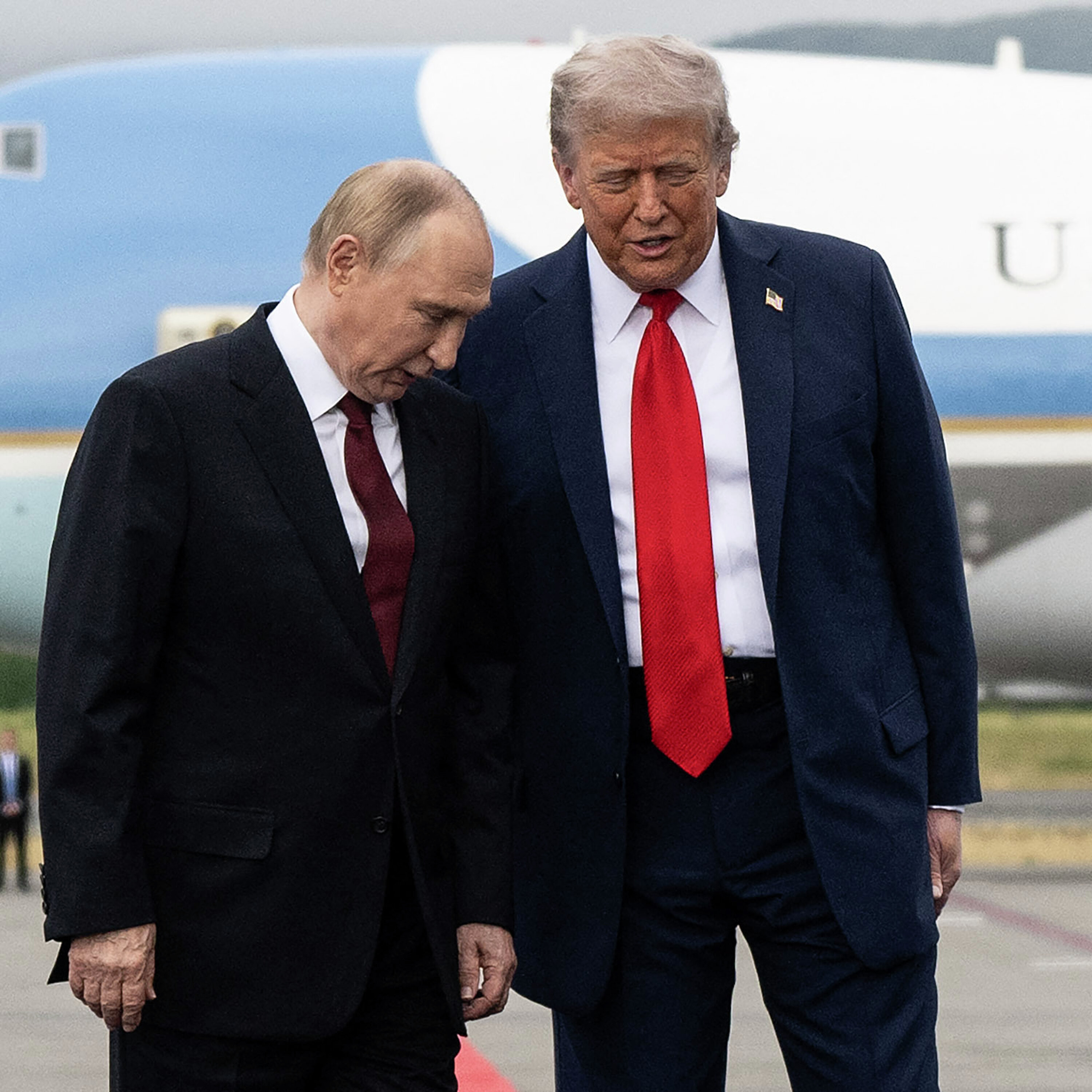
Since President Donald Trump returned to office, he's taken meetings with Russian President Vladimir Putin and scaled back U.S. support for Ukraine. He's also alienated NATO, the military alliance that's been providing key support for Ukraine's war efforts. And after Trump started a war with Iran in February, the relationship with NATO has been under new strains. This weekend, Trump told the Financial Times in a phone call that he expected NATO to assist the US in keeping the Strait of Hormuz open. Trump told the paper, quote, if there's no response or if it's a negative response, I think it will be very bad for the future of NATO. I'm Sarah Holder and this is the big take from Bloomberg News. Today on the show, what Russia stands to gain and lose from the war in Iran, how rising oil prices and conflict in the Middle east could impact Russia's war in Ukraine, how its economy and the US's global alliances. So, Natalia, as the US and Israel's war with Iran widens and continues, I wanted to talk to you about where Russia fits in. Russia and Iran have been allies for a long time. Can you give us a quick overview of that relationship?
- [04:36]
Natalia Drozdiak
Yeah. So, you know, Russia and Iran's relationship really deepened, I would say, over the last few years since the start of Russia's full scale invasion of Ukraine in 2022. And so they reached out to Iran and that resulted in Iran transferring these shahed drones as well as ballistic missiles later on. They also provided Russia with know how to produce those drones and build them up themselves. There has been intelligence sharing already happening with the Russians sharing sensitive military information and know how. But critically, also lessons learned about how those Iranian drones work on the battlefield and, you know, how they've been countered. And last year they even signed a partnership to kind of cement that relationship.
- [05:31]
Sarah Holder
Given that deepening relationship, what does Russia have to gain or lose in this war?
- [05:37]
Natalia Drozdiak
Well, in some sense, you know, they don't want the US and its allies to succeed. And success from that perspective would look like Iran becoming more moderate or weak. So in that respect, Putin would want to keep hardliners in Tehran to maintain that support, maintain that relationship. But they also have. I mean, they're benefiting from the war going on and dragging on as we've been seeing with the price of oil. This is critical to Russia's economy.
- [06:13]
Sarah Holder
What has Putin said about the level of coordination between Moscow and Tehran? Has he confirmed that, you know, Russia has been providing this intelligence.
- [06:25]
Natalia Drozdiak
According to Steve Witkoff, Trump's envoy, the Russians denied that. And, you know, some of the folks around Trump are ready to believe that denial. Although, you know, we did hear Trump saying that it seems like the Russians were helping the Iranians at least a little bit.
- [06:43]
Sarah Holder
Do we know if Iran has been acting on that intelligence?
- [06:47]
Natalia Drozdiak
Well, we can only assume. I don't think we have specific information tying, like Iranian strikes to Russian intelligence, for example, but we can only assume that it's at least been somewhat helpful, you know, in terms of other information. We know that that's also included, like targeting and satellite imagery to help them pinpoint where US Forces are in the region. One of the key questions going forward will be, you know, how regular and timely that information is transferred to Iran. You know, whether it was just a one off or if it's kind of a systematic transfer of information, that makes a big difference. Of course, you know, Trump and other administration officials say it hasn't.
- [07:34]
Sarah Holder
Beyond, you know, intelligence sharing, what tactics do you see Iran taking from Russia's playbook?
- [07:42]
Natalia Drozdiak
Well, one of the key tactics that we're seeing over the last few days, which, you know, they either received as direct advice from the Russians or as passive advice. Just watching Russian tactics in Ukraine was to target allied oil infrastructure as a way to inflict pain on their enemy.
- [08:05]
Sarah Holder
How is the US Thinking about this dynamic and Russia's role here?
- [08:10]
Natalia Drozdiak
In some senses, they've been more willing to look past the Russian support to Iran with comments like saying that, you know, whatever support they have been giving has been very limited and not very impactful. So there seems to be some sort of degree of, you know, willingness to let it slide. And then in addition to that, we're seeing the US Roll back some of the sanctions on Russian oil or at least issue these temporary waivers. So, you know, the priority with the Trump administration right now is clear. Clearly not to maintain or even increase pressure on Russia. It's fully focused on Iran. But those two are linked.
- [08:58]
Sarah Holder
We'll dig into what the easing of those sanctions mean for the global oil market, for Russia, and for Ukraine and its allies after the break.
- [09:11]
Dr. Guy Winch
For many men, mental health challenges aren't recognized until they've already taken a toll. Work pressure, financial changing relationships, and traditional expectations around masculinity can quietly wear men down, often without clear warning signs. In season three of the Visibility Gap, Dr. Guy Winch and his guests explore how these pressures show up, how to spot them earlier, and how men can access meaningful support. Listen to the new season of the Visibility Gap, a podcast presented by Cigna Healthcare.
- [09:42]
Malcolm Gladwell
Hello. Hello, I'm Malcolm Gladwell, host of the podcast smart talks with IBM. I recently sat down with IBM's chairman and CEO Arvind Krishna, and I asked him how can companies use AI to its fullest potential to create smarter business? My one advice to them Pick areas you can scale. Don't pick the shiny little toys on the side. For example, if anybody has more than 10% of what they had for customer service 10 years ago, they're already five years behind. If anybody is not using AI to make their developers who write software 30% more productive today with the goal of being 70% more productive. Yeah.
- [10:30]
Adobe Representative
Wow.
- [10:31]
Malcolm Gladwell
So we are not asking our clients to be the first experiment on it. We say you can leverage what we did. We are happy to bring out all our learnings, including what needs to change in the process. Because the biggest change is not technology. It's getting people to accept that there's a different way to do things. To listen to the full conversation, visit IBM.com smarttalks.
- [11:00]
Adobe Representative
Everyone has been there. Your team's feedback is scattered across emails, chats and sticky notes. It's a mess, but PDF spaces in Adobe Acrobat gives you one collaborative workspace to streamline every file and comment. So if you need six departments to finally agree on a proposal, do that with Acrobat. Need to turn a mountain of feedback into one plan of action. Do that with Acrobat. Want to stop searching for files and finally get everyone on the same page. Do that, do that, do that with Acrobat. Learn more@adobe.com do that with Acrobat.
- [11:41]
Sarah Holder
Since Russia launched its full scale invasion of Ukraine in 2022, the US has imposed strict sanctions on buying Russian oil. But on March 5, the US issued a temporary authorization letting India buy more Russian oil already out at sea on tankers. And last week the US Widened that waiver to create a one month window for countries to buy more Russian oil that's already in transit. I asked Bloomberg's Natalia Drozdiak what we know about how the Trump administration came to that decision.
- [12:14]
Natalia Drozdiak
So the Trump administration has come under a lot of pressure in recent days because of the spiking price of oil. And that comes at a time when they've promised the American people that they are laser focused on affordability and reducing the price of gas and other goods, groceries or that's what's led them at least to to look at these waivers on Russian oil.
- [12:40]
Sarah Holder
And how much of an effect could this move actually have on oil prices around the world?
- [12:46]
Natalia Drozdiak
Well, we've seen that the waiver that they issued for India had only a relatively limited impact, because this really is dealing with a small fraction of the global oil market. And the key issue is really about access through the Strait of Hormuz, and that's what's driving the price of oil. So even as the administration has widened some of those waivers, it's unlikely to have a major impact on the price of oil.
- [13:17]
Sarah Holder
But, I mean, that measure, you know, temporarily lifting sanctions on Russia, even in a limited way, is a pretty bold move. The President of the European Union, Ursula von der Leyen, has said that this is not the moment for the US to be easing sanctions on Russian oil. So I'm wondering, could this move by the US Strain the relationship with Europe, and how does that play for Russia?
- [13:40]
Natalia Drozdiak
Yeah, I mean, I think the relationship has already been strained for quite some months. I mean, especially on other issues, trade, but also on threats over Greenland. And so this certainly isn't helping. And then this example of them trying to convince Trump not to roll back these sanctions or at least weaken them, and then, you know, them going ahead with it anyway. I think that's just really adding to the frustration.
- [14:07]
Sarah Holder
Well, how big of a win is this, this rolling back of these sanctions for Russia?
- [14:13]
Natalia Drozdiak
I think it is a big win because, you know, just a few months ago, there was talk about whether the Trump administration could actually impose more. You know, they've touted these. These sanctions as examples of them not being soft on Putin and on Russia and the impact that they've had on the Russian economy, and now, you know, rolling these back in in a limited way, even. Even if just limited is just not a great sign. I think the concern is also, what if there's more like, what if this continues and the Russians are already benefiting from the spike in the price of oil, which is critical for them because this is the backbone of their economy. This is how they finance their war in Ukraine. So any relief in addition to that is only going to benefit them, even if it's relatively limited.
- [15:10]
Sarah Holder
As you mentioned, one of the open questions is about how this easing of sanctions could lead to other moves. Right. The limited lifting of sanctions is supposed to be temporary. It's set to last till April 11. But can this genie be put back into the bottle once these sanctions are lifted? Even in this limited way, how hard might it be to reinstate them?
- [15:33]
Natalia Drozdiak
I think they could manage that, because, like I said, this seems to be targeting oil that was already in transit. I think if they went further than that, it could be more complicated. The question is also, as this drags on, how desperate does the US Government become, and do they go further, and then it becomes even harder to reimpose them?
- [16:00]
Sarah Holder
I'm curious about some of the other ways this war might end up benefiting Russia or be seen by Russia as beneficial to to their aims. For starters, I'm thinking about the way that this might draw attention away from its own war with Ukraine or draw away U.S. munitions that could be sent to Ukraine.
- [16:20]
Natalia Drozdiak
Yeah, I think this is a key worry for Ukraine and its European allies. So we've seen the Ukrainians tell the Americans that they'd be willing to share information and specialists that know how to counter those Iranian drones because they've had all this experience over the last few years in dealing with that on the battlefield. And that seems, you know, to be an effort by the Ukrainians to curry good favor with the U.S. i mean, the one thing I will say about the Ukrainian drone support is, you know, this is something that they've been talking about for months, and even before the outbreak of the war, the US And Trump has been really interested in that because I think there's been a recognition that drones are going to be a critical element of any future warfare. And we've seen that play out on the battlefield in Ukraine in terms of how that quickly shifted into a battle of drones between Russia and Ukraine. And we've seen that bear out over the last few days in Iran and how the US and its allies have been put on their heels to some degree by the vast use of these relatively cheap drones that has forced the US and allies to counter them with more expensive interceptors. But, you know, at the same time, there is a real concern about the weapons stockpiles, because if this drags on for many months, that's going to make it a lot harder for Ukraine and Europe to buy those critical American weapons that they rely on. And, you know, especially if the US Decides they want to prioritize the Middle east and supporting the operation there.
- [18:15]
Sarah Holder
Does the fact that the US Is leaning on Ukraine in some ways for that expertise in drone defense strengthen the relationship between the US And Ukraine moving forward?
- [18:27]
Natalia Drozdiak
I think that's what the Ukrainians are hoping for. But, you know, so far, we're not seeing that translate into stronger pressure on Russia.
- [18:37]
Sarah Holder
I'm wondering, the longer the Iran war drags on, what could this conflict mean for the future of the war between Russia and Ukraine?
- [18:48]
Natalia Drozdiak
Well, I think there's a real risk that the US and even European allies become distracted. I think that's something that Putin probably hopes for to some degree, as he's been, you know, his his major tactic has been stalling for time. And if, you know, the more that the US And Europe are distracted by what's happening in the Middle east, the less pressure he faces to to end the war. So it could mean the longer that the war drags out in Iran, the longer the war drags out in Ukraine as well.
- [19:34]
Sarah Holder
This is the Big Take from Bloomberg News. I'm Sarah Holder. To get more from the Big Take and unlimited access to all of bloomberg.com, subscribe today@bloomberg.com podcastoffer if you like this episode, make sure to subscribe and review the Big Take Take wherever you listen to podcasts. It helps people find the show. Thanks for listening. We'll be back tomorrow.
- [20:06]
Dr. Guy Winch
For many men, mental health challenges aren't recognized until they've already taken a toll. Work pressure, financial stress, changing relationships and traditional expectations around masculinity. Conflict quietly wear men down, often without clear warning signs. In season three of the Visibility Gap, Dr. Guy Winch and his guests explore how these pressures show up, how to spot them earlier, and how men can access meaningful support. Listen to the new season of the Visibility Gap, a podcast presented by Cigna Healthcare.
- [20:40]
Malcolm Gladwell
With volley from Ishares. You get access to both monthly income and and growth potential in one simple etf. It's the best of both worlds. Discover Bali Ishares Large Cap Premium Income Active ETF iShares the market is yours. Visit www.ishares.com to view perspectives for investment objectives, risks, fees, expenses, and other information that you should read and consider carefully before investing. Risks include principal, loss and the use of derivatives, which could increase risks and volatility. Monthly income is not guaranteed. Prepared by BlackRock Investments, LLC.
- [21:06]
Dr. Guy Winch
These days it seems like AI agents are just about everywhere. You turn every field and every function. But without identity, you can't trust they'll serve your business instead of je jeopardizing it. Fortunately, Okta helps you get identity right by securing your AI agents identities, giving you a single layer of control, a single standard of trust. So whether an AI agent supports a single user or your entire enterprise, with Okta you'll turn risk into opportunity. Secure every agent, Secure any agent. Okta secures AI.