Loading summary
Transcript76 lines
- [00:00]
Emily Simpson
Hey, everyone, it's Emily Simpson and Shane Simpson from the Legally Brunette podcast.
- [00:06]
Shane Simpson
Each week we're bringing you true crime through a legal lens.
- [00:09]
Emily Simpson
Whether you want all the facts on the disappearance of Nancy Guthrie or you still need to wrap your head around the Diddy verdict, we're breaking it all down step by step.
- [00:19]
Shane Simpson
And we're not just lawyers. We're also husband and wife. It makes for some pretty entertaining episodes.
- [00:24]
Emily Simpson
Listen to Legally Brunette on the iHeartRadio app, Apple Podcasts, or wherever you get your podcasts.
- [00:32]
David Gura
The news doesn't stop on the weekends.
- [00:34]
Christina Raffini
Context changes constantly, and now Bloomberg is the place to stay on top of it all.
- [00:39]
David Gura
Hi, I'm David Gura. Join us every Saturday and Sunday for the new Bloomberg this weekend.
- [00:44]
Christina Raffini
I'm Christina Raffini. We'll bring you the latest headlines in depth analysis and big interviews, all the stories that hit home on your days off. And I'm Lisa Mateo. Watch and listen to Bloomberg this weekend for thoughtful, enlightening conversations about business, lifestyle, people and culture.
- [00:59]
David Gura
On Saturday mornings, we put the past week's event events into context, examining what happened in the markets and the world.
- [01:06]
Christina Raffini
Then on Sundays, we speak with journalists, columnists and key political figures to prepare you for the week ahead. Join us as soon as you wake up and bring us with you wherever your weekend plans take you.
- [01:16]
David Gura
Watch us on Bloomberg Television, listen on Bloomberg Radio, stream the show live on the Bloomberg Business app, or listen to
- [01:22]
Christina Raffini
the podcast that's Bloomberg this weekend, Saturdays and Sundays starting at 7am Eastern on February 28th. Make us part of your weekend routine on Bloomberg Television Radio and wherever, wherever you get your podcasts.
- [01:40]
Emily Simpson
Bloomberg Audio Studios, Podcasts, radio news.
- [01:46]
Rick Waldenberg
We got sued by sleazebags. I know him well that are very outside country China centric, but outside country centric.
- [01:54]
Sarah Holder
Where were you when the opinion was finally announced today?
- [01:57]
Greg Storr
Where else? On a conference call.
- [02:00]
Sarah Holder
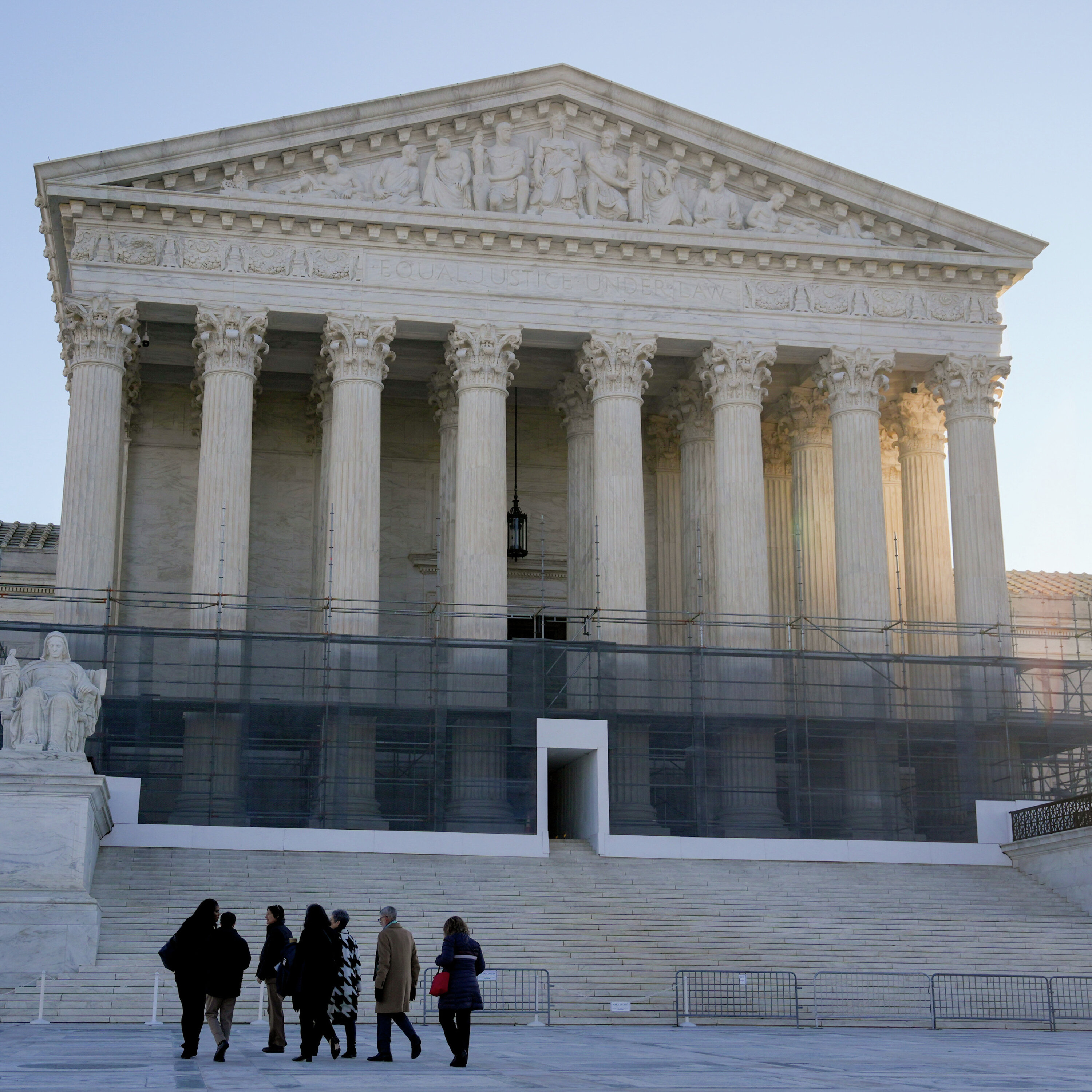
Rick Waldenberg is the CEO of a toy company called Learning Resources, a company that sued the Trump administration over its signature tariff policy back in April. The case went all the way to the Supreme Court. Rick wasn't expecting the court to issue its opinion today. Rick's son, who also works for the company, broke the news and he said,
- [02:22]
Greg Storr
hold on, hold on. We just won the case.
- [02:25]
Sarah Holder
In a 6, 3 ruling, the court sided with Rick and his fellow plaintiffs, declaring many of the president's sweeping tariffs illegal. It also said the court didn't have jurisdiction over Rick's particular case, a technicality, but he calls that a footnote to history.
- [02:42]
Greg Storr
A lot of times when history is made you don't realize, hey, I just made history. But in this case, from the beginning, we knew we were involved in something that would have a long tail and would affect the trajectory of our country.
- [02:57]
Sarah Holder
The Supreme Court's decision was a direct rebuke of President Donald Trump's attempts to use broad emergency powers to reshape global trade. It reaffirmed that only Congress has the power to impose tariffs during peacetime.
- [03:11]
Rick Waldenberg
I'm ashamed of certain members of the court, absolutely ashamed, for not having the courage to do what's right for our country.
- [03:20]
Sarah Holder
Trump called a press conference to respond to the decision, where he vowed to sign an immediate order imposing a new 10% global tariff using a different legal authority.
- [03:30]
Rick Waldenberg
We have alternatives, great alternatives. Could be more money. We'll take in more money, but what
- [03:36]
Sarah Holder
comes next is less clear. The Supreme Court didn't give guidance on what happens to the tariffs that have already been collected, which Trump addressed in a question from a reporter at his press conference.
- [03:47]
Rick Waldenberg
Wouldn't you think they would have put one sentence in there saying that keep the money or don't keep the money? Right. I guess it has to get litigated for the next two years.
- [03:58]
Greg Storr
Just reverse the gears, guys, and give me my money back. The US Government sends out millions of tax refunds a year, and no one, when they open the check, goes, oh, my God, how did they do that? That's a marvel.
- [04:12]
Shane Simpson
They know how to do it.
- [04:14]
Greg Storr
They can do it. It's our money. Give it back.
- [04:19]
Sarah Holder
I'm Sarah Holder and this is the big take from Bloomberg News. Today on the show, the Supreme Court rules against Trump on tariffs, what the decision means for consumers, businesses, global trade and presidential power. This Supreme Court decision has been highly anticipated, both because President Trump's use of tariffs is such an important piece of his economic policy, and because it's seen as yet another way he sought to expand his powers as president.
- [04:50]
Brendan Murray
It's really a huge blow. President Trump stood out in the Rose Garden a little over 10 months ago and told us that the tariffs were going to essentially revitalize American manufacturing, which has been in a about a three decade downward spiral. This was going to create jobs, this was going to level the playing field with trading partners that he said were cheating the US in the global trading system.
- [05:15]
Sarah Holder
Brendan Murray oversees Bloomberg's global trade coverage.
- [05:19]
Brendan Murray
And so he embarked on this campaign to issue these tariffs broadly, often pretty much at his own discretion, on everything from countries that he disagreed with, their geopolitical decisions to countries that he thought had bureaucratic problems with the way they were treating American companies in the case of Canada. So striking this down is a big blow to the President. He has based his entire economic and geopolitical foreign policy agenda on tariffs and his ability to use them at will.
- [05:54]
Sarah Holder
The Supreme Court didn't say that President Trump can't impose any tariffs. This case was about the way Trump has justified imposing many of the tariffs he's put in place since returning to office. He's leaned on a law called the International Emergency Economic powers Act, or IEPA. Here's Bloomberg Supreme Court reporter Greg Storr.
- [06:15]
Greg Storr
This 1977 law gives the President certain powers in the case of economic emergencies. And that law doesn't mention tariffs. But the president has said it gives him authority to enact these sweeping tariffs. And that includes his so called reciprocal tariffs that he announced on what he described as Liberation Day in April. And what the Supreme Court said today was that law does not give the president authority to impose tariffs. And so it means that all the tariffs he imposed under that law are now invalid. Left open some other questions, like what about refunds for people who paid them? Lower courts will decide that. And it didn't knock out other forms of authority that he has also asserted, but it knocked out the biggest single pillar in his tariff policy.
- [07:02]
Sarah Holder
And there was dissent among the justices. Right. This was a 6, 3 opinion. What was the substance of the disagreement?
- [07:10]
Greg Storr
Well, the core question was whether this statute could be read to include tariff powers. As I said, it doesn't mention the word, but it does have a phrase that says the president during these economic emergencies, may regulate importation. And that was really kind of the key legal question for the court was whether that could be read or should be read to encompass the authority to impose tariffs. The three dissenters said, yes, that regulating importation includes tariffs. The majority, although they splintered a little bit in their reasoning, essentially said, look, if Congress wants to give the power to impose tariffs to the president, keep in mind, by the way, the Constitution says it's Congress's power. But if Congress wants to give the President that power, the majority said it knows how to do that explicitly. And it didn't do that in this statute. And so we're not going to read it in a way that gives the President such expansive authority.
- [08:07]
Sarah Holder
Well, Greg, one of the big things that the court didn't weigh in on, which you alluded to, is the issue of refunds. Whether or not the money that has already been collected under these tariffs will now have to be returned to the companies that have paid it. Tell me a bit about this decision not to weigh in on refunds right now. Why did they do that?
- [08:24]
Greg Storr
At least as a formal matter? It wasn't really in front of them. They talked about it during the arguments because they were interested in what the consequences of their decision would be if they struck down the tariffs. But nobody was asking them to rule on that. And perhaps more importantly, no lower court had said anything about how refunds would work. That's the kind of situation where the Supreme Court normally doesn't like to be the first one to weigh in. They want to let lower courts deal with stuff first. And so I would have been quite surprised if they had said something about refunds just because it would have been so unusual for them.
- [09:02]
Sarah Holder
Brendan Trump has vowed to replace these tariffs with new ones. What are his options here?
- [09:08]
Brendan Murray
If you dial this back 12 months ago or so, when the second term began, there were people in the administration who wanted to go this other route, this more legally sound route, and not to come out with these IPA tariffs that they would be challenged. And so there is a playbook for what comes next. And they can try to replicate this tariff wall that he's built around the US Economy. It just may be more of a patchwork than a broad use of tariffs. The way he's done so since April of last year, the one that most people point to, including Bloomberg Economics. Is this what they call section 122? This is an authority that they can use to address trade deficit problems, imbalances. But it only goes up to 15%. You know, there are some countries whose IPA tariffs now illegal, you know, were over 15%. So they can go up to 15%. And they're. And it's capped at 150 days. And so they're temporary and they need congressional authorization to be extended. So this is just one of the examples of the ways that the Trump administration can kind of create a bridge to buy themselves some time, given the
- [10:26]
Sarah Holder
uncertainty about how this will impact trade policy moving forward at this juncture. Have markets reacted to the news yet?
- [10:34]
Brendan Murray
Markets don't really know what to make of it yet. It seems to be good for the stocks of companies that have paid a lot of tariffs, that they will presumably get some refunds over the next six to 12 months or so. But there's also a realization that tariffs aren't going away and there's going to be some uncertainty about how this next wave of them will be administered. And so companies don't like uncertainty. They tend to sit on their hands, not invest, not hire. Consumers tend to sort of rein in their spending. So the markets don't really know what to make of it just yet. There's a lot of trying to wait and see what the president's going to do next.
- [11:16]
Sarah Holder
So what will the president do next? What new tariffs might he impose? And will the US Government have to refund the money it's collected? That's after the break.
- [11:34]
Emily Simpson
Hey everyone, it's Emily Simpson and Shane Simpson from the Legally Brunette podcast.
- [11:39]
Shane Simpson
Each week we're bringing you true crime through a legal lens.
- [11:42]
Emily Simpson
Whether you want all the facts on the disappearance of Nancy Guthrie or you still need to wrap your head around the Diddy verdict, we're breaking it all down step by step.
- [11:52]
Shane Simpson
And we're not just lawyers, we're also husband and wife. It makes for some pretty entertaining episodes.
- [11:57]
Emily Simpson
Listen to Legally Brunette on the iHeartRadio app, Apple Podcasts, or wherever you get your podcasts.
- [12:04]
Christina Raffini
Bloomberg Daybreak is your best way to get informed first thing in the morning, right in your podcast feed. Hi, I'm Karen Moscow.
- [12:11]
David Gura
And I'm Nathan Hager. Each morning we're up early putting together the latest episode of Bloomberg Daybreak US Edition. It's your daily 15 minute podcast on the latest in global news, politics and international relations.
- [12:25]
Christina Raffini
Listen to the Bloomberg Daybreak US Edition podcast each morning. For the stories that matter with the context you need.
- [12:32]
David Gura
Find us on Apple, Spotify or anywhere you listen.
- [12:40]
Sarah Holder
Greg, after the decision today, what actually happens next? Are the impacted tariffs immediately removed in
- [12:47]
Greg Storr
terms of seeing an immediate practical impact where goods start coming into the country without those tariffs, we have to wait to see exactly what happened. But they are unlawful, the ones that have been imposed. And it does, as we've alluded, to trigger this refund process. That has some questions to it for sure, but everybody who paid one of those tariffs so far can say, I shouldn't have had to pay it. That was illegal, right?
- [13:17]
Sarah Holder
You said that the lower courts will have to decide on that question of how the tariff refund process goes. In Kavanaugh's dissent, he said the process would likely be a, quote, mess. Is there any precedent for refunding tariffs like this? And how much of a mess could it actually be?
- [13:34]
Greg Storr
So I want to be a little cautious because it really remains to be seen. There are some precedents not on tariffs, but there was this tax known as the Harbor Maintenance tax back in the late 1990s where there was a process for refunding very large sums of money, not this big. So this is all going to go forward in a specialized court known as The Court of International Trade, they do have procedures for dealing with refunds, and they're very familiar with tariffs. But there will undoubtedly still be a lot of questions. Among other things, some tariffs were paid almost a year ago, and they may be in a slightly different boat than tariffs that were paid last week. A number of companies, about 1,500, according to my colleague Zoe Tillman, have sort of preemptively filed claims saying we're entitled to a bunch of refunds. That doesn't preclude other payers from claiming those refunds as well. And it's not yet clear what argument the Trump administration might make, if anything, for saying that some or all these people are not entitled to refunds. At the moment, it looks like at least most of those folks are in line for refunds, but it's going to take a while for things to play out.
- [15:02]
Sarah Holder
That's what this decision might mean for companies. But Brendan, should consumers expect lower prices on the goods that were impacted? Like to the extent that companies raised prices as a result of these tariffs, is it likely that they'll lower them now?
- [15:16]
Brendan Murray
I wouldn't count on it. Companies at the moment that have paid these tariffs, if they can get a refund, they're going to do a lot of things that they've held back on doing over the past year or so. I wouldn't expect this to have any sort of short term impact on the price of consumer items. As Greg spelled out there, this is going to be a long drive, drawn out, messy process. Don't forget a lot of companies, importers that paid these tariffs had arrangements with their suppliers overseas. To the suppliers themselves overseas will say, hey, I cut my price because you had to pay this tariff. Those suppliers are going to want a piece of that action back. This is just going to create a really complicated situation. Bloomberg Economics estimates that the amount of IEEPA tariffs that could be subject to refunds is about 100 billion. Let's call that 200 billion on an annualized basis. That's a little less than the IRS gives out in tax refunds every year. It ranges from a couple hundred billion to four hundred billion.
- [16:27]
Sarah Holder
So that's something the government knows how to do.
- [16:29]
Brendan Murray
Well, the IRS knows how to do that because that's sort of what the IRS does. The Customs and Border Protection Agency is not in the business of shelling out hundreds of billions of dollars of refunds. So the administration of that is going to have up to scale very quickly. If the companies, as we expect, you know, thousands of them, will try to come to the customs agency and ask for their money back.
- [16:57]
Sarah Holder
And just to put a finer point on what this means for consumers, you know, obviously not all of Trump's tariffs have been struck down by this ruling. What is the effective tariff rate that consumers will face after the IPA tariffs go away?
- [17:11]
Brendan Murray
So the effective tariff rate with IPA in effect was about 13 or 14%. That's sort of a broad average over all US imports. It varies by country, obviously, but without IPA, it goes from 13% to something in the range of 6 to 7%. So essentially gets cut in half. So again, we'll wait and see what the administration does, but they're still going to remain elevated higher than they were before Trump began his second term. They were down in the 2 to, to 3% range.
- [17:43]
Sarah Holder
And Brendan, I want to go back to what this all means for President Trump. Because tariffs have been such a central part of his economic agenda, how does this change his ability to threaten other countries willy nilly with immediate tariffs? Does it weaken his negotiating position?
- [17:59]
Brendan Murray
That would be his argument. The President of the United States has a lot of other non tariff powers that they can bring to the table in foreign policy. But the real issue here is that President Trump, Trump is going to have to restrain that impulse to use tariffs at every turn to try to sway countries to his ideology. Another thing we shouldn't overlook here is the opportunity that this provides him, too. We've been talking a lot about tariffs effects on the economy. The economy hasn't exactly been going gangbusters of late, and Republicans in Congress are hearing it from their constituents. And ratcheting back tariffs is such a bad thing for the president politically heading into these midterm elections, dialing them down, bringing them on board more slowly, using more discretion, might actually help the economy and might help sentiment and pull consumer confidence out. So there's a flip side to this that's not all bad for the president.
- [19:11]
Sarah Holder
And Greg, a conservative majority court has just struck down one of the president's key policies. I, I want to underline that for a second. When we think about the balance of the court's decisions for and against the Trump administration and the expansion of presidential powers. How does today's opinion change the picture for you, if at all?
- [19:31]
Greg Storr
The way I'm thinking about it is that this is a case where Donald Trump just pushed the Supreme Court too far. He has made all manner of claims of presidential power that we haven't seen before. And the Supreme Court over the last year has been pretty accommodating, not on every single thing. But over and over, at least on a short term basis, with these emergency requests to do various things involving immigration and spending and firing, the court has let him do what he wanted to do for the most part. But here when we were looking at what's a pretty fundamental question about separation of powers, where the Constitution says this is a power that Congress has, the Supreme Court said, including two members of the court who were appointed by Donald Trump, Neil Gorsuch and Amy Coney Barrett said, no, you, the president do not have this authority by using this statute that doesn't even talk about tariffs. And that is a big deal. So there's no question that this is a line the court has drawn with the president. Don't minimize everything else the court has done. This court has still been very, very accommodating. But at least on this sort of unprecedented assertion of presidential authority, the court is saying, no, you can't do that.
- [20:55]
Sarah Holder
This is the big take from Bloomberg News. I'm Sarah Holder. The show is hosted by me, David Gura and Juan Ha. The show is made by Aaron Edwards, David Fox, Jeff Grocott, Eleanor Harrison Dengate, Patty Hirsch, Rachel Lewis Christie, Katie McMurran, Naomi Ng, Julia Press, Tracy Samuelson, Naomi Shaven, Alex Sugiura, Julia Weaver, Yang Yang and Taka Yasuzawa. There's Much more on Bloomberg.com get unlimited access to all of our coverage at a special rate for listeners@Bloomberg.com podcastoffer thanks for listening. We'll be back on Monday.
- [21:34]
Brendan Murray
Foreign
- [21:36]
Emily Simpson
hey everyone, it's Emily Simpson and Shane Simpson from the Legally Brunette podcast.
- [21:42]
Shane Simpson
Each week we're bringing you true crime through a legal lens.
- [21:45]
Emily Simpson
Whether you want all the facts on the disappearance of Nancy Guthrie or you still need to wrap your head around the Diddy verdict, we're breaking it all down step by step.
- [21:55]
Shane Simpson
And we're not just lawyers, we're also husband and wife. It makes for some pretty entertaining episodes.
- [21:59]
Emily Simpson
Episodes Listen to Legally brunette on the iHeartRadio app, Apple Podcasts, or wherever you get your podcasts.
- [22:08]
David Gura
I'm Joe Matthew, inviting you to join me for the Balance of Power podcast. Every day we deliver insight and analysis on the latest headlines from the White House and Capitol Hill, including breaking news from Bloomberg's reporters and in depth conversations with lawmakers and administration officials that you won't hear anywhere. What are the policy changes the Trump administration is making that affect Washington and Wall street and drive your investment decisions? From tariffs to taxes, the rules are constantly changing, which is why you need to listen every day. We do it all live each weekday, then bring you the best conversations in the daily podcast. Catch up on the headlines you missed while you were at work. Listen on your way home for the top news of the day, straight from our nation's capital and around the world. That's the Balance of Power podcast with me, Joe, Matthew and Kailey Leinz. Listen on Apple, Spotify, and wherever you get your podcasts.